
人民币国际化

Search documents
港股IPO募资额居全球榜首,中金公司市占率、承销规模持续领跑
Cai Jing Wang· 2025-12-31 09:19
Core Insights - In 2025, the Hong Kong IPO market has significantly rebounded, reclaiming the top position globally in fundraising, driven by the increasing allocation of international capital to Chinese assets and the enhanced international service capabilities of Chinese investment banks [1][7] Group 1: Market Performance - The Hong Kong market completed 117 IPOs in 2025, with China International Capital Corporation (CICC) participating in 53, achieving a market coverage rate of 45%, a substantial increase from 17% in 2019 [1] - CICC sponsored 33 companies for listing, maintaining the number one market share for four consecutive years, with a sponsorship market share of 36% [1][2] Group 2: Underwriting Scale - CICC's total underwriting scale exceeded $10 billion, with a market share of nearly 30%, nearly doubling from about 15% in 2019 [2] - The shift in market dynamics reflects CICC's enhanced ability to cover global investors and its growing dominance in key underwriting processes [2] Group 3: Leading Projects - CICC's involvement in head projects increased from 4 in 2019 to 10 in 2025, representing 50% of the total head projects, with 8 projects having an underwriting share exceeding 45% [3] - This change highlights CICC's professional capabilities in leading organization and communication with global investors [3] Group 4: Internationalization and Capital Access - CICC has successfully attracted top-tier sovereign funds and long-term institutional investors for various IPOs, providing crucial funding for companies [4] - Notable IPOs include CATL's $5.25 billion listing, which set multiple records, and Chery Automobile's $1.34 billion IPO, marking the largest financing scale for a comprehensive automotive company in nearly a decade [5][6] Group 5: Strategic Innovations - The listing of Jaxin International Resources marked a significant milestone as the first dual listing project in Hong Kong and Astana, showcasing innovative trading structures and the internationalization of the RMB [6] - CICC's role in these projects has established a strong market pricing foundation for emerging international mining enterprises [6] Group 6: Overall Impact - From 2019 to 2025, CICC has transitioned from a significant participant to a leader in the Hong Kong IPO market, enhancing its influence and establishing a more robust pricing foundation for Chinese assets in the global capital market [7]

2025最后2天,中国铁矿石定价权扩大战果,2大巨头让步,新矿报捷
Sou Hu Cai Jing· 2025-12-31 08:12
Core Viewpoint - The article discusses China's significant progress in gaining pricing power over iron ore, transitioning from a passive role to an active one in the global market, particularly by the end of 2025 [3][11][23]. Group 1: Historical Context - Since the establishment of the global iron ore long-term contract mechanism in 1981, China, as the largest consumer, has been dominated by Western countries like the US and Australia in pricing power, leading to substantial profit losses [1][3]. - The pricing system centered around the US S&P iron ore index has constrained Chinese enterprises for over four decades, limiting their negotiation power [5][7]. Group 2: Recent Developments - In December 2025, major mining companies, including Rio Tinto and Fortescue Metals Group, announced a shift from the US S&P index to pricing standards more aligned with China's market realities, marking a significant change in the pricing dynamics [11][13]. - This shift is a result of long-term negotiations with China's Mineral Resources Group, which has consolidated purchasing power, allowing China to negotiate on equal footing with global mining giants [9][11]. Group 3: Impact of Renminbi Internationalization - The move towards Renminbi (RMB) settlement for iron ore trade, initiated by BHP in October 2025, has opened avenues for reducing reliance on the US dollar, enhancing China's bargaining position [17][19]. - The transition to RMB settlement not only mitigates exchange rate risks for Chinese companies but also creates a closed-loop system for raw material imports and finished product exports, lowering transaction costs [19][21]. Group 4: Significance of Pricing Index Change - The adoption of local pricing indices, such as the "My Steel" index, reflects a shift in the international mining community's recognition of China's market influence, allowing China to move from being a price taker to a price maker [21][23]. - This change in pricing benchmarks is seen as a milestone, as it aligns more closely with China's actual supply and demand, benefiting the local steel industry [21][23].




落实中新金融合作最新成果,银河海外落地首单境外柜台债券业务
Zhong Guo Ji Jin Bao· 2025-12-31 07:39
Group 1 - The core viewpoint of the news is the successful completion of the first counter bond transaction between China and Singapore, marking a significant step in cross-border financial connectivity and the opening of the capital market [1][2] - China Galaxy Securities' overseas subsidiary, Galaxy Overseas, has become the first institution to participate in the newly established counter bond market between China and Singapore, showcasing its execution and innovation capabilities [1] - The transaction is part of a broader initiative to enhance financial cooperation between China and Singapore, as outlined in the 2025 financial cooperation document, which emphasizes the interconnectivity of the bond markets [1][2] Group 2 - Bank of China, as the only authorized Chinese bank for the counter bond project, has created an efficient channel for qualified foreign investors to access the Chinese interbank bond market, providing comprehensive services including account opening, trading, registration, and settlement [2] - The initiative aligns with China's Belt and Road strategy, promoting cross-border financial innovation and market connectivity, while supporting the internationalization of the Renminbi [2] - China Galaxy Securities aims to leverage its international presence to actively participate in Belt and Road projects, contributing to the dual opening of financial markets and the establishment of a higher-level open economy [2]


把脉人民币动向:复旦南土国际金融政策圆桌会深度研讨汇率走势
Sou Hu Cai Jing· 2025-12-31 06:55
Core Viewpoint - The forum at Fudan University aims to analyze the current macroeconomic financial situation, focusing on the RMB exchange rate and its driving factors, with insights from various experts in academia and industry [1]. Group 1: RMB Exchange Rate Analysis - Professor Shen Guobing emphasizes that the traditional view of currency depreciation benefiting trade is outdated, suggesting that RMB appreciation could lower import costs and enhance national welfare [3]. - Wang Han from Industrial Securities notes that the RMB may face upward pressure against the USD due to potential weakening of the dollar, with a possible target of 6.7, while the People's Bank of China will manage market expectations to prevent excessive appreciation [5]. - Wu Xinru presents data indicating that the RMB's actual effective exchange rate may be undervalued by about 24% compared to equilibrium levels, asserting that export competitiveness relies more on industrial upgrades than on currency depreciation [7]. Group 2: Future Outlook and Risks - Professor Feng Ling highlights that the RMB's stabilization in 2025 is supported by improved external conditions and record trade surpluses, but uncertainties in 2026 may arise from U.S. monetary policy and political events [9]. - Tang Jianwei from the Bank of Communications predicts a moderate appreciation of the RMB in 2026, with expected fluctuations between 6.8 and 7.15, while cautioning against external political risks [11]. - The discussion reveals a consensus that the traditional "devaluation promotes exports" logic is outdated, with RMB appreciation driven by multiple factors, while uncertainties remain regarding U.S. monetary policy and geopolitical developments [15].

数据诠释“港股之王”:中金公司市占率与头部项目主导力断层领先
Jin Rong Jie· 2025-12-31 06:18
Core Viewpoint - Since 2025, the international capital has increased its allocation to Chinese assets, leading to a revitalization of the Hong Kong IPO market, which has regained its position as the largest globally in terms of fundraising scale after six years [1] Group 1: Market Position and Performance - CICC has participated in 53 out of 117 IPOs in the Hong Kong market since 2025, achieving a market coverage rate of 45%, a significant increase from 17% in 2019 [2] - CICC has led 38 projects as the principal sponsor, with a leading rate exceeding 90%, establishing a dominant position in the market [2] - The underwriting scale of CICC has surpassed 100 billion USD, with a market share of nearly 30%, nearly doubling from about 15% in 2019 [2] Group 2: Leadership in Major Projects - In the top 20 IPO projects, CICC's sponsored projects increased from 4 in 2019 to 10 in 2025, accounting for 50% of the total [3] - CICC's underwriting share for 8 of its sponsored projects exceeded 45%, with 5 projects surpassing 70%, indicating a significant lead in major projects [3] - CICC has successfully attracted global sovereign funds and long-term institutional investors, providing crucial funding support for companies [3] Group 3: Notable IPOs - CATL's IPO on May 20 raised 5.25 billion USD, marking the largest IPO globally in 2023 and the largest for a Chinese company since 2022, with CICC as the sponsor [4] - CICC facilitated the introduction of cornerstone investors, including a major European asset management firm, for Sanhua Intelligent Control's IPO, which raised 1.368 billion USD [5] - JXIR's IPO on August 28 raised 176 million USD, marking a significant milestone in the internationalization of the RMB and showcasing CICC's ability to attract long-term investors [6] Group 4: Strategic Impact - CICC has transitioned from an "important participant" to a "leader" in the Hong Kong IPO market from 2019 to 2025, enhancing its influence in market participation and project leadership [7] - The company is strengthening the pricing power and influence of Chinese assets in the global capital market, establishing itself as the core leading investment bank in Hong Kong [7]
数字金融专题系列一:数字人民币升级的五问五答
Changjiang Securities· 2025-12-31 05:41
Investment Rating - The report does not explicitly provide an investment rating for the industry [25]. Core Insights - Accelerating the development of digital RMB is a core path to respond to international monetary system competition and promote the internationalization of the RMB [2][7]. - The People's Bank of China (PBOC) has introduced a new action plan to strengthen the management service system and related financial infrastructure for digital RMB, with a new measurement framework and operational mechanism set to be implemented on January 1, 2026 [2][7]. - The digital RMB will transition from being classified as digital cash (M0) to a deposit liability of commercial banks (M1), allowing banks to pay interest to real-name customers and participate in monetary creation [7][8]. Summary by Sections Development Achievements and Challenges - Since the launch of the first pilot in 2019, digital RMB has expanded nationwide, with a cumulative transaction amount of 16.7 trillion yuan and 230 million personal wallets opened by the end of November 2025 [6]. - Challenges include the maturity of domestic third-party payment systems, which reduces public enthusiasm for using digital RMB, and the dual-layer operation system that limits commercial banks' incentives to promote digital RMB due to unequal responsibilities and benefits [6]. Policy Background for Digital RMB Upgrade - The recent upgrade of digital RMB is aimed at enhancing its monetary creation and interest-bearing functions, as highlighted by the PBOC's action plan [7]. - The current M0 scale is 13.74 trillion yuan, with digital RMB first included in M0 statistics in December 2022, showing a balance of 13.61 billion yuan at that time [7]. Transition from Cash to Deposit - The shift to a deposit model is expected to increase the holding willingness of customers if digital RMB can earn interest, thus boosting transaction volumes [8]. - For commercial banks, treating digital RMB as a stable deposit liability could enhance their willingness to promote it by allowing them to earn interest rate spreads [8]. Future Development Focus - Key areas to monitor include the formal release of the action plan detailing the measurement framework and management system for digital RMB [9]. - Cross-border payments are identified as a significant area for development, with ongoing efforts to enhance efficiency and reduce costs, including partnerships with countries along the Belt and Road Initiative [9]. Mixed Architecture Development Route - Unlike many overseas practices, the digital RMB adopts a mixed architecture of "account system + blockchain + smart contracts," balancing centralized management advantages with decentralized transparency [10].

泸州银行荣获2025年第十四届金融界“金智奖”杰出跨境金融创新服务奖
Jin Rong Jie· 2025-12-31 04:48
Core Viewpoint - Luzhou Bank has been awarded the "Outstanding Cross-Border Financial Innovation Service Award" at the 2025 Golden Intelligence Awards, recognizing its innovative and solid services in the cross-border financial sector since launching international operations in 2020 [1]. Group 1: Development Achievements - Luzhou Bank's cross-border financial business has experienced rapid growth since its inception in 2020, with an average annual growth rate exceeding 150% and a cumulative scale surpassing 20 billion [4]. - The service network has expanded from basic settlement to multiple areas including cross-border clearing, trade financing, and foreign debt management, effectively supporting local enterprises in the Sichuan-Chongqing region [4]. Group 2: Innovation Practices - Innovation is the core of Luzhou Bank's cross-border financial services, successfully addressing information asymmetry for small and medium-sized foreign trade enterprises through the first corporate bank "bank-enterprise financing docking" pilot in Sichuan [5]. - The bank has introduced an innovative combination model of "import letters of credit + interbank forfaiting," leading to a 488% year-on-year increase in related business volume, significantly aiding enterprises in managing exchange rate risks and reducing financial costs [5]. Group 3: Global Expansion - Luzhou Bank is actively expanding its network under the Belt and Road Initiative, enhancing cooperation with domestic and foreign institutions, and continuously improving its cross-border RMB clearing network [6]. - The bank's business now effectively covers key regions such as Hong Kong, Macau, Taiwan, ASEAN, and the EU, providing robust financial infrastructure support for local enterprises to connect with global markets [6]. Group 4: Future Outlook - The recognition from the Golden Intelligence Awards serves as both a summary of past achievements and a starting point for new endeavors, with Luzhou Bank committed to serving the high-quality development of the regional economy [11]. - The bank aims to continue deepening product and service innovation while optimizing cross-border business processes and experiences, striving to inject more efficient financial resources into cross-border trade and investment cooperation [11].
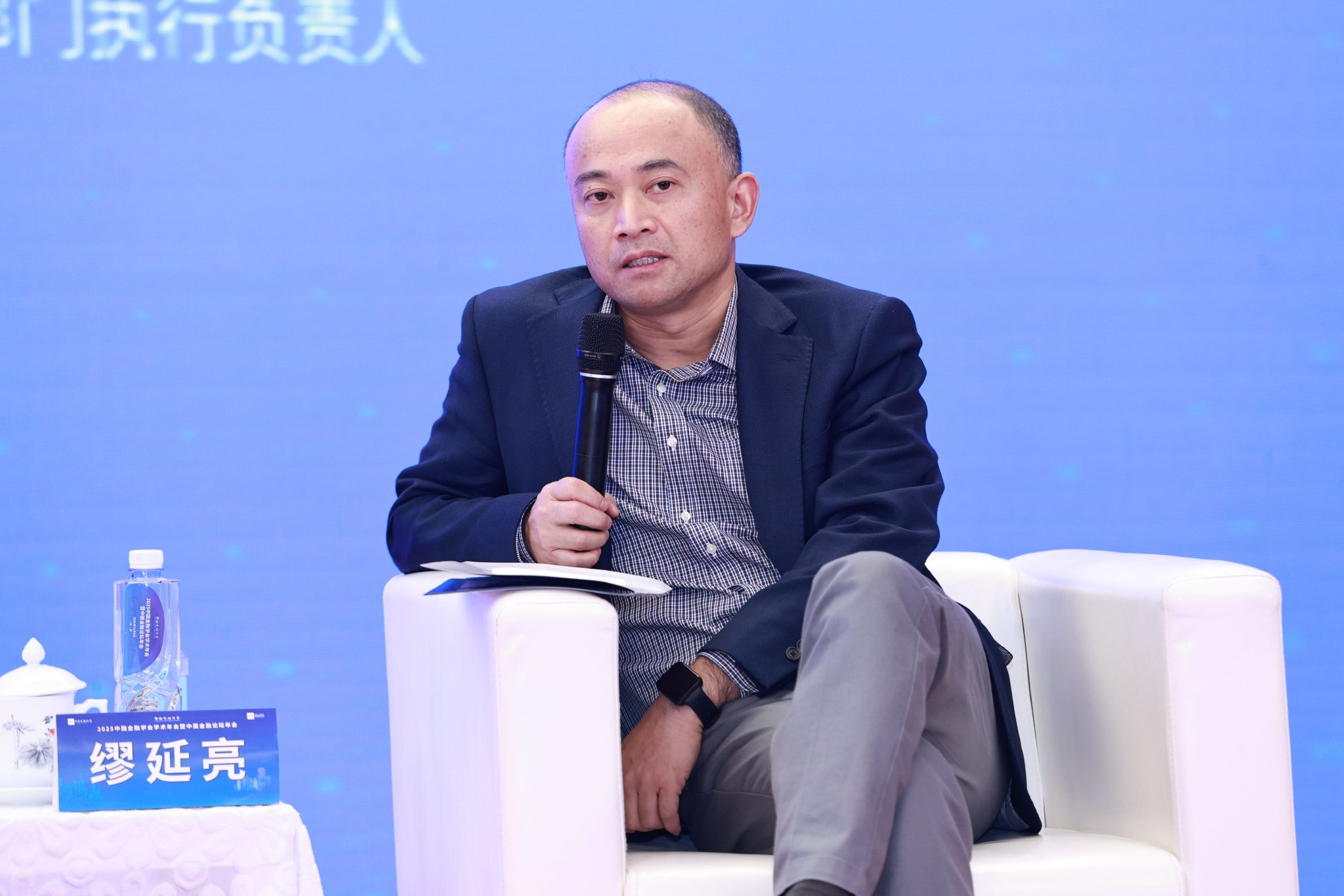
中金公司研究部首席策略分析师、部门执行负责人缪延亮在2025中国金融学会学术年会暨中国金融论坛年会上的演讲
Zhong Guo Jin Rong Xin Xi Wang· 2025-12-31 03:06
Core Viewpoint - The presentation by the chief strategist of CICC highlights the evolution of the international monetary system and the potential for the renminbi to become a central currency, driven by various economic and institutional forces [3][4][8]. Group 1: Historical Context of Currency - Currency exhibits a natural order characterized by a "center-periphery" structure, with the US dollar currently in a central position following the breakdown of the Bretton Woods system [3]. - The stability of this order is evident, as historical central currencies like the pound and dollar have maintained their status for over a century [4]. - The transition of central currencies is not fixed, with historical shifts from the Spanish dollar to the Dutch guilder, then to the pound, and finally to the dollar [4]. Group 2: Forces Driving Currency Evolution - The first force is economic strength, where a larger economy with significant trade volume is more likely to become a central currency [5]. - The second force is the robustness of financial markets, which are essential for establishing trust in a currency on the international stage [5]. - The third force is institutional credibility, such as property rights protection, which underpins trust in a central currency [6]. - The fourth force is technological advancement, which has historically transformed currency forms and payment systems [6]. - A debated fifth force is military power, which some argue can protect but not create currency credibility [6]. Group 3: Stability of Central Currencies - The strong network effects of these forces create inertia, making established currencies difficult to displace [7]. - These forces are interrelated, enhancing each other and raising barriers to entry for new central currencies [7]. - Existing central currencies can leverage their influence through institutional arrangements to maintain their status [7]. Group 4: Current Context for Renminbi - The current economic conditions suggest a potential shift, as China has surpassed the US in purchasing power parity (PPP) and has the largest trade volume [9]. - The US dollar's status as a safe asset is showing signs of strain, with changes in asset correlations indicating a weakening of its traditional role [9]. - The need for the renminbi to float more freely is emphasized, as this would facilitate its use in international trade and finance [10]. Group 5: Recommendations for Renminbi Internationalization - The development of both onshore and offshore financial markets is crucial, focusing on liquidity coordination and cross-border financial product innovation [10]. - Increasing the openness of China's capital account is necessary to enhance investor confidence and facilitate international transactions [11].
中信建投提出2026年全球宏观十大机遇
Sou Hu Cai Jing· 2025-12-31 02:53
Core Insights - CITIC Securities has identified ten major global macro opportunities for 2026, reflecting the ongoing macro paradigm shift and trend forces [1] Group 1: Investment Opportunities - Gold continues to see increased reserves, with precious metals maintaining a strong position [1] - Silver is undergoing a value reassessment, while strategic metal resources are emerging [1] - The integration of new technologies and manufacturing is accelerating commercial applications [1] Group 2: Market Dynamics - The construction of a unified large market is expected to release consumer demand [1] - Continued robust international trade and corporate expansion overseas [1] - The optimization of resource allocation through the "New Four Bulls" [1] Group 3: Financial and Economic Trends - Strengthening of Hong Kong's role as an international financial center [1] - The internationalization of the Renminbi and the benefits of Asia-Pacific integration [1] - The shift towards a more accommodative monetary policy in the U.S. is likely to benefit capital inflows into emerging markets [1]

数字人民币迈向2.0时代:从“数字现金”到“数字存款货币”
Xin Lang Cai Jing· 2025-12-31 02:46
专题:香港试验场:稳定币、监管与未来金融体系 中国的央行数字货币——数字人民币(e-CNY)将在新年迎来重大升级:从1.0版本(属于M0的"数字现 金")迈向2.0版本(属于M1的"数字存款货币")。 金杜律师事务所香港办公室合伙人费思律师指出,这一升级标志着数字人民币设计理念的重大创新,将 为人民币国际化提供新的动力,并进一步巩固香港作为离岸人民币中心和数字金融枢纽的战略地位。e- CNY 2.0也是目前全球主要经济体中最具前瞻性和创新性的央行数字货币。 e-CNY 2.0的设计理念:延续"双层"体系,与BIS愿景契合 费思律师表示,e-CNY 2.0的设计延续并强化了现有"双层"银行与支付体系(即中央银行与商业银行协 同运作),这一模式与国际清算银行(BIS)在《下一代货币与金融体系》研究报告中提出的愿景高度 契合。该报告指出,央行数字货币应在保持金融体系稳定和效率的前提下推进创新,避免直接替代商业 银行功能,以防止存款集中迁移、信贷创造受限等风险。 通过"双层架构",中央银行负责核心标准和基础设施,商业银行继续承担客户服务、支付结算和信贷中 介职能,从而实现安全性、公信力与市场化创新的有机结合,确保货币 ...
