创新药出海

Search documents
科创第五套上市公司市值表现如何?解构标准重启隐含的价值导向
Tai Mei Ti A P P· 2025-07-22 12:16
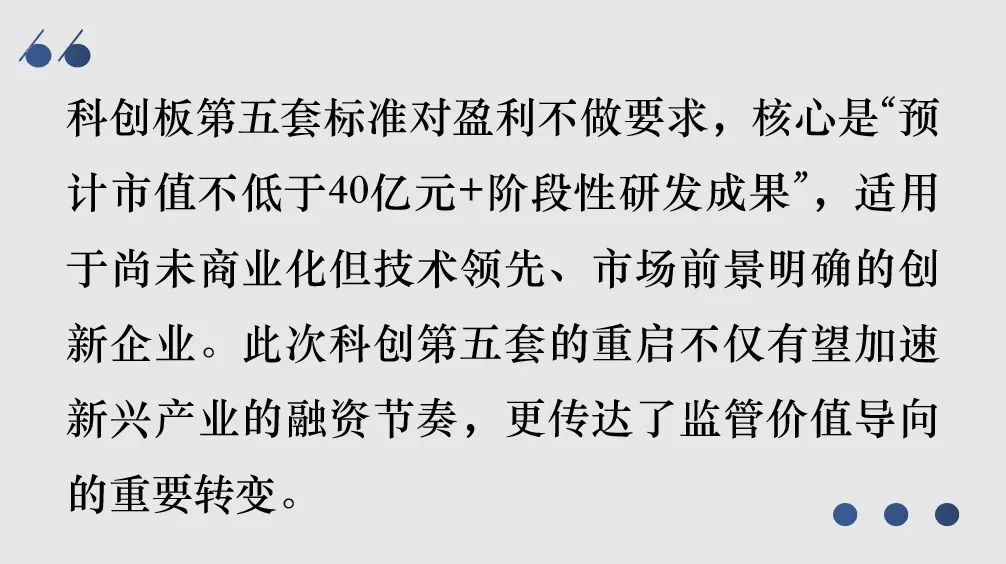
Core Insights - The reactivation of the fifth listing standard on the Sci-Tech Innovation Board (STAR Market) aims to support high-growth technology companies, particularly in the biopharmaceutical sector, by allowing companies without profits to list based on expected market capitalization and R&D achievements [1][19] - The biopharmaceutical industry, especially innovative drug companies, faces longer investment periods and higher uncertainty due to strict regulatory requirements for product approval, making them highly reliant on capital [1][19] - Since the reactivation in June 2025, companies like He Yuan Bio and Bei Xin Life have made significant progress, signaling a positive outlook for other biopharmaceutical firms still in clinical stages [2] Market Performance - The innovative drug sector has seen a remarkable stock performance in 2025, driven by favorable policy changes, relaxed procurement policies, and the growth of commercial health insurance, which enhances market expectations for innovative drugs [3] - The 20 companies that successfully listed under the fifth standard have achieved a total market capitalization of 364.12 billion, with an average increase of 79.10% since the beginning of 2025 [3][7] Financial Performance - In 2024, the 20 companies reported a combined revenue exceeding 14.3 billion, a year-on-year growth of 45%, with 16 companies generating over 1 billion in revenue [12][16] - The total R&D expenses for these companies accounted for 67% of their total revenue, indicating a high dependency on external financing for continued innovation [16][18] R&D and Innovation - The 20 companies listed under the fifth standard have collectively developed 45 drug varieties, with 22 classified as first-class new drugs or innovative biological products, covering various advanced therapeutic areas [8][10] - The number of candidate products in the R&D pipeline for these companies has exceeded 200, showcasing their commitment to innovation and market expansion [8] Regulatory Environment - The reactivation of the fifth standard reflects a shift in regulatory focus towards recognizing the inherent risks and long timelines associated with technology innovation, moving away from traditional financial metrics [19][20] - The introduction of a "Sci-Tech Growth Tier" aims to enhance information disclosure and regulatory oversight for companies listed under the fifth standard, ensuring a balance between support and supervision [22]


中国创新药出海低至“一折”!
证券时报· 2025-07-22 08:19
Core Viewpoint - The article discusses the challenges and opportunities within China's innovative pharmaceutical industry, highlighting the significant foreign licensing deals while also addressing the undervaluation and pricing issues faced by domestic companies [2][3][4]. Group 1: Achievements in the Innovative Pharmaceutical Industry - In 2023, China's innovative pharmaceutical sector has seen remarkable achievements, with foreign licensing deals exceeding $1 billion, and the total licensing amount in the first half of the year nearing last year's total [2]. - A notable transaction involved BioNTech acquiring rights to the cancer drug BNT327 from Chinese company Pumice, with a total deal value of $11.1 billion, showcasing the high value of Chinese-developed drugs [3][4]. Group 2: Concerns Over Valuation and Pricing - Despite the successes, there are concerns regarding whether the true value of these drugs is being realized, as many Chinese companies are perceived to be "selling low" their innovations to international giants [3][4]. - The pricing disparity between domestic and international markets is significant, with some innovative drugs priced 10 to 30 times higher in the U.S. compared to China, indicating a systemic undervaluation of Chinese innovations [9][10]. Group 3: Challenges in Market Access - The process for new drugs to enter hospitals in China is lengthy and complex, often taking up to 10 years to achieve significant sales, which hampers the commercial returns for innovative drug companies [12][13]. - Regulatory barriers and a traditional focus on inpatient care over outpatient services limit the market penetration of innovative drugs, further constraining their profitability [13]. Group 4: Potential Solutions and Policy Support - Recent policy measures, including the establishment of a commercial health insurance directory for innovative drugs, aim to enhance the domestic market and provide new payment channels for high-value drugs [16][17]. - The government is also focusing on improving the global competitiveness of Chinese innovative drugs by facilitating their entry into international markets and supporting investment in these sectors [17][18].

中国创新药出海低至“一折”“青苗贱卖”何以愈演愈盛?
Zheng Quan Shi Bao· 2025-07-21 18:55
Core Insights - The Chinese innovative pharmaceutical industry has achieved significant milestones in 2023, with over $1 billion in outbound licensing deals, nearing last year's total in just the first half of the year [1] - However, concerns arise regarding whether the true value of these innovations is being realized and who holds the pricing power [1][3] - Many Chinese companies are reportedly undervaluing their innovations, leading to a situation where they sell their drug pipelines at low prices before they reach the market [2][3] Group 1: Licensing Deals and Financial Returns - BioNTech's acquisition of BNT327 from Chinese company Pumice highlights the disparity in returns, with BioNTech set to receive over $96 billion in future payments after a $15 billion upfront payment, while Pumice only received $0.55 billion initially [2] - Similar situations are observed with other companies, such as Hengrui Medicine, which licensed SHR-1905 to Aiolos Bio, only for Aiolos to be acquired by GSK shortly after, indicating a trend of undervaluation in the Chinese market [2][3] Group 2: Pricing Disparities - There is a significant price gap between innovative drugs in China and those in the U.S., with examples showing that Chinese prices can be 14 to 33 times lower than U.S. prices for similar drugs [5][6] - The Chinese market is described as a "price sink," with innovative drugs priced approximately 39% lower than the median international reference prices, resulting in a mere 3% share of the global pharmaceutical market [5][6] Group 3: Market Access Challenges - The process for new drugs to enter hospitals in China is lengthy and complex, often taking up to 10 years to achieve significant sales, which contrasts sharply with the U.S. market where new drugs can generate substantial revenue within months [7][8] - High entry barriers and low coverage rates for innovative drugs in hospitals hinder their market penetration and profitability, further discouraging innovation [8] Group 4: Policy Responses and Future Outlook - Recent policy measures, including the establishment of a "commercial health insurance innovative drug directory," aim to enhance the market for innovative drugs and provide new payment channels [10][11] - The government is also focusing on improving the global competitiveness of Chinese innovative drugs by facilitating access to international markets and supporting commercial insurance investments [11]
中国创新药出海狂飙:450亿美元交易撞上“系统能力”大考
2 1 Shi Ji Jing Ji Bao Dao· 2025-07-21 10:11
Core Insights - The total transaction value of Chinese innovative drugs going abroad has exceeded $45 billion in the first five months of 2025, nearly matching the total for the entire year of 2024, indicating strong confidence from international pharmaceutical giants in China's original drug capabilities [1] - Despite the impressive figures, there are significant challenges, with a 40% termination rate in license-out transactions, highlighting systemic risks in clinical trial design and commercial cooperation [1] - The Chinese pharmaceutical industry is at a historical turning point, facing increasing international regulatory pressures and a shift from "single-point breakthroughs" to comprehensive capability assessments [1][5] Industry Status - Chinese new drug research capabilities have reached a world-class level, with 1,775 First-in-Class (FIC) drugs, accounting for 19% of the global total, narrowing the gap with the U.S. [3] - The number of Chinese research presentations at the ASCO conference has increased, with 73 reports in 2025, including 11 breakthrough studies, representing 20% of the total [3] - However, challenges remain, including a significant degree of homogeneity in drug research and a mismatch between industry development and market potential [1][3] Clinical Trials and Research - In the oncology sector, clinical trials accounted for 41% of all trials, with a notable increase in trials for rare cancers, which made up 74% of new trials in 2024, reflecting a 3% growth from 2023 [4] - The proportion of clinical trials conducted by Chinese companies has risen to 39%, up from 24% five years ago, indicating a growing role in global new product development [4] - Despite the growth, there are still issues with the internationalization of regulatory systems, leading to insufficient responses from Chinese teams to complex inquiries from the FDA [5] Innovation and Development Strategies - Original innovation remains the core competitiveness for biopharmaceutical companies, necessitating a focus on clinical needs and clear targets for therapeutic breakthroughs [6] - The establishment of a three-dimensional innovation ecosystem is essential for domestic innovative drug companies, requiring collaboration across research, industry, and regulation [6][9] - The transition from "license-out" to "co-development" models necessitates that Chinese pharmaceutical companies develop comprehensive capabilities across the entire value chain [9] Global Market Expansion - The Chinese biopharmaceutical industry is experiencing explosive growth, with a significant portion of innovative drug pipelines originating from China [7] - Companies must navigate varying regulatory requirements across different countries, making compliance a critical factor for successful international market entry [7] - Initiatives like Cytiva's "Sail Plan" aim to support Chinese biopharmaceutical companies in global market strategies and regulatory compliance [8] Conclusion - The journey of Chinese innovative drugs in the global market is marked by impressive growth and significant challenges, with a need for systemic improvements in research, regulatory compliance, and market strategies to achieve global recognition and therapeutic value [9]
前瞻布局,融入全球药物创新网络
Huan Qiu Wang Zi Xun· 2025-07-20 02:10
Core Insights - The article highlights the strategic advancements of Shijiazhuang Pharmaceutical Group, particularly its focus on innovation and international collaboration in drug development [1][4][10] Group 1: Innovation and Research - Shijiazhuang Pharmaceutical has achieved significant milestones in innovation, including 11 licensed-out projects and a strategic partnership with AstraZeneca worth $5.33 billion [3][4] - The company has established eight major research and development platforms, with over 200 innovative drug projects currently in progress [8] - The R&D investment is projected to reach 5.7 billion yuan in 2024, maintaining a high growth rate over the past decade [8] Group 2: Globalization and Collaboration - The company emphasizes the importance of international collaboration, viewing licensing as a means to leverage mature markets and advanced research systems [4][10] - Shijiazhuang Pharmaceutical has set up five global R&D centers and has received over 30 overseas clinical approvals, including 16 FDA fast-track or orphan drug designations [4][8] Group 3: Local Ecosystem Support - The local government of Shijiazhuang has actively supported the pharmaceutical industry, providing 290 million yuan in rewards since 2021, with 79.25 million yuan allocated to Shijiazhuang Pharmaceutical [9][10] - The city aims to create a conducive environment for the pharmaceutical sector, with plans to double the company's revenue within five years [9][10]
7月18日主题复盘 | 稀土再度强势,锂电板块也有表现,创新药持续活跃
Xuan Gu Bao· 2025-07-18 08:52
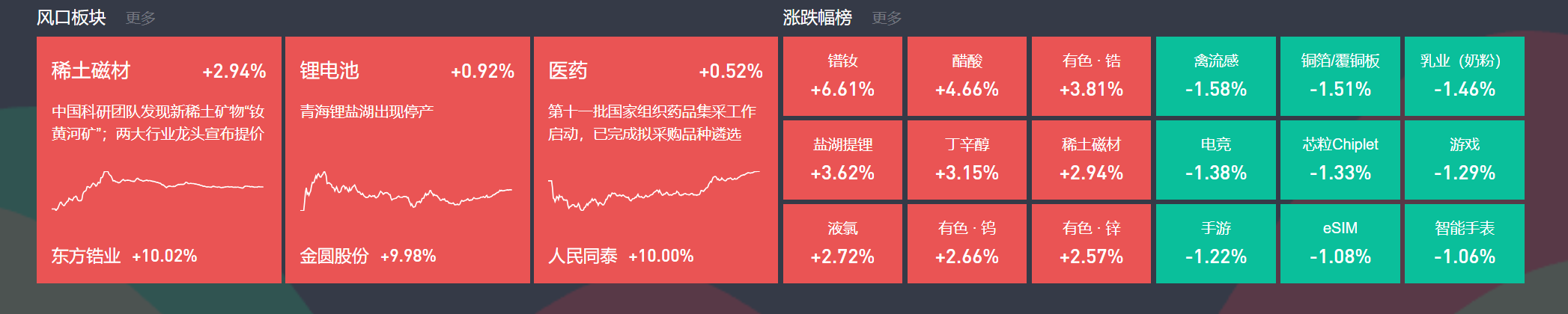
Market Overview - The Shanghai Composite Index experienced strong fluctuations throughout the day, reaching a new closing high for the year, while the ChiNext Index saw a pullback after an initial surge [1] - The rare earth permanent magnet sector saw a collective surge, with companies like China Northern Rare Earth and Dongfang Zirconium hitting the daily limit [1][4] - Lithium mining stocks also showed volatility, with Jin Yuan Co. and Shengxin Lithium Energy reaching their daily limits [1] - The innovative drug concept remained active, with Angli Kang hitting the daily limit and Borui Pharmaceutical rising over 10%, both achieving historical highs [1] Key Sectors Rare Earth Materials - The rare earth magnetic materials sector rebounded significantly, with companies such as Dongfang Zirconium and China Northern Rare Earth hitting the daily limit [4] - A new rare earth mineral named "Nd Huanghe Mineral" was discovered in Inner Mongolia, which may impact the supply dynamics in the sector [4] - Analysts believe that the strengthening expectations of supply contraction and the easing of export controls could benefit related rare earth resource companies [5] Lithium Battery - The lithium battery sector performed well, with stocks like Jin Yuan Co. and Guoji General hitting their daily limits [6] - A recent announcement from Cangge Mining regarding the suspension of its lithium resource operations due to violations has raised concerns about compliance in the mining sector [6] - The adjustment of the "China Prohibited Export Technology Directory" includes new regulations on battery materials, which may affect the competitive landscape for domestic companies [8] Pharmaceutical Sector - The pharmaceutical sector continued to be active, with Han Shang Group and Renmin Tongtai achieving consecutive gains, and Angli Kang hitting the daily limit [9][10] - The Hong Kong Stock Connect Innovative Drug Index has seen a cumulative increase of 108.21% over the past year, indicating strong market confidence in the innovative drug sector [9] - Domestic innovative drugs are expected to see increased sales supported by medical insurance negotiations and commercial insurance [10]
国信证券:创新药板块持续改善 CXO行业或迎反转
智通财经网· 2025-07-18 02:05
Group 1 - The adjustment of the medical insurance catalog and commercial health insurance innovative drug catalog has officially started, providing stronger economic support for the development of innovative drugs in China [1] - Domestic and overseas markets for innovative drugs are showing continuous improvement, with promising clinical data presented at academic conferences such as ASCO and ADA [1] - The trend of Chinese innovative drugs going abroad is strengthening as their clinical data and progress become increasingly competitive globally [1] Group 2 - The CXO industry is experiencing a recovery, with prices in preclinical CRO, clinical CRO, and domestic CDMO businesses stabilizing, and new orders steadily recovering [2] - The international CDMO business maintains a reasonable pricing system, and the impact of high pandemic baselines has been digested, indicating a potential industry reversal [2] - Chinese companies have comprehensive advantages in the small molecule CRDMO sector, and their industry position is unlikely to be shaken in the medium term [2][3] Group 3 - The overall market share of Chinese companies in the large molecule CRDMO sector remains low, facing strong competition from international players [3] - The rapid development of new molecular businesses such as peptides, oligonucleotides, and CGT is expected to further open up growth opportunities in the CXO sector [3]

医药生物行业2025年7月投资策略:继续推荐关注创新药及创新产业链
Guoxin Securities· 2025-07-17 14:50
Core Insights - The report continues to recommend focusing on innovative drugs and the innovative industry chain, highlighting improvements in both domestic and overseas markets for July 2025 [5][4] - The investment strategy suggests a sustained focus on innovative drugs and related industries, with a specific portfolio of recommended stocks for A-shares and H-shares [5][6] Industry Overview - The pharmaceutical manufacturing industry reported a cumulative revenue of 994.79 billion yuan with a year-on-year decline of 1.4% from January to May 2025, while total profits decreased by 4.7% to 135.32 billion yuan [9][8] - The overall industrial added value for the pharmaceutical manufacturing sector grew by 0.9% during the same period, indicating a modest recovery [9][8] Market Performance - In June 2025, the pharmaceutical sector experienced a 0.70% increase, underperforming the CSI 300 index by 1.80% [10][11] - The medical service sector showed significant growth, with a 4.77% increase, while traditional Chinese medicine and medical commercial sectors faced declines of 1.86% and 1.23%, respectively [13][14] Investment Recommendations - The report emphasizes the potential for domestic innovative drugs to achieve sales growth supported by medical insurance negotiations and commercial health insurance [5][4] - Recommended companies with high-quality innovation capabilities include Kelun-Biotech, CanSino Biologics, and Innovent Biologics, among others [5][4] Valuation Insights - The overall valuation level of the pharmaceutical sector is currently at a PE (TTM) of 46.97, which is at the 73.1% historical percentile over the past five years [20][19] - The report indicates that the pharmaceutical sector's valuation has fully adjusted, with premium rates relative to the CSI 300 and the entire A-share market being at their five-year averages [20][19] Recent Approvals and Applications - In June 2025, four innovative drugs or biosimilars were approved for market entry, including three domestic products and one imported product [22][23] - The report tracks NDA and IND applications for innovative drugs, highlighting several key products and their respective companies [24][25][26]
出海+政策双轮驱动,创新药板块午后领涨,创新药ETF国泰(517110)涨超4%
Sou Hu Cai Jing· 2025-07-17 05:51
Group 1 - The industry is evolving with new transaction models such as NewCo, and there is high interest in the ADC sector, along with opportunities in dual antibodies, multi-antibodies, small nucleic acids, and mRNA technologies [1] - The upcoming commercial insurance innovative drug catalog is expected to be launched within 2025, aiming to include products beyond basic medical insurance, potentially creating a more flexible pricing environment compared to medical insurance negotiations [1] - The innovative drug ETF Guotai (517110) tracks the CSI Hong Kong-Shenzhen Innovation Drug Industry Index, covering quality innovative drug companies across A-shares and Hong Kong Stock Connect, mitigating risks associated with single technology failures [1]
医药板块行情有哪些驱动因素?
Mei Ri Jing Ji Xin Wen· 2025-07-15 01:52
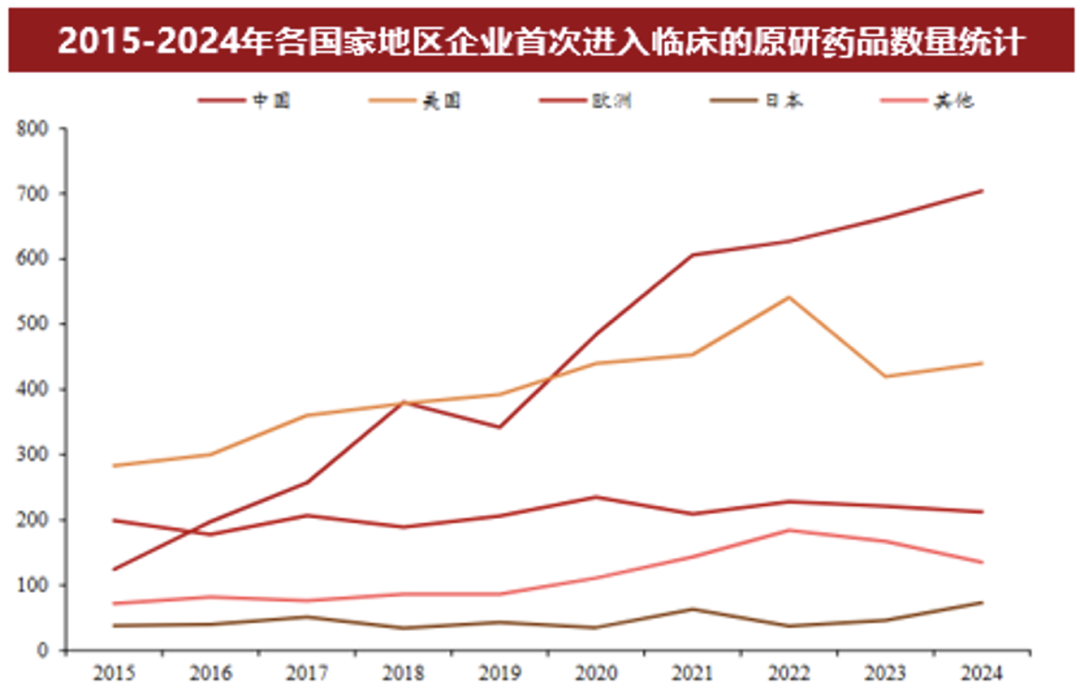
Policy Support - The significant rebound in the pharmaceutical sector is largely driven by favorable policies supporting innovative drug development, including optimization measures for drug review and approval processes [1][2] - The introduction of a new category in the medical insurance directory aims to support innovative drugs, allowing previously high-priced drugs like CAR-T to be included, which will alleviate payment pressures in the pharmaceutical industry [2][3] - The proportion of medical insurance spending on innovative drugs has increased from approximately 0.29% in 2019 to 3.19% in 2023, indicating a shift towards supporting innovative drugs over generic ones [3] Supply Side - Domestic innovative drug companies have shown significant competitive advancements, with the number of original drugs entering clinical trials in China surpassing that of the United States since 2020 [4] - The trend of Chinese pharmaceutical companies engaging in license-out agreements and collaborations has surged, driven by the expiration of patents for original drugs from multinational companies, leading to increased demand for innovative drug acquisitions [6][7] Profitability - The upward trend in the pharmaceutical sector is also attributed to the commercialization of innovative drugs, with some leading companies achieving breakeven or profitability after years of losses [10] Valuation - The pharmaceutical sector is currently at a relatively low valuation, with the weighted PE ratio around 35%, indicating potential for valuation recovery as significant events and policy support emerge [11] Funding - The proportion of public fund holdings in the pharmaceutical sector has decreased significantly from a peak of 18% in 2020 to about 9% in the first quarter of this year, suggesting room for institutional investment growth as catalysts and policies continue to develop [12]