
未来产业

Search documents
国家发改委发声!多措并举促进投资止跌回稳
Zhong Guo Zheng Quan Bao· 2025-12-13 13:51
大力培育壮大新兴产业和未来产业,培育壮大若干新兴支柱产业,深化拓展"人工智能+"行动 大力推动民营经济促进法配套制度建设 会议强调,发展改革系统要准确把握明年经济工作的总体要求,结合职能扎扎实实做好明年发展改革重 点工作。一是编制实施好"十五五"规划。深入领会党中央战略意图,坚持因地制宜,提高规划质量,加 强规划内容审核衔接,把党的二十届四中全会通过的《中共中央关于制定国民经济和社会发展第十五个 五年规划的建议》确定的各项决策部署和工作要求落到实处。同时,加强经济监测预警分析,完善政策 工具箱,加强预期管理,做好今明两年政策衔接、工作衔接,推动政策靠前发力,实现良好开局。 二是多措并举促进投资止跌回稳。充分发挥"两重"建设、新增地方政府专项债券等各类政府投资资金作 用,适当增加中央预算内投资规模,继续发挥新型政策性金融工具作用,不断提高投资效益。面向"十 五五"谋划实施重大工程项目。进一步明确投资规则,扎实做好前期工作,加强投资项目调度。深入实 施促进民间投资发展的若干措施,有效激发民间投资活力。 三是提振消费要出实招出新招。优化实施消费品以旧换新政策,积极扩大服务消费,加快清理消费领域 不合理限制性措施,推 ...
上海150亿元超级LP再出手,投向AI等未来产业
Hua Xia Shi Bao· 2025-12-13 09:57
"一年投资23只子基金,上海未来产业基金的快速布局,旨在迅速搭建覆盖核聚变、空天信息、量子科 技等核心赛道的资本矩阵,以政府资金为杠杆,撬动更大规模的社会资本进入这些高风险、长周期的早 期领域。"星图金融研究院研究员武泽伟对《华夏时报》记者表示,在短期内形成关键领域的资本覆盖 密度,系统性支撑上海打造未来产业创新高地,是其作为政策性"耐心资本",主动构建未来产业投资生 态、抢占技术窗口期的战略体现。 新增5只子基金 "上海未来产业基金"微信公众号近日宣布,上海未来产业基金投资决策委员会近期审议通过拟参与投资 5只子基金,包括上海琏瑆创业投资合伙企业(有限合伙)、上海创新工场创业投资合伙企业(有限合 伙)(暂定名)、苏州砺思星河创业投资合伙企业(有限合伙)、上海元禾璞华未来种子创业投资合伙 企业(有限合伙)、上海思源探索创业投资合伙企业(有限合伙)。 事实上,自上海未来产业基金去年9月启动以来,已投资四批共23只子基金。从基金微信公众号披露的 投资动态可见,其布局节奏清晰且高效。今年4月,首批6只子基金落地,涵盖博联脑科学产业创投、安 本报(chinatimes.net.cn)记者耿倩 上海报道 "在起势之前落 ...


中国新闻网:2025武汉国际工业设计博览会首设低空经济等展区
Zhong Guo Xin Wen Wang· 2025-12-13 05:19
自2017年首次举办以来,该博览会已成功走过七载春秋,成为国内工业设计领域规格最 高、规模最大、影响力最广的专业展会之一。 2025武汉国际工业设计博览会12月12日在武汉国际博览中心开幕。 本届博览会精心设置十大展区,既有彰显地方产业特色的地方展区、汇聚全球智慧的国 际展区,也有聚焦前沿赛道的低空经济、AI赋能、未来产业等专题展区,形成"综合展区 +专题展区"的立体展示格局,其中,多个展区为首设。 编辑:赖俊 ...
学习贯彻党的二十届四中全会精神丨面向基层宣讲 推动全会精神深入人心
Yang Guang Wang· 2025-12-13 02:14
Group 1 - The core message emphasizes the importance of grassroots promotion of the spirit of the Fourth Plenary Session of the 20th Central Committee of the Communist Party of China across various regions including Tianjin, Shanxi, and Hainan [1][2] - Tianjin has organized diverse promotional activities involving experts, model workers, and youth teams to disseminate the session's spirit in various settings such as government agencies, enterprises, and schools [1] - In Shanxi, local organizations have conducted community outreach through unique initiatives like "Residents' Lectures" to explain the session's spirit in relatable terms, focusing on improving people's livelihoods [1] Group 2 - Hainan has leveraged citizen lecture groups to promote the session's spirit, focusing on key topics such as the construction of the Hainan Free Trade Port and the integration of culture and tourism [2] - Financial state-owned enterprises have established grassroots lecture teams composed of party members and cadres, linking the session's spirit with daily financial work to enhance service delivery in emerging sectors like low-altitude economy and artificial intelligence [2]
今天国际(300532.SZ)拟1700万元参投产业基金 布局“20+8产业”
智通财经网· 2025-12-12 12:15
Core Viewpoint - The company intends to establish a private equity fund in collaboration with several professional investment institutions, focusing on strategic emerging industries and future industries in Shenzhen [1] Group 1: Fund Establishment - The company plans to partner with Shenzhen Songhe Growth Private Equity Fund Management Co., Ltd., Hong Kong CUHK (Shenzhen) Asset Management Co., Ltd., Shenzhen Angel Investment Guidance Fund Co., Ltd., and Longgang District Guidance Fund Investment Co., Ltd. to set up the Shenzhen Gangzhong Shen Songhe No. 1 Seed Private Venture Capital Fund Partnership (Limited Partnership) [1] - The total scale of the fund is set at 100 million yuan, with the company committing 17 million yuan, representing 17% of the total subscribed capital of the partnership [1] Group 2: Investment Focus - The fund will invest entirely in Shenzhen's strategic emerging industries and future industries, specifically targeting the "20+8 industries" [1] - The "20 strategic emerging industry clusters" include sectors such as semiconductors and integrated circuits, artificial intelligence, low-altitude economy and aerospace, new energy, intelligent connected vehicles, biomedicine, high-end medical devices, robotics, marine industry, health, high-end equipment and instruments, network and communication, ultra-high-definition display, smart terminals, digital creativity, modern fashion, safety and energy conservation, software and information services, smart sensors, and high-performance materials [1] - The "8 future industry clusters" encompass intelligent robotics, brain science and brain-machine engineering, synthetic biology, quantum information, cutting-edge new materials, optical information, deep earth and deep sea, and cell and gene technology [1]

“十五五”开局,北京如何下好未来产业先手棋
Xin Jing Bao· 2025-12-12 09:51
Group 1 - The core focus of the news is on the strategic development of future industries in China, particularly in the context of the "14th Five-Year Plan" and the emphasis on innovation-driven growth [1][2][3] - Key future industry directions include quantum technology, hydrogen energy, nuclear fusion, biomanufacturing, brain-computer interfaces, embodied intelligence, and 6G mobile communication [1][3] - The 2025 Central Economic Work Conference highlights the importance of fostering new production capacities and integrating technological innovation with industrial innovation [1][3] Group 2 - Beijing aims to establish itself as a global benchmark city for the digital economy and a hub for emerging industries by the end of the "14th Five-Year Plan" [3][4] - The city has developed a "2+N" spatial layout focusing on various future industry sectors, including artificial intelligence and commercial aerospace [4][12] - By 2025, Beijing's artificial intelligence core industry is projected to exceed 450 billion yuan, leading the national AI industry landscape [8][12] Group 3 - The humanoid robot market in China is expected to see significant growth, with sales projected to exceed 10,000 units by 2025, representing a 125% year-on-year increase [19][20] - Beijing is a key player in the humanoid robot sector, with 57 specialized enterprises and a significant share of national financing [20] - The city is also advancing in autonomous driving, with over 400 related enterprises and a comprehensive ecosystem covering all aspects of the industry [23][30]
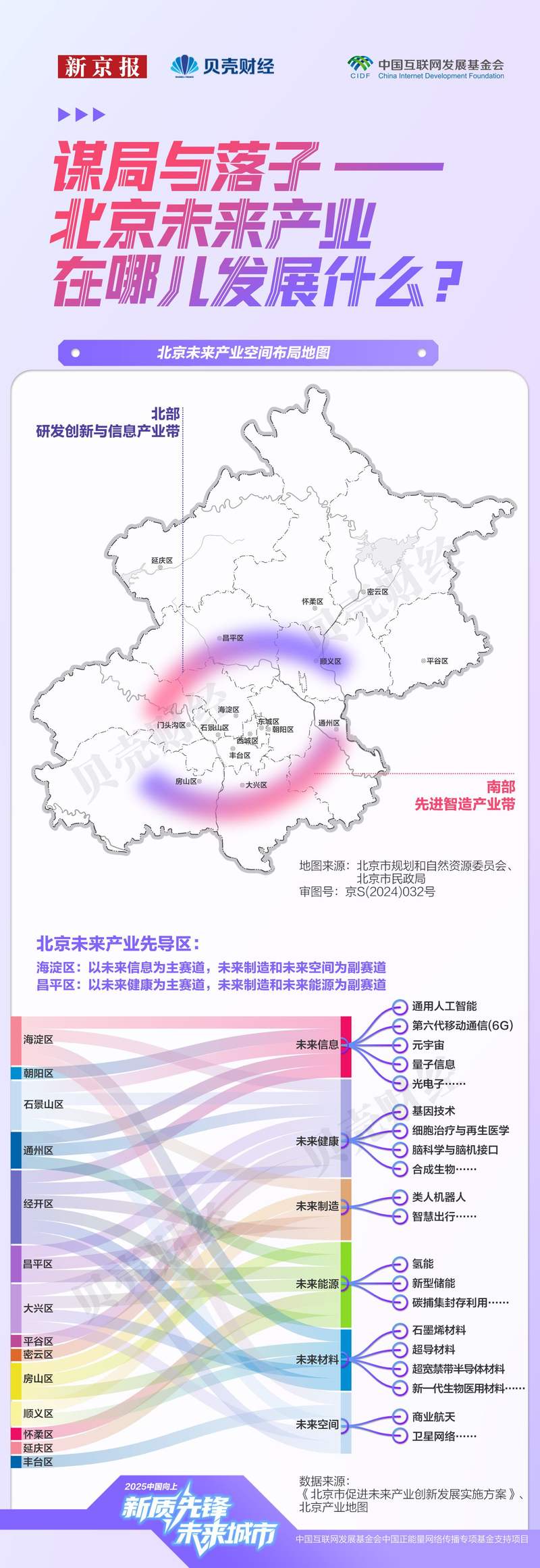
北京未来产业图谱|“十五五”开局,北京如何下好未来产业先手棋
Xin Jing Bao· 2025-12-12 09:49
2026年是"十五五"开局之年,中央明确提出,要加快构建现代化产业体系、因地制宜发展新质生产力, 把发展未来产业作为抢占全球科技和产业竞争制高点的关键抓手。 在"十五五"规划建议中,量子科技、氢能、核聚变能、生物制造、脑机接口、具身智能、第六代移动通 信等被前瞻布局为未来产业重点方向,并提出探索多元技术路线、典型应用场景、可行商业模式和市场 监管规则,推动其成长为新的经济增长点。 12月11日发布的2025年中央经济工作会议文件进一步强调,要坚持创新驱动,加紧培育壮大新动能,强 化企业创新主体地位,实施新一轮重点产业链高质量发展行动,深化"人工智能+"行动。会议强调,要 因地制宜发展新质生产力,推动科技创新与产业创新深度融合。 在全球科技革命与产业变革进入关键窗口期的当下,未来产业不再只是技术想象,而正成为驱动经济增 长、塑造城市竞争力、重构产业格局的核心引擎。 双区引领 多极支撑 北京未来产业全景布局 在高质量发展成为中国经济主线的当下,未来产业正加速崛起为新质生产力的重要代表,也成为全球科 技竞争的高地。 中央经济工作会议提出,要建设北京(京津冀)、上海(长三角)、粤港澳大湾区国际科技创新中心。 北京市经 ...
巩固壮大实体经济根基|为推进强国建设提供坚实物质支撑
Zhong Guo Jing Ji Wang· 2025-12-12 07:31
Core Viewpoint - The modernization of the industrial system is the material and technical foundation of Chinese-style modernization, emphasizing the importance of strengthening the real economy and optimizing traditional industries while fostering emerging and future industries [1][2]. Group 1: Traditional Industries - Traditional industries account for approximately 80% of the value added in manufacturing, highlighting their foundational role in the industrial system [2]. - The "14th Five-Year Plan" emphasizes the need to optimize and upgrade traditional industries, which will support the development of new and future industries by providing diverse application scenarios and market space [2][3]. - Significant advancements have been made in traditional manufacturing, with over 230 exemplary smart factories and 1,260 5G factories established since the "14th Five-Year Plan" began, and the comprehensive energy consumption of products like steel and cement reaching world-leading levels [2]. Group 2: Emerging and Future Industries - The National Development and Reform Commission estimates that approximately 10 trillion yuan of market space will be added in the next five years, indicating strong growth potential for traditional industries [3]. - Emerging industries, such as new energy vehicles and biomanufacturing, have shown remarkable growth, with the production scale of the biomanufacturing industry nearing 1 trillion yuan [5]. - The "14th Five-Year Plan" aims to cultivate and strengthen emerging and future industries, which are crucial for maintaining economic stability and fostering new productive forces [6][7]. Group 3: Service Industry - The service industry is a vital component of the national economy, with its value added increasing from 24.5 trillion yuan in 2012 to 76.6 trillion yuan in 2024, contributing 60.7% to national economic growth [8][9]. - Despite significant growth, challenges remain in the service sector, particularly in specialized and high-end services, which require further development to meet diverse consumer needs [9][10]. - The focus on high-quality and efficient development in the service industry is essential for building a modern industrial system and meeting the evolving expectations of the population [10]. Group 4: Infrastructure Development - The modernization of infrastructure is crucial for economic and social development, with significant advancements made in transportation, energy, and communication systems since the "14th Five-Year Plan" [11][12]. - The comprehensive transportation network has exceeded 6 million kilometers, and the modern information communication system is the largest globally, facilitating efficient resource allocation [11]. - Future infrastructure development must address existing shortcomings, such as regional coordination and intelligent integration, to support high-quality industrial development [12][13].
安徽省属企业在共建“一带一路”国家投资超500亿元
Zhong Guo Xin Wen Wang· 2025-12-12 06:32
中新网合肥12月11日电 (付敏)安徽省人民政府国有资产监督管理委员会主任王宏11日在合肥介绍说,截 至目前,该省省属企业在共建"一带一路"国家投资超500亿元(人民币,下同)。 "十四五"期间,安徽把科技创新摆在更加突出位置,推动省属国有资本加大对量子信息、聚变能源、深 空探测三大科创引领高地等重大项目投资支持力度。其间,安徽省属企业累计研发经费投入超千亿元; 建成国家级创新平台36个,其中全国重点实验室2个。 在优化布局结构方面,"十四五"以来,安徽实施布局新兴产业行动计划,省属企业新兴产业领域完成投 资超2000亿元,带动集成电路、新能源汽车、新型显示等产业在该省集聚。 同时,发挥省级国有资本股权投资基金功能作用,加快布局生物医药、人工智能、量子信息等新兴产业 和未来产业。(完) 王宏说,"十四五"以来,安徽省国资监管企业资产总额、营业总收入年均增长21.7%、11.2%。其中, 省属企业资产总额跃升至5万亿元台阶,营业总收入跨过万亿元大关。 在建设开放大通道方面,安徽与沪苏浙合作推进长三角世界级港口群、机场群建设。 当日,安徽省政府新闻办举行新闻发布会,介绍"十四五"以来该省国资国企发展情况。 ...
安徽在共建“一带一路”国家投资超500亿元
Sou Hu Cai Jing· 2025-12-11 14:19
中新网合肥12月11日电 (付敏)安徽省人民政府国有资产监督管理委员会主任王宏11日在合肥介绍说,截 至目前,该省在共建"一带一路"国家投资超500亿元(人民币,下同)。 "十四五"期间,安徽把科技创新摆在更加突出位置,推动省属国有资本加大对量子信息、聚变能源、深 空探测三大科创引领高地等重大项目投资支持力度。其间,安徽省属企业累计研发经费投入超千亿元; 建成国家级创新平台36个,其中全国重点实验室2个。 在优化布局结构方面,"十四五"以来,安徽实施布局新兴产业行动计划,省属企业新兴产业领域完成投 资超2000亿元,带动集成电路、新能源汽车、新型显示等产业在该省集聚。 同时,发挥省级国有资本股权投资基金功能作用,加快布局生物医药、人工智能、量子信息等新兴产业 和未来产业。(完) 当日,安徽省政府新闻办举行新闻发布会,介绍"十四五"以来该省国资国企发展情况。 王宏说,"十四五"以来,安徽省国资监管企业资产总额、营业总收入年均增长21.7%、11.2%。其中, 省属企业资产总额跃升至5万亿元台阶,营业总收入跨过万亿元大关。 在建设开放大通道方面,安徽与沪苏浙合作推进长三角世界级港口群、机场群建设。 ...