
绿色发展

Search documents
“手上的订单量又增了”
Ren Min Ri Bao· 2026-01-08 08:12
Core Viewpoint - The export of wind power equipment from Xinjiang to Central Asian countries is increasing, driven by advanced technology and infrastructure experience from Chinese companies, which are also expanding their international market presence [1][2]. Group 1: Company Developments - Xinjiang Feichi International Freight Forwarding Co., Ltd. has successfully completed the export of over 230 vehicles of wind power equipment, marking a significant achievement in their operations [1]. - The company has been involved in the export of large wind power equipment since 2016 and currently operates over 100 specialized vehicles for this purpose [1]. - New orders for wind power equipment exports are expected to exceed last year's figures, indicating a growing demand in the market [1]. Group 2: Industry Trends - The export destinations for wind power equipment have expanded to include Uzbekistan and Azerbaijan, in addition to Kazakhstan [1]. - The customs authorities have established dedicated channels for oversized equipment, improving the efficiency of the customs clearance process [1]. - According to statistics from the Horgos Customs, a total of 948 vehicles of wind power equipment were exported through the Horgos port in the first 11 months of 2025, highlighting the port's significance in the wind power equipment export sector [2].
人民财评:让人民群众在绿色发展中享有高品质生活
Sou Hu Cai Jing· 2026-01-08 04:38
Group 1 - The core idea emphasizes the need for multi-faceted collaboration among government, market, and consumers to promote green consumption, integrating it into every aspect of daily life [1] - The Ministry of Commerce and nine other departments have jointly issued a notice with 20 specific measures across seven areas to encourage green consumption, aiming to foster a green and low-carbon lifestyle [1] - The initiative seeks to enhance policy guidance, market mechanisms, and public participation to drive high-quality development and accelerate the transition to green consumption models [1] Group 2 - Policy incentives are crucial for cultivating green consumption, with measures such as subsidies for replacing old products and pilot programs for green consumption scenarios translating into tangible benefits for the public [2] - The government aims to replace 18.3 million vehicles through trade-in programs from 2024 to 2025, with nearly 60% being new energy vehicles, and 192 million home appliances, with over 90% being of the highest energy efficiency [2] - Local initiatives, such as green consumption subsidies and food banks, are effectively meeting consumer demand for high-quality products while promoting green consumption [2] Group 3 - Enterprises play a vital role in driving green consumption by integrating green principles throughout their operations, with e-commerce platforms forming green cooperation alliances and retailers establishing dedicated green product sections [3] - The introduction of a quantifiable green consumption points system encourages consumer participation and aligns commercial and social values, with a reported 26.31% increase in the use of environmentally friendly alternatives in the business sector by mid-2025 [3] - The development of "zero-carbon factories" and products made from recyclable materials reflects the growing commitment of businesses to sustainability [3] Group 4 - Green consumption is becoming a societal trend, with individual actions like using reusable bags and choosing energy-efficient products contributing to a collective movement towards sustainability [4] - The Wuhan carbon benefit platform exemplifies innovative approaches to engage consumers, allowing them to track their low-carbon behaviors and earn rewards, with over 200 million users and 24 million recorded reduction actions [4] - The widespread promotion of green consumption concepts through various campaigns is fostering a deeper societal commitment to sustainable practices, driving the growth of the green consumption market [4]
思想指路 向新前行
Ren Min Ri Bao· 2026-01-08 02:15
1月5日,本报头版头条刊发通讯《老杨小杨思想"转弯"记》。近日,围绕学思践悟习近平新时代中国特 色社会主义思想,记者和楚源集团党委书记、董事长杨鹏进行了采访对话。 "思想开窍,困难让道" 记者:2016年楚源接受环保"天价罚单"停产整改。十年后再回首,怎么看这个"大跟头"? 杨鹏:如果算小账,2700多万元罚单,近10个月停产,损失不小。可从长远看,无视生态安全,一味大 干快上,企业早晚会垮掉。 今天回头看,感谢党和政府。我们犯了错,省市党委政府一起帮我们改错,当是"自己人",有关部门该 监管的一丝不苟,该服务的一样不少。 这也让我重新思考,时代究竟需要民营经济做什么?我父亲那一代主要解决的是"有没有",看重企业数 量、规模。今天,高质量发展追求"好不好",高质量、可持续不是口号,而是决定着企业的生死。 记者:你坦荡看待当年的处罚,让我们想起了2022年第一次见面,可不像今天这么从容。 杨鹏:那时候思想疙瘩还没完全解开。2022年楚源销售收入跌入低谷,我也想过转到新赛道。 2023年,全国生态环境保护大会召开,习近平总书记在会上说,"对于传统行业,不能简单当成'低端产 业'一退了之、一关了之,而是要推动工艺、 ...
竞争力重塑 传统产业转型集中发力
Jing Ji Ri Bao· 2026-01-08 01:01
Group 1: Core Insights - Traditional industries are the backbone of China's manufacturing sector, accounting for approximately 80% of key indicators such as value added and employment [1] - The transformation of traditional industries towards high-end, intelligent, and green development is essential for building a modern industrial system [1] Group 2: Cost Reduction and Efficiency Improvement - In Zhengzhou, the use of intelligent manufacturing systems has led to a 10% to 15% increase in production efficiency and a 5% to 10% reduction in delivery cycles, with overall costs decreasing by 3% to 5% [2] - Traditional industries are shifting from relying on scale and experience to a data-driven approach that integrates hardware and software ecosystems [2] Group 3: Smart Factory Development - Over 35,000 basic-level and more than 7,000 advanced-level smart factories have been established since the start of the 14th Five-Year Plan, significantly enhancing production efficiency and reducing costs [3] - Continuous investment in new technology and the application of AI and smart technologies are crucial for traditional industries to enhance their high-end and intelligent capabilities [3] Group 4: Green Development Opportunities - The "dual carbon" goals are driving traditional industries to transition from resource dependency to technology value addition, creating new growth opportunities through smart and green technologies [4] - By 2024, the utilization of recycled resources such as waste steel and waste copper is expected to exceed 400 million tons, highlighting the push for industrial decarbonization and green growth [4] Group 5: Energy Transition and Circular Economy - Traditional energy companies are encouraged to explore clean energy development, while steel companies can utilize recycled materials to reduce costs and emissions [5] - The development of carbon trading markets presents opportunities for traditional industries to profit from energy-saving and emission-reduction efforts [5] Group 6: Consumer Market Dynamics - The expanding consumer market is providing new opportunities for traditional industries, emphasizing the need for precise alignment of production with consumer preferences [7] - The demand for higher quality and diverse products is driving traditional industries to innovate and enhance product offerings [8] Group 7: Value Enhancement Challenges - The ultimate goal for traditional industries is to address the challenge of value enhancement through technological innovation and brand building [9] - Improving product quality and brand premium capabilities are essential for driving value enhancement in traditional enterprises [9]
新疆纵深推进污染防治攻坚筑牢生态安全屏障
Zhong Guo Huan Jing Bao· 2026-01-08 00:46
Core Viewpoint - The news emphasizes the importance of green development in Xinjiang as part of China's modernization efforts, highlighting the region's commitment to ecological civilization and sustainable development through various initiatives and policies aimed at pollution prevention and environmental protection [2][3][22]. Group 1: Green Transformation and Development Goals - Xinjiang aims to accelerate comprehensive green transformation in economic and social development, with a focus on building a beautiful Xinjiang by 2025 [2][3]. - The region's economic work priorities include promoting carbon reduction, pollution control, and green expansion, with specific targets set for energy system construction and green electricity application [2][20]. Group 2: Pollution Prevention and Environmental Quality Improvement - Xinjiang has made significant progress in pollution prevention, achieving high marks in national assessments and maintaining over 90% satisfaction in ecological environment quality among residents [4][5]. - The air quality in the Tianshan North Slope urban cluster improved, with a 91.0% rate of good air quality days in 2025, and a reduction in heavy pollution days [5]. - Water quality has also improved, with 97.3% of surface water meeting good quality standards, reflecting a 1.4% increase [5]. Group 3: Ecological Protection and Sustainable Practices - The region has implemented comprehensive measures for soil pollution prevention, ensuring 100% safety in the utilization of contaminated farmland [6]. - Xinjiang has established a robust system for solid waste management, with 77 hazardous waste disposal facilities capable of processing 13.99 million tons annually [6][11]. - The development of eco-friendly practices, such as desert aquaculture, is being promoted to address ecological challenges while enhancing economic growth [9]. Group 4: Carbon Market Participation and Low-Carbon Development - Xinjiang is actively participating in the national carbon market, focusing on key industries and ensuring compliance with carbon emission regulations [20][21]. - The region is enhancing its capacity for carbon data management and quality supervision, aiming to improve the overall effectiveness of carbon market participation [21]. Group 5: Systematic Approach to Ecological Civilization - The implementation of a comprehensive plan for ecological civilization construction includes 25 key tasks across various sectors, aiming for a coordinated approach to environmental management [9][10]. - Continuous monitoring and improvement of ecological conditions are being prioritized, with new monitoring stations established to enhance data collection and analysis [18].


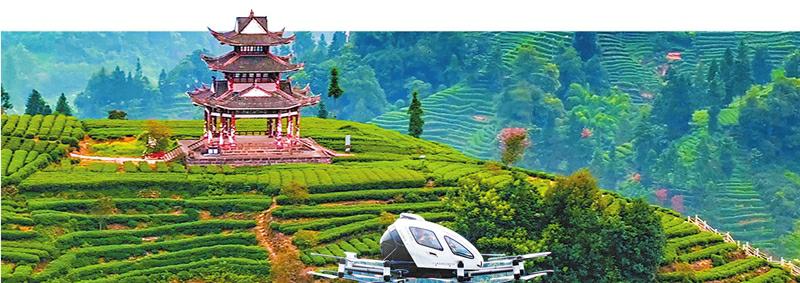
“十五五”期间,雅安围绕“三区两地一枢纽”谋篇布局 绿色发展,雅安如何“先行”
Si Chuan Ri Bao· 2026-01-08 00:24
Core Viewpoint - The article discusses the strategic development plan of Ya'an City, emphasizing its goal to become a leading green development city in the province and a new highland for opening up towards the west of Chengdu and Chongqing. The plan includes a focus on ecological, industrial, and open market development strategies to enhance the city's economic capabilities and quality of life for its residents [9][10]. Group 1: Development Strategy - The development strategy is centered around "ecological city, industrial city, and open city," with a clear path defined as "three zones, two areas, and one hub" [9][10]. - The strategy aims to establish a green industrial innovation development zone, a collaborative economic pilot zone with Tibet, and a significant functional area in the Chengdu metropolitan area [9][10]. Group 2: Economic and Social Goals - The city aims to significantly enhance its economic development capabilities, reform and opening-up levels, green transformation quality, social civilization standards, living quality, and safety development capabilities [10]. - Eight key measures have been proposed, including improving the modern industrial system, strengthening technological innovation, deepening reform and opening up, and enhancing urban-rural integration [10]. Group 3: Ecological and Industrial Focus - The article highlights the importance of ecological priorities in Ya'an's development, with a focus on creating a modern industrial system that supports green innovation and sustainable practices [11][12]. - Specific initiatives include promoting green industrialization and establishing a green industrial system supported by modern agriculture, services, and manufacturing [12][13]. Group 4: Open Market Development - The article emphasizes the role of openness in driving Ya'an's economic growth, with plans to build a comprehensive transportation hub and expand cooperation with surrounding regions [15][16]. - Key initiatives include enhancing transportation infrastructure, expanding international market access for local products, and developing a logistics center to support exports of unique products like caviar and lithium battery materials [15][16].
“压舱石”释放新动能
Jing Ji Ri Bao· 2026-01-08 00:06
Core Insights - Traditional industries serve as the "ballast" of the national economy and are fundamental to the modern industrial system, covering essential areas of daily life and providing substantial employment opportunities [1] - There is a misconception that emphasizes the growth of emerging industries while neglecting the transformation and upgrading of traditional industries, which are essential for the complementary relationship between both sectors [1] - Digital transformation is a crucial engine for enhancing the quality and efficiency of traditional industries, with technologies like AI and industrial internet reshaping production paradigms and improving operational efficiency [1] Group 1: Digital Transformation - Digital transformation is vital for improving quality and efficiency in traditional industries, enabling precise allocation of production factors and significantly enhancing production efficiency and product quality [1] - The application of new technologies such as AI models and intelligent agents will inject new vitality into innovation and production efficiency in traditional industries [1] Group 2: Green Development - Green development opens up vast incremental space for traditional industries, promoting the elimination of outdated capacity and optimizing industrial structures while fostering new growth points like energy conservation and carbon reduction [2] - The green transition aligns with "dual carbon" goals and generates new supplies of green products and technologies to meet market upgrade demands [2] Group 3: Consumer Demand - The expansion of domestic demand provides precise guidance for upgrading traditional industries, compelling companies to enhance product quality and develop personalized new products [2] - Insights from consumer data facilitate traditional industries in achieving precise supply and rapid response, leading to comprehensive upgrades from product innovation to model innovation [2] Group 4: Collaborative Efforts - Releasing new momentum in traditional industries requires a collaborative effort of digital empowerment, green transformation, and consumer leadership, rather than merely extending existing development paths [2] - Embracing technological revolution opportunities and driving innovation are essential for traditional industries to maintain their foundational role and support high-quality economic development [2]
绿色钢城向新向绿
Xin Lang Cai Jing· 2026-01-07 20:19
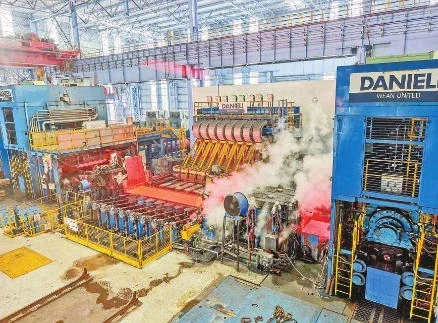
Core Viewpoint - Yunnan Yukun Steel Group is undergoing a transformation towards green development, focusing on energy conservation, emission reduction, and the utilization of industrial waste as resources [2][3]. Group 1: Green Development Initiatives - The company emphasizes green development as a core strategy, implementing mechanisms for energy conservation and emission reduction, optimizing energy structure, and advancing green technologies [2]. - Yukun Steel is transforming industrial waste such as waste gas, residual heat, and slag into usable resources, achieving a comprehensive green transformation in its production processes [2]. Group 2: Technological Advancements - The QSP-DUE hot-rolled strip production line, introduced from Italy, is the world's first elevated QSP continuous casting and rolling line, capable of producing ultra-thin and thick steel products ranging from 0.8 to 25.4 millimeters [3]. - The integration of information technology and automation in production processes allows for energy consumption and quality control, leading to cost reduction and efficiency improvement [3]. Group 3: Economic Impact and Future Goals - The green steel industry is becoming a pillar of Yuxi's industrial economy, with a significant investment of 23.7 billion yuan in a capacity replacement and upgrade project expected to be completed by November 2025 [3]. - Yuxi City aims to implement a "Green Manufacturing Industry Doubling Action," targeting an industrial output value of 115.2 billion yuan and an added value of 12.8 billion yuan for the green steel industry during the 14th Five-Year Plan period [4].
生态守护者的绿色画卷
Xin Lang Cai Jing· 2026-01-07 20:19
转自:贵州日报 八步沙是甘肃省武威市古浪县最大的风沙口,身为林场党支部书记的郭万刚告诉总书记,林场三代人累 计完成治沙造林20多万亩。总书记殷切嘱托:"要继续发扬'六老汉'的当代愚公精神,弘扬他们困难面 前不低头、敢把沙漠变绿洲的进取精神,再接再厉,再立新功,久久为功,让绿色的长城坚不可摧。" "总书记的话让我们更加坚定,要立下愚公志,一锹一锹挖、一代一代干!"郭万刚说。 牢记总书记嘱托,"郭万刚"们治沙的脚步从未停歇。在八步沙治理已大见成效的基础上,多年来,郭万 刚带队不断向古浪县北部沙区挺进。2019年底,黑岗沙、大槽沙、漠迷沙三大风沙口被全部锁住;2023 年再向北,麻黄塘15.75万亩沙化土地绿了;2024年,古浪县239万亩沙化土地全部完成初步治理,他们 又把草方格扎到了张掖、金昌和白银。 "为子孙后代留下天蓝、地绿、水清的美丽家园。" 戈壁荒漠、江河湖泊、高山密林……在祖国辽阔的土地上,生态守护者以脚步丈量青山绿水,用初心守 护万物共生,深入践行习近平总书记的殷殷嘱托,用自己的力量让家园变得越来越美。 沙里的"绿色长城" 凌晨6点的八步沙,天光未亮,河西走廊的风,刮得脸生疼。 70多岁的郭万刚穿着 ...
鲁抗医药荣获第七届济宁市市长质量奖
Qi Lu Wan Bao· 2026-01-07 15:11
Group 1 - The seventh Jining City Mayor Quality Award was awarded to Shandong Lukang Pharmaceutical Co., Ltd. for its outstanding quality management, technological innovation, and industry leadership [1] - The Jining High-tech Zone Market Supervision Administration emphasized the importance of cultivating quality enterprises and provided targeted support for the award application process, including one-on-one guidance and assistance in preparing application materials [1][2] - The award is a recognition of Lukang Pharmaceutical's quality management efforts and reflects the successful implementation of the "Quality Strong Zone" initiative by the local market supervision authority [2] Group 2 - Shandong Lukang Pharmaceutical, as a leading enterprise in the health industry of the high-tech zone, adheres to a "quality first" development philosophy and has developed a "three-quality linkage" management model covering the entire process from R&D to production and sales [2] - The company has received multiple honors, including being recognized as a national quality efficiency advanced enterprise and a demonstration enterprise for drug quality integrity [2] - The next steps for the Jining High-tech Zone Market Supervision Administration include deepening quality improvement actions, enhancing support for quality enterprises, and promoting advanced quality management models to help more companies achieve quality development [2]
