智能化

Search documents
代表委员风采简俊:以专业所长为渔民护航
Liao Ning Ri Bao· 2026-01-17 01:12
Core Viewpoint - The article highlights the need for improved precision in weather forecasting for the fishing industry in Dalian, emphasizing the importance of tailored meteorological services to enhance safety and productivity in fishing operations [1][2][3] Group 1: Current Conditions and Challenges - Dalian's geographical location presents complex meteorological conditions affecting fishing operations, with varying wind patterns and sea conditions across different areas [1] - Fishermen have expressed concerns about the inadequacy of traditional weather forecasts, particularly regarding sudden weather changes that can pose risks during fishing activities [2] Group 2: Research and Recommendations - A proposal was made to enhance the precision of weather and sea condition forecasts, advocating for a grid-based, intelligent, and multi-source integrated forecasting system [3] - The suggestion includes the implementation of customized meteorological services for small and medium-sized fishing enterprises, allowing them to receive tailored forecasts that complement public data [3]
立马车业加强自主研发提升智能化水平——用户体验没有上限
Xin Lang Cai Jing· 2026-01-16 23:10
Core Viewpoint - The company, Hebei Limama Vehicle Technology Co., Ltd., is experiencing growth in electric bicycle production and sales, driven by technological advancements and automation in manufacturing processes [1][2]. Group 1: Company Overview - Hebei Limama is located in Langfang City, Hebei Province, and integrates research, manufacturing, and sales of electric bicycles [1]. - From January to November 2025, the company sold over 660,000 units, generating more than 600 million yuan in revenue, reflecting a year-on-year increase of 6.7% [1]. Group 2: Technological Advancements - The company invests over 10 million yuan annually in R&D for new product development and iterations of existing products, holding more than 60 national patents [1]. - The production process is fully automated, with an automation rate exceeding 92%, and includes 17 production lines such as assembly, welding, and storage [1][2]. Group 3: Product Safety and Compliance - Following the introduction of the new national standard for electric bicycles, the company has upgraded its testing capabilities with six new devices to enhance product safety and stability [2]. - The company has addressed safety concerns by upgrading materials, such as converting magnesium and aluminum components to sheet metal, which reduces costs and improves yield rates [2]. Group 4: Product Development and Market Strategy - The company focuses on stylish and youthful product designs, with smart upgrades that include features like traction control and intelligent positioning [3]. - In 2026, the company plans to invest 12 million yuan in developing 16 new models of electric bicycles, 7 electric lightweight motorcycles, and 14 electric leisure tricycles, with the first products expected to launch in March [3].
鲁酒文化大模型建设正式启动
Qi Lu Wan Bao· 2026-01-16 13:24
Group 1 - The "2025 Lu Liquor High-Quality Development Forum and Lu Liquor Classic Inheritance Brand Release" was held on January 15, 2026, in Jinan, marking the official launch of the Lu Liquor Cultural Model, which aims to be the first digital and intelligent cultural model in the liquor industry [1] - The Lu Liquor Cultural Model will systematically promote the protection, excavation, dissemination, and innovative transformation of Lu liquor culture through digital and intelligent means, injecting new momentum into the high-quality development of the core industry [1][2] - The construction of the Lu Liquor Cultural Model includes the establishment of a cultural gene bank, which will consist of five core databases: historical literature, brewing techniques, brand assets, production area ecology, and consumption scenarios, forming a complete "Lu Liquor Cultural Knowledge Brain" [1][2] Group 2 - The model will enable the transformation of static cultural information into a dynamic knowledge system through deep processing and knowledge extraction of vast cultural data, creating a Lu Liquor cultural knowledge graph [2] - The model will enhance cultural content creation by utilizing AIGC capabilities to automatically generate diverse cultural dissemination materials, significantly improving content creation efficiency and richness [2] - The construction of immersive cultural experience scenarios using digital twin and VR/AR technologies will allow users to remotely experience the brewing environment and interactively learn about brand history, greatly expanding the perception and dissemination of Lu liquor culture [2] Group 3 - The model aims to drive value creation and transformation upgrades in the industry by digitizing and modeling core cultural elements such as brewing techniques and flavor systems, providing data-driven decision support for process optimization and new product development [2] - The use of digital humans and intelligent marketing tools will deepen emotional connections with consumers, particularly younger demographics, enhancing brand loyalty and market competitiveness [3] - The establishment of digital archives for non-heritage brewing techniques and VR training systems will ensure the sustainable transmission of traditional skills, while a knowledge-sharing platform will promote collaboration among enterprises, enhancing the overall competitiveness of the Lu liquor industry [3]
2025年新能源拖拉机行业词条报告
Tou Bao Yan Jiu Yuan· 2026-01-16 12:56
Investment Rating - The report rates the new energy tractor industry as a high-growth sector with significant investment potential, projecting a market size increase from 0.25 billion RMB in 2019 to 25.18 billion RMB in 2024, with a compound annual growth rate (CAGR) of 151.82% [4][36]. Core Insights - The new energy tractor industry is characterized by strong policy support, deep integration of intelligence, and extensive connections with related industries. The growth is driven by technological advancements, environmental regulations, and rising rural incomes [4][8][20]. - The market is expected to expand to 93.97 billion RMB by 2029, with a projected CAGR of 31.82% from 2025 to 2029 [36]. Summary by Sections Industry Definition - New energy tractors are defined as tractors that primarily rely on electric or hybrid power systems, replacing traditional diesel engines. They are used in various agricultural applications, including field management and transportation [5]. Industry Characteristics - The industry has strong ties to multiple related sectors, is heavily influenced by macro policies, and is experiencing deep penetration of intelligent technologies [7][8][9]. Development History - The industry began in 1963 with the introduction of the first electric tractor. Significant advancements occurred in the 21st century, particularly with breakthroughs in lithium battery technology [10][14][15]. Industry Chain Analysis - The industry chain consists of upstream components (battery, motor, control systems), midstream manufacturing, and downstream sales and applications. The upstream sector is dominated by Chinese companies, particularly in battery technology [16][21][22]. Market Size and Growth - The market size grew from 0.25 billion RMB in 2019 to 25.18 billion RMB in 2024, with a CAGR of 151.82%. Future growth is expected to be driven by policy support and technological advancements [36][37]. Policy Analysis - Various policies, including subsidies for new energy tractors and environmental regulations, are expected to stimulate market demand and support industry growth [47][48].
IATA《2025航空货运设施未来愿景:以技术与创新重塑全球物流新格局》解读
Sou Hu Cai Jing· 2026-01-16 12:06
Core Insights - The global air cargo industry is at a historic turning point driven by increasing trade volumes and evolving customer demands, particularly in a volatile and uncertain macroeconomic environment [4] - The International Air Transport Association (IATA) emphasizes the need for air cargo facilities to evolve towards safety, security, sustainability, automation, connectivity, and intelligence to meet modern logistics demands [4] Group 1: Current Challenges in Air Cargo - Insufficient infrastructure both inside and outside airports is a major issue, necessitating a systematic restructuring of air cargo facilities to enhance operational efficiency and capacity [5][6] - Labor shortages and sustainability pressures are critical challenges, with approximately 57% of air cargo operators citing workforce shortages as a significant barrier to smooth operations [7][8] - The air cargo sector suffers from a significant "innovation gap," with only 27.5% of cargo declarations being accurate, leading to wasted capacity on flights [9] Group 2: Technological Advancements and Recommendations - IATA has identified six key technology areas that can reshape air cargo operations, including robotics, sustainable operations, digital processes, and wearable devices [10][11] - The report predicts that automated guided vehicles will become mainstream within five years, significantly improving efficiency in cargo transport [10] - The adoption of APIs for real-time data exchange is expected to have a very high operational impact within five years, streamlining various processes [12][13] Group 3: Future Vision and Strategic Directions - The future vision for air cargo facilities involves a comprehensive transformation that integrates operational logic, infrastructure, and talent systems, moving towards interconnected, data-driven, and environmentally sustainable ecosystems [14] - Stakeholders must address challenges such as high initial investments and complex system integration while adopting industry standards like IATA's ONE Record for data sharing [14]


春风动力(603129):首次覆盖报告:四轮春华秋实,两轮风驰电掣
Western Securities· 2026-01-16 11:46
Investment Rating - The report assigns a "Buy" rating to the company, Chuanfeng Power (603129.SH), with a target market value of 49.8 billion yuan based on a PE ratio of 21 times for 2026 [1][7][19]. Core Insights - Chuanfeng Power is positioned as a leading manufacturer of all-terrain vehicles (ATVs) and large-displacement motorcycles in China, with product performance reaching international standards and a competitive price advantage over overseas counterparts. The company is expected to continue capturing market share from foreign manufacturers, while its electric two-wheeler business is anticipated to contribute to ongoing revenue growth [1][19]. - The projected net profit for the company from 2025 to 2027 is estimated at 1.907 billion, 2.371 billion, and 2.805 billion yuan, respectively, with corresponding PE ratios of 21, 17, and 14 times [1][19]. Summary by Sections Company Overview - Chuanfeng Power was established in 1989 and has transitioned from manufacturing core components to producing ATVs, motorcycles, and electric two-wheelers. The company has maintained a focus on self-owned brands and has become a leading power sports enterprise in China, exporting to over 100 countries [20]. All-Terrain Vehicles - The global ATV market has shown a clear trend towards high-end products, with the average selling price of Chuanfeng's ATVs increasing from 33,700 yuan per unit in 2020 to 46,500 yuan in the first half of 2025. The company is expected to benefit from this trend and continue to increase its market share in Europe and North America [2][19]. - The company’s ATV sales are projected to grow significantly, with revenue growth rates of 24%, 17%, and 7% from 2025 to 2027, respectively [15]. Large-Displacement Motorcycles - The domestic penetration rate of large-displacement motorcycles is on the rise, and Chuanfeng Power is well-positioned to benefit from both domestic and international sales opportunities. The potential market for large-displacement motorcycles in China is expected to double in the next 2-3 years [2][19]. Electric Two-Wheelers - The electric two-wheeler segment has seen exponential growth, with sales reaching 250,500 units and revenue of 872 million yuan in the first half of 2025, marking a year-on-year increase of 652.06%. The company plans to expand its store network and product offerings, which is expected to sustain growth in this segment [3][19].

明泰铝业:公司聚焦“高端化+绿色化+智能化”主战略
Zheng Quan Ri Bao Wang· 2026-01-16 11:41
Core Viewpoint - The company focuses on a strategic approach of "high-end, green, and intelligent" development, aiming to establish a closed-loop industrial chain for aluminum recycling and processing [1] Group 1: Strategic Focus - The company aims to build a recycling capacity of over 1 million tons of recycled aluminum, integrating waste aluminum collection, smelting, and deep processing [1] - The company utilizes advanced recycling technology and laser-induced breakdown spectroscopy to expand the range of waste aluminum recovery and achieve high-value utilization, significantly reducing raw material costs [1] Group 2: Technological Advancements - The company is advancing its intelligent transformation and high-end capacity construction by investing in advanced equipment such as air cushion furnaces and roller hearth furnaces [1] - The focus is on high-value sectors such as new energy battery materials and lightweight aluminum for automobiles, leveraging technological premiums and green low-carbon advantages to counteract industry profit pressures [1] Group 3: Financial Performance - The company has achieved a continuous increase in pre-tax profit per ton, indicating successful financial performance [1] - The results of the green transformation are expected to gain additional premiums under the EU carbon border tax policy [1]

9系双旗舰重塑50万级豪华市场,极氪的“破壁”方法论
Jing Ji Guan Cha Wang· 2026-01-16 10:58
Core Insights - The Chinese luxury car market is undergoing significant changes, with traditional luxury brands experiencing a decline in sales while domestic brands like Zeekr are gaining market share [1][2][3] Group 1: Market Dynamics - In 2025, traditional luxury brands saw a decline in imported car sales, with some brands experiencing a drop of over 60% year-on-year due to inventory pressure and slow electrification [2] - Conversely, Chinese high-end brands such as Zeekr, NIO, and Li Auto are steadily increasing their market share in the 300,000 to 500,000 yuan price range [2] - The shift in consumer perception among high-net-worth individuals in China is a key driver of this change, moving from valuing brand history to prioritizing technological advancement and smart experiences [3] Group 2: Product Innovation - The Zeekr 9X is recognized for its technological superiority over traditional luxury SUVs, achieving over 1,000 kilometers of range and exceptional performance through its 900V architecture [4] - The Zeekr 009 has also established itself as a leader in the MPV segment, demonstrating the brand's understanding of luxury beyond vehicle categories [5] Group 3: Global Expansion - Zeekr is transitioning from merely exporting products to a comprehensive global strategy that includes localizing products, channels, and services in various markets [7] - The brand has received international recognition, being praised as a leading global brand from China, indicating a shift from manufacturing to intelligent manufacturing and branding [8] Group 4: Strategic Integration - Zeekr's integration with its parent company Geely has allowed it to focus on long-term product development and user experience without the pressures of short-term profitability [9] - This integration provides Zeekr access to Geely's extensive resources, enhancing its ability to compete in the luxury market [9] Group 5: User Engagement - Zeekr has initiated a "communication transparency revolution," making key information accessible to users and inviting them to supervise service processes [11] - The brand's "mystery experience officer" program engages users in the feedback process, ensuring quality control from the customer's perspective [12] Group 6: Brand Evolution - Zeekr has successfully transitioned from a nascent brand to a significant player in the luxury market, showcasing that Chinese automotive brands can achieve high market scale and brand value [13]
爆款广货现场爆单:广东制造以新价值“行天下”
21世纪经济报道· 2026-01-16 09:18
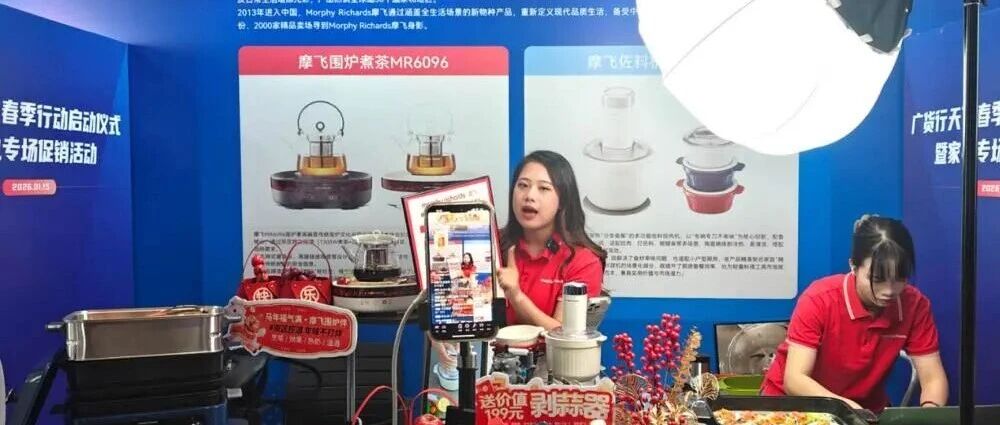
Core Viewpoint - The "Guangdong Goods Going Global" spring initiative aims to enhance consumer spending and expand the influence of Guangdong products, showcasing over 30 home appliance companies and their products through live streaming and on-site sales [1][3]. Group 1: Event Overview - The event took place on January 15 at the Shunde Tanzhou Convention and Exhibition Center, featuring major brands like Midea, Gree, Galanz, and Hisense [1][3]. - Sales during the live broadcast exceeded 100,000 yuan within three hours, indicating a 100% increase compared to regular sales [1][3]. Group 2: Evolution of Guangdong Goods - Guangdong goods have evolved from basic necessities to high-quality products, reflecting a shift in consumer demand from mere survival to quality and innovation [3][4]. - The evolution is characterized by three main trends: smart technology, green competitiveness, and aesthetic manufacturing [3][4]. Group 3: Strategic Changes - The Guangdong industry is transitioning from OEM to brand development, supply chain optimization, and international standards, enhancing the value proposition of Guangdong products [4]. - The initiative emphasizes not just product sales but also the transmission of quality confidence and brand value [4]. Group 4: Sales and Marketing Strategies - The initiative includes government subsidies, corporate discounts, and platform support, with companies like Gree offering up to 15% discounts and other brands providing various promotional offers [6]. - The event's success is attributed to the continuous optimization of Guangdong's industrial structure and product quality, with the home appliance sector alone exceeding 1 trillion yuan in scale [7][8]. Group 5: Regional Manufacturing Strength - Foshan was chosen as the launch site due to its concentration of advantageous manufacturing industries, contributing significantly to global production of microwaves and water heaters [8]. - The region has produced major brands like Midea and Galanz, as well as smaller innovative companies, forming a robust industrial cluster [8]. Group 6: Technological and Aesthetic Innovations - Companies are focusing on smart technology and green solutions, with products like Gree's AI-powered air conditioners and Galanz's energy-efficient appliances leading the way [11][12]. - The integration of technology and aesthetics is transforming products from mere tools to expressions of emotional and aesthetic value, enhancing user experience [13][14]. Group 7: Future Directions - Guangdong plans to continue its promotional efforts with a weekly focus on different product categories, aiming to cover all consumer needs and enhance the global reach of its products [9][14]. - The integration of cutting-edge technology, green practices, and aesthetic design is seen as essential for maintaining competitiveness in the global market [14].




进口夺冠,国产占四席:2025年度X射线衍射仪热度榜单TOP10
仪器信息网· 2026-01-16 09:02
Core Insights - The article reviews the top X-ray diffractometer products of 2025, highlighting those that gained significant user attention due to technological advantages or market strategies [2][4]. Group 1: Product Rankings - The "2025 Annual X-ray Diffractometer Popularity List Top 10" includes seven manufacturers: Rigaku, Bruker, Malvern PANalytical, Haoyuan, Langsheng, Tongda, and Betop Science, reflecting a diverse competitive landscape [2][6]. - The top products listed are: 1. SmartLab X-ray Powder Diffractometer by Rigaku 2. D8 ADVANCE X-ray Diffractometer by Bruker 3. Empyrean X-ray Diffractometer by Malvern PANalytical 4. MiniFlex600 X-ray Powder Diffractometer by Rigaku 5. DX-2700BH Multifunctional X-ray Diffractometer by Haoyuan 6. FRINGE Desktop X-ray Diffractometer by Langsheng 7. D8 DISCOVER High-end X-ray Diffractometer by Bruker 8. AERIS Desktop X-ray Diffractometer by Malvern PANalytical 9. TD-3500 X-ray Diffractometer by Tongda 10. BRAGG110 Desktop X-ray Diffractometer by Betop Science [3][5]. Group 2: Product Features and Innovations - SmartLab features a fully automated multifunctional design with the highest photon flux X-ray source and high-energy resolution 2D detector, enhancing material analysis efficiency and precision [9][10]. - D8 ADVANCE utilizes a creative design for automatic switching between different analysis modes, allowing for quick transitions between applications [13][14]. - Empyrean's "MultiCore" optical system enables various measurements without manual intervention, ensuring reliable data quality across different sample types [16][17]. - MiniFlex600 is compact yet offers high-end testing capabilities, featuring advanced semiconductor detectors for high sensitivity and low detection limits [19][20]. - DX-2700BH is a multifunctional instrument suitable for various materials and applications, demonstrating versatility in fields like mineral and chemical industries [23][24]. - FRINGE is designed for compactness and ease of use, making it suitable for routine material analysis in both industrial and academic settings [26][27]. - D8 DISCOVER integrates advanced software and automation for complex analysis, enhancing user experience and operational efficiency [30][31]. - AERIS emphasizes user-friendly operation with a focus on low ownership costs, catering to specific industry needs [33][34]. - TD-3500 highlights precision and stability with a modular design adaptable to various testing requirements [36][37]. - BRAGG110 focuses on rapid and accurate phase analysis, suitable for daily testing and educational research [40][41]. Group 3: Market Trends and Insights - The article identifies trends towards automation, intelligence, and multifunctionality as key competitive factors in high-end products [42]. - Imported brands like Rigaku, Bruker, and Malvern PANalytical dominate the high-end market due to their technological expertise, while domestic brands are gaining traction in mid-range and specialized markets by offering competitive pricing and convenience [42][45]. - The diversity in product forms, from large floor-standing to compact desktop models, meets the needs of various applications from cutting-edge scientific research to industrial quality control and educational experiments [45].