未来产业

Search documents
老牌制造业之都破解“中年危机”
Jing Ji Ri Bao· 2025-12-09 22:12
Core Insights - The article emphasizes the transformation of traditional manufacturing in Foshan, Guangdong, into a modern industrial system supported by advanced manufacturing and technological innovation [1][2][3]. Group 1: Industrial Transformation - Foshan is undergoing a systematic restructuring of its industrial landscape, focusing on upgrading traditional industries and developing emerging sectors to create a competitive modern industrial system [1][2]. - The city has established 11 trillion-yuan industrial clusters, with leading production in ceramics, refrigerators, aluminum profiles, and soy sauce, exporting to over 100 countries [2][3]. - The "three arrows" strategy aims to transform traditional industries, develop emerging sectors, and cultivate future industries, supported by policy guidance and digital empowerment [3][4]. Group 2: Policy and Infrastructure Development - Foshan's government is enhancing the business environment through reforms and initiatives to support enterprise development, including the "Foshan 'Yishai Ni' Enterprise Service System" [4]. - The city has over 100,000 industrial enterprises, with more than 10,000 above-designated size, and ranks first in Guangdong with 102 companies listed in the "Top 500 Manufacturing Enterprises" [5]. Group 3: Digital and Intelligent Transformation - Foshan is leading in digital transformation with initiatives like "Smart Transformation and Digital Upgrade," focusing on enhancing production efficiency in traditional industries [6][7]. - The city has implemented AI technologies in various sectors, such as furniture and soy sauce production, improving quality control and operational efficiency [7][8]. - Over 78% of industrial enterprises have adopted digital and intelligent transformation, supported by financial incentives and policies [7][8]. Group 4: Emerging Industries and Innovation - Foshan is actively developing emerging industries, particularly in smart equipment and advanced manufacturing clusters, aiming for global competitiveness [9][10]. - The city supports innovation through the establishment of major platforms and technology research centers, focusing on semiconductor and AI technologies [12][15]. - The semiconductor industry park is nearing completion, expected to enhance the local ecosystem and attract related businesses [16]. Group 5: Future Industry Development - Foshan is planning to explore future industries such as green hydrogen, generative AI, and gene therapy, aiming to cultivate high-end talent and innovative enterprises [13][14]. - The city is enhancing its technology innovation system to facilitate the commercialization of research outcomes, bridging the gap between laboratories and market applications [14][15]. - Foshan aims to maintain a high growth rate in patent applications and standard-setting, positioning itself as a leader in future industrial development [16].
巩固壮大实体经济根基|开辟产业发展新领域新赛道
Zhong Guo Jing Ji Wang· 2025-12-09 10:00
Group 1 - The core viewpoint emphasizes the rapid advancement of emerging and future industries, which are becoming key drivers for high-quality economic development in China [1] - Emerging industries such as new energy vehicles, photovoltaic and wind power equipment, and biomanufacturing are showing significant growth, with the "three new" economy's contribution to GDP exceeding 18% in 2024 [1] - Future industries, including quantum technology, hydrogen energy, and brain-machine interfaces, are expected to create substantial market opportunities, potentially equivalent to recreating a high-tech industry in China over the next decade [1] Group 2 - Challenges faced by key industries like mining, metallurgy, and textiles include international trade issues, insufficient domestic demand, and rising production costs [2] - The "14th Five-Year Plan" suggests fostering emerging and future industries as a strategic direction for the next five years, emphasizing the importance of modernizing the industrial system [2] - The plan highlights the need for innovative regulatory approaches and investment mechanisms to support the development of future industries, addressing uncertainties in investment returns and encouraging capital investment [3]
开辟产业发展新领域新赛道
Zhong Guo Jing Ji Wang· 2025-12-09 10:00
制图:彭章霞 近几年,人们的"曾经想象"正变得触手可及。无人机送外卖,美食"从天而降";借助脑机接口技 术,四肢截肢患者用"意念"下象棋;人形机器人站上生产一线,与工人协同工作。一批前沿科技从实验 室走向生产生活,成为推动经济高质量发展的新引擎。 新兴产业、未来产业技术创新速度快、市场潜力空间大、新动能成长活跃,对保持经济稳定增长、 培育发展新质生产力至关重要。"十四五"期间,我国新兴产业和未来产业有了怎样的积累? 新能源汽车产销量连续10年保持全球第一,光伏和风电装备产量位居世界前列,生物制造产业总规 模已接近1万亿元……新兴产业加速"领跑",未来产业加力"生根",为我国经济高质量发展注入源源不 断的新动能。2024年,我国"三新"经济增加值占GDP比重已经超过18%。 放眼长远,新兴产业和未来产业发展前景广阔。在新能源、新材料、航空航天、低空经济等战略性 新兴产业领域,有望催生数个万亿级甚至更大规模的市场;量子科技、生物制造、氢能和核聚变能、脑 机接口、具身智能、第六代移动通信等未来产业蓄势发力,未来十年新增规模相当于再造一个中国高技 术产业。 然而,机遇和挑战如同一枚硬币的两面,总是相伴而生。近年来,在 ...
21社论丨需重视发挥存量政策和增量政策集成效应
2 1 Shi Ji Jing Ji Bao Dao· 2025-12-08 23:12
Core Viewpoint - The Central Political Bureau of the Communist Party of China emphasizes the need for a stable yet progressive economic strategy for 2026, focusing on enhancing quality and efficiency through proactive fiscal and moderately loose monetary policies [1] Group 1: Economic Policy Direction - The economic policy for 2026 will continue the trend of a more proactive fiscal policy and moderately loose monetary policy, consistent with the 2025 policy direction [1] - The fiscal deficit rate is set to increase from 3% in 2024 to a historical high of 4% in 2025, while the central bank implemented a 0.5 percentage point reserve requirement ratio cut and a 0.1 percentage point reduction in the 7-day reverse repurchase rate in May [1] Group 2: Focus on Domestic Demand and Supply Optimization - The meeting highlights the importance of continuously expanding domestic demand and optimizing supply as strategic bases for constructing a new development pattern and responding to international economic challenges [2] - Recent measures to promote private investment include 13 initiatives aimed at stimulating market-driven effective investment growth, alongside a plan to enhance the adaptability of consumer goods supply and demand [2] Group 3: Key Strategies for Economic Growth - The strategy of "optimizing increment and revitalizing stock" is crucial, which involves developing new productive forces and fostering strategic emerging industries while ensuring reasonable investment growth [2] - Revitalizing stock assets, including idle land, vacant properties, and existing infrastructure, is essential for economic stability, necessitating the optimization and upgrading of traditional industries [3] Group 4: Integration of Policies - The integration of stock and increment policies requires addressing the connection between new and old policies, particularly in sectors like automotive and housing, where existing restrictive measures need adjustment [3] - Effective implementation of increment policies relies on the degree of coordination with stock policies, aiming to enhance resource allocation efficiency and drive high-quality economic development [3]
利好!中央政治局会议精神解读
2025-12-08 15:36
利好!中央政治局会议精神解读 20251208 摘要 政策聚焦基本面,消费端关注纺织服饰、轻工制造、家电和农业等板块 的阿尔法机会,供给侧关注有色金属、石油化工等上游资源品及钢铁、 水泥等 PPI 修复逻辑板块,以及机械设备和电力设备等中国制造。 优增量与盘活存量政策旨在推动新旧动能转换,重点发展新质生产力, 战略新兴产业和未来产业是两大方向,尤其关注量子科技、生物制造、 氢能、核聚变、脑机接口及 6G 等六大未来产业。 货币政策预计延续适度宽松,降准降息概率较低,倾向于通过买入回购 或购入国债保持流动性,一季度或配合财政发力降准一次,下半年可能 降息一次。财政政策保持连续性和平稳性,赤字率预计维持在 4%左右, 增加超长期国债和地方政府专项债额度。 扩大内需旨在提升消费和保持投资合理增长,以实现 5%左右的经济增 长目标,通过消费品以旧换新和服务消费专项方案提振消费,并以基建 为抓手稳定固定资产投资。 培育壮大新动能需推动科技创新与先进制造业发展,在中美暂缓期,加 快推进十四五规划中的科技加制造战略,支持科技研发,促进高质量的 新质造业发展。 Q&A 如何解读近期中央政治会议对 A 股市场的影响? 从整体框 ...
2026六大未来产业发展趋势与人工智能八大落地场景洞察
材料汇· 2025-12-08 14:02
Core Insights - The article emphasizes that the AI industry in China is at a critical juncture, with increasing penetration of AI solutions across various sectors, indicating a forthcoming commercial explosion for AI agents [6][10]. Group 1: AI Industry Development - The penetration rate of AI applications across industries is expected to rise from 2021 to 2024, with significant growth in sectors such as internet, telecommunications, government, finance, manufacturing, transportation, services, and education [7]. - By 2025, China's AI products will have competitive user scale and product quantity globally, although revenue and web traffic remain significantly lower, reflecting challenges in commercialization and user willingness to pay [11]. - The strategic development paths of leading AI companies in China are diverging, focusing on technology breakthroughs, ecosystem integration, and market targeting [11]. Group 2: AI Applications - AI in marketing is experiencing rapid growth, with the market expected to reach approximately 442 billion yuan by 2024, driven by the increasing demand for customized features [20]. - In the office sector, AI programming tools are being adopted widely, with a significant percentage of non-engineering staff utilizing AI for tasks such as prototyping and coding [22][25]. - The healthcare AI market is projected to grow from 579 million yuan in 2024 to 8.683 billion yuan by 2030, with hospitals leading in application penetration [23][24]. Group 3: Future Industries - The "14th Five-Year Plan" highlights the importance of future industries, with a focus on high-end manufacturing, information technology, and energy sectors [12][14]. - The development of 6G technology is anticipated to commence commercial use by 2030, marking a significant milestone in communication technology [49][54]. - Innovations in materials such as two-dimensional semiconductors and solid-state batteries are accelerating towards industrialization [55]. Group 4: AI Hardware and Consumer Trends - The competition in AI hardware is shifting towards edge computing, with native AI hardware penetrating multiple fields [26][31]. - The consumer landscape is evolving from resource consumption to value co-creation, with AI playing a pivotal role in enhancing shopping experiences [28][32]. Group 5: Embodied Intelligence - The market for embodied intelligence is expected to grow significantly, with diverse applications moving from experimental phases to real-world deployment [33][34]. - The integration of various forms of embodied intelligence is anticipated to enhance operational capabilities across multiple sectors [39]. Group 6: AI in Manufacturing and Transportation - The industrial AI model market is projected to reach 77.2 billion yuan by 2025, focusing on application and computational power [40]. - The Robotaxi market is expected to grow rapidly, with average fares approaching those of traditional taxis, indicating a shift in profitability dynamics [41][46].

深赛格(000058.SZ):拟购买八六三81%股权
Ge Long Hui A P P· 2025-12-08 13:27
标的主要从事检验检测业务,拥有材料分析、可靠性、物理、化学、日化等实验室,为客户提供表面分 析、性能测试、可靠性和失效分析、环保和化学测试等分析测试服务的能力。主要面向战略性新兴产业 和未来产业,提供系统化、定制化、线上线下多维度的一站式综合解决方案,是集概念验证、中小试研 发、检测认证、技术咨询、技贸研究、科技成果转化等为一体的公共技术服务平台。 格隆汇12月8日丨深赛格(000058.SZ)公布,围绕公司整体战略,为实现检验检测认证业务的布局优化, 持续拓展新业务领域和市场,为客户提供更加全面、专业、高效的检验检测认证服务,持续提升市场竞 争力和可持续发展能力,推动检验检测认证业务稳健增长。公司拟以自有资金9,752.40万元购买丽星科 技全资子公司八六三81%的股权。本次交易完成后,八六三将成为公司控股子公司并纳入公司合并报表 范围。 ...

上海押注“未来” 具身智能、量子计算、脑机接口又传好消息
Di Yi Cai Jing· 2025-12-08 12:22
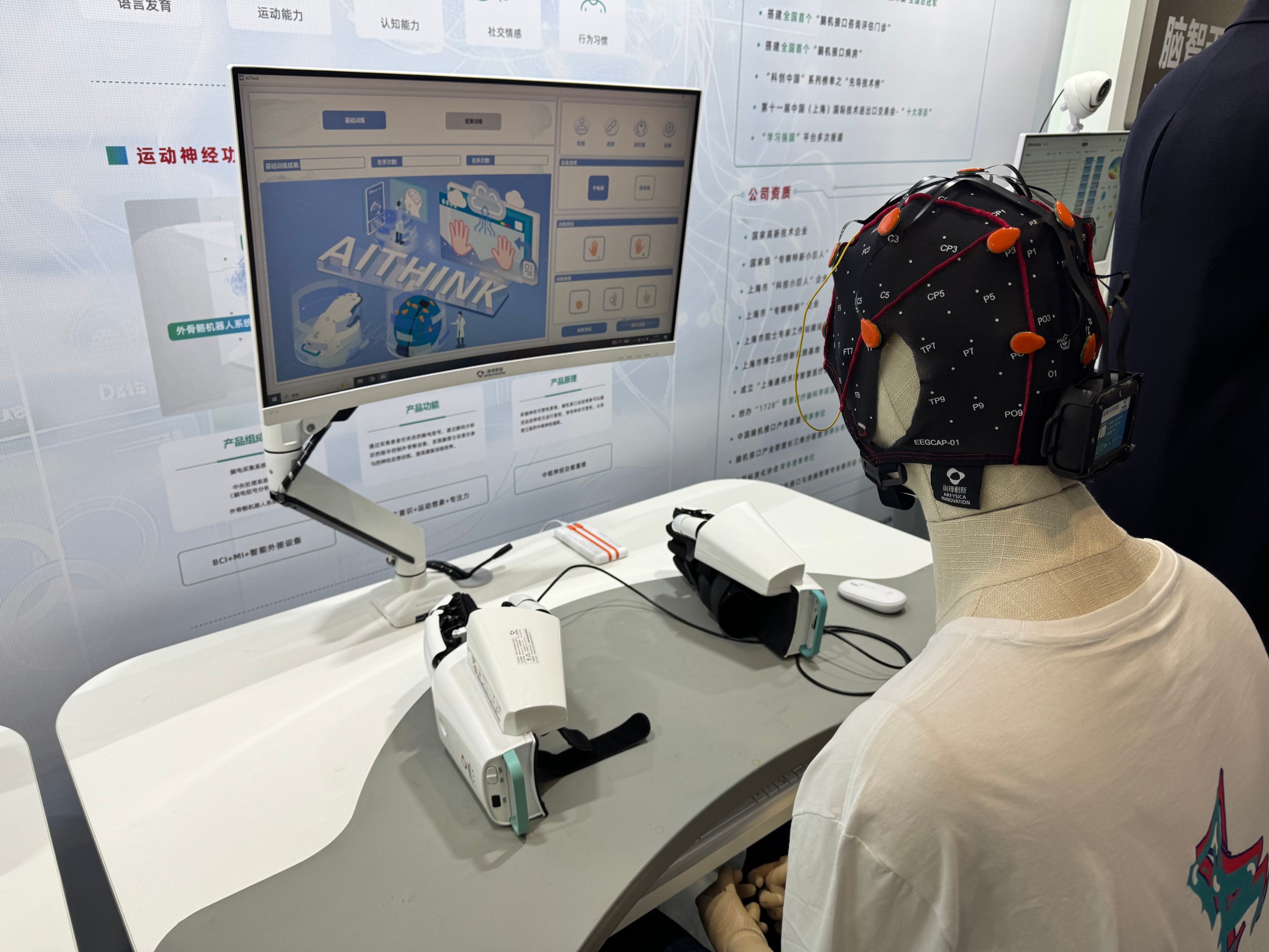
Core Insights - Shanghai is focusing on six key areas for future industry development, including future manufacturing, information, materials, energy, space, and health [1] - The city has seen significant advancements in robotics, quantum computing, and brain-computer interfaces, with milestones such as the production of the 5000th general-purpose embodied robot by Zhiyuan Robotics [1][2] - The Shanghai Future Industry Fund is playing a crucial role in supporting disruptive innovations and multi-disciplinary technologies, with a total scale of approximately 15 billion yuan [8][10] Group 1: Key Developments - Zhiyuan Robotics has achieved a milestone with the mass production of its 5000th general-purpose embodied robot, validating its delivery capabilities and setting the stage for future production scaling [1] - Shanghai Future Industry Fund is actively investing in quantum technology and brain-computer interfaces, with recent angel financing rounds and product launches in these sectors [1][2] - The 2025 Brain-Computer Interface Conference showcased new invasive and non-invasive products from seven companies, highlighting the rapid development in this field [1] Group 2: Strategic Measures - Shanghai has introduced measures to accelerate the innovation of frontier technologies and cultivate future industries, aiming to establish industry clusters and nurture around 20 leading enterprises by 2027 [1][6] - The city is focusing on three leading industries: cell and gene therapy, brain-computer interfaces, and biomanufacturing, with an emphasis on cost reduction and ecosystem development [6][7] - The Future Industry Fund employs a dual investment model, combining direct investments in early-stage projects with the establishment of sub-funds to create a comprehensive investment network [8][10] Group 3: Ecosystem and Talent Development - Shanghai's strategic advantages include a robust technological foundation, significant infrastructure, and a rich talent pool, which are essential for supporting the development of future industries [7] - The city is fostering a collaborative environment for brain science and technology, with initiatives to connect global talent and resources in this field [9] - The Future Industry Fund has made strategic investments in key projects, including controlled nuclear fusion and AI models, with a focus on maximizing investment returns and supporting technological breakthroughs [10]
上海押注“未来”,具身智能、量子计算、脑机接口又传好消息
Di Yi Cai Jing Zi Xun· 2025-12-08 12:13
Core Insights - Shanghai is focusing on six key areas for future industry development, including future manufacturing, future information, future materials, future energy, future space, and future health [1] - The city has seen significant advancements in robotics, quantum computing, and brain-machine interfaces, with milestones such as the production of the 5000th general-purpose embodied robot by Zhiyuan Robotics [1][5] - The Shanghai Future Industry Fund has been established to support disruptive innovation and interdisciplinary collaboration, with a total scale of approximately 15 billion yuan and investments in 18 sub-funds [7][9] Group 1: Robotics and Quantum Computing - Zhiyuan Robotics has achieved a milestone with the mass production of its 5000th general-purpose embodied robot, validating its capability for large-scale delivery and setting the stage for future production goals [1] - Shanghai's quantum technology company has completed several million yuan in angel financing, indicating strong investor interest in the quantum computing sector [1] Group 2: Brain-Machine Interfaces - The 2025 Brain-Machine Interface Conference showcased new invasive and non-invasive products from seven companies, highlighting the rapid development in this field [1] - The Shanghai Future Industry Fund is actively involved in the brain-machine interface sector, focusing on creating a systematic approach to talent and technology development [8] Group 3: Strategic Measures and Support - Shanghai has introduced measures to accelerate the innovation of frontier technologies and cultivate future industries, aiming to establish industry clusters and nurture around 20 leading enterprises by 2027 [1][5] - The city is leveraging its strong technological foundation and resource endowment to strategically position itself in emerging fields such as artificial intelligence, regenerative medicine, and quantum technology [2][5] Group 4: Investment and Ecosystem Development - The Future Industry Fund employs a dual investment model, combining direct investments in early-stage projects with the establishment of sub-funds to create a comprehensive investment ecosystem [7][9] - The fund has already made significant investments in key areas such as controlled nuclear fusion, AI models, and biomedicine, with a focus on maximizing the impact of its investments [9]

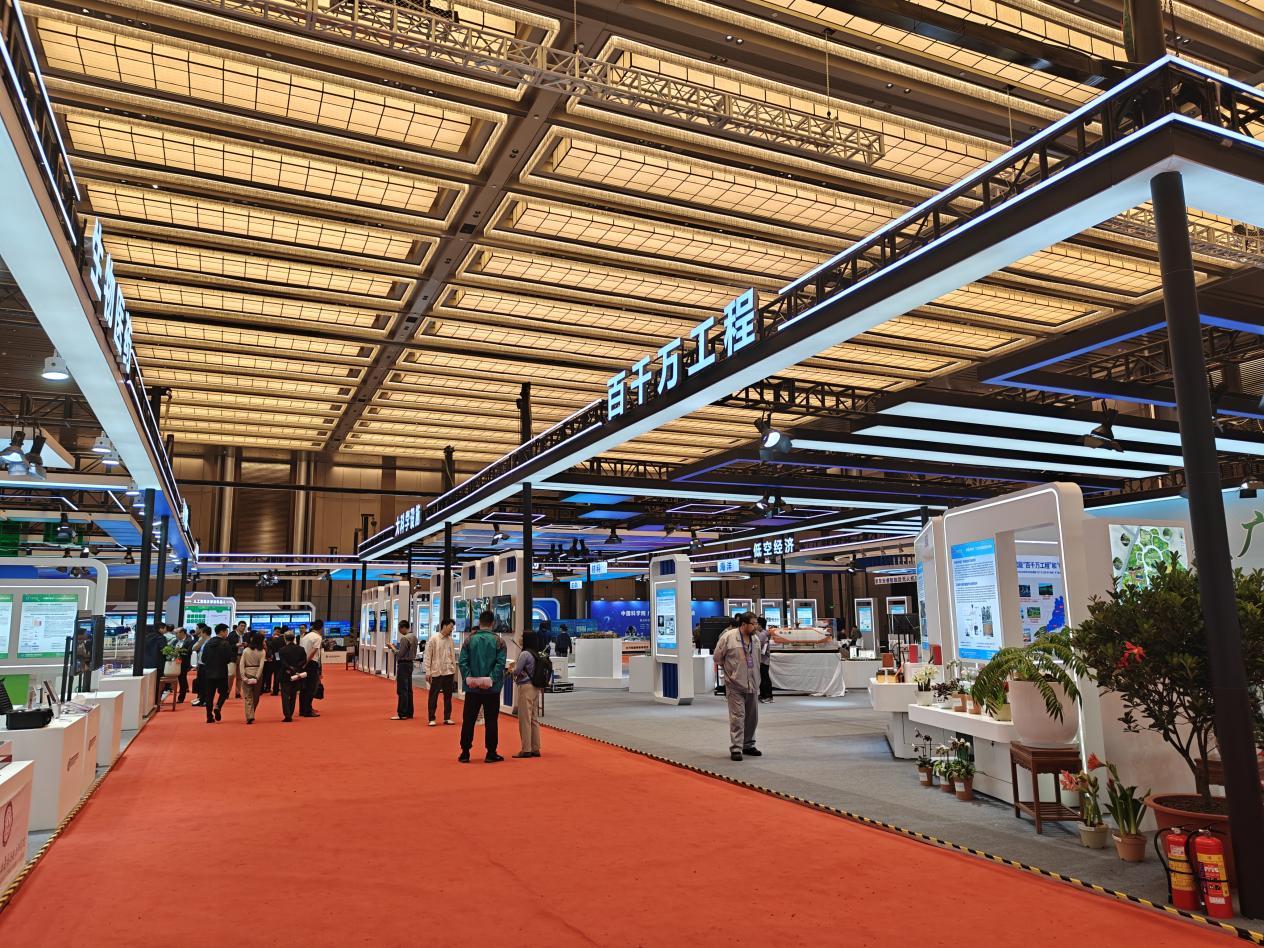
当“科学图纸”遇见“湾区产线”:一场关于未来的“硬核交易”
Feng Huang Wang Cai Jing· 2025-12-08 08:41
Core Insights - The collaboration between cutting-edge scientific research and Guangdong's manufacturing industry represents a significant shift towards defining future industrial capabilities rather than merely producing traditional products [2][10] - The projects listed, such as "low-altitude resource intelligent dynamic monitoring" and "wave energy-driven artificial upwelling marine ranches," are not just products but foundational solutions for a new industrial architecture [2][4] Group 1: Project Overview - The projects include advanced technologies like "digital twin integration devices" and "targeted ecDNA anti-tumor strategies," which are seen as a blueprint for future industries [1][2] - Many projects, such as the neutrino experiment facility and the China Spallation Neutron Source, focus on fundamental scientific research that may not yield immediate profits but are crucial for long-term industrial development [4] Group 2: Manufacturing Capabilities - Guangdong's manufacturing strength lies in its ability to quickly transform designs into products, exemplified by its rapid production capabilities in sectors like smartphones and home appliances [2][6] - The region's unique "translation" and "acceleration" capabilities allow for the swift conversion of scientific concepts into practical engineering and market-ready products [6][7] Group 3: Strategic Alignment - The scientific achievements are closely aligned with Guangdong's strategic future industries, such as low-altitude economy and marine ranching, ensuring that research meets industrial needs [8][10] - The collaboration is characterized by a "dual adaptation," where scientists focus on practical applications of their research while addressing the specific demands of Guangdong's industries [8] Group 4: Future Implications - Guangdong's entrepreneurs are encouraged to rethink traditional cost and efficiency models, exploring the potential of synthetic biology and quantum precision measurement [10] - This partnership signifies a transformative moment in China's industrial evolution, as Guangdong transitions from an executor in the global innovation chain to a definitional leader in industry [10]