大模型

Search documents
港股午盘|恒指涨1.45% 半导体、黄金股走强
Xin Lang Cai Jing· 2026-02-09 04:23
恒指报26945.35点,涨1.45%,恒生科技指数报5401.54点,涨1.04%。半导体板块领涨,澜起科技上市 半日涨超50%,华虹半导体涨超5%,中芯国际涨超3%。黄金股普涨,万国黄金集团涨超7%,大唐黄金 涨超6%,中国黄金国际、紫金黄金国际涨超3%。大模型股走强,智谱大涨超17%,MINIMAX-WP涨超 6%。(AI生成) 来源:第一财经 ...
阿里新一代模型Qwen3.5曝光,或将开源多款模型
Xin Lang Cai Jing· 2026-02-09 04:11
Core Insights - The latest development in the open-source project by HuggingFace indicates that the new generation base model Qwen3.5 from Alibaba is expected to be released soon [1][2] - There is speculation that February will see a surge in advancements in Chinese large models, referred to as "Crazy February" [2] - Qwen3.5 is reported to utilize a new hybrid attention mechanism and is likely to be a VLM (Vision-Language Model) capable of visual understanding [2] - Developers have discovered that Qwen3.5 may open source at least a 2 billion parameter dense model and a 35 billion parameter MoE (Mixture of Experts) model [2] - Prior reports from The Information suggested that Qwen3.5 would be open-sourced during the Spring Festival [2] - Additionally, the chief scientist of Zhipu, Tang Jie, mentioned on social media that several new models, including DeepSeek v4, Qwen3.5, and GLM-5, are set to debut soon [2]

中盛集团:首次覆盖云知声予“买入”评级 目标价750.58港元
Zhi Tong Cai Jing· 2026-02-09 03:04
Core Viewpoint - Zhongsheng Group predicts that Cloud Wisdom (09678) will experience accelerated revenue growth over the next three years, with expected revenues of 1.236 billion, 1.923 billion, and 2.918 billion yuan for 2025, 2026, and 2027 respectively, representing growth rates of 31.6%, 55.6%, and 51.7%, achieving profitability in 2026 [1] Group 1: Company Overview - Cloud Wisdom is a pioneer in AGI technology in China, being one of the first companies to commercialize deep learning voice technology and integrate multimodal technology [2] - The company has developed a matrix of multimodal large models and specialized industry large models, with its UniGPT Med ranking first in three projects in the latest MedBench 4.0 evaluation, demonstrating a hallucination rate of less than 3% [2] Group 2: Industry Position and Data Advantage - The company has established partnerships with top-tier hospitals such as Peking Union Medical College and Hunan Xiangya, covering 40% of the top 100 hospitals in China, leveraging vast amounts of specialized data to create a competitive advantage [3] - The high-quality data utilized for training forms an efficient data flywheel, with significant potential applications in medical insurance and commercial health insurance cost reduction [3] Group 3: Business Model and Commercialization - The company employs a dual-platform strategy, with MaaS focusing on high-end clients through private deployment of regional/industry large models, while SaaS targets small and medium clients with standardized applications for scalable delivery [4] - This approach establishes technical and situational barriers, facilitating accelerated commercialization [4] Group 4: Growth in Smart Living Business - The company has seen steady growth in its smart living business, with multimodal interactions implemented in various transportation sectors, and deep collaborations with leading companies like TCL and Gree in the home appliance sector [5] - Smart cockpit solutions have been widely adopted in mainstream vehicles such as SAIC's Zhiji L6 and Geely's Xingrui [5]
从“更快”到“更省”:AI下半场,TPU重构算力版图
3 6 Ke· 2026-02-09 02:47
Core Insights - The rise of Google's TPU (Tensor Processing Unit) marks a significant shift in AI computing, moving from a GPU-dominated era to a new focus on specialized architectures for inference, particularly with the introduction of TPU v7, which has drastically reduced inference costs [1][4][32] Group 1: Market Dynamics - The AI landscape is evolving, with a shift from "training is king" to "inference is king," as the demand for efficient inference services grows [2][4] - Google's TPU v7 has reportedly reduced the cost per million tokens for inference by approximately 70% compared to its predecessor, indicating a competitive edge over NVIDIA's offerings [4][7] - The competition is intensifying, with companies like Anthropic placing significant orders for TPUs, highlighting the commercial viability of specialized chips [7][32] Group 2: Technological Innovations - TPU's architecture is designed for efficiency, focusing on matrix operations essential for AI, which contrasts with the general-purpose nature of GPUs [8][12] - Innovations such as the unique pulsing array architecture and large on-chip SRAM cache significantly reduce energy consumption associated with data movement [8][12] - The introduction of RISC-V architecture in AI chips allows for enhanced programmability and efficiency, aligning with industry trends towards specialized computing [15][16] Group 3: Cost Efficiency - The focus on reducing token costs is paramount, as companies aim to make AI services as affordable as utilities, driving the need for lower inference costs [4][27] - The competitive landscape is shifting towards maximizing efficiency and reducing costs rather than merely increasing computational power [27][32] - Companies like Yixing Intelligent are developing architectures that align with these trends, emphasizing energy efficiency and cost reduction in AI computations [14][20] Group 4: Ecosystem Development - The collaboration between hardware and software is crucial, with companies like Yixing Intelligent integrating open-source technologies to enhance compatibility and ease of use [20][26] - The establishment of ecosystems that support various frameworks (e.g., TensorFlow, PyTorch) is essential for broad adoption and seamless transitions between platforms [10][20] - The development of advanced interconnect technologies, such as ELink, is vital for supporting high-bandwidth, low-latency communication in AI applications [28][30]



从“更快”到“更省”:AI下半场,TPU重构算力版图
半导体行业观察· 2026-02-09 01:18
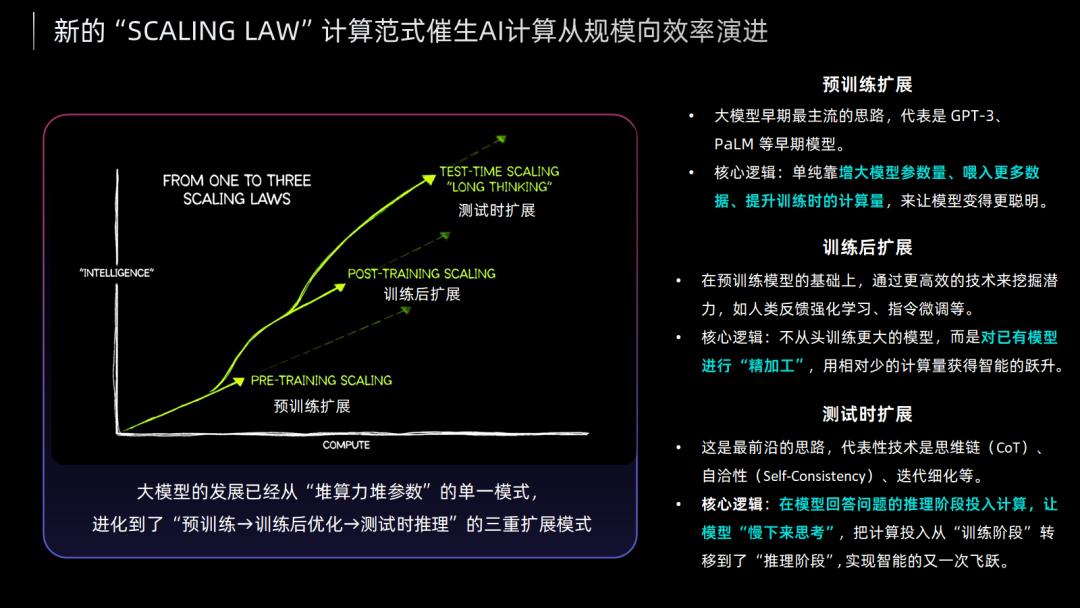
Core Insights - The article emphasizes the shift from "training is king" to "inference is king" in AI, highlighting the importance of specialized architectures like Google's TPU in reducing inference costs and reshaping the AI computing landscape [1][4][11]. Group 1: Evolution of AI Models - Large models undergo a growth process similar to human development, involving pre-training, fine-tuning, and reinforcement learning to align outputs with human preferences [3]. - The infrastructure for training large models requires high computing power, high memory bandwidth, and strong multi-GPU interconnects, with NVIDIA being the dominant player due to its high-performance GPUs and CUDA ecosystem [3]. Group 2: Cost Efficiency in Inference - After training, the commercial value of AI models lies in scalable inference services, where the cost of inference directly impacts profit margins [4]. - The focus has shifted to reducing inference costs while maintaining performance, with Google's TPU v7 reportedly lowering the cost per million tokens by approximately 70% compared to its predecessor [8][10]. Group 3: Competitive Landscape - The competition in AI computing is evolving, with specialized architectures like Google's TPU emerging as strong challengers to NVIDIA's dominance [10][11]. - A significant order from Anthropic for TPUs indicates a shift towards large-scale commercial deployment of ASIC chips, suggesting potential profit improvements of billions annually through reduced inference costs [10]. Group 4: Technological Innovations - Google's TPU architecture is designed for efficiency, focusing on matrix operations and minimizing unnecessary components, which enhances performance and reduces energy consumption [13]. - Innovations such as the unique pulsed array architecture and large on-chip SRAM caches contribute to TPU's advantages in inference scenarios [18]. Group 5: Software and Ecosystem Development - Google is addressing the software ecosystem by making its TPU compatible with popular frameworks like PyTorch, thereby reducing the cost of transitioning from NVIDIA's ecosystem [15][27]. - The collaboration with various tech giants to support open-source projects like OpenXLA aims to create a unified compilation path across different hardware [15][17]. Group 6: Domestic Chip Manufacturers - Domestic chip companies like Yixing Intelligent are developing architectures that align with the trends of specialized computing, focusing on efficiency and cost reduction [20][22]. - Yixing Intelligent's chips support advanced data formats and architectures that enhance performance while reducing storage costs, positioning them competitively in the market [26][27]. Group 7: Future Directions - The industry is transitioning from a focus on raw computing power to optimizing efficiency and cost-effectiveness, marking a significant shift in the competitive landscape [42]. - The emergence of technologies like ELink for high-speed interconnects indicates a broader trend towards integrated AI infrastructure that encompasses hardware, software, and system optimization [38][40].

1月重卡批发销量约10万辆,蔚来2026Q4经营利润转正
Zhong Guo Neng Yuan Wang· 2026-02-09 00:42
Group 1: Market Overview - In January 2026, China's heavy truck market is expected to sell approximately 100,000 units (wholesale), with terminal sales projected to decline by 5% to 10% year-on-year [1][2] - The new energy heavy truck segment is experiencing a severe decline, with terminal sales expected to drop over 85% month-on-month, while year-on-year figures are expected to remain stable, leading to a decrease in domestic penetration rate from 54% in December last year to around 20% [1][2] - The natural gas heavy truck segment is showing some year-on-year growth [1][2] Group 2: Industry News - He Xiaopeng announced that the Xiaopeng GX is expected to launch in April or May [2] - Xiaoma Zhixing and Moore Threads have formed a strategic partnership, bringing domestic full-function GPUs into the core area of autonomous driving [2] - The new generation of Li Auto L9 has launched the Livis ultimate version, positioning it as a flagship SUV for the embodied intelligence era [2] - NIO expects to achieve an adjusted operating profit of 700 million to 1.2 billion yuan in Q4 2025 [2] - BYD plans to achieve local manufacturing and procurement of half of its components at its Brazil factory by the end of the year [2] - Tesla is fully shifting towards humanoid robot business, with Elon Musk estimating the long-term value of the robot business to reach $25 trillion, planning to release the third-generation Optimus in 2026 and aiming for an annual production capacity of 1 million units by 2027 [2] - New forces in the industry are restructuring to focus on robot research and development, indicating a shift towards "embodied intelligence" [2] - The humanoid robot industry competition is shifting towards large models, with manufacturers accelerating efforts to enhance AI capabilities [2] Group 3: Market Performance - This week, the CSI 300 index fell by 1.33%, while the automotive sector rose by 0.47%, ranking 10th among A-share primary industries [3] - The passenger vehicle II index increased by 0.01%, with Li Auto-W and Seres leading the gains [3] - The commercial vehicle index rose by 1.34%, with Jinlong Automobile and Foton Motor leading the gains [3] - The automotive parts II index increased by 0.58%, with Xingmin Zhitong and Yinlun Co. leading the gains [3] - The electric control system sector saw a decline of 2.49%, while the bearing sector rose by 0.40% [3] - The reduction gear/gear sector increased by 2.32%, while the lightweight & structural components sector fell by 1.06% [3] - The motor sector rose by 0.49%, while the Tier 1 sector increased by 1.93% [3] - The sensor sector saw a slight decline of 0.15%, and the linear transmission components sector fell by 3.19% [3] Group 4: Investment Recommendations - For passenger vehicles, the demand for domestic high-end luxury vehicles is exceeding expectations, with a favorable competitive landscape; companies recommended include Jianghuai Automobile and Seres, with Geely Automobile as a beneficiary [4] - In the parts sector, the industry is expected to see an upward turning point in profitability against the backdrop of reduced internal competition, with recommended companies including Desay SV Automotive, Zhejiang Xiantong, Meili Technology, and others [4]

中国谷歌是个伪命题
虎嗅APP· 2026-02-09 00:14
Core Viewpoint - The article discusses how Google's financial performance and strategic shift towards AI infrastructure have set a benchmark that Chinese tech giants aspire to replicate, yet face significant challenges in doing so [5][6][24]. Group 1: Google's Performance and Strategy - Google's parent company, Alphabet, reported a historic revenue exceeding $400 billion in 2025, with Q4 revenue reaching $113.8 billion, showcasing its robust financial health [5]. - The growth of Google's cloud business surged by 48%, with annual revenue surpassing $70 billion, indicating a successful transition from a search-centric model to a global AI infrastructure provider [5][6]. - Google has accumulated a backlog of $240 billion in orders, reflecting strong demand for its AI capabilities and services [6]. Group 2: Chinese Tech Giants' Aspirations - Chinese tech companies like Baidu, Alibaba, and Tencent are striving to emulate Google's model, viewing it as the pinnacle of success in the tech industry [9][10]. - Baidu, heavily reliant on search and advertising, sees AI as a lifeline, investing in autonomous driving and self-developed chips to transform its search engine into a smart entity [18]. - Alibaba aims to integrate its cloud services with AI, investing $38 billion to enhance its technological capabilities and move away from mere resource selling [20]. - Tencent focuses on leveraging its social and content platforms to integrate AI, with over 900 applications utilizing AI internally [21]. Group 3: Challenges Faced by Chinese Companies - Chinese tech giants struggle to replicate Google's global operational model due to their inward-focused ecosystems, which limit their ability to scale and innovate on a global level [25][26]. - The competitive landscape in China forces companies to prioritize short-term gains over long-term innovation, hindering the development of groundbreaking technologies [34][35]. - The cultural differences between Google's engineer-driven approach and the product manager-driven culture of Chinese firms contribute to the challenges in achieving similar levels of innovation [30][32]. Group 4: Unique Opportunities for Chinese AI - Despite the challenges, Chinese companies possess unique advantages, such as a diverse and complex industrial landscape that can provide valuable data for AI applications [42]. - The rapid digitalization of various sectors in China offers opportunities for AI models to excel in practical applications, potentially surpassing Google's capabilities in specific areas [42]. - The article suggests that instead of trying to become "the Chinese Google," companies should focus on their unique narratives and strengths in the AI landscape [40][41].


首钢园消费场景再“上新”
Bei Jing Ri Bao Ke Hu Duan· 2026-02-08 22:16
Core Insights - The permanent establishment of the service trade fair at Shijingshan District's Shougang Park is expected to significantly boost consumer activity in the area [1] - The district aims to leverage the unique advantages of the service trade fair to develop a "Convention Town," enhancing service consumption and creating distinctive experiences [1][4] Group 1: Shougang Park Developments - Shougang Park features the first national robot technology experience store, "Tao Zhu New Creation Bureau," which showcases interactive robots and AI technology [1] - The park's visitor engagement has been high, with 784,000 attendees during the last service trade fair, leading to a 7.1% year-on-year increase in consumption in dining, retail, and cultural tourism sectors [3] Group 2: Future Plans and Projects - The second phase of the robot experience center is set to open on February 11, featuring a robot maintenance workshop for customers to observe the repair process [2] - The "Yongding River Collection" project is being developed as a new cultural and commercial hub, integrating various business types with natural landscapes, and is expected to enhance regional consumer potential [2][4] - The district plans to continue expanding the spillover effects of exhibitions, improving infrastructure, and attracting industry chain enterprises to the area [4]
AI眼镜进入验证期;潮玩IP工业化加速
Huafu Securities· 2026-02-08 13:41
Investment Rating - The industry rating is "Outperform the Market" [7] Core Insights - The AI glasses have entered the delivery verification phase, with Rokid achieving a significant milestone by surpassing 15,000 units shipped globally, marking a rare case of substantial delivery in the domestic AI glasses market [2][13] - The smart glasses industry has transitioned from an engineering verification phase dominated by AR/MR headsets to a consumer exploration phase driven by lightweight designs and AI capabilities, focusing on everyday wearability and comfort [3][15] - The trend in the collectible toy industry has shifted from niche art toys to mainstream cultural consumption, with IP industrialization accelerating, indicating a structural upgrade in the market [4][21] Summary by Sections AI Glasses - Rokid AI Glasses Style has officially launched globally, with over 15,000 units shipped as of February 2, indicating a successful entry into the consumer market [13] - The product is designed for daily wear, weighing only 38.5g, and features AI capabilities such as real-time translation and information queries, emphasizing its role as a primary eyewear option [13][15] - The industry focus has shifted from the feasibility of technology to whether products can support real consumer demand, with key performance indicators now including sales volume, return rates, and customer retention [15] Collectible Toys - Recent collaborations, such as the partnership between Miniso and CCTV for Spring Festival IP derivatives, highlight the cultural significance of collectible toys, moving them into broader consumer markets [4][24] - The SPACE MOLLY toy, which completed a space round trip, represents a new cultural narrative, transforming collectible toys into symbols of exploration and future imagination [21][23] - The collectible toy industry has evolved from a focus on individual IP to a model of industrialized production and cultural output, with a shift towards high turnover and multi-IP strategies [29][30]
硬科技漫卷A股港股
Bei Jing Shang Bao· 2026-02-08 06:34
Group 1 - Yushu Technology is preparing for its IPO while also focusing on the Spring Festival Gala program, having been announced as a partner for the 2026 event [1] - The company clarified rumors regarding the suspension of the IPO green channel, stating that its listing process is progressing normally [1] - Yushu Technology completed its IPO counseling in November 2025 and aims to apply for a domestic IPO, positioning itself as one of the faster capitalized companies in the robotics sector [1] Group 2 - The chip sector, particularly represented by GPUs, is experiencing rapid activity, with companies like Moer Thread and Muxi Co. achieving significant IPO milestones [2] - In January 2026, 13 new companies were listed on the Hong Kong Stock Exchange, a 63% increase from the previous year, with hard tech firms dominating the listings [3] - Companies in the storage chip sector, such as Changxin Technology, are also advancing their IPO processes, indicating a broader trend of capitalizing on the semiconductor market [10] Group 3 - Domestic GPU leaders like Biran Technology and Tensu Zhixin have rapidly progressed to listing on the Hong Kong Stock Exchange [6] - The capital market has seen a swift construction of a tiered structure among leading GPU companies, with significant fundraising efforts aimed at enhancing R&D capabilities [7] - Biran Technology has invested over 3.3 billion yuan in R&D over the past three years, emphasizing the importance of continuous investment in technology [8] Group 4 - The commercialization of large models is gaining momentum, with companies like Zhipu AI and MiniMax leading the way in the AI model sector [12] - Zhipu AI has established a strong presence in the ToB market, serving over 8,000 institutional clients and achieving a market share of 6.6% in China [13] - MiniMax focuses on consumer-oriented AI products, with a significant portion of its revenue coming from subscriptions, highlighting different business models within the AI sector [14] Group 5 - Blue Arrow Aerospace's IPO application has been accepted, aiming to raise 7.5 billion yuan for reusable rocket technology [16] - The commercial aerospace sector is gradually moving towards IPOs, with several companies in the industry preparing for listings [20] - The commercial aerospace index has seen significant growth, indicating strong investor interest in this sector [18] Group 6 - The A-share and Hong Kong markets provide different advantages for hard tech companies, influencing their listing choices [22] - The Hong Kong market is more flexible, accommodating various corporate structures and supporting emerging hard tech sectors [23] - Companies are increasingly considering dual listings in both markets to optimize their capital-raising strategies [25] Group 7 - The hard tech IPO wave is driven by national strategies promoting domestic alternatives and the urgent need for industrial upgrades [27] - The demand for AI and computing power is at a critical juncture, with companies poised for significant growth through IPOs [27] - The outlook for new listings in Hong Kong is optimistic, with expectations of continued growth in the number of IPOs [28]