
风险管理

Search documents
转变您管理与分析风险的方式:风险分析实验室
Refinitiv路孚特· 2025-09-29 06:03
Core Viewpoint - LSEG has launched the Risk Analytics Lab, a powerful new platform that combines the flexibility of the Open Risk Engine (ORE) with the efficiency and simplicity of SaaS, designed for risk management professionals to provide smarter, faster, and more collaborative risk management solutions [1][3]. Group 1: Key Features - Risk Analytics Lab offers a free entry point for users to access cutting-edge risk and pricing capabilities, fostering a growing user community for shared innovation and addressing industry challenges [2]. - The platform integrates market data and pre-configured workflows, allowing users to execute risk calculations instantly without lengthy setup processes or complex integration projects [1][4]. - The open-source architecture of Risk Analytics Lab enables users to customize and collaborate, promoting a community-driven approach to pricing and risk analysis [5]. Group 2: Advantages - Risk Analytics Lab provides a free usage option, significantly reducing costs for risk management professionals, making it a more viable investment choice for enterprises [4]. - The SaaS solution can be activated immediately, allowing teams to demonstrate its capabilities out of the box while being scalable to meet complex risk calculation needs [4]. - The platform supports advanced mathematical models and simulations for accurate pricing of structured derivatives, utilizing methods like Black-Scholes and Monte Carlo simulations [7]. Group 3: Applications and Capabilities - Risk Analytics Lab facilitates complex product pricing, xVA simulations, and sensitivity analysis, enabling teams to price complex products and validate models [5][6]. - It integrates with Post Trade Solutions' market data services, providing cleaned market data for pricing and model calibration [7][12]. - The platform supports compliance and regulatory reporting, serving as a technical foundation for Basel III and IFRS 13 reporting [12].


FXGT外汇:行业格局中的国际化发展路径
Sou Hu Cai Jing· 2025-09-29 03:20
Core Insights - FXGT Forex is leveraging technological innovation and strategic international expansion to reshape the industry landscape and enhance its global competitiveness Group 1: Technological Innovation - The application of innovative technologies, including blockchain, enhances transaction transparency and adapts to market changes [1][11] - Significant investments in artificial intelligence and big data analytics are made to ensure trading efficiency and security [2][11] - Automated trading systems simplify operations and improve user trading efficiency [7] Group 2: Market Expansion Strategy - FXGT Forex emphasizes localized operations to cater to diverse cultural and consumer preferences in different regions [2][12] - The company actively seeks partnerships with local businesses to enhance market penetration and brand recognition [2][3] - A diversified product portfolio is crucial for maintaining competitiveness in a challenging market environment [3][12] Group 3: Risk Management and Compliance - Strict risk management strategies and compliance measures are implemented to safeguard client funds [2][8] - The use of technology-driven risk assessment tools and multi-layered monitoring mechanisms ensures risks remain manageable [6][12] - Regular audits and adherence to regulatory standards bolster the company's market credibility [8][18] Group 4: Customer Experience and Service Enhancement - Recent advancements in service upgrades and customer experience have laid a solid foundation for competing in the international market [6][20] - Data analysis tools are utilized to identify user needs and provide personalized service [6][19] - A global customer support network is established to respond swiftly to client demands [7][20] Group 5: Strategic Partnerships - Establishing strategic partnerships with leading global firms is essential for enhancing FXGT Forex's market influence and competitiveness [3][17] - Collaborations provide access to technological support and market resources, strengthening product and service value [3][17] Group 6: Cultural Diversity and Communication - Cultural diversity is recognized as a vital component in the internationalization process, enriching the company's perspective and facilitating market expansion [12][13] - Effective cross-cultural communication strategies help the company understand and adapt to varying cultural needs [13][18] Group 7: Financial Performance Impact - The internationalization strategy significantly influences the company's financial performance by broadening its customer base and diversifying revenue sources [21] - While international expansion incurs additional costs, it lays the groundwork for long-term financial growth [21]

终结多年格局!江苏银行靠体育IP成城商行一哥
Sou Hu Cai Jing· 2025-09-28 23:39
Core Viewpoint - Jiangsu Bank has surpassed Beijing Bank with a total asset scale of 4.79 trillion yuan, becoming the leading city commercial bank in China, supported by strong profitability and strategic regional focus [1][17]. Group 1: Financial Performance - In 2024, Jiangsu Bank achieved a net profit of 33.306 billion yuan, averaging over 91 million yuan daily, with a further increase to 20.238 billion yuan in the first half of 2025, averaging over 112 million yuan daily [1]. - The bank's net interest margin has been under pressure, yet it has managed to grow its net interest income by 21.94% year-on-year in Q1 2025 [9]. Group 2: Regional Focus and Strategy - Jiangsu Bank's growth is attributed to its deep engagement in the Yangtze River Delta and a precise service strategy for the real economy, benefiting from the region's economic advantages [2]. - The bank's loans to the manufacturing sector grew by 19.41% year-on-year, and loans to scientific research and technical services surged by 141.09%, both significantly above industry averages [2]. Group 3: Business Optimization and Digital Transformation - The bank has optimized its asset-liability management and retail business, enhancing its profitability through a dual strategy of cost reduction and revenue increase [7]. - As of Q1 2025, the retail assets under management (AUM) exceeded 1.5 trillion yuan, positioning Jiangsu Bank as a leader among city commercial banks [9]. Group 4: Risk Management and Brand Development - Jiangsu Bank's non-performing loan ratio decreased to 0.84% by June 2025, continuing a four-year downward trend, significantly lower than the industry average of 1.18% [10]. - The bank's provision coverage ratio reached 350.10% by the end of 2024, well above the industry average, indicating strong risk mitigation capabilities [13]. Group 5: Future Outlook - Jiangsu Bank aims to integrate its development with the high-quality growth of the regional economy, focusing on smart, distinctive, international, and comprehensive strategies [15]. - The bank's brand influence has been enhanced through innovative marketing strategies, such as sponsoring local sports events, leading to a significant increase in app downloads and younger customer acquisition [10][14].

关于保险资管践行“长钱长投”,业内人士发声
Zhong Guo Zheng Quan Bao - Zhong Zheng Wang· 2025-09-28 16:56
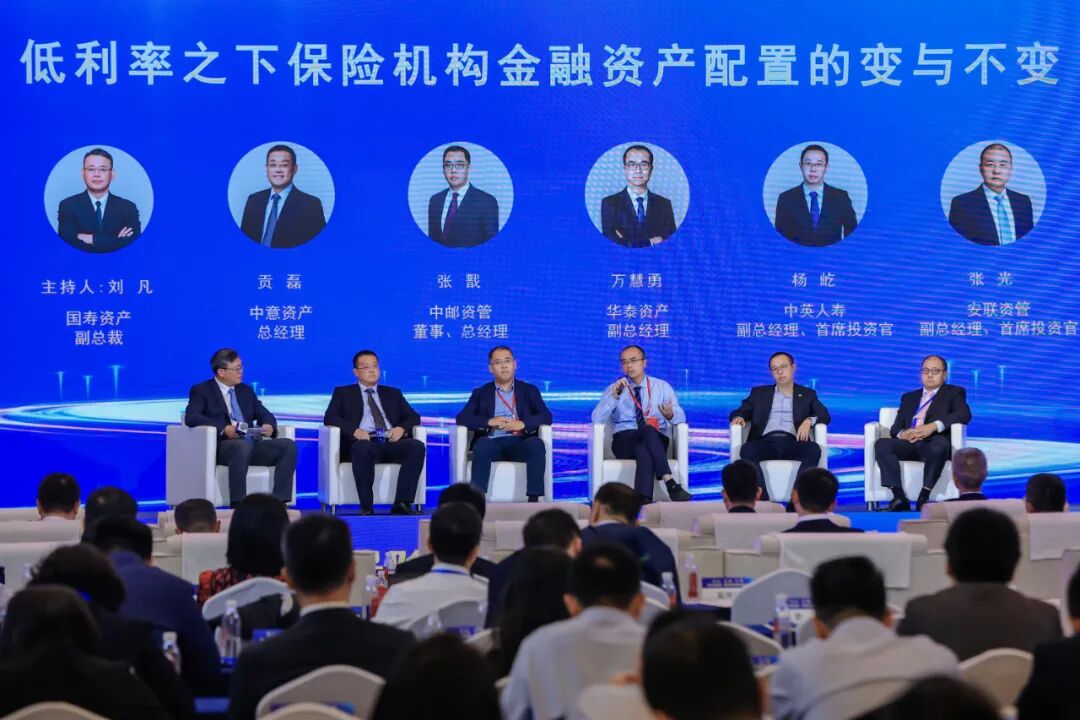
Core Viewpoint - The conference highlighted the need for insurance institutions to adapt their asset allocation strategies in a low interest rate environment while maintaining a long-term investment approach to support the high-quality development of the real economy [1][3]. Group 1: Market Environment and Confidence - Insurance institutions are experiencing increased confidence due to positive changes in the capital market since September of last year, with notable improvements in market performance despite economic slowdowns [4]. - Key factors contributing to this confidence include the rapid development of technology industries driven by artificial intelligence, expectations of intensified reforms during the 14th Five-Year Plan, and the resilience of exports amid global economic uncertainties [4]. Group 2: Asset Allocation Strategies - The risk appetite of insurance institutions is rising, necessitating adjustments in asset allocation strategies to align with the current market environment [5][6]. - The allocation structure is shifting towards a more diversified approach, with an emphasis on both fixed income and equity assets, while maintaining a cautious stance on fixed income investments [7]. - Insurance funds have increased their equity investments, with over 8% of investments in stocks this year, reflecting a significant rise from the beginning of the year [7]. Group 3: Alternative Investments and Long-term Strategies - There is a growing focus on diversifying income sources through alternative investments to extend duration, smooth volatility, and enhance yield flexibility [8]. - The appeal of REITs is highlighted as they offer predictable cash flows in a low interest rate environment, making them attractive for insurance capital [8]. Group 4: Investment Capability Enhancement - The changing investment environment demands improved asset identification and operational management capabilities from insurance institutions [9]. - A shift from a credit-focused approach to a more asset-understanding capability is essential for long-term stability and risk management [9]. - The industry consensus emphasizes the importance of deepening value investment and focusing on high-quality growth sectors such as new energy, technology, and advanced manufacturing [9].
北京监管局一日开出五张罚单 银行贷款“三查”失职问题集中曝光
Jing Ji Guan Cha Bao· 2025-09-27 04:28
Core Viewpoint - The recent administrative penalties imposed on five banks in Beijing highlight the ongoing regulatory focus on compliance in credit operations, particularly regarding the "three checks" system in loan management [1][2][5]. Group 1: Regulatory Actions - Five banks, including major state-owned banks and joint-stock banks, were fined 350,000 yuan each for violations related to loan management, specifically the "three checks" system [1][2][4]. - The "three checks" system, which includes pre-loan investigation, in-process review, and post-loan inspection, is crucial for managing loan risks and ensuring asset quality [2][3]. Group 2: Systemic Risks and Challenges - Inadequate management of working capital loans can lead to misuse of funds and potential systemic financial risks if multiple banks face similar issues [3][4]. - The penalties reflect a broader industry challenge, indicating that loan management problems are not isolated incidents but rather a common issue across the banking sector [4]. Group 3: Regulatory Environment and Future Directions - The regulatory authority has emphasized the importance of compliance and risk management in credit operations, with a focus on enhancing internal controls within banks [5][6]. - Future regulatory measures are expected to diversify, incorporating tools like window guidance and stress testing to create a multi-layered regulatory framework [5]. Group 4: Cultural and Mechanism Reforms - The penalties serve as a catalyst for banks to rethink their internal assessment criteria, ensuring that compliance and asset quality are prioritized alongside growth metrics [6]. - The adoption of advanced technologies such as big data and artificial intelligence is necessary to improve the efficiency and effectiveness of the "three checks" system [6].



德邦证券,揽入两位券业大将!
券商中国· 2025-09-26 14:06
Core Viewpoint - The recent recruitment of senior executives at Debon Securities, including Wei Feng and Gao Li, signifies a strategic move to enhance the company's wealth management and risk management capabilities following its acquisition by Shandong Financial Group [1][2][4][5]. Group 1: Executive Recruitment - Debon Securities has appointed Wei Feng, former Deputy General Manager of Guotou Securities, as Senior Vice President, focusing on wealth management [2][4]. - Wei Feng brings over 20 years of experience in the securities industry, having worked at various firms including Southern Securities and Anxin Fund, and is recognized as a comprehensive management talent in wealth management [4]. - Gao Li is set to become the Chief Risk Officer, with over a decade of experience in the industry, previously holding key financial roles at Changjiang Securities and Minsheng Securities [5]. Group 2: Strategic Goals - The recruitment of these executives is part of Debon Securities' strategy to enhance its core competitiveness and adapt to profound changes in the wealth management industry [4]. - The company aims to develop its wealth management business in a more professional, refined, and digital direction through the introduction of industry-leading talent [4]. Group 3: Company Background and Developments - Debon Securities is a national, comprehensive securities company under the Shandong Financial Group, which became its actual controller in September 2024 [6][7]. - The company has been actively restructuring its management team and has seen a steady introduction of external talent since joining Shandong Financial Group [6]. - As of September 15, 2024, Debon Securities has significantly increased its bond underwriting projects, with 100 projects completed, a 100% year-on-year growth, ranking it among the top 30 in the industry [7].

中建咨询:先后通过ISO三标体系认证与信息安全管理体系认证|2025华夏ESG实践合规典范案例
Hua Xia Shi Bao· 2025-09-26 12:18
Company Overview - China Southwest Architectural Consulting Co., Ltd. (referred to as "China Construction Consulting") is a subsidiary of China State Construction Engineering Corporation, with over 40 years of experience in the construction consulting industry, serving over 700 clients and 5,000 projects with a total investment amount nearing 1 trillion yuan [3] - The company provides comprehensive technical support and management services in various areas including project consulting, investment decision-making, engineering supervision, project management, bidding agency, cost consulting, technical consulting, low-carbon consulting, digital consulting, and sustainable development (ESG) strategy consulting [3] - Headquartered in Chengdu, the company has established regional offices in the Guangdong-Hong Kong-Macao Greater Bay Area, Yangtze River Delta Economic Belt, and Beijing-Tianjin-Hebei Capital Economic Circle, with overseas projects spanning four continents and over 20 countries and regions [3] - The company employs over 1,000 staff, including more than 230 senior and professor-level professionals, and over 700 registered professionals in various fields [3] ESG Integration - China Construction Consulting integrates ESG concepts into its development strategy, establishing an ESG governance system led by the board of directors [4] - The ESG Research Center, a dedicated institution, is directly overseen by the board, with the general manager serving as the center's head [4] - The company has identified "compliance management and risk management" as primary indicators within its ESG framework, further breaking them down into quantifiable sub-indicators through stakeholder dialogue and dual materiality assessments [4] Compliance and Risk Management - The company has developed comprehensive regulations such as the "Compliance Management Regulations" and "Risk Management Regulations" to standardize management practices [4] - A full-process management mechanism for compliance includes compliance review, risk identification and response, issue rectification, reporting, and accountability [5] - The risk management framework encompasses risk identification, monitoring, special assessments, annual major risk evaluations, and overseas risk management [5] Achievements and Certifications - China Construction Consulting has achieved ISO certification across three standards and information security management system certification [5] - In 2024, the company conducted 10 legal compliance inspections and organized 6 specialized training sessions, ensuring comprehensive coverage of key positions and business areas [5] - The company aims for zero major risk incidents in 2024, demonstrating a proactive approach to compliance and risk management [5][6]
一个单一家办的投资进化论:在不确定中寻找确定性
3 6 Ke· 2025-09-26 07:42
Group 1 - The essence of family office mission is to maintain and enhance long-term purchasing power, focusing on the ability to exchange money for more goods and services in the future [3][28][29] - Risk management emphasizes understanding and prevention rather than mere control, preparing for uncertainties with contingency plans [4][3] - The investment strategy is based on macroeconomic cycles, with a focus on maintaining a stable annual return of over ten percent during economic adjustments [2][10] Group 2 - The company has transitioned from being a "follow-on investor" to an "asset creator," recognizing the need for direct involvement in market understanding and asset management [9][10] - Investment decisions are guided by a combination of macroeconomic conditions and specific industry dynamics, with a focus on sectors in growth phases [14][20] - The investment philosophy includes a "dynamic monopoly dividend portfolio," aiming for long-term stability and risk reduction through diversified asset allocation [24] Group 3 - The company has identified high-value opportunities in the bond market, particularly in local government bonds, which were mispriced due to market conditions [20][21] - The approach to overseas asset allocation is primarily focused on the U.S. market, with a strategic shift towards undervalued Chinese assets [25][26] - The family office industry is characterized by a need for improved professional investment research and decision-making capabilities, particularly in distinguishing between quality general partners [32][34] Group 4 - The family office's mission encompasses both wealth preservation and value creation, with a focus on maintaining purchasing power over time [28][29] - The industry is experiencing a shift towards secondary market investments as many family offices reassess the liquidity and transparency of equity investments [33][34] - Future opportunities in wealth management are driven by the substantial demand for trustworthy asset management, particularly in a post-cycle economic environment [34]

期权服务实体经济量质齐升
Qi Huo Ri Bao Wang· 2025-09-25 23:37
Core Viewpoint - The rapid development of China's options market has significantly enhanced its ability to serve the real economy, becoming a crucial pillar for capital market reform and risk management in a volatile global financial landscape [1][2]. Market Growth - The market scale has continuously expanded, with record high open interest of 13.48 million contracts on August 6, 2025, and a daily average open interest increase of 207% compared to 2022 [2]. - The number of listed options has accelerated, with 62 options currently available, covering major sectors such as energy, agriculture, and metals [7]. - Corporate participation has increased, with notable growth in open interest and trading activity among corporate clients in various sectors, indicating a rising acceptance of options as flexible risk management tools [2][6]. Historical Development - The options market in China has evolved from its inception in 2015, with significant milestones including the launch of the first financial ETF options and commodity options, paving the way for a comprehensive derivatives market [4][5]. - The period from 2015 to 2018 was characterized by the expansion of pilot programs and regulatory frameworks, establishing a solid foundation for market growth [4]. - Since 2019, the market has entered a phase of accelerated growth, with the introduction of various commodity options and the expansion of index options [5]. Performance Metrics - In the first half of 2025, the average daily trading volume of financial futures options reached 284.78 billion yuan, reflecting a sustained increase in market activity [3]. - The average daily trading volume for the soybean meal options was 148,100 contracts, with a year-on-year increase of 29.72%, while gold options saw a staggering 173.54% increase in average daily trading volume [3]. Future Outlook - The options market is expected to continue expanding, with projections indicating that the total trading volume could exceed 1 trillion yuan in 2025, supported by economic recovery and foreign capital inflow [9]. - Product innovation is anticipated to accelerate, with exchanges expected to introduce more options products to achieve full industry chain coverage [9]. - The integration of options with insurance products is expected to empower more small and medium-sized enterprises, enhancing their risk management capabilities [9].
两融余额迭刷纪录 券商争相提额抢占市场
Shang Hai Zheng Quan Bao· 2025-09-25 18:14
Core Viewpoint - The continuous increase in margin financing balance reflects a growing confidence in the market, prompting brokerages to raise their credit business limits to capture market share and enhance their capital strength and risk management capabilities [1][2][5]. Group 1: Margin Financing Balance Growth - As of September 24, the margin financing balance reached a record high of 2.43 trillion yuan, with a single-day increase of over 14 billion yuan, marking a 77.14% year-on-year growth [1][4]. - The margin financing balance has remained above 2 trillion yuan since August 5, with 37 consecutive trading days above this threshold [4]. - The proportion of margin financing balance to the A-share market capitalization is currently 2.54% [4]. Group 2: Brokerages' Credit Business Expansion - Zheshang Securities raised its credit business limit from 40 billion yuan to 50 billion yuan, reflecting confidence in the growth of its margin financing business, which saw a 32.60% year-on-year increase to 23.785 billion yuan [2]. - Huayin Securities has increased its credit business limit twice this year, first to 6.2 billion yuan and then to 8 billion yuan [2]. - Multiple brokerages, including Xingye Securities, have also announced plans to expand their credit business limits, indicating a trend of growth in the sector [2]. Group 3: Market Activity and Investment Trends - The active trading environment has led to significant inflows of leveraged funds into sectors such as electronics, power equipment, and machinery, with net purchases of 11.095 billion yuan, 2.502 billion yuan, and 876 million yuan respectively on September 24 [4]. - Over the past month, several sectors, including electronics and power equipment, have seen net purchases exceeding 10 billion yuan, highlighting investor interest in these areas [4]. Group 4: Risk Management and Compliance - The rapid expansion of margin financing has raised challenges in risk management, with some brokerages facing regulatory warnings for inadequate risk checks and compliance failures [6][7]. - Companies are enhancing their risk management frameworks, focusing on investor suitability management and continuous monitoring of client accounts to mitigate risks associated with increased leverage [7]. - The industry is entering a phase where both scale and quality of service are emphasized, with brokerages competing on capital adequacy, liquidity risk management, and operational compliance [7].

