
AI算力

Search documents
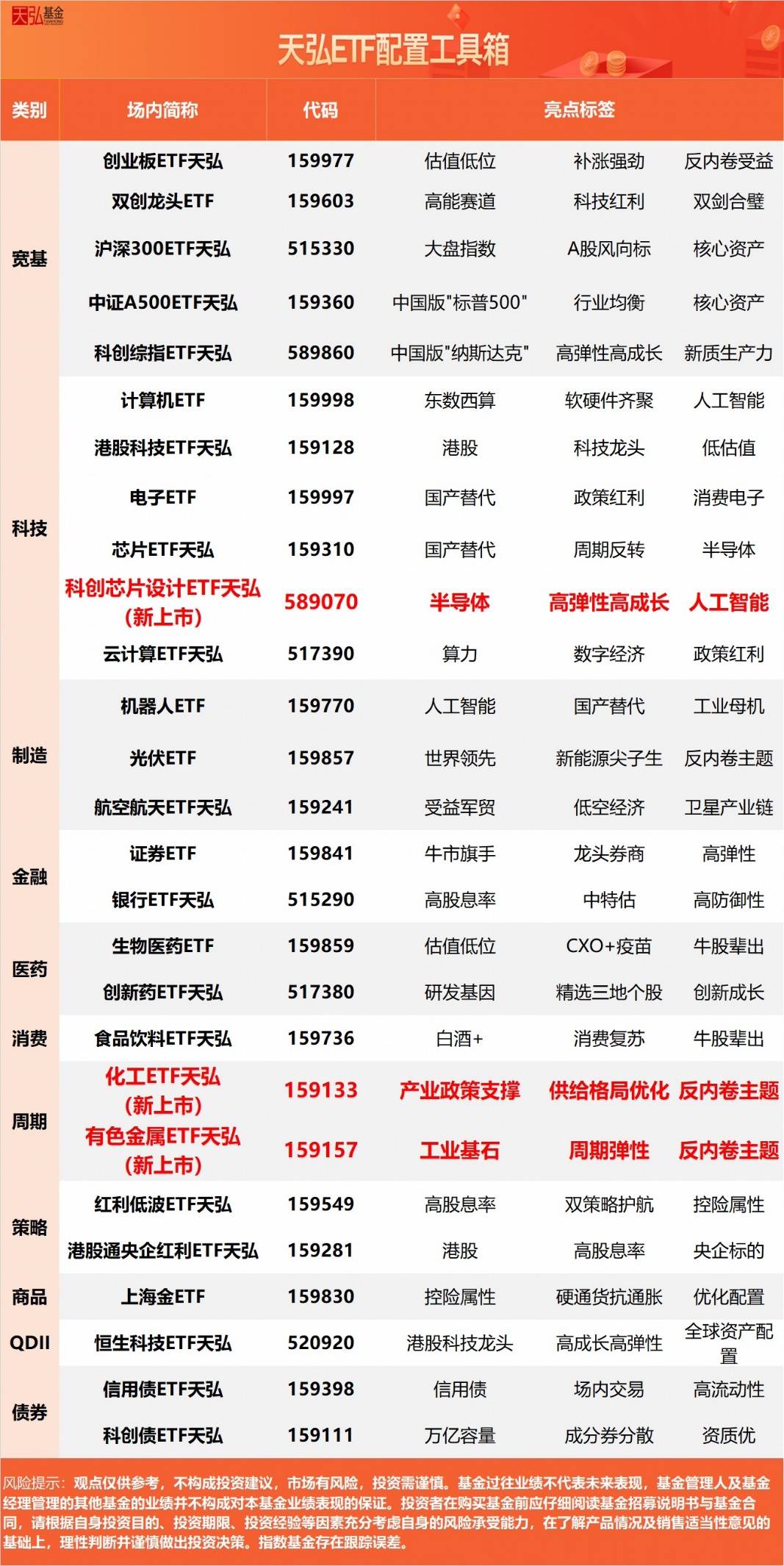
蓝海华腾布局第四代半导体领域!科创芯片设计ETF天弘(589070)标的指数昨日强势收涨超1%,实现四连阳!
Sou Hu Cai Jing· 2026-02-11 01:46
Core Insights - The Tianhong Sci-Tech Chip Design ETF (589070) has shown significant trading activity with a turnover of 7.3% and a transaction volume of 48.55 million yuan as of February 10, 2026, while the underlying index has risen by 1.25% for four consecutive days [1] - The ETF has experienced a growth of 109 million yuan in scale and an increase of 14.6 million shares over the past two weeks, indicating strong investor interest [1] - The ETF has attracted a total of 129 million yuan in inflows over the last ten trading days, reflecting a robust demand for investments in the chip design sector [1] Product Highlights - The Tianhong Sci-Tech Chip Design ETF (589070) strategically targets three high-growth segments: cloud training chips, edge inference chips, and domestic GPUs, aligning with the trends of AI computing power explosion and domestic substitution [2] - The AI chip design market is projected to grow at a rate of 68%, with domestic GPUs holding a 12% market share, providing solid performance support for the ETF [2] - The ETF is positioned as an efficient tool for investors looking to capture the benefits of the semiconductor design sector, balancing a reasonable valuation of 40-45 times with high volatility risks of 35%-45% [2] Market Events - Blue Ocean Huating has made a strategic investment in the fourth-generation semiconductor company "Gallium Future," marking a significant move in the fourth-generation semiconductor field [3] - According to Galaxy Securities, the storage market has continued its strong upward trend since Q4 2025, with DRAM and NAND flash prices rising significantly, driven by increased demand from AI servers and data center capital expenditures [3] - NAND flash supply prices have increased by over 100%, while DRAM prices have risen by 60%-70%, with expectations that this price increase cycle will continue until mid-2026 [3][4] Investment Opportunities - The current market conditions represent a new starting point for the storage chip sector, driven by rapid growth in AI server demand and domestic substitution, presenting investment opportunities in related listed companies within the domestic storage industry chain [4]


部分净值创新高的主动权益基金
2 1 Shi Ji Jing Ji Bao Dao· 2026-02-10 23:13
Core Insights - As of February 9, 2026, a total of 149 actively managed equity funds have reached their highest unit net value since inception [1] Fund Performance and Strategy - The investment styles of these funds show divergence: some focus on concentrated investments in AI computing power and applications, demonstrating significant performance elasticity but also higher volatility [1] - Other funds prioritize diversified allocations to manage risk effectively [1]
新浪财经资讯AI速递:昨夜今晨财经热点一览 丨2026年2月11日
Xin Lang Cai Jing· 2026-02-10 23:13
2026年初国际金价经历剧烈波动,创历史新高后大幅回调。分析指出,金价驱动因素权重发生结构性变 化,实际利率影响减弱,而全球债务高企、地缘政治风险及对国际货币体系的重估成为核心驱动力。同 时,全球央行持续战略性增持黄金,为金价提供长期支撑。市场呈现"强美元"与"强黄金"并存的新动态 平衡,黄金正从传统避险资产向对冲长期不确定性的战略资产转变。 164亿,中国家电大王要IPO 金融市场瞬息万变,投资与经济政策深刻影响全球。我们为您带来昨夜今晨的财经新闻,涵盖股市动 态、经济数据、企业财务和政策更新,帮助您全面把握金融世界。 黄金价格波动,有何深意? 海尔旗下工业互联网平台卡奥斯(估值164亿)正式递表赴港IPO,同时海尔新能源启动上市辅导,海 尔系上市公司数量或将增至10家。这标志着海尔在周云杰掌舵下,正从传统家电制造商向跨产业平台型 集团加速转型。卡奥斯虽被视作工业互联网标杆,但其高关联交易占比和盈利模式仍受市场质疑。此次 IPO被视为海尔对未来的关键押注,旨在构建"数字经济+绿能"的生态协同,以应对家电主业增长压 力,重塑长期竞争力。 年轻人勇闯"3元香港游"低价团,边壮胆子边"担心回不来" 春节前夕,二手 ...
从黄金到GPU:一条让你多花钱的隐秘供应链
Sou Hu Cai Jing· 2026-02-10 21:39
Group 1 - The IT industry is experiencing a cost storm due to soaring prices of precious metals, which is impacting the semiconductor supply chain and leading to a "digital inflation" crisis [1][4][5] - Gold prices reached a historical peak of nearly $5600 per ounce before experiencing significant volatility, with a record single-day drop of 40 years on January 30, followed by a rebound [2][4] - Silver has seen dramatic price fluctuations, with a single-day drop exceeding 35% on January 31, erasing all gains made since the beginning of the year, further contributing to cost pressures in the semiconductor industry [4][6] Group 2 - Silver's demand is increasing significantly in various industries, particularly in semiconductors, photovoltaics, and automotive sectors, due to its superior conductivity and thermal properties [8][10] - The photovoltaic industry now consumes nearly 30% of the global physical silver supply, as new technologies require almost double the amount of silver compared to older models [10][12] - The semiconductor packaging segment is highly sensitive to raw material price changes, with a 20% increase in gold costs potentially leading to a 5%-8% rise in packaging costs [12][14] Group 3 - The semiconductor industry is facing a supply-demand imbalance, with a projected 23% increase in global DRAM memory demand in 2026, particularly driven by data centers [14][15] - The AI boom is a significant factor driving the current price increase in the semiconductor sector, as the demand for computing power surges [14][15] - The limited capacity expansion in semiconductor manufacturing, with only a 5% increase expected in 2026, is insufficient to meet the explosive demand growth [14][15] Group 4 - Different players in the semiconductor ecosystem are experiencing varied impacts from the price increases, with domestic semiconductor equipment manufacturers benefiting from increased cash flow due to rising prices [15][17] - Chip design and hardware manufacturers are struggling to pass on rising costs to customers, risking customer loss while facing pressure from raw material price hikes [15][17] - The overall price increase across the semiconductor supply chain is likely to affect consumer electronics, leading to higher prices for end products [17][19] Group 5 - Major PC manufacturers have begun raising prices across their product lines, with increases ranging from 10% to 30% due to rising component costs [21][22] - The smartphone industry is also feeling the impact, with companies like Xiaomi and OPPO announcing price hikes for new models, driven by increased memory costs [22][24] - Cloud computing giants like AWS and Google Cloud have announced price increases for their services, marking a significant shift in the pricing paradigm of the industry [25][28] Group 6 - The rise in cloud service prices is expected to affect consumers directly, as software and application subscription costs are also increasing due to higher underlying computing costs [29][31] - The trend of charging for AI services is shifting from aggressive subsidies to more sustainable pricing models, with many companies adjusting their API prices upwards [31][34] - A significant portion of consumers is now willing to pay for AI functionalities that enhance productivity, indicating a shift in consumer attitudes towards software pricing [34][35]

2025年电子业绩前瞻:AIPCB/存储、服务器业绩高增,封装及设备国产化加速
Shenwan Hongyuan Securities· 2026-02-10 13:10
Investment Rating - The report maintains a positive outlook on the electronic industry, indicating an "Overweight" rating for the sector, driven by AI computing and semiconductor localization trends [3][4]. Core Insights - The electronic industry is expected to leverage AI computing as a growth engine, with strong performance anticipated in PCB, storage, AI/GPU chips, and semiconductor equipment sectors [3][4]. - The semiconductor equipment and parts sector is experiencing a recovery in demand, particularly benefiting from domestic production [3][4]. - The storage sector is witnessing a significant increase in profitability due to the AI industry trend, with a notable rise in demand and prices for storage products [3][6]. - The AI server and chip sectors are seeing a surge in demand both domestically and internationally, particularly for cloud servers and high-speed switches [3][6]. - The PCB sector is expected to benefit from high-end AI PCB product demand, with companies like Shenghong Technology and Shenyin Electronics leading in performance [3][8]. Summary by Sections 2025 Industry Outlook - The electronic industry is projected to thrive with AI as the main driver and semiconductor localization as a catalyst, with strong performances expected across various sub-sectors [4][5]. - Specific forecasts for companies include: - Jiangfeng Electronics: Revenue of approximately 4.6 billion, net profit growth of 7.5% to 27.5% [5]. - ShenGong Co.: Revenue growth of 42.04% to 48.65%, net profit growth of 118.71% to 167.31% [5]. - Zhongwei Company: Revenue of 12.385 billion, net profit growth of 28.74% to 34.93% [5]. Semiconductor Storage Sector - The storage sector is benefiting from increased demand driven by AI, with prices stabilizing and then rising due to supply-demand imbalances [6][7]. - Key company forecasts include: - Jiangbolong: Expected net profit growth of 150.66% to 210.82% [7]. - Aibin Storage: Revenue growth of 49.36% to 79.23%, with net profit growth of 427.19% to 520.22% [7]. PCB Sector - The PCB sector is expected to continue benefiting from high-end AI product demand, with companies like Shenghong Technology and Shenyin Electronics showing strong performance [8][9]. - Forecasts for Shenghong Technology indicate a net profit increase of 260% to 295% [8].




4卡96GB显存暴力输出!英特尔锐炫Pro B60和长城世恒X-AIGC工作站评测
Xin Lang Cai Jing· 2026-02-10 12:41
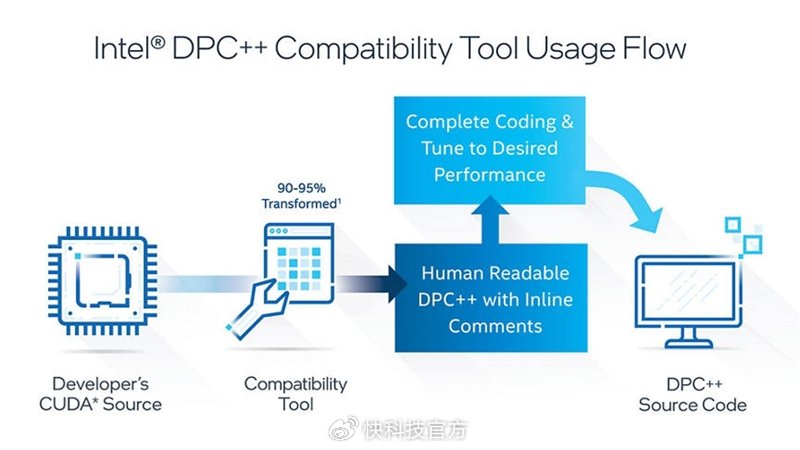
Core Viewpoint - Intel's Arc Pro B60 graphics card is positioned as a cost-effective solution for AI inference, offering significant advantages in memory capacity and performance compared to NVIDIA's offerings, particularly in the context of large model inference. Group 1: Product Overview - Intel's Arc Pro B60 features a complete BMG-G21 GPU core with 20 Xe2 cores, 2560 FP32 units, and 24GB of GDDR6 memory, which is double the capacity of its predecessor, the Intel Arc B580 [6][59]. - The card provides 12.28 TFLOPS of FP32 performance and 197 TOPS of INT8 AI performance, with a memory bandwidth of 456GB/s [8][59]. - Compared to NVIDIA's RTX Pro 2000, the Arc Pro B60 offers 50% more memory capacity and bandwidth at a significantly lower price point, making it a competitive option for high-performance AI inference [9][46]. Group 2: Market Positioning - Intel's transition to a "full-stack AI company" is challenging NVIDIA's previous dominance in the GPU market, particularly in AI applications [1][52]. - The introduction of oneAPI allows developers to easily migrate code from NVIDIA's CUDA environment to Intel hardware, enhancing the usability of Intel's GPUs for AI tasks [4][55]. - The Arc Pro B60 is highlighted as the most cost-effective solution for building large memory pools (96GB to 192GB) necessary for running extensive AI models [9][59]. Group 3: Performance Testing - In tests with the GPT-OSS-120B model, the Arc Pro B60 demonstrated the ability to handle 100 concurrent requests successfully, indicating its robustness for real-time applications [27][50]. - The mean time to first token (TTFT) was recorded at 91.37ms, showcasing the card's strong performance in the prefill phase [31][50]. - As concurrency increased, the throughput of the Arc Pro B60 improved significantly, reaching a maximum of 701 tokens per second at high loads, which is sufficient to support up to 1000 simultaneous users [36][40]. Group 4: Competitive Analysis - When compared to NVIDIA's RTX Pro 2000, the Arc Pro B60 outperformed in both memory capacity and processing power, achieving approximately 50% better performance in multi-GPU setups [46][49]. - The Arc Pro B60's large memory capacity allows it to run larger models without the need for extreme quantization, which is a limitation for NVIDIA's offerings at similar price points [47][49]. - Intel's pricing strategy for the Arc Pro B60 positions it as a viable alternative for enterprises looking to build high-performance local LLM inference stations at a fraction of the cost of NVIDIA's equivalent products [50][51].


从科创板到港股:黄浦江资本与澜起科技的A+H双城记
FOFWEEKLY· 2026-02-10 10:00
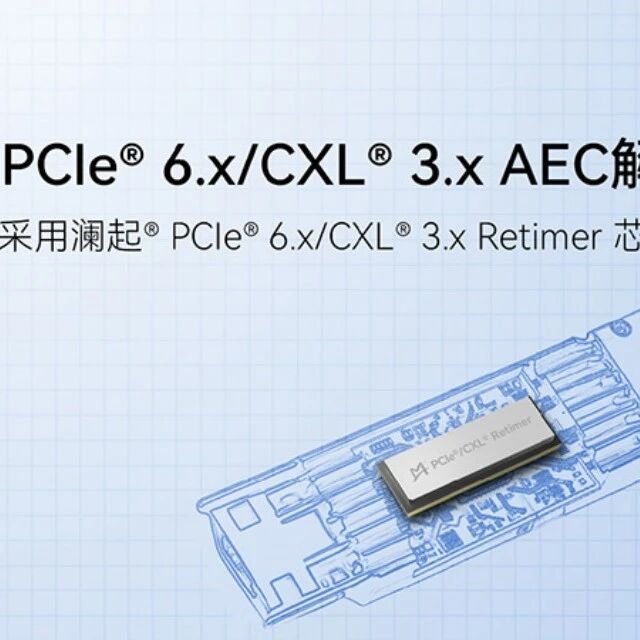
Core Viewpoint - The article highlights the successful listing of Lanqi Technology (06809.HK) on the Hong Kong Stock Exchange, marking a significant milestone in China's semiconductor industry, particularly in memory interface chips, and emphasizes the role of early investors like Huangpujiang Capital in supporting such high-tech enterprises [1][3][7]. Group 1: Company Overview - Lanqi Technology's stock closed at HK$175.00 on its listing day, a 63.72% increase from its issue price, with a combined market capitalization exceeding HK$210 billion across A and H shares [1]. - The company represents a breakthrough in China's high-end semiconductor sector, contributing to the security and resilience of the national digital infrastructure supply chain [1][9]. Group 2: Investment Journey - Huangpujiang Capital made a decisive investment in Lanqi Technology after its privatization from NASDAQ, becoming one of the major private strategic shareholders based on in-depth industry research [3]. - The capital firm accompanied Lanqi Technology through its journey from a market value of HK$100 billion to HK$1 trillion, and then to HK$1.6 trillion, demonstrating a complete cycle of investment and support [4]. - The strategic exit from the Science and Technology Innovation Board (STAR Market) was not a departure but a tactical move aligned with market conditions, maintaining a long-term positive outlook on the company [5]. Group 3: Market Dynamics - The surge in AI computing demand has been a significant driver for Lanqi Technology's value, as its products are essential for high-speed communication between CPUs and memory, addressing the needs of AI servers [9][11]. - The company's performance forecast indicates a projected net profit growth of over 50% year-on-year, driven by its interconnect chips for data centers and AI applications [11]. - Lanqi Technology's transition from the STAR Market to the Hong Kong market signifies its evolution from relying on domestic markets to competing globally through international capital [11].
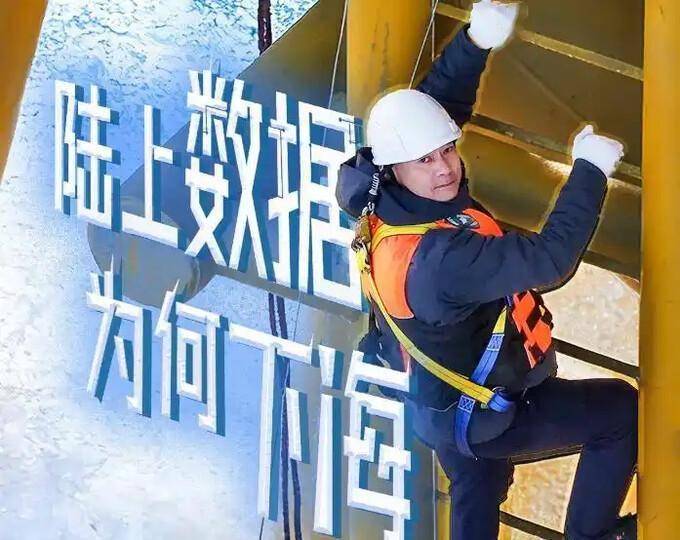
海底数据中心机房优势与全球关注
Sou Hu Cai Jing· 2026-02-10 09:36
Core Insights - The underwater data center in Shanghai represents a significant advancement in green computing, utilizing offshore wind energy to power its operations, thus reducing reliance on traditional fossil fuels [1][3] - This project addresses the challenges faced by large cities like Shanghai regarding land and energy consumption, providing a solution that allows for the establishment of data centers without occupying valuable land [3][5] - The successful implementation of this concept demonstrates the commercial viability of innovative technologies in the green infrastructure sector, positioning China favorably in the global dialogue on sustainable development [5][6] Group 1: Technological Innovation - The Shanghai Lingang project connects directly to an offshore wind farm, allowing it to operate primarily on clean energy, significantly reducing its carbon footprint and energy costs [3][6] - The data center boasts an energy efficiency ratio of below 1.1, which is considerably better than the industry average, leading to annual savings of 61 million kilowatt-hours [3][8] - The use of seawater for cooling not only reduces operational costs but also minimizes equipment failure rates, enhancing overall reliability [3][5] Group 2: Market Implications - The project is seen as a benchmark for future developments in other coastal provinces such as Guangdong, Zhejiang, and Shandong, with industry experts closely monitoring its first full-year operational report [8] - The competitive landscape is shifting as global tech giants like Google and Amazon seek to lower data center energy consumption, with China's underwater model potentially influencing other countries with extensive coastlines and wind resources [6][8] - The project has sparked interest in the entertainment industry, with studios exploring underwater data center services for data security and privacy, indicating a growing market for such innovative solutions [9] Group 3: Future Prospects - The initial high investment costs of underwater data centers must be justified by long-term energy savings and land use efficiency for widespread adoption [8] - Ongoing challenges include managing extreme marine weather conditions and long-term corrosion resistance, which will require continuous technological advancements [8][9] - The concept of "underwater computing tourism" has emerged, suggesting potential for public engagement and interest in these advanced infrastructures [9]
“易中天”业绩预告出炉 光模块“三剑客”利润暴涨
Xin Lang Cai Jing· 2026-02-10 09:33
Core Insights - The optical communication industry is experiencing a concentrated performance release period in February 2026, with companies like Zhongji Xuchuang, Xinyi Sheng, and Tianfu Communication gaining market attention due to strong 2025 performance forecasts driven by robust demand for high-speed optical modules related to AI infrastructure [1] Group 1: Performance Explosion - Zhongji Xuchuang leads the industry with a projected net profit of 9.8 billion to 11.8 billion yuan, reflecting a year-on-year increase of 89.5% to 128.2% [2] - Xinyi Sheng follows closely with an expected net profit of 9.4 billion to 9.9 billion yuan, showing a staggering year-on-year growth of 231.2% to 248.9% [2] - Tianfu Communication anticipates a net profit of 1.88 billion to 2.15 billion yuan, with a year-on-year growth rate of 40% to 60% [2] - The global market for optical modules is projected to exceed $26 billion in 2026, with a compound annual growth rate of 87% from 2026 to 2028 [2] Group 2: Demand Drivers - The core driver of this performance surge is the ongoing investment in AI computing power, with JPMorgan estimating that the total capital expenditure of the four major North American cloud service providers will reach approximately $363 billion in 2025, a year-on-year increase of about 65% [3] - In 2026, this expenditure is expected to rise to approximately $447 billion, indicating continued strong growth [3] - Chinese companies like ByteDance, Alibaba, and Tencent are also ramping up their demand for 800G modules, potentially reaching several million units collectively [3] - ByteDance is notably advancing directly to LPO (Linear Drive Optical) technology, which could position it as a dark horse in the 800G market if successful [3] Group 3: Challenges and Opportunities - Despite the industry's positive outlook, a shortage of optical chip supply remains a significant bottleneck, with Nomura estimating that global advanced optical chip capacity will grow by 80% in 2025 but still lagging behind demand by 5% to 15% [4] - Leading companies are addressing these challenges through vertical integration and technological innovation, with Zhongji Xuchuang reducing reliance on external suppliers by developing its own optical chips [4] - Xinyi Sheng is enhancing its technological layout through the acquisition of silicon photonics companies, while Tianfu Communication has established a technological barrier with over 1,200 patents, having its core components integrated into NVIDIA's supply chain [4] - The "Yizhongtian" trio is leveraging technological iteration and capacity expansion to write a golden chapter for China's optical communication industry during this super cycle [4]


PCB产业链深度报告:2025年业绩预告高增,2026年景气持续
Dongguan Securities· 2026-02-10 08:41
Investment Rating - The report maintains an "Overweight" rating for the PCB industry chain, anticipating high growth in 2025 and sustained prosperity in 2026 [1]. Core Insights - The PCB industry is expected to experience significant growth in 2025, driven by increasing demand for AI computing power and the upgrade of PCBs towards high-performance and high-density products. This includes a rise in demand for high-layer boards and advanced HDI products, which will also boost related sectors such as high-end copper-clad laminates, drilling consumables, and equipment [4][61]. - Despite some disruptions in Q4 2025 performance, the growth logic for 2026 remains intact, with new computing platforms and technologies like orthogonal backplanes and CoWoP expected to enhance product value significantly [4][61]. Summary by Sections PCB - Q4 2025 performance may face disruptions, but the growth logic for 2026 remains unchanged. The demand for high-layer and advanced HDI PCBs is increasing, leading to high growth rates for companies like Shenghong Technology, Huadian Co., and Shennan Circuit, with projected net profits of 43.60 billion, 38.22 billion, and 32.48 billion respectively, reflecting year-on-year growth rates of 277.68%, 47.74%, and 73.00% [13][14]. Copper Clad Laminate (CCL) - The CCL sector is expected to see high growth in 2025, benefiting from increased demand for high-end products driven by AI computing power and price adjustments. Major CCL manufacturers are projected to achieve significant profit increases, with companies like Shengyi Technology expected to report a net profit of 33.50 billion, a year-on-year increase of 92.50% [36][41]. Drilling Tools and Equipment - The drilling tool sector is anticipated to exceed market expectations in 2025, with companies like DingTai High-Tech projected to achieve a net profit of 4.35 billion, reflecting a year-on-year growth of 91.74%. This growth is driven by increased demand for high-end PCBs and the optimization of product structures [48][49]. - Equipment demand is expected to rise due to the expansion of PCB production capacity, with companies like Dazhu CNC and Chip Quik projected to see significant profit increases, driven by the growing market for PCB-specific processing equipment [55][57].

