
绿色发展

Search documents
长江经济带十年蝶变:科创赋能,世界级产业方阵成形
2 1 Shi Ji Jing Ji Bao Dao· 2026-01-05 13:01
Core Insights - The Yangtze River Economic Belt has achieved significant green development over the past decade, contributing nearly half of the national GDP while accounting for about one-third of energy consumption and carbon emissions [1][11]. Group 1: Economic Growth and Development - The GDP of the Yangtze River Economic Belt has more than doubled, increasing its share of the national GDP from 42.2% to 47.3% [6]. - The region has cultivated 41 national-level advanced manufacturing clusters and 30 strategic emerging industry clusters, representing 51% and 45% of the national totals, respectively [11]. Group 2: Technological and Industrial Innovation - The integration of technological and industrial innovation has accelerated, with a focus on building international technology innovation centers and nurturing emerging industries [1][11]. - Breakthroughs in key technologies have been achieved in fields such as artificial intelligence, quantum information, and life sciences, with notable companies like DeepSeek and Yushu Technology emerging as internationally competitive [1][12]. Group 3: Green Transformation and Sustainability - The Yangtze River Economic Belt is actively promoting the green and low-carbon transformation of industries, with initiatives including the establishment of carbon peak pilot cities and zero-carbon parks [11]. - The shift from viewing ecological protection as a burden to recognizing it as a driving force for economic development has been emphasized, showcasing a successful model of harmonious coexistence between economic growth and environmental sustainability [6][7]. Group 4: Future Directions and Recommendations - Future efforts should focus on broader regional cooperation in key sectors such as aerospace and renewable energy, enhancing collaborative innovation to elevate China's global competitiveness [14][17]. - The need for a transition from government-led development to a model that fully activates market and social forces has been highlighted, aiming for innovative shared ecological development [16][17].

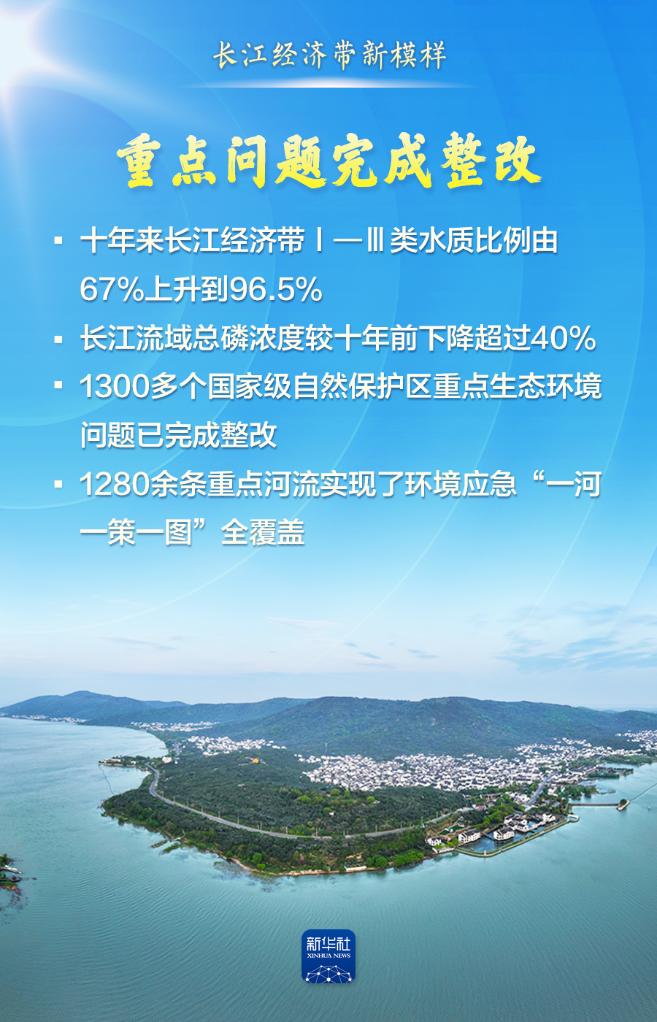
这组数据,描绘长江经济带新模样!
Xin Hua Wang· 2026-01-05 12:51
Core Viewpoint - The Yangtze River Economic Belt has achieved significant ecological and economic advancements over the past decade, emphasizing ecological priority and green development, leading to a harmonious coexistence of nature and human activities [1]. Environmental Protection and Quality Improvement - The proportion of water quality classified as good has increased from 67% to 96.5% [4]. - Total phosphorus concentration in the Yangtze River basin has decreased by over 40% compared to ten years ago [4]. - More than 1,300 national nature reserves have completed key ecological environment issue rectifications [4]. - Over 1,280 key rivers have achieved full coverage of environmental emergency management [4]. Infrastructure and Economic Development - The high-grade navigable waterway mileage has reached 11,500 kilometers [6]. - By 2025, the throughput of Yangtze River mainline ports is expected to reach 4.2 billion tons, with the number of major ports increasing to 18 [6]. Flood Control and Water Resource Management - Successfully managed the 2020 regional flood by preventing 49 billion cubic meters of floodwater, protecting 1,752 million people and 1.1 million hectares of farmland [8]. - Ensured safe drinking water for urban populations and irrigation for 1.83 million acres of autumn crops [8]. Green and Low-Carbon Industrial Transformation - Three technology innovation centers and eight national laboratories have been established along the river [11]. - By 2025, the production of new energy vehicles in Shanghai, Jiangsu, Zhejiang, Anhui, and Chongqing is expected to exceed one million units each [11]. - 24 cities and parks have been designated as national carbon peak pilot areas, with 14 zero-carbon parks established [11]. Pollution Control and Regulatory Framework - Over 160,000 kilometers of river and lake shorelines have been inspected, with more than 200,000 pollution outlets accurately identified [12]. - A comprehensive supervision management system for pollution outlets has been established [12]. Fisheries and Biodiversity Conservation - The release of over one million Chinese sturgeons is planned for 2024 and 2025 [13]. - The population of Yangtze River dolphins is steadily increasing, with the distribution range expanding [13]. - A total of 344 fish species have been monitored in the Yangtze River basin from 2021 to 2024, an increase of 36 species compared to before the fishing ban [13]. Multi-Modal Transport and Connectivity - The implementation of a comprehensive transport system has led to significant improvements in multi-modal transport [14]. - By the "14th Five-Year Plan" period, the railway port rate for major ports along the Yangtze River is expected to exceed 90%, with an annual growth rate of over 30% for container rail-water intermodal transport [14]. Flood Prevention Infrastructure - More than 300 large reservoirs have been built in the Yangtze River basin, with a flood control capacity of 80 billion cubic meters [15]. - Over 1,000 kilometers of riverbanks have been treated to stabilize the river flow in the middle and lower reaches [15].
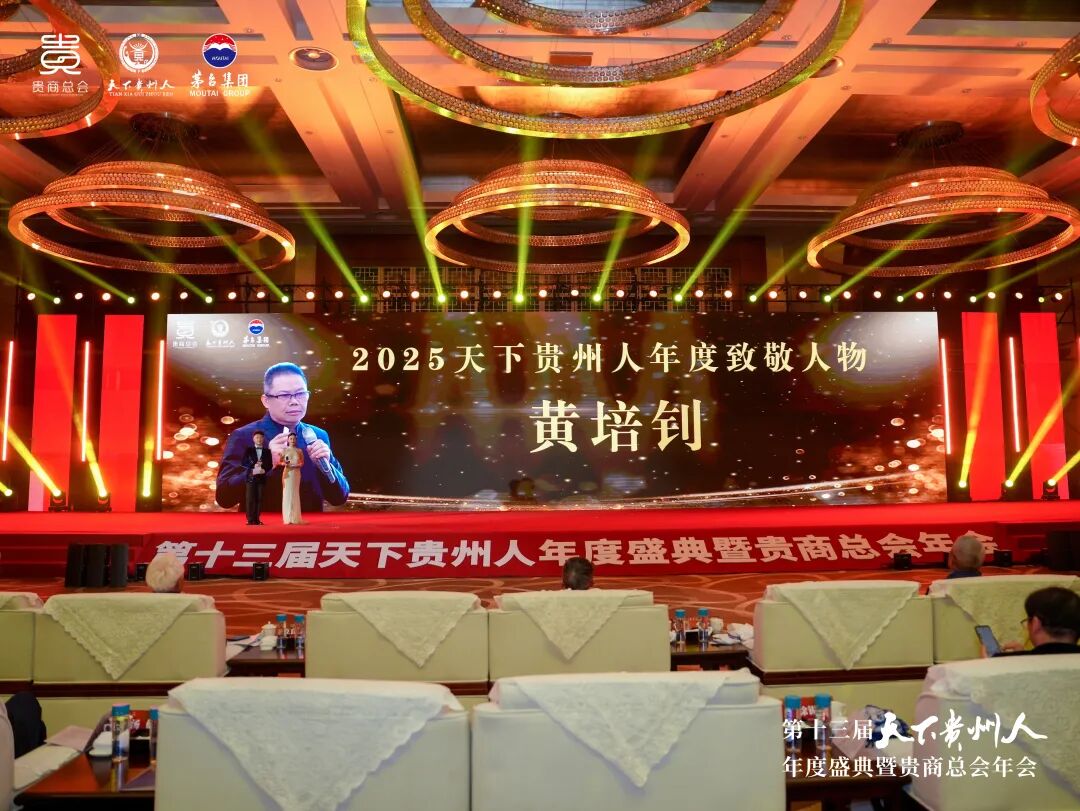
以技术革新守护绿水青山:芭田股份董事长兼总裁黄培钊荣膺贵州年度致敬人物
Xin Lang Cai Jing· 2026-01-05 11:45
Core Insights - The article highlights the recognition of Huang Peizhao, Chairman and President of Batian Co., Ltd., as the "Annual Tribute Person of Guizhou" for his contributions to efficient phosphorus resource utilization and green transformation in the industry [1][11][13] Group 1: Leadership and Vision - Huang Peizhao has dedicated 40 years to the agricultural and fertilizer industry, earning a Ph.D. in Plant Nutrition in 1999, which laid a solid foundation for his contributions [3][15] - Under his leadership, Batian Co., Ltd. became the first listed company in China's compound fertilizer industry in 2007, marking a new chapter in standardized and large-scale development [3][15] - The company focuses on technological innovation as a core driver, establishing a dual business model of "high-value fertilizers + fine phosphorus chemicals" [3][15] Group 2: Technological Breakthroughs - Batian Co., Ltd. has adopted a "green first, ecological priority" philosophy, addressing the industry's challenges of high production costs and environmental pollution [4][11] - Huang led a strategic decision to invest over 4 billion yuan in building a phosphorus chemical circular economy industrial park in Guizhou, developing a proprietary frozen nitric phosphorus fertilizer process [4][16] - The company achieved significant breakthroughs in key processes, successfully localizing 308 sets of core equipment and breaking foreign technology monopolies [4][16][17] Group 3: Resource Empowerment - The Weng'an phosphorus mine in Guizhou is a key resource for Batian, known for its high phosphorus content and rich trace elements, supporting the company's stringent raw material standards [7][19] - Batian has made steady progress in securing phosphorus mining rights, achieving a production capacity goal of 200 million tons per year by October 2024, with plans to expand to 290 million tons [7][19][20] - The company has established a closed-loop circular economy model, achieving a net profit of 409 million yuan in 2024, a 57.67% increase year-on-year, and a net profit of 687 million yuan in the first three quarters of 2025, a 236.13% increase [8][20] Group 4: Future Outlook - Huang Peizhao's practices in Guizhou have become a replicable model for resource-based industry transformation, with plans to continue enhancing strategic layouts through innovative processes and AI [10][22] - The company aims to maximize phosphorus resource value and support modern agricultural development, contributing to economic growth and ecological protection [10][22]

中国社会科学院国家全球战略智库:在开放合作中推动全球绿色发展
Jing Ji Ri Bao· 2026-01-05 10:21
Core Viewpoint - Green development has become a global consensus, emphasizing the need for cooperation in promoting low-carbon transitions amidst climate change and economic challenges [1] Group 1: Historical Context and Development - Environmental issues have transitioned from the periphery to the mainstream agenda since the 1960s, with significant milestones such as the publication of "Silent Spring" in 1962 and the 1972 UN Conference on the Human Environment [2] - The concept of sustainable development was first articulated in the 1987 report "Our Common Future," leading to frameworks like the 1992 UN Conference on Environment and Development [2] - From the early 2000s to 2015, green trade and clean energy investments surged, with emerging market economies playing a crucial role in global climate negotiations [3] Group 2: Current Trends in Green Development - A comprehensive green low-carbon policy framework is being established globally, with countries setting carbon neutrality goals and developing carbon markets [4] - The scale of green investments is expanding, with global renewable energy investments projected to reach $807 billion in 2024, including solar investments exceeding $554 billion [4] - Green trade is emerging as a new growth point, with exports of solar and wind products expected to reach $443 billion and $245 billion respectively in 2024 [5] Group 3: Regional Practices and Innovations - Different regions are exploring diverse paths for green transformation, with the EU focusing on a market-driven approach and the Asia-Pacific region emphasizing industrial upgrades and financial collaboration [6][7] - Africa is leveraging its renewable energy resources through initiatives like the African Green Energy Initiative, with clean energy investments projected to reach $40 billion in 2024 [8] - Latin American countries are implementing green development plans based on their resource endowments, with Argentina's lithium exports expected to grow by 26% in 2024 [9] Group 4: China's Role in Global Green Development - China is committed to a green low-carbon development path, actively participating in global green governance and contributing to sustainable development [10] - The country has established a comprehensive carbon reduction policy framework and is enhancing its international cooperation in green technology and standards [11] - China's green investment initiatives, such as the "Belt and Road" initiative, are aimed at supporting global green infrastructure and energy projects [12] Group 5: Future Opportunities and Challenges - The urgency of climate change and rising consumer awareness are driving demand for green products, with new growth points emerging in green technology services and carbon trading [13][14] - The transition to a low-carbon economy is expected to increase investment needs across various sectors, including renewable energy and smart transportation [14] - However, international competition in the green sector is intensifying, with trade protectionism and geopolitical tensions posing challenges to global green development [15]
入局雄安新区建设 杭州园林标杆实力承接国家级战略工程
Quan Jing Wang· 2026-01-05 08:59
Core Insights - The company received a letter of appreciation from the Beijing University of Science and Technology for its professional capabilities and collaborative spirit in the landscape design of the university's Xiong'an campus project, which is a key national strategic initiative [1][2] - The project is expected to enhance the company's brand influence and market competitiveness in high-end landscape design [1] - The collaboration with the university is set to deepen by 2026, indicating a long-term partnership and solidifying the company's market position in the Xiong'an New Area [2] Company Performance - The company has been actively involved in multiple key projects in the Xiong'an New Area, including the design of the Beijing University of Science and Technology campus and other ecological restoration projects [3] - The company received recognition for its professional execution in challenging projects, which further establishes its reputation in ecological construction [3] Industry Context - The Xiong'an New Area is a significant national strategic initiative, with total investments exceeding 1 trillion yuan since its establishment, and an average annual investment growth rate of 19.8% during the 14th Five-Year Plan period [2] - The industry is experiencing accelerated growth opportunities due to the emphasis on green development and ecological restoration as part of China's modernization strategy [3][4] - The company holds multiple high-level qualifications in landscape design and engineering, allowing it to undertake a wide range of projects without restrictions [4] Strategic Advantages - The company focuses on integrated solutions for landscape design and engineering, leveraging its strong brand and order acquisition capabilities [4] - It actively engages with government entities and developers to secure landmark projects, enhancing its influence across various stakeholders [4] - The ongoing emphasis on ecological restoration and urban renewal during the 14th Five-Year Plan is expected to create further growth opportunities for the company [4]

金徽股份:2025年绿色发展引领矿业新篇章
Zhong Guo Jin Rong Xin Xi Wang· 2026-01-05 08:08
Core Viewpoint - In 2025, Jinhui Mining Co., Ltd. aims to become a benchmark for green development in the mining industry, driven by its achievements in green development, significant breakthroughs in resource exploration, and notable results in technological innovation and talent cultivation [1]. Group 1: Green Development - Jinhui Mining prioritizes "ecology first, green development" as its core philosophy, actively exploring new models of ecological mining and achieving remarkable results [3]. - The company was awarded the title of "Outstanding Contribution Enterprise for Stable Growth in Gansu Province" by the Gansu Provincial Party Committee and Government in March 2025, and recognized as a national-level "Green Water and Green Mountain is Gold Mountain and Silver Mountain" practice innovation base in December 2025 [3]. - Jinhui Mining has made significant progress in green mining and ecological restoration, enhancing production efficiency and resource utilization through intelligent construction, achieving a win-win situation for economic and ecological benefits [3]. Group 2: Resource Exploration - In resource exploration, Jinhui Mining has achieved significant breakthroughs, particularly in the Dongpo and Yangjiashan areas, laying a solid resource foundation for future capacity enhancement [4]. - The Yangjiashan-Yuanjiaping lead-zinc-gold polymetallic mine has been identified as a medium to large-scale deposit, with the relevant report approved by the Gansu Provincial Natural Resources Department [4]. - The Dongpo lead-zinc mine has discovered stable high-grade ore bodies, with lead-zinc average grades reaching 6%-8% and a drilling success rate exceeding 80%, with a detailed investigation report expected to be completed this year [4]. - The company is investing 5 billion yuan in the Jianglu mining area, with projects progressing efficiently, including the successful trial operation of the Xiejia Gou flotation plant (1.5 million tons/year) on December 29, 2025 [4]. Group 3: Technological Innovation and Talent Cultivation - Jinhui Mining established a Mineral Research Institute and the Xiao Yun Skills Master Studio in December 2025, marking a new phase in systematic technological innovation and high-skilled talent cultivation [5]. - The Mineral Research Institute focuses on green mineral processing and resource comprehensive utilization, promoting the transformation and application of technological achievements [5]. - The Xiao Yun Skills Master Studio gathers top industry talents to conduct training and exchange activities, providing strong support for the company's technological innovation [5]. - The company has deepened partnerships with several higher education institutions to create a full-cycle talent pathway from internships to recruitment and in-service training, fostering a new generation of talent for management and technical teams [5].

国家发展改革委:长江经济带十年来地区生产总值占全国比重从42.2%提升到47.3%
Xin Hua Cai Jing· 2026-01-05 06:59
Core Viewpoint - The Yangtze River Economic Belt has achieved significant ecological and economic progress over the past decade, with a focus on ecological priority and green development, leading to improved water quality and increased GDP contribution to the national economy [1] Group 1: Ecological Progress - The proportion of good water quality in the Yangtze River Economic Belt has increased from 67% to 96.5% over the past ten years [1] - The GDP of the region has more than doubled, rising from 42.2% to 47.3% of the national total [1] - The concept of "big protection, not big development" has been effectively implemented, leading to significant pollution control in key areas such as industrial and agricultural sectors [1] Group 2: Technological and Industrial Innovation - The integration of technological and industrial innovation in the Yangtze River Economic Belt has accelerated, with a focus on fostering emerging and future industries [2] - The length of high-level navigable waterways has increased from 8,000 kilometers to 11,000 kilometers, and cargo throughput at mainline ports has grown by 71% to reach 4.2 billion tons [2] - The establishment of international technology innovation centers in Shanghai, Wuhan, and Chengdu-Chongqing regions has led to the emergence of competitive innovative enterprises [2] Group 3: Cultural Heritage and Community Well-being - The cultural heritage along the Yangtze River has been preserved and promoted, with significant archaeological discoveries and the establishment of the Yangtze National Cultural Park [3] - The flood control and disaster reduction system in the Yangtze River basin has been improved, protecting lives and property [3] - The per capita disposable income of residents has increased from 23,000 yuan to 44,000 yuan, representing a growth of 91% [3]
何以中国 | AI漫话天津:海河潮涌 “津”彩万象
Huan Qiu Wang· 2026-01-05 06:15
Group 1 - The core viewpoint highlights Tianjin's development as a key northern international shipping hub, emphasizing its commitment to innovation and ecological sustainability [1] - By the end of 2024, Tianjin Port's container throughput is expected to exceed 23.28 million standard containers, with an automation rate of over 88% for large container handling equipment and a 15% increase in average operational efficiency [1] - The port has achieved 100% clean transportation for container and coke internal handling, with all shore power at the operational terminals sourced from wind and solar green energy [1] Group 2 - Tianjin has intensified efforts in wetland ecological restoration, particularly in the Qilihai Wetland Nature Reserve, leading to improved ecological conditions and a steady increase in biodiversity, making it a breeding ground for many rare waterbirds [1] - The narrative of Tianjin reflects an open and inclusive story along the Bohai Bay, showcasing a blend of rich history and a forward-looking future [1]

国家发改委:长江干流水质由部分Ⅴ类提升到全线Ⅱ类
Zhong Guo Xin Wen Wang· 2026-01-05 03:16
编辑:张澍楠 广告等商务合作,请点击这里 国家发改委:长江干流水质由部分Ⅴ类提升到全线Ⅱ类 中新网1月5日电 国务院新闻办公室5日举行新闻发布会,介绍长江经济带发展十年工作进展和成效。国 家发展改革委副主任王昌林在会上表示,十年来,共抓大保护、不搞大开发的理念在长江经济带落地生 根,生态长江底色更加鲜明。 王昌林介绍,国家发改委坚守战略初心,追根溯源、系统治疗"长江病",深入推进工业、城镇污水垃 圾、农业面源、船舶等重点领域污染治理,通过"关、改、搬、转"近万家化工企业破解"化工围江"难 题,彻底清理整治1361座非法码头,基本消除沿江地级及以上城市黑臭水体,坚定不移推进长江十年禁 渔,长江干流水质由部分Ⅴ类提升到全线Ⅱ类。清江呈碧影,岸翠映芳洲,江豚逐浪起,鲟鱼竞洄游, 在万里江涛上谱写了一首新时代绿色发展的"长江之歌"。 来源:中国新闻网 本文为转载内容,授权事宜请联系原著作权人 中新经纬版权所有,未经书面授权,任何单位及个人不得转载、摘编或以其它方式使用。 关注中新经纬微信公众号(微信搜索"中新经纬"或"jwview"),看更多精彩财经资讯。 ...
确保一江清水绵延后世、惠泽人民
Xin Hua Wang· 2026-01-05 01:51
Core Viewpoint - The development of the Yangtze River Economic Belt over the past decade has focused on ecological protection and high-quality development, emphasizing the need for sustainable practices and environmental restoration [1][3][30]. Group 1: Ecological Restoration and Economic Transformation - The ecological environment of the Yangtze River has significantly improved, with over 96% of national control sections showing good water quality, and the population of Yangtze finless porpoises increasing to 1,249 [13]. - The shift from coal mining to agriculture, such as the successful cultivation of oranges in Fengjie County, exemplifies the region's transition to a green economy [2][3]. - The implementation of the "Ten-Year Fishing Ban" aims to restore aquatic biodiversity, allowing fish populations to recover and providing new livelihoods for former fishermen [16][17]. Group 2: Policy and Legal Framework - The introduction of the "Yangtze River Protection Law" in March 2021 provides a legal foundation for ecological protection efforts, reinforcing the commitment to sustainable development [9]. - A series of policies and planning documents have been released to support the ecological and economic goals of the Yangtze River Economic Belt, creating a cohesive strategy for development [9][24]. Group 3: Collaborative Governance and Community Involvement - The establishment of a river chief system has mobilized local communities to participate in river management, fostering a culture of environmental stewardship [10][11]. - Cross-regional cooperation among provinces along the Yangtze River has improved water quality management and ecological restoration efforts, demonstrating the importance of collaborative governance [7][8]. Group 4: Economic Development and Innovation - The Yangtze River Economic Belt has become a hub for the automotive industry, with the region accounting for 40% of China's new energy vehicle production [22]. - Technological innovation is driving economic transformation, with cities like Chengdu and Hefei focusing on advanced manufacturing and quantum technology [23][24]. - The economic output of the Yangtze River Economic Belt is projected to exceed 63 trillion yuan, contributing over 50% to national economic growth [24][27].