
绿色消费

Search documents
最高2000元!西安绿色家电消费补贴再加力
Mei Ri Jing Ji Xin Wen· 2025-08-17 05:49
Group 1 - Xi'an's municipal government is enhancing subsidies for green home appliances, providing a subsidy of 7.5% of the final sales price for eligible products, with a maximum subsidy of 1000 yuan per item [1] - Consumers can receive a total subsidy of 15% of the transaction price, up to 2000 yuan, if companies match the subsidy on a 1:1 basis [1] - The subsidy policy will be effective from August 13, 2025, and will continue until the allocated funds are exhausted [1]
巴菲特减持苹果和美国银行|首席资讯日报
首席商业评论· 2025-08-16 04:34
Group 1 - The Trump administration is in talks to potentially acquire a stake in Intel to support its domestic manufacturing efforts, particularly for a planned factory cluster in Ohio [2] - The film "浪浪山小妖怪" has surpassed previous Japanese animated films to become the highest-grossing 2D animated film in Chinese history [3] Group 2 - Keling AI has launched a new feature for its 2.1 model, enhancing video generation capabilities and addressing issues like abrupt transitions and insufficient text responses, making it suitable for professional creative scenarios [4] - Berkshire Hathaway has reduced its holdings in Apple and Bank of America while initiating positions in companies like UnitedHealth and Nucor [5][6] Group 3 - As of the end of July, the nationwide unsold commercial housing area in China has decreased for five consecutive months, totaling 76,486 million square meters, down by 462 million square meters from June [7] - At the World Humanoid Robot Sports Competition, Yushun's robot H1 won first and third place in the 1500-meter race, with the CEO expressing excitement for future 100-meter races [8] Group 4 - The American Bitcoin company, backed by the Trump family, is looking to acquire a Japanese listed company and expand into the Hong Kong market [9] - Samsung's market share in DRAM memory and smartphone display panels has declined, with DRAM dropping from 41.5% to 32.7% and smartphone displays from 50.1% to 39.9% [10] Group 5 - Customs authorities in Dongguan seized 1,992 counterfeit "Labubu" blind boxes, indicating significant infringement concerns [11] - IDC predicts that China's spending on generative AI-related network hardware will increase from 6.5 billion yuan in 2023 to 33 billion yuan by 2028 [12] Group 6 - Huawei has launched the MatePad 11.5 S, starting at 2,199 yuan, featuring a high-precision screen designed to reduce environmental interference [13] - The China Consumers Association has released a draft of the "Green Consumption Guide" to promote sustainable consumption practices among consumers [14]






环保新风尚绘就绿色消费新图景
Xin Hua Wang· 2025-08-15 11:54
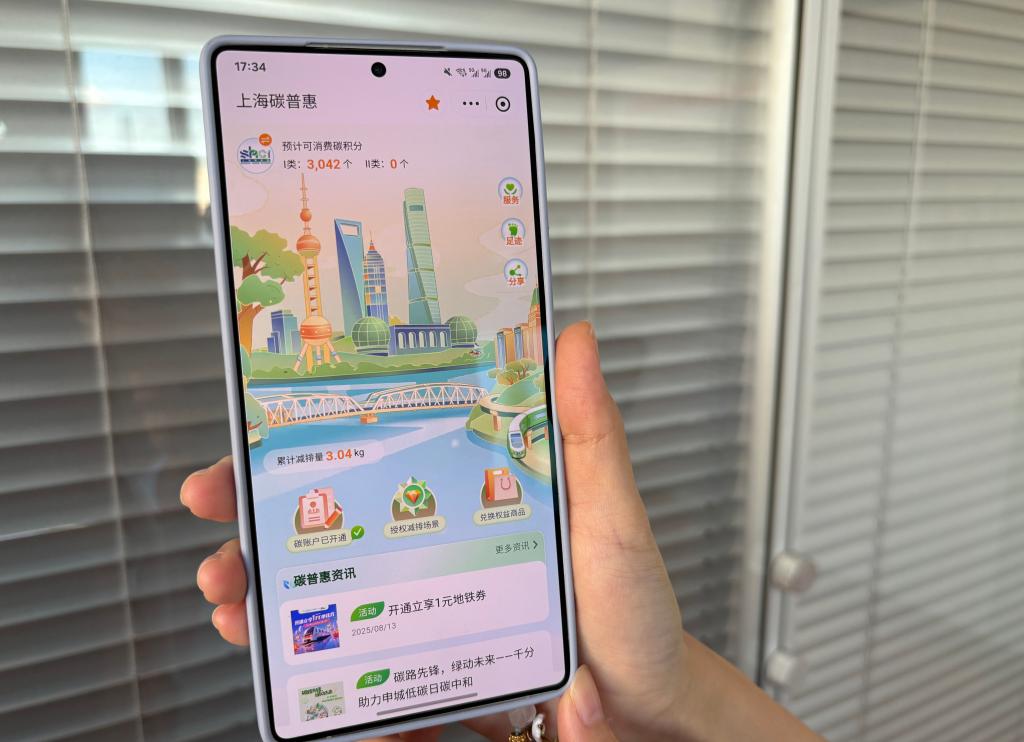
Core Viewpoint - The articles highlight the growing trend of green consumption in China, driven by initiatives such as carbon footprint labeling, the promotion of the second-hand economy, and technological innovations that facilitate sustainable living practices [1][2][3][4][6]. Group 1: Carbon Footprint and Green Labels - Various regions are implementing carbon footprint labels on products to guide low-carbon consumption, with examples like bamboo kitchenware in Anji showing specific carbon emissions data [1]. - Anji County has introduced carbon footprint labels for bamboo products, aiming to promote low-carbon consumption and help businesses identify carbon reduction opportunities [1]. Group 2: Second-Hand Economy - Chongqing is focusing on developing the second-hand economy as a means to promote green consumption, with a projected transaction scale of 69.75 billion yuan by 2024 and plans for 57 second-hand markets [2]. - The city is also fostering an "Internet + second-hand" model, leading to the emergence of new business formats like live-streaming for second-hand goods [2]. Group 3: Technological Innovations - The Green Life Ecological Platform launched in April 2023 utilizes a points system to encourage sustainable consumption, allowing users to earn rewards that can be redeemed for discounts [3]. - Shanghai's Carbon Inclusive Platform enables users to track their carbon footprint through a personal account, rewarding green behaviors with carbon credits that can be exchanged for benefits [4]. Group 4: Sustainable Lifestyle Practices - The shift towards green consumption is evident in urban lifestyles, with individuals opting for local and seasonal foods, and using reusable containers to minimize waste [6][8]. - The promotion of bamboo products in Anji not only reduces plastic waste but also enhances local cultural identity, with significant reductions in single-use plastic items reported [6][8]. Group 5: Economic Implications - Green consumption is expected to drive the rise of green industries, creating new economic opportunities and reinforcing the importance of sustainable practices in consumer behavior [8].
明天上海见!第三届21世纪“活力·ESG”论坛议程请查收
2 1 Shi Ji Jing Ji Bao Dao· 2025-08-15 09:53
Group 1 - The third "Vibrant · ESG" Innovation Forum is scheduled to be held in Shanghai on August 16, guided by the Southern Finance Media Group and hosted by the 21st Century Business Herald [1] - Key speakers include prominent figures from various organizations, such as Wang Zhongmin, former vice chairman of the National Social Security Fund Council, and Zhang Zhengwei, special advisor to the ISSB chairman, who will discuss the latest policy trends in green transformation and ESG practices [1][2] - The forum emphasizes the importance of ESG as a strategic choice for enterprises to overcome development bottlenecks and internal competition, highlighting the need for digital transformation in traditional energy companies and addressing uncertainties in technology routes for renewable energy firms [2] Group 2 - A session on "Building Green Supply Chains, Industrial Chains, and Value Chains" will feature representatives from major companies like Sony, Adidas, and Mars, focusing on how leading firms can drive green transformation in their supply chains [3] - The forum promotes sustainable practices by encouraging attendees to use public transportation, bring their own cups and utensils, and implement recycling initiatives at the venue, contributing to energy conservation and waste reduction [3]
《中国消费者绿色消费指南》公开征求意见
Yang Shi Wang· 2025-08-15 08:02
央视网消息:8月15日,中国消费者协会(以下简称"中消协")推出《中国消费者绿色消费指南》(公 开征求意见稿,以下简称《指南》),广泛征求社会意见。 《指南》的编制发布,是中消协立足于新时代消费者权益保护工作要求,履职尽责、守正创新的有益尝 试。 中消协负责人表示,中消协将在公开征求社会各界和广大消费者意见的基础上,对《指南》进行修改完 善,择期正式发布。 《指南》兼顾环保效益、个体效益和社会效益三个维度,对绿色消费政策进行深入浅出的解读,通俗易 懂、朗朗上口,有助于消费者口耳相传、对照实践。 《指南》重点围绕"3060"碳达峰碳中和目标,将居民生活消费作为促进节能减排、推动绿色转型的关键 动力,倡导绿色消费从每个普通消费者做起,从日常消费行为做起,帮助消费者增加绿色消费知识,提 升绿色消费信心,培养可持续生活方式。 《指南》立足于我国社会文化背景与居民日常生活场景,综合考量科学性、环保性和可行性,系统性提 出50条行动建议,引导绿色消费行为。其内容涵盖饮食、出行、资源、日用品消费等领域,具体包括倡 导"光盘行动"、减少一次性餐具使用,倡导低碳出行,鼓励优先选择公共交通、骑行或步行,推广节能 家电、合理使用水 ...
从吃到行全覆盖!中消协推出绿色消费指南,今起征求意见
Yang Shi Xin Wen· 2025-08-15 03:01
Core Points - The China Consumers Association (CCA) has released a draft of the "Green Consumption Guide" to solicit public opinions, aiming to promote a green and low-carbon lifestyle among consumers [1] - The guide focuses on the "3060" carbon peak and carbon neutrality goals, emphasizing the role of residential consumption in energy conservation and green transformation [1] - It proposes 50 actionable recommendations across various consumption areas, including food, transportation, resources, and daily necessities, to encourage sustainable consumption practices [1] Summary by Categories Green Consumption Goals - The guide aims to guide consumers in adopting green consumption practices to support resource conservation and environmental protection [1] - It seeks to enhance consumer knowledge and confidence in green consumption, fostering sustainable lifestyles [1] Actionable Recommendations - Recommendations include promoting the "Clean Plate" campaign, reducing single-use utensils, advocating for low-carbon travel, and encouraging the use of public transport, cycling, or walking [1] - It also suggests promoting energy-efficient appliances, rational use of water and electricity, purchasing green-certified products, resisting excessive packaging, and encouraging the recycling of old items [1] Educational Approach - The guide is designed to be accessible and easy to understand, making it suitable for widespread dissemination among consumers [1] - It balances environmental, individual, and social benefits, providing a comprehensive interpretation of green consumption policies [1]
为消费提质升级绘制清晰路径 宁夏实施优化消费环境三年行动
Zhong Guo Chan Ye Jing Ji Xin Xi Wang· 2025-08-15 01:17
Core Insights - The article discusses the implementation of the "Three-Year Action Plan for Optimizing the Consumption Environment (2025-2027)" by the Ningxia Autonomous Region, aiming to enhance consumer experience and address pain points in the consumption sector [1][2]. Group 1: Key Actions and Objectives - The plan includes five major actions and 31 specific tasks targeting consumer safety, quality, and experience upgrades, establishing a clear path for consumption enhancement [1]. - It emphasizes the integration of consumption upgrades with supply-side structural reforms, leveraging existing national "Three Products" strategic demonstration cities to cultivate local quality brands [1][2]. - The plan aims to balance short-term consumption stimulation with long-term transformation through policies like new purchase subsidies in sectors such as automotive and home appliances, alongside initiatives for waste classification and resource recycling [1]. Group 2: Rural Consumption and Logistics - The plan proposes innovative service models like "Hundred Supply Pass" to bridge the urban-rural consumption gap, targeting the establishment of 180 new "Hundred Supply Pass" outlets and over 150 integrated routes by 2027 [1]. - A goal of achieving 80% coverage of comprehensive logistics service stations in administrative villages is set to facilitate rural consumption [1]. Group 3: Consumer Safety and Market Regulation - The plan outlines the construction of a comprehensive consumer protection network, emphasizing strict food and drug safety regulations and enhanced oversight of key agricultural products [2]. - It aims to address market transaction environments by targeting unfair practices in sectors like training, fitness, tourism, and elderly care, while promoting transparency in pricing through mechanisms like the "price commitment system" in the restaurant industry [2]. Group 4: Consumer Rights and Dispute Resolution - The plan seeks to improve consumer rights protection by encouraging large enterprises to establish dispute resolution systems and promoting no-reason return policies in physical stores, with a target of over 300 such units by 2027 [3]. - Mechanisms like "litigation mediation" and "shared courts" are introduced to lower the barriers for consumer rights protection, while a consumer environment index will be developed to quantify consumer satisfaction [3].
做好基本消费品保供稳价 大力发展绿色消费 国办20条举措力促消费潜力释放
Xin Hua Wang· 2025-08-12 06:27
Group 1 - The State Council issued opinions to stimulate consumption potential and promote sustained recovery through 20 measures across five areas, including ensuring supply and stabilizing prices of basic consumer goods [1][3] - Emphasis on developing green consumption, including promoting prefabricated buildings, green building materials, and accelerating the development of energy-efficient home appliances and furniture [1] - Encouragement for large commercial enterprises and e-commerce platforms to extend services to rural areas, focusing on promoting brand and quality consumption, particularly in automobiles and home appliances [1] Group 2 - Increasing demand for services related to the elderly and children, with initiatives to develop smart elderly care products and services, as well as a comprehensive childcare service system [2] - Promotion of new consumption models by integrating online and offline channels, and fostering smart products and services across various sectors, including healthcare and home decoration [2] - Support for small and micro enterprises in the catering and retail sectors affected by the pandemic, including financial assistance and subsidies for epidemic prevention measures [2] Group 3 - Establishment of a robust supply chain for essential consumer goods, including logistics and storage facilities to ensure price stability and availability of daily necessities [3] - The timing of these consumption-promoting policies is seen as critical for achieving annual growth targets, with a comprehensive approach to support demand and improve the consumption market environment [3]
《绿色金融支持项目目录(2025年版)》出炉
Jin Rong Shi Bao· 2025-08-08 07:57
Core Viewpoint - The release of the "Green Financial Support Project Directory (2025 Edition)" aims to unify and enhance the efficiency of green finance projects in China, aligning with the latest national policies on green and low-carbon development [2][3][4]. Summary by Relevant Sections Green Finance Development - China's green finance has entered a rapid development phase, with increasing richness in green development connotations and continuous updates in industry policies and standards [3]. - The new directory addresses the long-standing issue of inconsistent identification standards between green bond support projects and green loan statistical systems, aiming to reduce management costs for financial institutions and regulatory bodies [3][4]. Directory Structure and Application - The directory is applicable to various green financial products, excluding green stocks, and integrates existing standards for green bonds and loans to enhance market liquidity and asset management efficiency [4][5]. - The directory includes new classifications for green trade and green consumption, responding to national policies aimed at promoting green consumption and supporting the transition to a green economy [5][6]. Support for Low-Carbon Transition - The directory not only supports traditional green industries like renewable energy and green transportation but also provides pathways for high-carbon industries such as steel and petrochemicals to transition towards low-carbon practices [8]. - The introduction of specific financial standards for transformation finance in pilot regions is intended to clarify the categorization of green and transitional economic activities, enhancing the targeting of financial support [8]. Implementation and Future Directions - Future efforts will focus on deep interpretation, extensive training, policy collaboration, product innovation, and international exchanges to ensure effective application of the directory [7]. - The systematic detailing of project classifications and evaluation methods in the directory is expected to improve operational feasibility and align with international standards, facilitating the integration of green finance with industrial upgrades [8].

曾刚:化解压力求突破 消费金融再进阶
Jing Ji Guan Cha Bao· 2025-08-07 15:59
Core Viewpoint - The importance of consumer finance is increasingly recognized as a crucial bridge connecting finance and consumption, especially in the context of China's economic transformation and the need to stimulate domestic demand [1][5]. Economic Environment - China's economy is facing challenges such as insufficient domestic demand and weak consumer willingness, with consumer contribution to economic growth at 82.5% in 2024, still below pre-pandemic levels [1][2]. - The leverage ratio of households continues to rise, and income growth is slowing, which constrains consumer spending [1]. Market Dynamics - The consumer finance market has expanded significantly, exceeding 50 trillion yuan, accounting for about 40% of GDP, but growth rates have slowed from around 20% in 2020 to below 10% in 2024 [2]. - The competitive landscape is diversifying, with major players including commercial banks, licensed consumer finance companies, and internet platforms, each targeting different consumer segments [3]. Innovation in Products and Services - Consumer finance products are evolving towards scenario-based, differentiated, and intelligent offerings, covering a wide range of consumption scenarios from durable goods to frequent small purchases [4]. - Digitalization is enhancing the efficiency and reach of consumer finance services, with many institutions adopting online customer acquisition methods and utilizing advanced technologies [4]. Policy Initiatives - The "Notice" issued by the National Financial Supervision Administration outlines measures to support the development of consumer finance, emphasizing the need for diverse financial products and services to meet evolving consumer demands [5][6]. - Specific initiatives include promoting green consumption through low-interest loans for purchasing energy-efficient products and supporting the recovery of the tourism sector with targeted credit [6]. Consumer Protection and Market Regulation - The "Notice" stresses the importance of market transparency and consumer rights protection, requiring financial institutions to clearly disclose loan costs and improve contract clarity [7][8]. - A fair dispute resolution mechanism is highlighted to enhance market credibility and address illegal practices within the industry [8]. Future Outlook - The consumer finance industry is expected to continue evolving by aligning with consumer demand upgrades, accelerating digital transformation, and enhancing risk management practices [9]. - The dual support of digital technology and policy initiatives is anticipated to significantly boost consumer capacity and contribute to sustainable economic growth [9].