
全固态电池技术

Search documents
容百科技亮相ABEC2025 全固态电池布局再提速
Zheng Quan Ri Bao· 2025-11-14 06:39
Group 1 - The 12th China (Suzhou) Battery New Energy Industry International Summit Forum (ABEC2025) will be held from November 11 to 13, 2025, focusing on the theme of "Innovation and Resilience in the Restructuring Cycle of China's Battery New Energy Industry" [2] - Over 500 representatives from the global battery new energy industry chain will gather to discuss industry development bottlenecks and propose solutions for high-quality development [2] - Li Chongxi, President of R&D System and Director of Central Research Institute at Ningbo Ronbay New Energy Technology Co., Ltd. (Ronbay Technology), delivered a keynote speech on the technical challenges and innovation strategies in the development of all-solid-state battery materials [2] Group 2 - Ronbay Technology has made significant progress in key components of all-solid-state batteries, including positive and negative electrodes, solid electrolytes, and binders, since its strategic layout began in 2018 [3] - The company has transformed from a single ternary enterprise to a platform-type provider of overall solutions for positive electrode materials, focusing on customized product development, process optimization, quality management, and supply chain stability [3] - Ronbay Technology aims to accelerate its transformation into a platform-type enterprise, enhancing its overall competitiveness and responding more efficiently to market changes through technology integration and digital management based on artificial intelligence [3]


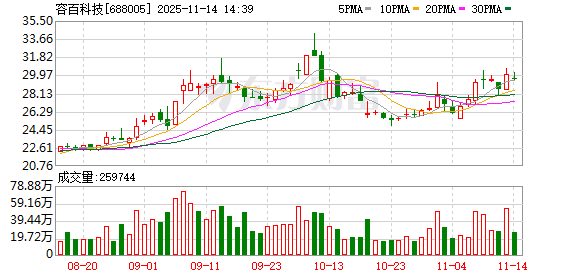
容百科技发布全固态电池产业化路径 预计2027年实现规模化商用
Zhong Zheng Wang· 2025-11-14 06:26
Core Viewpoint - Rongbai Technology has disclosed its comprehensive research and development layout and technology commercialization timeline for all-solid-state battery materials, aiming for mass commercialization of its positive materials by 2027 [1][2] Group 1: All-Solid-State Battery Development - The all-solid-state battery is considered the ideal form of next-generation battery technology due to its high safety and comprehensive performance, with a projected global market size exceeding 156 GWh by 2030 [1] - The industrialization of sulfide all-solid-state batteries faces three core challenges: interface stability, cost, and manufacturing processes [1] - Industry efforts are focused on interface modification and multi-scale characterization technologies to guide structural optimization, with expectations that the cost of sulfide all-solid-state batteries could drop below 0.4 yuan/Wh by 2035 as production capacity expands and processes iterate [1] Group 2: Positive Material Strategy - Rongbai adopts a dual strategy of "ultra-high nickel" and "lithium-rich manganese-based" in the positive material sector, achieving 10-ton level shipments for 8-series high nickel and ton-level shipments for 9-series high nickel [2] - The lithium-rich manganese-based positive material has been recognized by leading cell manufacturers for its high capacity output under high voltage through structural adjustments [2] Group 3: Solid Electrolyte and Supply Chain - The company is advancing both sulfide and halide routes for solid electrolytes, with LPSC electrolytes showing uniform particle size distribution and air stability, suitable for high nickel positive materials to achieve energy density breakthroughs [2] - Halide electrolytes maintain a stable capacity retention rate after 1000 cycles and exhibit industry-leading ionic conductivity [2] - Key auxiliary materials such as binders and lithium sulfide have achieved independent mass production, ensuring supply chain support for industrialization [2] Group 4: Strategic Transformation and Innovation - Rongbai Technology has transformed from a single ternary material company to a platform provider of comprehensive positive material solutions, leveraging a "technology-process-market" closed-loop strategy [2] - The company is rapidly entering new markets such as sodium batteries, manganese iron phosphate, and lithium iron phosphate through continuous acquisitions and independent research and development [2] - In supply chain management, the company employs long-term procurement agreements and AI to optimize inventory, while also establishing a battery recycling system to create a resource recycling value chain [2] - The company emphasizes accelerating material design through a digital platform and strengthening collaborative innovation with global customers [2]
瑞达期货碳酸锂产业日报-20251113
Rui Da Qi Huo· 2025-11-13 09:33
Report Investment Rating - No investment rating information is provided in the report. Core Viewpoints - The overall fundamentals of lithium carbonate may be in a stage of stable and slight increase in supply and rapid release of demand, with a slight reduction in industry inventory. The option market sentiment is bullish, and the implied volatility has slightly increased. Technically, the 60 - minute MACD shows that the double - line is above the 0 - axis and the red column is converging. The operation suggestion is to conduct short - selling transactions at high prices with a light position and pay attention to controlling risks in trading rhythm [2]. Summary by Directory Futures Market - The closing price of the main contract is 87,840 yuan/ton, up 1,260 yuan; the net position of the top 20 is - 185,604 hands, down 16,513 hands; the position of the main contract is 536,514 hands, up 7,548 hands; the spread between near and far - month contracts is - 1,220 yuan/ton, up 140 yuan; the warehouse receipt of GZEE is 27,508 hands/ton, down 779 hands [2]. Spot Market - The average price of battery - grade lithium carbonate is 84,350 yuan/ton, up 1,050 yuan; the average price of industrial - grade lithium carbonate is 82,000 yuan/ton, up 900 yuan; the basis of the Li₂CO₃ main contract is - 3,490 yuan/ton, down 210 yuan [2]. Upstream Situation - The average price of spodumene concentrate (6% CIF China) is 934 US dollars/ton, unchanged; the average price of amblygonite is 9,510 yuan/ton, up 215 yuan; the average price of lepidolite (2 - 2.5%) is 3,360 yuan/ton, up 46 yuan; the monthly output of lithium carbonate is 51,530 tons, up 4,390 tons; the monthly import volume of lithium carbonate is 19,596.90 tons, down 2,250.01 tons [2]. Industry Situation - The monthly export volume of lithium carbonate is 150.82 tons, down 218.09 tons; the monthly operating rate of lithium carbonate enterprises is 47%, unchanged [2]. Downstream and Application - The monthly output of power batteries is 170,600 MWh, up 19,400 MWh; the price of lithium hexafluorophosphate is 151,500 yuan/ton, up 1,500 yuan; the price of lithium manganate is 33,000 yuan/ton, unchanged; the price of lithium cobaltate is 343,500 yuan/ton, unchanged; the price of ternary material (811 type): China is 164,500 yuan/ton, unchanged; the price of ternary material (622 power type): China is 144,500 yuan/ton, unchanged; the price of ternary material (523 single - crystal type): China is 156,000 yuan/ton, unchanged; the monthly operating rate of ternary cathode materials is 52%, down 1%; the price of lithium iron phosphate is 35,300 yuan/ton, unchanged; the monthly operating rate of lithium iron phosphate cathodes is 64%, up 5%; the monthly output of new energy vehicles is 1,772,000 vehicles, up 155,000 vehicles; the monthly sales volume of new energy vehicles is 1,715,000 vehicles, up 111,000 vehicles; the cumulative sales penetration rate of new energy vehicles is 46.75%, up 0.66%; the cumulative sales volume of new energy vehicles is 12,943,000 vehicles, up 3,193,000 vehicles; the monthly export volume of new energy vehicles is 256,000 vehicles, up 34,000 vehicles; the cumulative export volume of new energy vehicles is 2,014,000 vehicles, up 956,000 vehicles [2]. Option Situation - The 20 - day average volatility of the underlying is 35.58%, down 0.80%; the 40 - day average volatility of the underlying is 28.67%, down 1.27%; the total call position is 165,826 contracts, up 11,585 contracts; the total put position is 122,507 contracts, up 10,319 contracts; the put - call ratio of the total position is 73.88%, up 1.1413%; the implied volatility of at - the - money IV is 0.34%, up 0.0093% [2]. Industry News - All - solid - state batteries are expected to achieve technological breakthroughs and industrialization demonstration applications by around 2030. Zoubang plans to expand the production capacity of lithium hexafluorophosphate. In October, the domestic power battery loading volume increased both month - on - month and year - on - year. CATL's fifth - generation lithium iron phosphate battery has been mass - produced, and the "Chocolate Battery Swapping Alliance" will build 1,000 swapping stations by the end of 2025. The scrapping growth cycle of new energy vehicles has not yet arrived [2].

预计到2030年前后全固态电池将小批量装车应用 首个飞行汽车工厂落地广州 | 汽车早参
Mei Ri Jing Ji Xin Wen· 2025-11-12 22:36
Group 1: Solid-State Battery Development - The full solid-state battery technology is expected to achieve breakthroughs and demonstration applications by around 2030, marking significant progress in the electric vehicle industry [1] - The inherent safety and ultra-high energy density of solid-state batteries have made them a focal point globally, currently undergoing critical phases of scientific breakthroughs and industrial technology challenges [1] - The anticipated introduction of solid-state batteries may stimulate investment enthusiasm in the new energy vehicle market and promote collaboration and innovation in battery manufacturing and material science [1] Group 2: Flying Car Manufacturing - The first electric vertical takeoff and landing flying car factory with a production capacity of "ten thousand units" has entered trial production in Guangzhou, marking a significant step towards large-scale manufacturing in the low-altitude economy sector [2] - The manufacturing process of flying cars has adopted automotive industry practices, such as "parallel flight testing," to shorten the verification cycle [2] - This initiative is expected to attract more investment and resources into related industries, particularly in aviation manufacturing and intelligent transportation [2] Group 3: Huawei's Automotive Trademark Application - Huawei has applied for the "Qi Jie" trademark, expanding its footprint in the automotive sector, indicating the company's growing ambitions in the smart vehicle market [3] - The trademark application covers automotive-related goods and services, which may enhance brand recognition and market competitiveness [3] - Huawei's diversified strategy in the smart vehicle field is likely to positively impact the industry and attract investor interest in innovation potential [3] Group 4: Li Auto's Organizational Restructuring - Li Auto has announced an organizational restructuring, merging the "Organization Department" and "Human Resources" into a new "Human Resources" department, directly reporting to CEO Li Xiang [4] - The restructuring aims to improve decision-making efficiency and team collaboration, reflecting the company's agile strategy in responding to market changes [4] - Li Auto's frequent structural adjustments may enhance investor confidence in its future development [4]

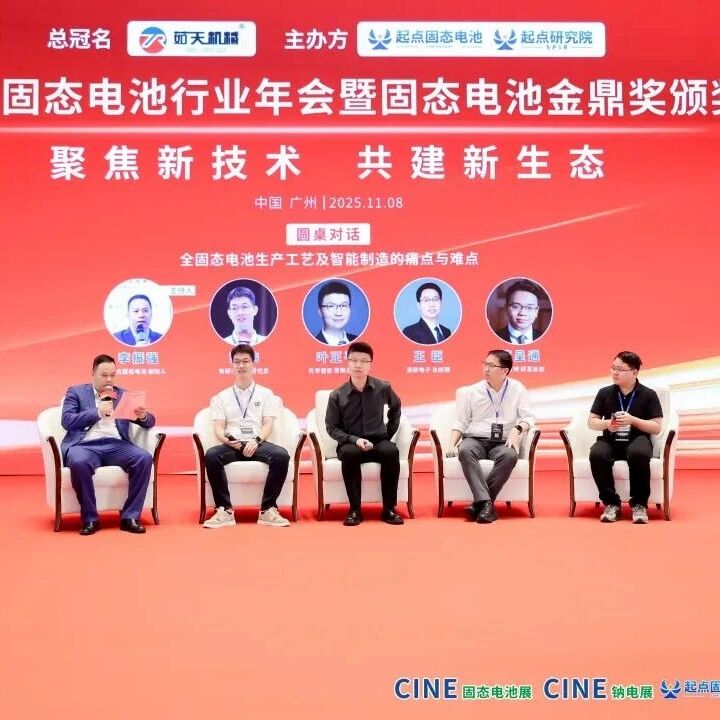
圆桌对话:全固态电池生产工艺及智能制造的痛点与难点
起点锂电· 2025-11-08 12:40
Core Viewpoint - The 2025 Solid-State Battery Industry Annual Conference highlighted the rapid advancements and challenges in solid-state battery technology, emphasizing the need for collaboration across the industry to overcome technical hurdles and achieve large-scale production [2][5][23]. Group 1: Industry Trends and Developments - Over 500 key players from the solid-state battery supply chain and more than 1000 high-level representatives gathered to discuss new trends and opportunities in the industry [2]. - The conference featured discussions on the significant changes in production processes and equipment for solid-state batteries, particularly the transition to large-scale production [5][6]. - The solid-state battery sector is experiencing rapid development, with significant progress in research and technology over the past two years [23]. Group 2: Technical Challenges and Innovations - Key challenges in solid-state battery production include achieving high yield and consistency, particularly in electrode preparation and formation processes [6][12]. - Innovations in dry processing techniques are being explored, with dry methods showing potential advantages over traditional wet methods, although they are not yet fully mature [8][14]. - The need for precise manufacturing processes is critical, as solid-state batteries require higher accuracy in electrode production compared to liquid-state batteries [12][13]. Group 3: Equipment and Production Efficiency - Companies like XianDao Intelligent have made significant investments in research and development across all stages of solid-state battery production, focusing on equipment that enhances production efficiency [6][19]. - The cost of dry processing equipment is reportedly lower than that of wet processing, with a 30% to 35% reduction in investment costs for dry methods compared to wet methods [17][19]. - The production speed of dry processing is currently lower than that of wet processing, indicating room for improvement in efficiency [19][20]. Group 4: Future Outlook and Collaboration - The industry is at a pivotal point where new technologies can lead to significant changes, and collaboration among companies is essential for overcoming existing scientific and technical challenges [23][24]. - The future of solid-state battery technology may involve a coexistence of both dry and wet processing methods, as each has its own advantages and challenges [14][16]. - The ongoing development of solid-state batteries is expected to reshape the entire supply chain, presenting both opportunities and challenges for equipment manufacturers and material suppliers [24].

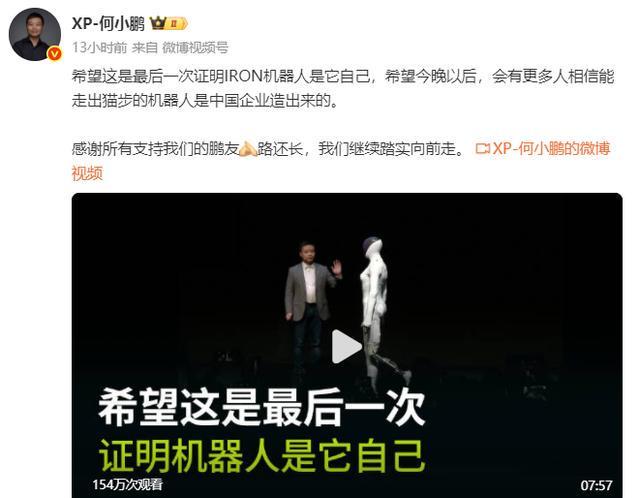
小鹏 IRON 机器人遭“真人疑云”,董事长哽咽辟谣
Huan Qiu Wang Zi Xun· 2025-11-07 03:48
Core Viewpoint - The emergence of the new generation IRON humanoid robot by Xiaopeng Motors has sparked significant public interest and debate regarding its authenticity and technological capabilities [1][4]. Group 1: Product Features - The IRON robot features a bionic design with a "skeleton-muscle-skin" structure, boasting 82 degrees of freedom and equipped with three self-developed Turing AI chips, achieving a total computing power of 2250 TOPS [4]. - The robot incorporates all-solid-state battery technology to ensure safety and extended operational range [4]. Group 2: Public Response and Clarification - Following public skepticism about the robot's authenticity, Xiaopeng Motors' chairman, He Xiaopeng, released an unedited video demonstrating the robot's internal structure, humorously acknowledging the high level of realism [4]. - During a technology launch event, He Xiaopeng further addressed the concerns by publicly cutting open the robot's leg covering to reveal its mechanical components, expressing hope that this would be the last time he needed to prove its robotic nature [4]. Group 3: Future Plans - The IRON robot has entered practical training at Xiaopeng's factory in Guangzhou, with plans for mass production by the end of 2026 [4]. - Baosteel has been announced as the first ecological partner for industrial inspection scenarios involving the IRON robot [4].


固态电池角逐来到冲刺阶段 国内固态电池相关专利申请量达1.3万项
Zhong Guo Jing Ying Bao· 2025-11-03 10:35
Group 1 - Solid-state battery technology is entering a critical phase, with Samsung SDI, BMW Group, and Solid Power collaborating on a solid-state battery validation project [1] - Solid Power will supply sulfide solid electrolytes to Samsung SDI, which will integrate and manufacture these electrolytes into battery cells, while BMW will test the performance in next-generation evaluation models [1] - Solid-state batteries are expected to offer higher energy density and safety, potentially improving the range of electric vehicles, but widespread commercialization is not anticipated until after 2030 [1] Group 2 - In China, 44.1% of solid-state battery-related companies have been established for 5 to 10 years, with a significant concentration in South and East China [2] - As of October 31, China has filed 13,000 solid-state battery-related patents, primarily in the form of invention patents, which account for 63.7% of the total [2] - A research team from the Chinese Academy of Sciences has developed an anion regulation technology that addresses the contact issue between electrolytes and lithium electrodes in solid-state batteries, providing crucial support for practical applications [2]
中国上市公司:前三季多行业向好,多产业业绩增长
Sou Hu Cai Jing· 2025-11-02 06:44
Core Insights - In the first three quarters of 2025, 17 out of 19 industry sectors reported profits, with 9 sectors showing revenue growth and 10 sectors experiencing net profit growth [1] - The advanced manufacturing sector has emerged as a significant growth driver, supported by trends towards intelligence, greenness, and integration [1] - The storage chip industry saw a revenue increase of 16.08% and a net profit increase of 26.44%, driven by accelerated iterations of AI data storage needs [1] - Breakthroughs in all-solid-state battery technology are expected to enhance the range of electric vehicles, with related companies reporting revenue growth exceeding 10% and net profit growth exceeding 20% [1] - Core industries such as superhard materials and rare earths experienced revenue growth of 10.48% and 7.11%, respectively, amid increasing global resource trade disruptions [1] - The "anti-involution" governance measures have shown effectiveness, leading to production control and quality improvement in key industries like photovoltaic equipment and cement, resulting in reduced losses for several listed companies [1]

日产全固态电池续航翻倍,争取2028年度量产
日经中文网· 2025-11-01 00:33
Core Viewpoint - Nissan aims to revolutionize the electric vehicle (EV) market with its next-generation all-solid-state batteries, achieving double the range of current batteries and targeting a cost of $75 per kilowatt-hour, which could significantly lower the average global battery pack price by 30% by 2024 [2][7]. Group 1: Battery Technology - The all-solid-state battery, composed of numerous "cells," has achieved performance metrics that meet practical application goals, with energy density increased to double that of existing lithium batteries, allowing for doubled EV range with the same battery size [4]. - All-solid-state batteries can withstand high-power charging, reducing charging time to one-third compared to traditional batteries [4]. - The solid electrolyte used in all-solid-state batteries prevents unexpected side reactions and can operate at high temperatures, enhancing battery performance [5]. Group 2: Manufacturing and Collaboration - Nissan has partnered with the American startup LiCAP Technologies to utilize their electrode manufacturing technology, which incorporates a fibrous binder in the positive electrode material, enhancing ion mobility and efficiency [6]. - The "dry electrode" manufacturing method used by LiCAP Technologies eliminates the need for drying compounds during production, making cost control easier, although large-scale production capabilities are still a challenge [6]. - Nissan has initiated a pilot production line to master mass production technology, focusing on producing complete batteries rather than just cells [7]. Group 3: Competitive Landscape - Toyota plans to start mass production of all-solid-state batteries in the fiscal year 2027, indicating a competitive race among Japanese automakers, who currently lead in this technology [7]. - The all-solid-state battery is viewed as a key technology for Japanese automakers to regain market share in the battery sector, where they currently hold about 70% in China [7].


孚能科技:公司2025年推出并即将交付第一代硫化物全固态电池
Zheng Quan Ri Bao Wang· 2025-10-31 13:41
Core Viewpoint - The company Fudi Technology announced on October 31 that its all-solid-state battery models will achieve a range of 1000-1500 km, depending on customer needs, application scenarios, and environmental conditions [1] Group 1: Product Development - The company plans to launch its first generation of sulfide all-solid-state batteries in 2025, featuring a high nickel ternary cathode and high silicon anode, with an energy density of 400 Wh/kg [1] - In 2026, the company will introduce the second generation of sulfide all-solid-state batteries, upgrading the cathode material to lithium-rich manganese-based/high nickel cathodes and using lithium metal anodes, increasing energy density to 500 Wh/kg [1] - The third generation of sulfide all-solid-state batteries is expected to be launched in 2027, achieving an energy density exceeding 500 Wh/kg [1]
