
可回收火箭技术

Search documents
研报 | 可回收技术有望降低火箭发射成本,全球大厂正加速推进布局
TrendForce集邦· 2025-12-22 09:01
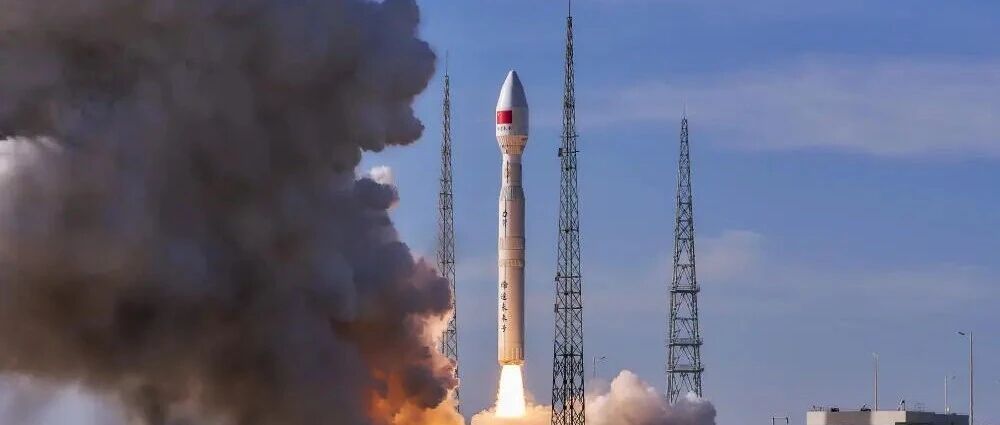
Core Insights - The article discusses the increasing demand for satellite deployment by Starlink and the U.S. Space Force, leading to a shift in rocket manufacturers like SpaceX towards full rocket recovery technology [2][6] - The average launch cost for expendable rockets is between $110 million and $180 million, while partially reusable rockets cost around $6.7 million. Full recovery technology aims to reduce costs to between $2 million and $5 million [6][7] Group 1: Rocket Types and Costs - Expendable rockets have a complex structure and do not require recovery fuel, but their costs are significantly higher [3] - Partially reusable rockets, like SpaceX's Falcon 9, lower launch costs to approximately $6.7 million but still have limitations on payload capacity due to fuel reservation for recovery [3][7] - Fully reusable rockets, such as SpaceX's Starship, aim to drastically reduce costs to $2 million to $5 million, although they require additional investment in specialized recovery platforms [3][6] Group 2: Technological Developments - SpaceX is leading the commercial rocket launch sector in the U.S. and has made advancements in using liquid methane for its Starship's second stage to reduce cleaning times and overall launch costs [7] - The China National Space Administration (CNSA) is also actively developing its rocket launch plans, focusing on the Long March series to execute national-level missions while optimizing recovery efficiency [7] - Challenges remain in the recovery technology, such as the need for additional fuel in partially reusable rockets and the costs associated with building recovery platforms for fully reusable rockets [7]


中国商业航天迈入爆发期
21世纪经济报道· 2025-12-19 06:10
Core Viewpoint - 2025 is projected to be a pivotal year for China's commercial space industry, transitioning from technological accumulation to explosive growth, with multiple private aerospace companies completing rocket launch tests and accelerating satellite internet deployment [1] Group 1: Industry Developments - The Chinese government is providing strong support for commercial space through policies, including the "14th Five-Year Plan" emphasizing the construction of a "space power" and the establishment of a dedicated Commercial Space Administration [1] - Despite a promising outlook, the industry faces significant supply chain challenges, particularly in upstream infrastructure, with a consensus that the bottleneck is not in downstream applications but in launch capacity and costs [1] - The recent successful launch of the Zhuque-3 rocket and the upcoming maiden flight of the Long March 12甲 rocket are seen as significant milestones for China's commercial space sector, potentially reshaping market dynamics [3][4] Group 2: Technological Innovations - The Zhuque-3 rocket, developed by Blue Arrow Aerospace, is a new generation of low-cost, high-capacity, reusable rocket, utilizing a self-developed liquid oxygen-methane engine [3][7] - The Long March 12甲 rocket, developed by China Aerospace Science and Technology Corporation, emphasizes a stable supply chain by using a liquid oxygen-kerosene engine, reflecting a dual risk approach in China's aerospace strategy [8] - The ultimate goal of reusable rocket technology is to significantly reduce launch costs, with the Zhuque-3 aiming to lower the cost per kilogram to below 20,000 RMB, enhancing China's competitive edge in the global market [9][10] Group 3: Market Dynamics and Future Outlook - Predictions indicate that within three years, launch prices in China could approach those of SpaceX, with the potential to undercut SpaceX's Falcon 9 prices in about five years [11] - The competitive focus in the coming years will center on cost control, reliability, fulfillment capabilities, and service responsiveness, as companies strive to meet the growing demand for satellite deployment [11] - The challenges faced by Chinese rocket companies include not only technological hurdles but also the need for systematic engineering and industrialization to catch up with established players like SpaceX [11]
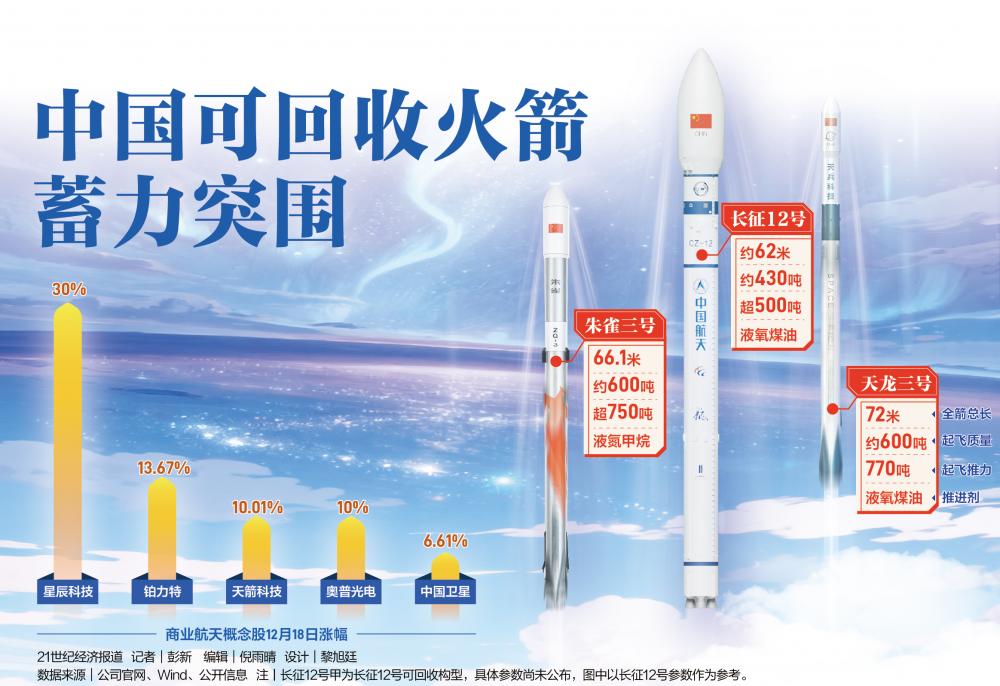
中国可回收火箭蓄力突围
2 1 Shi Ji Jing Ji Bao Dao· 2025-12-18 23:43
Core Insights - 2025 is projected to be a pivotal year for China's commercial space industry, transitioning from technological accumulation to explosive growth, with multiple private aerospace companies completing rocket launch tests and accelerating satellite internet deployment [1][11] - Policy support is intensifying, with the "14th Five-Year Plan" emphasizing the construction of a "space power," and the establishment of a dedicated Commercial Space Administration by the National Space Administration [1][11] - Despite a promising outlook, supply chain weaknesses remain evident, particularly in upstream infrastructure, which is seen as a critical bottleneck for the industry [1][11] Industry Developments - December marked significant advancements in China's reusable rocket technology, highlighted by the launch of the Zhuque-3 rocket, which, despite a recovery failure, provided valuable experience for future developments [2][12] - The Zhuque-3 rocket, developed by Blue Arrow Aerospace, is a new generation of low-cost, high-capacity, reusable liquid oxygen-methane rocket, showcasing advanced features such as a reaction control system and landing legs [2][12] - Following Zhuque-3, the Long March 12甲 rocket, developed by China Aerospace Science and Technology Corporation, is set for its maiden flight, indicating a rapid progression in China's commercial space capabilities [2][12][13] Market Dynamics - Currently, only the United States has mastered reusable rocket technology, with SpaceX leading the way, having completed over 500 launches and capturing 86% of the global orbital payload market in 2023 [3][13] - In contrast, China's commercial launch capacity remains limited, with a market share in commercial payloads only in the single digits, insufficient to support the ambitious deployment of satellite constellations [3][14] - The urgency for breakthroughs in reusable rocket technology is underscored by the need to address the significant launch capacity gap in the market [4][15] Technological Innovations - The Zhuque-3 rocket's development process emphasized a unique engineering approach, integrating market demand insights and innovative materials like stainless steel to reduce production cycles [6][16] - The Long March 12甲 rocket adopts a different strategy, focusing on stable supply chains and leveraging domestic resources to ensure reliable operations [7][17] - The Tianlong-3 rocket, set for its first flight, aims for high reliability and low-cost delivery, utilizing advanced materials and 3D printing technology [7][17] Cost Reduction Strategies - The ultimate goal of reusable rocket technology is to significantly lower launch costs, with a focus on recovering the first stage of rockets, which constitutes the highest cost component [8][19] - The Zhuque-3 is designed for 20 reuses, with operational costs expected to decrease by approximately 45% after five uses, reflecting a model of high initial investment followed by diminishing marginal costs [8][19] - The target cost for launching per kilogram is set below 20,000 RMB, which would enhance China's competitive edge in the global market [20] Competitive Landscape - The future competition in the rocket market will center on cost control, reliability, fulfillment capabilities, and service responsiveness [10][20] - Chinese companies face significant challenges in catching up with established players like SpaceX, which has spent over a decade refining its technology [10][21] - The ongoing developments in China's commercial space sector indicate a gradual resolution of previously deemed insurmountable challenges, as companies continue to innovate and validate their technologies [21]
中国可回收火箭“压轴”12月 商业航天蓄力突围
2 1 Shi Ji Jing Ji Bao Dao· 2025-12-18 23:04
Core Insights - 2025 is projected to be a pivotal year for China's commercial space industry, transitioning from technological accumulation to explosive growth, with multiple private aerospace companies completing rocket launch tests and accelerating satellite internet deployment [1] - Policy support is intensifying, with the "14th Five-Year Plan" emphasizing the construction of a "space power" and the establishment of a dedicated Commercial Space Administration by the National Space Administration [1] - Despite a promising outlook, supply chain weaknesses remain evident, particularly in upstream infrastructure, which is seen as a critical bottleneck for the industry [1] Group 1: Developments in Reusable Rockets - December 2023 marked significant advancements in China's reusable rocket technology, highlighted by the launch of the Zhuque-3 rocket, which, despite a recovery failure, provided valuable experience for future missions [3] - The Zhuque-3 rocket is designed for low-cost, high-capacity, and reusability, utilizing a self-developed liquid oxygen-methane engine [3][7] - Following Zhuque-3, the Long March 12甲 rocket is set for its maiden flight, indicating a rapid progression in China's commercial space capabilities [3][8] Group 2: Market Dynamics and Competition - Currently, only the United States has mastered reusable rocket technology, with SpaceX leading the way, having completed over 500 launches with its Falcon 9 rocket [4] - China's commercial launch capacity remains limited, with a small percentage of payloads being launched, highlighting a significant gap in meeting future satellite constellation deployment needs [5] - The goal of reusable technology is to significantly reduce launch costs, with the Zhuque-3 aiming to lower costs to below 20,000 RMB per kilogram, enhancing China's competitive edge in the global market [10] Group 3: Technical Challenges and Innovations - The Zhuque-3 rocket's development involved a unique approach based on first principles, leading to innovative design choices such as a stainless steel body and a specific landing strategy [7] - The Long March 12甲 rocket emphasizes a stable supply chain by utilizing domestically produced liquid oxygen and kerosene, reflecting a dual risk approach in China's aerospace strategy [8] - The economic logic of rocket recovery is underscored by the potential for significant cost reductions through repeated use, with projections indicating a 45% decrease in operational costs after five uses [9] Group 4: Future Outlook - The next few years are expected to see intensified competition in the rocket market, focusing on cost control, reliability, and service responsiveness [10] - Industry consensus suggests that with the emergence of medium to large liquid rockets and reusable technology, launch prices may approach or even undercut those of SpaceX within five years [10] - The ongoing efforts in China's commercial space sector are gradually addressing previously deemed insurmountable challenges, indicating a promising trajectory for the industry [11]
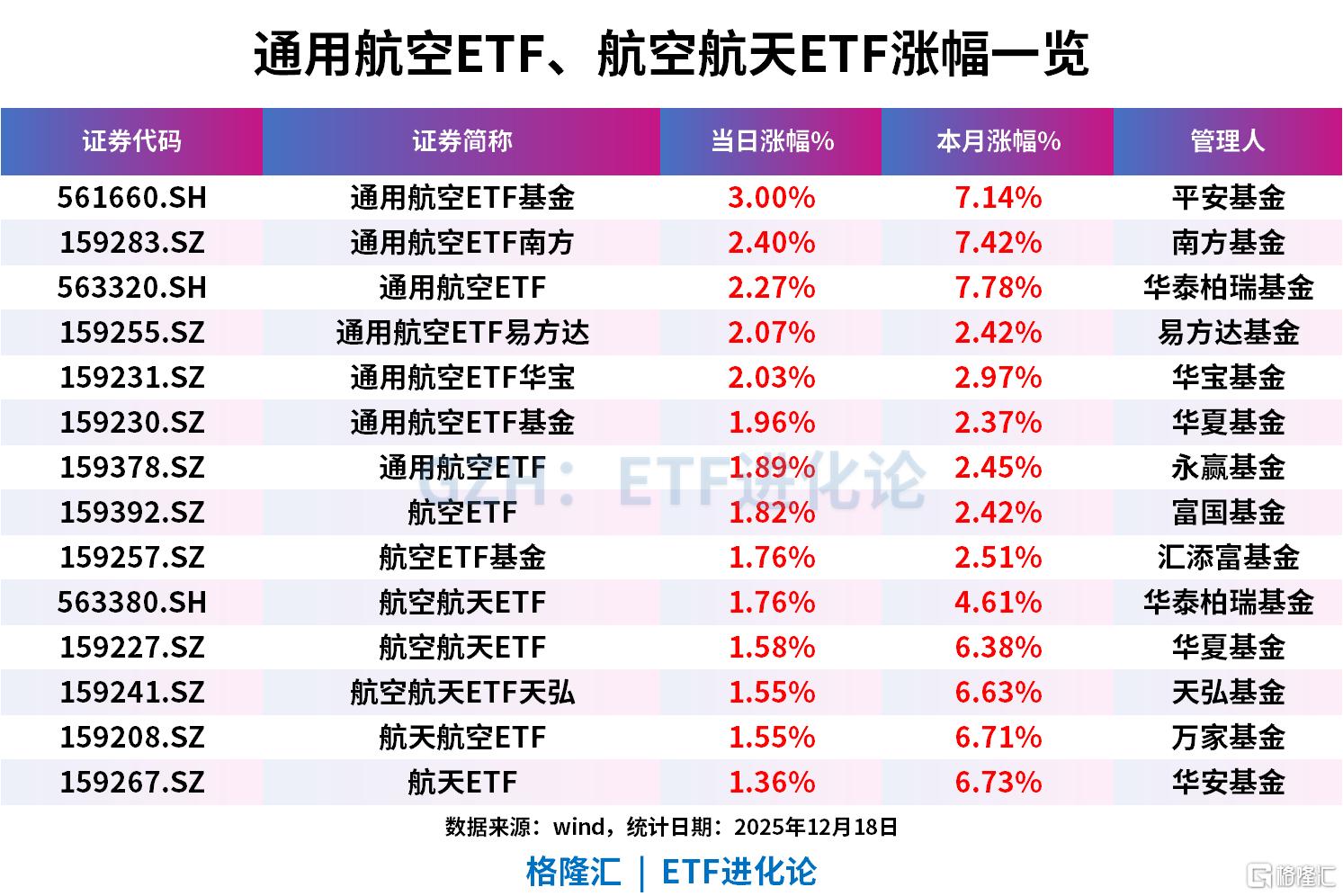
航空航天板块爆发!通用航空ETF南方、通用航空ETF、通用航空ETF易方达涨超2%
Ge Long Hui A P P· 2025-12-18 08:10
Group 1: SpaceX IPO and Regulatory Silence - SpaceX has notified employees to enter a "regulatory quiet period" to comply with SEC regulations, prohibiting discussions or comments on the company's IPO plans, growth prospects, or valuations [2][3] - This "gag order" includes restrictions on social media, interviews, meetings, and public appearances [3] Group 2: Developments in China's Commercial Space Industry - China's commercial space industry is experiencing a dual boost from policy and technological advancements, with a three-year action plan and new satellite IoT business trial notifications expected to accelerate the industry chain [4] - Recent technological breakthroughs in reusable rocket technology are seen as a significant step towards achieving low-cost and high-reusability goals in China's space industry [5] - The advancements in reusable rocket technology are expected to lower satellite launch costs and drive rapid growth in the commercial space sector [4][5] Group 3: Market Implications and Future Outlook - Short-term benefits are anticipated for companies involved in aerospace manufacturing, new materials, and satellite applications due to advancements in reusable rocket technology [4][5] - Long-term implications include a transition for China from a major space power to a strong space power, providing critical support for the country in the next wave of technological revolution and industrial transformation [4][5]
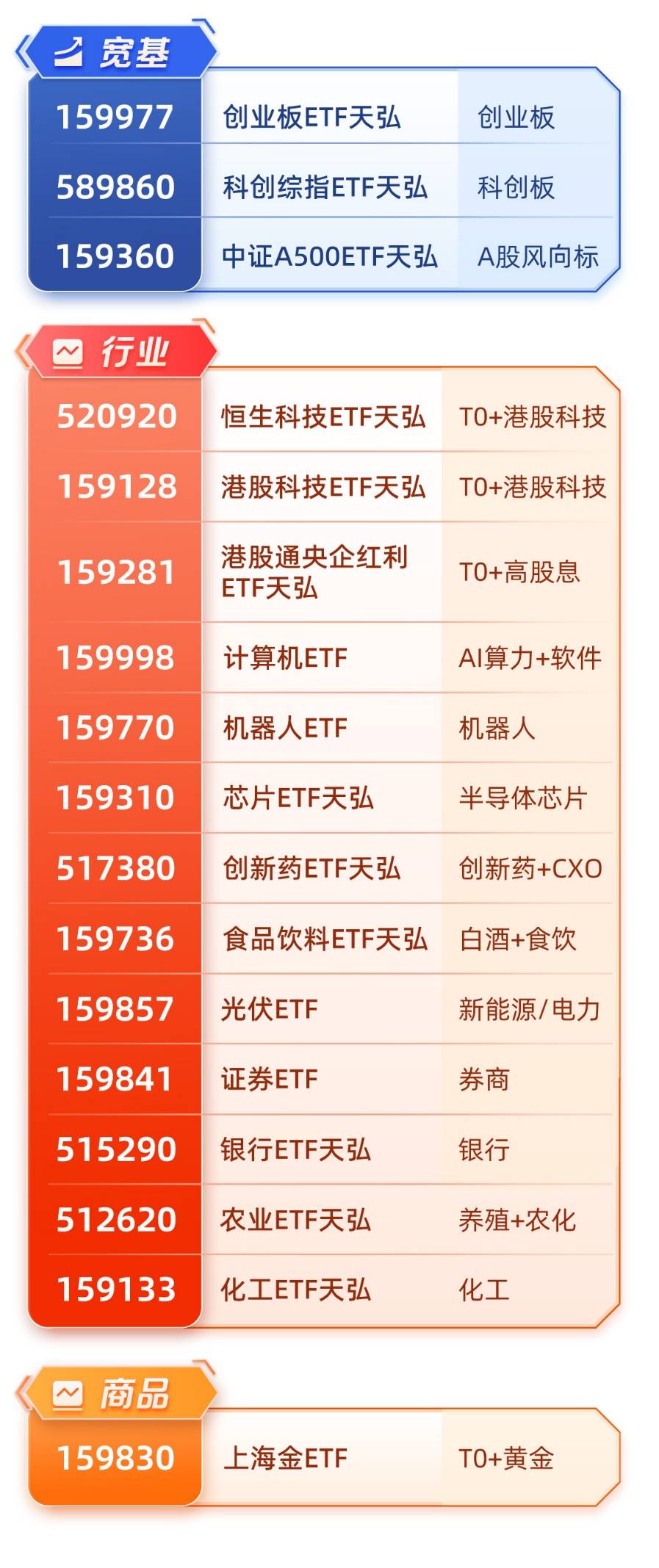
天龙三号、长征十二号甲首飞在即,航空航天ETF天弘(159241)跟踪指数飙升涨超2%,近5日“吸金”超7000万元
Sou Hu Cai Jing· 2025-12-18 03:14
Core Insights - The aerospace ETF Tianhong (159241) has seen significant trading activity, with a turnover of 8.83% and a transaction volume of 53.17 million yuan as of December 18, 2025 [1] - The underlying index, the National Aerospace Industry Index (CN5082), rose by 2.17%, with notable gains from constituent stocks such as Beimo Gaoke (002985) up 10.01% and Guobo Electronics (688375) up 8.67% [1] - Over the past week, the Tianhong aerospace ETF has experienced a scale increase of 22.37 million yuan and a share increase of 12 million shares, indicating strong growth [1] Product Highlights - The Tianhong aerospace ETF (159241) is designed to efficiently capture core military aerospace opportunities, tracking the National Aerospace Index, which has a military attribute of 97.86%, making it the highest military content index in the market [1] - The ETF has a high weight of 66.8% in aerospace equipment, significantly surpassing the weights in the CSI Military and CSI Defense indices [1] Hot Events - From December 2025 to early 2026, China's commercial space sector will witness a series of maiden flights for reusable rockets, including the Tianlong-3 and Long March 12甲, marking a new phase in the verification of reusable rocket technology [1] - The Long March 12甲, developed by the China Aerospace Science and Technology Corporation's Eighth Academy, is set for its historic first launch in late December 2025, representing a significant entry into the reusable rocket field for China's "national team" [2] Institutional Views - Dongwu Securities notes that recent breakthroughs in reusable rocket technology indicate that China's aerospace industry is moving closer to "low-cost, high-reusability" solutions, which will benefit related sectors such as aerospace manufacturing, new materials, and satellite applications [2] - The advancements in reusable rocket technology are seen as pivotal for national security, high-end manufacturing upgrades, and reshaping the global competitive landscape [2]





卫星/商业航天闭环构建,国防ETF(512670)盘中涨超2%
Xin Lang Cai Jing· 2025-12-18 03:06
近期卫星/商业航天板块持续发酵,主要系行业面临三大拐点: 截至2025年12月18日 10:44,中证国防指数(399973)强势上涨2%,成分股西部材料(002149)10cm涨停, 北摩高科(002985),国博电子(688375),航天电子(600879),宝钛股份(600456)等个股跟涨。国防 ETF(512670)上涨2%。 国防ETF紧密跟踪中证国防指数,中证国防指数选取隶属于十大军工集团公司旗下的上市公司证券,以 及为国家武装力量提供武器装备,或与军方有实际装备承制销售金额或签订合同的相关上市公司证券作 为指数样本,以反映国防产业上市公司证券的整体表现。 政策面拐点:国家高度重视。2025年,国家航天局正式成立商业航天司,并发布三年行动计划。商业航 天与低空经济是"新质生产力"中仅有的两个设立专门管理部门的领域。 业绩面拐点:发射量密集提升。2025年国内商业航天发射量较2024年显著增长。重点星座进展:(1)中 国星网(GW星座):截至2025年12月7日,已发射113颗低轨组网星。(2)上海G60(源城星座):已发 射108颗低轨组网星。根据国际电联规则及星座申报规模(GW-A59、GW- ...
操盘必读:影响股市利好或利空消息_2025年12月17日_财经新闻
Xin Lang Cai Jing· 2025-12-16 23:15
Industry News - Douyin Group's Li Liang stated that the platform aims to combat the dissemination of financial content by unqualified individuals, emphasizing that having qualifications does not grant unrestricted speaking rights [35] - The European Union plans to abandon the ban on internal combustion engines by 2035, allowing certain plug-in hybrid vehicles and fuel-extended electric vehicles to be sold [35] - Alibaba released the upgraded Wanxiang 2.6 series model, which is the first video model in China to support role-playing functions, targeting professional film production and image creation [35] - The price of tungsten has seen a rapid increase, with tungsten concentrate exceeding 400,000 yuan per ton, APT surpassing 600,000 yuan per ton, and tungsten powder nearing 1,000 yuan per kilogram [35] - The Ministry of Housing and Urban-Rural Development held a national conference on intelligent construction, emphasizing the need for broader application and policy coordination to promote high-quality development in the construction industry [36] Company News - 360 Group's founder Zhou Hongyi clarified that allegations of financial fraud are completely unfounded, stating that the individuals mentioned never held core management positions in the A-share listed company [37] - Wangzi New Materials announced the passing of its third-largest shareholder, Wang Xiaojun, whose 11.25 million shares will be inherited by his children [37] - Jiamei Packaging announced a change in its controlling shareholder to Zhuyue Hongzhi, with stock resuming trading [37] - Century Huatong completed the cancellation of 56.1208 million repurchased shares, which accounted for 0.7555% of the company's total share capital before cancellation [37] - Jiaojian Co. announced that its controlling shareholder and actual controller's shares have been judicially frozen and marked [37] - Zhongke Electric plans to invest approximately 7 billion yuan to build an integrated project for the annual production of 300,000 tons of lithium-ion battery anode materials [41] - Xiechuang Data signed a strategic cooperation framework agreement with Guangwei Technology and Guangjia Technology to rapidly enter the optical chip and optical module industry [41] - AVIC Chengfei plans to build an aerospace equipment assembly base, with an investment estimate of about 422 million yuan [41] - Dongjie Intelligent announced plans to acquire the controlling stake in Aobo Intelligent, with stock suspension starting from December 17, 2025 [53]
【早报】中央财办:扩大内需是明年排在首位的重点任务;财务造假?三六零回应来了
财联社· 2025-12-16 23:14
Macro News - The Central Financial Office stated that expanding domestic demand is the top priority for next year, emphasizing the need to boost consumption by addressing structural changes from both supply and demand sides [4] - The Ministry of Commerce proposed to impose anti-dumping duties on imported pork and pork products from the EU, effective from December 17, 2025, for a duration of five years [4] - The Social Security Fund emphasized the importance of leveraging long-term and patient capital to support national development needs and enhance the integration of technological and industrial innovation [4] Industry News - Reports indicate that the EU plans to abandon the ban on internal combustion engines by 2035, allowing certain plug-in hybrid vehicles and fuel-efficient electric vehicles to be sold [6] - The tungsten market has seen a significant price increase, with tungsten concentrate prices exceeding 400,000 yuan per ton and APT prices surpassing 600,000 yuan per ton [6] - The Ministry of Housing and Urban-Rural Development held a national conference on intelligent construction, focusing on promoting smart construction applications and enhancing policy coordination for high-quality development in the construction industry [6] Company News - 360 Group's founder Zhou Hongyi denied allegations of financial fraud, clarifying that the individuals mentioned never held core management positions during their tenure [8] - Wangzi New Materials announced the passing of its third-largest shareholder, Wang Xiaojun, with his shares being inherited by his children [8] - Jia Mei Packaging announced a change in its controlling shareholder to Zhuyue Hongzhi, with stock resuming trading [8] - Century Huatong completed the cancellation of 56.12 million repurchased shares [8] - Jiang Jian Co. announced that its controlling shareholder's shares have been judicially frozen [8] - Chang'an Automobile is expected to conduct L3-level autonomous driving trials in the first quarter of 2026 [8] - Zhongke Electric plans to invest approximately 7 billion yuan in a project to produce 300,000 tons of lithium-ion battery anode materials [8] - Xpeng Motors has obtained a road testing license for L3-level autonomous driving in Guangzhou and has initiated regular L3 road tests [8]



对标SpaceX星舰,火箭回收捕获臂全尺寸原型机交付
Xuan Gu Bao· 2025-12-16 15:11
*免责声明:文章内容仅供参考,不构成投资建议 *风险提示:股市有风险,入市需谨慎 中证报表示,中国可回收火箭技术的突破,不仅是航天产业内部的成本革命与技术升级,更是国家战略 安全、高端制造升级与全球竞争格局重塑的重要支点。短期来看,将利好航天制造、新材料、卫星应用 等产业链相关企业;长期来看,将推动我国从航天大国向航天强国跨越,为我国在新一轮科技革命与产 业变革中抢占先机提供重要支撑。 公司方面,据中证报表示,A股相关概念股有中新集团 、上大股份等。 据中证报报道,国内唯一采用"不锈钢火箭 + 捕获臂回收"方案的团队宇石空间宣布,近日完成了国内首 个百吨级全尺寸"筷子"捕获臂地面验证试验,标志着我国首个对标 SpaceX星舰回收模式的捕获臂全尺 寸原型机正式交付,进入地面联合试验阶段。宇石空间核心产品 AS-1火箭采用不锈钢结构+液氧甲烷动 力+捕获臂回收,目标将发射成本降至2万元/千克(回收后低至1万元/千克),仅为传统火箭的1/6。 ...