
智能出行

Search documents
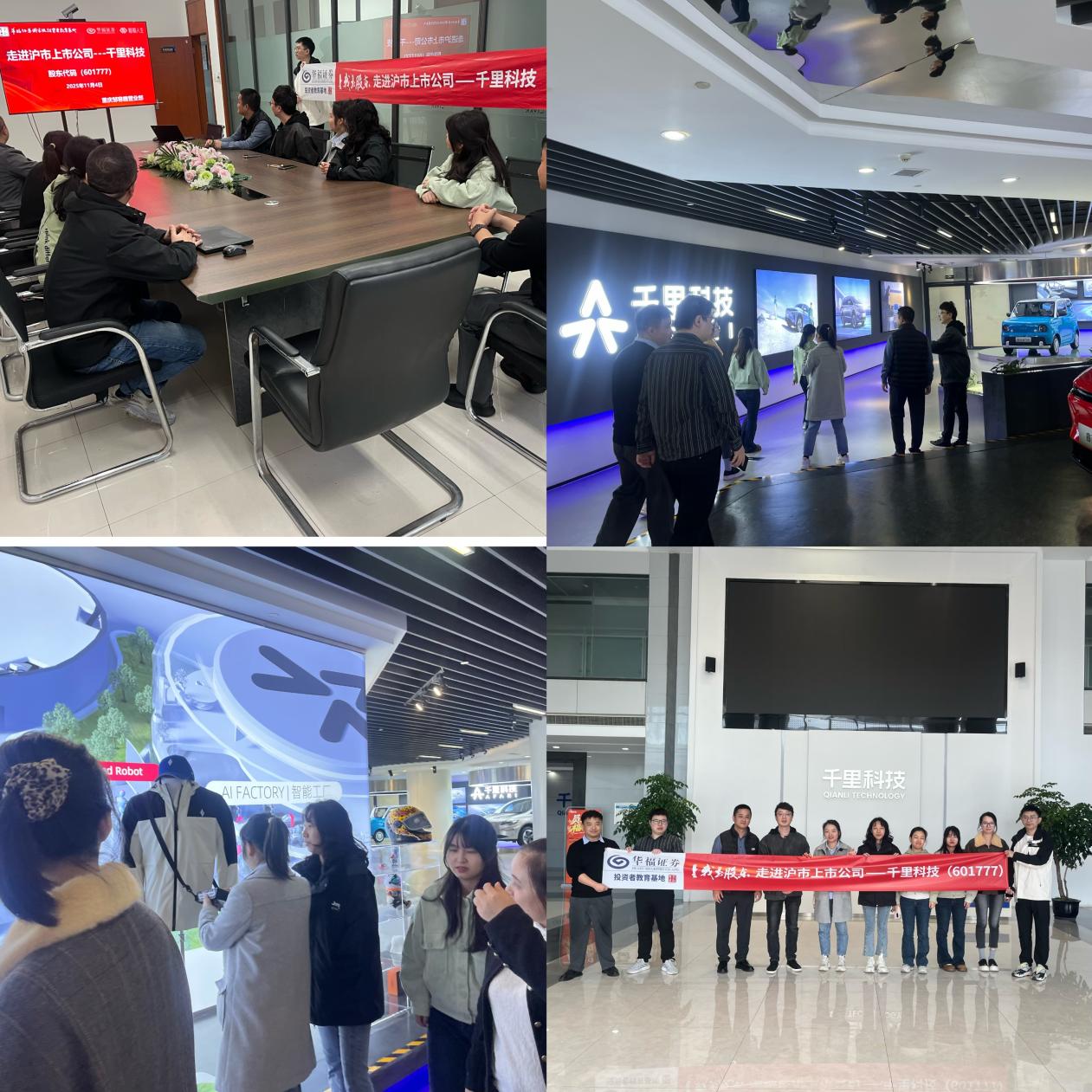
亲历“AI+车”战略的落地步伐——华福证券开展“我是股东走进沪市上市公司千里科技”活动
Quan Jing Wang· 2025-12-22 08:42
Group 1 - The event organized by Huafu Securities and Chongqing Zourong Road Securities Department focused on the development dynamics and operations of Qianli Technology, providing investors with insights into the company's transition from traditional manufacturing to intelligent technology [1] - Qianli Technology showcased its latest technological achievements, including an AI-driven intelligent driving solution and the Agent OS system, which serves as a foundational infrastructure for AI Agent operations [1] - The management of Qianli Technology engaged in in-depth discussions with investors, addressing key concerns about the company's market expansion and strategic transformation, highlighting its global motorcycle business and positive progress in the automotive sector in Europe and Southeast Asia [1] Group 2 - Huafu Securities plans to continue organizing events that promote rational investment concepts and empower investors to exercise their shareholder rights, contributing to a robust capital market ecosystem [2] - Qianli Technology focuses on the "AI + vehicle" core strategy, aiming to establish a global smart mobility technology brand, with core businesses in terminal and technology sectors, including motorcycles and new energy vehicles [4] - The company has developed a diversified product matrix with motorcycle brands like Lifan and Paifang, and is committed to leading innovations in intelligent driving and cockpit solutions [4]


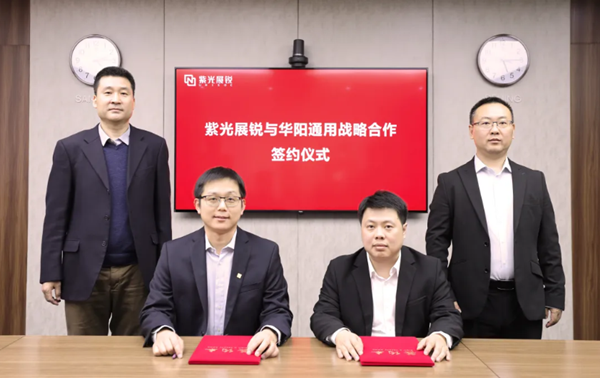
华阳通用与紫光展锐:签署全面战略合作协议 共推智能汽车芯片国产化进程
Zhong Guo Qi Che Bao Wang· 2025-12-19 05:58
Group 1 - Huayang General Electronics and Unisoc officially signed a comprehensive strategic cooperation agreement, marking the start of deep collaboration in the smart automotive chip sector [1][3] - Huayang General has a leading technological advantage in automotive electronics, covering core product areas such as smart cockpit domain controllers and driver assistance systems, serving major global automotive clients [3] - Unisoc is a leading platform chip design company with a comprehensive communication technology system from 2G to 5G, providing core computing power for automotive intelligence [3] Group 2 - The cooperation focuses on smart cockpits, leveraging both companies' strengths to create high-performance, cost-effective benchmark products for domestic smart cockpits [3] - Key executives from both companies emphasized that 5G communication and domain control technology are crucial for building differentiated competitiveness in smart vehicles [3] - The agreement aims to deepen collaboration in technology, market synergy, and ecosystem building, promoting the localization of smart automotive chips and addressing the shortfall in high-end domestic smart cockpit chip applications [3][4] Group 3 - Future collaboration will focus on technological innovation and open cooperation, aiming to enhance synergy in core electronic areas of smart vehicles and contribute to the high-quality development of the global smart automotive industry [4]
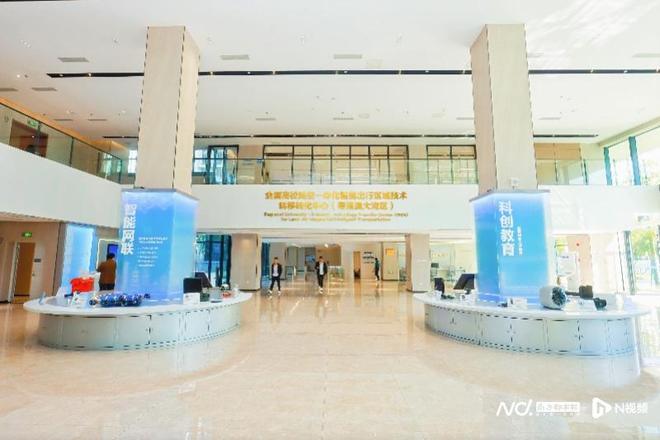
“国字号”平台落地广州番禺,三大研究中心、17个项目进驻
Nan Fang Du Shi Bao· 2025-12-17 09:18
Core Viewpoint - The establishment of the Intelligent Mobility Sub-center in Guangzhou University Town aims to enhance technology transfer and commercialization from universities, focusing on AI-enabled solutions for the mobility sector [3][6]. Group 1: Establishment and Operations - The Intelligent Mobility Sub-center has connected with 40 universities nationwide, collecting 364 project proposals and selecting 65 quality projects, with 17 projects from institutions like Beijing Institute of Technology and Hong Kong University of Science and Technology [3][9]. - The center operates under a unique mechanism combining a council, a registered public institution, and a company, utilizing a 90,000 square meter technology park as its core [3][6]. - The center aims to address challenges in technology transfer from universities, introducing a comprehensive service system powered by AI to facilitate the commercialization process [3][4]. Group 2: Service and Support - The center has launched a "one-stop" service system that enhances efficiency in matching technology, talent, and projects, allowing for automated and precise connections between universities and enterprises [6]. - Over 60 professionals have been integrated into a "dual transfer team" to support technology transfer, combining public funding and equity investment to bolster the intelligent mobility sector [6][9]. - The center has announced 60 technology demands and 118 application scenarios to foster targeted collaborations between researchers and businesses [6]. Group 3: Educational and Research Collaboration - The center has established partnerships with three Ministry of Education engineering research centers to enhance technical support and practical talent training, aiming to add 120 doctoral and 240 master's degree slots by 2026 [9][10]. - The introduction of a "new engineering" educational model aims to cultivate high-quality, innovative talent capable of addressing real-world problems through design thinking [12]. - Collaborations with institutions like Guangzhou Academy of Fine Arts focus on integrating design capabilities into technology development, resulting in the incubation of projects in smart hardware and robotics [12].
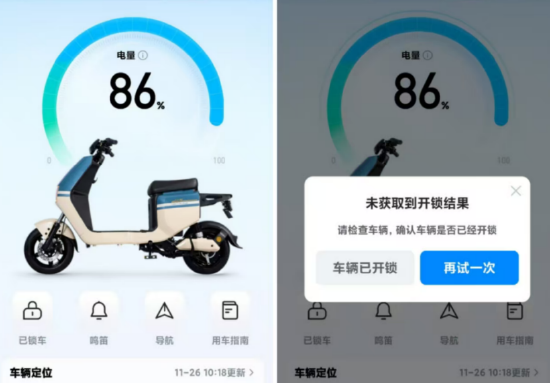
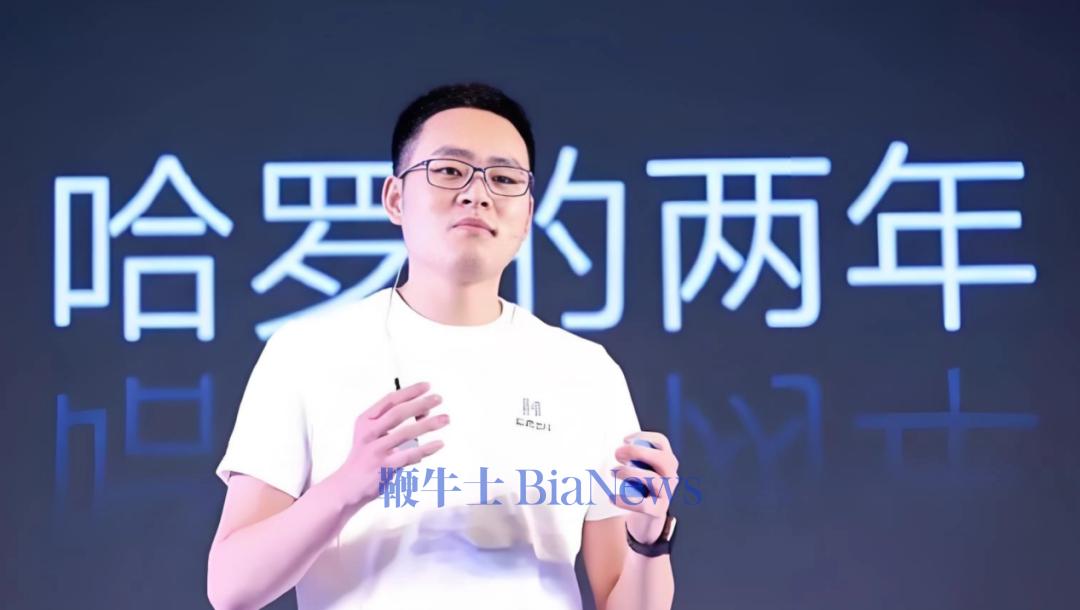
哈啰“双线翻车”:电动车大规模断服
Xin Lang Ke Ji· 2025-12-15 02:04
Core Viewpoint - The company faces significant backlash from users due to the discontinuation of 2G network services, which has rendered many smart features of its electric bikes inoperable, leading to safety concerns and potential legal issues [1][5][7]. Group 1: User Experience and Feedback - Numerous users reported their electric bikes experienced sudden "lockout" and "power loss" while riding, raising safety concerns [1][3]. - The company attributed these issues to the nationwide 2G network shutdown, affecting models with EB11 and EB20 smart chips, and offered limited solutions such as Bluetooth unlocking or upgrading to a 4G smart chip at a cost [3][4]. - Users expressed frustration over the lack of prior notification regarding the use of 2G technology when purchasing their bikes, which they believe violates their right to be informed [5][10]. Group 2: Regulatory and Industry Context - The company began its electric bike business in July 2020, shortly after a government directive in August 2020 advised against using 2G/3G networks for new IoT devices [7][9]. - Despite the regulatory guidance, the company continued to release new electric bike models utilizing outdated 2G technology, which is seen as a significant oversight given the expected lifespan of electric bikes [10][11]. Group 3: Legal and Ethical Implications - Legal experts suggest the company's actions may infringe on consumer rights, including the right to be informed and the right to fair trade, as consumers were not made aware of the implications of the 2G network shutdown [10][12]. - The company's failure to provide adequate information about the technology used in its products has led to accusations of short-sightedness and a lack of responsibility towards consumers [5][11]. Group 4: Robotaxi Business and Safety Concerns - The company recently entered the Robotaxi market but faced a serious incident where a self-driving vehicle struck pedestrians, raising questions about the safety of its AI and hardware capabilities [12][13]. - This incident has sparked concerns about the company's ability to ensure safety in its new ventures, paralleling the issues faced in its electric bike business [13].
哈啰「双线翻车」:电动车大规模断服,Robotaxi当街撞人,CEO「成熟AI」被打脸?
Xin Lang Ke Ji· 2025-12-15 01:32
Core Viewpoint - The company Hello has faced significant backlash from electric vehicle owners due to the discontinuation of 2G network services, which has rendered many smart features in their electric bikes inoperable, leading to safety concerns and customer dissatisfaction [2][3][10]. Group 1: Network Issues and Customer Impact - Hello's electric bikes have experienced service interruptions due to the shutdown of 2G networks, affecting features like remote locking and battery monitoring, which were marketed as part of the "permanent membership" benefits [2][3][6]. - Users were not informed at the time of purchase that the bikes relied on 2G communication, and now they face additional costs to upgrade to 4G technology [4][10]. - The company has offered limited solutions, such as using Bluetooth to unlock the bikes or paying for a 4G upgrade, while only partially refunding membership fees [6][10]. Group 2: Regulatory and Industry Context - The Ministry of Industry and Information Technology had issued a notice in August 2020, urging the discontinuation of 2G/3G networks for new IoT devices, yet Hello continued to release models using 2G technology [4][12][16]. - The company launched its electric bike business in July 2020, shortly before the regulatory notice, and has since introduced several models that still utilize outdated communication technology [12][13]. Group 3: Legal and Ethical Concerns - Legal experts have indicated that Hello's actions may violate consumer rights, including the right to be informed about the implications of using 2G technology, which could lead to legal repercussions [14][16]. - The failure to disclose the potential for service disruption due to network changes raises questions about the company's commitment to consumer transparency and fair trading practices [14][16]. Group 4: Robotaxi Business and Safety Issues - Hello's Robotaxi service has recently encountered a serious safety incident, marking a significant concern for the company's new venture into autonomous driving [18][19][21]. - The CEO had previously claimed that advancements in AI and hardware justified the launch of the Robotaxi service, but the recent accident has cast doubt on these assertions and raised concerns about the safety protocols in place [18][19][21]. - The incident has led to fears that Hello's approach to the Robotaxi market may mirror the issues faced in their electric bike segment, potentially damaging the company's reputation and consumer trust [21].
保时捷2026年纯电车型将支持苹果数字车钥匙
Huan Qiu Wang Zi Xun· 2025-12-12 03:53
依托先进的感应技术,用户无需将设备从口袋或包中取出,车辆便能自动识别并响应,真正实现"无感 解锁"。进入车内后,驾驶者无需额外操作手机,可直接启动车辆行驶,全程流程简洁顺畅,大幅提升 出行便捷性。针对用户关注的设备续航问题,该功能配备了完善的解决方案——即便iPhone或Apple Watch电量耗尽并自动关机,内置的备用电量功能(Power Reserve)仍能保障数字钥匙正常工作,避免 因设备断电影响用车。 作为长期位列该技术支持车企名单的品牌,保时捷此次明确了数字车钥匙功能的落地时间与首发车型, 填补了此前技术应用的具体信息空白。据了解,该功能的集成将彻底改变传统车辆交互模式,车主无需 携带物理钥匙,仅需随身携带iPhone或Apple Watch,即可完成车门及尾箱的解锁操作。 从技术层面来看,苹果数字车钥匙基于低功耗蓝牙(BLE)和超宽带(UWB)技术构建,确保了连接 的稳定性与安全性。数字钥匙将安全存储于Apple Wallet(苹果钱包)应用中,同时支持通过邮件、短 信(Messages)等方式与其他用户共享,进一步拓展了使用场景。(纯钧) 来源:环球网 【环球网科技综合报道】12月12日消息, ...

曹操出行锚定Robotaxi万亿市场,三张牌重构出行生态
雪球· 2025-12-09 08:06
Core Viewpoint - The Robotaxi industry is transitioning from a "technology story" to a "business story," with 2025 marking a critical commercialization turning point [1][3]. Industry Overview - The Robotaxi sector is approaching a pivotal moment, evolving from single-vehicle intelligence validation to ecosystem competition [2]. - By 2025, significant advancements in the Robotaxi sector are expected, with a projected annual decrease in autonomous driving system costs of 10%-15% [3]. - The market for Robotaxis is anticipated to grow significantly, with Goldman Sachs predicting 1.9 million Robotaxis in operation in China by 2035, leading to a market size of $47 billion [3]. Company Strategy - Cao Cao Mobility has launched a "Ten Years, One Hundred Cities, One Hundred Billion" strategic goal, leveraging the Geely technology ecosystem to establish a unique three-in-one development model of "smart customized vehicles + smart driving technology + smart operations" [1][4]. - The company plans to introduce a customized Robotaxi model designed for L4 autonomous driving by the end of 2026, utilizing battery swapping technology [6]. Competitive Advantage - The three-in-one model creates a competitive moat for Cao Cao Mobility in the Robotaxi ecosystem, focusing on smart driving technology, customized vehicles, and operational systems [5][7]. - The "Green Intelligent Passage Island" enhances operational capabilities, serving as a hub for automated battery swapping, cleaning, and vehicle management, with plans for replication in other cities [7]. Implementation Plan - Cao Cao Mobility's "three-step" strategy includes: 1. Technical validation and small-scale testing; 2. Transitioning to unmanned operations; 3. Full-scale commercial operations with customized Robotaxi models [9]. - The company has initiated global expansion, signing a memorandum with the Abu Dhabi Investment Office to pilot autonomous driving and green travel technologies [10]. Investment Perspective - The value of Cao Cao Mobility's Robotaxi strategy lies in optimizing unit economics, with total cost of ownership (TCO) for customized vehicles reduced by 36.4% compared to typical electric vehicles [12][13]. - As the Robotaxi business progresses, the company's valuation may shift from a "mobility platform" to a "smart mobility technology company," reflecting its role in future smart city infrastructure [13][14].

华为HMSfor Car智行论坛落幕,赋能车企智能化转型与出海新征程
Xin Lang Cai Jing· 2025-12-08 12:25
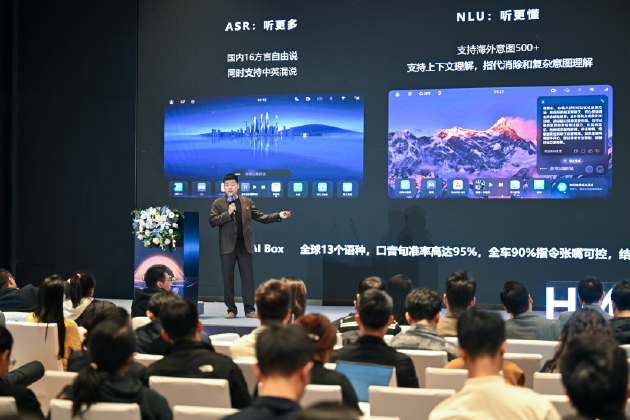
Core Insights - The Huawei HMS for Car forum held on November 28 in Shenzhen focused on the automotive industry's transition towards digitalization, intelligence, connectivity, and electrification, emphasizing the need for a competitive global smart in-car service system [1][10] Group 1: HMS for Car Overview - Huawei's HMS for Car integrates four core capabilities: maps, voice, ecosystem, and connectivity, aiming to help automotive companies establish differentiated competitive advantages globally [2][11] - The platform has evolved from addressing basic needs to integrating into local ecosystems, enhancing product localization experiences for automotive companies [2][12] Group 2: Core Capabilities - In smart voice technology, the AIBox has been upgraded to understand context and engage in natural conversations, achieving a 90% accuracy rate in local accents and supporting 16 Chinese dialects and 13 global languages [3][12] - The ServiceBox acts as a bridge for localizing automotive ecosystems, adapting top-tier in-car applications to different countries and supporting various interaction methods [3][13] - The NetBox enhances network stability for in-car services, covering over 100 countries and integrating resources from 150 operators [3][13] - The MapBox focuses on providing accurate local map data and real-time updates, collaborating with overseas map providers to offer over 280 million points of interest [4][13] Group 3: Collaborative Practices - The partnership with automaker Seres emphasizes a new paradigm in smart mobility, integrating AI capabilities to create a comprehensive user experience across six key areas: smart travel, smart living, smart entertainment, safety, child companionship, and smart office [5][15] - Long-term collaboration with Great Wall Motors has led to significant advancements in navigation accuracy and stability, with new features set to debut in December [6][16] Group 4: Ecosystem Partnerships - Collaborations with content partners like Tencent Music aim to enhance in-car entertainment experiences through AI-driven music recommendations based on user context [7][18] - The integration of smart parking solutions simplifies the parking process, allowing users to reserve spaces and pay fees via voice commands [9][18] - TomTom's dynamic mapping capabilities support real-time navigation and traffic management, enhancing the overall driving experience [9][19] Group 5: Future Directions - The forum highlighted the evolution of HMS for Car from a basic service provider to a comprehensive travel assistant, with plans for continuous upgrades and deeper integration with partners to create innovative travel experiences [10][19]
华为HMS for Car智行论坛举办,携手全球伙伴探索生态共赢之路
Xin Lang Cai Jing· 2025-12-05 15:14
Core Insights - The automotive industry is rapidly transitioning towards digitalization, intelligence, connectivity, and electrification, with a focus on building a globally competitive intelligent in-car service system [1] - Huawei's HMS for Car aims to enhance the localization experience of smart cockpits to meet diverse regional market needs, moving from merely supporting car companies to integrating into local ecosystems [2] Group 1: HMS for Car Capabilities - HMS for Car integrates four core capabilities: maps, voice, ecosystem, and connectivity services, providing a comprehensive intelligent in-car solution that has already supported multiple car manufacturers [1] - The AI Box upgrade allows for proactive understanding and natural communication, achieving a 90% accuracy rate in recognizing local accents and supporting 16 Chinese dialects and 13 global languages [4] - Service Box acts as a bridge for local ecosystem adaptation, enhancing user familiarity with local applications and supporting diverse interaction methods [4] - Net Box enhances network stability for in-car services, covering over 100 countries and integrating resources from 150 operators [4] Group 2: Navigation and Mapping Enhancements - Map Box focuses on creating a differentiated product experience with real-time updates, supported by local research institutes in Munich and the Netherlands [5] - The collaboration with overseas map providers has resulted in over 280 million Points of Interest (POI) data, improving navigation accuracy and efficiency [5] Group 3: Integration and User Experience - HMS for Car is evolving into a "personal travel assistant," integrating various services such as navigation, vehicle control, and entertainment into a seamless user experience [7] - The system can understand the entire travel cycle, automatically planning routes and recommending services along the way [7] - Over 70 vehicle models globally have successfully integrated HMS for Car solutions [7] Group 4: Collaborative Innovations - The partnership with automaker Seres has led to the development of a smart automotive ecosystem, enhancing user experience through AI algorithms and multi-scenario intelligent functions [8] - Long-term collaboration with Great Wall Motors has resulted in significant improvements in navigation precision and stability, with new capabilities set to debut in December [10] - Collaborations with content partners like Tencent Music have led to the creation of an AI music recommendation system tailored to user travel scenarios [13] Group 5: Parking and Navigation Solutions - The partnership with Shenzhen Shunyi Tong has resulted in a convenient parking experience through features like space reservation and voice-activated payment [15] - TomTom's integration of radar perception and data fusion has enhanced the accuracy and reliability of global map data for the "live map" capabilities [17] Group 6: Future Outlook - The forum highlighted the evolution of HMS for Car from "going out" to "going in," emphasizing ongoing upgrades and partnerships to create new intelligent travel experiences [19]
剑指千亿!Robotaxi,大消息
Zhong Guo Ji Jin Bao· 2025-12-05 06:37
Core Insights - Caocao Travel has announced an ambitious "Ten Years, One Hundred Cities, One Hundred Billion" strategy for its Robotaxi business, aiming to establish five operational centers globally, expand services to 100 cities, and achieve a total transaction value (GTV) of 100 billion RMB over the next decade [2][4]. Group 1: Robotaxi Strategy and Market Position - The global Robotaxi market is transitioning from a phase of technical feasibility validation to one of replicable commercial expansion, marking a pivotal moment for the autonomous taxi industry [4]. - Caocao Travel is the only domestic company and one of the few globally that possesses all essential elements for Robotaxi operations, offering a comprehensive solution rather than just focusing on technology or vehicles [4][6]. - The company has developed a unique three-in-one model combining smart customized vehicles, intelligent driving technology, and smart operational systems, leveraging its deep expertise in electric smart vehicle development [4][6]. Group 2: Operational Framework and Infrastructure - A complete operational system is crucial for the success of Robotaxi services, integrating smart driving technology into vehicles and providing consumer services to create a commercial loop [7]. - Caocao Travel has established systematic capabilities in user service, platform scheduling, and asset management, ensuring operational efficiency and user experience [7][10]. - The introduction of the "green smart passage island," which integrates automatic battery swapping, cleaning, vehicle maintenance, intelligent scheduling, and automatic settlement, represents a significant advancement in urban mobility infrastructure [9][10]. Group 3: Future Developments and Collaborations - Caocao Travel's Robotaxi strategy includes a "three-step" approach: initial technical validation and small-scale testing, transitioning to mixed operations of human-driven and autonomous vehicles, and ultimately launching fully customized Robotaxi models for global commercial operations [12]. - A strategic partnership has been signed with Qianli Technology to accelerate the large-scale application and commercialization of intelligent driving technology in the Robotaxi sector [14]. - The development of the Robotaxi business is expected to create new employment opportunities and explore diverse revenue models, including potential vehicle purchase options for drivers [14].
