智能网联技术

Search documents
八部门:推进智能网联汽车准入和上路通行试点 有条件批准L3级车型生产准入
Ge Long Hui· 2025-09-13 02:06
格隆汇9月13日|工业和信息化部等八部门印发《汽车行业稳增长工作方案(2025—2026年)》,方案 提出,推动智能网联技术产业化应用。深入开展智能网联汽车"车路云一体化"应用试点,加快网联基础 设施和云控平台建设,鼓励汽车前装V2X、5G等高性能通信模块,加快推进北斗系统规模化应用,促 进物流、环卫、出行服务等多场景应用,鼓励重点地区逐步拓展跨区域协同应用。推进智能网联汽车准 入和上路通行试点,有条件批准L3级车型生产准入,推动道路交通安全、保险等法律法规完善。支持 汽车、信息通信、交通等行业企业以数据为纽带探索新型商业模式,加快多元化价值链培育。 ...
八部门印发《汽车行业稳增长工作方案(2025—2026年)》:推进智能网联汽车准入和上路通行试点 有条件批准L3级车型生产准入
Mei Ri Jing Ji Xin Wen· 2025-09-13 02:03
Core Viewpoint - The Ministry of Industry and Information Technology, along with eight other departments, has issued the "Automobile Industry Stabilization and Growth Work Plan (2025-2026)", focusing on promoting the industrial application of intelligent connected technologies [1] Group 1: Policy Initiatives - The plan emphasizes the development of intelligent connected vehicle applications through integrated "vehicle-road-cloud" pilot projects [1] - It aims to accelerate the construction of connected infrastructure and cloud control platforms [1] - The initiative encourages the adoption of high-performance communication modules such as V2X and 5G in new vehicles [1] Group 2: Technological Advancements - The plan promotes the large-scale application of the Beidou system and encourages various scenario applications in logistics, sanitation, and transportation services [1] - It supports the gradual expansion of cross-regional collaborative applications in key areas [1] Group 3: Regulatory Framework - The initiative includes advancing pilot projects for the access and road use of intelligent connected vehicles [1] - It proposes conditional approval for the production access of L3 level vehicles and aims to improve laws and regulations related to road traffic safety and insurance [1] Group 4: Business Model Innovation - The plan supports companies in the automotive, information communication, and transportation sectors to explore new business models linked by data [1] - It aims to accelerate the cultivation of diversified value chains [1]
推动中国汽车向新、向优、向上——记2025中汽人年会
Zhong Guo Qi Che Bao Wang· 2025-09-04 01:11
Group 1 - The Chinese automotive industry is experiencing intensified market competition and continuous technological innovation, particularly in AI, reshaping the industry chain [2][5] - The "14th Five-Year Plan" period has seen significant growth in the automotive sector, with production and sales exceeding 15 million units for the first time, and new energy vehicles (NEVs) accounting for 44.3% of total sales [3][5] - Talent is recognized as a key driver for the automotive industry's development, necessitating a strategic focus on cultivating high-quality professionals to support the industry's transformation [3][4] Group 2 - The automotive industry is transitioning towards electric vehicles, with NEVs becoming the dominant market force, laying a solid foundation for becoming a global automotive powerhouse [5][6] - The market structure is expected to undergo rapid changes, with a coexistence of new energy and traditional vehicles due to product characteristics and resource distribution [5][6] - AI technology is significantly impacting the automotive sector, necessitating a transformation in talent requirements and organizational structures to adapt to new demands [7][8] Group 3 - The integration of AI into the automotive industry is seen as a marathon, requiring a gradual approach to implementation, starting with small-scale applications [8][9] - The dual impact of AI on the workforce includes the potential replacement of certain jobs while simultaneously creating demand for specialized roles in AI and machine learning [8][9] - The industry must embrace AI and innovation while maintaining a long-term strategic focus, viewing AI as an essential element of the ecosystem rather than a speculative investment [9]


牵手八大国有车企 华为汽车板块扩大“朋友圈”
Zheng Quan Shi Bao· 2025-09-02 18:11
Core Insights - Huawei has established partnerships with all eight major state-owned car manufacturers in China, marking a significant milestone in its automotive strategy [1][3] - The collaboration with FAW Hongqi signifies Huawei's growing influence and recognition in the automotive sector, as it aims to leverage its intelligent automotive solutions [3][5] Huawei's Automotive Business Development - Huawei's automotive business evolved from its vehicle communication segment, officially entering the automotive field in May 2019 with the establishment of the Intelligent Automotive Solutions Division [2] - The company has developed three main collaboration models with car manufacturers: component supply, Hi (full-stack intelligent automotive solutions), and Hongmeng Zhixing (formerly "Smart Choice") [2] - Huawei's automotive structure has matured over six years, with its automotive division split into two main parts: component supply and Hi model, both under Shenzhen Yingwang Intelligent Technology Co., Ltd. [2] Recent Collaborations and Product Launches - The recent partnership with FAW Hongqi aims to develop a new flagship model, the "Hongqi 9 Series," expected to launch in 2026, utilizing Huawei's comprehensive technology stack [3][4] - Huawei's Hongmeng Zhixing has achieved over 900,000 cumulative deliveries, indicating a successful transition from exploration to commercial expansion [4][5] - Upcoming models include the Enjoy S9T and Shangjie H5, with the latter priced starting at 169,800 yuan, marking Huawei's entry into the sub-200,000 yuan market segment [4] Competitive Landscape - The automotive industry is witnessing a shift in competition dynamics, with traditional manufacturers, BYD, and new entrants like NIO and Xpeng, alongside Huawei, shaping the market [6] - Huawei's expanding partnerships and technology integration are expected to create a competitive ecosystem among different smart automotive brands [6][7] - The high-end market, particularly vehicles priced above 400,000 yuan, is increasingly influenced by Huawei's Hongmeng Zhixing, potentially challenging established luxury brands [7] Future Outlook - Huawei aims to become a core technology provider for China's automotive industry, facilitating the intelligent transformation of domestic car manufacturers [5][7] - The company is positioned to potentially lead global automotive intelligence standards, similar to how Android operates in the mobile sector, if it continues to innovate and deepen partnerships [7] - However, challenges such as brand differentiation and the need for rigorous testing of intelligent driving technologies remain critical for Huawei's sustained growth in the automotive sector [8]
「玩花活儿」救不了汽车之家
36氪· 2025-09-01 13:36
Core Viewpoint - The article discusses the challenges faced by Autohome after its acquisition by Haier, highlighting its struggle to adapt to a rapidly changing automotive media landscape and the decline in its traditional media business [4][5][21]. Group 1: Acquisition and Ownership Changes - Haier completed the acquisition of Autohome for approximately $1.8 billion, gaining control of about 43% of the company [5]. - Autohome has undergone multiple ownership changes since the departure of its founder, Li Xiang, indicating instability and challenges in maintaining a consistent strategic direction [5][21]. - The acquisition by Haier is seen as a strategic move to integrate Autohome into its smart mobility ecosystem, focusing on the potential of the automotive industry [21][23]. Group 2: Financial Performance - Autohome reported a net revenue of RMB 1.758 billion for Q2 2025, a decline of 6.14% compared to RMB 1.873 billion in the same period of 2024 [7]. - The company's net profit for Q2 2025 was RMB 415.7 million, down approximately 20.79% from RMB 524.8 million in Q2 2024, marking a significant decline in profitability [8][10]. - The media services segment, a key revenue driver, saw a 35.46% year-on-year decline, with revenues dropping from RMB 432.9 million in 2024 to RMB 279.4 million in 2025 [10][11]. Group 3: Market Challenges and Competition - Autohome's media business is facing structural challenges due to reduced advertising spending from traditional fuel vehicle manufacturers, who are shifting budgets to more effective channels like social media [11][12]. - Competitors such as Dongchedi and Yiche are leveraging resources from major tech companies like ByteDance and Tencent, intensifying competition in the automotive media space [11][23]. - The rise of independent automotive content creators and the diversification of information channels are further eroding Autohome's market position [12]. Group 4: Strategic Shifts and New Initiatives - Autohome is pivoting towards AI technology and new retail models, including the establishment of "offline space stations" for a more integrated car buying experience [13][14]. - The offline space stations aim to provide a comprehensive service model, combining vehicle display, retail, and customer engagement through advanced technologies like VR and AI [14][17]. - Despite the innovative approach, the high operational costs associated with these new initiatives pose a significant challenge to achieving profitability [19][20]. Group 5: Long-term Outlook and Strategic Intent - The long-term success of Autohome under Haier's ownership will depend on its ability to regain user trust and establish a sustainable business model in a competitive landscape [23]. - The integration of Autohome into Haier's broader smart home ecosystem reflects a strategic intent to leverage synergies between automotive and home technology [21][23]. - The ongoing transformation efforts highlight the need for Autohome to adapt quickly to market demands and consumer preferences to remain relevant in the evolving automotive industry [22][23].
海马汽车2025年上半年净亏损7451.91万元,同比收窄50.85%
Bei Jing Shang Bao· 2025-08-25 10:42
Core Viewpoint - Haima Automobile reported a revenue of 655 million yuan for the first half of 2025, marking a year-on-year increase of 9.89%, while the net loss attributable to shareholders narrowed by 50.85% to 74.5191 million yuan [1] Group 1: Financial Performance - The company's revenue for the reporting period was 655 million yuan, reflecting a year-on-year growth of 9.89% [1] - The net loss attributable to shareholders was 74.5191 million yuan, which is a reduction of 50.85% compared to the previous year [1] - The company has decided not to distribute cash dividends, issue bonus shares, or increase capital through reserves [1] Group 2: Industry Context - The automotive industry is experiencing rapid changes due to advancements in new energy and intelligent connected technologies, leading to increased market competition and operational pressure for car manufacturers [1] - In response to the fast-paced industry changes, the company aims to identify suitable niche markets based on its own conditions and resources [1] - The company plans to adopt a more open approach to seek external cooperation opportunities, aiming for collaborative win-win outcomes [1]

2025中国汽车产业发展(泰达)国际论坛9月开幕
Zhong Guo Qi Che Bao Wang· 2025-08-19 09:53
2025年,是"十四五"收官之年和"十五五"谋篇布局之年,也是我国汽车产业进入新旧动能转换和发展新 质生产力的关键窗口期和机遇期。总体来看,尽管困难和挑战很多,优势和机遇也在蓄势累积。我国经 济正处于回升向好的关键时期,为汽车产业发展创造了良好环境。同时,汽车产业自身坚定不移深化变 革,打基础练内功,对技术精益求精、前瞻布局,新能源汽车综合性能持续提升,智能网联技术加快赋 能产业稳健发展,前景总体向好。 泰达汽车论坛自2005年创办以来,始终秉持着推动中国汽车产业可持续高质量发展的初心和使命。 面对"十五五"时期的新变化新挑战,产业高质量发展新任务,第21届泰达汽车论坛将以"增动能 启新 篇 向全球"为年度主题,在更广范围内汇聚汽车产业及跨产业智慧力量,聚焦"十五五"时期产业政策 取向、战略布局选择、前瞻技术趋势等影响产业发展的关键要素展开深度研讨,助力产业及企业选对路 径、破解难题,高质量完成"十四五"规划目标任务、为实现"十五五"良好开局打牢基础,共绘汽车产业 高质量发展锦绣图景。 2025泰达汽车论坛在既往经验基础上,将结合产业发展的新形势、新任务、新变化,不断创新和完善论 坛的组织形式和内容设置,在推 ...
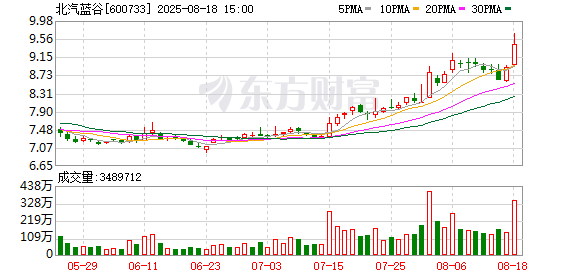
整车板块“数据入表”唯一样本,北汽蓝谷近一月股价上涨逾20%
2 1 Shi Ji Jing Ji Bao Dao· 2025-08-18 10:57
Core Viewpoint - The stock price of Beiqi Blue Valley (600733.SH) has increased significantly, reflecting positive market sentiment despite the company reporting a net loss in its latest half-year results [2][8]. Financial Performance - Beiqi Blue Valley reported a revenue of 9.52 billion yuan for the first half of the year, representing a year-on-year growth of 154.4% [8]. - The company's net profit attributable to shareholders was -2.31 billion yuan, a reduction in loss by 10.2% compared to the previous year [8]. - The overall gross margin improved to -5.47%, up from -10.98% in the same period last year [8]. Asset and Liabilities - The company's asset-liability ratio increased from 75.08% in the first quarter to 80.26% in the half-year report [9]. Data Resources and R&D - The total amount of data resources reported by the company was 12.17 million yuan, with a notable increase in capitalized development expenditures from 2.23 million yuan to 4.20 million yuan [4][8]. - The intangible assets decreased from 9.62 million yuan to 7.97 million yuan due to normal amortization [4]. Market Position and Stock Performance - Beiqi Blue Valley is the only listed company in the automotive sector to disclose data resources, and its stock price has risen by over 20% since the announcement of its expected loss on July 15 [2][3]. - The automotive sector overall saw a 1.05% increase, with Beiqi Blue Valley's stock rising by 5.72% on the same day [2][3]. Technological Advancements - The company has made significant progress in intelligent driving and digitalization, including the development of platforms for high-speed NOA and city NOA, as well as a data cloud control platform [9]. - Beiqi Blue Valley has established a comprehensive self-research capability in intelligent driving technology, covering levels L2 to L4 of autonomous driving [9].

筑牢安全与性能基石——记《中国汽车报》第十八届年度消费车型试驾
Zhong Guo Qi Che Bao Wang· 2025-08-12 04:18
Group 1 - The core viewpoint of the event is to provide an authoritative and professional evaluation of automotive technology, focusing on the advancement of intelligent and connected vehicles in China [3][7] - The event has tested over 400 models and covered more than 100,000 kilometers, establishing itself as a recognized "technical barometer" in the industry [3][4] - The testing methodology includes both open road and closed circuit assessments, ensuring a comprehensive evaluation of vehicle performance under various conditions [4][5] Group 2 - The event highlights the importance of real-world testing scenarios, examining vehicles' performance in diverse driving conditions, including urban and highway environments [4][5] - Key features evaluated include advanced driver-assistance systems (ADAS) such as highway navigation assistance (NOA) and lane centering assistance (LCC), focusing on their adaptability and responsiveness [4][6] - The testing also emphasizes the differentiation in technology among various models, showcasing innovations tailored to user needs, such as enhanced weather adaptability and improved human-machine interaction [6][7] Group 3 - The event serves as a platform for both consumers and manufacturers, providing valuable insights for purchasing decisions and guiding research and development directions in the automotive industry [8] - It aims to promote the maturity of industry standards and the technological ecosystem, reflecting the ongoing transformation driven by intelligent vehicle technology [8]

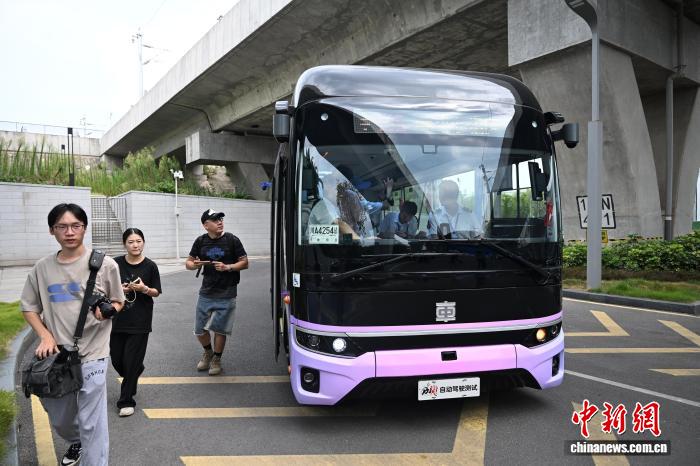
成都首条自动驾驶公交线路亮相
Zhong Guo Xin Wen Wang· 2025-08-04 06:33
Core Viewpoint - Chengdu has officially launched its first autonomous driving bus line, marking a significant step in the integration of smart transportation technologies in public transit [1][2]. Group 1: Autonomous Driving Bus Line - A 12-kilometer autonomous driving bus demonstration line has been unveiled in Chengdu, connecting Foton TOD Station to Zhichuang Industrial Park B District [2]. - Four 6-meter autonomous buses equipped with L4-level capabilities have been introduced, featuring high-precision sensors, vehicle-road collaboration devices, and AI algorithms for autonomous operation [2]. Group 2: Chengdu Public Transport Group Initiatives - Chengdu Public Transport Group is the first urban public transport enterprise in China to independently research and develop a multi-system integration for autonomous driving buses [5]. - The company is implementing a comprehensive lifecycle management system for autonomous buses, integrating four foundational systems: intelligent maintenance, charging network, smart station, and intelligent vehicle fleet operations [5]. Group 3: Strategic Development and Industry Integration - The launch of the autonomous bus demonstration project is a key initiative in Chengdu Public Transport Group's strategic layout, aimed at enhancing operational services, dispatch command, maintenance, and emergency response for autonomous bus operations [5]. - The company has identified 60 autonomous operation scenarios and has developed a series of management systems and standards, including the "Chengdu Public Transport Autonomous Driving Operation Scenario Construction Plan" [6].