
服务业扩大开放

Search documents
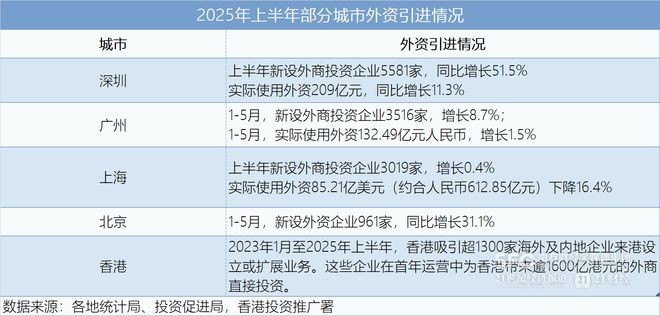
全球资金加仓中国 深圳抓住这一机遇
2 1 Shi Ji Jing Ji Bao Dao· 2025-08-01 03:59
Core Insights - Global capital is rebalancing, with foreign investment in China increasing significantly, as evidenced by the establishment of 30,014 new foreign-invested enterprises in the first half of the year, a year-on-year increase of 11.7% [1] - Shenzhen leads major cities in China with 5,581 new foreign-invested enterprises established in the first half of the year, reflecting a growth of 51.5% [2] - The service sector is experiencing accelerated opening, with telecommunications and healthcare becoming new hotspots for foreign investment, as seen by a 60% increase in new foreign-invested telecommunications enterprises and an 85.2% increase in healthcare enterprises in Shenzhen [1][13] Foreign Investment Trends - In the first half of the year, Shenzhen attracted 209 billion yuan in actual foreign investment, marking an 11.3% increase [1][6] - High-tech industries accounted for 35.2% of Shenzhen's actual foreign investment, with high-tech manufacturing seeing a remarkable increase of 122.2% [6] - Major multinational corporations like Siemens and Valeo are increasing their investments in China, signaling confidence in the market despite previous downturns in the medical equipment sector [3][4] Regional Preferences - Foreign investment is showing regional preferences, with Shanghai, Beijing, and Guangzhou also reporting significant foreign investment activity, albeit with different focuses based on their unique industrial strengths [8][9] - Beijing is attracting foreign investment in research and development, particularly in the pharmaceutical sector, with significant investments from companies like AstraZeneca [8] - Shanghai is positioning itself as a hub for multinational corporate headquarters and R&D centers, with over 1,042 regional headquarters established [9] Emerging Sectors - The telecommunications and healthcare sectors are emerging as key areas for foreign investment, driven by recent policy changes aimed at expanding service sector openness [12] - The number of foreign-invested telecommunications enterprises in China has grown by 27% year-on-year, with Shenzhen being a significant contributor [12] - The establishment of foreign-owned hospitals is expected to enhance the healthcare service landscape in China, providing high-quality medical resources and alleviating pressure on public hospitals [13]

杭州构筑服务业开放新格局
Zhong Guo Jing Ji Wang· 2025-07-08 23:47
Core Viewpoint - The rapid expansion of the digital economy, along with the profound reshaping of industrial patterns by artificial intelligence and cloud computing, is driving significant transformation and innovation in China's service industry [1] Group 1: Policy and Strategic Initiatives - The Chinese government initiated the first round of comprehensive pilot work for expanding the service industry in Beijing in 2015, which has since expanded to 20 provinces and cities [1] - Hangzhou was approved as a pilot city for expanding the service industry at the end of 2022, with 97 pilot tasks assigned [1][2] - The State Council issued a notice in April 2023 to accelerate the pilot work, specifying 119 tasks [1][2] Group 2: Implementation and Achievements - Hangzhou has implemented 97 pilot tasks across 42 departments and 13 districts, achieving a completion rate of 94.8% [5] - The city's service industry added value reached 15,962 billion yuan in 2024, with a year-on-year growth of 5.0% [6] - Actual foreign investment in Hangzhou reached 6.542 billion USD, ranking third among all cities in China [6] Group 3: Digital Economy and Innovation - Hangzhou is leveraging digital technology to drive urban development, with initiatives like digital identity registration and the promotion of digital RMB [4] - The city has established a robust artificial intelligence ecosystem, with significant contributions from leading digital enterprises and innovative projects [5] Group 4: Cross-Industry Collaboration and Infrastructure - The city has introduced a new "one box, one order" model for sea-rail intermodal transport, enhancing logistics efficiency and reducing operational costs for businesses [8] - Various departments in Hangzhou are working collaboratively to provide innovative solutions and support for the service industry pilot [7] Group 5: Future Directions and Goals - Hangzhou aims to establish itself as a national leader in service industry reform, focusing on digital industries, finance, healthcare, commerce, and tourism [13] - The city plans to implement a "seven actions" strategy to enhance top-level design, innovate policy support systems, and create exemplary projects [13]
广州服务业扩大开放持续升级 130项试点任务已实施128项
Guang Zhou Ri Bao· 2025-06-28 02:26
Core Insights - Guangzhou has made significant progress in expanding the service industry since being selected as a national pilot city for service industry opening-up in December 2022, with an implementation rate of 98.5% for 130 pilot tasks [1] - The city has seen a continuous increase in service industry value added, exceeding 2.2 trillion yuan for two consecutive years, accounting for over 70% of GDP [1] - New foreign investment in the service sector has reached nearly 15,000 enterprises, with service trade surpassing 75 billion USD, showing double-digit growth for two years [1][2] Group 1: Service Industry Development - Guangzhou has introduced 13 measures in areas like foreign legal services and green finance, which have been recognized as national pilot cases [1] - The city has established a cross-border business registration service platform that is being replicated nationwide [1] - The "Guangzhou Consumption Festival" has successfully attracted global buyers, boosting local dining consumption by nearly 100 million yuan [3] Group 2: Innovation in New Business Models - Guangzhou has pioneered the integration of "service + manufacturing," particularly in the field of autonomous driving, with extensive testing networks and commercial applications [3] - The city has launched a global cross-border e-commerce platform for transporting battery-powered goods, significantly improving efficiency and reducing costs [5] - The establishment of an international ship fuel supply center at Guangzhou Port has positioned the city as a leader in providing comprehensive bonded fuel services [6] Group 3: Business Environment Optimization - Guangzhou has focused on enhancing the business environment to facilitate foreign investment and trade, implementing 100 annual reform tasks [7] - The city has initiated the "Enterprise Service Year" program, which includes a feedback mechanism for policy improvement [7] - Recent government approvals have empowered Guangzhou to further advance its service industry opening-up strategy, with a focus on data, healthcare, and finance sectors [7]
关注市政府新闻办新闻发布会 | 成都大力实施“蓉品出海”行动 1至4月“蓉产”“蓉造”出口同比增长23.4%
Sou Hu Cai Jing· 2025-06-16 12:37
Group 1: Core Initiatives for Business Development - Chengdu focuses on expanding service industry openness and supporting enterprise development through enhanced policy, service, and scenario supply [1] - The city aims to leverage its Free Trade Zone to explore innovative models in key industries such as digital creativity, biomedicine, and modern logistics [1] - Chengdu is implementing institutional innovations to address foreign enterprises' pain points, including foreign talent management and cross-border data and capital flow [1] Group 2: Enhancing International Consumption Services - Chengdu is developing key commercial areas and new consumption hotspots, including cultural entertainment tourism and international medical beauty [2] - The city is accelerating the establishment of duty-free shops and promoting convenient services for tax refunds for departing tourists [2] - Efforts are being made to improve the internationalization of public services in tourism, healthcare, education, and transportation [2] Group 3: Supporting Foreign Trade Innovation - Chengdu is implementing the "Rong Products Going Global" initiative, focusing on key categories and markets to support local products' international expansion [3] - From January to April this year, exports of Chengdu's self-owned brands increased by 23.4% year-on-year [3] - The city is exploring new models combining cross-border e-commerce, industrial belts, and overseas warehouses to enhance international market access [3] Group 4: Promoting Investment and Trade Facilitation - Chengdu is targeting key sectors for openness, including the construction of an international technology transfer center under the Belt and Road Initiative [4] - Financial innovations such as QFLP and cross-border capital pool services are being supported for multinational enterprises [4] - The city encourages the introduction of international sports organizations and high-level cultural exhibitions to enhance its global presence [4]
北京“两区”建设五周年成绩单:累计落地70余项全国突破性政策
Xin Jing Bao· 2025-06-12 22:47
Core Insights - The "Two Zones" initiative in Beijing has achieved significant breakthroughs in the past five years, showcasing strong vitality in the open economy [1][2]. Group 1: Policy and Innovation - Over the past five years, Beijing has implemented more than 70 national breakthrough policies and has developed over 80 innovative practices for nationwide replication [1][2]. - The initiative has focused on institutional innovation, achieving "zero breakthroughs" in various fields, including technology transfer tax incentives and the establishment of the first pilot for equity investment transfer [2][3]. Group 2: Foreign Investment and Economic Performance - Beijing's actual foreign investment reached $66.18 billion, accounting for 8.4% of the national total, with over 90% of this investment in the service sector [3][4]. - The foreign investment in the free trade zone has increased from less than 10% at its inception to over 20% [3]. Group 3: Infrastructure and Business Environment - The city has streamlined the process for foreign investment enterprises, reducing the establishment time from 2-3 months to as fast as 1 day [4]. - Nearly 7,900 new foreign-funded enterprises have been established in the city, including significant investments from major international companies [4]. Group 4: Future Development Plans - Beijing is working on the 3.0 version of the service industry expansion plan, aiming for quick approval and implementation [5]. - The city plans to enhance the open level of parks and deepen reforms in key sectors such as technology, digital economy, finance, and biomedicine [5].
服务业开放,“解锁”哪些新机会
Ren Min Ri Bao· 2025-06-09 21:34
Core Viewpoint - The recent release of the "Comprehensive Pilot Work Plan for Accelerating the Expansion of the Service Industry" aims to enhance the openness of the service sector, providing more choices for consumers and investors, and includes 155 pilot tasks across 11 provinces and cities, with 9 additional cities newly included in the pilot program [1][2][3]. Group 1: Expansion of Service Industry - The service industry has undergone significant upgrades and expansions since 2015, with a current focus on creating a more diverse and innovative institutional framework [2][3]. - The 11 pilot provinces and cities are expected to attract approximately 293.2 billion yuan in foreign investment in 2024, accounting for about half of the national total in the service sector [2]. - The plan emphasizes the need for a market-oriented, legal, and international business environment to facilitate foreign investment [2][4]. Group 2: New Pilot Cities and Tasks - The new pilot cities, including Dalian, Ningbo, and Xiamen, have been selected based on their strong service industry foundations and regional significance [3][4]. - The plan includes 155 pilot tasks that focus on innovation and adapting to local conditions, aiming to accelerate implementation and enhance the effectiveness of the pilot programs [5][6]. Group 3: Key Areas of Focus - The plan highlights the importance of aligning with high-standard international trade rules, such as the CPTPP and DEPA, to enhance China's commitment to opening up [4]. - Specific measures in the telecommunications sector include removing foreign ownership limits on certain services and promoting new business models [9]. - In the healthcare sector, initiatives include allowing foreign doctors to open clinics and optimizing the import inspection process for rare disease medications [8][9]. Group 4: Financial Sector Initiatives - The financial sector will see support for international factoring business and the development of cross-border fund operations in RMB [10]. - The plan aims to attract foreign insurance companies and funds to invest in green projects, enhancing the financial services industry's quality [10].
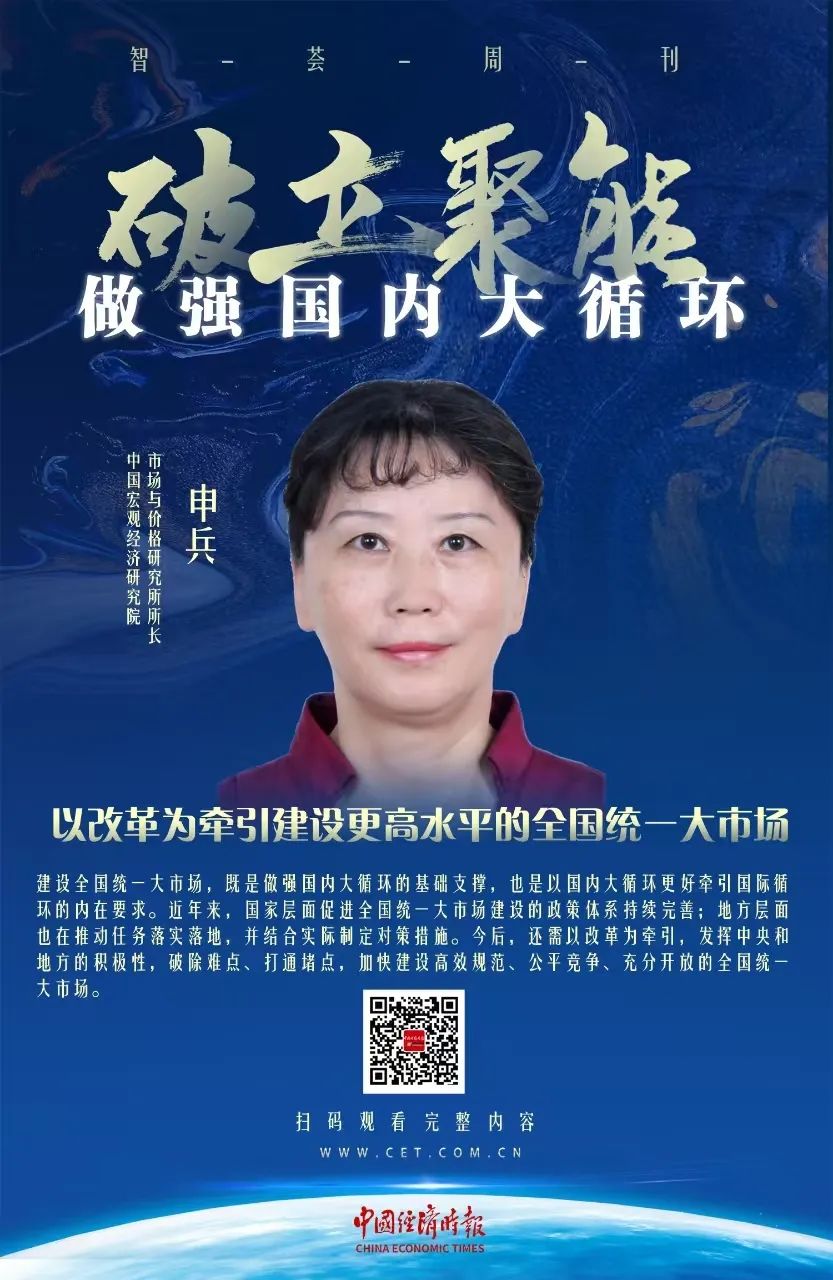
做强国内大循环·破壁丨申兵:以改革为牵引建设更高水平的全国统一大市场
Sou Hu Cai Jing· 2025-05-28 02:23
Core Viewpoint - The construction of a unified national market is essential for strengthening domestic circulation and better integrating international circulation, with significant progress made at both national and local levels through policy improvements and practical measures [4][5][6]. Group 1: Achievements in Building a Unified National Market - A series of detailed policies have been introduced to provide actionable measures for the construction of a unified national market, including the issuance of the "Opinions on Accelerating the Construction of a Unified National Market" in March 2022 and the "Guidelines for the Construction of a Unified National Market (Trial)" set to be released by the end of 2024 [5]. - Key areas such as market access, fair competition, and investment promotion have seen continuous policy enhancements, including a reduction in the number of items in the "Negative List for Market Access (2025 Edition)" from 117 to 106, indicating a further relaxation of market access restrictions [5][6]. - Actions have been taken to eliminate market access barriers, with the establishment of a complete work loop for collecting, verifying, rectifying, and reporting issues related to improper interventions in the construction of a unified national market [6]. Group 2: Local Level Implementation - Local governments have improved regulations and foundational systems, such as the implementation of the "Zhejiang Province Fair Competition Review Measures" in April 2024, which is the first provincial-level regulation of its kind in the country [7]. - Regions have actively cleaned up policies that contradict the spirit of unified market construction, leading to the repeal and revision of several measures that hinder fair competition [7]. - Efforts to create a favorable business environment have been exemplified by Zhejiang's introduction of a monitoring index system for the business environment, which includes 300 specific indicators to reduce administrative intervention [7]. Group 3: Future Directions and Reforms - To address the complexities of economic circulation and local protectionism, reforms are needed to dismantle systemic barriers and enhance cooperation between central and local governments [9][10]. - Key reforms include optimizing the fiscal and tax system to reduce local protectionism, improving statistical accounting systems, and enhancing the evaluation and assessment of government performance [10]. - Local mechanisms should be innovated to facilitate regional economic integration, including the establishment of unified management mechanisms for land use and shared human resources [12].
南京2项服务业扩大开放创新举措入选全国最佳案例
Nan Jing Ri Bao· 2025-05-22 23:23
Group 1 - Nanjing has two innovative measures selected as best practices in the national service industry expansion pilot program, ranking among the top in the same batch of six pilot cities [2][3] - The first selected measure is the "exploration of digital development and utilization of cultural resources," which includes the launch of the Nanjing Wendu Digital Cloud Platform, a comprehensive solution for urban cultural resources [2] - The second selected measure focuses on "innovating the ecological system for technology research and achievement transformation," aiming to build a globally influential industrial technology innovation center [3] Group 2 - Nanjing has established a full-chain transformation system for technology achievements, integrating basic research, application development, and industrialization [3] - The city has made significant progress in implementing 104 pilot tasks since the approval of the service industry expansion pilot program, achieving over 90% task implementation rate [3] - Nanjing has initiated new practices in institutional openness, including hosting trade cooperation events in Hong Kong and publishing various standards for service sectors [4]

美西方没料到,关键时刻力挺中国的,不是巴铁也不是俄罗斯
Sou Hu Cai Jing· 2025-05-19 11:18
Group 1 - Hungary's government, led by Prime Minister Orban, signals a strong commitment to maintaining economic ties with China, resisting U.S. pressure to distance itself from Beijing [1] - Hungary's Economic Minister, Nagy Marton, states that there are currently no U.S. projects that can match the scale of Chinese investments in Hungary, partly due to the absence of a new tax agreement between the U.S. and Hungary [1] - The U.S. trade deficit with the EU remains high, exceeding $160 billion in 2024, indicating ongoing trade challenges despite recent negotiations [3] Group 2 - The EU is encouraged to focus on China's policy measures that promote domestic consumption, which could create broader market opportunities for European products and services [5] - China is expanding its cooperation with Russia beyond resource exchanges, now focusing on agriculture, manufacturing, high-tech, and green industries, adapting to geopolitical changes and evolving development models [6] - The EU and China are urged to enhance mutual understanding and overcome distrust to maintain global economic stability, as trade wars could lead to systemic economic collapse [8]

商务部印发《国家服务业扩大开放综合试点示范建设第三批最佳实践案例》
news flash· 2025-05-16 12:59
Core Viewpoint - The National Comprehensive Pilot Demonstration for Expanding Service Industry Opening is a significant initiative by the central government aimed at promoting high-level opening-up in the service sector, accumulating replicable and promotable experiences for nationwide service industry opening [1] Group 1: Key Initiatives - The Ministry of Commerce, in collaboration with pilot provinces and relevant departments, has recently issued the "Third Batch of Best Practice Cases for National Comprehensive Pilot Demonstration for Expanding Service Industry Opening," promoting a set of strong, practical, and positively received innovative measures nationwide [1] - The innovative measures include 11 cases across three areas: industrial ecosystem construction, international cooperation and regional collaboration, and institutional mechanism innovation [1] Group 2: Focus Areas - The cases reflect collaborative opening and integrated innovation in key industries such as culture, technology, and healthcare in pilot provinces [1] - There is an emphasis on open cooperation in areas like digital trade facilitation and international data channels [1] - Regional collaborative innovations are highlighted in cross-regional logistics and healthcare integration [1] Group 3: Future Directions - The Ministry of Commerce will continue to gather innovative results from pilot demonstrations, distilling typical cases and development experiences to strengthen replication and promotion [1] - The goal is to lead and drive high-quality development in the national service industry [1]