
油价下跌

Search documents
高盛看好中国2026年增加石油储备的前景 但依然看跌油价
Xin Lang Cai Jing· 2025-09-12 08:29
Core Viewpoint - Goldman Sachs predicts that China will accelerate its crude oil reserves this year and by 2026, driven by falling prices and concerns over energy security [1] Group 1: Oil Inventory Projections - Goldman Sachs' oil research head Daan Struyven forecasts that China's oil inventory will increase by 500,000 barrels per day over the next five quarters, significantly exceeding recent estimates of China's storage efforts [1] - Frederic Lasserre, head of research at Genscape, estimates that China's inventory has increased by approximately 200,000 barrels per day in recent months [1] Group 2: Market Impact and Price Predictions - Participants at the Asia-Pacific Oil Conference noted that China's buying activity has supported demand and boosted oil prices, although the outlook for oversupply casts a shadow over the global market [1] - Goldman Sachs still expects Brent prices to fall to the mid-range of $50-60 per barrel next year [1] - The International Energy Agency (IEA) has raised its forecast for the scale of oversupply expected in 2026 to a record high, as OPEC+ and other oil-producing countries increase production [1]
油价跳水模式!油价下跌,9月11日调整后92、95汽油价格速查!
Sou Hu Cai Jing· 2025-09-11 22:17
Core Viewpoint - The oil price has unexpectedly entered a "stagnation" phase, with a significant downward trend emerging despite initial predictions of a rise [3][5]. Price Adjustments - The latest adjustment resulted in a price stagnation for refined oil, with 92 gasoline prices hovering around the 7 yuan mark [3]. - As of September 11, the expected price reduction reached 55 yuan per ton, translating to a decrease of approximately 3 to 4 cents per liter [3]. Market Dynamics - International oil prices, including WTI and Brent crude, have shown slight increases, reported at $63.28 and $67.01 per barrel respectively [3]. - The U.S. government is navigating a complex situation, balancing the restriction of Russian energy exports while managing domestic inflation [3][5]. Supply and Demand Factors - OPEC is steadily advancing its production increase plans, contributing to rising global oil inventories, which suppress upward price movements [3]. - Market traders anticipate a potential interest rate cut from the Federal Reserve, which could stimulate oil demand [3]. Regional Price Overview - Gasoline prices vary across regions, with 92 gasoline prices in different areas ranging from 6.90 to 7.20 yuan [6].


刚刚,金价爆了!再创历史新高
Qi Huo Ri Bao· 2025-09-06 02:07
Group 1: Federal Reserve and Economic Data - The U.S. non-farm payrolls increased by 22,000 in August, significantly below the market expectation of 75,000, indicating a cooling labor market [1] - The unemployment rate in August reached 4.3%, matching market expectations and marking the highest level since October 2021 [1] - The probability of a 25 basis point rate cut by the Federal Reserve in September is at 88.3%, with a 0% chance of maintaining the current rate [1][2] Group 2: Gold and Silver Market - Spot gold prices reached a historical high of $3,600.15 per ounce, with a year-to-date increase of 37% [1] - The rise in gold prices is driven by expectations of a rate cut, a weakening dollar, and increased market demand for safe-haven assets [4][5] - The SPDR Gold ETF holdings increased from 953.1 tons at the beginning of August to 981.9 tons by September 4, reflecting strong investment interest [4] Group 3: Oil Market - Saudi Arabia is pushing OPEC+ to consider restoring more oil production to regain market share, leading to a drop in international oil prices [3] - Brent crude oil fell below $65 per barrel, marking a new low since August 18, while WTI crude dropped to $61.3 per barrel, the lowest since June [3]
OPEC+周日会议在即,沙特力推加速增产,誓言重夺市场份额!
Hua Er Jie Jian Wen· 2025-09-05 13:37
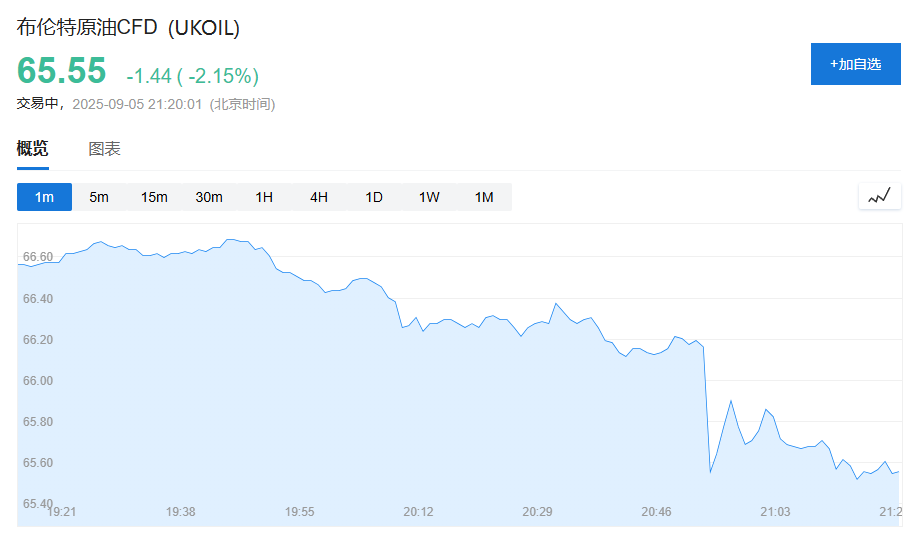
Core Viewpoint - Saudi Arabia is pushing OPEC+ to consider restoring more oil production to regain market share amid weak global demand, with a video meeting scheduled to discuss the handling of the currently suspended 1.66 million barrels per day supply [1][5]. Group 1: OPEC+ Production Strategy - Saudi Arabia aims to accelerate the planned increase in oil supply before the end of next year to counteract the impact of falling prices and reclaim market share previously ceded to competitors like U.S. shale oil producers [5]. - OPEC+ has already resumed 2.2 million barrels per day of previously halted production over the past five months and is now faced with the decision on how to manage the remaining 1.66 million barrels per day of suspended supply [5]. Group 2: Market Impact and Price Pressure - Further production increases could exacerbate the anticipated oversupply in the fourth quarter, putting additional downward pressure on oil prices [5]. - Despite concerns about the market's ability to absorb extra oil, the market has not collapsed since OPEC+ began restoring production [5]. - Goldman Sachs predicts that non-OPEC supply growth (excluding the U.S.) will lead to a surplus of 1.8 million barrels per day by 2026, potentially pushing Brent crude prices down to $50 per barrel by the end of that year [5].
高盛:原油过剩加剧,2026年底布油或跌至50美元出头
Hua Er Jie Jian Wen· 2025-08-27 07:20
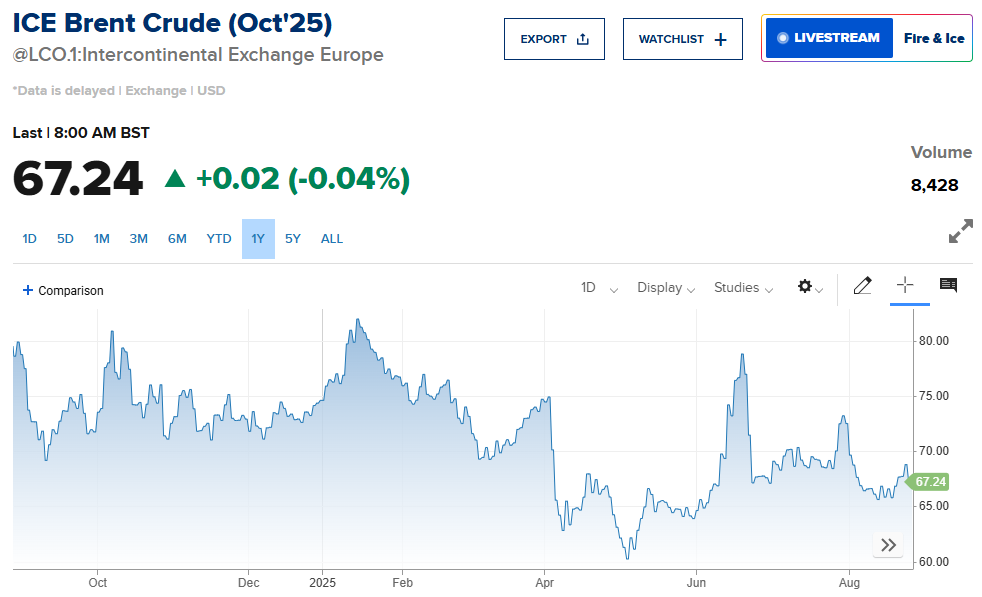
Group 1 - Goldman Sachs warns that due to a surge in global crude oil inventories, Brent crude prices may fall to just above $50 per barrel by the end of 2026 [1] - Starting from Q4 2025, a surplus of 1.8 million barrels per day is expected in the global oil market, leading to an accumulation of nearly 800 million barrels by the end of 2026 [1] - OECD countries are projected to contribute about one-third of the inventory increase, reaching 270 million barrels, coinciding with a decline in oil demand from these countries, further pressuring oil prices [1] Group 2 - Goldman Sachs predicts that oil prices may remain near current forward contract levels in 2025, but this balance is expected to break in 2026 [1] - The "fair value" of Brent crude is anticipated to decrease from the current range of $70 to the $50 range, especially as inventories continue to accumulate in 2026 [1]
俄罗斯与乌克兰有望举行会谈 油价小幅下跌
Sou Hu Cai Jing· 2025-08-19 00:20
Group 1 - Oil prices experienced a slight decline due to the potential for talks between Russia and Ukraine, with West Texas Intermediate crude oil futures falling 0.1% to $63.33 per barrel and Brent crude oil futures also down 0.1% to $66.55 per barrel [1] - NATO Secretary General Jens Stoltenberg indicated that Russian President Vladimir Putin has agreed to meet with Ukrainian President Volodymyr Zelensky [1] - TD Securities' Bart Melek noted that many issues, such as ceasefire, security guarantees, and the advancement of the peace process, still need to be determined [1] Group 2 - Melek suggested that if a resolution can be reached to ease tensions and eliminate the threat of secondary tariffs or sanctions, oil prices would likely decrease [1]
美俄缓和预期冲击原油市场 布伦特、WTI今年已双双重挫超10%
智通财经网· 2025-08-18 02:49
Group 1 - International oil prices continue to decline as traders focus on the meeting between Donald Trump and Volodymyr Zelensky in Washington, with speculation about a potential peace agreement involving territorial concessions from Ukraine [1] - Brent crude and WTI futures prices have shown a downward trend, with WTI closing at $62.80 per barrel, down 1.81%, and Brent at $65.85 per barrel, down 1.48% [1] - The uncertainty surrounding the resolution of the Russia-Ukraine conflict continues to weigh on the market, leading to a narrow range of fluctuations in oil prices [2] Group 2 - The International Energy Agency has predicted a record surplus in the global crude oil market by 2026 due to increased supply and slowing demand, which exacerbates the market's pessimistic outlook for medium to long-term oil prices [2] - Year-to-date, international oil prices have dropped over 10% due to the dual pressures of Trump's trade policies and the potential rapid restoration of idle production capacity by OPEC+ [2]
2025年油价下跌潮定了?五大原因决定油价下跌!现在加油站汽柴油最新报价!
Sou Hu Cai Jing· 2025-08-08 04:18
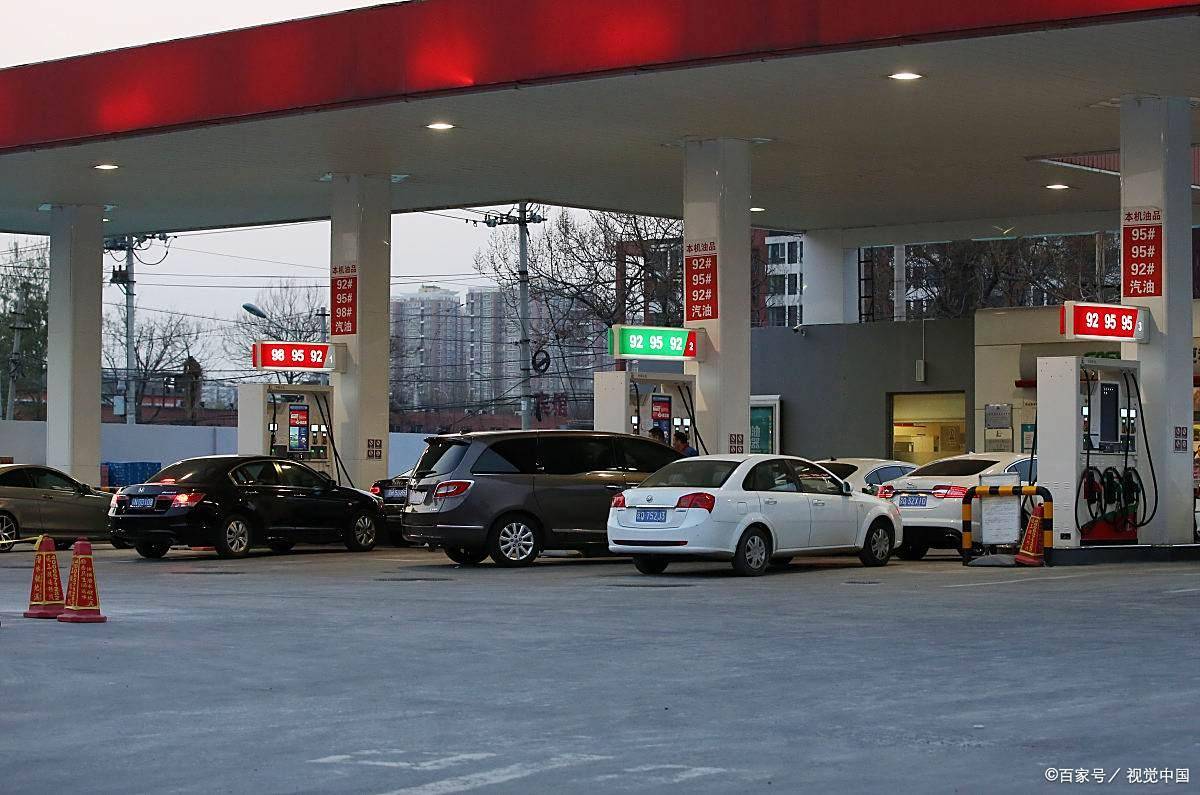
Core Viewpoint - The article discusses the anticipated decline in oil prices in 2025, driven by multiple factors affecting the global oil market, with a significant downward trend expected starting in September 2025 [1]. Group 1: Current Oil Prices - As of August 6, 2025, domestic fuel prices are as follows: 92 gasoline at 7.23 CNY/liter, 95 gasoline at 7.69 CNY/liter, 98 gasoline at 8.49 CNY/liter, and 0 diesel at 6.87 CNY/liter [2]. - International oil prices are reported with WTI at $65.16 per barrel and Brent at $67.64 per barrel, reflecting a decline of 12.3% and 10.8% respectively from July highs [2]. Group 2: Reasons for Oil Price Decline - Major oil-producing countries, including Saudi Arabia, have increased production for five consecutive months, with OPEC planning to raise output by 547,000 barrels per day in September, leading to a significant risk of oversupply [5]. - The Federal Reserve's decision to maintain high interest rates has increased the cost of oil for buyers using other currencies, dampening consumption expectations [5]. - A slowdown in global economic activity and a decrease in trade, with the IMF reporting an 8% drop in global trade volume due to tariff policies, is contributing to reduced oil demand, particularly in the transportation sector [5]. - The acceleration of renewable energy adoption is evident, with renewable energy accounting for 42% of global power generation in the first half of 2025, and the cost of solar power dropping to one-third of coal power, further squeezing traditional oil demand [5]. - Easing geopolitical tensions in the Middle East, particularly the reduced risk of blockade in the Strait of Hormuz, has contributed to the decline in oil prices [5]. Group 3: Conclusion and Outlook - The article concludes that the downward trend in oil prices is expected to become more pronounced in the near future, with the belief that the impact of oil price fluctuations on the economy will gradually diminish as favorable economic policies are implemented [6].
利空突袭!OPEC+大幅增产 油价大跌
Hua Xia Shi Bao· 2025-08-04 01:09
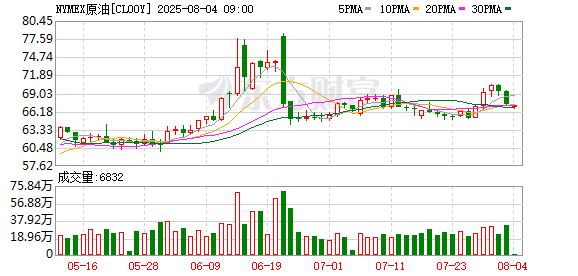
Group 1 - OPEC+ plans to significantly increase oil production in September to exit the latest round of production cuts amid growing supply surplus concerns in the global market [1][2] - On August 1, international oil prices fell sharply, with WTI and Brent crude oil prices dropping nearly 3%, and Brent crude futures falling below $70 per barrel [1][5] - The increase in production comes after major oil-producing countries, including Saudi Arabia, Russia, Iraq, and the UAE, agreed to raise output by an average of 548,000 barrels per day in September [2] Group 2 - The recent decision by OPEC+ to increase production occurs against a backdrop of potential U.S. sanctions on Russian oil exports, which could conflict with U.S. efforts to lower oil prices [8] - Analysts warn that the market may enter a phase of significant oil supply surplus starting in October, urging OPEC+ to be cautious about further increasing production [8]
港股概念追踪|OPEC+供应增加促油价下跌 机构看好航空业长期趋势(附概念股)
智通财经网· 2025-08-04 00:24
Group 1 - Oil prices in Asia fell due to OPEC+ agreeing to significantly increase production, raising concerns about global oversupply [1] - Brent crude oil prices dropped to around $69 per barrel, while West Texas Intermediate crude approached $67 per barrel [1] - OPEC+ approved an increase of 547,000 barrels per day starting in September, aligning with market expectations [1] Group 2 - Short-term demand fluctuations do not alter the long-term logic of the aviation industry, suggesting a contrarian investment approach in aviation [2] - The Chinese aviation industry has a long-term growth logic, with expectations for ticket price marketization and a recovery in supply-demand dynamics [2] - The aviation supply has entered a low growth phase, but the medium-term growth trend remains stable, with oil price declines benefiting profitability recovery [2] Group 3 - Relevant Hong Kong stocks in the aviation sector include China National Aviation (00753), Southern Airlines (01055), and Eastern Airlines (00670) [3] - Private jet manufacturer mentioned is Cirrus (02507) [3]