
现代服务业

Search documents
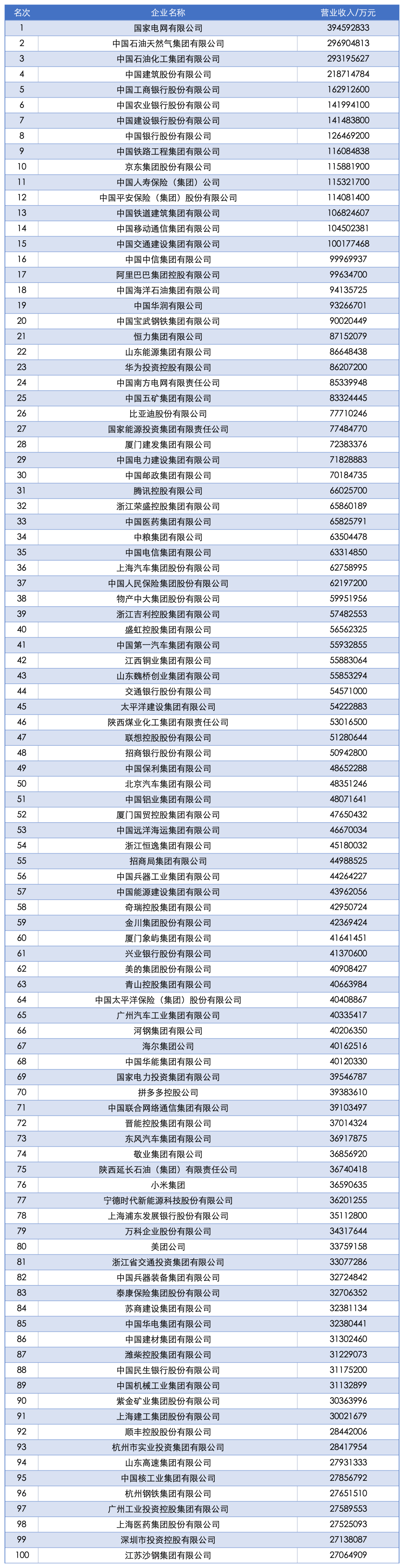
最新!中国企业500强名单揭晓!4家厦企入围
Sou Hu Cai Jing· 2025-09-15 14:24
Core Points - The "2025 China Top 500 Enterprises" list has been released, highlighting the top companies based on their revenue for the year 2024 [19][20] - The threshold for entry into the list was set at 47.96 billion yuan, an increase of 579 million yuan from the previous year [19] - The total revenue of the top 500 enterprises reached 11.015 trillion yuan, showing a growth trend compared to the previous year [19][20] Company Highlights - Xiamen-based companies that made the list include: - Xiamen Jianfa Group Co., Ltd. ranked 28th with a revenue of 72.38 billion yuan - Xiamen Guomao Holdings Group Co., Ltd. ranked 52nd with a revenue of 47.65 billion yuan - Xiamen Xiangyu Group Co., Ltd. ranked 60th with a revenue of 41.64 billion yuan - Xiamen Road and Bridge Engineering Material Co., Ltd. ranked 324th with a revenue of 75.69 billion yuan - Anta Sports Products Group Co., Ltd., headquartered in Xiamen, ranked 412th with a revenue of 60.30 billion yuan [2][19] Industry Insights - The economic performance of the top 500 enterprises has improved, with a total net profit of 4.71 trillion yuan, an increase of 4.39% [20] - The net profit margin for these enterprises is 4.27%, up by 0.17 percentage points [20] - The average R&D intensity of the listed companies has reached a new high of 1.95%, marking an increase for eight consecutive years [20] - There is a notable increase in the number of companies from advanced manufacturing and modern service industries, with 39 new or returning companies on the list [20]




广东服务业增加值连续40年全国第一
Nan Fang Du Shi Bao· 2025-08-22 23:09
Core Insights - Guangdong's service industry has reached a value of 8.14 trillion yuan in 2024, maintaining its position as the largest in the country for 40 consecutive years, contributing 57.5% to the GDP and accounting for 10.6% of the national total [4][6] - The modern service industry is identified as a key driver for economic growth, with a contribution rate of 47.9% to the overall economic increase [4] - The integration of modern service and advanced manufacturing sectors is highlighted, with the digital economy in Guangdong reaching 6.9 trillion yuan, leading the nation for eight years [5] Industry Performance - The modern service sector in Guangdong is characterized by significant breakthroughs in both quantity and quality, with productive services dominating the landscape [4] - The retail sales of consumer goods in Guangdong reached 4.79 trillion yuan in 2024, marking 42 consecutive years at the top nationally [4] - The financial sector, information transmission, software, and IT services are identified as core engines of growth within the modern service industry [4] Challenges and Shortcomings - The report indicates that the productive service sector faces challenges such as low technology conversion rates and a lack of key core technologies [6] - There is a noted shortage of high-end talent in finance and cross-border services, as well as a lack of skilled personnel in the life service sector [7] - The life service industry is experiencing a mismatch between supply and demand, particularly in high-end care and smart elderly services [6] Strategic Recommendations - The report suggests accelerating the domestic replacement of high-end software and enhancing the digital capabilities of productive services [9] - It emphasizes the importance of leveraging strategic platforms like Hengqin, Qianhai, Nansha, and He Tao to enhance cooperation with Hong Kong and Macau [9] - The development of new consumption scenarios through "AI + consumption" and the promotion of low-altitude economy applications are recommended to stimulate new service consumption [9][10] Talent Development - The report advocates for collaboration between universities and leading service enterprises to establish specialized colleges, aiming to cultivate innovative and skilled talent [10] - A comprehensive talent system that includes training, certification, and employment is proposed to address the skills gap in the service industry [10]

从主引擎到新引擎,广东现代服务业如何开启“破茧”之旅?
Nan Fang Du Shi Bao· 2025-08-22 13:25
Core Insights - Guangdong's service industry achieved a value-added of 8.14 trillion yuan in 2024, maintaining its position as the largest in the country for 40 consecutive years, contributing 57.5% to the GDP and accounting for 10.6% of the national total [2][3] - The modern service industry is identified as a key driver for economic growth, with a contribution rate of 47.9% to the overall economic growth [3] - The integration of modern service and advanced manufacturing industries is highlighted, with the digital economy in Guangdong reaching 6.9 trillion yuan, leading the nation for eight years [4] Economic Contribution - In 2024, Guangdong's retail sales of consumer goods totaled 4.79 trillion yuan, marking 42 years at the top nationally, supported by a population of over 150 million [3] - The financial sector, information transmission, software, and IT services are recognized as core engines of the service industry [3] Structural Challenges - The service industry faces structural weaknesses, particularly in the supply capabilities of productive services, with low technology conversion rates and a lack of key core technologies [5] - The life service sector is experiencing a mismatch between supply and demand, particularly in high-end care and smart elderly services [8] Talent and Capital Development - There is a significant talent shortage in high-end services such as finance and cross-border services, as well as in the life service sector [8] - Recommendations include building a talent system that integrates education and industry, and fostering innovation through collaboration between universities and leading service enterprises [17] Pathways for Improvement - The report suggests accelerating the domestic replacement of high-end software and enhancing the digital empowerment of productive services [11] - Emphasis is placed on leveraging strategic platforms like Hengqin, Qianhai, Nansha, and He Tao to enhance cooperation with Hong Kong and Macau [11] - The development of new consumption scenarios through AI and digital services is proposed to stimulate economic growth [14]

郑永年:粤港澳大湾区现代服务业发展潜力远未释放
Nan Fang Du Shi Bao· 2025-08-22 11:22
Core Viewpoint - Guangdong Province is actively developing the modern service industry, which has become a key pillar for economic growth and employment, supporting high-quality economic and social development in the region [2]. Group 1: Development of Modern Service Industry - The overall scale of the service industry in Guangdong has been continuously expanding, becoming crucial for economic growth and employment [2]. - A special meeting was held on August 22 to discuss the acceleration of modern industrial system construction, focusing on modern service industries [2]. Group 2: Key Elements for Development - Zheng Yongnian emphasizes that the service industry is a vital component of modern economies, with a higher proportion of service industries in more developed economies [5]. - He notes that China is approaching high-income status and should be in a phase of significant service industry development [5]. - The Guangdong-Hong Kong-Macao Greater Bay Area is identified as the most active region for service industry development in China, with substantial growth potential yet to be realized [5]. Group 3: Core Components of Modern Service Industry - Zheng identifies three essential components for the development of modern service industries: 1. A strong base of universities and research institutions capable of conducting fundamental scientific research 2. Enterprises or institutions that can transform basic research into applied technologies 3. An open financial support system to facilitate both research and technology application [5]. - The technology service industry is highlighted as the most important part of modern services, with the Fourth Industrial Revolution centered around the internet and artificial intelligence [5]. Group 4: International Expansion and Competitive Advantages - Zheng advocates for the international expansion of China's modern service industry, especially in light of changing international trade dynamics and the acceleration of Chinese enterprises going global [6]. - He points out that the core of the service industry lies in regulatory management and standards, necessitating increased efforts for high-level openness [6]. - Guangdong's unique advantages for developing modern service trade include its proximity to Hong Kong and Macau, which offer professional service advantages, cultural diversity, and geographical proximity to Southeast Asia [6].

中山大学李江帆:广东应在特大城市拓展第三产业生产性服务业
2 1 Shi Ji Jing Ji Bao Dao· 2025-08-22 10:12
Core Insights - The process of industrial transformation and upgrading is fundamentally about the increasing role of production services [1][2] - Guangdong's modern service industry has become a significant engine for economic growth, with a service industry added value of 8.14 trillion yuan, accounting for 57.5% of GDP and 10.6% of the national total [2] Group 1: Development Strategies - Guangdong should focus on strengthening the core layer of productive services, including scientific research, technology services, and information technology services, to enhance digital empowerment and key technology supply capabilities [1] - The province is advised to cultivate leading e-commerce platforms, support the development of cross-border e-commerce, and establish foreign-related legal service clusters to improve logistics efficiency and global channels for manufacturing [1][2] - There is a recommendation to develop supporting services such as business hotels and catering for producers [1] Group 2: Industry Position and Challenges - Despite the growth, Guangdong's modern service industry still lags behind developed countries in terms of application levels and competitive advantages of leading enterprises [2] - The quality and capability of productive services provided to the manufacturing sector need improvement, as well as the ability of service industries to lead manufacturing towards mid-to-high-end development [2] - Future strategies should include a focus on advancing productive services in the secondary industry and expanding the third industry in major cities while developing productive services in the primary industry in rural areas [2]
无锡服务业回升向好 发展动能稳步增强
Xin Hua Ri Bao· 2025-08-21 23:15
Core Viewpoint - Wuxi City is actively responding to external environmental changes and is focused on achieving stable growth in the service industry, with various policies being implemented to support this goal [1] Group 1: Growth in Modern Service Industry - In the first half of the year, the added value of the tertiary industry in Wuxi reached 4,093.63 billion yuan, with a year-on-year growth of 5.1% [2] - The revenue of the above-scale service industry was 1,204.6 billion yuan, increasing by 5.7% year-on-year [2] - Key sectors such as education, residential services, and scientific research saw significant growth rates of 20.8%, 16.9%, and 13.4% respectively [2] - The total retail sales of consumer goods reached 2,308.06 billion yuan, with a year-on-year increase of 4.7%, ranking third in the province [2] Group 2: Stable Investment in Service Industry - In the first half of the year, Wuxi completed service industry investments of 1,289.07 billion yuan, exceeding the provincial average growth rate by 8.5 percentage points, ranking second in the province [3] - The city has 35 service projects included in the 2025 provincial key project list, with a total investment of 80.9 billion yuan, marking a 75% increase in the number of projects compared to the previous year [3] - By the end of June, 35 projects had completed an annual investment of 84.68 billion yuan, achieving a completion rate of 70.8% [3] Group 3: Growth in Productive Service Industry - The productive service industry in Wuxi has seen rapid growth, with above-scale productive service industry revenue reaching 807.91 billion yuan, accounting for 67% of the above-scale service industry revenue, and growing by 8.1% year-on-year [4] - Key sectors such as information transmission, software, and information technology services, as well as leasing and business services, have shown strong growth, with revenue increases of 4.4%, 13.1%, and 13.4% respectively [4] Group 4: Cultural and Tourism Consumption Potential - In the first half of the year, Wuxi implemented policies to boost service consumption, resulting in an 11.5% increase in out-of-town cultural tourism consumption [5][6] - The number of visitors and total consumption in monitored cultural tourism venues increased by 15.7% and 15.1% respectively [6] - The entertainment industry achieved a revenue of 8.83 billion yuan, with a year-on-year growth of 8.0% [6] - The retail sales of new energy vehicles surged by 63.1% year-on-year, reflecting strong consumer demand [6]
主题基金“上榜”,金信、泰信旗下产品陷风格漂移争议,公司回应
Hua Xia Shi Bao· 2025-08-15 06:43
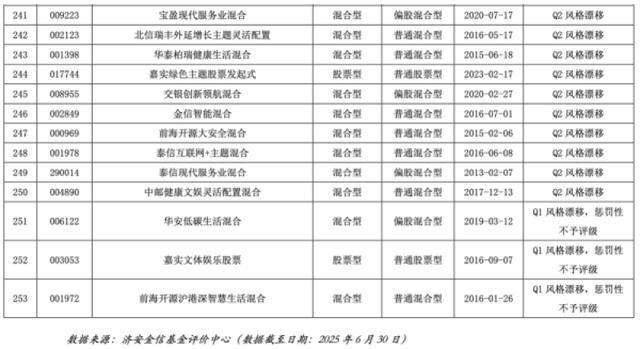
Core Viewpoint - Multiple public fund products have been identified as experiencing style drift, which may lead to investor losses due to discrepancies between actual investment styles and those stipulated in fund contracts [2][7]. Group 1: Style Drift Identification - In the second quarter of this year, 10 products were recognized for style drift, with an additional 3 products penalized for style drift in the first quarter [2]. - Notable funds affected include Qianhai Kaiyuan Great Security Mixed, Jinxin Intelligent China 2025 Mixed (A/C classes), and Taixin Modern Service Industry Mixed [2]. Group 2: Fund Definitions and Investment Focus - The Jinxin Intelligent China 2025 Mixed fund focuses on sectors related to intelligent production and services, with a minimum of 80% of non-cash assets invested in defined "Intelligent China 2025" themes [3]. - The Taixin Modern Service Industry Mixed fund allocates 60-95% of its assets to stocks, emphasizing productive and life service industries, including financial services, logistics, and healthcare [5][6]. Group 3: Fund Responses to Style Drift Concerns - Jinxin Fund representatives argue that their high allocation to bank stocks aligns with the intelligent service theme, citing low valuations and high dividend yields as justifications [4]. - Taixin Fund maintains that its investments in new technologies and services are consistent with the fund's definition of modern service industries, addressing concerns about style drift [6].
年中经济观察丨全力以赴稳就业惠民生——中国经济年中观察之六
Xin Hua Wang· 2025-08-12 06:30
Employment Stability and Economic Growth - Employment is viewed as a "barometer" of economic development and a "ballast" for social stability, with the national urban survey unemployment rate averaging 5.2% in the first half of the year, a decrease of 0.1 percentage points from the first quarter, indicating overall stability in employment [1] - China's GDP grew by 5.3% year-on-year in the first half of the year, supporting improvements in employment, with unemployment rates dropping to 5.1% and 5% in April and May respectively, and stabilizing at 5% in June [3] Industry-Specific Employment Trends - The optical products company in Jingzhou, Hubei, has added approximately 500 employees this year, marking its largest recruitment year, driven by strong demand for prism products in the consumer electronics sector [2] - In the second quarter, recruitment in industries such as humanoid robots, new materials, and smart hardware saw year-on-year increases of 398.1%, 72.1%, and 50.3% respectively, with several other sectors also experiencing significant growth [3] Support for Employment Initiatives - Various local governments are implementing employment-first policies and enhancing employment promotion mechanisms to support job stability and growth, with companies benefiting from social security and job subsidies totaling 648,000 yuan [3] - The government has introduced a series of policies to support employment, including expanding the scope of special loans for job stabilization and increasing the unemployment insurance return ratio for relevant enterprises [9] Focus on Youth Employment - The number of college graduates in 2025 is projected to reach a record high of 12.22 million, prompting local governments to prioritize employment services for this demographic [5] - Educational institutions are actively organizing online recruitment events and implementing training programs to enhance graduates' employability, with a focus on aligning skills with industry needs [6][11] Skills Training and Development - A significant push for skills training is underway, with plans to subsidize vocational skills training for over 10 million people annually in key sectors such as advanced manufacturing and modern services [11] - Companies are increasingly recognizing their social responsibility by providing job opportunities for disadvantaged groups, supported by government incentives that enhance their capacity to hire more employees [4]
产城景融合发展,打造毗邻普惠共享的“先行样板” 川渝边界上 “1小时生活圈”破界生长
Si Chuan Ri Bao· 2025-08-06 07:06
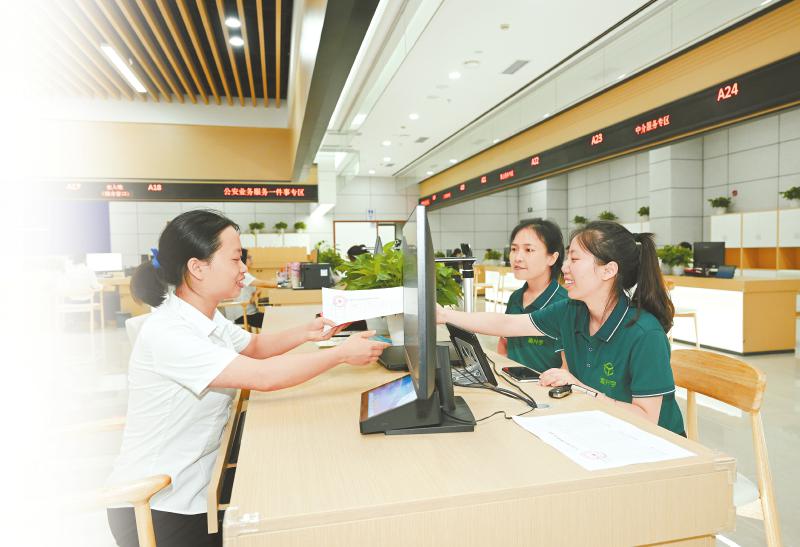
7月31日,川渝高竹新区政务服务中心,工作人员在为群众办理业务。康建林 摄 7月31日上午10点,川渝高竹新区公交站,川渝20路公交车抵达站台。这条全长52公里、途经19个站点的交通 线路,串联起渝北双凤桥枢纽站和川渝高竹新区,为勾勒川渝"1小时生活圈"添上清晰的一笔。 当天,邻水市民夏碧君搭乘这趟班车,从邻水县高滩镇马鹿村赶往重庆沙坪坝上班:"现在每隔半小时就有一 班车,省时又省钱。"据了解,该线路开行至今,已运送沿线居民超100万人次。 经过5年深耕,川渝高竹新区构建的交通网络,跨越川渝边界,形成带动年产值超200亿元的"黄金走廊"。 这只是川渝高竹新区拔节生长的缩影。既是全国首个跨省共建新区、经济区与行政区适度分离改革试验区, 也是成渝中部地区深度融合发展的"连接点",当前,川渝高竹新区正在探索推动产城景融合发展,打造毗邻普惠 共享的"先行样板"。 看服务 "一扇窗"办两地事 跨省政务"零跑腿" "以前办同类业务,动辄要跑三四个部门,耗上一整天。"近日,在川渝高竹新区政务大厅智慧办税区,重庆 籍创业者舒小洪仅用半小时就办完跨区域税务登记变更。 2024年6月,税费征管服务中心迁入川渝高竹新区政务服务中心 ...
新兴产业“抢人”现代服务业“吸才”——产业变革下的就业市场新动向
Zhong Guo Chan Ye Jing Ji Xin Xi Wang· 2025-08-04 02:11
Group 1: Employment Trends - In the first half of the year, 6.95 million new urban jobs were created, achieving 58% of the annual target, indicating overall stability in the employment situation [1] - The demand for talent in emerging industries and modern service sectors is increasing, reflecting a significant impact of industrial development on employment [1][3] - The shift from "demographic dividend" to "talent dividend" is evident, with a growing demand for high-tech and high-value-added positions [3] Group 2: Emerging Industries - The demand for composite talents in fields such as humanoid robotics and low-altitude economy is surging, with job postings in humanoid robots, new materials, and smart hardware increasing by 398.1%, 72.1%, and 50.3% year-on-year, respectively [2] - Companies like EX Robotics and WoFei ChangKong are actively seeking talent in mechanical automation, artificial intelligence, and supply chain management [2] Group 3: Service Sector Opportunities - The pet medicine sector is experiencing a talent shortage, with companies like Jiangxi Ruide Pharmaceutical Co., Ltd. needing professionals in product development and analysis, constituting about 30% of their workforce [4] - The modern service industry is witnessing rapid growth in job demand, particularly in pet services, automotive aftermarket, elderly care, and online life services, with pet services leading at a 72.2% increase in job postings [4] Group 4: Policy Support - The government is implementing policies to support employment growth along the industrial chain, including a series of incentives and skills training programs [5][6] - The Ministry of Human Resources and Social Security has introduced measures that have effectively reduced labor costs for enterprises by over 90 billion yuan through unemployment insurance rate reductions and other subsidies [6] - Continuous support for vocational skills training in key sectors is planned, with a target of subsidizing over 10 million training sessions annually for the next three years [6]