
社会主义市场经济体制

Search documents
海南大中小学改革开放史教育公益项目举办
Hai Nan Ri Bao· 2025-09-28 01:26
Core Viewpoint - The event "Reform Spirit, Passing the Torch - Hainan Province's Education Public Welfare Project on the History of Reform and Opening Up" aims to instill the spirit of reform in the youth, contributing to China's modernization and the construction of Hainan Free Trade Port [1][2] Group 1: Event Overview - The event was held on September 27 in Haikou, featuring a lecture by Chen Wei, Vice President of the China (Hainan) Reform and Development Research Institute, focusing on the historical context and experiences of establishing a socialist market economy [1] - Liu Xianghong, Deputy Secretary of the Party Committee of Hainan Qiong University, shared personal experiences related to the restoration of the college entrance examination and becoming a "pioneer" in reform [1] - Student representatives from Hainan University and Haikou Economic College shared stories related to historical events and personal experiences, highlighting the impact of reform on their lives [1] Group 2: Future Plans - The project, initiated on July 11 by the Hainan Reform and Development Research Foundation, plans to conduct a series of activities with different themes and formats to further promote the spirit of reform among the youth [2] - The initiative aims to provide strong youthful energy for the construction of Chinese-style modernization and the Hainan Free Trade Port [2]
实现资源配置效率最优化、效益最大化
Sou Hu Cai Jing· 2025-09-12 05:34
郑州中央商务区。 河南日报社全媒体记者 宋亚猛 摄 本报讯(河南日报社全媒体记者 聂辉)9月11日下午,国务院新闻办公室在北京举行国务院政策例行吹风 会,介绍全国部分地区实施要素市场化配置综合改革试点有关情况。国家发展改革委副主任李春临介绍,国 务院批准开展要素市场化配置综合改革试点的10个地区均是发展基础较好、经济增长支撑作用强的城市群、 都市圈或者中心城市,改革基础条件较好,具有较强代表性。 记者在吹风会现场了解到, 为深入贯彻党中央、国务院关于深化要素市场化改革、构建更加完善的要素市场 化配置体制机制有关部署,近期,经国务院常务会议审议通过,批准在10个地区开展要素市场化配置综合改 革试点,试点实施方案已经全文向社会公布。 在吹风会上,李春临表示,深化要素市场化配置改革,是建设全国统一大市场的关键环节,是构建高水平社 会主义市场经济体制的重要内容。 改革开放以来,我国绝大部分商品和服务都已实现了市场定价、自由流动,但要素市场体系建设相对滞后, 发育还不充分,不利于发挥市场在资源配置中的决定性作用。 李春临介绍,此次改革试点是深入推动要素市场化配置改革的重要举措,具有试点地区范围广、要素领域覆 盖全、试点 ...


黄泰岩:发展民营经济的理论内涵和实践导向
Jing Ji Ri Bao· 2025-09-12 00:09
Core Viewpoint - The development of the private economy is essential for achieving the goals of socialism with Chinese characteristics and promoting high-quality economic growth, as emphasized by Xi Jinping's important discourses on the role of the private sector in China's economic landscape [1][2][3]. Encouragement and Support for Private Economy - The private economy has made significant contributions to productivity and common prosperity, with Xi Jinping stating that it plays a crucial role in creating China's economic miracles [2]. - The private economy is recognized as an integral part of China's economic system, and its development is necessary for the advancement of socialism with Chinese characteristics [2][3]. - Policies must be implemented to encourage the growth of private enterprises, enhance their competitiveness, and ensure their integration into the global supply chain [3][4]. Role in Technological Innovation - The private sector contributes over 70% of technological innovations in China, with more than 92% of national high-tech enterprises being private [4]. - Encouragement for private enterprises, especially tech-oriented ones, to increase R&D investment and participate in national technology initiatives is crucial for enhancing innovation capabilities [4]. Contribution to Common Prosperity - The private economy is vital for promoting common prosperity, as it helps reduce income disparities and create stable employment opportunities [5][6]. - Policies should focus on increasing the number of private enterprises and ensuring their long-term sustainability to support high-quality employment [5][6]. Addressing Challenges Faced by Private Enterprises - The majority of private enterprises are small and medium-sized, facing common challenges such as financing difficulties and competition pressures [7][8]. - Effective measures are needed to alleviate these challenges, including improving access to financing and supporting digital transformation [8][9]. Methods and Pathways for Development - The socialist system provides a robust framework for the healthy and high-quality development of the private economy, emphasizing the importance of institutional advantages [10][11]. - National economic planning and strategic direction are essential for guiding private enterprises towards high-quality development and enhancing their core competitiveness [12][13]. Legal and Institutional Framework - The legal system plays a critical role in protecting the rights of private enterprises and ensuring fair competition [13][14]. - Continuous improvement of the legal framework, including the implementation of the Private Economy Promotion Law, is necessary to foster a conducive environment for private sector growth [14].
以竞争政策重塑中国市场经济新优势——兼论高水平对接国际经贸规则的中国方案
证券时报· 2025-09-05 04:22
Group 1 - The article emphasizes the transition of China's competition policy from a basic framework to a more robust governance tool during the "14th Five-Year Plan" period, highlighting the need for a shift from merely having competition policies to ensuring their strength and effectiveness [1][2][3]. - It outlines the systematic integration of the legal framework for competition policy, noting significant developments such as the first revision of the Anti-Monopoly Law in 2022, which included the establishment of a fair competition review system [3][4]. - The article discusses the ongoing reforms in industries with natural monopoly characteristics, such as telecommunications and energy, showcasing specific achievements like the 90% sharing rate of 5G base stations and the introduction of market mechanisms in electricity pricing [4][5]. Group 2 - The article identifies the challenges of "involutionary" competition, where excessive competition leads to price drops and reduced profitability, particularly in sectors like solar energy and new energy vehicles, where government subsidies have distorted market dynamics [6][7]. - It highlights the misalignment between industrial policies and competition policies, particularly in the AI sector, where aggressive subsidies have led to market saturation and reduced R&D investment among companies [8][9]. - The article warns of the implications of international trade rules, such as the EU's Foreign Subsidies Regulation and the US Inflation Reduction Act, which pose challenges for Chinese companies seeking to compete globally [9][10]. Group 3 - The article outlines the vision for the "15th Five-Year Plan," advocating for a stronger foundational role for competition policy in economic governance, emphasizing the need for coordination between competition and industrial policies [10][11]. - It suggests enhancing the implementation framework for competition policy, including mandatory competition impact assessments for industrial planning and fiscal policies [12][13]. - The article calls for a robust legal framework to support competition principles, particularly in emerging sectors like digital economy and AI, to ensure fair competition and innovation [14][15]. Group 4 - The article stresses the importance of aligning with high-standard international trade rules, such as the CPTPP, to enhance China's competitive position in the global market [15][16]. - It concludes that the focus of competition policy should shift from merely preventing monopolies to fostering a competitive environment that encourages innovation and sustainable growth [16].

经济日报:加力提升宏观政策实施效能
Sou Hu Cai Jing· 2025-08-28 23:54
Core Viewpoint - The article emphasizes the importance of scientific macro-control and effective government governance as key to leveraging the advantages of the socialist market economy system. It highlights the continuous strengthening of macro policies in response to external pressures and internal difficulties this year [1]. Group 1: Macro Policy Measures - The issuance of ultra-long-term special government bonds is part of a larger effort to implement "two重" and "two新" policies with greater intensity [1]. - A variety of monetary policy tools are being utilized to maintain ample liquidity in the market [1]. - The government is focusing on stabilizing employment while also expanding job opportunities to keep the overall employment situation stable [1]. Group 2: Consumer and Economic Stimulus - The approach combines promoting consumption with improving people's livelihoods to enhance the intrinsic motivation for consumption [1]. - The government is committed to responding to market concerns promptly to ensure the forward-looking nature of policies [1]. Group 3: Policy Effectiveness - Enhancing policy effectiveness requires a good evaluation mechanism to ensure the practical results of policies [1]. - Strengthening collaborative innovation is essential to ensure the systemic nature of policies [1].
2025年中级经济师考试高频考点(10科)
Sou Hu Cai Jing· 2025-08-26 05:08
Group 1 - The core viewpoint of the article emphasizes the importance of the socialist economic system, which includes public ownership as the mainstay and multiple forms of ownership coexisting, reflecting the superiority of the socialist system [3][4][5] - The article outlines three main aspects of the economic system: ownership or property rights system, income distribution system, and resource allocation methods, highlighting the central role of production relations in social production [6][7] - It discusses the significance of resource allocation, defining it as the distribution of various resources for different purposes, and identifies market regulation and government regulation as the two primary methods of resource allocation [7][8] Group 2 - The article explains that in a socialist market economy, the market plays a decisive role in resource allocation, with prices primarily determined by market forces rather than government intervention [8][10] - It emphasizes the need for an active government role in addressing market failures and ensuring effective economic regulation, market supervision, and public service [11] - The article also touches on the classification of fiscal expenditures, distinguishing between uncontrollable and controllable expenditures, and their economic impacts on social production and income distribution [14][15]

为什么说民营经济是推进中国式现代化的生力军?
Sou Hu Cai Jing· 2025-08-21 21:21
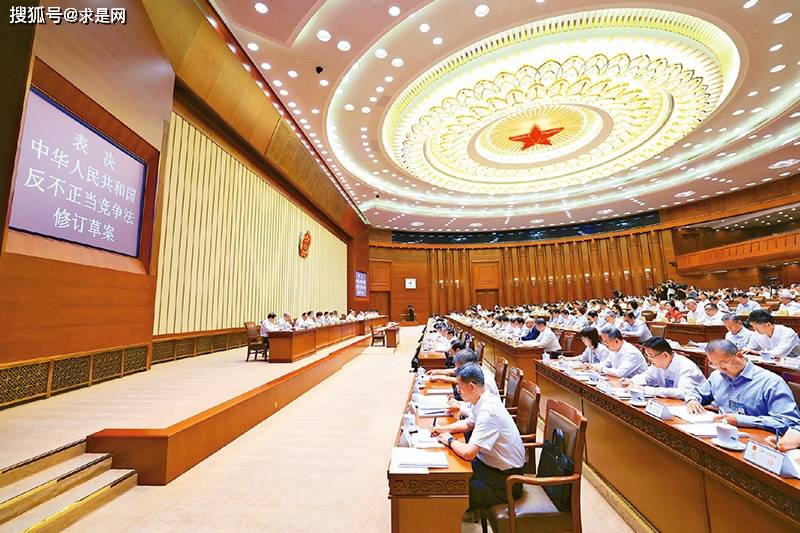
Group 1 - The development of the private economy in China is closely linked to the establishment and improvement of the socialist market economy system, evolving from a necessary supplement to an important component of the economy [1][7] - The new Anti-Unfair Competition Law, effective from October 15, 2025, aims to strengthen anti-monopoly and fair competition policies, which are essential for improving the socialist market economy [3] - The number of individual economic practitioners surged from 140,000 in 1978 to 24.677 million in 1992, showcasing the significant growth of the private economy following policy relaxations [3] Group 2 - The 14th National Congress of the Communist Party of China set the reform goals for establishing a socialist market economy, marking a new phase for the rapid development of the private economy [4] - By 2002, the number of private enterprises had increased 16.5 times compared to 1992, with tax contributions growing 243 times, indicating robust growth [4] - The entry into the World Trade Organization and the rise of the internet have provided unprecedented opportunities for the private economy, leading to the emergence of new business models [5] Group 3 - Since the 18th National Congress, a series of new ideas and requirements have been proposed to guide the private economy towards high-quality development, emphasizing the role of the market in resource allocation [6] - Policies have been implemented to create a better development environment for private enterprises, including legal protections for property rights and entrepreneurs [6] - As of July 2025, there are 185 million private economic organizations in China, accounting for 96.38% of all business entities, highlighting the significant role of the private sector in the economy [7]
深圳:探路者 | 《财经》封面
Cai Jing Wang· 2025-08-18 12:08
Economic Performance - Shenzhen's GDP reached 1.832226 trillion yuan in the first half of the year, marking a 5.1% year-on-year growth despite various challenges such as US-China trade tensions and domestic economic pressures [1][2] - The establishment of the Shenzhen Special Economic Zone 45 years ago has led to a GDP increase from 2.7 million yuan to nearly 4 trillion yuan, representing a growth of over 13,000 times [6] Reform and Innovation - The release of the "Opinions" by the Central Committee and the State Council aims to deepen reform and expand openness in Shenzhen, focusing on education, technology, and talent integration [2][3] - Shenzhen is encouraged to implement new reform measures and innovative experiments to enhance its role as a key engine in the Guangdong-Hong Kong-Macao Greater Bay Area [2][3] Infrastructure and Connectivity - The interconnection of metro systems between Shenzhen and Dongguan reflects the rapid urban integration and infrastructure development in the region [4] - Shenzhen's proactive planning in modern infrastructure has positioned it as a crucial gateway for trade and economic activities in China [9] Industry Development - Shenzhen has established a complete industrial chain in the new energy vehicle sector, with over 30% of national enterprises in this field having a presence in Shenzhen [16] - The city is also a hub for the robotics industry, with significant growth in both industrial and service robots, showcasing a robust ecosystem of innovation and production [24][25] Talent and Investment - Shenzhen's total talent pool has surpassed 7 million, with over 400,000 skilled workers and more than 22,000 returnees from studying abroad, contributing to its innovation-driven economy [22] - The city has seen a substantial increase in venture capital investments, with over 97 billion yuan invested in more than 20,000 projects [29] Challenges and Future Outlook - The competitive landscape is intensifying, with concerns about maintaining Shenzhen's unique advantages amid rising competition from other cities [20][28] - The city is tasked with balancing its historical successes with the need for continuous innovation and adaptation to global market changes [33][34]

“十四五”期间全国政协共举办各类协商活动279场次
Xin Hua Wang· 2025-08-18 05:50
Core Points - The National Committee of the Chinese People's Political Consultative Conference (CPPCC) has conducted 279 consultation activities during the "14th Five-Year Plan" period, enhancing the quality of political consultation [1] - A total of 41,043 proposals were filed, with many suggestions being transformed into policy measures [1] - The CPPCC has established 229 institutional documents to improve the institutionalization and standardization of consultation and political participation [1] Group 1 - The CPPCC emphasizes the importance of research and investigation, implementing a "research-consultation-research" approach to address issues deeply and propose actionable recommendations [2] - A new system for specialized research has been created, focusing on strategic and forward-looking topics, resulting in 84 in-depth research projects [2] - CPPCC members have conducted 148 learning and research activities at the units where they serve [2]
我国经济实力跃上新台阶
Xin Hua Wang· 2025-08-12 06:25
Economic Growth and Development - China's economic strength has significantly increased over the past decade, with the total economic output rising from 53.9 trillion yuan in 2012 to 114.4 trillion yuan in 2021, and the share of the global economy increasing from 11.3% to over 18% [1] - Per capita GDP has more than doubled, increasing from $6,300 to over $12,000 [1] - The innovation index of China reached the 12th position globally in 2021, reflecting substantial achievements in building an innovative nation [1] Investment and Structural Reforms - Fixed asset investment has maintained stable growth, with a cumulative total of approximately 409 trillion yuan from 2013 to 2021, averaging an annual growth rate of 7.8% [1] - The proportion of private investment has consistently remained above 55% since 2012, becoming the main driver of investment growth [1] - Economic reforms have led to a significant increase in the number of private enterprises, which quadrupled from 10.85 million to 44.57 million [2] Trade and International Cooperation - China has signed over 200 cooperation documents related to the Belt and Road Initiative with 149 countries and 32 international organizations [2] - The stock of outbound investment has increased from less than $600 billion to over $2.6 trillion [2] Social Improvements - Comprehensive victory in poverty alleviation has been achieved, marking a significant milestone in global poverty reduction [2] - Employment quality has improved, with an average of over 13 million new urban jobs created annually [2] - The average years of education for the working-age population reached 10.9 years, indicating advancements in education [2] Economic Security and Stability - Grain production has remained stable at over 1.3 trillion jin for seven consecutive years, ensuring basic self-sufficiency in grains [3] - The energy supply security has been enhanced, with improvements in the coal, electricity, oil, and gas supply chain [3] - Key technological advancements have been made in critical areas such as 5G, industrial software, and renewable energy [3]