租购并举

Search documents
新财观|当前千亿级REITs市场“仅仅是一个起步”
Xin Hua Cai Jing· 2025-10-27 06:08
Core Viewpoint - The development of China's public REITs market is a product of deep integration between financial supply-side reform and national strategy, transitioning from an exploratory phase to a quality improvement phase since its pilot launch in 2020 [1] Group 1: Market Development and Challenges - The public REITs market in China has evolved through a process of identifying problems, conducting scientific research, innovating practices, summarizing experiences, and continuously addressing new challenges [2] - The market's growth requires balancing economic growth, high-quality development, and risk management, involving coordination among local government actions, financial policies, and real estate policies [1][2] - The current REITs market, valued in the hundreds of billions, is just a starting point compared to the trillion-level stock of real estate assets, indicating significant room for growth [3] Group 2: Policy and Regulatory Framework - The pilot phase adopted a "public fund + ABS" product structure, which aligns with existing regulatory frameworks but raises concerns about governance complexity and unclear responsibilities [2] - Future institutional transitions must clarify the legal and market positioning of REITs while establishing a supportive policy ecosystem across various sectors, including industry, finance, and taxation [2] Group 3: Strategic Alignment and Market Potential - China's REITs are closely aligned with national strategies, such as the "dual carbon" goals and housing policies, demonstrating their role in addressing financing challenges in key sectors [3] - The REITs market has expanded to cover over ten asset classes, including energy, transportation, and affordable housing, showcasing its versatility and potential for further development [3] Group 4: Pricing Mechanism and Valuation - The pricing mechanism of REITs has been a focal point, with past issues of excessive price volatility and liquidity challenges needing resolution through improved institutional design and technological innovation [4] - The introduction of ESG evaluation frameworks is expected to provide new dimensions for value discovery, addressing the limitations of traditional valuation models [4] Group 5: Internationalization and Global Competitiveness - The domestic REITs market has the potential for international development, with plans to establish an independent international REITs trading platform in Hong Kong and attract foreign capital [4] - The goal is to create a globally competitive REITs market centered in China, enhancing its influence in the global financial system [4]
“十四五”期间四川累计建设筹集各类保障性住房36.7万套
Xin Hua Cai Jing· 2025-10-17 14:25
Core Insights - During the "14th Five-Year Plan" period, Sichuan Province has constructed and secured a total of 367,000 units of various types of affordable housing [1] - The government is combining public support and market allocation to enhance the housing supply system, aiming to meet both rigid and improved housing demands of residents [1] Housing Supply and Policy Measures - Sichuan is implementing a multi-faceted approach to increase the supply of affordable housing, including public rental housing, affordable rental housing, and allocated affordable housing [1] - The province is promoting a balanced and healthy development of the real estate market by adjusting and optimizing real estate policies to meet diverse housing needs [1] Real Estate Market Performance - During the "14th Five-Year Plan" period, Sichuan Province has sold a total of 420 million square meters of commercial housing [1] - Specific measures include enhancing policy support for home purchases, such as purchase subsidies and housing vouchers, and promoting the role of housing provident funds [1]
立规明矩治理租房之乱
Jing Ji Ri Bao· 2025-10-14 00:34
Core Points - The implementation of the Housing Rental Regulations in mid-September aims to standardize the rental market and address the challenges faced by renters and landlords [1][2] - The regulations emphasize the protection of the legal rights of both landlords and tenants, focusing on timely resolution of issues related to tenant rights [1] - The government encourages the establishment of stable rental relationships and equal rights for renters and buyers in accessing public services [2] Summary by Sections Housing Rental Regulations - The Housing Rental Regulations are the first administrative regulations specifically governing housing rentals in China, providing positive energy for the rental market [1] - The regulations are designed to enhance practical operations and effectiveness, addressing weak regulatory oversight in the rental sector [1] Rights and Protections - The regulations highlight the importance of protecting the legal rights of both landlords and tenants, particularly in ensuring timely protection for tenants [1] - There is a need for detailed measures to strengthen supervision and management of the housing rental market [1] Community and Conflict Resolution - The regulations promote the enhancement of grassroots governance capabilities to effectively mediate conflicts between landlords and tenants [2] - It is suggested that mediation organizations should extend to rural and urban areas to provide timely conflict resolution, contributing to a harmonious society [2]
调研速递|兰州银行接受鹏华基金等1家机构调研 透露多项关键要点
Xin Lang Cai Jing· 2025-10-13 12:19
Core Insights - Lanzhou Bank aims to achieve a total asset of 509.742 billion yuan by June 2025, reflecting a growth of 4.82% from the beginning of the year, with a core Tier 1 capital adequacy ratio of 8.50% [1] Group 1: Asset Growth and Financial Performance - The bank's asset growth will consider market demand, capital constraints, and yield optimization [1] - As of June 2025, the net interest margin is projected to be 1.37%, slightly below the average of A-share listed banks, with short-term pressure but potential stabilization in the medium to long term [1] - The bank's deposit interest rate is 2.22%, down 25 basis points from the beginning of the year, indicating a continued decline in funding costs [1] Group 2: Regional Economic Development - Gansu Province's GDP reached 646.9 billion yuan in the first half of 2025, growing by 6.3%, with key industries including manufacturing, agriculture, new energy, and digital economy [1] - Lanzhou's GDP was 203.36 billion yuan, with a growth rate of 5.6%, focusing on sectors like semiconductors, new energy, biomedicine, and infrastructure [1] Group 3: Loan Demand and Quality - Public loan demand in Gansu Province is growing, with a total loan balance of 3,002.7 billion yuan, an increase of 51.5 billion yuan since the beginning of the year [1] - The non-performing loan ratio for corporate loans decreased from 1.85% to 1.74%, while retail loan non-performing rates increased from 1.77% to 2.01% [1] Group 4: Strategic Initiatives - The bank plans to expand its commission income by developing wealth management and other services to offset declines in self-managed investment income [1] - The bank holds a market share of 12.02% in deposits and 10.17% in loans within Gansu Province, ranking first and second respectively [1] Group 5: Capital and Dividend Strategy - The bank intends to supplement its capital through various means, including issuing subordinated debt, and has maintained a stable dividend payout ratio since 2019, with a cumulative dividend of 2.398 billion yuan and a dividend yield of approximately 4% [1]
2030预言:楼市转向租房时代,房产变现将越来越难!
Sou Hu Cai Jing· 2025-10-13 11:48
Core Viewpoint - The real estate market is shifting towards a rental era by 2030, making property liquidation increasingly difficult due to changing attitudes among younger generations and market saturation [1][4]. Group 1: Changing Attitudes of Young People - Over 65% of young people working in first-tier cities plan to rent long-term, prioritizing quality of life and personal development over mortgage burdens [2]. - The concept of "use rights over ownership" is gaining traction, with renting seen as a viable alternative to buying, allowing for financial flexibility [2]. Group 2: Policy Support for Rental Market - Government initiatives are significantly promoting the rental market, with over 3 million units of affordable rental housing constructed, and ongoing growth expected [3]. - Various tenant protection policies have been implemented, such as capping rent increases and ensuring lease renewal rights, enhancing the stability and security of renting [3]. Group 3: Market Saturation and Liquidation Challenges - The real estate market in China has transitioned from a growth phase to a saturation phase, leading to an oversupply of properties, particularly in third and fourth-tier cities, where vacancy rates are high [4]. - The difficulty in liquidating properties is increasing, especially outside prime locations in first-tier cities, compounded by rising holding costs despite lower bank loan rates [4].


兰州银行(001227) - 2025年10月13日投资者关系活动记录表
2025-10-13 11:40
Group 1: Company Growth and Financial Performance - As of June 2025, the total assets of the bank reached 5,097.42 million CNY, reflecting a growth of 4.82% since the beginning of the year [2] - The core Tier 1 capital adequacy ratio stands at 8.50%, indicating a stable capital position [2] - The bank aims to maintain reasonable growth in asset scale while optimizing its structure, considering market demand, capital constraints, and yield [2] Group 2: Economic and Industry Overview - In the first half of 2025, Gansu Province's GDP was 6,469 million CNY, with a year-on-year growth of 6.3% [2] - Lanzhou's GDP reached 2,033.6 million CNY, growing by 5.6% year-on-year, with key industries including semiconductors, new energy, and biomedicine [2] - The province's financial institutions saw a net increase of 30,027 million CNY in loans, indicating a stable demand for corporate loans [3] Group 3: Loan Demand and Market Trends - Corporate loan demand has shown overall growth, while retail loan demand remains lower and more sensitive to interest rates [3] - The bank's mortgage loans have increased, with 76% of the loans directed towards external markets, particularly in regions like Longnan and Tianshui [3] - The real estate market outside Lanzhou is performing better than within the city, with stable sales in county-level areas [3] Group 4: Risk Management and Asset Quality - The bank has implemented a "control existing, limit new" strategy to manage asset quality, resulting in a decrease in the non-performing loan (NPL) ratio from 1.85% to 1.74% [9] - The retail loan NPL ratio increased from 1.77% to 2.01%, indicating challenges in that segment [9] - The bank has established a professional collection team to enhance the recovery of non-performing loans [7] Group 5: Financial Metrics and Future Outlook - As of June 2025, the bank's net interest margin was 1.37%, slightly below the average for urban commercial banks [6] - The deposit interest rate has decreased to 2.22%, down by 25 basis points since the beginning of the year [6] - The bank's financial investments totaled 1,650 million CNY, accounting for 32.37% of total assets, expected to remain stable [12] Group 6: Competitive Position and Market Share - The bank holds a market share of 12.02% in deposits, ranking first in Gansu Province, while its loan market share is 10.17%, placing it second [11] - The bank is actively exploring various capital-raising methods to enhance its capital structure [12] Group 7: Dividend and Capital Plans - The bank has issued perpetual bonds worth 50 million CNY in 2025 and plans to continue optimizing its capital structure [12] - The bank has maintained a cash dividend payout ratio exceeding 30% since its listing, with a total cash dividend of 23.98 million CNY [12]
2026年房价,已出现3大信号,行内人:买卖房子,心里有数了
Sou Hu Cai Jing· 2025-10-08 13:32
Core Viewpoint - The real estate market is experiencing a downward trend, but there are signals indicating future price movements, prompting both first-time buyers and current homeowners to reassess their strategies [2] Group 1: Policy Signals - The government has established a clear long-term policy that emphasizes housing for living rather than speculation, indicating that the era of easy profits from real estate is over [4] - Recent adjustments to foreign investment policies aim to stabilize the housing market, suggesting that while there are more buying incentives, significant price increases are unlikely [5] Group 2: Market Differentiation - There is a growing disparity in housing prices between different cities and locations, with first-tier cities showing price increases while third and fourth-tier cities face declines [7] - As population and capital continue to concentrate in major urban areas, properties in these locations are expected to maintain their value better than those in declining regions [7] Group 3: Housing Supply Changes - The government is increasing the supply of various housing types, such as affordable rental housing and shared ownership, providing more options for first-time buyers [9] - The introduction of policies in cities like Shenzhen allows more families to access affordable housing, indicating a shift towards a more rational market [9] Group 4: Recommendations for Buyers and Sellers - For first-time buyers, it is advisable to act when suitable properties are found, as prices are not expected to drop significantly [11] - Homeowners looking to upgrade should consider trading less desirable properties for better-quality homes, as high-quality properties will remain valuable [13] - Investors with multiple properties should evaluate their holdings, particularly those that are difficult to rent, and consider reallocating funds to more promising investments [13] Conclusion - The real estate market is expected to experience differentiation rather than dramatic fluctuations, urging a more rational approach to property investment [15]

【财经分析】首提“止跌回稳”满一年 一线城市房地产市场数据见好
Xin Hua Cai Jing· 2025-09-28 13:46
Core Viewpoint - The article discusses the recent policy adjustments in major Chinese cities aimed at stabilizing the real estate market, highlighting the positive effects of these measures on housing demand and market activity [1][10]. Policy Adjustments - Major cities like Guangzhou, Beijing, Shanghai, and Shenzhen have implemented significant policy changes to stimulate the real estate market, including the removal of purchase restrictions and adjustments to loan policies [1][2][8]. - In June, Guangzhou fully lifted purchase restrictions and reduced down payment ratios and interest rates; in August, Beijing and Shanghai followed suit with similar relaxations [1][2]. Market Performance - Following the policy changes, Beijing saw a 37% increase in housing provident fund loan applications in the first month after the new policy, indicating a strong market response [2]. - The real estate market in first-tier cities is showing signs of recovery, with core urban land markets remaining active, which is expected to positively influence second-tier cities [1][12]. Regional Variations - The performance of the housing market is not uniform across regions; for instance, the second-hand housing market within Beijing's Fifth Ring faces significant price pressure due to competition, while new homes in popular areas outside the Fifth Ring are benefiting from policy incentives [2][5]. - In Shanghai, the new policies have led to increased interest in areas like Qingpu and Songjiang, while other districts like Jinshan and Fengxian are still experiencing downward trends [5]. Land Use and Development - Guangzhou has introduced a new land use efficiency reform plan, allowing previously self-held properties to be sold, which may lead to a short-term increase in supply [6][11]. - The recent policies in Shenzhen include differentiated management of purchase qualifications, which aims to balance housing demand across different regions [7][8]. Market Sentiment and Future Outlook - The overall sentiment in the real estate market is improving, with indicators suggesting a potential end to the downward trend observed since June, particularly during the traditional peak season of "Golden September and Silver October" [10][12]. - Analysts predict that the recovery in first-tier cities will have a ripple effect on second-tier cities, enhancing overall market confidence [12].
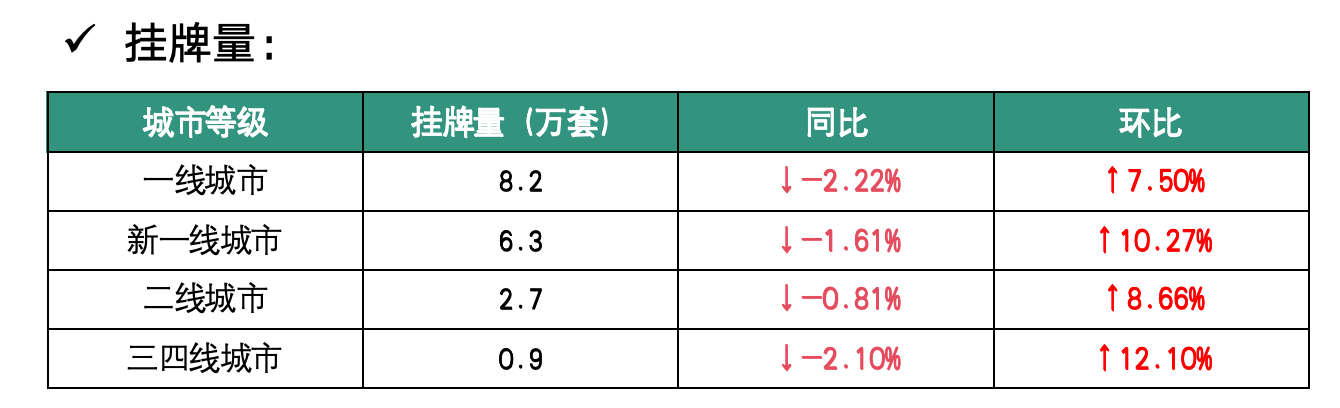
2025年9月房地产市场跟踪:中央纲领指引高质量发展,地方优化为“金九银十”蓄力
Zhong Cheng Xin Guo Ji· 2025-09-26 07:12
Investment Rating - The report indicates a positive outlook for the real estate industry, suggesting a stabilization and recovery trend in the market [3][8][9]. Core Insights - The central government has issued guidelines for high-quality urban development, emphasizing a shift from large-scale construction to improving existing stock, which is expected to guide the real estate sector towards a more sustainable and quality-focused growth phase [3][4][8]. - Local governments in major cities like Beijing, Shanghai, and Shenzhen have implemented policy adjustments to stimulate the real estate market, including easing purchase restrictions and enhancing financial support for homebuyers [5][6][7]. - The report highlights a trend of narrowing year-on-year declines in new home prices, while sales volumes and amounts continue to show significant year-on-year decreases, indicating ongoing pressure in the market [9][10]. Market Tracking Summary - The report notes that the real estate market is transitioning towards a model that prioritizes quality and efficiency, with a focus on urban renewal and the revitalization of existing resources [4][8]. - In August, the number of cities experiencing rising new home prices increased, although the overall trend remains downward, with significant year-on-year declines in sales area and sales amount [9][11]. - The report emphasizes that the ongoing adjustments in policies are expected to provide a supportive environment for market stabilization, particularly in the upcoming "Golden September and Silver October" period [8][9].
地产及物管行业周报:8月投资销售继续走弱,上海房产税优化调整-20250921
Shenwan Hongyuan Securities· 2025-09-21 05:45
Investment Rating - The report maintains a "Positive" rating for the real estate and property management sectors [4][31]. Core Views - The report indicates that the broad housing demand in China has reached a bottom, but the volume and price have not yet entered a positive cycle. It predicts that the real estate market will continue to stabilize, with policies aimed at stopping the decline expected to be introduced [4][31]. - The report highlights that the real estate market in core cities is at a turning point and will lead the recovery. It emphasizes the potential of new policies to create new products, pricing, and models that will improve the real estate market in core cities [4][31]. Industry Data Summary New Housing Transaction Volume - For the week of September 13-19, 2025, new housing transactions in 34 key cities totaled 2.083 million square meters, a week-on-week increase of 5.4%. The transaction volume for first and second-tier cities increased by 5.2%, while third and fourth-tier cities saw an increase of 8.1% [5][6]. - In September 2025, the cumulative transaction volume for new housing in 34 cities was 5.605 million square meters, a year-on-year increase of 17.6% [6][8]. Second-Hand Housing Transaction Volume - For the week of September 13-19, 2025, second-hand housing transactions in 13 key cities totaled 1.096 million square meters, a week-on-week decrease of 6.1%. However, the cumulative transaction volume for September showed a year-on-year increase of 31.3% [12][31]. New Housing Inventory - In the week of September 13-19, 2025, 15 key cities had a total of 1.07 million square meters of new housing launched, with a total available residential area of 89.666 million square meters, reflecting a week-on-week increase of 0.3% [21][31]. Policy and News Tracking Real Estate Industry - The State Council has officially implemented the "Housing Rental Regulations," encouraging multiple channels to increase rental housing supply. The National Bureau of Statistics reported that from January to August 2025, real estate investment totaled 603.09 billion yuan, down 12.9% year-on-year [31][32]. - Shanghai has optimized its property tax pilot policy, temporarily exempting eligible residents from property tax for their first home and second homes under certain conditions [31][32]. Property Management Industry - The "Housing Rental Regulations" emphasize the role of property management in coordinating supervision and promoting the transition of the property industry from traditional management to "rental + service" [35][36].