
稳外资

Search documents
河南发布重大国际合作项目名单 105个项目上榜
He Nan Ri Bao· 2025-08-05 01:49
Group 1 - The first overseas port hub project of Henan Province, constructed by China Henan International Cooperation Group, is nearing operational readiness after completing trial runs [1] - The project aims to enhance the logistics channel between Henan and Africa, facilitating the import of high-quality bauxite and agricultural products, thereby reducing operational costs and expanding the mineral development industry chain [1] - The project is part of Henan's broader strategy to integrate into the national unified market and promote high-level opening-up [1] Group 2 - The 2025 Henan Province Major International Cooperation Project list includes 105 projects, with 46 foreign investment projects totaling 25.922 billion yuan [2] - Notable projects include a 2 billion yuan Charoen Pokphand (CP) superfood factory in Luohe, which will enhance the local food industry chain [2] - The projects aim to connect global resources and markets, facilitating the internationalization of Henan's economy [2] Group 3 - The provincial development and reform commission has issued an implementation plan to support the early commencement and effectiveness of these projects, including financial backing and policy support [3] - The plan includes measures to enhance service for foreign investment projects and to encourage reinvestment by foreign enterprises in China [3] - The focus areas for future projects include infrastructure, advanced manufacturing, digital economy, urban renewal, and green low-carbon initiatives [3]

义乌外资主体破万户诠释“投资中国就是投资未来”
Zheng Quan Ri Bao· 2025-08-01 16:12
Group 1 - The core viewpoint of the article emphasizes that the increase in foreign investment entities in Yiwu reflects China's favorable business environment and market vitality, supporting the notion that "investing in China is investing in the future" [1][4] - Yiwu has officially surpassed 10,000 foreign investment entities, accounting for one-sixth of the total in Zhejiang province, making it the first county-level city in China to achieve this milestone [1] - The Ministry of Commerce reported that in the first half of this year, 30,014 new foreign-invested enterprises were established nationwide, representing a year-on-year increase of 11.7% [2] Group 2 - The article outlines two main reasons for the growing consensus among foreign investors that "investing in China is investing in the future." The first reason is China's continuous expansion of high-level opening-up and optimization of the business environment [3] - Yiwu has implemented various measures to facilitate foreign investment, including a "zero face-to-face, zero cost" foreign investment registration process by 2025, and initiatives to enhance the experience of foreign entrepreneurs [1][3] - The second reason is China's large-scale market advantage, with the retail sales of consumer goods expected to exceed 50 trillion yuan this year, and a consistent position as the world's second-largest import market [3] Group 3 - The article mentions that the Chinese government has introduced a "2025 Action Plan for Stabilizing Foreign Investment," which includes 20 policy measures aimed at supporting foreign enterprises in China [2] - Recent tax incentives have been introduced to encourage foreign investors to reinvest their profits in China, thereby reducing investment costs and stabilizing expectations [2] - The article highlights that high-tech industries have seen significant foreign investment, with actual foreign capital used in high-tech industries reaching 127.87 billion yuan in the first half of this year, with notable growth in sectors such as e-commerce and pharmaceuticals [3]
强化产业升级、需求支撑、创新驱动,上海下半年经济任务明确
Di Yi Cai Jing· 2025-07-31 14:21
Economic Overview - Shanghai's GDP reached 2.62 trillion yuan in the first half of the year, with a year-on-year growth of 5.1% [1] - The city's industrial added value increased by 5.1% year-on-year, while the tertiary industry's added value grew by 5.4%, accounting for 79.1% of GDP [1] Investment and Consumption - Total fixed asset investment in Shanghai grew by 6.2% year-on-year, with major projects completing 50.9% of their annual plans [2] - Social retail sales increased by 1.7% year-on-year, with consumption subsidies driving over 54 billion yuan in social consumption [2] - International tourism saw 4.25 million inbound visitors, a 38.5% increase year-on-year [2] Trade Performance - Shanghai's total import and export volume reached 2.15 trillion yuan, growing by 2.4% year-on-year, with exports increasing by 11.1% [2] - Exports to non-U.S. markets rose by 16.1%, and trade with Belt and Road countries, ASEAN, and BRICS members grew by 11.8%, 10.9%, and 16.5% respectively [2] - Private enterprises' imports and exports increased by 23.6%, accounting for 38.1% of the city's total [2] Foreign Investment - Actual foreign investment in Shanghai decreased by 16.4% year-on-year, although manufacturing and business services saw increases of 48.7% and 47.7% respectively [2] - The city added 30 new regional headquarters for multinational companies and 19 foreign R&D centers, totaling 1,046 and 610 respectively [2] Strategic Focus for Future Development - Shanghai's economic development will focus on five key areas: national strategy, industrial upgrading, demand support, innovation-driven growth, and livelihood security [3] - The city plans to enhance its "five centers" construction and implement a new round of pilot programs for service industry expansion [3][4] - Emphasis will be placed on investment in key industries and regions, supporting industrial growth, and promoting high-quality development in technology and service sectors [4][5] Innovation and Technology - Shanghai aims to strengthen its international technology innovation center and focus on cutting-edge and disruptive technologies [5] - Plans include enhancing incubator functions and establishing high-quality concept verification platforms to support the growth of leading technology enterprises [5]
优化稳外资税收环境
Jing Ji Ri Bao· 2025-07-28 21:46
Core Viewpoint - The Chinese government aims to enhance the attractiveness of foreign investment by combining market opportunities, fiscal support, and quality service guarantees, with a consensus among the international community being optimistic about the Chinese market [1][4]. Group 1: Tax Policy and Foreign Investment - The Ministry of Finance, State Taxation Administration, and Ministry of Commerce have jointly issued a policy allowing foreign investors to offset 10% of their taxable income against direct investments made from distributed profits from Chinese resident enterprises between January 1, 2025, and December 31, 2028 [1]. - This tax incentive is expected to reduce the tax burden on foreign investors, encouraging long-term capital investment in China [1][2]. - In 2024, foreign reinvestment in China benefiting from deferred tax policies is projected to reach 162.28 billion, a 15% increase year-on-year [2]. Group 2: Supportive Measures for Foreign Investment - The new tax credit policy is part of a broader strategy to create a favorable business environment for foreign investment, with 32 tax policies specifically encouraging foreign investment [3]. - The Chinese government is actively participating in international tax governance and enhancing multilateral tax cooperation to foster a better international tax environment [3]. - The "2025 Action Plan for Stabilizing Foreign Investment" aims to stabilize existing investments, improve quality, optimize the environment, and enhance expectations, signaling a commitment to high-level opening-up [3]. Group 3: Challenges and Future Directions - The global investment landscape is undergoing significant changes, with foreign direct investment declining, which poses challenges for China's foreign investment utilization [4]. - Despite foreign enterprises in China having considerable profitability, profit growth has slowed in recent years, necessitating a combination of market opportunities, fiscal support, and quality services to attract foreign investment [4]. - The government plans to implement hard measures and soft services to ensure foreign capital is willing to invest, stay, and thrive in China [4]. Group 4: Service Innovations and Efficiency - Continuous improvement in digital empowerment and departmental collaboration is essential, with initiatives like integrated processing of related matters and policy services without application requirements being promoted [5]. - Tax authorities are encouraged to share data with other departments to enhance service efficiency, as seen in Jiangsu Province's initiatives to optimize tax refund processes and improve foreign enterprise satisfaction [5].
今年上半年 我国稳外资政策持续落地显效 外资高科技项目加速落地
Yang Guang Wang· 2025-07-28 01:27
Group 1 - The core viewpoint is that China's foreign investment policies are yielding positive results, with significant foreign investment projects showing progress and improving the quality of investment in the country [1][2] - Foreign investment is crucial for promoting high-level opening-up, with many foreign enterprises reinvesting profits earned in China, indicating strong confidence in the Chinese market [1] - Key sectors attracting foreign equity investment include new energy vehicles, healthcare, and green economy, with a notable increase in ESG investments [1] Group 2 - China is accelerating institutional opening-up, with a series of policies introduced to facilitate foreign equity investment [2] - The "2025 Action Plan for Stabilizing Foreign Investment" encourages foreign investment in equity and provides operational guidelines for strategic investments [2] - Measures to optimize the foreign equity investment policy system are being explored through pilot programs in free trade zones and service industry expansion, aimed at attracting more global capital [2]
七部委下发通知:鼓励外商投资企业境内再投资
Jing Ji Guan Cha Wang· 2025-07-19 03:28
Core Viewpoint - The issuance of the notification by multiple government departments is a timely and necessary measure to encourage foreign direct investment (FDI) reinvestment in China, addressing the decline in global FDI and the need for stability in foreign investment [1][2]. Group 1: Current FDI Situation - Global FDI has been shrinking for two consecutive years, with a projected decline of 11% in 2024, influenced by geopolitical tensions and the deepening of major power rivalries [1]. - In China, from January to May this year, there were 24,018 newly established foreign-invested enterprises, a year-on-year increase of 10.4%, while the actual utilized foreign capital amounted to 358.19 billion RMB (49.88 billion USD), reflecting a year-on-year decrease of 13.2% [1]. Group 2: Measures in the Notification - The notification includes twelve measures focusing on six main areas: enhancing project service guarantees, optimizing land resource allocation, simplifying relevant procedures, implementing and enforcing support policies, facilitating foreign exchange fund usage, and increasing financial support and innovation [2]. - The notification aims to stabilize foreign investment and is seen as a crucial step in promoting high-level opening-up and modernizing China's production capabilities [2][3]. Group 3: Policy Implications and Recommendations - The notification signals a commitment to stabilizing foreign investment, which is essential for maintaining investment scale amid risks associated with multinational companies' strategies and adverse impacts from U.S. tariffs [3]. - To further support FDI and reinvestment, it is recommended to maintain macroeconomic stability and capital returns, as well as to stabilize the exchange rate, particularly given the current appreciation of the RMB against the USD but lower levels against a basket of currencies [3].
中国连续3个月减持美债,以旧换新带动消费2.9万亿 | 财经日日评
吴晓波频道· 2025-07-19 00:04
Group 1: Foreign Investment Policies - The Chinese government is encouraging foreign investors to reinvest in China by implementing tax support policies and simplifying investment processes [1][2] - The new measures allow foreign investment enterprises to reinvest profits without needing to register for domestic reinvestment, thus reducing currency and tax costs [1] Group 2: Domestic Consumption and Economic Policies - The "old-for-new" policy has significantly boosted domestic consumption, with sales reaching 2.9 trillion yuan, benefiting around 400 million people [3][4] - The government plans to continue supporting this policy to stimulate domestic demand, although the effectiveness may diminish without additional supportive measures [4] Group 3: U.S. Treasury Holdings - China has continued to reduce its holdings of U.S. Treasury bonds for three consecutive months, with a total holding of 756.3 billion USD as of May [5][6] - This trend reflects a strategic move to decrease reliance on the U.S. dollar and promote the internationalization of the yuan [6] Group 4: Central Enterprises Performance - Central enterprises reported a value-added output of 5.2 trillion yuan and a profit total of 1.4 trillion yuan in the first half of the year, indicating stable performance amid external challenges [7][8] - Investment in strategic emerging industries remains high, showcasing a shift in focus towards enhancing future competitiveness [8] Group 5: Automotive Tax Policy Changes - The threshold for luxury car consumption tax has been lowered from 1.3 million yuan to 900,000 yuan, which will increase costs for certain vehicle buyers [9][10] - This policy aims to boost tax revenue while potentially dampening luxury car sales, although the overall impact is expected to be manageable [10] Group 6: Semiconductor Industry Insights - TSMC reported a 61% increase in net profit for Q2 2025, driven by strong demand for advanced semiconductor processes, particularly in AI applications [11][12] - The company maintains a leading position in the market, with advanced processes accounting for 74% of total revenue, indicating robust customer demand for cutting-edge technology [11] Group 7: Volvo's Financial Challenges - Volvo reported its first quarterly loss since going public, with a 10 billion SEK operating loss due to high one-time costs related to U.S. tariffs [13][14] - The company is exploring options to establish manufacturing in the U.S. to mitigate tariff impacts, reflecting broader challenges faced by global automakers [14] Group 8: Stock Market Trends - The stock market showed mixed performance, with the Shanghai Composite Index reaching a new high for the year, indicating a recovery in trading enthusiasm [15][16] - Market dynamics are influenced by various sectors, with energy and metal prices showing upward trends, although the sustainability of these price increases remains uncertain [15]



七部门鼓励外商再投资 短期资金调配将更便利 新版《鼓励外商投资产业目录》即将出炉,引导外资更多投向先进制造业、现代服务业、高新技术等领域
Zheng Quan Shi Bao· 2025-07-18 17:10
Group 1 - The core viewpoint of the news is the issuance of a notification by seven departments, including the National Development and Reform Commission, to encourage foreign investment enterprises to reinvest domestically, aiming to enhance their long-term development in the Chinese market [1][2] - The notification outlines measures to support foreign investment enterprises, including optimizing land allocation, simplifying processes for establishing new reinvestment enterprises, facilitating foreign exchange fund usage, and innovating financial products and services [1][2] - The focus will be on guiding foreign investment towards advanced manufacturing, modern services, high-tech, energy conservation, and environmental protection, particularly in the central and northeastern regions of China [1][2] Group 2 - The global foreign direct investment (FDI) scale is shrinking, with a projected decline of 11% to approximately $1.5 trillion in 2024, marking the second consecutive year of decrease [2] - The notification allows eligible foreign investment enterprises' reinvestment projects to be included in the major and key foreign investment project lists, thus benefiting from corresponding support policies [2] - The notification specifies that foreign investment enterprises can transfer legally generated foreign exchange profits for domestic reinvestment without the need for additional registration procedures, provided the projects comply with regulations [2][3] Group 3 - To stabilize foreign investment, it is essential to implement policies that enhance short-term liquidity and facilitate fund usage, which are critical factors for foreign investors [3] - The notification includes provisions for optimizing management processes for loans from foreign shareholders and panda bonds required for domestic reinvestment, placing them under a "green channel" for expedited processing [3] - A survey indicated that nearly 70% of German automotive companies plan to increase investments in China by 2025, with over 78% focusing on research and development [3]
中国引力持续增强 首个美企在华独资重大石化项目在粤投产
Sou Hu Cai Jing· 2025-07-15 10:48
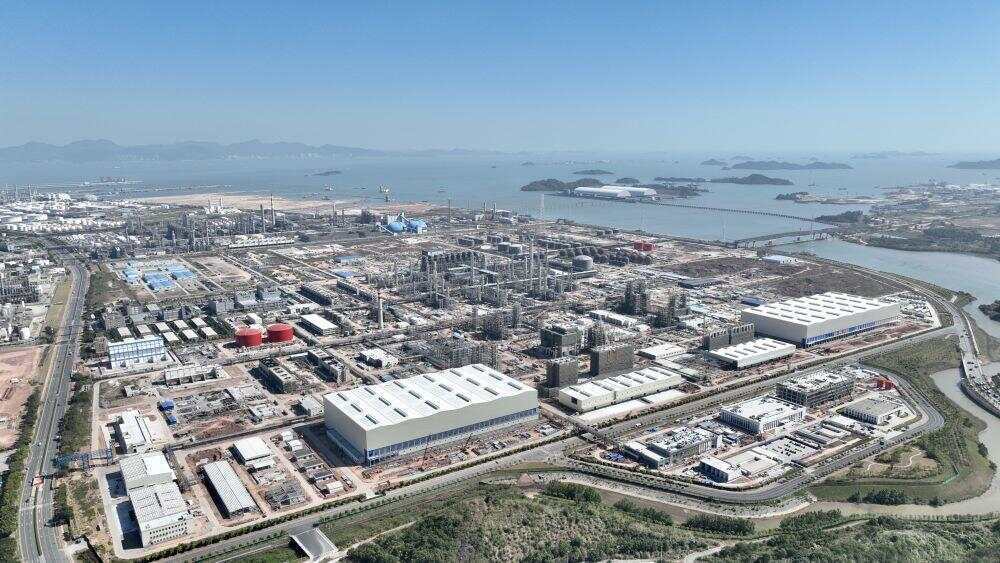
Core Viewpoint - The ExxonMobil Huizhou Ethylene Project has officially commenced operations, marking the first major petrochemical project wholly owned by a U.S. company in China, which signifies a new chapter for ExxonMobil's development in the Chinese market [2]. Group 1: Project Overview - The first phase of the ExxonMobil Huizhou Ethylene Project includes a flexible feed steam cracking unit with an annual capacity of 1.6 million tons of ethylene, two high-performance linear low-density polyethylene units with a combined annual capacity of 1.2 million tons, the world's largest single-unit low-density polyethylene unit with an annual capacity of 500,000 tons, and two differentiated high-performance polypropylene units with a combined annual capacity of 950,000 tons [2]. - Ethylene, known as the "mother of the petrochemical industry," is a crucial raw material in organic chemicals. The project will produce high-value-added basic chemical raw materials such as ethylene, polyethylene, and polypropylene, which are widely used in packaging, automotive, sanitary products, and personal care sectors [2]. Group 2: Environmental and Economic Impact - The project adopts an external pre-treatment mode for environmental protection and includes a comprehensive energy station that can utilize process tail gas for combustion, achieving clean energy recycling. Some products will use recyclable materials, supporting lower carbon emissions in product applications [3]. - The project is expected to enhance China's ethylene production capacity and industrial technology level, strengthening raw material supply for various industries, including electronic chemicals, fine chemicals, and biomedicine [2][3]. - The Huizhou Daya Bay Petrochemical Industrial Park, where the project is located, is home to other international petrochemical giants such as Shell, BASF, Clariant, and Mitsubishi Chemical, indicating a significant benefit to the industrial ecosystem in the Guangdong-Hong Kong-Macao Greater Bay Area [5]. Group 3: Government Support and Foreign Investment - The project received comprehensive and efficient support from the local government in areas such as customs coordination and construction permits, facilitating its successful construction and operation [5]. - China continues to signal its commitment to stabilizing foreign investment, with policies aimed at encouraging foreign enterprises to reinvest domestically. In the first five months of this year, China established 24,018 new foreign-invested enterprises, a year-on-year increase of 10.4% [5].

外企深耕中国投资沃土
Zhong Guo Zheng Quan Bao· 2025-07-13 20:52
Group 1 - The core viewpoint of the articles highlights the increasing attractiveness of China for foreign investment, evidenced by the recent certification of 30 multinational company regional headquarters and 15 foreign R&D centers, along with 56 foreign investment projects totaling approximately $3.68 billion [1][2] - Foreign companies are showing strong commitment to investing in China, with notable investments such as AstraZeneca's $2.5 billion for a new R&D center and Wacker Chemie's expansion in specialty organosilicon production [1][2] - The Chinese government is actively supporting foreign investment through policies aimed at creating a fair competitive environment, expanding domestic demand, and accelerating industrial upgrades, as outlined in the "2025 Action Plan for Stabilizing Foreign Investment" [2][3] Group 2 - Recent data indicates a significant increase in newly established foreign-invested enterprises, with 24,018 new companies set up from January to May, representing a year-on-year growth of 10.4% [4] - The structure of foreign investment in China is improving, with actual foreign investment in the manufacturing sector reaching 91.52 billion RMB and in the service sector reaching 259.64 billion RMB from January to May [4] - High-tech industries are also seeing substantial foreign investment, with sectors such as e-commerce services and aerospace manufacturing experiencing growth rates of 146% and 74.9%, respectively [4]