
量子力学

Search documents
三名量子物理学家获诺奖,他们让微波通信成为可能
Xin Jing Bao· 2025-10-07 23:37
Core Insights - The 2025 Nobel Prize in Physics was awarded to John Clarke, Michel H. Devoret, and John M. Martinis for their contributions to the realization of macroscopic quantum tunneling effects and energy quantization in circuits, marking a significant milestone in quantum mechanics as it celebrates its centenary [1] Group 1: Quantum Tunneling Effect - The macroscopic quantum tunneling effect refers to the phenomenon where macroscopic objects exhibit quantum behavior by passing through energy barriers, which is significant at the nanoscale and limits the miniaturization of microelectronic devices and the information retention time of storage devices [2][3] - The research demonstrated that quantum mechanical properties can be manifested on a macroscopic scale, allowing systems to escape a zero-voltage state through tunneling effects, which was previously thought impossible [3] Group 2: Applications in Technology - The principles of macroscopic quantum tunneling and energy quantization are applicable in semiconductor devices such as tunnel diodes and superconducting quantum interference devices, which are crucial for the operation of electronic devices like smartphones and computers [4][5] - Tunnel diodes, which utilize these quantum principles, have significant applications in high-speed electronic devices, including RF oscillators and frequency converters, and are essential for microwave communication systems [5][6] Group 3: Future Implications - The advancements in quantum tunneling and energy quantization could lead to breakthroughs in microwave communication, potentially surpassing current fiber optic technologies by providing faster wireless broadband and effective signal transmission for devices like smartphones and satellites [6][7] - The research also highlights the role of quantum tunneling in solar nuclear fusion, which is vital for sustaining life on Earth by providing energy through the fusion process, demonstrating the broad implications of these quantum principles for future technological developments [7]
他们为量子计算机创新应用打开大门
Nan Fang Du Shi Bao· 2025-10-07 23:16
Group 1 - The 2025 Nobel Prize in Physics was awarded to John Clarke, Michel H. Devoret, and John M. Martinis for their discovery of macroscopic quantum tunneling effects and energy quantization in circuits [3] - The award committee recognized that the winners demonstrated the peculiar characteristics of the quantum world in systems large enough to be held in hand, with their superconducting electrical systems tunneling between states [3] - This achievement paves the way for the development of next-generation quantum technologies, including quantum cryptography, quantum computers, and quantum sensors [3] Group 2 - Several Chinese scientists have previously won the Nobel Prize in Physics, marking significant contributions to the field [4] - Notable winners include Yang Chen-Ning and Li Zhengdao in 1957 for their groundbreaking work on parity non-conservation, which changed the understanding of symmetry in physics [5] - Other prominent Chinese laureates include Ding Zhaozhong in 1976 for discovering a new fundamental particle, and Gao Kun in 2009 for breakthroughs in optical communication [5]

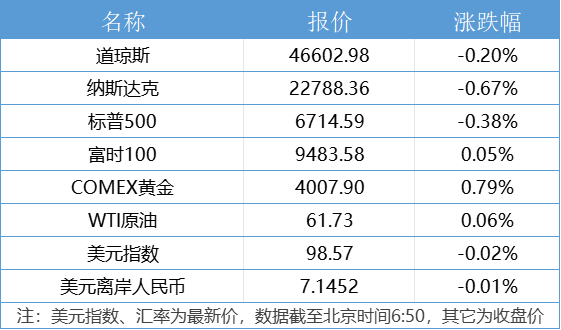
美股三大指数集体收跌;纽约期金首破4000美元/盎司|南财早新闻
2 1 Shi Ji Jing Ji Bao Dao· 2025-10-07 23:15
Investment News - Gold prices reached a historic high, with New York futures surpassing $4000 per ounce and London spot prices exceeding $3990 per ounce. Goldman Sachs has raised its gold price forecast for December 2026 to $4900 per ounce from a previous estimate of $4300 [3] - The domestic gold price has also risen in tandem with international prices, leading to a rapid expansion of gold ETF sizes in China, with several products exceeding 10 billion yuan. Analysts attribute this upward trend to expectations of Federal Reserve interest rate cuts and ongoing issues with U.S. dollar credibility [3] - In the first three quarters, Hong Kong's stock exchange ranked first globally in financing, with over 180 billion HKD raised, as overseas funds increasingly flow into emerging markets [3] - Following a global consensus on technology narratives, foreign and QDII funds have been actively investing in Hong Kong's tech sector, which has shown significant growth during the recent holiday period. The expectation is that this sector will continue to thrive with lower financing costs and ongoing technological advancements [3] Company Developments - Tesla has updated the ordering information for its Model Y and Model 3 standard versions, with the Model Y starting at $39,990, approximately 11% cheaper than before, and the Model 3 starting at $36,990, making it Tesla's most affordable model [4] - Mercedes-Benz Group reported a third-quarter sales figure of 525,300 units, a 12% year-on-year decline, with total sales for the first three quarters reaching 1.6 million units, down 9% year-on-year. However, the sales of pure electric vehicles in the third quarter increased by 9% to 51,200 units [4] - Dell Technologies has significantly raised its sales and profit growth forecasts for the next two years, citing strong demand for AI products, with a projected annual sales growth rate of 7% to 9% over the next four years [5] - AstraZeneca announced that its investigational hypertension drug baxdrostat met its primary goal in a late-stage clinical trial for patients with resistant hypertension, significantly lowering blood pressure [5]

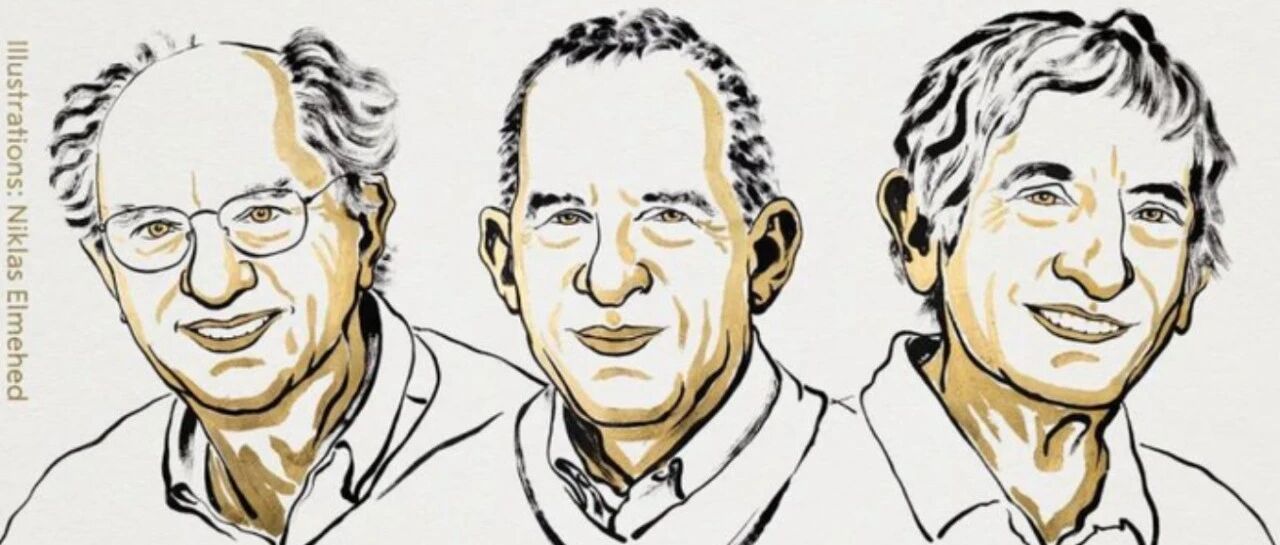
科普|让量子现象“肉眼可见”——2025年诺贝尔物理学奖成果解读
Xin Hua She· 2025-10-07 16:12
Core Insights - The 2025 Nobel Prize in Physics was awarded to John Clarke, Michel H. Devoret, and John M. Martinis for their groundbreaking discoveries that allow visibility of quantum phenomena previously confined to the microscopic realm, laying a solid foundation for the next generation of quantum technologies [1][2] Group 1: Experimental Achievements - The awarded scientists conducted pioneering experiments at the University of California, Berkeley, demonstrating a phenomenon where all charged particles in superconductors exhibit coordinated behavior, akin to a single particle [2] - Their experiments showcased macroscopic quantum tunneling, where a system initially trapped in a zero-voltage state successfully escaped to produce a measurable voltage, confirming the quantum nature of the system [2][3] Group 2: Historical Context - Quantum mechanics, established in 1925, has evolved over a century, becoming a cornerstone of modern physics, with the recent Nobel Prize achievements building on a century of scientific exploration [3] - The concept of quantum tunneling was first theorized by George Gamow in 1928, which laid the groundwork for its application in nuclear physics, leading to further studies in superconductivity [3] Group 3: Future Implications - The Nobel Prize committee highlighted that the recent achievements open doors to the development of next-generation quantum technologies, including quantum cryptography, quantum computers, and quantum sensors [4] - International collaboration is emphasized as crucial for advancing research in quantum mechanics, with many significant breakthroughs resulting from global partnerships [4][5]
量子电路突破荣获诺贝尔物理学奖
半导体行业观察· 2025-10-07 13:47
Core Viewpoint - The article discusses the significance of the Nobel Prize awarded to John Clarke and his team for their groundbreaking work in quantum mechanics, particularly in the field of superconducting circuits and quantum tunneling, which has implications for the development of quantum computing and technology [5][9]. Group 1: Research and Findings - John Clarke and his team conducted experiments using "Josephson junction" superconducting circuits, demonstrating that charged particles behave like a single particle filling the entire circuit and exhibit quantum tunneling effects [5][6]. - Their research confirmed energy quantization, where the circuit only absorbs or releases specific amounts of energy, which is fundamental to the operation of modern quantum chips [5][8]. Group 2: Implications for Technology - The Nobel Committee highlighted that their research lays the foundation for future quantum technologies, including quantum computers, quantum cryptography, and quantum sensors [9]. - The work of Clarke and his team is considered essential for the development of superconducting qubits, a primary hardware technology in quantum computing [9]. Group 3: Historical Context - The article provides a brief overview of recent Nobel Prize winners in physics, emphasizing the ongoing advancements in quantum mechanics and related fields [10].
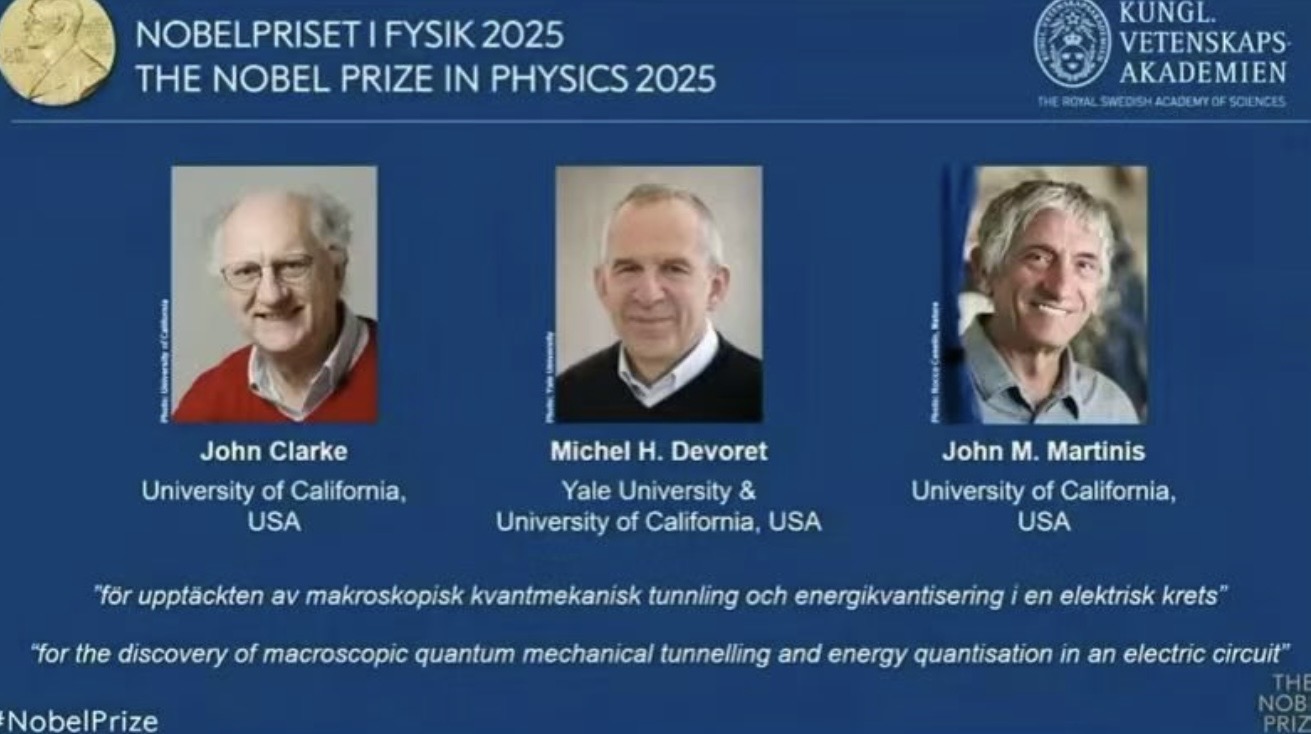
三名量子物理学家获2025年诺贝尔物理学奖
Xin Hua She· 2025-10-07 13:06
Core Points - The 2025 Nobel Prize in Physics will be awarded to John Clarke, Michel H. Devoret, and John M. Martinis for their contributions to the realization of macroscopic quantum tunneling effects and energy quantization in circuits [1][2] - The Nobel Prize committee highlighted that this year's achievements pave the way for the development of next-generation quantum technologies such as quantum cryptography, quantum computers, and quantum sensors [1] - The announcement coincides with the centenary of quantum mechanics, which has continuously provided new insights and serves as a foundation for digital technology [1] Summary by Categories Award Recipients - John Clarke, born in 1942 in the UK, is a professor at the University of California, Berkeley [2] - Michel H. Devoret, born in 1953 in France, is a professor at Yale University and the University of California, Santa Barbara [2] - John M. Martinis, born in 1958, is also a professor at the University of California, Santa Barbara [2] Prize Details - The three laureates will share a prize of 11 million Swedish Krona, approximately 1.17 million USD [3]
今年的诺贝尔物理学奖,为超导量子计算机铺平道路
Hu Xiu· 2025-10-07 12:22
Core Viewpoint - The 2023 Nobel Prize in Physics was awarded to John Clarke, Michel H. Devoret, and John M. Martinis for their groundbreaking experiments demonstrating macroscopic quantum tunneling effects and energy quantization phenomena in electrical circuits, paving the way for advancements in quantum technologies such as quantum computing and quantum cryptography [1][2][3]. Group 1: Award Significance - The award recognizes the ability to observe quantum mechanical effects at a macroscopic scale, addressing a fundamental question in physics regarding the maximum size of a system that can exhibit quantum behavior [1][2]. - The experiments conducted by the laureates illustrate that quantum properties can manifest in systems large enough to be handled, such as superconducting circuits, which are practical applications of quantum technology [1][2][3]. Group 2: Experimental Insights - The laureates' work involved constructing a superconducting circuit that allowed for the observation of quantum tunneling, where charged particles behave collectively as a single entity, demonstrating quantum effects in a system containing billions of Cooper pairs [1][2][37]. - Their experiments showed that the system could escape a zero-voltage state through quantum tunneling, producing measurable voltage, thus confirming the quantum nature of the system [21][24][39]. Group 3: Future Implications - The findings from this research are expected to significantly impact the development of next-generation quantum technologies, including quantum computers and quantum sensors, by providing a deeper understanding of quantum mechanics at larger scales [1][2][42]. - The work lays a foundation for future advancements in quantum computing, as it allows for the use of quantized energy states in superconducting circuits as qubits, which are essential for building practical quantum computers [43][44].

诺奖对量子计算“下赌注”!谷歌“悬铃木”发明人获奖
Di Yi Cai Jing· 2025-10-07 12:09
Group 1 - The 2025 Nobel Prize in Physics was awarded to three scientists for their contributions to quantum mechanics, specifically for discovering macroscopic quantum tunneling and energy quantization in circuits [1] - The Nobel Prize committee stated that this year's award opens opportunities for the development of next-generation quantum technologies, including quantum cryptography, quantum computers, and quantum sensors [1] - The award highlights the significant contributions of the winners to superconducting quantum computing, which is based on macroscopic quantum effects and energy quantization [3] Group 2 - The concept of "quantum computing superiority" refers to the ability of quantum computers to outperform classical computers in solving specific problems that even supercomputers cannot solve in a short time [4] - The mainstream academic view suggests that the development of quantum computing will follow a three-step process: achieving quantum computing superiority, developing manipulable quantum simulators, and creating programmable universal quantum computers [4] - Major technology companies, including Google, IBM, Microsoft, and NVIDIA, are actively investing in quantum information technology, accelerating the transition from laboratory research to industrial applications [4]

量子论力学100周年,2025年诺贝尔物理学奖公布
仪器信息网· 2025-10-07 12:02
Core Points - The 2025 Nobel Prize in Physics was awarded to scientists John Clarke, Michel H. Devoret, and John M. Martinis for their contributions to quantum mechanics, specifically for discovering macroscopic quantum tunneling and energy quantization in electronic circuits [4][8][34] Group 1: Award Details - The Nobel Prize recognizes the ability to observe quantum tunneling effects at a macroscopic scale, which was previously only studied at the microscopic level [17][30] - The awardees demonstrated that quantum properties can manifest in systems large enough to be held in hand, using superconducting circuits [8][15] Group 2: Experimental Contributions - The experiments conducted by the awardees involved superconductors that could tunnel from one state to another, akin to passing through a wall, and showed that these systems absorb and emit energy in specific quantized amounts [8][19][30] - Their work involved creating a Josephson junction, which allowed for the measurement of quantum phenomena in a system containing billions of Cooper pairs, thus bridging the gap between micro and macro quantum effects [26][30] Group 3: Theoretical Implications - The findings have significant implications for understanding quantum mechanics, as they illustrate that macroscopic systems can exhibit quantum behavior, challenging the notion that quantum effects are only relevant at the microscopic level [32][33] - The research opens new avenues for experimental exploration of quantum phenomena and has potential applications in quantum computing, where the quantized states of circuits can be utilized as qubits [34]
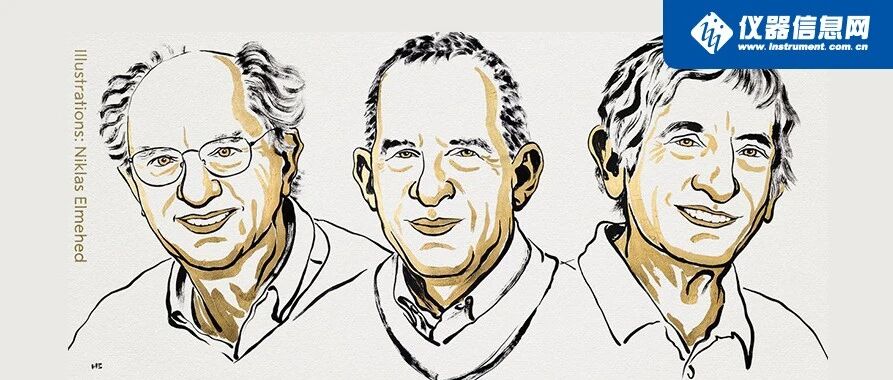
2025年诺贝尔物理学奖揭晓,三名科学家因量子力学研究获奖
2 1 Shi Ji Jing Ji Bao Dao· 2025-10-07 11:22
Core Points - The 2025 Nobel Prize in Physics was awarded to scientists John Clarke, Mike H. Devoret, and John M. Martinis for their research on the macroscopic quantum tunneling effect and energy quantization in circuits [1] - The Nobel Committee recognized that the winners demonstrated the peculiar characteristics of the quantum world can be realized in systems large enough to be held in hand through a series of experiments [1] Summary by Categories - **Award Recipients** - John Clarke, Mike H. Devoret, and John M. Martinis are the recipients of the 2025 Nobel Prize in Physics [1] - **Research Focus** - The awarded research focuses on the discovery of the macroscopic quantum tunneling effect and energy quantization in electrical circuits [1] - **Significance of Research** - The Nobel Committee highlighted the importance of the research in showing that quantum phenomena can manifest in larger systems, bridging the gap between quantum mechanics and classical physics [1]