
长江经济带发展

Search documents
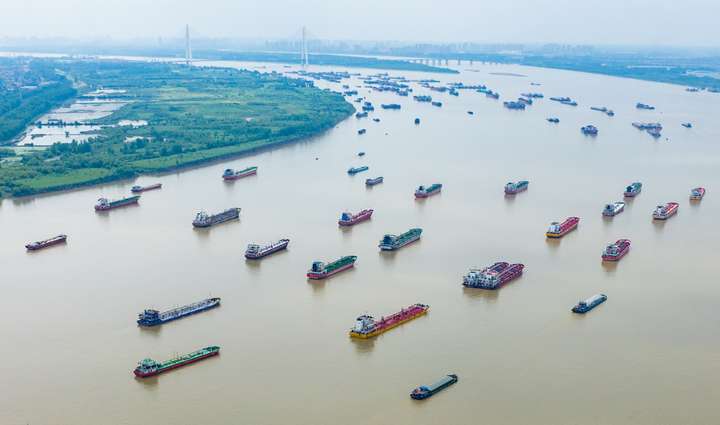
长江货运量有多大?比全球其它国家内河货运量加起来还多
Sou Hu Cai Jing· 2026-01-05 15:09
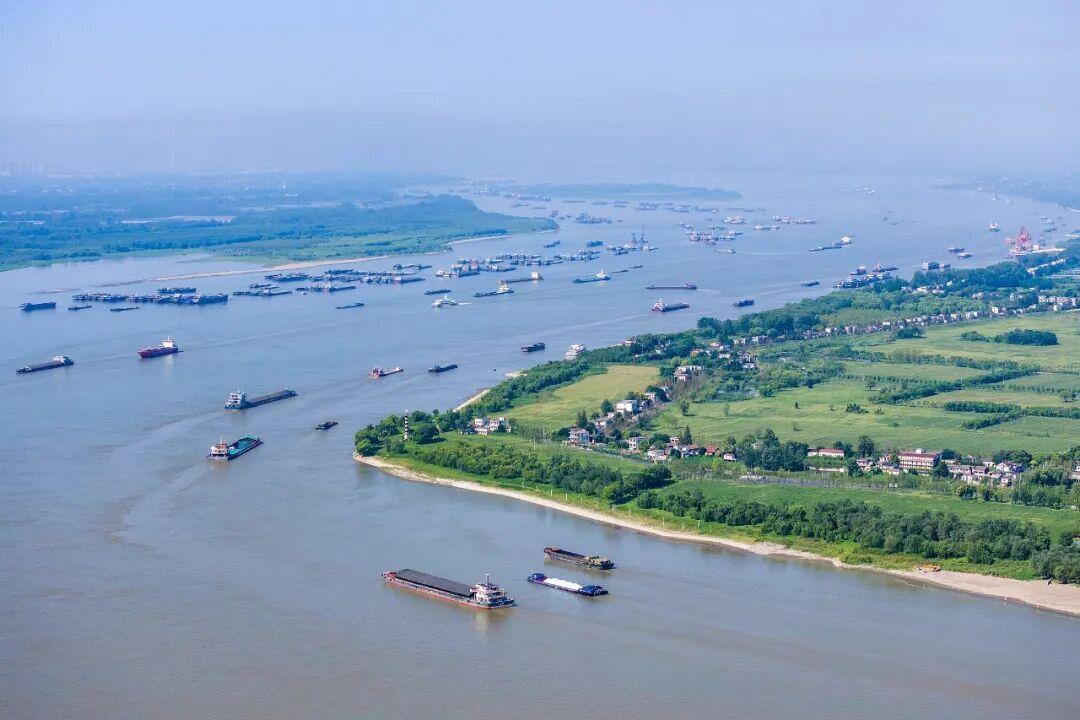
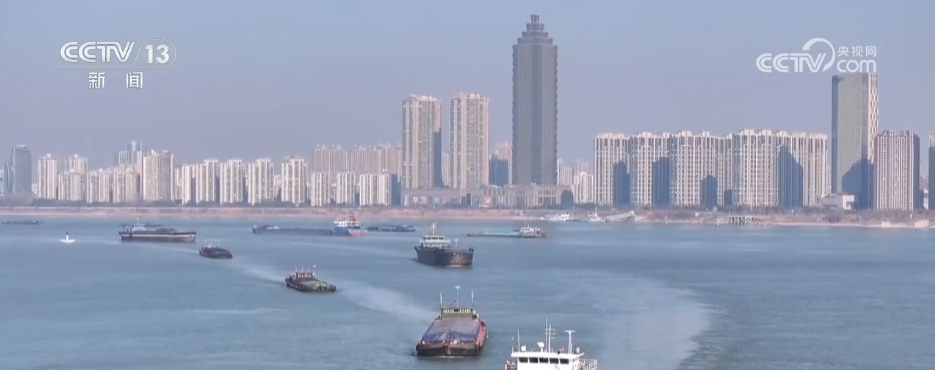
Core Insights - The cargo throughput of the Yangtze River mainline ports has increased by 71% over the past decade, reaching 4.2 billion tons, maintaining its position as the world's leading inland river in terms of cargo volume [1][27] Group 1: Cargo Volume and Comparisons - The 4.2 billion tons of cargo is equivalent to needing 105 million heavy trucks, which could circle the equator 1.3 times if lined up [4] - In comparison to other major rivers, the Amazon River's annual cargo volume is approximately 1 million tons, which is only 1/42 of the Yangtze's volume [4][13] - The Mississippi River in North America has an annual cargo volume of about 600 million tons, ranking fourth globally, but still less than 1/7 of the Yangtze's volume [6] Group 2: Infrastructure and Development - Over the past decade, the high-grade waterways of the Yangtze River have expanded from 8,000 kilometers to 11,000 kilometers, effectively creating a "water highway" [15] - The number of major ports along the Yangtze has increased from 10 to 18, with 127 new production berths added, enhancing the capacity for large cargo ships [17] - The integration of ecological improvements has led to a 90% reduction in vessel detention rates due to sedimentation, demonstrating that environmental protection can coexist with increased cargo capacity [19][21] Group 3: Economic Impact - The Yangtze River's cargo volume supports 80% of the iron ore and thermal coal transportation for industries along the river, indicating its critical role in the supply chain for steel and electricity [15][22] - The cost advantage of inland waterway transport is significant, with costs being only half of rail and one-fifth of road transport, contributing to the competitiveness of manufacturing clusters in the Yangtze River Delta and Chengdu-Chongqing regions [22] - In the first 11 months of 2025, the foreign trade import and export value of the 11 provinces and cities along the Yangtze Economic Belt reached 19.12 trillion yuan, accounting for 46.4% of the national total, highlighting the economic significance of the 4.2 billion tons of cargo [22] Group 4: Future Prospects - The 4.2 billion tons of cargo not only represents a numerical achievement but also symbolizes the Yangtze Economic Belt's connectivity between western mineral resources and eastern manufacturing bases, as well as its integration into global trade networks [24] - The Yangtze River is poised to continue playing a vital role in supporting high-quality economic development, with an average of one cargo ship passing every three minutes in the lower reaches [25]

视频丨十年来长江经济带生产总值翻了一番多 未来工作重点公布
Yang Shi Xin Wen Ke Hu Duan· 2026-01-05 14:28
Core Insights - The development of the Yangtze River Economic Belt over the past decade has seen significant improvements in water quality, with the proportion of good water quality rising from 67% to 96.5%, and regional GDP more than doubling, increasing its share of the national economy from 42.2% to 47.3% [1] Group 1: Environmental Protection and Economic Growth - The concept of "coordinated major protection, not major development" has been effectively implemented, leading to the resolution of the "chemical industry surrounding the river" issue by addressing nearly 10,000 chemical enterprises [1] - A total of 1,361 illegal docks have been cleared, and black and odorous water bodies in major cities along the river have been largely eliminated [1] - The water quality of the Yangtze River has improved from some sections being classified as Grade V to the entire river being classified as Grade II [1] Group 2: Technological and Industrial Innovation - The integration of technological and industrial innovation in the Yangtze River Economic Belt has accelerated, with the establishment of international technology innovation centers in Shanghai and other regions [1] - Significant technological achievements include the "artificial sun" achieving a billion-degree operation for a thousand seconds and targeted cancer drugs, alongside the emergence of competitive innovative companies like DeepSeek and Yushu Technology [1] - World-class industrial clusters have formed in sectors such as automotive manufacturing and electronic information [1] Group 3: Infrastructure and Transportation - The functionality of the Yangtze River as a "golden waterway" has been reinforced, with the high-grade navigable waterways increasing from 8,000 kilometers to 11,000 kilometers [1] - The cargo throughput of trunk ports has grown by 71%, reaching 4.2 billion tons, maintaining its position as the world's leading inland river [1] Group 4: Cultural and Social Development - The cultural heritage of the Yangtze River has deepened, with the successful inclusion of the Liangzhu Ancient City Ruins in the World Heritage List and significant archaeological discoveries at Sanxingdui [2] - The "Happiness Yangtze" initiative has improved quality of life, with per capita disposable income rising from 23,000 yuan to 44,000 yuan, an increase of 91% [2] - The South-to-North Water Diversion Project has delivered over 84 billion cubic meters of water, benefiting 48 cities and 195 million people [2] Group 5: Future Development Plans - The "14th Five-Year Plan" emphasizes the continued development of the Yangtze River Economic Belt, focusing on ecological protection, innovation, regional collaboration, and cultural heritage [3][4] - Key areas of focus include pollution control, fostering original technological innovations, and enhancing agricultural production capabilities [3][4] - The plan aims to strengthen the safety and quality of life in the region, ensuring food security and improving the welfare of the population [4]
1月5日晚间央视新闻联播要闻集锦
Yang Shi Xin Wen Ke Hu Duan· 2026-01-05 14:11
Group 1 - Xi Jinping held a welcoming ceremony for South Korean President Yoon Suk-yeol's state visit to China on January 5 [8] - Xi Jinping met with South Korean President Yoon Suk-yeol for discussions in Beijing on January 5 [9] - Xi Jinping also met with Irish Prime Minister Martin during his official visit to China on January 5 [9] Group 2 - The State Council Information Office held a press conference to introduce the achievements and progress of the Yangtze River Economic Belt development over the past ten years [15]
焦点访谈|黄金水道 十年巨变:长江航运如何赋能经济带高质量发展
Yang Shi Wang· 2026-01-05 13:30
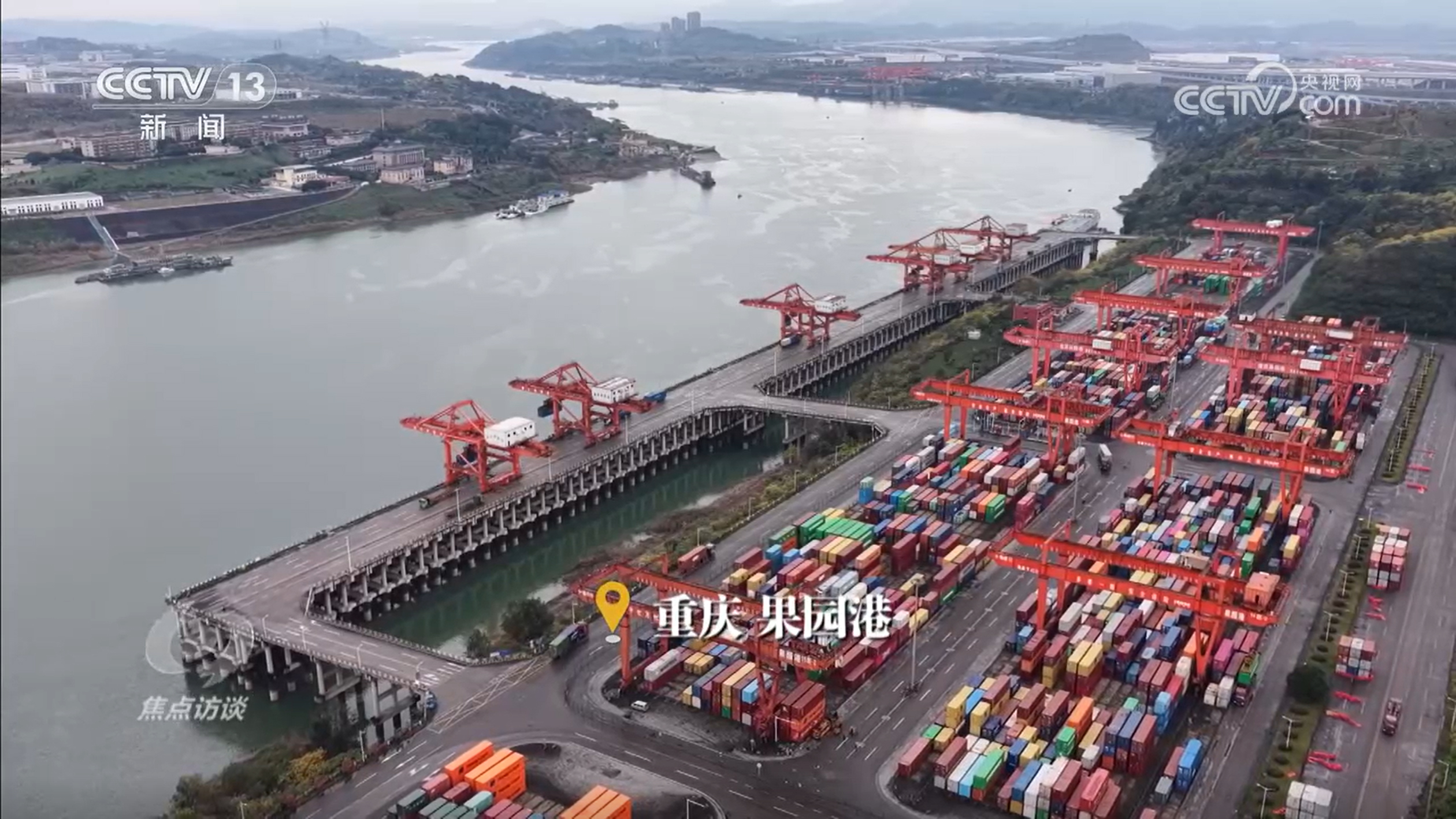
Core Viewpoint - The Yangtze River is a vital economic artery for the region, referred to as the "golden waterway," and plays a crucial role in the development of the Yangtze River Economic Belt strategy, which has seen significant advancements over the past decade [1][10]. Group 1: Infrastructure and Capacity - The Chongqing Guoyuan Port has been upgraded to a modern inland port with 18 berths for 5,000-ton vessels and 14 dedicated railway lines, enhancing its operational efficiency [3][4]. - The port's annual throughput has exceeded 26 million tons, connecting to over 100 countries and regions globally, indicating a significant increase in cargo movement [4][10]. - The number of 100-million-ton ports along the Yangtze River has increased from 11 to 18 over the past decade, improving logistics and reducing transportation costs [11][15]. Group 2: Technological Advancements - The port has implemented smart upgrades, allowing operators to control multiple devices from a remote control room, significantly increasing work efficiency [4][5]. - The development of a smart maritime traffic control system has reduced accident rates by 70% in busy shipping areas, showcasing the effectiveness of technology in enhancing safety and efficiency [16][18]. - The Yangtze River's electronic navigation chart now provides over 80 data services, contributing to the green development of the economic belt by integrating various shipping elements [19]. Group 3: Economic Impact - The port's transformation has facilitated the shift of the western region from being a raw material supplier to a manufacturing hub, with increased exports of equipment and goods [7][10]. - The Chongqing Guoyuan Port serves as a critical node in the logistics network, linking the western region with the eastern coastal areas and enhancing industrial synergy [8][10]. - The Yangtze River's cargo throughput has surpassed 4.2 billion tons, maintaining its position as the world's busiest inland waterway, which is essential for the economic growth of the region [19][21].
长江经济带发展十年:GDP占全国比重升至47.3%
Di Yi Cai Jing· 2026-01-05 13:23
Core Insights - The "14th Five-Year Plan" emphasizes the continuous development of the Yangtze River Economic Belt, highlighting the importance of ecological protection and high-quality development [1][3] Group 1: Economic Growth and Development - The Yangtze River Economic Belt has seen its GDP more than double over the past decade, increasing its share of the national GDP from 42.2% to 47.3% [1] - The per capita disposable income of residents in the region has risen from 23,000 yuan to 44,000 yuan, marking a 91% increase [1] - The region has established a complete industrial chain in sectors such as electronics, automotive, pharmaceuticals, and chemicals, contributing to its status as a major area for industrial aggregation [3][4] Group 2: Environmental Protection and Sustainability - The proportion of good water quality in the Yangtze River has improved from 67% to 96.5% over the past decade [1] - The ecological environment capacity of the Yangtze River basin is limited, necessitating a focus on green, high-end, and intelligent economic growth [3] - Efforts are being made to promote the green transformation of traditional industries, with 24 national carbon peak pilot cities and parks established in the region [4] Group 3: Transportation and Logistics - The Yangtze River's high-grade waterway mileage has reached 11,500 kilometers, significantly enhancing shipping capabilities [6] - By 2025, the throughput of major ports along the Yangtze River is expected to reach 4.2 billion tons, with the number of large ports increasing to 18 [6] - The development of multimodal transport is being prioritized to optimize transportation structure and reduce logistics costs, with a focus on enhancing intermodal connectivity [7]
十年来长江经济带生产总值翻了一番多 未来工作重点公布
Yang Shi Xin Wen Ke Hu Duan· 2026-01-05 13:05
Core Insights - The development of the Yangtze River Economic Belt over the past decade has seen significant improvements in water quality, economic growth, and environmental protection measures [2][3] Economic Growth - The GDP of the Yangtze River Economic Belt has more than doubled, increasing its share of the national GDP from 42.2% to 47.3% [2] - The per capita disposable income of residents has risen from 23,000 yuan to 44,000 yuan, marking a 91% increase [3] Environmental Protection - The proportion of good water quality in the Yangtze River has improved from 67% to 96.5% [2] - The implementation of the "protection first, development second" principle has led to the closure and relocation of nearly 10,000 chemical enterprises and the cleanup of 1,361 illegal docks [2] - The water quality of the Yangtze River has improved from a mix of class five to class two across the entire river [2] Technological and Industrial Innovation - The integration of technological and industrial innovation has accelerated, with the establishment of international technology innovation centers in Shanghai and Wuhan [2] - Notable technological achievements include advancements in nuclear fusion and targeted cancer therapies, alongside the emergence of competitive innovative companies [2] Transportation and Infrastructure - The high-grade navigable waterways of the Yangtze River have increased from 8,000 kilometers to 11,000 kilometers [2] - The cargo throughput of major ports along the river has grown by 71%, reaching 4.2 billion tons, maintaining its position as the world's leading inland waterway [2] Cultural Development - The cultural heritage of the Yangtze River has been enhanced, with the successful inclusion of the Liangzhu Ancient City site in the World Heritage List [2] - Efforts are underway to promote cultural tourism and deepen the integration of culture and tourism [6] Future Development Plans - The "14th Five-Year Plan" emphasizes continued development of the Yangtze River Economic Belt, focusing on ecological protection, innovation, regional collaboration, cultural heritage, and enhancing the quality of life for residents [5][6] - Key initiatives include improving environmental protection, fostering innovation, and enhancing regional connectivity and openness [5][6]
这组数据,描绘长江经济带新模样!
Xin Hua Wang· 2026-01-05 12:51
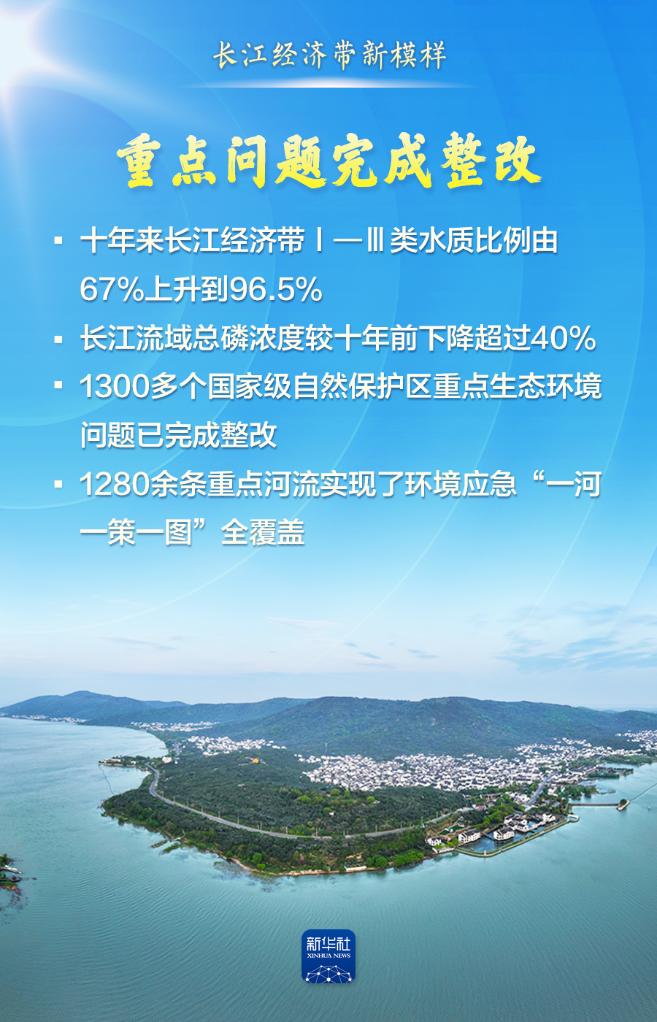
Core Viewpoint - The Yangtze River Economic Belt has achieved significant ecological and economic advancements over the past decade, emphasizing ecological priority and green development, leading to a harmonious coexistence of nature and human activities [1]. Environmental Protection and Quality Improvement - The proportion of water quality classified as good has increased from 67% to 96.5% [4]. - Total phosphorus concentration in the Yangtze River basin has decreased by over 40% compared to ten years ago [4]. - More than 1,300 national nature reserves have completed key ecological environment issue rectifications [4]. - Over 1,280 key rivers have achieved full coverage of environmental emergency management [4]. Infrastructure and Economic Development - The high-grade navigable waterway mileage has reached 11,500 kilometers [6]. - By 2025, the throughput of Yangtze River mainline ports is expected to reach 4.2 billion tons, with the number of major ports increasing to 18 [6]. Flood Control and Water Resource Management - Successfully managed the 2020 regional flood by preventing 49 billion cubic meters of floodwater, protecting 1,752 million people and 1.1 million hectares of farmland [8]. - Ensured safe drinking water for urban populations and irrigation for 1.83 million acres of autumn crops [8]. Green and Low-Carbon Industrial Transformation - Three technology innovation centers and eight national laboratories have been established along the river [11]. - By 2025, the production of new energy vehicles in Shanghai, Jiangsu, Zhejiang, Anhui, and Chongqing is expected to exceed one million units each [11]. - 24 cities and parks have been designated as national carbon peak pilot areas, with 14 zero-carbon parks established [11]. Pollution Control and Regulatory Framework - Over 160,000 kilometers of river and lake shorelines have been inspected, with more than 200,000 pollution outlets accurately identified [12]. - A comprehensive supervision management system for pollution outlets has been established [12]. Fisheries and Biodiversity Conservation - The release of over one million Chinese sturgeons is planned for 2024 and 2025 [13]. - The population of Yangtze River dolphins is steadily increasing, with the distribution range expanding [13]. - A total of 344 fish species have been monitored in the Yangtze River basin from 2021 to 2024, an increase of 36 species compared to before the fishing ban [13]. Multi-Modal Transport and Connectivity - The implementation of a comprehensive transport system has led to significant improvements in multi-modal transport [14]. - By the "14th Five-Year Plan" period, the railway port rate for major ports along the Yangtze River is expected to exceed 90%, with an annual growth rate of over 30% for container rail-water intermodal transport [14]. Flood Prevention Infrastructure - More than 300 large reservoirs have been built in the Yangtze River basin, with a flood control capacity of 80 billion cubic meters [15]. - Over 1,000 kilometers of riverbanks have been treated to stabilize the river flow in the middle and lower reaches [15].
47.3%、42亿吨、96.5% 一组数据梳理长江经济带发展“多点开花”
Yang Shi Wang· 2026-01-05 12:51
Core Insights - The Yangtze River Economic Belt, covering 11 provinces and cities, contributes over 40% of the national population and GDP, representing a vital economic area for China [1] Group 1: Economic Growth - The GDP of the Yangtze River Economic Belt has more than doubled over the past decade, increasing its share of the national GDP from 42.2% to 47.3% [3] - Per capita disposable income in the region rose from 23,000 yuan to 44,000 yuan, marking a 91% increase [3] Group 2: Transportation Development - The length of high-grade navigable waterways in the Yangtze River system increased from 8,000 kilometers to 11,000 kilometers over the past decade [5] - The cargo throughput at the main ports along the Yangtze River grew by 71%, reaching 4.2 billion tons, maintaining its position as the world's leading inland river in terms of cargo throughput [5] Group 3: Environmental Protection - The proportion of Class I to III water quality in the Yangtze River Economic Belt improved from 67% in 2015 to 96.5%, an increase of nearly 30 percentage points [7] - The water quality of the main stem of the Yangtze River improved from some sections being Class V to the entire river being classified as Class II [7]
好评中国丨十年砥砺奋进“换了新颜”,唱响更加雄浑壮美的“长江之歌”
Xin Lang Cai Jing· 2026-01-05 12:33
Core Viewpoint - The development of the Yangtze River Economic Belt must prioritize the long-term interests of the Chinese nation, emphasizing ecological restoration and protection over large-scale development [1] Summary by Sections Strategic Importance - The development of the Yangtze River Economic Belt is a significant decision made by the central leadership, impacting the overall national development strategy [1] - Over the past decade, the leadership has held four meetings focused on the development of the Yangtze River Economic Belt, evolving from "promoting" to "further promoting" the initiative [1] Ecological and Economic Progress - The region, covering approximately 2.05 million square kilometers and spanning 11 provinces, has seen substantial progress in ecological protection and economic transformation [1] - The "High-Quality Development Index of the Yangtze River Economic Belt (2025)" reached 155.16, an increase of 43.18 since 2015, with an average annual growth rate of 4.16% [1] - The Green Development Index reached 116.87, up 15.12 since 2015, maintaining a steady annual growth of 1.75% [1] - The Innovation Development Index reached 200.90, an increase of 19.03 from the previous year, with an average annual growth of 7.4% compared to 2015 [1] - The Coordinated Development Index reached 120.83, up 13.63 since 2015, with an average annual growth rate of 1.51% [1] - The Open Development Index reached 151.90, maintaining a steady annual growth of 2.51% since 2015 [1] - The Shared Development Index reached 183.95, an increase of 70.61 since 2015, with an average annual growth rate of 6.24% [1] Case Studies and Examples - The removal of 45 chemical enterprises in Changzhou, Jiangsu, transformed an "industrial rust belt" into an "ecological embroidery belt," leading to new business models like "Eastern Carbon Valley" and "Innovative Pharmaceutical Valley" [1] - The renovation of the Chenglingji Port in Yueyang, Hunan, introduced modern facilities, making it a popular destination for visitors [1] - Guizhou established a leading low-cost, high-reliability data center, supporting the high-quality development of big data [1] Future Outlook - By 2035, the Yangtze River Economic Belt aims to become a golden economic belt characterized by better ecology, smoother transportation, coordinated economy, and more scientific mechanisms [1] - The strategy's tenth anniversary serves as a new starting point to reinforce the commitment to ecological protection and sustainable development [1]
国家发展改革委副主任王昌林:推动长江经济带发展不断迈上新台阶
Qi Huo Ri Bao· 2026-01-05 12:15
下一步,王昌林表示,将深入贯彻落实党中央、国务院决策部署,编制好实施好长江经济带发展"十五 五"实施方案,一体推进长江大保护三年行动计划落实,咬定青山不放松,推动长江经济带发展不断迈 上新台阶。 期货日报网讯(记者肖佳煊)1月5日,国务院新闻办公室举行新闻发布会,介绍长江经济带发展十年工作 进展和成效。国家发展改革委副主任王昌林在会上表示,经过不懈努力,长江经济带走出了一条生态优 先、绿色发展的新路子,长江母亲河重新焕发出了生机活力。 谈及长江大保护三年行动计划进展的成效,王昌林用"四个一批"来概括。一是新建改造一批污水管网项 目,积极发挥"两重"建设对长江大保护战略实施的支撑作用,统筹"硬投资"和"软建设",2025年安排超 长期特别国债资金244亿元,支持长江干流和主要支流沿线城市约1.2万公里污水管网建设项目。二是出 台实施一批重点政策举措,统筹安排超长期特别国债、中央预算内投资等资金超1000亿元,支持重点河 湖水生态修复、城市黑臭水体治理、重点行业和重点领域节能降碳等长江大保护项目建设。三是组织开 展一批专项治理行动。四是推进建设一批重大工程项目。 ...