AI计算

Search documents
光模块,掘金下一代数据基础设施蓝海丨热门赛道
创业邦· 2025-10-12 01:08
Core Insights - The article discusses the optical module industry, highlighting its significance in high-speed data transmission and its evolving technology landscape [6][9][10]. Industry Definition - Optical modules are essential components that convert electrical signals to optical signals, facilitating high-speed data transmission over fiber optics [6]. - They are critical in various applications, including data centers, telecommunications, and enterprise networks [7]. Technological Evolution - The optical module industry is evolving towards higher speeds (from 10G to 400G and beyond) and improved packaging techniques, such as silicon photonics integration and co-packaged optics (CPO) [9]. - Future advancements will require breakthroughs in chip technology, packaging, and thermal management, alongside industry collaboration and standardization [9][10]. Industry Structure - The optical module supply chain consists of upstream (core component suppliers), midstream (manufacturers), and downstream (end-users like data centers and telecom operators) [9][10]. - Key components include lasers, photodetectors, modulators, and high-speed circuit chips, which are crucial for performance and cost [10]. Market Trends - From 2020 to 2024, the number of financing events in the optical module sector fluctuated, decreasing from 59 in 2020 to 26 in 2023, before rebounding to 31 in 2024, indicating a shift towards investing in leading companies with scalable production capabilities [11]. Company Highlights - Afalight, established in 2016, focuses on next-generation optical modules and has achieved significant cost reductions and production efficiency through proprietary technologies [13]. - Weijian Intelligent, founded in 2019, specializes in high-precision chip packaging equipment and has established partnerships with major global optical device manufacturers [16][17]. - New Fei Guang, a subsidiary of OFILM Group, has developed a range of optical modules from 10G to 1.6T, with a focus on automated production and digital manufacturing [20][21]. Recent Developments - DingTong Technology plans to invest up to $15 million in Vietnam for the production of optical module cooling solutions [25]. - Huagong Technology launched the industry's first 3.2T CPO optical engine, significantly improving signal transmission efficiency [29]. - The establishment of Huagong Technology's optical electronics research park aims to produce over 40 million optical modules annually by 2027 [30].



全球首款1.8nm芯片亮相,华人CEO打响关键一战,英特尔杀回来了
3 6 Ke· 2025-10-11 10:53
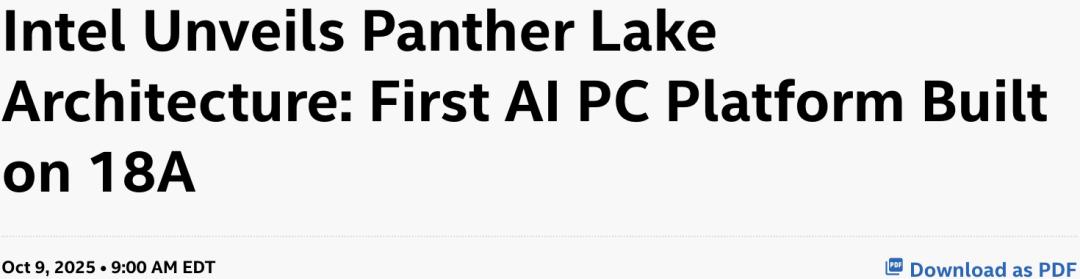
Core Insights - Intel has launched its first AI PC platform based on the 18A process technology, named Panther Lake, which boasts a performance increase of 50% and a power reduction of approximately 30% compared to its predecessor [1][2][17] - The Panther Lake chips are set to enter mass production by the end of this year, with a full market release expected in January 2026 [2][14] Technology Advancements - The 18A process technology, approximately 1.8nm, represents a significant innovation in the semiconductor industry, featuring Gate-All-Around transistors and a Backside Power Delivery Network [2][10] - Compared to the Intel 3 process, the 18A technology offers a 15% improvement in performance per watt and a 30% increase in chip density [2][10] Strategic Importance - The introduction of Panther Lake is seen as a critical battle for Intel to regain its competitive edge in advanced process technology [1][17] - Intel's CEO highlighted that the 18A node is the most advanced semiconductor node developed and manufactured in the U.S., marking a pivotal moment for the American semiconductor industry [4][6] Product Applications - Panther Lake is designed for consumer and commercial AI PCs, gaming devices, and edge computing applications, utilizing a scalable multi-chiplet architecture for enhanced flexibility [8][9] - The platform will also extend to edge applications, including robotics, supported by a new Robotics AI software suite [9] Manufacturing Capabilities - The Panther Lake and Clearwater Forest (Xeon 6+) processors will be produced at Intel's new Fab 52 facility in Chandler, Arizona, which is now fully operational [4][8][13] - The successful ramp-up of 18A production is crucial for Intel's broader chip manufacturing strategy and its plans for future nodes [14][16]

【大涨解读】闪存:外资大行称行业迎来“前所未有四年定价上行周期”,全球存储公司迎来共振
Xuan Gu Bao· 2025-09-30 03:23
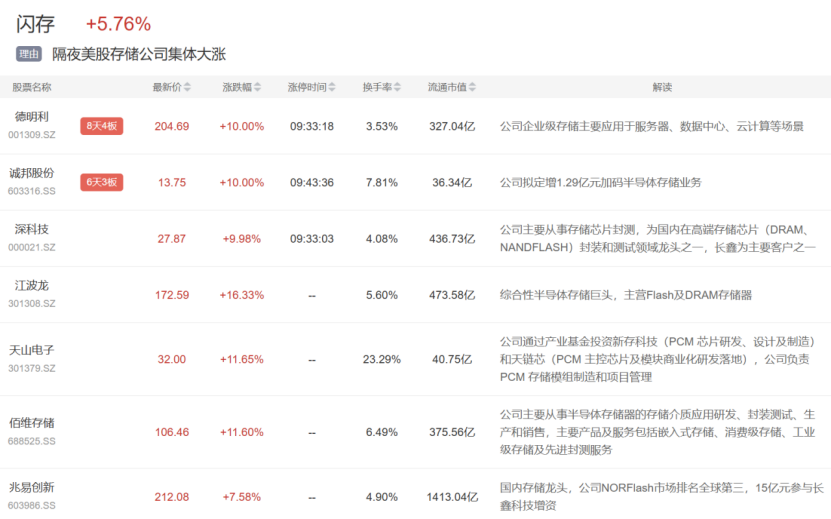
Core Viewpoint - The storage sector has experienced significant gains, with companies like Demingli, Chengbang, and Shentek reaching their daily price limits, while others like Jiangbolong and Tianshan Electronics saw increases exceeding 10% [1][2]. Group 1: Stock Performance - Demingli (001309.SZ) has seen a 10% increase, with a market cap of 32.704 billion, focusing on enterprise-level storage applications [2]. - Chengbang (603316.SS) also rose by 10%, with a market cap of 3.634 billion, planning to raise 129 million to enhance its semiconductor storage business [2]. - Shentek (000021.SZ) increased by 9.98%, with a market cap of 43.673 billion, specializing in storage chip packaging and testing [2]. - Jiangbolong (301308.SZ) surged by 16.33%, with a market cap of 47.358 billion, recognized as a comprehensive semiconductor storage giant [2]. - Tianshan Electronics saw an 11.65% rise, with a market cap of 4.075 billion, investing in new storage technology [2]. Group 2: Market Trends - U.S. storage stocks have continued to rise, with significant increases in companies like SanDisk (16.87%), Western Digital (9.23%), and Micron (4.22%) [3]. - Morgan Stanley highlights that AI computing is driving demand for high-performance memory, leading to a structural growth phase in the industry, with expectations of a pricing upcycle in the DRAM market from 2024 to 2027, potentially reaching a global storage market size of nearly $300 billion by 2027 [3]. - The CFM flash memory market anticipates a price increase of over 10% for server eSSD and 10-15% for DDR5 RDIMM in Q4 [3]. Group 3: Supply Dynamics - Major storage manufacturers, including SanDisk and Micron, have announced price increases, indicating a potential upward trend in the NAND flash market [4]. - AI's demand for SSDs is projected to exceed 45EB in 2024, with an average annual growth rate of over 60% for AI server SSD demand [5]. - Supply constraints in Nearline HDDs due to limited capacity have led to a shift towards eSSD for cold data storage, with current production rates for NAND at about 70-80% [6].
这一战,谷歌准备了十年
美股研究社· 2025-09-28 11:28
Core Insights - Google has begun selling its Tensor Processing Units (TPUs) to cloud service providers, aiming to compete directly with NVIDIA in the AI computing market, which is projected to be worth trillions of dollars [4][6][7] - The competition between Google and NVIDIA is intensifying, with analysts predicting a significant decline in NVIDIA's GPU sales due to the rise of TPUs [7][19] - Google's TPUs are designed specifically for AI computing, offering a cost-effective and energy-efficient alternative to traditional GPUs, with reported costs being one-fifth of those for GPUs used by OpenAI [11][12] Google TPU Development - Google initiated discussions about deploying specialized hardware in its data centers as early as 2006, but the project gained momentum in 2013 due to increasing computational demands [9][10] - The TPU architecture focuses on high matrix multiplication throughput and energy efficiency, utilizing a "Systolic Array" design to optimize data flow and processing speed [10][11] - Over the years, Google has released multiple generations of TPUs, with the latest, Ironwood, achieving peak performance of 4614 TFLOPs and supporting advanced computing formats [15][16] Market Position and Future Outlook - By 2025, Google is expected to ship 2.5 million TPUs, with a significant portion being the v5 series, indicating strong market demand [15] - Analysts suggest that Google's TPUs could become a viable alternative to NVIDIA's offerings, with a notable increase in developer activity around Google Cloud TPUs [19] - The competitive landscape is evolving, with other companies like Meta and Microsoft also developing their own ASIC chips, further challenging NVIDIA's dominance in the market [23][25]



“中国版英伟达” IPO过会 这支“概念股”已经连续涨停
Sou Hu Cai Jing· 2025-09-27 01:27
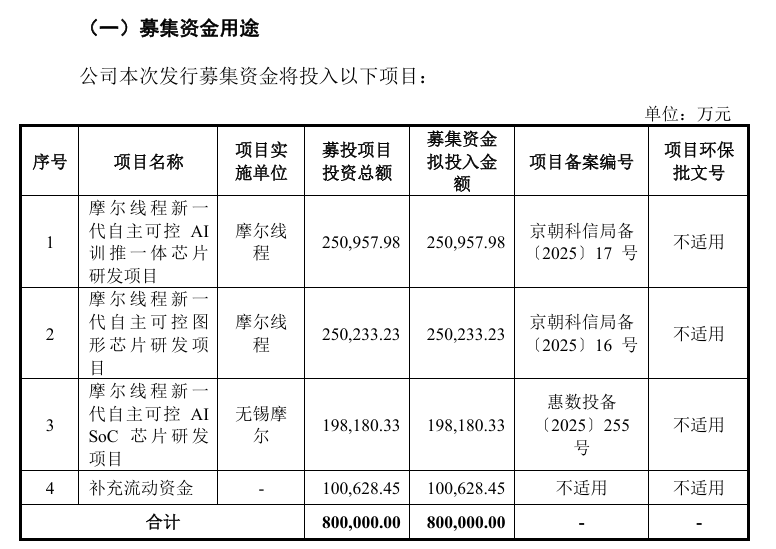
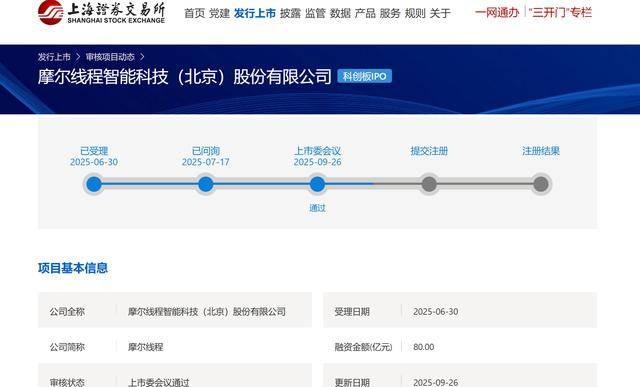
Group 1 - The core viewpoint of the news is that Moole Technology's IPO application has been approved by the Shanghai Stock Exchange, marking a significant step towards its listing on the A-share market [1] - Moole Technology plans to raise 8 billion RMB through its IPO, which is the largest fundraising project in the A-share market this year and also the largest IPO in the semiconductor sector [1] - The funds raised will be allocated to the development of new AI training and inference chips, new graphics chips, and new AI SoC chips, as well as to supplement working capital [1] Group 2 - Moole Technology, established in 2020, is a domestic GPU company that focuses on providing accelerated computing infrastructure and solutions for digital transformation across various industries [1] - The company is recognized as a "unicorn" in the industry and is often referred to as the "Chinese version of NVIDIA" due to its capabilities in both graphics rendering and AI computing [1] - The news of Moole Technology's IPO has led to a surge in the stock prices of related companies, particularly Heertai, which has seen its stock price rise significantly this year [2]
摩根大通:存储芯片,“饥饿游戏”开启,一场为期四年的上行周期
美股IPO· 2025-09-26 03:38
Core Viewpoint - The "memory hunger" trend driven by AI computing is pushing the entire industry into a structural growth phase, leading to an unprecedented four-year pricing upcycle in the DRAM market from 2024 to 2027, with the global storage market expected to reach nearly $300 billion by 2027 [1][2]. Group 1: Market Dynamics - The core driver of the current cycle is the immense demand for high-performance memory due to AI computing, which has rapidly expanded from high-bandwidth memory (HBM) to traditional DRAM and NAND flash [2][3]. - Suppliers may struggle to meet the entire demand in the next 12 months, supporting sustained price increases [2]. - The NAND flash market is also experiencing a strong rebound, partly due to a severe shortage of hard disk drives (HDD), pushing customers towards enterprise solid-state drives (eSSD) [2][9]. Group 2: DRAM Market Outlook - The DRAM market is entering an unprecedented four-year pricing upcycle from 2024 to 2027, breaking the previous pattern of volatility [3]. - By 2027, HBM is expected to account for 43% of the total value in the DRAM market, stabilizing traditional DRAM price fluctuations and enhancing overall market profitability [3]. - Even with potential price drops for HBM3E products in 2026 due to increased supply, the next-generation HBM4 is anticipated to maintain a premium of about 35%, keeping the average selling price (ASP) stable [3]. Group 3: AI-Driven Demand - The rise of AI inference, AI services, and edge AI applications necessitates upgrades in memory configurations for general servers to achieve lower latency and better power efficiency [8]. - By 2027, AI-related applications are projected to account for 53% of the DRAM market's total addressable market (TAM) [8]. Group 4: NAND Market Recovery - The NAND flash market is experiencing a strong pricing recovery after two years of underinvestment, driven by a surge in demand for eSSD [9]. - The shortage of traditional HDDs, with delivery cycles extending up to 52 weeks, is prompting a significant shift towards eSSD in nearline storage markets [9]. - The structural importance of NAND is increasing as AI models transition from training to inference applications, raising demands for data read speeds and latency [10].
计算机行业点评报告:英伟达(NVDA.O):与英特尔合作并投资,巩固AI计算领域核心地位
Huaxin Securities· 2025-09-25 04:32
Investment Rating - The report maintains a "Recommended" investment rating for the industry [1] Core Insights - The collaboration between NVIDIA and Intel aims to develop advanced data center and PC products, leveraging NVIDIA's NVLink technology to integrate AI and accelerated computing capabilities with Intel's leading CPU technology [5][6] - NVIDIA's investment of $5 billion in Intel at a price of $23.28 per share signifies a strong commitment to enhancing AI computing solutions [5][6] - The partnership is expected to create a more powerful computing ecosystem by combining GPU and CPU technologies, which will enhance the performance and utilization of AI computing resources [6][7] - The focus on AIPC (AI Personal Computing) business is crucial, as the integration of NVIDIA's RTX GPUs with Intel's x86 systems is anticipated to drive the development of powerful edge AI solutions [8] - NVIDIA's extensive investments in the AI computing ecosystem are aimed at solidifying its core position in the market and promoting the growth of AI technology [9] Summary by Sections Industry Performance - The computer industry has shown a performance of -2.7% over the last month, 17.9% over the last three months, and 78.5% over the last year, compared to the CSI 300 index which has performed at 2.2%, 15.3%, and 34.2% respectively [2] Investment Highlights - The collaboration between NVIDIA and Intel is expected to yield stronger AI computing solutions, enhancing the overall computing ecosystem [6] - The integration of Intel's x86 architecture with NVIDIA's AI capabilities is projected to provide significant advantages in high-performance computing [7] - The partnership is set to address the limitations of edge AI deployment by providing robust computing solutions [8] - NVIDIA's strategy includes broad investments to strengthen its position in the AI computing landscape [9] Company Focus and Earnings Forecast - NVIDIA's stock price is currently at $176.97, with earnings per share (EPS) estimates of $12.05 for 2024, $2.97 for 2025E, and $4.46 for 2026E [11]
历史性合作!英伟达宣布豪掷50亿美元入股英特尔,黄仁勋:将全球最强CPU整合起来,加速计算和AI计算时代已经到来【附全球GPU芯片行业市场分析】
Qian Zhan Wang· 2025-09-22 01:56
Core Viewpoint - Nvidia announced a $5 billion acquisition of Intel common stock at $23.28 per share, making it one of Intel's largest shareholders with an expected ownership of over 4% [2] - Following the announcement, Intel's stock price surged over 30% in pre-market trading, marking its largest single-day increase in recent years [2] - Nvidia and Intel will collaborate to develop customized CPUs for data center platforms and integrate Nvidia's GPUs with Intel's CPUs, signaling a significant partnership in the AI and accelerated computing sectors [2] Group 1: Nvidia and Intel Collaboration - The partnership is described as a fusion of two world-class platforms, emphasizing that it is not merely a financial investment but a strategic alliance [2] - Nvidia's CEO highlighted the importance of this collaboration in driving advancements in AI and accelerated computing [2] - The integration of Nvidia's AI technology with Intel's x86 ecosystem is expected to open new application scenarios for Nvidia's CUDA platform [5] Group 2: Market Context - Intel has historically dominated the GPU market with over 60% market share, primarily due to its integrated GPU chips in desktop and laptop computers [3] - However, in the independent GPU market, Nvidia and AMD have captured most of the market share, leaving Intel with a minimal presence [5] - The collaboration is viewed as a pivotal moment for Intel's "second startup," potentially allowing it to catch up in the AI chip market [5] Group 3: Industry Trends - The global GPU chip industry is recognized as a vital and strategic sector, with applications in gaming, AI, data centers, and autonomous driving [2] - The semiconductor industry is shifting from a "arms race" to "ecosystem building," as evidenced by alliances like the Nvidia-Intel partnership and TSMC's wafer foundry collaborations [5]
芯片圈炸了!英伟达扔 50 亿美刀“救” 英特尔。网友:以前的弟中弟,拉了一把老大哥
程序员的那些事· 2025-09-21 02:35
Core Viewpoint - The unexpected collaboration between Nvidia and Intel marks a significant shift in the semiconductor industry, highlighting Nvidia's dominance in AI computing and Intel's need for strategic partnerships to recover from its declining market position [5][11][14]. Group 1: Nvidia's Investment in Intel - Nvidia announced an investment of $5.9 billion to acquire approximately 4% of Intel's shares at a price of $23.28 per share, pending regulatory approval [5]. - Following the announcement, Intel's stock price surged by 30%, significantly increasing the value of shares held by the U.S. government by $4.9 billion, bringing the total value to approximately $14 billion [5]. - The collaboration aims to integrate Nvidia's AI and accelerated computing capabilities with Intel's CPU technology, creating advanced solutions for data centers and personal computing [6]. Group 2: Impact on Competitors - AMD's stock fell by 5.9% in response to the news, as the collaboration poses a competitive threat in both the PC and data center markets [8][12]. - Analysts expressed skepticism about the true intentions behind the Nvidia-Intel partnership, questioning whether it is a superficial gesture or the beginning of a more extensive collaboration [8]. - AMD remains committed to its strategy of capturing market share from Intel, emphasizing AI as a primary focus [8]. Group 3: Nvidia's Industry Leadership - Nvidia's rise to prominence is attributed to its early recognition of the need for new chips and software in AI computing, positioning itself ahead of competitors [13]. - Nvidia's market capitalization has surpassed $4 trillion, while Intel's stands at $116 billion, illustrating the dramatic shift in industry dynamics [13]. - The rapid change in market positions highlights the volatility and competitive nature of the semiconductor industry, with Nvidia's sales projected to reach $200 billion this year [13]. Group 4: Intel's Strategic Shift - Intel's current predicament is a result of its failure to capitalize on the AI boom and a loss of manufacturing advantages, now relying on TSMC for top-tier chip production [18]. - The appointment of a new CEO, who advocates for an open strategy and collaboration, marks a pivotal change in Intel's approach to regain competitiveness [15][17]. - Intel's ongoing challenges include reliance on external investments and asset sales to fund operations amid declining market share [17].
摩尔线程IPO,下周上会
Sou Hu Cai Jing· 2025-09-19 15:10
Core Viewpoint - The company Moole Technology is set to hold its IPO review meeting on September 26, 2025, with plans to raise 8 billion yuan through its listing on the Sci-Tech Innovation Board [1]. Group 1: Company Overview - Moole Technology was established in June 2020 and is controlled by Zhang Jianzhong, who holds 44.07% of the shares [3]. - The company has received investments from notable institutions including Sequoia China, Tencent, and ByteDance [3]. Group 2: Financial Performance - Moole Technology reported net losses of approximately 1.84 billion yuan, 1.673 billion yuan, and 1.492 billion yuan for the years 2022 to 2024, with a net loss of about 271 million yuan in the first half of 2025 [3]. - The company's revenue has shown significant growth, increasing from 46 million yuan in 2022 to 438 million yuan in 2024, reflecting a compound annual growth rate of 208.44%. In the first half of 2025, the revenue reached 702 million yuan [3]. Group 3: Future Outlook - The company aims to become a leading GPU enterprise with international competitiveness, focusing on providing computing acceleration infrastructure and solutions for digital transformation across various industries [4].