DTC模式

Search documents
Shoplazza携手WINTOPAY 打造“建站+支付”直通车,为独立站出海提速
Sou Hu Cai Jing· 2025-07-29 11:14
近日,全球一站式支付方案服务商 WINTOPAY 凭借与店匠科技(Shoplazza)多年来在跨境支付领域的深 度协作与成果积淀,荣获店匠科技授予的 "SHOPLAZZA CERTIFIED PARTNER" 认证。这一荣誉不仅 是对双方长期友好合作的见证,更标志着两大企业将进一步深化协同,以 "建站 + 支付" 的生态融合, 为跨境电商独立站商家打造更高效的全球化解决方案。 授牌仪式 | 店匠科技中国区商务负责人张扬(左)与WINTOPAY深圳公司负责人 Maggie(右) 展望未来,WINTOPAY 与店匠科技将持续以资源共享、优势互补为核心,升级全球化跨境服务体系, 从技术适配、支付效率到生态资源整合,为中国品牌出海提供多维度支撑,助力更多独立站商家在全球 市场实现突破与增长。 关于WINTOPAY WINTOPAY是全球一站式支付方案服务商,致力于为中国跨境商户和全球电子商务企业提供安全、便 捷、专业、简单的支付基础设施和解决方案。自2013年成立以来,WINTOPAY始终深耕跨境支付领 域,凭借香港MSO牌照、美国MSB牌照及PCI DSS支付安全认证,构建起覆盖全球的合规支付网络,已 服务超600 ...


靠DTC模式大卖的安踏,开始降速了
阿尔法工场研究院· 2025-07-24 11:31
Core Viewpoint - Anta is facing a critical question regarding the continuation of its Direct-to-Consumer (DTC) strategy as both Nike and Adidas are reassessing their own DTC approaches amid slowing growth for Anta [1][3]. Group 1: Anta's Performance and Market Context - Anta's growth has begun to slow down, with its main brand and FILA showing only low to mid-single-digit growth in retail sales for Q2 2025, while emerging brands have seen growth rates of 50% to 65% [6][8]. - The overall sports goods market has been a growth highlight, with retail sales growth of 25.7% in the first five months of the year, compared to 15.2% the previous year [11]. - FILA's performance has been particularly disappointing, with a reported 6.8% growth in H1 2024, significantly lower than the main brand's 13.5% growth [7][10]. Group 2: DTC Strategy Insights - DTC, which allows brands to sell directly to consumers, was initially seen as a way to enhance growth and profitability, but its effectiveness is now under scrutiny as major brands like Nike and Adidas face challenges related to inventory and channel management [9][10]. - The DTC model can significantly increase gross margins by eliminating middlemen, allowing brands to retain a larger share of sales revenue [16][21]. - However, transitioning to a DTC model also increases operational costs, as brands must now cover expenses traditionally borne by distributors, which can pressure net profits if not managed efficiently [22][23]. Group 3: Anta's Unique DTC Approach - Anta's DTC strategy began in 2020 during a challenging market environment, allowing for a smoother transition and testing phase [29][30]. - FILA served as a successful testing ground for DTC, enabling Anta to validate its model with lower costs and risks [31][32]. - Unlike Nike and Adidas, Anta has maintained a higher number of franchise stores compared to direct stores, indicating a more integrated approach to DTC that does not completely abandon distributors [35][36].


安踏的高毛利方法,其他品牌学不会
晚点LatePost· 2025-07-23 15:49
Core Viewpoint - Anta Sports has successfully reclaimed ownership of nearly 10,000 stores from distributors, enhancing its market position and profitability [2][3]. Group 1: Financial Performance - Anta Sports has demonstrated impressive financial results, becoming a leading player in the domestic footwear and apparel industry, with no significant challengers emerging [3]. - The company has maintained a gross margin exceeding 60% over the past four years, significantly higher than competitors like Nike, Adidas, and Li Ning, which have gross margins below 50% [7][9]. - The gross margin of Anta's core brand has improved from 41% in 2019 to 52% in 2021, attributed to the implementation of a Direct-to-Consumer (DTC) model [14][18]. Group 2: DTC Model and Brand Strategy - The DTC model allows Anta to connect directly with end consumers, eliminating intermediaries and enhancing revenue recognition [14][17]. - Over 90% of Anta's revenue now comes from the DTC model and e-commerce channels, indicating a significant shift towards a direct sales approach [17]. - The successful transition to the DTC model is largely credited to the prior success of the FILA brand, which has maintained a gross margin around 70% and has been a key contributor to Anta's overall profitability [13][19][22]. Group 3: Market Expansion and Future Prospects - Anta's acquisition of the German outdoor brand Jack Wolfskin aims to leverage its existing supply chain and retail network to capture a larger market share in the outdoor apparel sector, projected to exceed 100 billion yuan by 2024 [35]. - The company is expected to face challenges in sustaining growth, as the DTC model and e-commerce have already reached a high penetration rate, and the FILA brand's store count has stabilized around 2,000 [30][35]. - Anta plans to finance the Jack Wolfskin project through bond issuance, indicating confidence in future revenue growth and profitability [36].

户外新消费机会挖掘
2025-07-16 15:25
Summary of Key Points from Conference Call Records Industry Overview - The outdoor apparel industry in China is currently a market worth over 100 billion, while the international market reaches a scale of 1 trillion. The annual growth rate of the industry is between 10% to 15%, with some optimistic forecasts reaching 20% [2][12]. Company Performance - Amazon's brands in China are performing strongly, with projected sales of over 5 billion USD for the year 2024. The Chinese market accounts for over 30% of global sales, and if overseas purchases by Chinese consumers are included, it represents 50% of the group's sales [1][4]. - Arc'teryx holds a market share of 60% to 70%, while Salomon and Wilson each account for around 40% [4]. Marketing Strategies and Channels - The outdoor apparel industry primarily utilizes three marketing channels: e-commerce, direct retail, and wholesale. Amazon relies heavily on retail and wholesale, but the DTC model is gaining importance [5]. - Brands are adopting a strategy of closing smaller stores while opening larger ones, aiming for luxury and high-end positioning [5]. Competitive Landscape - The competition in the domestic outdoor apparel market is intense, with brands needing to shift from pure outdoor categories to more fashionable offerings. Emerging brands like Boshihe are gaining traction in the mid-to-low-end market [2][12]. - Salomon is aggressively expanding its flagship stores in first- and second-tier cities, contrasting with Arc'teryx's focus on enhancing single-store efficiency and high-end positioning [6][11]. Supply Chain Advantages - Supply chain barriers are crucial for competitive advantage. Arc'teryx's long-term partnership with Gore-Tex provides it with priority access to the latest products, while Salomon reduces costs through outsourcing production [9][10]. - The integration of resources within Anta Group helps optimize operations for both Arc'teryx and Salomon [10]. Future Growth and Strategies - Arc'teryx aims for a doubling of growth by 2030, transitioning to a normal growth state post-2025. Salomon, while growing rapidly, faces higher risks [3][27]. - Wilson's rapid rise is attributed to the surge in tennis popularity, with plans to open over 10 stores by 2025 or 2026 [8][7]. Market Dynamics - The market is increasingly segmented, with the top 50% dominated by large brands and the remaining 20% to 30% occupied by numerous small emerging brands, which have the potential to be absorbed by faster-growing brands [20]. - The North American market shows a strong growth in DTC channels, although hotel channels remain the primary driver in absolute terms [30]. Conclusion - The outdoor apparel industry in China is poised for significant growth, driven by strong brand performances, strategic marketing shifts, and competitive supply chain advantages. Brands must adapt to changing consumer preferences and market dynamics to maintain and enhance their market positions [12][25].
英媒:一线明星如何搅动消费品行业
Huan Qiu Shi Bao· 2025-07-10 22:38
Core Insights - Celebrities are increasingly transitioning from traditional advertising to becoming entrepreneurs in the consumer goods sector, with notable examples including Hailey Bieber's nearly $1 billion cosmetics brand sale and Kim Kardashian's lingerie brand reaching $1 billion in annual sales [1][2] - The new generation of celebrity brands allows stars to become capitalists, actively participating in business operations and holding equity stakes, which contrasts with traditional endorsement models [1] - Consumer goods giants are acquiring successful celebrity brands, leveraging the stars' existing fan bases to drive initial sales, as seen in recent acquisitions by Diageo for tequila and gin brands associated with George Clooney and Ryan Reynolds [1] Industry Trends - The direct-to-consumer (DTC) model has made it easier for celebrities to launch products, allowing them to connect directly with fans through social media [1] - While celebrity endorsements can drive initial interest, the long-term success of products depends on quality and innovation, as poor consumer experiences can lead to negative reviews and lack of repeat purchases [2] - The landscape of consumer goods is evolving, with celebrities now seen as potential brand creators rather than just endorsers, leading to a shift in how brands are built and marketed [1][2]
独立站运营新解:SHOPLINE刘元喆称老客复购成本远低于新客
Sou Hu Cai Jing· 2025-07-10 03:48
Core Insights - Independent sites are becoming a crucial strategic area for brands going global, serving more than just as a simple order platform [1] - SHOPLINE stands out in the industry as a pioneer in cross-border e-commerce independent site building, emphasizing the importance of proper utilization of independent sites for customer retention [1][5] Group 1: Misconceptions and Operational Differences - Many view independent sites merely as brand display platforms, which limits their potential for sales and brand building [3] - Unlike marketplace platforms like Amazon, independent sites should not be operated with a shelf e-commerce mindset; they function more like boutique stores in a city center [3] - Independent sites allow brands to convert public traffic into private traffic and analyze consumer purchasing behavior, providing strong support for future sales [3] Group 2: SHOPLINE's Support for Chinese Merchants - SHOPLINE primarily serves Chinese cross-border e-commerce sellers and brands going global, offering AI-optimized site design and multi-channel traffic integration [5] - The one-stop building solutions and tools provided by SHOPLINE are developed and expanded around customer needs [5] Group 3: Core Values of Independent Sites - Independent sites can create a unique atmosphere and interaction, effectively retaining traffic [6] - The long-tail effect of traffic operation is crucial; many companies focus too much on acquiring new customers rather than on traffic operation and activation [6] - A case study showed that email marketing accounted for 40% of revenue for a brand, significantly higher than the industry average of 10% [6] Group 4: Future Prospects of Independent Sites - The independent site industry is moving towards more standardized operations, addressing challenges such as regulatory changes and rising traffic costs [7] - Future development will focus on branding and quality, accelerating the journey of cross-border e-commerce towards global brand expansion [7]

伯希和招股书解读:高性能户外服饰领先品牌,成长空间广阔
Haitong Securities International· 2025-06-29 14:57
Investment Rating - The report assigns an "Outperform" rating to several companies in the high-performance outdoor apparel sector, including Anta Sports, Shenzhou International, Li Ning, Samsonite, Xtep International, and 361 Degrees, with target prices set for each [1]. Core Insights - The high-performance outdoor apparel industry in China is entering a trillion-yuan era, with significant growth potential. The market size increased from 53.9 billion yuan in 2019 to 102.7 billion yuan in 2024, reflecting a compound annual growth rate (CAGR) of 13.8%. It is projected to reach 215.8 billion yuan by 2029, with a CAGR of 16% from 2024 to 2029 [3]. - The report highlights Pelliot as a leading brand in high-performance outdoor apparel, which has established a broad product matrix and a direct-to-consumer (DTC) sales channel. The company reported a revenue of 1.766 billion yuan in 2024, a 94.5% year-on-year increase [2][17]. - Pelliot's product matrix includes four main series: Peak Series, Professional Performance Series, Mountain Series, and Classic Series, with the Classic Series contributing over 80% of sales revenue [34]. Summary by Sections Company Overview - Pelliot has been a key player in the high-performance outdoor apparel market since its establishment in 2012, focusing on a wide range of products suitable for outdoor activities, fitness, and urban commuting [2][10]. - The company has developed a multi-channel sales and distribution network, with online sales accounting for 76.5% of total revenue in 2024, while offline sales grew by 257.1% [2][19]. Financial Performance - Pelliot's revenue grew from 379 million yuan in 2022 to 1.766 billion yuan in 2024, with a remarkable growth rate of 139.9% in 2023 and 94.5% in 2024 [17][18]. - The company's gross margin improved from 54.3% in 2022 to 59.6% in 2024, driven by business scale expansion, enhanced pricing power, and effective cost control [7]. Market Position - The high-performance outdoor apparel market in China is relatively fragmented, with the top ten brands holding a combined market share of 27.3% in 2024. Pelliot's market share was 1.7% [3]. - Pelliot ranked third in online retail sales among high-performance outdoor apparel brands in mainland China, with a market share of 3.7% [3]. Product Development - The company employs a dual-track technology system of "internal innovation + external procurement," focusing on proprietary technologies such as Storm Breath and Storm Shield [6]. - Pelliot's core products demonstrate its technological capabilities and market positioning, contributing significantly to revenue and brand strength [39].
海外“新消费”复盘:为何诞生?怎么发展?如何筛选?
2025-06-09 01:42
Summary of Key Points from the Conference Call Industry Overview - The conference call discusses the Direct-to-Consumer (DTC) model, particularly its development, challenges, and opportunities in both global and Chinese markets [1][2][5][22]. Core Insights and Arguments - **DTC Model Characteristics**: Successful DTC brands exhibit global reach, product-centric thinking, a challenger mentality, and effective use of social media for consumer engagement [3][4]. - **Challenges Faced**: DTC brands encounter high customer acquisition costs, logistical pressures, and limited customer lifetime value (CLTV), which can lead to unsustainable business models [4][16][18]. - **Chinese Market Advantage**: The Chinese market is particularly conducive to DTC brand growth due to its large population, robust e-commerce ecosystem, and lower operational costs compared to overseas markets [5][22][23]. - **Development Stages**: Different metrics should be monitored at various stages of a DTC brand's lifecycle, including infrastructure investment, marketing strategies, user feedback, and profitability [6][7]. - **Marketing and Logistics**: High marketing expenses and logistical challenges are significant barriers for DTC brands, especially when competing against giants like Amazon [16][18]. Additional Important Content - **Successful and Failed Examples**: Case studies of brands like Warby Parker and Casper illustrate the importance of continuous innovation and cost control for long-term success, while also highlighting the risks of high customer acquisition costs and operational inefficiencies [9][11][12][21]. - **Role of E-commerce Platforms**: Chinese platforms like Tmall provide comprehensive support for DTC brands, including supply chain management and data marketing, which enhances their growth potential [2][25]. - **Impact of Social Media**: Platforms like Xiaohongshu (Little Red Book) significantly influence DTC brand development by fostering community engagement and facilitating user-generated content, which enhances product visibility and conversion rates [26]. Conclusion - The DTC model presents both opportunities and challenges, particularly in the context of the Chinese market, where favorable conditions exist for brand growth. However, brands must navigate high acquisition costs and operational hurdles to achieve sustainable profitability.
伯希和(DY1521HK):公司招股书解读:高性能户外服饰领先品牌
Guohai Securities· 2025-06-05 11:15
Investment Rating - The report assigns a positive investment rating to PELLIOT, highlighting its rapid growth and market position as a leading high-performance outdoor apparel brand in China [2][9]. Core Insights - PELLIOT has experienced significant revenue growth, with revenue increasing from 378 million RMB in 2022 to 1.766 billion RMB in 2024, representing a CAGR of 116%. Net profit surged from 24 million RMB to 283 million RMB during the same period, with a CAGR of 243% [2][9]. - The company holds a market share of 5.2% in the high-performance outdoor apparel sector, ranking among the top three domestic brands in China as of 2024 [2][9]. - The Chinese functional apparel market is projected to grow from 484.3 billion RMB in 2024 to over 823.1 billion RMB by 2029, with a CAGR of 11.2% [2][23]. - The high-performance outdoor apparel segment is expected to grow from 102.7 billion RMB in 2024 to 215.8 billion RMB by 2029, with a CAGR of 16.0% [2][24]. Company Overview - PELLIOT, established in 2012, focuses on technological innovation and has developed a multi-tiered product matrix that includes four main lines: Peak Series, Professional Performance Series, Mountain Series, and Classic Series [2][8]. - The Classic Series contributed 82.7% of the revenue in 2024, indicating a strong market presence [9]. Market Dynamics - The high-performance outdoor apparel market in China is characterized by a fragmented landscape, with the top ten brands holding only 27.3% of the market share, indicating substantial growth opportunities for domestic brands like PELLIOT [2][24]. - The core category of jackets and pants is experiencing rapid growth, with the market size expected to increase from 30 billion RMB in 2024 to 75.4 billion RMB by 2029, reflecting a CAGR of 20.2% [2][34]. Competitive Advantages - PELLIOT adopts a high cost-performance strategy, with its Classic Series priced between 169-970 RMB, making it more competitive compared to international brands priced above 1,000 RMB [2][42]. - The company has successfully launched several best-selling products, including the "three-in-one down jacket," which has sold over ten million units [2][43]. - PELLIOT's direct-to-consumer (DTC) model has significantly contributed to its revenue, with online channels accounting for 76.5% of total revenue in 2024 [2][52]. Financial Performance - The company's gross margin has improved from 54.3% in 2022 to 59.6% in 2024, driven by enhanced pricing power and effective cost control [2][61]. - PELLIOT's sales and distribution expenses have been substantial, reflecting its reliance on online DTC channels, with sales expenses exceeding 30% of total revenue [2][62].
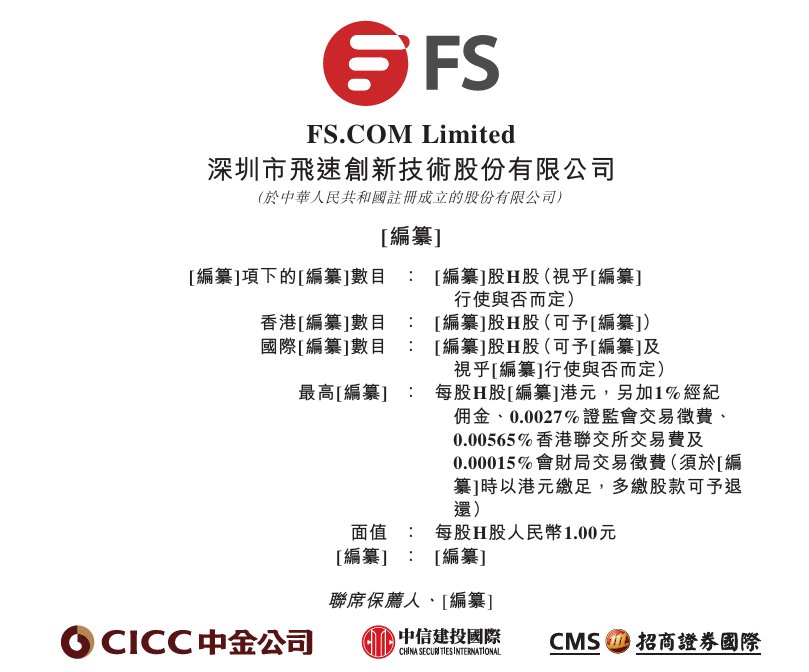
新股消息 | 飞速创新递表港交所 提供企业级网络解决方案助力数字化转型
智通财经网· 2025-05-27 22:53
Core Viewpoint - Shenzhen Feisuo Innovation Technology Co., Ltd. has submitted its listing application to the Hong Kong Stock Exchange, with CICC, CITIC Securities International, and China Merchants Securities International as joint sponsors [1] Group 1: Company Overview - Feisuo Innovation is a provider of enterprise-level network solutions, focusing on helping global enterprises achieve rapid digital transformation through a range of network solutions [4] - The company's products and services include high-performance network devices, scalable network operating systems, and cloud network management platforms, delivered through a direct-to-consumer (DTC) business model [4] - The DTC model integrates network architecture design, multi-vendor procurement, and after-sales support into a unified platform, providing a complete experience for global customers [4] Group 2: Market Position - According to Frost & Sullivan, Feisuo Innovation is the second-largest online DTC network solutions provider globally based on projected 2024 revenue [5] - The company has built a global customer base across various industries, serving over 450,000 customers in more than 200 countries and regions, including approximately 60% of Fortune 500 companies [5] Group 3: Financial Performance - For the fiscal years 2022, 2023, and 2024, Feisuo Innovation reported revenues of approximately RMB 1.988 billion, RMB 2.213 billion, and RMB 2.612 billion, respectively [6][7] - The total comprehensive income for the same periods was approximately RMB 371 million, RMB 459 million, and RMB 397 million [6][7] - The company achieved a pre-tax profit of RMB 419 million, RMB 513 million, and RMB 457 million for the fiscal years 2022, 2023, and 2024, respectively [7]