智能体

Search documents
AI眼镜火出圈,实测翻译、支付、拍照、导航
21世纪经济报道· 2025-07-30 01:28
Group 1 - The AI glasses were a major highlight at the World Artificial Intelligence Conference (WAIC), attracting significant attention and exceeding the booth's capacity for audience engagement [1] - The AI glasses demonstrated impressive smart interaction capabilities, accurately recognizing voice commands for tasks such as prompting and payment, and featuring high-quality photo and video functions [1] - Real-time translation capabilities of the AI glasses were noteworthy, effectively converting foreign languages into Chinese and displaying them on the lenses, facilitating cross-border communication [1] Group 2 - Major companies, including Alibaba, are entering the AI glasses market, with Alibaba's self-developed Quark AI glasses expected to launch within the year, integrating with its ecosystem for various functionalities [2] - The AI glasses market is still in its early stages, with no single product achieving sales of over one million units, except for Meta, which has subsidies influencing its sales [2] - The development of smart glasses is entering a rapid growth phase, presenting both opportunities and challenges, as noted by industry leaders [2]


2025WAIC:大厂回归,医疗AI爆火出圈
3 6 Ke· 2025-07-30 00:55
Core Insights - The article highlights the resurgence of medical AI at the WAIC, with major tech companies and startups re-engaging in the sector, indicating a shift in focus towards healthcare applications [1][2] Group 1: Medical AI Landscape - Major tech companies like Tencent, Alibaba, and ByteDance are refocusing on medical AI as a core business area, showcasing advanced AI solutions at WAIC [1] - Key topics discussed include AI drug development, clinical applications, and the democratization of healthcare, with participation from pharmaceutical and medical device companies [1] Group 2: Pathways of Medical AI Development - Pathway One: Fragmented AI is beginning to systematically empower healthcare, moving from isolated applications to integrated solutions that address broader healthcare needs [2][3] - The emergence of intelligent agents allows for proactive, goal-driven interactions in healthcare, enhancing the efficiency of medical processes [3][4] Group 3: Intelligent Agents and User Engagement - Intelligent agents like Tencent's "Health Management Assistant" integrate various health tools, enabling continuous user engagement and proactive health management [3][4] - Startups are also leveraging AI to enhance low-digitalization scenarios, such as simulating patient interactions for training purposes [5] Group 4: Clinical Applications and Specialized Models - Pathway Two: The focus is shifting from general applications to specialized clinical models, with companies like JD Health leading the way in developing tailored AI solutions for specific medical fields [6][7] - JD Health's "京医千询2.0" aims to enhance AI capabilities in clinical settings, focusing on evidence-based data and interactive simulations [6][7] Group 5: AI in Medical Imaging - Union Medical is noted for its advancements in medical imaging AI, showcasing a unique intelligent agent capable of detecting multiple chest abnormalities with high accuracy [8][9] - The intelligent agent demonstrates significant efficiency improvements in diagnostic processes, highlighting the potential of AI in enhancing clinical workflows [9] Group 6: Standardization and Regulation - The need for a comprehensive regulatory framework for medical AI is emphasized, with initiatives like the "AI Doctor" standard being introduced to ensure quality and safety in AI applications [11][12] - The establishment of standards is seen as a crucial step towards systematic and regulated development in the medical AI sector [12] Group 7: Future Outlook for Medical AI - Despite challenges in monetization and ethical considerations, there is optimism about the potential for medical AI to become an integral part of the healthcare ecosystem [13][14] - Collaborative efforts among government, healthcare institutions, and tech companies are paving the way for a more robust medical AI landscape, with the possibility of achieving viable business models in the near future [14]

抓住AI产业市场化的“先发优势期”
Shen Zhen Shang Bao· 2025-07-29 23:48
7月26日,以"智能时代 同球共济"为主题的2025世界人工智能大会在上海开幕。本次大会共有800多家 企业参展,集中展示3000多项人工智能产品、60多款智能机器人。参展的深圳"科技军团"中,有华为、 腾讯、荣耀等头部科技企业,还有异军突起的深圳具身智能企业。 这次大会犹如中国人工智能产业的"演兵场",前沿技术和最新产品纷纷登台亮相,展现了中国在人工智 能领域的强劲实力与创新活力,也折射出人工智能产业的发展风向,其显著特点是人工智能产业的商业 化应用正在加速。 产业风向也是推动人工智能产业发展风向。眼下人工智能产业市场化正迎来"先发优势期",绝不容错 过。对深圳而言,提供场景应用是深圳发展人工智能产业的"加速器",今后,深圳在提供场景上不仅要 更广泛,还要更具体更深入,把需求做细做实。另一方面,深圳当更大力度地推动深圳的人工智能产品 走向市场,比如通过办展推广、给予公共服务订单等方法,帮助企业顺利走上市场化道路、抢得发展先 机,从而巩固和提升深圳已有的产业优势。 如果把大模型比作操作系统,那么智能体则相当于应用程序。智能体越来越多,意味着大模型商用价值 越来越高,且二者相互促进形成产业闭环。 表现之二,具身 ...
浔兴股份股价小幅回落 公司回应投资者智能体合作问题
Jin Rong Jie· 2025-07-29 19:54
Group 1 - As of July 29, 2025, Xunxing Co., Ltd. shares closed at 9.63 yuan, down 0.93% from the previous trading day [1] - The trading volume on that day was 110,368 hands, with a transaction amount of 105 million yuan [1] - Xunxing Co., Ltd. is primarily engaged in the research, production, and sales of zippers and textile accessories, with products widely used in clothing, bags, and footwear [1] Group 2 - The company holds a significant influence in the domestic zipper industry, particularly in the Fujian region [1] - In a recent statement on the investor interaction platform, the company clarified that it has not yet engaged in cooperation with Shanghai Jiyue Xingchen regarding smart technology [1] - On July 29, the net inflow of main funds into Xunxing Co., Ltd. was 2.2192 million yuan, accounting for 0.06% of the circulating market value [1]

2025人工智能十大趋势
Sou Hu Cai Jing· 2025-07-29 16:39
Group 1 - The report titled "Coexistence Partners: Top 10 Trends in Artificial Intelligence for 2025" outlines significant trends in AI development, emphasizing the transition from "intelligent tools" to "coexistence partners" [1][7][26] - The three main themes identified are the evolution of foundational models, the rise of intelligent agents, and AI's integration into the physical world [1][7][21] Group 2 - The first trend highlights the breakthrough in reinforcement learning (RL), which is becoming a key force in enhancing the reasoning and action capabilities of large models, enabling them to solve complex scientific and engineering problems [2][36][39] - The second trend focuses on native multimodal generation, which allows AI to deeply integrate various data types such as images, speech, and text, facilitating seamless interaction across modalities [2][49][50] - The third trend discusses the evolution of voice models towards emotional intelligence, enabling AI to express context-aware emotional responses and enhancing human-machine interaction [2][3][48] Group 3 - The rise of intelligent agents is characterized by two main development paths: orchestration agents for complex task automation and end-to-end agents that internalize reasoning and planning capabilities [3][4][18] - The concept of LifeOS is emerging, where AI integrates user data to become a personalized digital self, enhancing user experience through long-term memory and personalized reasoning [3][4][19] - The trend of "intelligence as a service" is reshaping industry workflows, embedding AI deeply into sectors like healthcare, finance, and manufacturing [3][4][26] Group 4 - The report anticipates a "GPT-2 moment" for embodied intelligence in 2025, marking a significant leap from virtual computation to physical execution, with advancements in multimodal models and data engineering [4][6][21] - Spatial intelligence is evolving, allowing AI to process and understand three-dimensional environments, which opens new opportunities in fields like autonomous driving and robotics [4][20][21] - The commercialization of embodied intelligent robots is expected to accelerate, with companies like Tesla and Agility planning to produce around 1,000 units each for various applications [6][21][29] Group 5 - The overall trends indicate a shift towards AI becoming a true coexistence partner, with enhanced capabilities in reasoning, emotional understanding, and physical interaction, fundamentally changing human-AI relationships [7][21][26] - The report emphasizes the importance of building trust and collaboration with the next generation of AI, as it becomes more autonomous and capable [7][21][26]


理想i8正式发布:全系标配激光雷达,搭载VLA司机大模型,售价32.18万元起
Xin Lang Ke Ji· 2025-07-29 14:58
Core Viewpoint - Li Auto officially launched its first pure electric SUV, the Li Auto i8, with a retail price range of 321,800 to 369,800 yuan, set to begin deliveries on August 20 [1] Group 1: Product Features - The Li Auto i8 is equipped with a ternary lithium 5C supercharging battery, offering two battery versions of 90.1 kWh and 97.8 kWh, with CLTC ranges of 670 km and 720 km respectively, achieving a charging speed that adds 500 km of range in just 10 minutes [1] - The vehicle features a yacht-style design with a drag coefficient of 0.218, enhancing energy efficiency and reducing wind noise [2] - It includes a dual-motor all-wheel drive system with a maximum power of 400 kW and peak torque of 660 Nm, enabling a 0-100 km/h acceleration in 4.5 seconds [2] Group 2: Safety and Technology - The Li Auto i8 comes standard with 9 airbags and the longest side curtain airbags in its class, along with laser radar and enhanced active safety capabilities [2] - The vehicle incorporates an upgraded advanced driver assistance system (VLA architecture) that evolves through reinforcement learning, adapting to user driving behavior and preferences [3] - The intelligent assistant has evolved into a "smart entity," capable of performing complex tasks and understanding user memory [3] Group 3: Market Positioning and Options - The Li Auto i8 offers three versions: Pro, Max, and Ultra, priced at 321,800 yuan, 349,800 yuan, and 369,800 yuan respectively [3] - It provides five exterior color options and three interior color choices, along with standard 20-inch low-drag wheels and optional 21-inch wheels [3]

公募基金经理逛WAIC有感:AI应用持续引领智能体创新
Bei Jing Shang Bao· 2025-07-29 14:21
科技投资迎布局热 在WAIC现场,汇聚了800多家企业,涵盖40余款大模型、50余款AI终端产品、超过60款智能机器人以及80余款"全球首发"或"中国首秀"的重磅新品,规模创 历届之最。据国泰基金介绍,参展商及展品涵盖模型应用、智能体、具身智能和人形机器人、智能硬件、AI+AR眼镜、AI芯片、智算与AI基础设施等热门 行业。 中欧中证机器人指数基金经理宋巍巍也在会期前往了WAIC现场,并分享了他对于年内投资机构对人形机器人投资取向的观察。他认为,目前的投资机构集 中投资机器人行业的上游零部件厂商,这些厂商有四个特点,一是零部件有技术难度和技术壁垒,二是和机器人整机大厂有密切的合作,三是公司本身的业 务具备持续赚钱的能力,四是起始估值和市值较低。 对于市场投资方向为何集中在机器人上游产业链,宋巍巍进一步提到,有两点原因。首先,之前机器人行业还在"0—1"的阶段,也就是供给侧的逻辑更重 要。市场关注能不能做出来,而不是做出来多少,零部件厂商是最先拿到确定性营业收入的公司,机器人行业带来的增量会给这些公司带来较大的业务变 化。其次,之前A股一直没有已经上市的机器人整机公司,缺乏投资的渠道,所以资金只能集中在上游。 ...
直击WAIC 2025丨无限光年创始人漆远:对场景的深度理解和精耕是可信AI价值释放的终点
Mei Ri Jing Ji Xin Wen· 2025-07-29 13:56
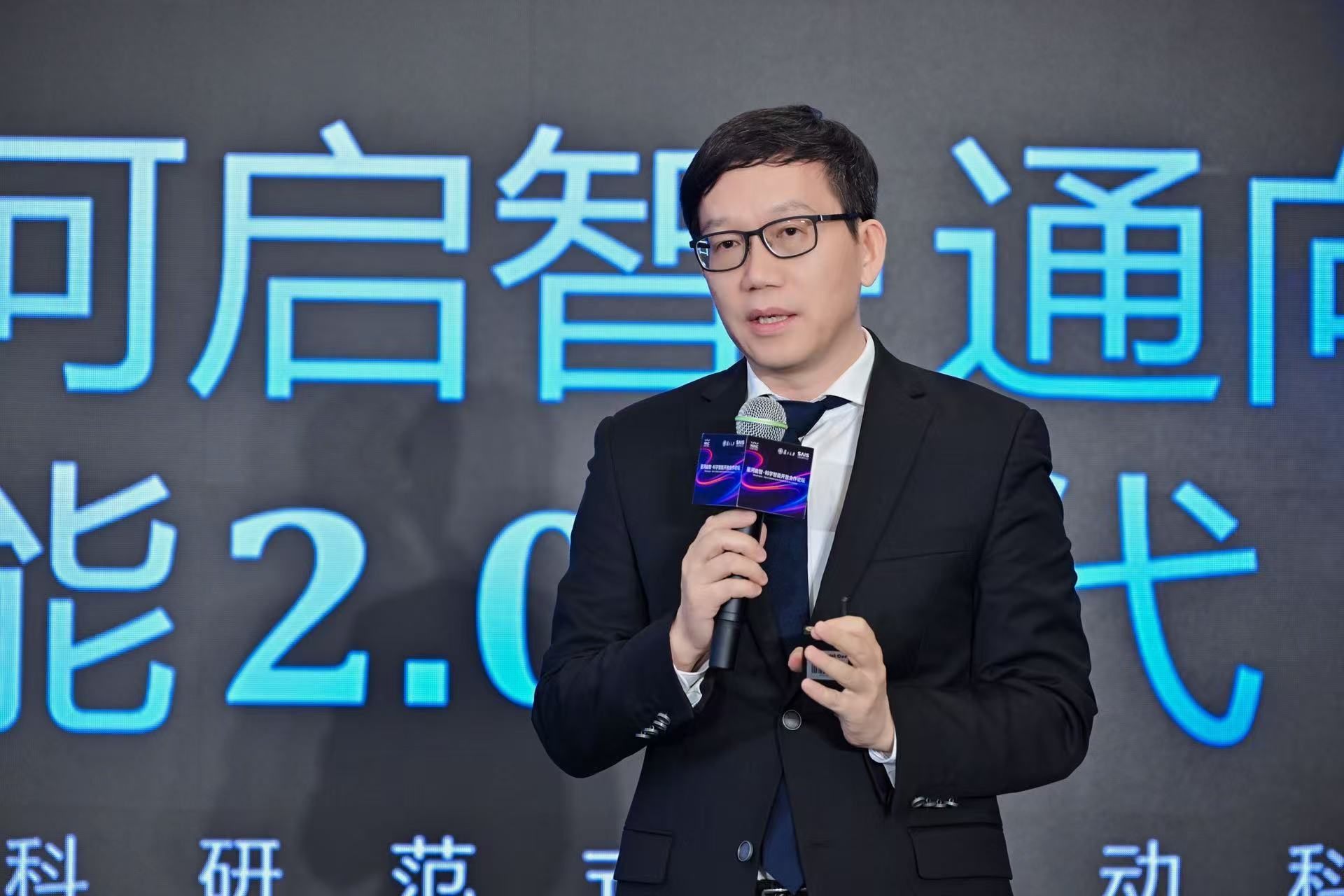
Core Insights - The 2025 World Artificial Intelligence Conference (WAIC) held in Shanghai showcased over 800 companies and more than 3,000 cutting-edge exhibits, marking the largest scale in its history [1] - The focus of discussions shifted towards embodied intelligence, intelligent agents, and AI hardware terminals, indicating a more practical approach to AI applications [1] - The founder of Infinite Light Years, Qi Yuan, emphasized that the AI industry is transitioning from a phase of technological worship to a focus on value creation, with credibility being a central theme in this transformation [1] Industry Trends - The emergence of vertical large models is seen as a new phase in AI development, with companies now focusing on intelligent agents and specific industry applications [3][4] - Differentiated product value is crucial for vertical large models, as they must effectively address user pain points to stand out in the market [4] - The importance of Product Market Fit (PMF) is highlighted, suggesting that companies need to deeply understand industry-specific challenges to succeed [5] Trustworthy AI - The concept of trustworthy AI is gaining traction, with a need for models to transition from being merely usable to being reliable and effective in real-world applications [6][7] - The development of trustworthy AI involves a three-tiered approach: enhancing retrieval-augmented generation (RAG), implementing reinforcement learning with well-defined reward functions, and integrating knowledge with rules for open-domain problems [6] - AI companies must not only possess technical expertise but also understand the specific language, rules, and pain points of the industries they serve [7]
支付、信贷、远程服务全面渗透,智能体扎堆金融赛道|聚焦2025WAIC
Hua Xia Shi Bao· 2025-07-29 12:28
Core Insights - The future of AI agents in finance is expected to surpass human numbers, with significant advancements in applications across banking, insurance, and trust sectors [1] - AI's integration into core financial operations is progressing, moving from customer service and office tasks to risk management and wealth management [1] Group 1: Challenges in AI Implementation - The application of large models in finance faces three main challenges: lack of "AI usability" in data, general models struggling with industry-specific issues, and the absence of a decision-making framework that integrates real-time data with model capabilities [2] - Financial institutions require specialized AI models that can handle complex scenarios, as each retail banking scenario presents unique challenges that demand tailored AI solutions [2] Group 2: Innovations in AI Applications - Ant Group launched the financial reasoning model Agentar-Fin-R1, which continuously updates to incorporate the latest financial policies and market dynamics, enhancing its applicability in real business scenarios [3] - Financial institutions are utilizing AI to create digital employees and remote service systems, breaking traditional service limitations and providing comprehensive financial services [3] Group 3: Evolution of AI in Financial Services - The role of AI in financial services is evolving from being an auxiliary tool to becoming a consultative expert, enhancing decision-making and optimizing processes [5] - The integration of AI into risk management is crucial, with intelligent systems offering broader coverage of the credit process compared to traditional risk management systems [5] - The development of specialized financial models is essential for bridging the "knowledge gap" between general AI models and industry-specific applications, which will be a key competitive factor for financial institutions [5]
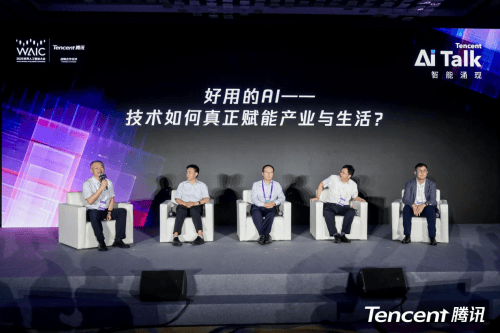
WAIC 2025腾讯“智能涌现”论坛圆桌讨论:好用的AI如何助力产业与生活
Sou Hu Cai Jing· 2025-07-29 07:39
Group 1 - The core viewpoint of the discussion revolves around the evolution of AI technology from being merely usable to being highly effective, emphasizing the need for suitable application scenarios and the potential future developments in AI [1][3] - The rapid changes in the AI field reflect both the industry's vitality and the numerous possibilities yet to be explored, as highlighted by Tencent's Vice President Yang Jian during the forum [3][5] - AI tools like Tencent's Yuanbao and AI Gao Kao Tong are becoming trends in education, providing suggestions for college admissions, indicating a shift in the educational landscape towards knowledge construction rather than mere transmission [5][7] Group 2 - The discussion highlighted the importance of finding suitable "AI entry points" for the general public, with a focus on the differences between "AI native" and "AI + existing applications" in various scenarios [7][8] - The debate on open-source versus closed-source models in AI development is crucial, with open-source seen as a pathway to democratizing AI while closed-source models are necessary for commercial sustainability [8][9] - The concept of Agent intelligence is gaining traction, with the need for integration with databases and knowledge bases to create effective AI applications that can perform tasks autonomously [13][14] Group 3 - The future of embodied intelligence in AI is discussed, emphasizing the need for a combination of physical and cognitive capabilities to make AI ubiquitous across various industries [15][17] - The development of specialized large models tailored to specific industries, such as agriculture, is seen as essential for the practical application of embodied intelligence [15][19] - The panelists agree that the definition of "usable AI" in the next five years will focus on reducing hallucinations in AI outputs by enhancing industry knowledge bases and ensuring user-friendly experiences [19]