人工智能

Search documents
CPO爆发前夜,回顾硅光40年
半导体行业观察· 2026-03-26 00:36
Core Viewpoint - The article discusses the evolution of silicon photonics technology, highlighting its historical development, current applications, and future potential in the context of AI and data centers. It emphasizes the transition from theoretical concepts to practical implementations, particularly the emergence of Co-Packaged Optics (CPO) as a solution to bandwidth and power challenges in modern computing environments [4][48]. Historical Development - In the late 1980s, the concept of silicon photonics emerged, but it was largely overlooked due to the dominance of silicon-based semiconductor technology and III-V compound semiconductors in communication [7][20]. - Richard Soref's foundational work in the mid-1980s established silicon as a viable platform for photonic integrated circuits, demonstrating the potential for electrical manipulation of light in silicon [10][12]. - The 1990s marked a paradigm shift as silicon photonics began to establish itself with the development of Silicon-On-Insulator (SOI) technology, allowing for precise control of light propagation [20][23]. Technological Breakthroughs - The introduction of low-loss silicon waveguides by Graham Reed's team validated the feasibility of optical circuits on silicon wafers, paving the way for practical applications [12][13]. - The discovery of photoluminescent porous silicon by Leigh Canham challenged the notion that silicon could not emit light, stimulating further research in silicon-based optoelectronics [17][19]. - The 2000s saw significant advancements, including the development of hybrid silicon lasers that combined silicon with III-V materials, enabling active optical components [31][34]. Current Applications - The rise of hyperscale data centers in the 2010s created a demand for high-bandwidth, low-cost optical interconnects, positioning silicon photonics as a key technology to meet these needs [36][40]. - Intel's introduction of 100G silicon photonic modules demonstrated the scalability and cost-effectiveness of silicon photonics, leading to widespread adoption in data centers [40][41]. - The industry has seen a shift towards integrated photonic-electronic solutions, with companies like Luxtera pioneering the monolithic integration of optical and electronic components on a single chip [34][35]. Future Prospects - The ongoing demand for higher bandwidth and lower power consumption in AI and computing applications is driving the development of Co-Packaged Optics (CPO), which integrates optical components directly with ASIC chips to minimize signal loss and power consumption [51][52]. - Innovations in optical I/O architectures aim to embed optical interconnects within computing chips, potentially revolutionizing data transfer speeds and efficiency in high-performance computing environments [53][54]. - The article concludes by highlighting the potential for silicon photonics to play a critical role in the future of computing, particularly as the industry moves towards more integrated and efficient solutions to meet the demands of AI and large-scale data processing [55].



芯片公司,霸榜全球市值!
半导体行业观察· 2026-03-26 00:36
Group 1 - The core viewpoint of the article highlights the significant growth of the semiconductor industry, driven by the rise of artificial intelligence, with seven semiconductor companies now in the top 25 global companies by market capitalization [1] - Nvidia has reached a market capitalization of nearly $4.3 trillion, a substantial increase from $661 billion three years ago, moving from sixth to first place in the rankings [1] - Gartner predicts a 33% growth in global chip revenue this year, surpassing $1 trillion, a milestone previously expected to be reached by 2030 [1] Group 2 - SK Hynix's stock price has increased nearly fivefold since early 2025, with a current market capitalization of approximately $470 billion, up from $49 billion three years ago, moving from 322nd to 21st place [2] - Other notable semiconductor companies in the top 25 include TSMC and Samsung Electronics, ranked 9th and 14th respectively, while new entrants include Broadcom at 7th and Micron Technology at 22nd [2] - SK Hynix is a leader in high bandwidth memory (HBM) technology, which enhances AI processing speeds for companies like Nvidia [2]
Arm这款芯片,瞄准万亿AI市场
半导体行业观察· 2026-03-26 00:36
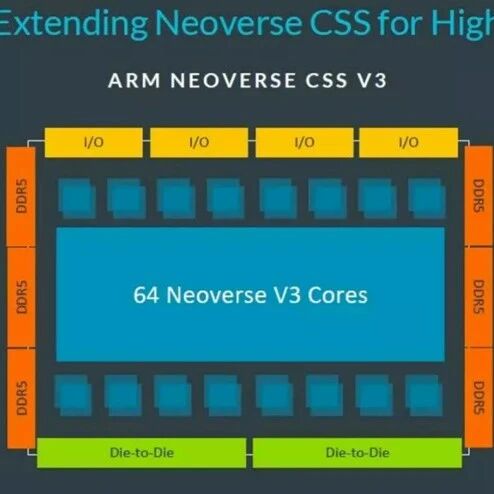
Core Viewpoint - Arm is shifting its strategy to self-develop CPUs for various applications, including data centers and edge devices, in response to market demands for complete CPU solutions rather than just design IP [1][2][3] Group 1: Arm's Market Position and Strategy - SoftBank has held a significant stake in Arm since 2016, currently owning about 90% of the shares, and is positioning Arm to capitalize on the generative AI chip market [1] - Arm's recent IPO in September 2023 saw its market capitalization reach $164.3 billion following the launch of its AGI general-purpose AI processor, which led to a 15% increase in stock price [1] - The company aims to achieve $15 billion in revenue from AGI CPU products by 2031, indicating a substantial growth target in the AI sector [6] Group 2: Development of AGI CPUs - Arm's decision to develop its own CPUs was influenced by client demands, particularly from major tech companies like Meta and OpenAI, who prefer complete CPU products over design services [3][4] - The first AGI CPU sample has entered the sampling phase and is expected to be mass-produced in the latter half of the year for clients including Meta and OpenAI [4] - The AGI CPU-1 is based on the Armv9.2 architecture, featuring up to 136 cores and utilizing TSMC's 3nm process technology, with a thermal design power of only 300 watts [9][14] Group 3: Market Demand and Future Projections - The demand for CPUs in AI data centers is projected to increase significantly, with estimates suggesting a need for 100 to 150 gigawatts of new AI data center capacity, translating to a requirement of approximately 100 million to 150 million CPUs [5][6] - Arm's strategy includes not only serving existing clients but also attracting new customers who may not have in-house chip design capabilities, thereby expanding its market reach [20] - The overall potential market for CPUs used in AI systems is expected to reach $100 billion by 2030, highlighting the lucrative opportunities in this sector [6] Group 4: Competitive Landscape - Arm's AGI CPUs are designed to compete with existing x86 architectures, focusing on performance, scalability, energy efficiency, and cost-effectiveness [8][18] - The AGI CPU's performance metrics indicate a significant advantage over x86 solutions, particularly in terms of performance per watt, which is crucial for data center operations [17][18] - Arm's future product roadmap suggests ongoing innovation and iteration of its AGI CPUs to maintain competitive advantages in the rapidly evolving semiconductor market [20]
早报|因社交媒体成瘾,Meta与谷歌被判赔偿600万美元;黄天鹅发布鸡蛋角黄素抽检结果;黄仁勋谈死亡:希望在工作中突然离世
虎嗅APP· 2026-03-26 00:27
Group 1 - Iran rejects the US ceasefire proposal and outlines five conditions for ending the war, emphasizing that it will decide when to end the conflict based on its own terms [2] - The five conditions include a complete halt to aggression and assassination by the enemy, establishment of mechanisms to prevent future conflicts, assurance of war reparations, cessation of hostilities by all resistance organizations in the region, and recognition of Iran's sovereignty over the Strait of Hormuz [2] Group 2 - Meta and Google were ordered to pay a total of $600,000 for damages related to social media addiction affecting a young woman's mental health, with punitive damages included [3][5] - Meta has provided stock options to executives for the first time since its IPO in 2012, aiming to retain and motivate leadership amid intense competition in AI [7] - Amazon acquired humanoid robotics startup Fauna Robotics, which will operate as a subsidiary within Amazon's personal robotics division [8][9] Group 3 - Tesla's Optimus robot is expected to start production this summer and aims for mass production by 2027, potentially transforming labor and manufacturing economics [16] - Pinduoduo announced the establishment of "New Pinduoduo," with a cash injection of 150 billion yuan and a total planned investment of 100 billion yuan over three years to enhance its supply chain and brand [15] - OpenAI has shut down its Sora video generation application and terminated a $1 billion partnership with Disney, refocusing on world model research [19]


英矽智能(03696) - 自愿公告 英硅智能与元羿生物拓展AI驱动CNS领域研发合作,新合作总金额...
2026-03-26 00:01
INSILICO MEDICINE InSilico Medicine Cayman TopCo 英矽智能 香港交易及結算所有限公司及香港聯合交易所有限公司對本公告的內容概不負責,對其準確性 或完整性亦不發表任何聲明,並明確表示概不就因本公告全部或任何部分內容而產生或因依賴 該等內容而引致的任何損失承擔任何責任。 (於開曼群島註冊成立的有限公司) (股份代號:3696) 自願公告 英矽智能與元羿生物拓展 AI 驅動 CNS 領域研發合作, 新合作總金額最高可達 9,475 萬美元 本公告由英矽智能(「本公司」,連同其附屬公司統稱「本集團」)自願作出,以告知 本公司股東及潛在投資者有關本集團的最新業務更新。 本公司董事會(「董事會」)欣然宣佈,在過去一年良好的合作關係基礎上,英矽智 能與Tenacia Biotechnology (Hongkong) Co., Limited(「元羿生物」),一家致力於 為未被滿足的神經系統疾病患者開發創新治療方案的商業化生物製藥公司,已達 成一項擴展的AI驅動研發合作(「該合作」)。 透過該合作,雙方旨在為極具挑戰性的神經系統疾病提供更廣泛、更精準的治療 方案,從而降低後期研 ...
A股头条:中远海运恢复海湾国家订舱,船舶暂不过霍尔木兹海峡;特斯拉机器人最新视频曝光,马斯克称有望在2027年实现量产
Sou Hu Cai Jing· 2026-03-25 23:54
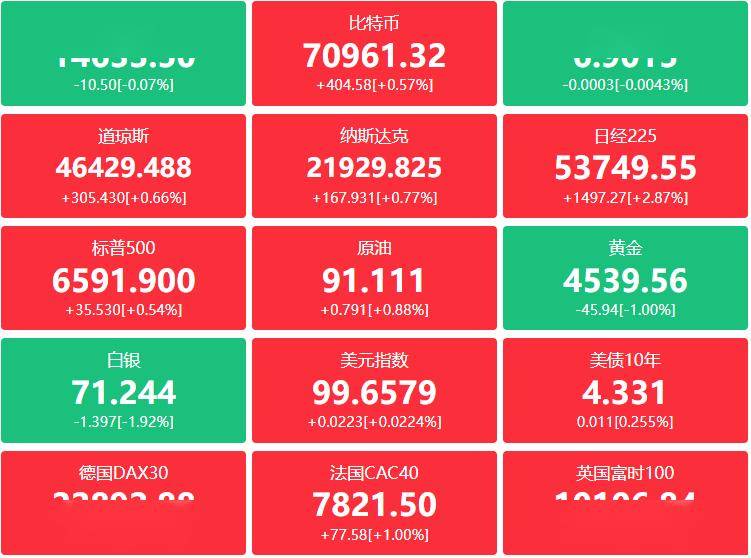
Group 1 - The National Supercomputing Internet has launched a new token giveaway, offering users a maximum of 30 million tokens to lower the entry barrier for AI applications [1] - The Ministry of Commerce of China has initiated an investigation into Mexico's increased import tariffs on products from non-free trade partners, identifying these measures as trade investment barriers [1] Group 2 - COSCO Shipping has resumed booking services to Gulf countries, although vessels will not pass through the Strait of Hormuz, instead using land transport for deliveries [2] - Mercedes-Benz has announced the integration of a multimodal large model developed in collaboration with Tsinghua University into its new generation S-Class vehicles, marking a significant step in automotive intelligence [3] Group 3 - Tesla has revealed new details about its Optimus robot, with plans for mass production by 2027, which could significantly impact labor and manufacturing economics [5] - The U.S. stock market has shown positive movement, with major indices rising, driven by technology stocks and a general optimism regarding Middle East peace negotiations [6][7] Group 4 - Shenzhen has launched an action plan to accelerate the high-quality development of the AI server industry, aiming for significant growth in production capacity and market share by 2028 [12][13] - The State-owned Assets Supervision and Administration Commission is promoting the digital transformation of financial management in central enterprises, leveraging new technologies like big data and AI [14] Group 5 - Several companies have reported significant profit growth for 2025, including Huagong Technology with a 20% increase and Yuloka with a 92.73% increase, indicating strong performance in their respective sectors [16]

马斯克造芯片,黄仁勋“反对”
汽车商业评论· 2026-03-25 23:07
Core Viewpoint - Elon Musk announced the establishment of a chip factory named "Terafab" with a budget of $20-25 billion, aiming to achieve full control over Tesla's computing power and integrate the semiconductor supply chain under one roof [10][12][15]. Group 1: Project Overview - Terafab is described as the largest chip manufacturing project in history, utilizing 2nm process technology, which is currently only produced by TSMC [13]. - The factory will have two production lines: one for Tesla's automotive and robotics chips, and another for aerospace-grade D3 chips [13]. - The initial monthly wafer output target is set at 100,000, with a long-term goal of reaching 1 million wafers per month, equating to approximately 70% of TSMC's current global output [18][22]. Group 2: Strategic Importance - Terafab aims to produce 1 terawatt of computing power annually, requiring the production of 100-200 billion custom AI and storage chips for various Tesla projects [22]. - Approximately 80% of the computing power will be dedicated to space-based AI satellites, leveraging the advantages of the space environment for heat dissipation [22]. - The project is seen as a response to the limitations of external chip suppliers like TSMC and Samsung, which Musk predicts will reach capacity limits within three to four years [15][18]. Group 3: Challenges - The project faces significant challenges, including the need to procure high-NA EUV lithography machines from ASML, which are in high demand and costly [24][26]. - Tesla has a $16.5 billion multi-year contract with Samsung to produce next-generation AI chips, which is crucial for knowledge transfer before Tesla operates its own foundry [26][28]. - Recruiting a specialized team of engineers with expertise in semiconductor manufacturing processes is essential, as Tesla has no prior experience in this field [28][29]. - Musk's unconventional cleanroom theory, which suggests that traditional cleanroom standards are outdated, has raised skepticism within the semiconductor industry [29][31]. Group 4: Industry Reactions - The semiconductor industry has expressed skepticism regarding Terafab, with industry leaders like NVIDIA's CEO warning about the complexities of building advanced chip manufacturing facilities [31][33]. - Analysts believe that achieving the production capacity of TSMC will be extremely challenging for Tesla, given its lack of experience in semiconductor manufacturing [33][37]. - Despite the challenges, the announcement of Terafab has prompted the semiconductor industry to take Musk's supply chain ambitions seriously, reflecting a broader trend of companies seeking to secure their supply chains amid geopolitical tensions [38].


伟仕佳杰午前涨近4% 25年AI相关业务同比增长30% 公司为英伟达东南亚核心合作伙伴
Zhi Tong Cai Jing· 2026-03-25 21:14
Core Viewpoint - The company reported a significant increase in annual profit, driven by growth in demand across various sectors, particularly due to the AI boom and the proliferation of electronic products [3]. Financial Performance - The company's annual profit attributable to shareholders reached HKD 1.353 billion, representing a year-on-year increase of 28.66% [3]. - The profit growth rate outpaced revenue growth, attributed to benefits from high-demand AI sectors, business structure optimization, and increased margins from rising prices of electronic components [3]. Business Segments - All business segments experienced growth, with a notable 30% year-on-year increase in AI-related business and a 20% increase in regional net profit [3]. - The company serves as a core partner for NVIDIA in Southeast Asia, contributing to the establishment of multiple AI computing centers and expanding market share with international brands such as Apple, HPE, and Dell [3]. Market Trends - The company is expected to benefit from the acceleration of digital transformation in Southeast Asia and the increasing demand from Chinese tech companies expanding overseas [3]. - The local channels, technical support, and delivery capabilities position the company well to capitalize on growth opportunities in AI infrastructure and regional ICT demand expansion [3].
FDA Grants Breakthrough Therapy Designation to Venglustat in the US, Sanofi (SNY) Reports
Yahoo Finance· 2026-03-25 19:11
Core Viewpoint - Sanofi (NASDAQ:SNY) is identified as an undervalued stock under $50, particularly following the FDA's Breakthrough Therapy designation for its investigational drug, venglustat, aimed at treating neurological manifestations of type 3 Gaucher disease [1]. Group 1: FDA Designation and Study Results - The FDA granted Breakthrough Therapy designation to venglustat based on data from the LEAP2MONO phase 3 study, which showed significant improvements in neurological symptoms compared to enzyme replacement therapy [2]. - Venglustat was well tolerated in the study, with no new safety signals reported compared to previous studies [2]. Group 2: Adverse Events and Regulatory Plans - Commonly reported adverse events for venglustat included headache, nausea, diarrhea, and spleen enlargement [3]. - Sanofi plans to pursue global regulatory filings for venglustat in 2026 for its use in treating Gaucher disease type 3 [3]. Group 3: Company Overview - Sanofi is involved in the research, production, and distribution of pharmaceutical products, with operations segmented into Pharmaceuticals, Consumer Healthcare, and Vaccines [4].

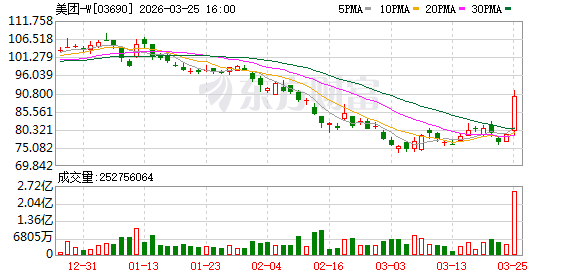
强监管信号释放 美团、阿里、京东股价应声大涨:“外卖大战该结束了”
Mei Ri Jing Ji Xin Wen· 2026-03-25 16:26
Core Viewpoint - The ongoing subsidy war among food delivery platforms has significant implications not only for restaurant owners but also for the livelihoods of ordinary people, indicating a broader economic impact [1] Regulatory Actions - On March 25, the National Market Supervision Administration reposted a commentary titled "The Takeaway War Should End," which garnered strong market attention [2] - This marks the second significant regulatory action against "involution-style" competition in a short period, with the Beijing Market Supervision Bureau recently conducting talks with 12 platform companies to address issues identified in their competitive practices [3] Financial Impact - The subsidy war, branded as "hundred billion subsidies," has led to substantial financial losses for major platforms. Alibaba reported an adjusted EBITA of 83.499 billion yuan for the nine months ending December 31, 2025, a 46% year-on-year decline [4] - JD.com disclosed a loss of 46.6 billion yuan in its new business segment, which includes its food delivery service, while Meituan projected a loss of approximately 23.3 billion to 24.3 billion yuan for 2025 [4] Supply Chain Effects - The price war has also affected the supply chain, with 39% of surveyed merchants opting for cheaper suppliers and 30% negotiating harder with suppliers to manage costs [5] Shift in Competition Dynamics - The commentary from the Economic Daily and its reposting by the regulatory body signal a shift towards ending the reliance on capital-intensive competition and promoting healthy competition through technological innovation and service optimization [5][6] - Experts suggest that while the subsidy war may pause, competition will continue in other areas, necessitating a clear distinction between "reasonable market competition" and "involution-style competition" [8] Future Industry Outlook - The food delivery industry is at a critical turning point, with regulatory actions and media positioning indicating a move away from aggressive subsidy strategies towards a focus on efficiency and service quality [10] - Companies will need to balance efficiency and scale while leveraging technological innovations to create differentiated advantages in the market [10]