未来产业

Search documents
黑龙江“十五五”规划建议发布:做强星网产业链 发展卫星制造、测控和数据地面应用
Zheng Quan Shi Bao Wang· 2025-11-25 02:15
Core Insights - The proposal from the Heilongjiang Provincial Committee emphasizes the cultivation and expansion of emerging and future industries [1] Industry Development - Implementation of industrial innovation projects to promote the construction of innovation facilities, technology research and development, and product iteration [1] - Establishment of a national heavy equipment manufacturing base, focusing on high-end equipment, aerospace, and new materials to develop trillion-level industrial clusters [1] - Development of a northern manufacturing base for the electronic information industry and a pilot zone for large high-power intelligent agricultural machinery [1] Economic Expansion - Acceleration of the low-altitude economy, enhancing the manufacturing industry of low-altitude aircraft and expanding applications in agricultural protection, emergency rescue, and logistics [1] - Strengthening the satellite industry chain, including satellite manufacturing, control, and data ground applications [1] - Promotion of deep processing of graphite and innovation in the supply of development policies for strategic emerging industries [1] - Encouragement of large-scale application demonstrations for new technologies, products, and scenarios to accelerate the development of emerging industries [1]
构建适应“十五五”未来产业发展的现代化金融体制
Jin Rong Shi Bao· 2025-11-24 02:11
Core Viewpoint - The construction of a financial system that adapts to the development of future industries is a complex system engineering task, requiring a balance between effective markets and proactive government intervention, while breaking path dependence and institutional barriers [1][22]. Group 1: Future Industry Characteristics - Future industries are characterized by the deep integration of technological and industrial innovation, representing a shift towards disruptive innovation driven by cutting-edge technologies [4]. - These industries face fundamental differences in financing needs compared to traditional industries, primarily due to their inherent uncertainty and the lack of established market applications [4][3]. - The rise of future industries necessitates a profound structural reform of the financial supply side to create a modern financial ecosystem that effectively accommodates their unique risk-return characteristics [3][4]. Group 2: Financial System Requirements - The financial system must develop mechanisms for prudent management of uncertainty, flexible operational mechanisms, inclusive development mechanisms, and transparent regulatory mechanisms to adapt to the uncertainties of future industries [4]. - There is a need for a financial infrastructure that can price and manage innovation-related uncertainties, utilizing financial technology for real-time risk monitoring and developing diversified investment tools [9][10]. Group 3: Capital Market Development - The capital market must evolve to support a modern industrial system, focusing on maintaining a reasonable proportion of manufacturing and enhancing the service capabilities of various market segments [5][7]. - A multi-layered capital market system should be established to enhance the service capabilities for specialized small and medium enterprises, particularly those with high intangible asset ratios [7][12]. Group 4: Investment and Financing Coordination - A seamless and complementary financing ecosystem is required to support the growth trajectory of future industries, necessitating a diverse "toolbox" of financing options tailored to different stages of enterprise development [12]. - The financial system should transition from a focus on collateral-based lending to a value discovery approach, emphasizing the importance of intangible assets and future growth potential [6][13]. Group 5: Innovation in Financial Products - Financial products must be innovated to align with the characteristics of future industries, including the development of green finance, digital finance, and inclusive finance to support various sectors of the economy [17][20]. - The establishment of a comprehensive financial service standard system is essential to support the growth of future industries and ensure that financial resources are effectively allocated [18][19]. Group 6: Regulatory Framework - A modern regulatory framework is necessary to ensure that financial resources are effectively directed towards innovation while managing risks, requiring a shift towards functional and penetrating regulation [21]. - The financial system must be equipped to handle systemic risks while promoting a culture of investment in innovative sectors, ensuring that financial resources are available for long-term projects [21].
演话剧、科技秀、微宣讲……一堂别样思政课激发青年“踏浪新质潮”
Xin Hua She· 2025-11-24 01:58
新华社天津11月23日电(记者宋瑞)日前,在天津天开高教科创园,一场别开生面的思政课——"青春华章·踏浪新质潮"学习贯彻党的二十届 四中全会精神网络主题宣传和互动引导活动,引发了广大青年的共鸣与思考。 "父亲一生基于国家需要做出三次重大选择。"于敏之子于辛深情讲述时,台下青年学子聆听得格外专注。 "新质生产力不再是传统的要素叠加,而是由科学突破、技术裂变、要素重构与产业跃迁共同催生的新的先进生产力质态。"中国新一代人工智 能发展战略研究院执行院长龚克的解读,为青年学子打开了通向未来的视野。 展望未来,龚克描绘了令人振奋的发展图景:以人工智能为代表的新一代信息技术和新能源、新材料、航空航天、低空经济等战略性新兴产业 集群发展将蓬勃发展;量子科技、生物制造、脑机接口等未来产业将蓄势待发;更具全球影响力的教育中心、科学中心、人才中心将加速崛 起。 中国社会科学院学部委员、中国社会科学院大学社会与民族学院院长张翼说:"新质生产力最大的特点是创新,本质是先进生产力。它既包括 理工科的科学、技术和业态创新,也包括文科的文化制度、管理和制度创新。" 张翼认为,青年一代具备快速学习的能力,能够将科技创新成果迅速转化为实际生产 ...


一周落地三个项目 未来产业集链成群
Sou Hu Cai Jing· 2025-11-23 06:33
Core Insights - Chengdu is accelerating the implementation of major industrial projects, showcasing its commitment to high-quality project development and modern industrial system construction [5][6][7] Group 1: Project Developments - The headquarters of Zhonghang Zhifei's eVTOL project has been established in Chengdu Future Science City, focusing on the research and production of new tilt-rotor eVTOL and hybrid power systems, with an expected annual production capacity of approximately 100 eVTOLs [4][6] - Baidu Smart Cloud's AI + Cultural and Entertainment Innovation Center has been inaugurated in the Eastern New District of Chengdu, aiming to integrate advanced technology with cultural and entertainment sectors, driving intelligent upgrades and collaborative development [4][6] - The partnership between Pidu District and Zhiyuan Innovation aims to build the Southwest's first large-scale embodied intelligent robot R&D and manufacturing base, focusing on humanoid robot development and smart manufacturing [5][6] Group 2: Economic Impact - The rapid signing of three major projects within a week reflects Chengdu's strong investment attraction and optimized business environment, contributing to the city's economic momentum as it approaches year-end [6][7] - The concentration of these projects signifies not only a quantitative breakthrough but also an enhancement in quality, as Chengdu focuses on precise investment attraction around key industrial chains [8] Group 3: Industry Cluster Development - Chengdu Future Science City has gathered 12 companies related to the low-altitude economy, with the addition of Zhonghang Zhifei's project further strengthening the industrial chain [8][9] - The low-altitude economy sector is witnessing rapid growth, with companies like Wofei Changkong progressing towards mass production of their aircraft, indicating a robust industrial ecosystem in Chengdu [8][9] - Chengdu is actively promoting the integration of emerging industrial chains, from low-altitude economy to artificial intelligence and intelligent robotics, enhancing its modern industrial system [9]
金融赋能未来产业发展:从理论逻辑到制度路径|政策与监管
清华金融评论· 2025-11-22 10:26
Core Viewpoint - Future industries, driven by disruptive technologies, are becoming a key variable in shaping the global competitive landscape, relying on both technological breakthroughs and effective financial support [1][3]. Group 1: Global Future Industry Competition - Future industries are characterized by their strategic, leading, disruptive, and uncertain nature, representing a new wave of technological revolution and industrial transformation [3]. - Major economies are accelerating their layout in future industries, with the U.S. investing heavily in semiconductor, clean energy, and AI sectors through legislative measures like the CHIPS and Science Act and the Inflation Reduction Act [3]. - The EU and Japan are also implementing policies to promote core technology breakthroughs and supply chain autonomy, indicating a shift in focus from traditional industry efficiency to future industry dominance [3]. Group 2: Financial Support for Future Industries - The adaptability of the financial system is crucial for transforming innovation potential into real productivity, as highlighted by the 2024 implementation opinions from the Ministry of Industry and Information Technology [4]. - Financial policies are being aligned with industrial policies to support future industries, with frameworks established for structural monetary policy, special credit, and industrial funds [4]. - The transformation of policies into actionable financial practices requires a deep understanding of the inherent rules and realities of financial support for future industries [4]. Group 3: Theoretical Mechanisms of Financial Support - The uncertainty and externalities of innovation necessitate financial systems that can structurally adapt to support future industries, as traditional market mechanisms are often insufficient [6]. - Future industries face high investment costs, long cycles, and significant risks, making them less attractive to short-sighted private capital [6]. - The public good nature of future industry outcomes often leads to underfunding and innovation gaps due to the inability of firms to internalize the positive externalities of their innovations [6]. Group 4: Structural Constraints of Existing Financial Systems - The existing financial system, rooted in industrialization, struggles to support future industries due to its focus on collateral, cash flow, and historical credit [7][8]. - There are three main mismatches: information mismatch, time mismatch, and structural mismatch, which hinder effective financial support for future industries [8]. - Financial institutions often lack the ability to assess technological potential and commercial pathways, relying instead on traditional financial metrics [8].
地方政府与城投企业债务风险研究报告:北京篇
Lian He Zi Xin· 2025-11-21 11:21
Report Industry Investment Rating No relevant content provided. Core Viewpoints of the Report - Beijing's economic and fiscal strength is solid, with continuous GDP growth, high - quality fiscal revenue, and a relatively light government debt burden. The city focuses on high - end and digital economy development [4][5]. - There are significant differences in economic and fiscal strength among districts in Beijing. Districts like Haidian, Chaoyang, and Xicheng are leading, while ecological conservation and development districts rely more on superior subsidies [4][17]. - Beijing's bond - issuing urban investment enterprises are mainly of high - level, with a reasonable debt - term structure and strong regional refinancing ability [4][34]. Summary According to the Table of Contents I. Beijing's Economic and Fiscal Strength 1. Beijing's Regional Characteristics and Economic Development - Beijing is the national political, cultural, international exchange, and scientific and technological innovation center, with a large population, rich scientific research, and cultural resources. Its GDP ranks in the upper - middle level nationwide, and per - capita GDP ranks first [5]. - The tertiary industry is the main driving force for economic growth, especially the financial and information technology industries. High - end and digital economy are the key development directions [5][9]. - Beijing has a good transportation network, a large number of scientific research institutions, and high - tech enterprises. It ranks third globally in the international scientific and technological innovation center and first globally in scientific research cities in 2024 [6][8]. 2. Beijing's Fiscal Strength and Government Debt - From 2022 - 2024, Beijing's general public budget revenue increased continuously, with high - quality fiscal revenue and strong fiscal self - sufficiency. Government - funded revenue decreased slightly [13]. - The government debt burden is relatively light, and there is still some financing space within the debt limit. The debt ratio increased continuously from 2022 - 2024, and the debt - to - GDP ratio fluctuated slightly [14]. II. Economic and Fiscal Strength of Districts in Beijing 1. Economic Strength and Industrial Characteristics of Districts in Beijing - There are significant differences in economic strength among districts in Beijing. In 2024, the GDP of all districts increased. Haidian, Chaoyang, and Xicheng are in the leading position, while ecological conservation and development districts are relatively backward [17][24]. - Different functional areas have different development orientations and leading industries. For example, the capital function core area focuses on finance and services, and the ecological conservation and development area focuses on ecological protection [18][22]. 2. Fiscal Strength and Debt Situation of Districts in Beijing - In 2024, Chaoyang, Haidian, and Xicheng had the top three general public budget revenues. Except for Dongcheng, Fangshan, and Huairou, other districts' general public budget revenues increased [27]. - Dongcheng and Xicheng have relatively low government - funded revenues. The ecological conservation and development area relies more on superior subsidies [27]. - By the end of 2024, except for Fengtai and Xicheng, the government debt balance of other districts increased. Fengtai's debt ratio decreased significantly, while Yanqing's debt burden increased significantly [31]. III. Debt - Repayment Ability of Beijing's Urban Investment Enterprises 1. Overview of Beijing's Urban Investment Enterprises - As of the end of September 2025, there are 31 bond - issuing urban investment enterprises in Beijing, mainly of high - level [34]. 2. Bond - Issuing Situation of Urban Investment Enterprises - In 2024, the issuance scale of Beijing's urban investment bonds increased slightly. The city - level, Xicheng, Changping, and Daxing had relatively large issuance scales. Bond financing was net inflow in 2024 and from January - September 2025 [37]. 3. Analysis of Debt - Repayment Ability of Beijing's Urban Investment Enterprises - The debt - term structure of Beijing's bond - issuing urban investment enterprises is reasonable, with low short - term debt - repayment pressure. Most enterprises had net financing inflows in 2024, and the regional refinancing ability is strong [40]. - By the end of June 2025, the total debt of Beijing's bond - issuing urban investment enterprises decreased compared with the end of 2024. The debt burden of most regions is within a reasonable range [40]. 4. Support and Guarantee Ability of District - Level Fiscal Revenues in Beijing for the Debt of Bond - Issuing Urban Investment Enterprises - The proportion of the total debt of Beijing's existing urban investment enterprises in (total debt of bond - issuing urban investment enterprises + local government debt) is 51.76%. In Huairou, Daxing, Yanqing, Tongzhou, and Fangshan, "(total debt of bond - issuing urban investment enterprises + local government debt)/comprehensive fiscal revenue" exceeds 300% [50].
成都千亿级未来产业基金集群启航 65亿元首批子基金集中签约
Zhong Zheng Wang· 2025-11-21 11:12
Group 1 - The Chengdu Future Industry Fund has launched its first batch of sub-funds, totaling approximately 6.5 billion yuan, marking a significant transition from policy planning to actual operations [1][2] - The fund aims to support the development of key emerging industries such as artificial intelligence, quantum technology, advanced semiconductors, life sciences, and new energy, aligning with Chengdu's "9+9+10" modern industrial system [2][3] - The Chengdu Future Industry Fund has signed agreements with six investment institutions, including Dinghui Investment and CICC Capital, to initiate the first batch of sub-funds [2][3] Group 2 - Chengdu Jiaozi Capital has managed over 70 funds with a total scale exceeding 170 billion yuan, focusing on financial capital operations, private equity direct investment, and government fund management [4] - The "Jiaozi Future" series of funds will concentrate on future industry sectors, while the "Jiaozi Full Garden" series will support regional resource activation and park development [5] - The "Jiaozi AIC" series aims to leverage national AIC pilot policies in collaboration with major banks, while the "Jiaozi M&A" fund will focus on local key industries and leading enterprises [5] Group 3 - A project opportunity list for key industrial chains has been released, covering strategic emerging industries such as integrated circuits, biomedicine, artificial intelligence, humanoid robots, and smart connected vehicles [6] - Over a hundred hard-tech enterprises are included in the initiative, indicating a robust ecosystem for future industries in Chengdu [6][7] - Investment institutions express confidence in Chengdu's future industry prospects, highlighting its competitive landscape in biomedicine and strong capabilities in semiconductors and artificial intelligence [7]
成都千亿未来产业基金集群正式启航,65亿首批子基金集中签约
FOFWEEKLY· 2025-11-21 09:40
Core Viewpoint - The establishment of the Chengdu Future Industry Fund's first batch of sub-funds, totaling approximately 6.5 billion yuan, marks a significant transition from policy planning to actual operation in the city's future industry investment strategy [1][2][3]. Group 1: Fund Launch and Investment Strategy - The first batch of sub-funds, amounting to 6.5 billion yuan, was signed with six major investment institutions, indicating a strong commitment to support key sectors such as artificial intelligence, quantum technology, advanced semiconductors, life sciences, and new energy [2][3]. - The Chengdu Future Industry Fund aims to enhance the city's modern industrial system, which consists of 9+9+10 sectors, by leveraging specialized capital to drive high-quality urban development [2][4]. Group 2: Capital Management and Fund Structure - Chengdu Jiaozi Financial Holdings Group has launched a "3+1" capital blueprint through its subsidiary, Jiaozi Capital, which includes three main funds focused on future industries, park industrial upgrades, and policy innovation [4][5]. - Jiaozi Capital has managed over 70 funds with a total scale exceeding 170 billion yuan, emphasizing its role in financial capital operations and private equity investments [4][6]. Group 3: Ecosystem Development and Collaboration - The event also introduced a project opportunity list for key industrial chains, facilitating precise connections between capital and industry, covering sectors like integrated circuits, biomedicine, and intelligent connected vehicles [7][8]. - The "Invest in Chengdu" Future Industry Investment Alliance was established to integrate various resources, aiming to break down barriers in the industrial chain and accelerate the clustering of industries [7][8]. Group 4: Future Directions and Goals - The Chengdu Future Industry Fund's strategy is to continuously attract global capital to support the development of strategic emerging industries and future industries in the city [3][6]. - Future initiatives will focus on enhancing the operational efficiency of funds and fostering a collaborative ecosystem to position Chengdu as a leading hub for future industry innovation [8].

打造链接全球的“超级接口”,2025汉交会在武汉启幕
Di Yi Cai Jing· 2025-11-21 08:22
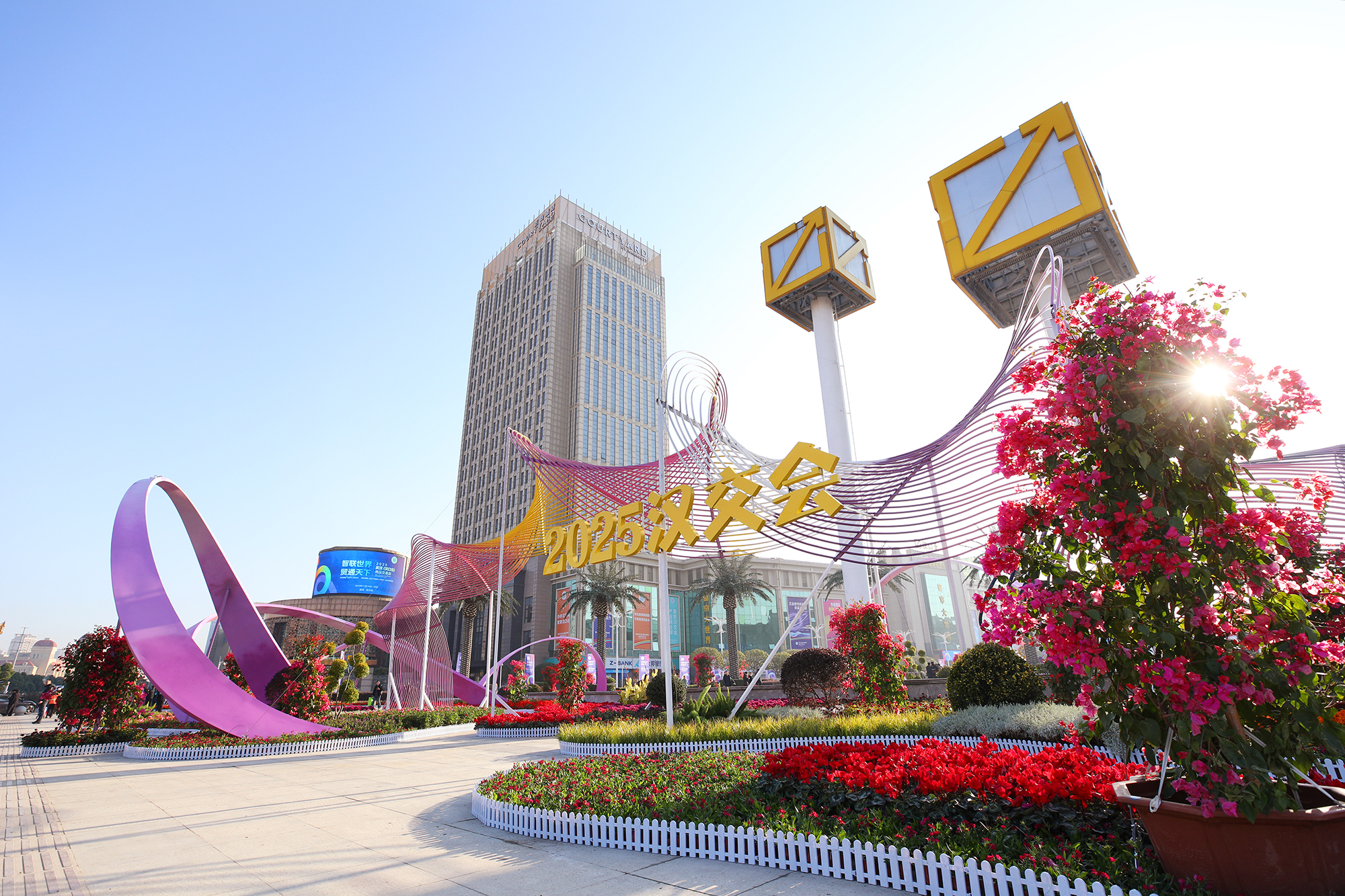
Core Insights - The 2025 Wuhan Commodity Trade Fair (Hanjiao Fair) opened on October 20, showcasing over 3,000 domestic and international enterprises from around 50 countries and regions, highlighting Wuhan's growing influence as a trade bridge for Hubei province [1][4] - The fair features a total exhibition area of 190,000 square meters, the largest in its history, covering key sectors such as artificial intelligence, low-altitude economy, future industries, and high-end manufacturing [1][4] Exhibition Highlights - The main exhibition area focuses on three major fields: commodity trade, digital trade, and service trade, attracting 165 high-quality enterprises, three times the number from the previous year, with 60% from foreign trade and innovative consumption sectors and 40% from digital economy and trade [4] - Nine market exhibition areas emphasize "full industry chain linkage and full scene service," connecting over 1,000 exhibitors, 3,000 buyers, and more than 100 industry associations, covering various sectors including pharmaceuticals, automotive, textiles, and cultural products [4] New Comparative Advantages - Experts at the 2025 Wuhan International Supply Chain Cooperation Forum discussed the structural changes in the international economic and trade environment, emphasizing the new characteristics of localization, regionalization, and friend-shoring in industrial chain layouts [5] - Wuhan's advantages have evolved beyond traditional geographic and labor cost benefits to a new comparative advantage based on high-level factor endowments, enhancing its role as a key node in international resource allocation [5] Supply Chain Development - The Wuhan Municipal Bureau of Commerce aims to create an efficient and comprehensive supply chain system to promote bilateral openness and industrial upgrades, extending the production process to a full chain from R&D to overseas services [6] - The Kenyan Ambassador to China highlighted Wuhan's strategic position as a "super interface" for global connections, emphasizing the importance of an efficient supply chain for deepening cooperation between Kenya and China [6] Trade Agreements - During the exchange event, eight trade projects were signed, with a total contract value of nearly 3 billion yuan, showcasing diverse cooperation, innovative business models, regional collaboration, and complementary supply chains [7]
谋篇布局“十五五”·热点问答|布局未来产业,如何下好先手棋?
Zhong Guo Jing Ji Wang· 2025-11-21 03:35
Group 1 - The core viewpoint emphasizes the importance of strategically planning for future industries driven by technological advancements and industrial transformations [2][3] - Future industries are characterized as forward-looking emerging industries driven by cutting-edge technologies, with high uncertainty distinguishing them from traditional and emerging industries [3][4] - To reduce uncertainty in investment returns, it is essential to develop venture capital and establish mechanisms for investment growth and risk sharing in future industries [4] Group 2 - To mitigate uncertainties in development path choices, it is necessary to explore diverse technological routes, typical application scenarios, viable business models, and market regulatory rules [5] - Promoting the aggregation of innovative resources towards enterprises and fostering the growth of leading technology companies is crucial for reducing uncertainties related to an incomplete industrial ecosystem [5]