
即时零售

Search documents
淘宝闪购骑手超时扣款将全面取消,年底前将覆盖全国直营城市
Sou Hu Cai Jing· 2025-11-28 11:05
据第一财经,11月28日,记者获悉,淘宝闪购取消超时扣款范围扩大,在12月3日将扩大覆盖至北京、杭州、广州、武汉、成都、厦门等60城,年底前将 覆盖全国直营城市。 图源:视觉中国 今年以来,淘宝闪购持续推广服务分机制,以正向激励和技术牵引骑士服务,通过好的履约加分、超时送达扣分的方式,让骑士收入不再因超时受影响, 多劳多得,优劳优得,实现骑士安全、履约效率与用户体验的协同提升。具体规则上,面向众包骑士,淘宝闪购积分制方式更科学、更温和,形成更有效 的弹性约束。在70分的基础设计上,顺利送达、没有违规就有加分,超过75分有额外奖励;让消费者体验受损、影响履约的行为会扣分,对超时来说,1 次最多扣2分。 此前报道>> 近日,有网友发文称,饿了么App最新内测版本已更名为"淘宝闪购",版本号更新至12.0.1。 消费者王先生(化名)称:"我11月3日收到内测邀请,饿了么App更新后版本号变为12开头,安装完毕名称变为淘宝闪购,配色也从蓝色变成了橙色。" 11月4日,红星资本局重新下载饿了么App,logo主色调是蓝色,但下方有淘宝闪购字样。 第一财经记者查询各大手机应用平台发现,目前饿了么app图标中已显示"双11 ...


“1对1急送”加速商家端渗透 顺丰同城餐饮、蛋糕等多品类“独享专送”单量大增
Jing Ji Guan Cha Wang· 2025-11-28 09:52
Core Insights - The instant retail market is expanding, with consumer demand shifting from "delivery" to "quality delivery," leading to a focus on "1-to-1 urgent delivery" services [1] - Enhanced delivery efficiency allows businesses to extend their service radius and enter new markets, such as cross-region food delivery [1] - High-quality delivery is becoming an extension of brand experience, supporting brand image and driving customer loyalty through membership marketing and high-value services [1] Industry Trends - Notable chain brands like Haidilao, A-Ma Handmade, and Sushi Zheng have adopted the "1-to-1 urgent delivery" service [1] - SF Express's "Exclusive Delivery" service has seen rapid growth, with restaurant order volumes increasing threefold compared to the same period last year [1] - Significant growth has also been observed in categories such as fresh fruits and vegetables, cakes, and flowers [1]
美团2025年三季度营收955亿元,餐饮外卖月交易用户数创新高
Bei Jing Shang Bao· 2025-11-28 09:38
Core Insights - Meituan reported Q3 2025 revenue of 95.5 billion RMB, a year-on-year growth of 2%, with an adjusted net loss of 16 billion RMB [1] - The core local commerce segment generated revenue of 67.4 billion RMB but faced operating losses due to intense competition, leading to a loss of 14.1 billion RMB in this segment [1] - User engagement increased significantly, with daily active users (DAU) growing over 20% year-on-year and monthly transaction users in the food delivery sector reaching a historical high, surpassing 800 million in the past 12 months [1] Local Commerce Segment - The core local commerce segment's operating profit turned negative due to increased direct subsidies aimed at the restaurant industry to combat irrational competition [1] - The platform's user structure advantage expanded, with more low-frequency users transitioning to high-frequency usage [1] Instant Retail and New Business Growth - Meituan's instant retail service, Meituan Flash Purchase, continues to lead the industry, with new user growth and increased transaction frequency among core users [1] - The launch of "Brand Flagship Lightning Warehouses" in October is expected to expand to thousands of brands across various categories, with sales on the first day of "Double 11" increasing by 300% [1] - The new business segment, including grocery retail, achieved revenue of 28 billion RMB, a year-on-year growth of 15.9%, with losses narrowing to 1.3 billion RMB [2] User Engagement and Feedback - The number of merchants and users in Meituan's dine-in business reached new highs, with user transaction frequency maintaining rapid growth [2] - The platform has accumulated over 25 billion authentic user reviews, with 3.5 billion added in the past 12 months [2]

美团三季度营收955亿元,核心本地商业经营亏损141亿
Bei Jing Shang Bao· 2025-11-28 09:20
Core Insights - Meituan reported Q3 2025 revenue of 95.5 billion yuan, a year-on-year increase of 2% [2] - Due to intensified competition in the industry, the core local commerce operating profit turned negative, resulting in a loss of 14.1 billion yuan [2] - The new business segment achieved revenue of 28 billion yuan, with a year-on-year growth of 15.9%, and the loss narrowed to 1.3 billion yuan quarter-on-quarter [2] Revenue Breakdown - The core local commerce segment generated revenue of 67.4 billion yuan in Q3 [2] - The adjusted net loss for the quarter was 16 billion yuan [2] Operational Highlights - In July, Meituan's instant retail daily order peak exceeded 150 million orders, with an average delivery time of 34 minutes [2] - The launch of "Brand Flag Flash Warehouse" in October is expected to expand to tens of thousands of brands across various categories [2] - On the first day of "Double 11," sales from hundreds of "Brand Flag Flash Warehouses" surged by 300% [2] User Engagement - The daily active users (DAU) of Meituan's app grew by over 20% year-on-year, accumulating over 25 billion authentic user reviews [2] - In the past 12 months, 3.5 billion new reviews were added [2] International Expansion - Meituan's Keeta has launched operations in Qatar, Kuwait, and the UAE, and officially started in Brazil at the end of October [2]
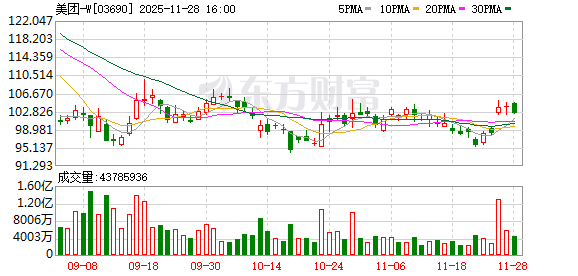
美团(03690)发布2025年Q3财报:季度营收955亿元,年交易用户数破8亿
智通财经网· 2025-11-28 08:59
Core Insights - Meituan reported Q3 2025 revenue of 95.5 billion yuan, a 2% year-on-year increase, but faced a core local business operating loss of 14.1 billion yuan due to intensified industry competition [1] - The number of transaction users exceeded 800 million in the past 12 months, indicating strong user engagement despite financial losses [1] - CEO Wang Xing emphasized the company's commitment to enhancing core competitiveness and maintaining industry leadership through a "retail + technology" strategy [1] Financial Performance - Core local business revenue reached 67.4 billion yuan, but operating profit turned negative with a loss of 14.1 billion yuan [1] - New business segment revenue grew by 15.9% year-on-year to 28 billion yuan, with a sequential loss reduction to 1.3 billion yuan [1] - Adjusted net loss for Q3 was 16 billion yuan [1] User Engagement and Growth - Daily active users (DAU) on the Meituan app increased by over 20% year-on-year, with record monthly transaction users in the food delivery segment [1] - The platform's user structure improved, with more low-frequency users transitioning to high-frequency usage, enhancing consumer engagement [2] - Meituan's flash purchase service saw significant growth, with new user acquisition and increased transaction frequency [2] Ecosystem and Welfare Initiatives - Meituan expanded its rider welfare program, introducing comprehensive insurance and benefits for over one million riders and their families [3] - The company launched the "Prosperity Plan" with an additional 2.8 billion yuan to support merchants amid competitive pressures [3] - Initiatives to enhance food safety and transparency included the "Bright Kitchen, Bright Stove" program, with participation from 300,000 merchants [3] Technological Innovation - R&D investment reached 6.9 billion yuan, a 31% increase year-on-year, reflecting the company's focus on technological advancement [4] - AI development progressed with the release of multiple open-source models and tools aimed at enhancing merchant services and user experience [5] - Meituan's drone delivery service expanded, achieving over 670,000 commercial orders, marking a significant milestone in nighttime delivery operations [5]
美团-W(03690)发布第三季度业绩 收入约955亿元 同比增长约2% 闪购与全球化布局亮点突出
智通财经网· 2025-11-28 08:50
Core Insights - The company reported a revenue increase of 2.0% year-on-year for Q3 2025, reaching RMB 955 billion, despite facing intensified competition in the food delivery sector [1] - The core local commerce segment experienced a significant decline, resulting in an operating loss of RMB 141 billion, while the new business segment's losses expanded to RMB 13 billion [1] - Adjusted EBITDA and adjusted net profit for the quarter were negative, at RMB -148 billion and RMB -160 billion respectively [1] - As of September 30, 2025, the company held cash and cash equivalents of RMB 992 billion and short-term investments of RMB 421 billion [1] Local Commerce Segment - The company maintained industry-leading operational efficiency and consumer experience, focusing on service quality and market adaptability [2] - Innovations in supply-side offerings, such as "拼好饭" and "神抢手," enhanced partnerships with quality merchants, expanding high-quality product coverage [2] - Daily active users and monthly transaction users for food delivery reached record highs, with a stable growth in core user base and increased frequency of consumption [2] Instant Retail Segment - "美团闪购" continued to lead rapid growth and service upgrades, with increased new user growth and transaction frequency among core users [3] - The expansion of new supply models like "美团闪电仓" extended reliable lifestyle services across broader regions in China [3] - The launch of "品牌官旗闪电仓" provided comprehensive instant retail infrastructure for brands, enhancing user growth and sales [3] New Business Segment - The new business division showed robust performance with strong growth in grocery retail operations like "小象超市" and "快驴," improving operational efficiency [4] - The company is exploring offline models to enhance supply chain capabilities and expand coverage [4] - Keeta is accelerating global expansion, with steady growth in Hong Kong and Saudi Arabia, and recent entries into Kuwait and UAE markets [4]
顺丰同城餐饮与蛋糕等多品类“独享专送”单量大增
Zheng Quan Ri Bao· 2025-11-28 05:05
Core Insights - The instant retail market is expanding, leading to a shift in consumer demand from "delivery" to "quality delivery," which is driving the growth of "1-to-1 urgent delivery" services [1] - SF Express's local business is enhancing its service by collaborating directly with restaurants to upgrade orders from various platforms into a unified "1-to-1 urgent delivery" service [1] - The "exclusive delivery" service of SF Express is experiencing rapid growth, with restaurant order volumes increasing threefold compared to the same period last year [1] Group 1 - The "1-to-1 urgent delivery" service is characterized by punctuality, safety, and efficiency, gaining market attention [1] - SF Express's "exclusive delivery" service has improved delivery times by 6 to 60 minutes compared to regular delivery methods [1] - The service upgrade allows merchants to expand their service radius and enter new markets, enhancing brand image and customer loyalty [1] Group 2 - SF Express provides customized delivery solutions across various industries, helping brands reduce reliance on single platforms and strengthen their private channels [2] - The company offers specialized fulfillment solutions for different product categories, including cold chain delivery for perishables and damage prevention for electronics [2] - The "1-to-1 exclusive delivery" service is becoming a key strategy for merchants to target high-end customers and differentiate their services, allowing SF Express to expand its market share and improve profitability [2]
第五届中国新潮品牌大会上海启幕 共探AI与即时零售时代品牌增长新路径
Jing Ji Guan Cha Wang· 2025-11-28 04:25
Group 1 - The core theme of the conference is the intersection of AI technology and instant retail, which is reshaping the supply chain and driving a paradigm shift in the business world [2] - The conference, hosted by New潮传媒, focuses on the survival and growth of brands in the era of AI and instant retail, featuring prominent speakers from various industries [2][3] - The instant retail market in China has reached a scale of over 1 trillion, with the potential to account for 20-25% of the retail market by 2025 [8][10] Group 2 - The consumer goods industry in China is undergoing significant changes driven by environmental iterations, technological innovations, and demographic shifts, leading to increased market uncertainty and strategic decision-making challenges [3][4] - Companies face three core challenges: increased market uncertainty due to economic cycles, widening growth gaps among enterprises, and intensified competition due to product homogeneity [3][4] Group 3 - Digital transformation is identified as a key engine for growth, with a focus on health-oriented and personalized product innovations, as well as the acceleration of instant retail [4] - The "three precision" strategy—streamlining organizations, optimizing investments, and refining business operations—is crucial for achieving high-quality growth [4] Group 4 - AI is viewed as a revolutionary force in productivity, comparable to the steam engine and electricity, with significant implications for social and economic structures [5] - The competition for AI talent in Silicon Valley is intense, with top salaries surpassing those of NBA stars, indicating the high stakes of the AI revolution [5] Group 5 - The "thought → organization → product" transformation method proposed by industry leaders emphasizes the need for companies to embrace AI tools and restructure management processes [7] - Companies like 猎豹移动 have successfully integrated AI into their operations, enhancing organizational efficiency and business growth [7] Group 6 - The rise of AI-driven e-commerce is transforming traditional customer acquisition strategies, shifting from human decision-making to AI-driven decisions [10] - The concept of "30-minute fulfillment" is reshaping consumer habits and driving sustained double-digit growth in the market [11][13] Group 7 - The conference highlighted the importance of centralized media in establishing consensus for brand marketing, with New潮传媒 leading in community media with 700,000 elevator screens across 200 cities [10] - The integration of digital and automated advertising systems is proving effective in increasing market share for community elevator media [10] Group 8 - The marketing strategies discussed at the conference emphasize the need for brands to adapt to the new landscape created by AI and instant retail, focusing on scenario-based consumption and digital distribution [13][14] - The collaboration between brands and media companies is essential for maximizing marketing effectiveness and achieving sustainable growth [39][41]
毛利不到10%,1.5折转让,闪电仓迎来半年生死线
3 6 Ke· 2025-11-28 02:59
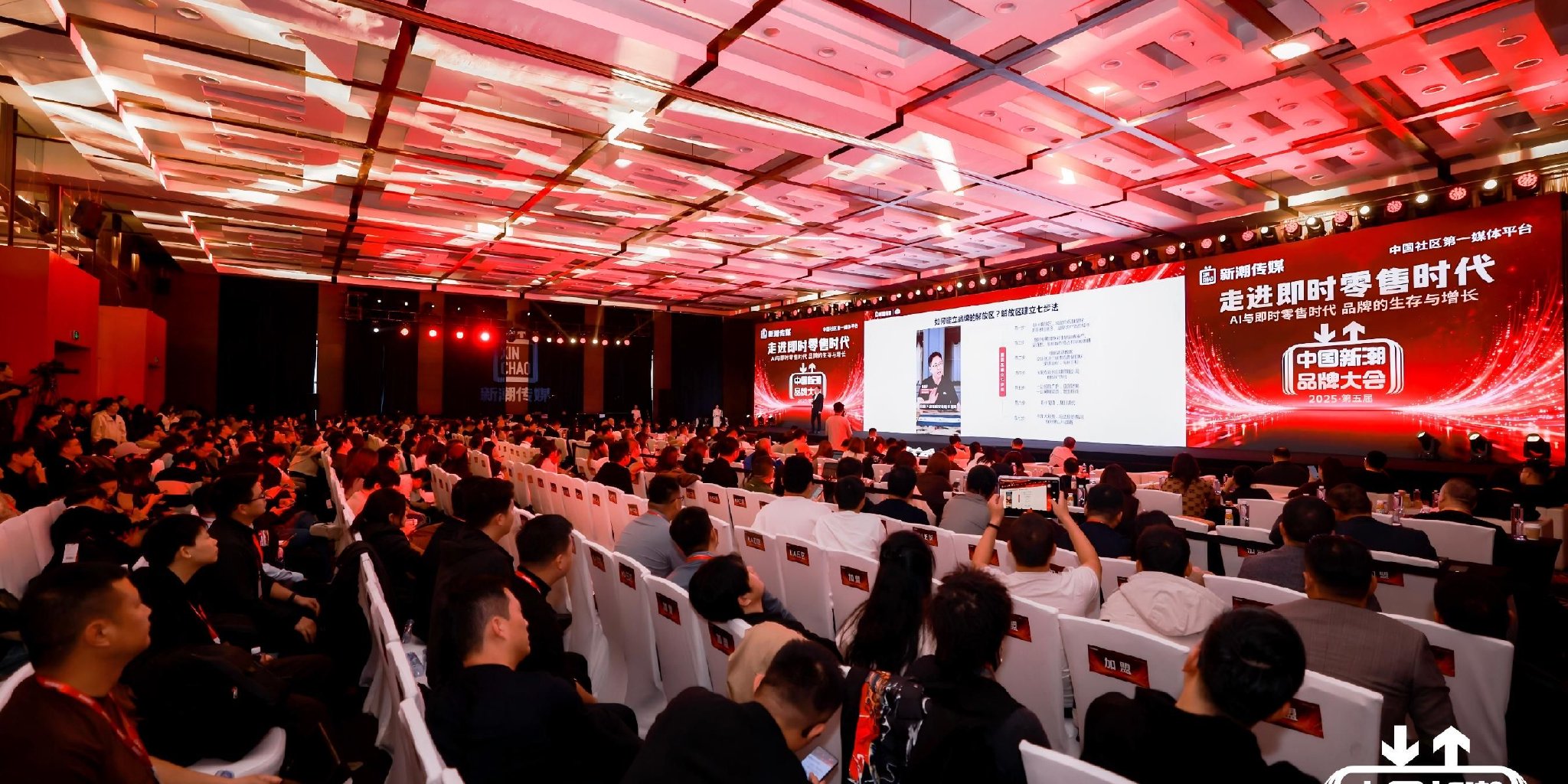
Core Insights - The rapid growth of "flash warehouses" has led to a highly competitive and unsustainable market, with many operators struggling to maintain profitability and facing high turnover rates [2][5][10] Group 1: Market Dynamics - Flash warehouses emerged to meet consumer demand for ultra-fast delivery, with major platforms like Meituan and Alibaba rapidly expanding their networks [2][6] - The number of flash warehouses has surged, with Meituan reporting over 50,000 locations in just eight months, up from 30,000 [6][7] - The lack of regional protection agreements has contributed to the rapid proliferation of flash warehouses, leading to intense competition [7] Group 2: Operational Challenges - Many flash warehouse operators are experiencing financial difficulties, with average daily orders around 100 and profits insufficient to cover operational costs [1][5] - The average gross margin for flash warehouses has plummeted to about 10%, significantly lower than previous years, making profitability increasingly elusive [9][10] - Operators often resort to loss-leading strategies to attract customers, which further exacerbates their financial struggles [8][9] Group 3: Business Model Evolution - Some operators are shifting from larger warehouses to smaller, more manageable setups to reduce costs and improve profitability [12] - The industry is witnessing a trend towards optimizing supply chains and focusing on high-demand products to enhance operational efficiency [12][13] - The market is expected to undergo significant consolidation, with many warehouses likely to close as competition intensifies [12][13]
美妆电商投流税近况更新
2025-11-28 01:42
Summary of Conference Call Records Industry Overview - The beauty e-commerce sector is experiencing a shift, with domestic beauty brands showing a slight decline during the 2025 Double Eleven shopping festival, while international brands are on the rise, contrary to previous trends. This change is primarily attributed to the impact of live streaming models, necessitating brands to adjust their strategies to adapt to market changes [1][20]. Key Insights and Arguments - **Advertising Costs and ROI**: - Douyin platform's advertising expenses are rapidly increasing, with beauty line ad allocation reaching 30%-40%. However, the return on investment (ROI) is relatively low, averaging between 2.2 and 2.3. Brands are advised to optimize their advertising strategies by collaborating with mid-tier influencers to reduce costs [1][4]. - The average ROI for short videos is around 1.5, contributing to an overall decline in ROI despite stable advertising expenses [4]. - **Impact of Streaming Tax Policy**: - The streaming tax policy significantly affects small and medium-sized businesses, with strategies suggested including reducing advertising expenses, improving store conversion rates, and shifting focus to mid-tier influencers [1][5][9]. - For larger companies, internal management can help distribute the tax burden by associating low-tax categories with higher ones [5][9]. - **Market Performance by Platform**: - During the 2025 Double Eleven, Pinduoduo's GMV grew by 20%-30%, aided by supportive policies such as waiving fees for beauty category merchants and covering substantial subsidies [1][33]. - JD.com saw a growth rate of approximately 20%, while the beauty segment on Douyin experienced a slight decline due to intense competition and the influence of top-tier influencers [2][41]. - **Changes in Influencer Dynamics**: - The share of transactions from mid-tier influencers on Douyin has increased to 35%-45%, while top-tier influencers' share has decreased to around 20%. This shift allows brands to lower advertising costs and improve overall profit margins [1][10][12]. - **Commission and Advertising Fee Variations**: - Advertising fee rates for beauty products vary across platforms, with Tmall generally maintaining rates between 20%-25%, while Pinduoduo keeps it under 5% [14][33]. - The average customer price for beauty products varies, with Douyin at 330-340 RMB, Tmall at around 250 RMB, and Pinduoduo generally under 200 RMB [40]. Other Important Insights - **Instant Retail Growth**: - Instant retail has led to a 20% increase in search browsing volume on Tmall, with food being the most significantly growing category. However, health products are less suited for instant retail due to high unit prices and extensive offline coverage [3][29]. - **Future Advertising Strategy**: - The company plans to increase investment in Tmall while reducing expenses on Douyin, focusing on new products and commercial collaborations [47][48]. - **Tax Policy Effects on Small Businesses**: - New tax policies are expected to heavily impact small businesses, particularly in the beauty sector, where initial investment costs may rise significantly, hindering their market growth [13]. - **Pinduoduo's Support Policies**: - Pinduoduo has introduced merchant support policies, including waiving platform fees and covering subsidies, which benefit top brands significantly [33][37]. This summary encapsulates the key points from the conference call, highlighting the current state of the beauty e-commerce industry, advertising strategies, and the impact of new policies on market dynamics.