价格战

Search documents
中通快递-W(2057.HK):市场份额为首要目标 短期盈利承压
Ge Long Hui· 2025-05-23 18:28
Core Viewpoint - Zhongtong Express reported a revenue of 10.89 billion yuan for Q1 2025, representing a year-on-year growth of 9.4%, and a net profit attributable to shareholders of 1.99 billion yuan, up 39.8% year-on-year, primarily due to the impact of asset impairment losses in the same period last year [1] Group 1: Financial Performance - Adjusted net profit attributable to shareholders for Q1 2025 was 2.21 billion yuan, showing a slight increase of 0.5% year-on-year [1] - The company achieved a total express delivery volume of 8.54 billion pieces, reflecting a year-on-year growth of 19.1%, although slightly below the industry growth rate of 21.6% [1] - The average revenue per piece decreased to 1.25 yuan, down 7.8% year-on-year, attributed to intense price competition in the industry [1] Group 2: Market Position and Strategy - Zhongtong Express maintained its position as the market leader with a market share of 18.9%, although this represents a decline of 0.4 percentage points year-on-year [1] - The company aims to increase business volume and market share as its primary goals for 2025, despite facing short-term price competition [1] - The company is focusing on reducing per-piece prices to capture more market share and solidify its competitive advantage [1] Group 3: Cost and Profitability - The per-piece cost for Q1 2025 decreased by 0.4% year-on-year to 0.94 yuan, benefiting from increased volume [2] - The per-piece net profit adjusted for Q1 2025 was 0.26 yuan, down 14.7% year-on-year, primarily due to the decline in per-piece revenue [2] - The costs for trunk transportation and sorting per piece were 0.41 yuan and 0.27 yuan, respectively, showing decreases of 13.2% and 10.4% year-on-year [2] Group 4: Future Outlook and Valuation - The net profit forecast for 2025 has been revised down to 8.18 billion yuan, with target prices adjusted to 160.1 HKD / 20.5 USD, reflecting a 19% decrease [3] - The adjustments in revenue assumptions for 2025, 2026, and 2027 led to a reduction in net profit estimates by 17%, 13%, and 8% respectively [3] - The target price is based on a PE ratio of 14.5x for 2025E, which is a discount to historical averages due to intensified industry price competition [3]
中通快递-W(02057.HK):价格战导致收入端承压 份额增长依旧是经营重心
Ge Long Hui· 2025-05-23 18:28
Core Viewpoint - The company reported a business volume of 8.54 billion pieces in Q1 2025, a year-on-year increase of 19.1%, but market share decreased by 0.4 percentage points to 18.9% [1] - Adjusted net profit for the company was 2.26 billion yuan, reflecting a year-on-year growth of 1.6% [1] - The company aims to enhance market share in 2025, despite Q1 growth being slightly below the industry average [1] Business Performance - The company maintained its business volume guidance for 2025 at 40.8 to 42.2 billion pieces, indicating a year-on-year growth of 20-24% [1] - Single ticket revenue decreased by 0.11 yuan, primarily due to increased incremental subsidies and a decline in single ticket weight [2] - The increase in direct customer business proportion partially offset the decline in single ticket revenue [2] Cost and Expenses - The company's single ticket core cost showed a notable year-on-year decrease, with transportation costs dropping from 0.47 yuan to 0.41 yuan and sorting costs from 0.30 yuan to 0.27 yuan [2] - Total operating expenses significantly decreased to 283 million yuan from 735 million yuan year-on-year, mainly due to reduced sales, general, and administrative expenses [2] Competitive Landscape - The industry is experiencing intensified price competition, which may lead to a short-term slowdown in profit growth for the company [3] - The company is shifting back to a market share priority strategy in 2025, which is expected to impact the competitive landscape significantly [3] Profit Forecast and Valuation - The company is projected to achieve net profits of 9.52 billion, 11.20 billion, and 12.64 billion yuan for 2025-2027, with corresponding P/E ratios of 10.9X, 9.2X, and 8.2X [3] - The company is expected to maintain a relatively stable profit level amid price wars, indicating strong safety margins [3]
魏建军提问,行业观望,消费者承担后果
Jing Ji Guan Cha Bao· 2025-05-23 06:30
Core Insights - The automotive industry is at a critical juncture, facing systemic issues that question its reliability and trustworthiness [1][2][5] - Price wars and unsustainable business practices are leading to a collective credit overdraw within the industry, impacting brand value and profit margins [3][4] - There is a call for greater transparency and accountability, with suggestions for independent audits to establish a consensus on true profits and costs [4] Group 1 - The industry is waiting for a definitive answer regarding its bottom line, with stakeholders including users, peers, and supply chains all anticipating clarity [1] - The automotive sector is experiencing growth in sales, exports, and stock prices, yet systemic concerns such as cost-cutting pricing strategies and unsustainable business models are emerging [1][2] - The metaphor of "the Evergrande of the automotive industry" suggests that significant underlying issues exist, even if they have not yet resulted in a crisis [2] Group 2 - Trust is a central issue, as pricing adjustments and delivery delays raise questions about the industry's credibility among consumers and investors [3] - The current pricing strategies are damaging brand value and profit margins, with drastic price reductions indicating deeper mathematical and economic problems [3] - Companies are engaging in practices that may not be sustainable, driven by the need to maintain favorable financial reports and secure financing [3][4] Group 3 - The industry is urged to shift from aggressive growth strategies to a focus on recalibrating its credit structure and ensuring reliability [5] - There is a recognition that the automotive industry is not a fast-moving consumer goods sector; it has broader implications for safety, energy consumption, and urban systems [4] - The conversation around self-regulation and industry standards is beginning, but it has not yet become a mainstream value [4]

车企智驾宣传迅速降温 强监管下车市“价格战”或趋缓
Zhong Guo Jing Ying Bao· 2025-05-23 03:45
Core Viewpoint - The automotive market is expected to see a moderation in the "price war" due to stringent regulations on "smart driving" advertising, shifting the focus from "autonomous driving" to "assisted driving" [1][4][6] Group 1: Regulatory Changes - The Ministry of Industry and Information Technology has mandated that car manufacturers avoid misleading terms like "autonomous driving" and instead use "assisted driving," emphasizing the driver's responsibility [1][4] - A recent meeting highlighted the need for manufacturers to conduct thorough testing and validation of driving assistance systems, ensuring accurate representation of their capabilities [4][6] Group 2: Industry Response - Multiple brands have acknowledged that their smart driving systems are not fully autonomous and require driver engagement, with sales representatives clarifying that hands must remain on the wheel [2][3] - Companies like Geely emphasize that while they can equip all models with advanced driving assistance systems, not all consumers require such features, indicating a focus on genuine consumer needs [3][5] Group 3: Market Dynamics - The penetration rate of L2 and above Advanced Driver Assistance Systems (ADAS) in new vehicles is projected to reach 47.9% in 2024, with a higher rate in electric vehicles at 56.9% [5] - Despite changes in smart driving advertising, industry experts believe the impact on overall vehicle sales will be limited, as competition remains fierce [6][7] Group 4: Price War and Competition - The price war in the automotive market is reportedly easing, with traditional fuel vehicle brands adopting transparent pricing strategies to reduce unhealthy competition [6] - Regulatory bodies are taking steps to address "involution" in the industry, aiming to curb excessive price competition and promote technological development [6][8] Group 5: Future Outlook - Companies are expected to reassess their smart driving system designs and marketing strategies, focusing on safety and the enhancement of driving experiences [6][7] - Industry associations are advocating for healthy competition and high-quality development, urging manufacturers to adhere to ethical advertising practices [8]
中通快递-W(02057.HK):价格战导致收入端承压,份额增长依旧是经营重心
Dongxing Securities· 2025-05-22 10:30
Investment Rating - The report maintains a "Strong Buy" rating for ZTO Express [4][3]. Core Views - The company reported a business volume of 8.54 billion pieces in Q1 2025, a year-on-year increase of 19.1%, but market share decreased by 0.4 percentage points to 18.9% [1]. - The focus for 2025 will shift towards increasing market share, with a target business volume of 40.8 to 42.2 billion pieces, representing a year-on-year growth of 20-24% [1]. - The company experienced a decline in single-ticket revenue, dropping from 1.36 CNY in Q1 2024 to 1.25 CNY in Q1 2025, primarily due to increased subsidies and a decrease in single-ticket weight [2]. - Operating expenses significantly decreased to 283 million CNY in Q1 2025 from 735 million CNY in Q1 2024, largely due to government subsidies and tax refunds [2]. - The competitive landscape is intensifying, with a strategy shift back to prioritizing market share, which may lead to slower profit growth in the short term [3]. Financial Projections - The projected net profit for 2025 is 9.52 billion CNY, with corresponding P/E ratios of 10.9X, 9.2X, and 8.2X for 2025, 2026, and 2027 respectively [3]. - Revenue is expected to grow from 38.42 billion CNY in 2023 to 49.90 billion CNY in 2025, reflecting a growth rate of 12.68% [8]. - The net profit margin is projected to be 19.24% in 2025, with a return on equity (ROE) of 15.94% [8].
中通快递-W(02057):价格战导致收入端承压,份额增长依旧是经营重心
Dongxing Securities· 2025-05-22 08:59
Investment Rating - The report maintains a "Strong Buy" rating for ZTO Express (02057.HK) [4][3] Core Views - The company reported a business volume of 8.54 billion pieces in Q1 2025, a year-on-year increase of 19.1%, but market share decreased by 0.4 percentage points to 18.9% [1] - The company aims to focus on increasing market share in 2025, despite facing pressure on revenue due to price wars [1][3] - The single ticket revenue decreased by 0.11 CNY, primarily due to increased subsidies and a decline in average weight per ticket [2] - The company’s core costs per ticket showed a notable decrease, with transportation costs dropping from 0.47 CNY to 0.41 CNY [2] - Operating expenses significantly decreased due to government subsidies and tax refunds, totaling 283 million CNY in Q1 2025 compared to 735 million CNY in Q1 2024 [2] Summary by Sections Business Performance - In Q1 2025, ZTO Express achieved a business volume growth of 19.1%, although this was slightly below the industry growth rate of 21.6% [1] - The company maintains its guidance for a total business volume of 40.8 to 42.2 billion pieces for 2025, representing a year-on-year growth of 20-24% [1] Revenue and Costs - The single ticket revenue fell to 1.25 CNY in Q1 2025 from 1.36 CNY in Q1 2024, influenced by increased subsidies and a decrease in ticket weight [2] - The core cost per ticket remained stable at 0.94 CNY, with a reduction in transportation and sorting costs [2] Strategic Focus - The company is shifting its strategy back to prioritizing market share over profitability in response to intensified price competition [3] - The report anticipates that while market share may recover, profit growth will slow down due to ongoing price wars [3] Financial Forecast - The projected net profits for ZTO Express from 2025 to 2027 are 95.2 billion CNY, 112.0 billion CNY, and 126.4 billion CNY, with corresponding P/E ratios of 10.9X, 9.2X, and 8.2X [3][8]
在泰国打败日本,中国车企不能只靠价格战
3 6 Ke· 2025-05-22 08:34
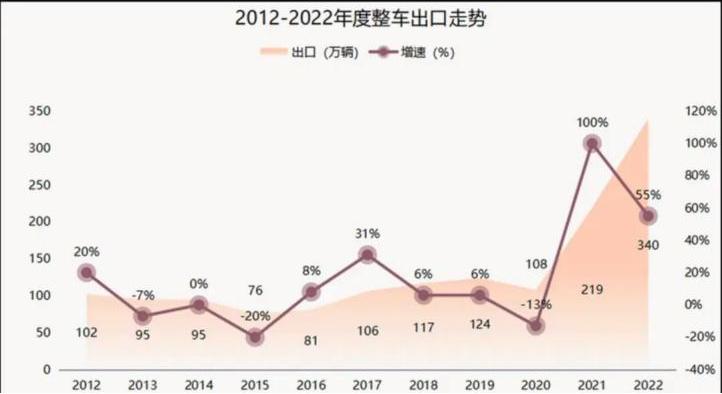
前两天,我在一篇文章里说,中国汽车现在集体出海泰国。 从2020年,#长城汽车 收购通用汽车位于罗勇府的制造工厂,到现在,已经七八家中国车企在泰国建厂,产能达到每年60万辆。 而且,迅速拿下泰国80%电动汽车市场。 但问题是:中国电动汽车在泰国,可能会重演20多年前中国摩托车在越南的悲剧。 越南悲剧是什么?我在文章里也说过: 在1990年代,越南是日本摩托车的天下。 2000年前后,中国摩托车企业开始大举"杀入"越南市场:打价格战。同样的摩托车,日本车卖2100美元,中国车只要1200-1300美元。越南摩 托车市场80%的份额到了中国企业手里。 但中国摩托车企却没有"停战",继续卷价格,摩托车甚至卖出废铁价。 偷工减料,售后服务差成了必然,最终,中国摩托车的招牌,被中国企业自己砸了。 中国摩托车在越南的市场份额又跌到5%以下,日本企业又回到了80%以上。 不少读者对中国汽车在泰国的情况感兴趣。 今天就简单聊聊。 中国车企,为何选中泰国? 中国汽车最早成规模的出海,可以追溯到2001年。 当时的目标市场是叙利亚。 而在2002年加入WTO时,中国汽车的出口量只有2.2万辆。 经过缓慢增长,直到十年后,中国销往 ...

市值6000亿美的掌门人方洪波:我从来不加班,首度回应与小米竞争
Xin Lang Cai Jing· 2025-05-21 19:12
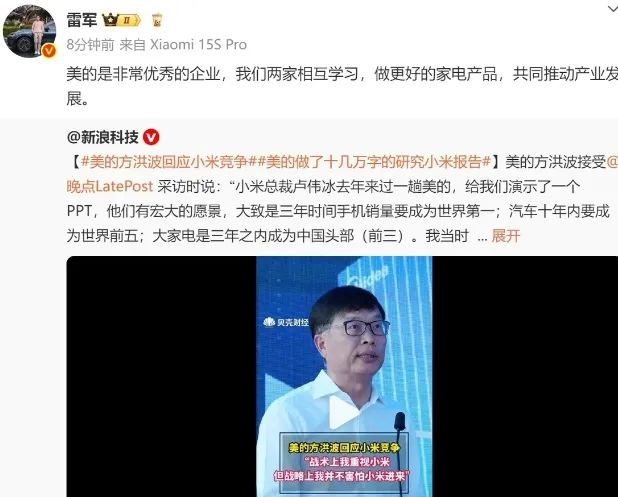
5月以来,美的旗下华凌采取低价策略,狙击小米的意图明显。格力也"出手"了,其子品牌晶弘今年也 推出了更具性价比的空调,参与到眼下加剧的市场争夺中,今年"6.18"空调业将有一场恶战。 近日,一则关于美的集团(000333)董事长方洪波的专访刷屏,其谈到了与小米在家电行业的竞争,以 及是否进入汽车行业。 首度回应与小米竞争 方洪波还谈到了和小米在家电领域的竞争。他表示:"小米总裁卢伟冰去年来过一趟美的,给我们演示 了一个 PPT,他们有宏大的愿景,大致是三年时间手机销量要成为世界第一;汽车十年内要成为世界前 五;大家电是三年之内成为中国头部(前三)。" 他表示:"我当时差一点就想问,美的、格力、海尔,你想把哪一家挤下去?"方洪波指出:"我们所有 的领域小米都进入了,空调、洗衣机全做了。" 在谈及此前被热议的"美的6点20强制下班"事件时作出了如上回应,并称"95%以上的加班都是形式主义 的加班"。 今日,美的集团的股份微涨0.17%,报78.8元/股,总市值达6043亿元。 小米集团(01810.HK)2024年年报显示,其空调、冰箱、洗衣机等大家电去年销售收入同比增长超 50%。今年小米空调掀起低价攻势。 5 ...


快递小哥平均工资降至5670元,再低也会有人干?
3 6 Ke· 2025-05-21 12:00
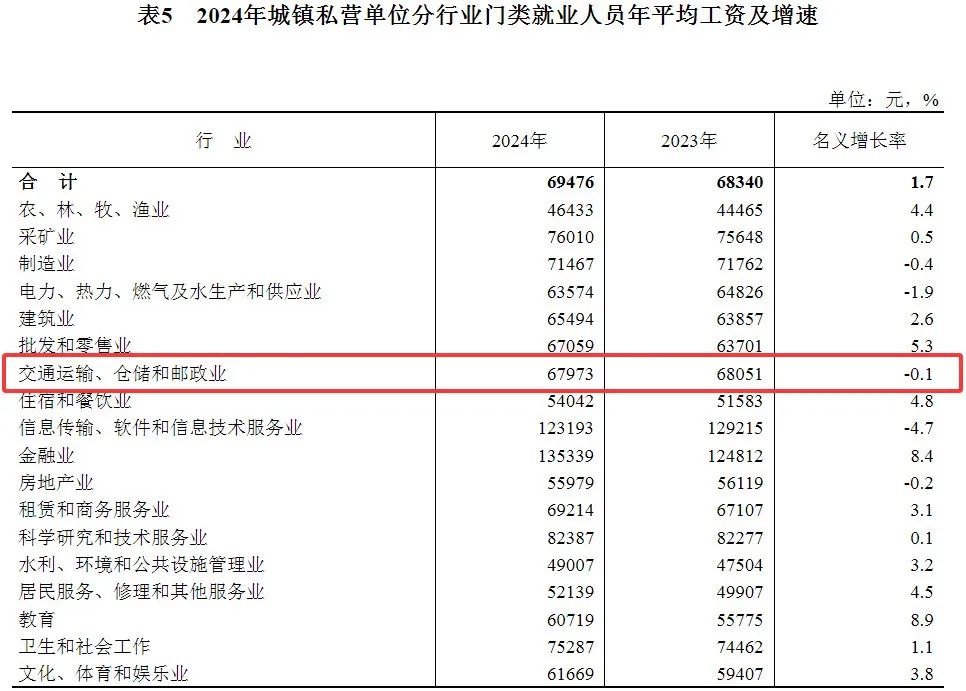
Core Points - The average annual salary for urban private sector employees in 2024 is reported to be 69,476 yuan, reflecting a nominal growth rate of 1.7% and a comparable growth of 4.0% [2] - Despite the overall increase in national income, the average salary for couriers in the express delivery industry has decreased, highlighting the competitive environment within the sector [2][4] - The express delivery industry has seen a significant increase in business volume, with a growth rate exceeding 20%, yet the income for couriers has not kept pace, leading to dissatisfaction among workers [4][7] Industry Overview - The express delivery industry is experiencing a decline in average wages, with a reported drop of 0.1% in the average annual salary for couriers, which is now 67,973 yuan [1][2] - The average salary in the express delivery sector is lower compared to other high-tech industries, such as information technology services, which saw a decline of 4.7% in average wages [4] - The average price per delivery has decreased significantly from 28.5 yuan in 2007 to 8.0 yuan in 2024, indicating intense price competition within the industry [7] Employment Conditions - The workload for couriers has increased dramatically, with the number of deliveries rising from 9.2 billion in 2013 to 175 billion in 2024, while the number of couriers has only increased from 3 million to 4 million [7] - Couriers report that their income has not increased despite the higher volume of work, with many earning as little as 0.8 yuan per delivery, leading to a situation where even high workloads yield minimal earnings [7][9] - The competitive labor market allows companies to maintain low wages, as there are many individuals willing to work in the industry despite declining pay [5][9]
价格战焦灼!顺丰4月单票收入探底,业务量增幅连续领跑 “通达系”如何应战?
Mei Ri Jing Ji Xin Wen· 2025-05-20 15:45
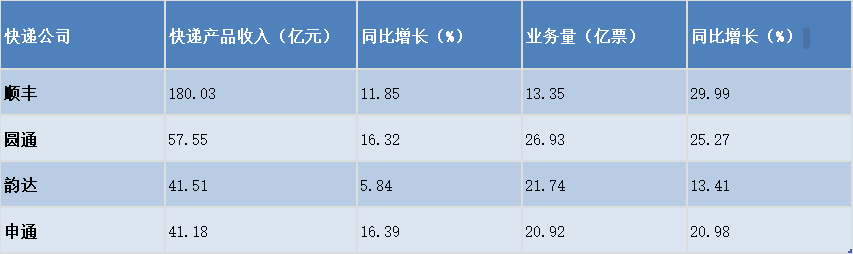
Core Viewpoint - The express delivery industry is facing intense competition, with companies needing to shift from price wars to a focus on quality and profitability to maintain market share and avoid a detrimental cycle of reliance on low prices [1][10]. Group 1: Company Performance - SF Express reported a business volume of 1.335 billion parcels in April, a year-on-year increase of 29.99%, the highest among the four companies, although its revenue per parcel fell by 13.91% to a historical low [1][4]. - YTO Express led the growth in business volume among the "Tongda" system, while Yunda and Shentong continue to face fierce competition [1][6]. - The total revenue for SF Express in April was 23.915 billion yuan, a year-on-year increase of 12.42%, with express logistics revenue at 18.003 billion yuan, up 11.85% [3][4]. Group 2: Market Dynamics - The "Tongda" system is experiencing downward pressure on pricing, with all companies reporting declines in revenue per parcel, indicating a highly competitive market environment [1][7]. - The industry is expected to undergo accelerated consolidation, with stronger companies gaining more market share while weaker ones may shrink their operations [1][10]. - The integration of intelligent and automated technologies is becoming a key focus for companies to enhance efficiency and reduce costs amid rising competition [8][9]. Group 3: Future Outlook - Analysts predict that the express delivery industry will see a significant shift towards high-quality development, moving away from traditional profit compression strategies [1][10]. - Companies are investing in automation and digitalization to improve service efficiency and meet diverse consumer demands, which is essential for survival in the evolving market landscape [9][10].