量子计算

Search documents
Will IonQ Be a $1 Trillion Company 10 Years From Now?
The Motley Fool· 2025-11-23 10:00
Core Viewpoint - IonQ is positioned as a leader in the quantum computing sector due to its superior accuracy and technology, but the overall market potential may be smaller than anticipated, raising questions about its future valuation [1][6][7]. Company Overview - IonQ currently has a market capitalization of approximately $16 billion and is recognized for having the most accurate quantum computing technology available [1][4]. - The company utilizes a trapped ion approach, which is more accurate and cost-effective compared to superconducting methods [3]. Technology and Performance - IonQ has achieved a two-qubit gate fidelity of 99.99%, setting a world record and significantly outperforming competitors who are striving for 99.9% accuracy [5]. - The trapped ion technology allows operations at room temperature, enhancing its practicality and accuracy [3]. Market Potential - Projections for the quantum computing market suggest a cumulative total of about $72 billion by 2035, indicating that annual market value will be considerably smaller [6]. - Even with optimistic assumptions of a 30% profit margin and a 30 times earnings multiple, IonQ's potential valuation would be around $648 billion, which is below the $1 trillion target [6][7]. Investment Outlook - The current sell-off in quantum computing stocks may present a better buying opportunity for investors in the future, as IonQ is expected to maintain its leadership position in the industry [8].



D-Wave Quantum's CFO Sold Nearly $5 Million in Company Stock. Is This a Warning Sign for Shareholders?
The Motley Fool· 2025-11-23 03:25
Core Insights - D-Wave Quantum's share price has significantly increased over the past year, with a notable transaction by CFO John M. Markovich involving the sale of 200,000 shares for approximately $4.6 million [1][9]. Transaction Summary - The transaction involved the exercise of 200,000 options followed by an immediate sale of the same number of shares, indicating a liquidity event rather than a discretionary sale [6]. - The transaction value was $4.6 million, with a weighted average sale price of $22.94 per share, which was above the market close price of $20.41 on November 22, 2025 [2][6]. - Post-transaction, Markovich holds 1,482,874 shares valued at approximately $30.4 million [2][6]. Company Overview - As of November 20, 2025, D-Wave Quantum's stock price was $22.94, with a market capitalization of $7.08 billion [4]. - The company reported a trailing twelve months (TTM) revenue of $24.1 million and a net income loss of $398.8 million [4]. Business Model - D-Wave Quantum specializes in quantum computing systems, cloud-based quantum access, and professional services, generating revenue from system sales, cloud subscriptions, and enterprise services [7][8]. - The company employs a hybrid revenue model that combines hardware sales, recurring cloud service fees, and professional consulting to facilitate enterprise adoption of quantum computing [8]. Market Position - D-Wave's primary customers include sectors such as manufacturing, logistics, financial services, and life sciences, all seeking advanced computational solutions [8]. - The company's shares have appreciated significantly, with a total return of 597% over the past 12 months as of the transaction date [6]. Valuation Metrics - D-Wave Quantum's forward price-to-sales (P/S) ratio is approximately 281, indicating a high valuation compared to peers like IonQ, which has a forward P/S ratio of 136 [10][11]. - The elevated valuation suggests that it may not be an ideal time to buy D-Wave stock, but rather a favorable time for selling [11].



科学计算软件的“量子跃迁” 上海交大全球首发“量子科学计算平台UnitaryLab”
Zhong Guo Xin Wen Wang· 2025-11-23 01:44
Core Insights - Shanghai Jiao Tong University has officially launched the world's first quantum scientific computing platform, UnitaryLab, which aims to overcome the computational power limitations of classical computing by developing quantum algorithms for various fields such as differential equations, numerical linear algebra, optimization, machine learning, and statistical computing [1][2] Group 1: Platform Features - UnitaryLab1.0 focuses on solving ordinary and partial differential equations, achieving quantum algorithm construction, solution, and quantum circuit design, thus breaking through traditional computational efficiency bottlenecks [1] - The platform is built on the "Schrödingerization" series of quantum algorithms proposed by the research teams, which innovatively transform partial differential equations into a form that can be directly processed by quantum systems [2] - The platform supports dual scenarios of "research + industry," allowing for a single platform to meet multiple needs, thereby enriching quantum teaching tools in universities and connecting talent cultivation, research innovation, and industrial application [3] Group 2: Industry Impact - UnitaryLab1.0 significantly lowers the barriers to using quantum computing, enabling engineers, researchers, and students from non-quantum fields to quickly engage in quantum scientific computing and engineering simulations, thus accelerating the problem-solving efficiency [2] - The platform has already attracted positive testing from domestic and international research teams and has established collaborations with leading domestic quantum hardware companies for real machine verification [3] - Future plans include further innovation in quantum algorithms, development of specialized hardware for algorithm adaptation, and the establishment of a standardized system for quantum solutions to partial differential equations, promoting the transition from fragmented exploration to standardized implementation [3]
量子计算加速迈向实用化 多领域应用持续拓展
Zhong Guo Xin Wen Wang· 2025-11-22 07:46
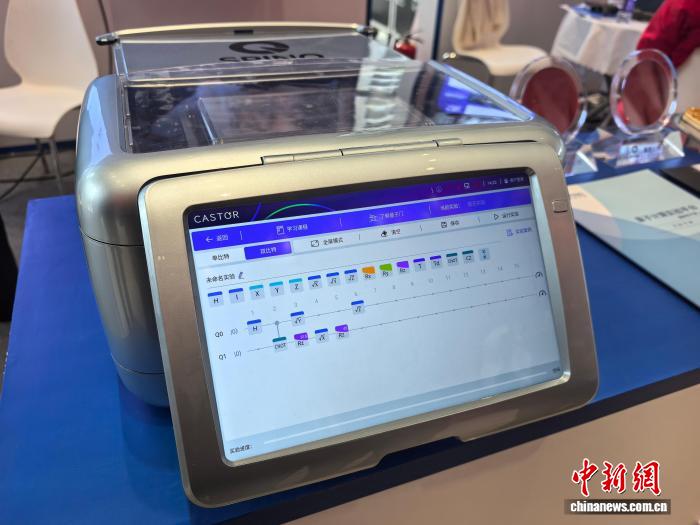
Core Insights - Quantum computing is transitioning from laboratory research to practical applications, with significant advancements showcased at the 2025 World Computing Conference in Changsha [1][3] Group 1: Industry Developments - China is reportedly keeping pace with international standards in quantum sensing and single-photon detection, with some applications already achieving breakthroughs [3] - Quantum sensors are being widely used in smart agriculture and safety monitoring, providing high-precision detection of temperature and magnetic fields [3] - Compared to traditional infrared sensors that require cooling to -200 degrees Celsius and cost hundreds of thousands, quantum sensors significantly reduce costs and eliminate the need for extreme environments, broadening their application scenarios [3] Group 2: Technological Innovations - The conference featured innovative products from Lianxuan Technology, including the portable quantum computer "Gemini Mini Pro" and the superconducting quantum chip "Shaowei," which integrates 25 high-performance qubits and has been exported to regions including the Middle East, Southeast Asia, and Europe [3] - The optical detection technology developed by Aopu Tiancheng is crucial for the practical implementation of quantum computing, exemplified by the Raman spectrometer's ability to identify suspicious powders in one second during police drug investigations [3] Group 3: Future Outlook - Predictions indicate that quantum computers may achieve large-scale applications within five years, with their parallel processing capabilities expected to revolutionize computing power [3] - Quantum computing and artificial intelligence are seen as mutually beneficial, with quantum computing overcoming AI data processing limitations and AI optimizing quantum algorithms [4] Group 4: Educational Initiatives - Lianxuan Technology has initiated a quantum computing research and study project in collaboration with Dahan International Craftsman Institute and Guanggu Chuangka, aiming to create a comprehensive educational model that includes equipment, courses, and practical experience [5] - The company has also partnered with Hunan University of Commerce to integrate quantum education into undergraduate training programs [5]
美股巨震恐未完!关税冲击以来最狂野交易日来袭,“逢低买入”信心面临严峻考验
Zhi Tong Cai Jing· 2025-11-21 12:52
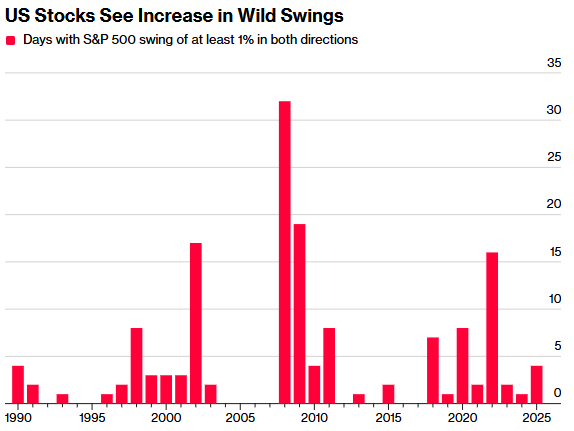
Core Viewpoint - The recent downturn in the stock market, particularly affecting technology stocks like Nvidia, has left investors in a dilemma between cutting losses or reinvesting, exacerbated by poor employment data and increased short-selling activity in macro products [1][2]. Group 1: Market Dynamics - Goldman Sachs' trading department noted a rise in short-selling across various macro products, contributing to the stock market's decline [1]. - The liquidity in the market has worsened, with the S&P 500 futures ToB depth indicator dropping below $5 million, compared to an average of $11.5 million over the past year, which may increase market volatility [1]. - Goldman Sachs predicts a significant options expiration day on Friday, with $3.1 trillion in nominal value options expiring, including $1.7 trillion in SPX index options and $725 billion in individual stock options, which typically leads to market fluctuations [1]. Group 2: Investor Sentiment - Following Nvidia's earnings report, there was a strong buying trend in options, indicating that investors were preparing for a stock rebound rather than hedging against a downturn [2]. - The VIX index, a measure of market volatility, surged by 19% during the trading session, reflecting heightened fear among traders [5]. - Investors are questioning what factors could drive market gains by year-end, especially after Nvidia's stock fell by 3.2% [5]. Group 3: Economic Indicators - Upcoming retail sales data for Black Friday and the Federal Reserve meeting are seen as the last remaining catalysts to boost investor sentiment [6]. - Retail trading activity has significantly decreased, with the proportion of retail trading dropping from 16% to 11% of total U.S. stock trading volume [6]. - The U.S. non-farm payroll data exceeded expectations, suggesting economic recovery but also reducing the likelihood of a Federal Reserve rate cut in December, which could further pressure the stock market [6].

我国活跃开源项目已超300万
Bei Jing Shang Bao· 2025-11-21 12:12
Core Insights - The Open Atom Open Source Foundation announced that by the end of 2024, there will be over 3 million active open source projects and 2.27 million active open source developers in China, indicating a large and diverse talent pool in the open source sector [1] Group 1: Open Source Development - The Open Atom Open Source Foundation's chairman, Cheng Xiaoming, highlighted the significant growth in active open source projects and developers [1] - The foundation's projects, Open Harmony and Open Euler, have been recognized as the first batch of graduation projects [1] Group 2: Government Support and Initiatives - The Beijing Economic-Technological Development Area is focusing on building a "national-level open source organization + leading enterprises" framework to support open source projects [1] - The implementation of the "Open Source Gathering Action" and various special policies, including "Ten Articles for Scientific Innovation," "Twenty Articles for AI," and "Ten Articles for Talent," aims to systematically support the development of open source projects and enterprises [1] Group 3: Community and Collaboration - The establishment of China's first AI open source root community, "Moli Ark," has launched over 16,000 open source models and more than 10,000 datasets, aiming to create a globally influential open source innovation hub [1] - The Open Atom Open Source Foundation signed donation agreements with 11 open source projects covering key technology areas such as artificial intelligence, quantum computing, robotics, operating systems, and the Internet of Things [1]
前瞻全球产业早报:我国首台套绿氢煤化工项目全面投运
Qian Zhan Wang· 2025-11-21 09:49
Group 1 - Guangdong aims to exceed 440 billion yuan in AI core industry scale by 2027, with a computing power scale surpassing 60 EFLOPS [2] - The digital economy's core industry added value is expected to account for over 16% of GDP by 2027, maintaining the top position in the country [2] - The plan includes the establishment of three internationally competitive trillion-level digital industry clusters and a data industry with an annual compound growth rate exceeding 15% [2] Group 2 - China's first green hydrogen coal chemical project has fully entered market operation, providing a replicable model for the green transformation of the coal chemical industry [3] - The project utilizes a "green electricity hydrogen production + excess electricity grid connection" collaborative model [3] Group 3 - The number of China-Europe freight trains has surpassed 3,500 this year, marking a historical high since the inception of the service in 2013 [4] - A freight train carrying 55 containers departed from Inner Mongolia, highlighting the increasing volume of trade through this route [4] Group 4 - Lenovo has signed agreements to secure long-term supply of key components amid rising prices and supply shortages [5][6] - The company emphasizes its strong relationships with suppliers to manage current supply challenges effectively [6] Group 5 - EVE Energy has signed a procurement framework agreement with Smoore International for the continuous supply of battery cells and other products until December 31, 2028 [7] Group 6 - Xiaomi has officially rolled out its 500,000th vehicle, setting a record for the fastest production of 500,000 units by a global new energy vehicle manufacturer in just 602 days [8] Group 7 - Meta's chief scientist Yann LeCun announced his departure to start a new venture focused on Advanced Machine Intelligence, aiming to revolutionize AI capabilities [12] Group 8 - The largest rare earth producer in the U.S. plans to build a refining plant in Saudi Arabia in partnership with the U.S. Department of Defense and a Saudi mining company [13] Group 9 - AMD, Cisco, and Saudi HUMAIN are forming a joint venture to deploy AI infrastructure, with plans to start operations in 2026 and reach up to 1 GW capacity by 2030 [15]

11月21日沪深两市涨停分析
Xin Lang Cai Jing· 2025-11-21 07:23
Group 1: Company Developments - Jiuqi Software is a leading domestic report management software provider, with its new generation application management platform, Nuwa GPT, offering capabilities for large model management and intelligent orchestration, already implemented in multiple intelligent scenarios [2] - Yidian Tianxia has reached a framework cooperation agreement with Alibaba Cloud to jointly create the first AI comic overseas acceleration engine [2] - Longxi Co., a leader in the joint bearing industry, is widely applied in aviation and military fields, and is a major supplier for robotics [2] - Seagull Home focuses on high-end sanitary ware and has established two manufacturing service bases in Vietnam [2] - Huakai is a custom home solution provider and one of the few brands in China with full trademark protection [2] Group 2: Market Trends and Economic Indicators - The People's Daily states that Taiwan's recovery signifies the inevitable unification of the motherland [2] - The October CPI increased by 0.2% year-on-year, with the Ministry of Finance indicating continued implementation of measures to boost consumption [3] - The real estate market is seeing multiple local governments release notifications to promote stable and healthy development [2][3] Group 3: Strategic Partnerships and Investments - Pingao Co. plans to invest 400 million yuan to acquire a 15.4182% stake in Jiangyuan Technology, which specializes in computing power cards [3] - Shenzhen State-owned Assets Supervision and Administration Commission controls Te Fa Group, which focuses on the optical communication industry [2] - The company Shida Group intends to acquire 95% of Shuchuan Ming Shang, which specializes in computing power and data services [4]

科大讯飞:截至目前,公司持有国仪量子的股份比例为1.40%
Mei Ri Jing Ji Xin Wen· 2025-11-21 04:19
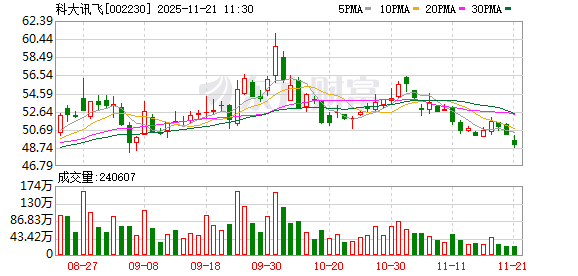
Group 1 - The company holds a 1.40% stake in Guoyi Quantum as of November 21 [2] - The company is actively monitoring and conducting preliminary research in the field of quantum technology, recognizing its potential to bring disruptive changes to artificial intelligence development [2]

丹麦第一家12英寸晶圆厂落成
半导体行业观察· 2025-11-21 00:58
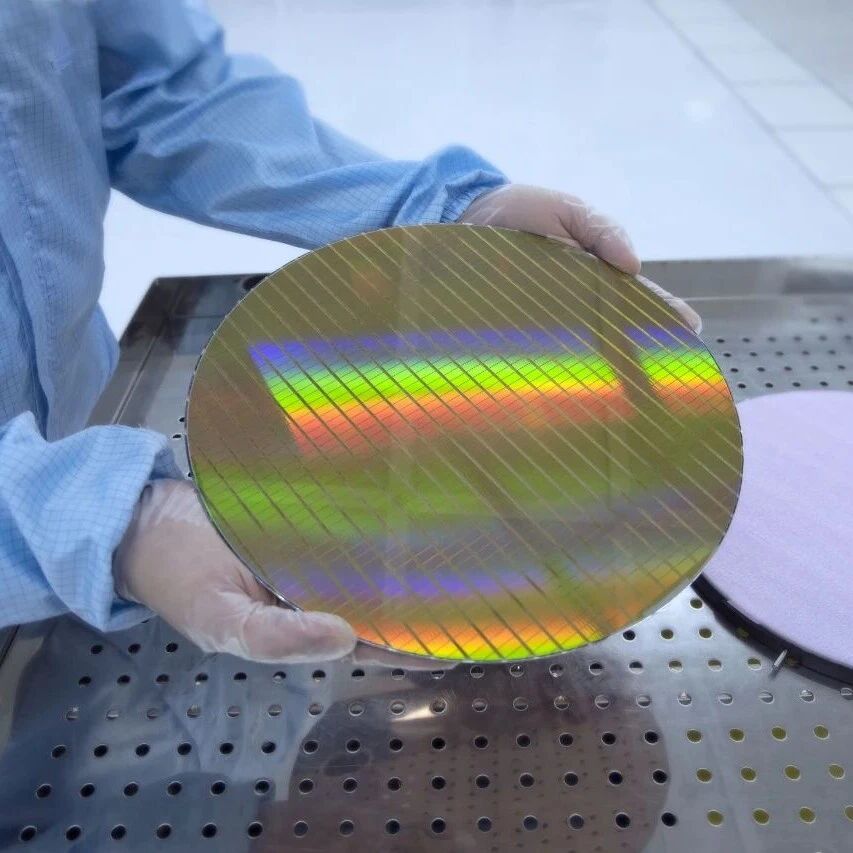
Core Insights - The establishment of Denmark's first 300mm wafer manufacturing facility, the POEM Technology Center, marks a significant step towards technological autonomy in Europe [1][3] - The center aims to accelerate breakthroughs in photonic and quantum chip manufacturing, enhancing Denmark's and Europe's semiconductor ecosystem [1][2] Group 1: Facility Overview - The POEM Technology Center is a collaboration between the Novo Nordisk Foundation's Quantum Chip Project (NQCP) and French company Riber, located at the Niels Bohr Institute of the University of Copenhagen [1] - The center will utilize advanced techniques such as molecular beam epitaxy to produce silicon and silicon-on-insulator wafers, with plans to be fully operational within a year [1][2] Group 2: Production and Research Focus - Initial materials for research are expected to be ready by the end of the year, with ongoing development of chip production infrastructure [2] - The center will serve as a pilot production line and prototype center, focusing on developing components necessary for quantum computing [2] Group 3: Strategic Importance - The POEM Technology Center aligns with Europe's efforts to reduce dependence on US and Asian chip manufacturing, supported by initiatives like the EU Chip Act [3] - The NQCP aims to create a national ecosystem for advanced quantum and photonic chips, collaborating with various stakeholders in the semiconductor industry [4]