多边主义

Search documents
国际锐评丨全球经济治理迎来更多“南方力量”
Yang Shi Xin Wen Ke Hu Duan· 2025-11-25 01:58
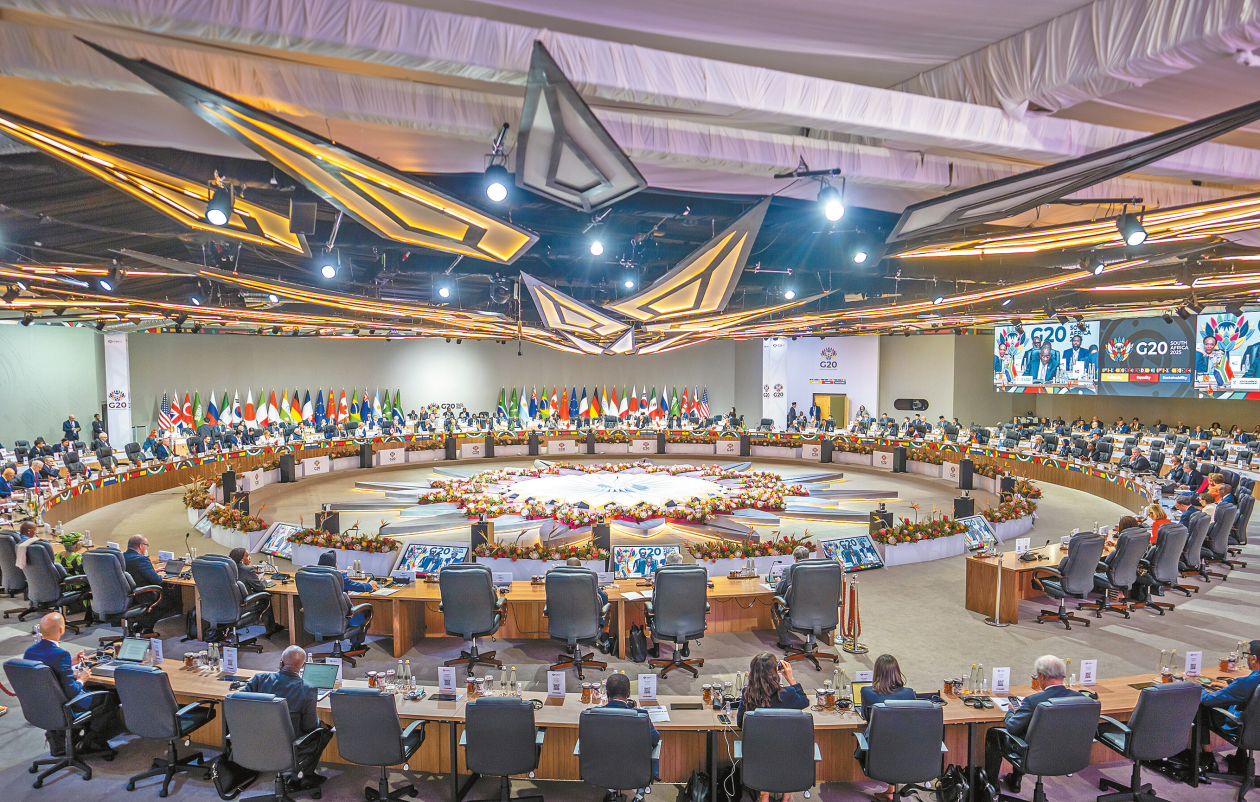
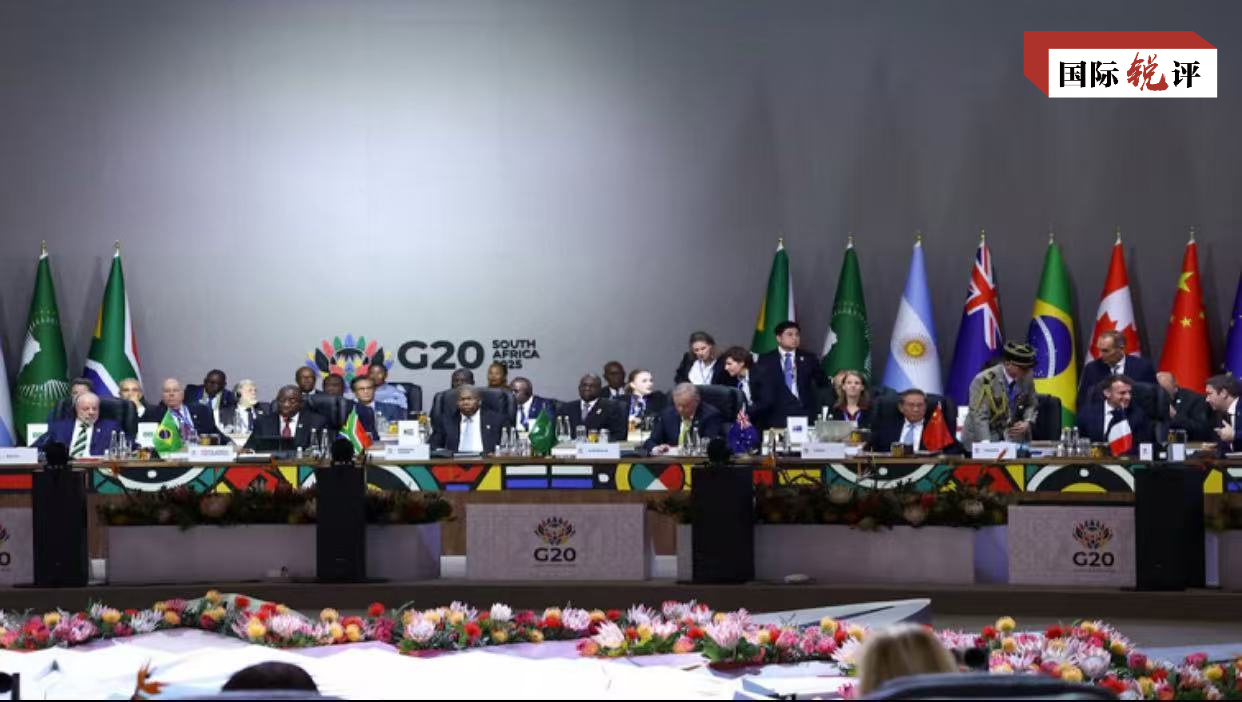
Group 1 - The G20 summit held in Johannesburg, South Africa, marked the first time the event was hosted on the African continent, emphasizing the need for unity in addressing global challenges such as economic recovery and governance issues [1][2] - The summit resulted in a joint declaration being adopted on the opening day, a historic first for G20 meetings, showcasing a commitment to collaboration among member nations [1][4] - China's Prime Minister Li Qiang highlighted the importance of cooperation to tackle the sluggish global economic recovery and proposed several practical measures to enhance global governance and development [2][3] Group 2 - China has consistently advocated for listening to African voices and supporting African initiatives, including the "Support for Africa's Industrialization Initiative" established during the 2016 G20 summit [3] - The summit addressed pressing global issues such as climate change, energy, and food security, with China proposing three key suggestions: enhancing ecological cooperation, promoting green energy, and ensuring food security [6] - The need for reform in global economic governance was emphasized, with calls for the G20 to lead in advocating for changes in institutions like the World Bank and IMF to better represent developing countries [6][7]

《联合国气候变化框架公约》第三十次缔约方大会达成系列成果文件 为应对气候变化注入信心与动力(国际视点)
Ren Min Ri Bao· 2025-11-24 23:12
当地时间11月22日,《联合国气候变化框架公约》(以下简称《公约》)第三十次缔约方大会 (COP30)在巴西贝伦落下帷幕。大会达成名为《全球动员团结协作应对气候变化挑战》的政治文件, 展现了各方合作推进绿色低碳转型的决心。《公约》秘书处执行秘书西蒙·斯蒂尔表示,COP30的成果 证明全球气候合作仍充满活力,从化石能源向可再生能源转型、增强气候韧性的趋势不可阻挡,大会为 守护地球、应对气候变化注入信心与动力。 为《巴黎协定》持续落地提供路径 今年恰逢《巴黎协定》达成10周年,"落实"成为贯穿始终的关键词。大会通过的最终政治文件,涵盖减 缓和适应气候变化、气候融资、国际合作等多项议题,为《巴黎协定》持续落地提供了具体路径。斯蒂 尔在闭幕全体会议上强调,这次大会释放了国际社会通过合作应对气候变化的明确信号。大会闭幕前发 布了《COP30全球气候行动议程成果报告》。该"行动议程"包含117项"加速解决方案计划",围绕能源 转型、生态保护、农业革新、基础设施韧性、社会发展及绿色融资六大主题,细化了30项关键目标,为 全球气候行动提供了可操作的实施框架。 中国生态环境部部长黄润秋在大会期间表示,气候变化是全人类共同面临的 ...
新华时评丨践诺于行,共同应对气候治理“行动赤字”
Xin Hua She· 2025-11-24 12:53
Core Viewpoint - The COP30 conference in Brazil marked a significant step in global climate governance, emphasizing the need for multilateralism, financial support, and just transitions to address the "action deficit" in climate change efforts [1][2][4] Group 1: Climate Governance and International Cooperation - The COP30 conference resulted in the political document "Global Mobilization and Collaborative Response to Climate Change Challenges," showcasing a commitment to green and low-carbon transformation [1] - Despite challenges such as rising unilateralism and geopolitical tensions, COP30 demonstrated that international consensus can still be achieved under the framework of the UN Climate Change Convention [1][2] Group 2: Financial Support for Developing Countries - The UN Environment Programme's 2025 Adaptation Gap Report highlights an increasing funding gap for climate adaptation in developing countries, threatening lives and economic stability [2] - COP30 reached a consensus on providing support for developing countries severely impacted by climate change, emphasizing the need to fulfill financial commitments [2] Group 3: China's Role in Climate Action - China has set ambitious targets for its 2035 Nationally Determined Contributions, covering all greenhouse gases and introducing absolute reduction targets, reflecting its commitment as a responsible major country [3] - China has established the world's most comprehensive carbon reduction policy system and the largest renewable energy system, contributing significantly to global emissions reduction [3] - As a major contributor to low-carbon technology, China exports renewable energy products globally, significantly reducing costs for wind and solar power [3] Group 4: Future Directions in Climate Governance - The conclusion of COP30 is seen as the beginning of a new phase in climate governance, with a call for practical actions to address the climate crisis and protect the planet [4]
COP30落幕巴西:适应资金增两倍,退出化石能源路线图落空
2 1 Shi Ji Jing Ji Bao Dao· 2025-11-24 11:46
Core Points - COP30 concluded with the adoption of the "Global Mobilization: United Cooperation to Address Climate Change Challenges" overall agreement, which mandates wealthy countries to double their climate funding to developing nations by 2035 [1][2] - The agreement aims to provide $1.3 trillion annually to developing countries by 2035, with adaptation funding increasing from $40 billion to $120 billion per year [2][7] - A significant controversy arose from the omission of direct references to "fossil fuels" in the final text, which left many participants disappointed [2][11] Funding and Financial Mechanisms - The overall agreement sets a target of mobilizing at least $300 billion annually for climate action [2][7] - The establishment of a loss and damage fund was discussed, but specific operational details remain unclear [7][8] - The challenge of attracting private capital for climate funding persists, as a significant portion of required funding relies on social capital [8][9] International Cooperation and Agreements - The "Carbon Emission Trading Market Open Alliance" was initiated by China, the EU, and Brazil, aiming to create a cooperative framework for carbon pricing and emissions trading [1][3] - The "Just Transition Work Program" was established, reflecting a strong consensus among parties to create mechanisms for equitable transitions [3][5] - The COP30 emphasized the importance of multilateralism and international cooperation in addressing climate change, despite geopolitical tensions [6][7] Challenges and Future Directions - The global energy structure remains heavily reliant on fossil fuels, particularly in developing countries, complicating the transition to renewable energy [12][13] - The ambitious goal of tripling renewable energy capacity set at COP28 faces significant obstacles, with many countries lagging behind [12][13] - The upcoming global conference in Colombia aims to advance the roadmap for phasing out fossil fuels, highlighting ongoing efforts despite setbacks at COP30 [11][12]
李强会见意大利总理
Yang Guang Wang· 2025-11-24 07:44
梅洛尼表示,意中关系发展势头良好。意方愿同中方用好双边合作机制,深化经贸、科技、人文等 领域合作,加强多边沟通协调,共同维护多边主义。 李强表示,去年7月,习近平主席同总理女士在北京举行会晤,就深化中意关系作出战略规划。中 方愿同意方进一步弘扬传统友好,加强发展战略对接,推进双向开放,做强传统合作优势,拓展新兴产 业合作,促进共同发展繁荣,打造更加稳定、更富成果的全面战略伙伴关系。双方要加强在联合国、二 十国集团等多边框架下的协调配合,凝聚更广泛共识,增强国际社会践行多边主义、筑牢多边机制的信 心和定力。 央广网北京11月24日消息 据中央广播电视总台中国之声《新闻和报纸摘要》报道,当地时间11月 22日,国务院总理李强在约翰内斯堡会见意大利总理梅洛尼。 ...
李强会见德国总理
Yang Guang Wang· 2025-11-24 07:44
Core Viewpoint - The meeting between Chinese Premier Li Qiang and German Chancellor Merz emphasizes the commitment to deepen bilateral relations and enhance cooperation in various fields, while maintaining respect for each other's core interests and concerns [1] Group 1: Bilateral Relations - Li Qiang highlighted the direction for further deepening bilateral relations as indicated by President Xi Jinping's earlier communication with Chancellor Merz [1] - Both parties expressed a desire to strengthen strategic communication and expand practical cooperation across various sectors [1] Group 2: Multilateral Cooperation - The Chinese side is willing to enhance multilateral communication and coordination to improve global governance and uphold multilateralism and free trade [1] - Merz acknowledged the importance of developing relations with China and expressed belief that China's 14th Five-Year Plan will present opportunities for Germany and the EU [1]
李强在二十国集团领导人第二十次峰会上的讲话
证监会发布· 2025-11-24 06:43
Group 1 - The theme of the G20 summit is "Unity, Equality, Sustainability," emphasizing the importance of unity in addressing global challenges [2] - The G20 was established in response to the Asian financial crisis in 1999 and has evolved to address various global economic issues, highlighting the need for cooperation among diverse member states [2][3] - Current global challenges include unilateralism and protectionism, which hinder international cooperation and require the G20 to seek common ground and resolve conflicts through dialogue [3] Group 2 - China has proposed initiatives to support industrialization in Africa and alleviate debt in developing countries, demonstrating a commitment to global development [4] - The G20 should enhance ecological cooperation to address climate change and promote sustainable development, with China announcing new national contributions to climate goals [5] - Strengthening green energy cooperation is essential for a fair transition to renewable energy, with China leading in renewable energy systems and reducing carbon emissions significantly [6] Group 3 - Food security is a pressing issue, with over 700 million people facing hunger; the G20 must optimize global food supply chains and enhance agricultural cooperation [6] - The rapid advancement of technology presents both opportunities and challenges, necessitating equitable access to development and the benefits of new technologies for all nations [7] - The G20 should promote cooperation in critical minerals to ensure sustainable supply and resource security, while also supporting the development of emerging economies [8]

新华时评|为全球治理体系变革凝聚南方共识
Xin Hua She· 2025-11-24 00:09
Group 1 - The G20 summit in Johannesburg marks the first time the event is held on the African continent, reflecting the collective desire of global South countries to express development demands and play a greater role in global governance reform [1] - The G20 members account for approximately 85% of the global economy and represent two-thirds of the world's population, making it a key platform for global economic governance [1] - The summit's declaration emphasizes the need for multilateral cooperation to address global challenges and calls for increased support for developing countries to promote inclusive growth and sustainable development [1] Group 2 - The current international landscape is characterized by rising unilateralism, protectionism, and geopolitical tensions, leading to sluggish global economic growth and widening development gaps [2] - A report released before the summit highlights alarming disparities between the global North and South in wealth, trade, resources, and education, warning that global prosperity cannot be built on the foundation of increasing poverty for the poor and wealth for the rich [2] - The Johannesburg summit, themed "Unity, Equality, Sustainability," is particularly significant as the global South accelerates its awakening, transitioning from passive participants in international rules to important shapers of global governance [2] Group 3 - As a major G20 member and the largest developing country, China is committed to promoting unity and revitalization among the global South [3] - China's global governance initiative, proposed in September, emphasizes principles such as sovereign equality, adherence to international law, multilateralism, and a people-centered approach, gaining broad international recognition [3] - The deepening cooperation between China and Africa focuses on enhancing the autonomous development capabilities of African countries and increasing the international community's attention to the African development agenda [3]
国际观察丨COP30凝聚全球共识 应对气候变化迈入新阶段
Xin Hua She· 2025-11-24 00:07
Core Points - The COP30 conference concluded with significant agreements, emphasizing the global consensus on the Paris Agreement and the irreversible trend towards green transformation [1][3][4] Group 1: Conference Outcomes - The conference adopted the political document "Global Mobilization: United Cooperation to Address Climate Change Challenges," which includes commitments on climate financing and international cooperation [3] - Developed countries are required to double their climate adaptation funding to developing countries by 2025 compared to 2019 levels, with a further doubling by 2035 [3] - For the first time, trade issues were included in the conference outcomes, stressing the need to avoid unilateral actions that create unfair trade discrimination against developing countries [3] Group 2: Global Support and Reactions - The outcomes received support from various groups, including the Alliance of Small Island States, which acknowledged the progress made despite imperfections [4] - The representative of the least developed countries expressed satisfaction with the commitment to increase adaptation funding for developing countries by 2035, highlighting the support for vulnerable populations [4] Group 3: Political Context and Implications - The absence of the U.S. federal government at the conference marked a significant shift, as it was the first time since 1995 that the U.S. did not send high-level representatives [7] - The conference showcased a strong political will among parties to unite against climate change, reflecting a global trend towards low-carbon and climate-resilient societies [7][8] - The conference's success was framed as a victory for science and multilateralism, indicating a collective desire to combat climate change despite geopolitical tensions [7][8] Group 4: China's Role - China played a pivotal role in advocating for the interests of developing countries, emphasizing the principle of common but differentiated responsibilities and opposing unilateral measures [9] - The country has signed numerous cooperation agreements with developing nations, implementing over 300 capacity-building projects to support climate action [9][10] - China's approach highlights the importance of harmonious coexistence between humans and nature, as reflected in its dual carbon goals and leadership in renewable energy [10]

峰会宣言“罕见”提前发布,中方呼吁重回团结协作,南非G20峰会坚守多边主义
Huan Qiu Shi Bao· 2025-11-23 23:01
打破惯例,第一天通过领导人宣言 法新社称,来自世界主要经济体(包括欧洲、中国、印度、日本、土耳其、巴西和澳大利亚)的数十位领导人出席了南非G20峰会,这是G20峰会首次在非 洲举行。G20峰会一般在会议闭幕时发表领导人宣言,但这次却打破了惯例。22日下午,南非国际关系与合作部长拉莫拉在召开记者发布会时表示,与会各 方已就会议核心议程达成共识,并通过《二十国集团领导人约翰内斯堡峰会宣言》。宣言共包含122条内容,强调通过多边合作应对全球挑战,并呼吁加强 对发展中国家的支持,以推动包容性增长与可持续发展。 【环球时报驻南非特派记者 戴楷然 环球时报特约记者 于文】二十国集团(G20)领导人第二十次峰会22日至23日在南非约翰内斯堡举行。"南非G20峰会打 破以往惯例,罕见于会议开幕时便通过《二十国集团领导人约翰内斯堡峰会宣言》。"美联社称,美国因与东道国南非的外交摩擦而抵制这次峰会,还向南 非施压,要求其不要在未经美方同意下"以二十国集团共识为前提发表任何峰会成果文件"。南非政府则表示,美方抵制峰会,已失去"发言"资格,南非不会 屈服于美方胁迫。法新社称,当前全球秩序正受到美国单边主义政策、战争和日益加剧的地缘政 ...