万物互联

Search documents
东方中科20251120
2025-11-24 01:46
Summary of Conference Call on HarmonyOS and Zhongke Honglue Industry and Company Involved - **Industry**: Operating Systems, IoT, Smart Devices - **Company**: Huawei and Zhongke Honglue Key Points and Arguments HarmonyOS Overview - HarmonyOS is divided into commercial and open-source versions, with the commercial version primarily used in smartphones and tablets, while the open-source version is widely applied in IoT devices [2][4] - As of 2024, there are 15,000 native applications supporting HarmonyOS, with a target of 100,000 applications by 2026 to enhance the ecosystem [2][6] Development and Challenges - The main challenge in developing HarmonyOS is building a robust application ecosystem, as early versions lacked popular applications like WeChat and QQ [5] - The ecosystem has significantly improved, with many native applications now available, including popular services like Amap and Alipay [5][6] Zhongke Honglue's Role - Zhongke Honglue focuses on the open-source version of HarmonyOS, primarily serving government and military clients, and has successfully adapted hardware for various industry clients [2][7] - The company is involved in local government initiatives to promote the adoption of open-source HarmonyOS solutions [7] Future Development Plans - Both commercial and open-source versions of HarmonyOS are expected to grow rapidly, with the commercial version set to release a long-term support version (6.1) in March 2026 [8] - Zhongke Honglue will continue to push for hardware adaptation and software development to meet diverse customer needs [8] Market Logic and Differentiation - The commercial logic of HarmonyOS is centered around scenario-based implementation, providing integrated solutions rather than just software licenses [9] - Zhongke Honglue leverages its industry advantages to focus on the government and military markets, offering comprehensive smart space solutions [10][11] Key Application Areas - HarmonyOS is gradually being implemented in healthcare, finance, and military sectors, focusing on non-core business areas to ensure system stability [3][12] - The successful implementation of HarmonyOS in specific scenarios is attributed to their independence from core business operations, allowing for easier adaptation [12][13] Product Development and AI Integration - The upcoming HarmonyOS 6.1 version is expected to enhance stability and compatibility, with a significant market launch anticipated in 2026 [14] - HarmonyOS is integrating AI capabilities, with many devices already supporting AI functions, positioning it competitively in the AI landscape [18] AR Technology Opportunities - HarmonyOS is poised to capitalize on the growing AR technology market, with significant resources allocated to AI development, leading to the launch of AR products [19] Market Outlook - By 2026, a significant increase in products based on HarmonyOS is expected, indicating a maturing market and a more comprehensive ecosystem [20] Other Important Insights - The focus on providing complete integrated solutions rather than standalone products is a key differentiator for HarmonyOS [9] - The gradual approach to implementing HarmonyOS in sensitive sectors like finance is crucial for ensuring stability and security [13] - The company is actively seeking new technological breakthroughs to maintain its competitive edge in the evolving market landscape [15][16]

手机与APP终将成为“时代的眼泪”
Qi Lu Wan Bao· 2025-11-21 18:29
Core Viewpoint - Elon Musk predicts that traditional smartphones and apps will disappear within the next 5 to 6 years, with AI generating most of the content consumed by users [2][3] Group 1: Future of Smartphones and Apps - Musk envisions a future where smartphones become mere display devices, integrating AI deeply to provide personalized content without the need for complex operating systems or numerous apps [2][4] - The transformation will shift from manual operations to proactive AI services, allowing for seamless interactions such as ordering breakfast based on health data and schedules [4][6] - The concept of apps as "function containers" is evolving, with AI expected to deconstruct and reassemble functionalities, leading to a dynamic service presentation rather than static app icons [6][8] Group 2: AI's Impact on Work and Daily Life - Musk indicates that AI will significantly reduce office tasks like email management and customer service in the near future, with creative jobs such as programming and writing also at risk of replacement [3][5] - The development of AI systems, such as Baidu's "伐谋," showcases advancements in self-evolving intelligent agents capable of providing optimal solutions and enhancing user interaction [5][6] Group 3: Evolution of Interaction Devices - Wearable and implantable devices are emerging as the next generation of human-computer interaction, potentially replacing smartphones as the primary interface [7][8] - The trend towards "AI-enhanced terminals" is evident, with devices like Samsung's Galaxy S25 adapting to user environments and Huawei's Mate 60 enabling seamless task transitions across multiple screens [8][9] Group 4: Challenges and Future Considerations - Despite rapid technological advancements, the transition away from traditional smartphones and apps will be gradual, with significant market presence still expected for smartphones in the near term [9][10] - Key challenges include the need for comprehensive 5G/6G network coverage, privacy concerns regarding AI algorithms, and user attachment to physical buttons [9][10]


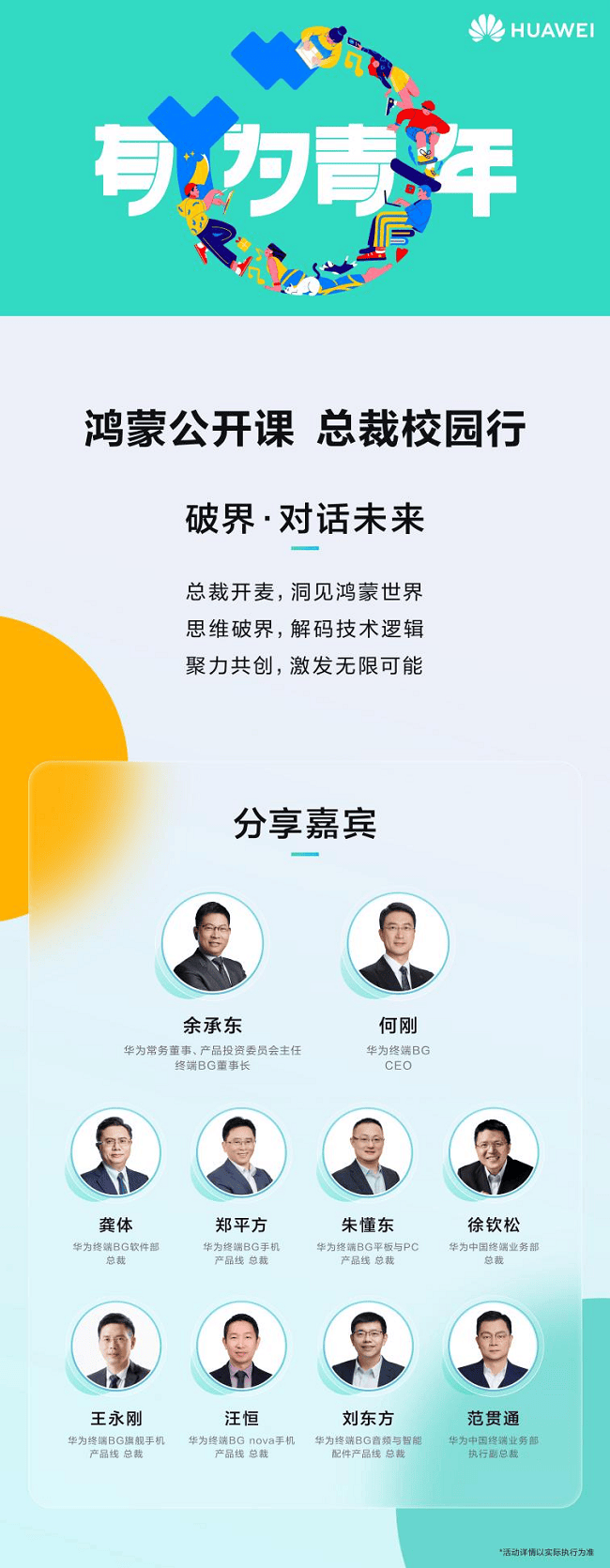
华为各领域总裁对话高校师生:破界科技创新魅力
Sou Hu Cai Jing· 2025-11-21 16:05
Group 1 - The core idea of the news is the launch of the HarmonyOS public lecture series, which aims to enhance understanding of smart technology innovation among university students and showcase the capabilities of the HarmonyOS ecosystem [1][5][11] - The HarmonyOS, launched in 2019, serves as a unified digital foundation for various devices, providing a seamless and secure smart experience [5][14] - The upcoming HarmonyOS 5 upgrade is described as the most significant in its history, featuring comprehensive enhancements in kernel architecture, system experience, and application ecosystem [5][16] Group 2 - The HarmonyOS public lecture series facilitates direct interaction between students and Huawei executives, allowing students to experience real-time collaboration among devices [11][13] - The initiative aims to transform technical knowledge into accessible case studies, breaking down the perception of technology as a "black box" and fostering value co-creation [13] - The HarmonyOS ecosystem has made significant progress, with over 23 million devices equipped with HarmonyOS 5, indicating a shift from "usable" to "well-used" [16][18] Group 3 - The public lecture series has been conducted in over 450 universities across China, with more than 1,100 sessions held, emphasizing the importance of nurturing a technology innovation environment [18] - The initiative not only shares technology but also explores future opportunities, allowing companies to listen to young voices while students gain insights into market demands for talent [18]
筑牢数字经济“根基” 鸿蒙公开课搭建产教融合新桥梁
Ren Min Wang· 2025-11-21 06:45
最新数据显示,截至目前,搭载HarmonyOS的终端设备数量已突破10亿台,鸿蒙注册开发者规模达到 800万,已上架鸿蒙应用和元服务覆盖了办公、社交、娱乐等18个垂直领域。快速丰富完善的鸿蒙生 态,为应用创新提供了更广阔的土壤。 业内分析认为,当前鸿蒙生态已进入"指数级扩张"的飞轮加速新阶段,依托中国科技企业集体发力,鸿 蒙生态已穿越操作系统生态必经的"微笑曲线"最低点。面对如此庞大的产业规模与增长速度,需要更多 用户、开发者和生态伙伴加入。行业对高素质复合型人才的需求比以往任何时候都更为迫切。 正在全国多所高校陆续展开的鸿蒙公开课·总裁校园行,便是在这一背景下的生动实践。该活动以"破界· 对话未来"为主题,通过华为各领域总裁的现场分享和鸿蒙全场景体验,帮助大学生开拓视野、理解技 术,搭建起企业与学子之间的沟通桥梁。 据悉,从2015年立项研发到2019年正式发布,再到如今HarmonyOS 6的全面升级,鸿蒙操作系统通过全 栈自研的技术架构,逐步构建起了"一个系统、统一生态"的全新格局,为全球移动操作系统提供了新的 选择。 此次鸿蒙公开课·总裁校园行正是基于鸿蒙系统及生态快速发展的产业背景,对创新人才培养模 ...
第七届东风梦想车大赛落幕,清华大学绝对队斩获大奖
Zhong Guo Jing Ying Bao· 2025-11-21 01:54
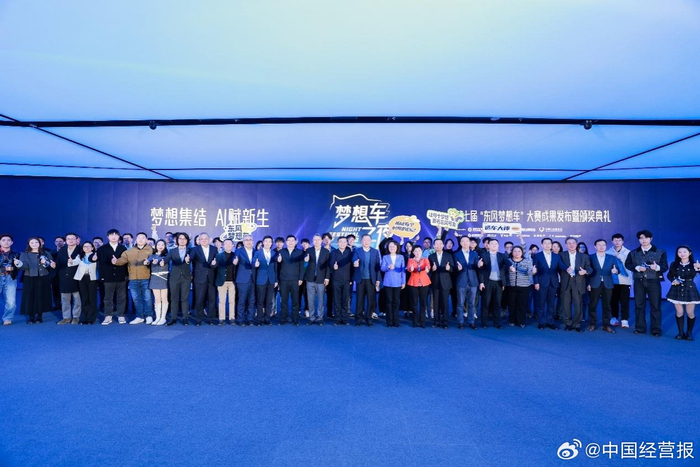
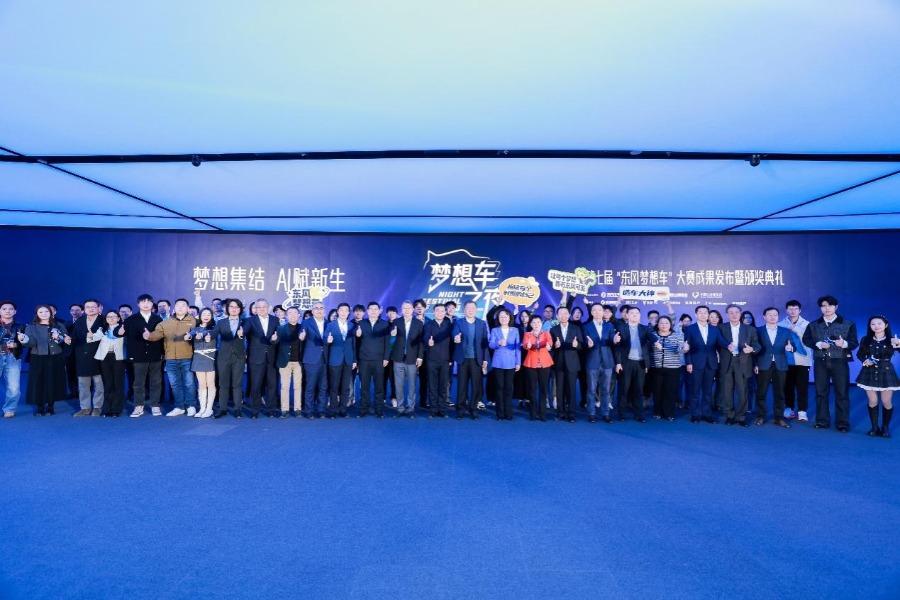
Group 1 - The "Dongfeng Dream Car" competition has attracted participation from 76 institutions and received a total of 231 innovative design submissions, showcasing forward-looking and practical ideas in the automotive industry [1][2] - The competition aims to provide a platform for young talents to showcase their skills and contribute to the transformation and upgrading of China's automotive industry towards new energy and intelligence [2][3] - The event was attended by key figures from the Communist Youth League and Dongfeng Motor Corporation, emphasizing the importance of social responsibility, technological innovation, and talent development in the automotive sector [2][3] Group 2 - Dongfeng Motor Corporation is committed to enhancing its role in the automotive industry by integrating social responsibility, technological innovation, and talent cultivation into its corporate DNA [2][3] - The company plans to accelerate the development of intelligent driving and smart cockpit technologies, aiming to transform vehicles into "intelligent mobile spaces" that understand user needs [3] - Dongfeng is also focusing on green energy technology innovation across various routes, including hybrid, electric, and hydrogen, to provide comprehensive and anxiety-free green travel solutions [3][4] Group 3 - Over the past ten years, the "Dongfeng Dream Car" competition has influenced over 20 million young students globally and has become a significant design competition in the automotive industry, attracting nearly a hundred universities and generating 1,191 innovative design works [4]

第七届“东风梦想车”大赛落幕 汇聚76所院校、231件作品参赛
Zhong Guo Jing Ying Bao· 2025-11-20 14:16
Core Insights - The future of automobiles is envisioned as not just a means of transportation but as a companion that provides emotional value and entertainment [1] - The "Dream Car Night 2025" event showcased the results of the 7th "Dongfeng Dream Car" competition, highlighting the importance of youth engagement in the automotive industry's transformation [2] Group 1: Event Overview - The 7th "Dongfeng Dream Car" competition attracted teams from 76 institutions worldwide, resulting in 231 innovative submissions [2] - Tsinghua University's "Absolute Team" won the grand prize and the best popularity award with their project "Lingyu - Twins," while South China University of Technology and Coventry University secured the second and third places respectively [2] - The event provided a platform for youth to showcase their talents and engage in the automotive industry's shift towards new energy and intelligent upgrades [2] Group 2: Company Commitment - Dongfeng Company emphasizes its commitment to social responsibility, technological innovation, and talent development as part of its corporate mission [3] - The company aims to deepen strategic collaboration, increase public welfare investments, and provide broader growth opportunities for young talents [3] Group 3: Future Directions - Dongfeng Company plans to leverage the "Taiji Big Model" to advance smart driving and smart cabin technologies, transforming vehicles into intelligent mobile spaces [5] - The company is committed to green energy technology innovation, covering hybrid, pure electric, and hydrogen energy solutions to support carbon neutrality goals [5] - Dongfeng aims to create an integrated smart travel ecosystem that connects vehicles with urban traffic systems and smart homes, promoting a connected lifestyle [5] Group 4: Competition Impact - Over ten years, the "Dongfeng Dream Car" competition has influenced over 20 million youth globally, attracting nearly a hundred universities and generating 1,191 innovative design projects [5]

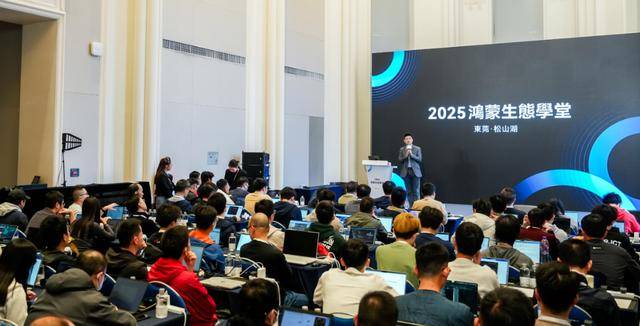
鸿蒙生态学堂创新实训营东莞站落幕,为港澳企业开发者注入新动能
Sou Hu Cai Jing· 2025-11-20 12:05
Core Insights - Huawei's HarmonyOS ecosystem training camp successfully held a specialized training program for developers from Hong Kong and Macau, aiming to empower them with key capabilities to expand their business platforms and achieve new commercial growth by 2025 [1] Group 1: Training Program Focus - The training program is designed to address the specific digital transformation needs of Hong Kong and Macau's core industries, supporting Hong Kong's status as an international financial center and Macau's position as a global tourism hub [3] - Course content includes topics such as multi-terminal experiences in smart retail, localized digital services in the tourism sector, cross-border payment adaptations, and lightweight device solutions for small and medium enterprises [3] Group 2: Practical Implementation and Support - The curriculum covers HarmonyOS system architecture, distributed capabilities, and the entire process of application adaptation and listing, with materials provided in traditional Chinese and support in Cantonese/English [4] - Huawei's expert team shared numerous practical cases and implementation paths tailored for the Hong Kong and Macau markets, including cross-device collaboration across multiple cities in the Greater Bay Area and local payment integration [4] Group 3: Industry Recognition and Value - The training camp received enthusiastic feedback from participating companies, highlighting the need for technological upgrades in Macau's tourism industry to enhance visitor satisfaction and spending [5] - Representatives from Hong Kong's financial institutions recognized the unique value of HarmonyOS in facilitating seamless cross-device business collaboration while ensuring compliance [5] Group 4: Certification and Future Collaboration - Huawei awarded official HarmonyOS professional certification to participants who passed the assessment, providing important qualification support for developers in the HarmonyOS ecosystem [5] - The training further strengthened the exchange and cooperation in digital technology between mainland China and Hong Kong and Macau, with companies expressing optimism about new business opportunities in the interconnected era [6] Group 5: Commitment to Ecosystem Development - Huawei expressed its commitment to continuously open its technological capabilities and collaborate with Hong Kong and Macau enterprises to build a prosperous HarmonyOS ecosystem, enhancing users' digital life experiences [8]
针对金融服务痛点 华为与科蓝软件联手打造鸿蒙智能网点
Zheng Quan Ri Bao Wang· 2025-11-13 07:13
Core Insights - Huawei and Beijing Kylin Software jointly launched the "Navigating Smart Finance - Harmony Joint Innovation Solution," showcasing Huawei's Harmony ecosystem in the intelligent robotics sector and emphasizing Kylin Software's "scene-driven" approach in technological innovation and industrial application [1][4] Group 1: Market Demand and Challenges - There is a growing demand for intelligent, personalized, and convenient services in the financial services sector, with traditional service models facing challenges in efficiency, coverage, and user experience [1] - Issues such as idle bank counters, long customer wait times, and disjointed online-offline service experiences negatively impact user satisfaction [1] Group 2: Product Development and Capabilities - The Harmony intelligent robot "Xiao Lan" is designed to replace human tellers, construct intelligent service environments in bank branches, and automate specific business processes seamlessly [2] - "Xiao Lan" is equipped with advanced natural language processing and computer vision algorithms, enabling high-precision voice recognition, multi-turn intelligent dialogue, facial recognition, and environmental awareness [3] Group 3: Strategic Collaboration and Future Outlook - Huawei emphasizes that the value of technological innovation lies in serving scenarios and creating value, with the core philosophy of the Harmony operating system being "everything is interconnected, and scenarios are king" [4] - Both Huawei and Kylin Software express confidence in their strategic partnership, aiming to drive the intelligent transformation of the financial sector through scene-driven innovation [4]

现在还有入场AI的蓝海?
虎嗅APP· 2025-11-12 09:48
Core Insights - The article discusses the evolution of mobile application ecosystems, highlighting the shift from traditional app development to AI-driven systems as the new growth frontier in the context of a slowing mobile internet user growth rate of 2.28% in China [2][5]. Group 1: AI Ecosystem Development - The report identifies ten potential growth areas within the Harmony ecosystem, including social communication, financial payments, audio entertainment, and healthcare, which have emerged as new opportunities in the AI era [7]. - The Harmony system's distributed technology aims to create a comprehensive, intelligent, and secure ecosystem, facilitating the integration of AI across various sectors [5][6]. Group 2: Financial Payments and User Experience - In the financial payments sector, Harmony's potential lies in enhancing public service payment systems, which are currently fragmented and do not meet user demands for convenience and security [9]. - The integration of AI in audio and news applications is transforming user habits, shifting from a demand-driven model to a more intuitive, context-aware service that anticipates user needs [11][12]. Group 3: Developer Opportunities and Ecosystem Growth - The article emphasizes the importance of AI capabilities being integrated at the operating system level, creating a flow of benefits from algorithms to systems and ultimately to developers [16]. - Developers are experiencing reduced barriers to entry and increased opportunities for innovation within the Harmony ecosystem, as evidenced by the success of applications like "Yao Guanjia," which saw a peak of 10 million new users in a month [20][24]. Group 4: Investment and Strategic Support - Harmony plans to invest over 6 billion RMB annually to support and incentivize developer innovation, aiming to create a positive cycle of creativity and development [25][29]. - The article notes that the current stage of the Harmony ecosystem presents a unique investment opportunity, as its "ecological value" may offer greater long-term potential compared to immediate revenue generation [29][30]. Group 5: Future of AI Operating Systems - The rise of AI operating systems represents a significant shift in the technological landscape, redefining user experience and the relationship between applications and systems [30]. - The article concludes that the greatest opportunities lie in actively participating in shaping the new ecosystem rather than searching for untapped areas within the existing framework [30].

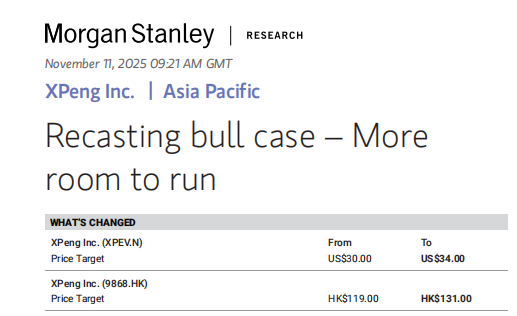
上调目标价!大摩猛赞小鹏汽车:不仅能对抗电动汽车同行,还能与成熟科技公司竞争
Zhi Tong Cai Jing· 2025-11-11 14:23
Core Viewpoint - XPeng Motors' stock price has surged significantly after a prolonged period of stagnation, with a 16% increase in US markets and an 18% rise in Hong Kong markets following a positive report from Morgan Stanley, which raised the target price to $34 per share and HK$131 [1][2]. Group 1: Strategic Positioning - Morgan Stanley believes XPeng is transitioning from being merely an electric vehicle manufacturer to a diversified player in artificial intelligence applications, which is expected to provide asymmetric advantages against competitors in both the EV and tech sectors [3]. - Despite having a smaller fleet compared to industry giants like BYD and Geely, XPeng's early focus on autonomous driving and self-developed AI computing is anticipated to accelerate its data collection and learning processes [3]. Group 2: Technological Advancements - XPeng showcased new products, including humanoid robots and autonomous taxis, during its technology day, which operate on the same foundational models, enhancing data acquisition and machine learning capabilities [4]. - The introduction of XPeng's AI Turing chip, which supports L3 autonomous driving, is a key component of its VLA 2.0 system and is expected to be integrated into new vehicle models starting in 2025 [7]. Group 3: Valuation and Market Potential - Morgan Stanley has updated its bullish scenario for XPeng, incorporating the potential revenue from AI products, humanoid robots, and autonomous taxis, alongside the ongoing expansion of its EV business [5]. - The estimated valuation for XPeng's AI Turing chip business is projected at 47 billion RMB, with potential revenue reaching 5-6 billion RMB by 2028 [8]. - The humanoid robot segment is valued at 7 billion RMB, with expectations of rapid growth from 2026 to 2030 [10]. - The autonomous taxi business is estimated to be worth 14 billion RMB, with a projected fleet size of 65,000 vehicles by 2028 [11]. - Overall, Morgan Stanley's bullish scenario values XPeng at approximately 368 billion RMB, factoring in the automotive business, AI chip business, humanoid robots, and autonomous taxis [12].