制裁

Search documents
台当局承认从俄罗斯大量购买,然后立刻甩锅
中国能源报· 2025-10-09 07:16
Group 1 - Taiwan has become the largest global buyer of Russian naphtha, despite sanctions imposed by the US and EU on Russia [3][5] - In the first half of 2025, the value of Russian naphtha imported by Taiwan was approximately $1.3 billion, with a monthly import volume nearly six times that of 2022 [5] - Russian naphtha accounted for 45% of Taiwan's total naphtha imports [5] Group 2 - Concerns have been raised about potential US tariffs on Taiwan due to its continued purchase of Russian naphtha, similar to actions taken against India [6] - The Taiwanese government has communicated with Formosa Plastics regarding their procurement of Russian naphtha and has sought the EU's opinion on the matter [6] - The Taiwanese official acknowledged uncertainty regarding supply security and potential future tariffs, stating that if the EU decides not to buy, Formosa Plastics will also cease purchases [7]

“第二战线”的极限施压
Hu Xiu· 2025-10-06 06:32
Group 1 - The core viewpoint of the article highlights the intensified pressure from the US, Europe, and Ukraine on Russia's energy revenue as a strategic move in the ongoing conflict [1] - Ukraine has shifted its focus to attacking oil refineries within Russia, with a significant increase in drone strikes targeting these facilities since August 2025, resulting in 21 out of 38 major refineries being attacked [2][3] - The situation in Crimea has led to gasoline rationing, with limits imposed on purchases, indicating the impact of these attacks on local fuel availability [4][5] Group 2 - Ukrainian President Zelensky emphasized that targeting Russia's oil industry is crucial for forcing negotiations, stating that the most effective sanctions involve attacks on refineries and storage facilities [6] - Despite difficulties in fuel supply within Russia, oil exports have reportedly reached new highs, suggesting that sanctions and refinery attacks alone may not be sufficient to compel Russia to yield [7][8] - The US is considering further support for Ukraine, including the potential provision of long-range Tomahawk cruise missiles, although there are doubts about the feasibility of this plan [9][10][13] Group 3 - The French Navy recently seized a tanker allegedly part of Russia's "shadow fleet," which is used to transport sanctioned oil, indicating a proactive stance against such operations [14][15] - The "shadow fleet" has doubled in size since the onset of the conflict, primarily to meet the demand for transporting Russian oil, highlighting the challenges of enforcing sanctions [18] - The EU estimates that the "shadow fleet" contributes over €30 billion annually to Russia's budget, which is significant for funding the war in Ukraine [22] Group 4 - The article discusses three potential scenarios for Russia regarding the ongoing conflict, including a complete military victory, a prolonged low-intensity conflict, or a negotiated ceasefire [26][31] - The article suggests that the prospect of lifting sanctions is becoming less significant for Russia, as the potential benefits do not warrant major concessions [36][37] - Public resilience in Russia towards the economic costs of the war is noted, with historical context provided regarding the slow economic growth prior to the conflict [40][41]
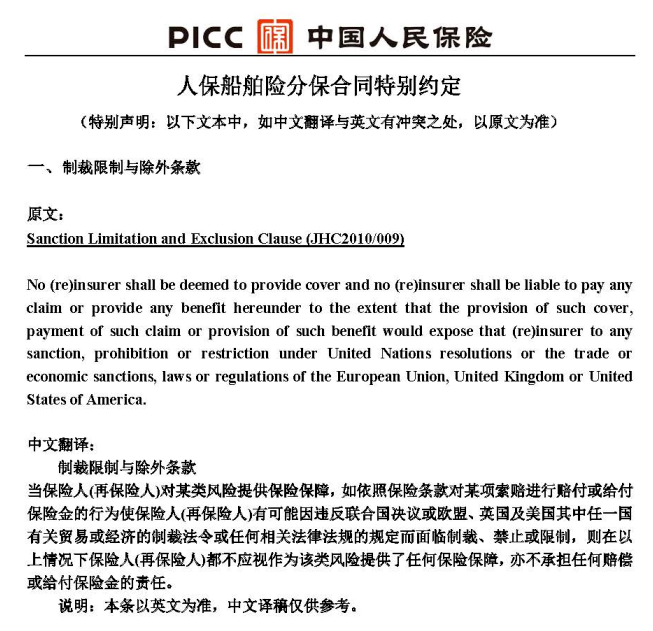
十余家中国实体被纳入名单!欧盟制裁风暴再升级
Sou Hu Cai Jing· 2025-09-28 10:04
Core Points - The European Union (EU) is moving towards a more aggressive stance against Russia, aiming to ban imports of liquefied natural gas (LNG) from Russia by 2027 under pressure from the United States [1] - The EU Commission has proposed a new round of sanctions that includes unprecedented measures targeting various sectors, including energy, finance, and technology, with a focus on energy [1][2] - The sanctions will also affect Chinese entities, with around 12 Chinese firms potentially facing restrictions on trade with EU companies [5] Energy Sector - The proposed sanctions include a complete ban on importing Russian LNG and a reduction of the price cap on Russian crude oil to $47.6 per barrel [1] - The EU plans to impose sanctions on 118 vessels of Russia's "shadow fleet," increasing the total number of sanctioned Russian ships to over 560 [2] Financial and Technological Measures - The sanctions will expand the trading ban on Russian banks within Russia and third countries, and for the first time, will include restrictions on cryptocurrency platforms to prevent sanction evasion [2] - New direct export restrictions on military goods and technology are also proposed, with 45 Russian and third-country companies set to be added to the sanctions list [2] Impact on Chinese Entities - The EU has prepared a sanctions list that includes approximately 12 Chinese entities, which would prohibit EU companies from engaging in any business with them [5] - Two Chinese petrochemical companies are also facing a complete trading ban with EU companies regarding oil and gas [5] Internal EU Disagreements - There are significant divisions within the EU regarding the sanctions, particularly from Hungary, which opposes the early cessation of Russian fossil fuel imports due to concerns over national energy security [6] - The approval of the sanctions requires unanimous consent from all 27 EU member states, and Hungary's energy security concerns may pose a significant obstacle [6]
百利好晚盘分析:降息押注盛行 黄金继续破高
Sou Hu Cai Jing· 2025-09-22 09:42
Gold - The Federal Reserve lowered interest rates by 25 basis points on September 18, with projections indicating two more 25 basis point cuts in the upcoming meetings, targeting a rate of 3.4% for next year, which is less than investors expected [1] - Wall Street believes that the rate cuts will occur faster than the Fed's projections, with futures markets betting on a drop to 3% by the end of next year, significantly lower than the Fed's forecast [1] - Technical analysis shows a bullish trend for gold, with a strong likelihood of further increases, and short-term support at $3,695 [1] Oil - OPEC+ has accelerated production since April, with cumulative increases exceeding the voluntary cuts of 2.2 million barrels per day planned for November 2023, ending a year earlier than expected [2] - The U.S. Energy Information Administration reported a 4 million barrel increase in distillate inventories, raising concerns about oversupply [2] - Technical analysis indicates a bearish outlook for oil, with a potential drop below $61.50 leading to a target of $55 [2] Dollar Index - New Fed Governor Milan emphasized the Fed's independence and the need for objective economic data interpretation, suggesting a rate cut of over 100 basis points by year-end [3] - Minneapolis Fed President Kashkari noted that a weak job market influenced the September rate cut decision, with further cuts likely in upcoming meetings [3] - The dollar index rebounded strongly post-Fed meeting, with resistance at the 97.80-98 range and key support at 97.23 [3] Nikkei 225 - The Nikkei 225 has maintained a strong bullish trend with high volatility, indicating a high probability of breaking previous highs [4] Copper - Copper prices experienced a pullback from $4.65, finding support at $4.51, with a potential for further gains in the near term [5] - Short-term resistance is noted at $4.62, with a breakout potentially targeting the $4.65-$4.70 range, and support at $4.53 [5] Market Overview - The U.S. House passed a Republican funding bill, but it failed in the Senate, prompting Democratic leaders to seek discussions with Trump to avoid a government shutdown [6] - The EU Commission approved a new sanctions package against Russia, lowering the oil price cap to $47.6 per barrel and proposing a ban on Russian LNG imports by January 1, 2027, a year earlier than planned [6] - The Bank of Japan maintained interest rates, with two members proposing a 25 basis point hike and initiating an ETF selling plan with an annual reduction of 330 billion yen [7]

原油成品油早报-20250922
Yong An Qi Huo· 2025-09-22 05:25
Group 1: Report Summary - The report is an early morning report on crude oil and refined oil, released on September 22, 2025, by the Energy and Chemicals Team of the Research Center [2] - It provides price data from September 15 - 19, 2025, for various oil - related products and analyzes daily news, regional fundamentals, and presents a weekly view [3][5][6] Group 2: Price Data Changes Crude Oil and Related Products - WTI decreased by $0.89 from September 15 - 19, 2025; BRENT decreased by $0.76; DUBAI decreased by $0.35 [3] - SC decreased by 4.80; OMAN decreased by 1.30 [3] Refined Oil and Other Products - Domestic gasoline decreased by $50.00; domestic diesel decreased by $28.00 [3] - Japan naphtha CFR dropped by 2.95; Singapore fuel oil 380CST decreased by 0.2 [3] Group 3: Daily News - Trump pressured European countries to stop buying Russian oil to end the Russia - Ukraine conflict [3] - Iran will suspend cooperation with the International Atomic Energy Agency due to the actions of the UK, France, and Germany [4] - Russia called the EU's reduction of Russian energy imports a "self - harm" behavior [4] - Cuba condemned the US for trying to seize Venezuela's resources through its actions in the Caribbean [5] - The UN Security Council vetoed the resolution to extend Iran's sanctions exemption, and sanctions may resume if no agreement is reached by September 27 [5] Group 4: Regional Fundamentals - In the week of September 12, US crude oil exports increased by 253.2 thousand barrels per day, while domestic production decreased by 1.3 thousand barrels [5] - Commercial crude oil inventory (excluding strategic reserves) decreased by 9.285 million barrels, a 2.19% decline [6] - Strategic Petroleum Reserve (SPR) inventory increased by 504 thousand barrels, a 0.12% increase [6] - The four - week average supply of US crude oil products increased by 1.69% year - on - year [6] - From September 12 - 18, the main refinery operating rate fluctuated, Shandong local refinery operating rate increased, domestic production of gasoline and diesel rose, and their inventories also increased [6] Group 5: Weekly View - This week, oil prices fluctuated at a high level, with fundamental and geopolitical factors diverging [6] - The EU's sanctions on Russia target shadow fleets, Russian banks, and oil buyers; Russian refined oil exports decreased by about 300 thousand barrels per day, while crude oil net exports increased by about 9% year - on - year [6] - Iranian crude oil exports did not decline; OPEC crude oil net exports increased by 11% year - on - year in September [6] - US EIA commercial crude oil inventory decreased, gasoline inventory decreased, and diesel inventory increased significantly [6] - Global refinery profits were divided, with US refinery profits rebounding, domestic refinery operating rates rising, and European and American refinery operating rates falling [6] - In the baseline scenario, there will be an oversupply of over 200 thousand barrels per day in Q4 2025 and 180 - 250 thousand barrels per day in 2026 [6] - It is expected that the absolute price center in Q4 will fall to $55 - 60 per barrel [6]
欧盟还是动手了,对购买俄油的中国公司进行制裁,美国得偿所愿?
Sou Hu Cai Jing· 2025-09-21 12:24
Group 1 - The European Union (EU) is set to impose sanctions on Chinese companies as part of its 19th round of sanctions against Russia, marking a significant shift in its approach [1][28] - The EU's dependency on the US for strategic decisions has been highlighted, with the EU executing US directives without substantial resistance [3][23] - The EU's economic growth has lagged behind China's, with an average growth rate of only 1.2% over the past decade compared to China's 5% [23] Group 2 - The automotive industry in Germany heavily relies on China, with 28% of its production value dependent on the Chinese market, raising concerns about the impact of sanctions [10][11] - France's agricultural exports to China, including wine and cheese, reached €4.5 billion in 2023, indicating the importance of the Chinese market for EU countries [13] - The sanctions against Chinese companies may disrupt the supply chain for critical materials, particularly in the automotive sector, where rare earth materials are essential [10][11] Group 3 - The US has strategically positioned itself to leverage the EU's actions against China while avoiding direct confrontation, particularly in sectors like rare earths and agricultural products [5][21] - The EU's sanctions are seen as a tool for the US to pressure China on trade issues, particularly in rare earths and soybeans, where the US has significant dependencies [18][21] - The EU's attempt to sanction Chinese companies may ultimately backfire, as many European firms express unwillingness to abandon the Chinese market [23][28]
为讨好特朗普,欧盟对俄罗斯下狠手,提前一年淘汰俄液化天然气
Sou Hu Cai Jing· 2025-09-21 10:49
Core Viewpoint - The European Commission has proposed a significant change in the energy landscape by banning the import of Russian liquefied natural gas (LNG) starting January 1, 2027, reflecting a growing urgency for energy independence from Russia [1][3]. Group 1: Financial Implications - The EU currently pays between €500 million to €700 million monthly for Russian LNG imports, translating to an annual outflow of €6 billion to €8.4 billion, which is a crucial source of foreign exchange for Russia [3]. - The accelerated timeline for the ban, moved up by a year, indicates the EU's increasing urgency regarding energy independence [3]. Group 2: Strategic Considerations - The proposal aims to weaken Russia's financial capabilities, as energy export revenues are a significant part of the Russian federal budget, contributing hundreds of billions annually [12]. - The EU's decision is influenced by multiple factors, including pressure from the U.S. government to reduce reliance on Russian energy, which is viewed as a security risk [7]. Group 3: Political Dynamics - The proposal marks a fundamental shift in the EU's energy policy, as previous sanctions did not target natural gas due to the need for unanimous agreement among member states [15]. - Some EU member states, particularly landlocked ones, face significant challenges in transitioning away from Russian pipeline gas, necessitating substantial investment and time to develop alternative infrastructure [17]. Group 4: Implementation Challenges - The proposal must undergo a complex approval process to become legally binding, requiring specific majority support in the European Council and simple majority approval in the European Parliament [22]. - There are discussions among European Parliament members to include pipeline gas in the ban and to expedite the implementation timeline, indicating a growing resolve to eliminate dependence on Russian fossil fuels [24].
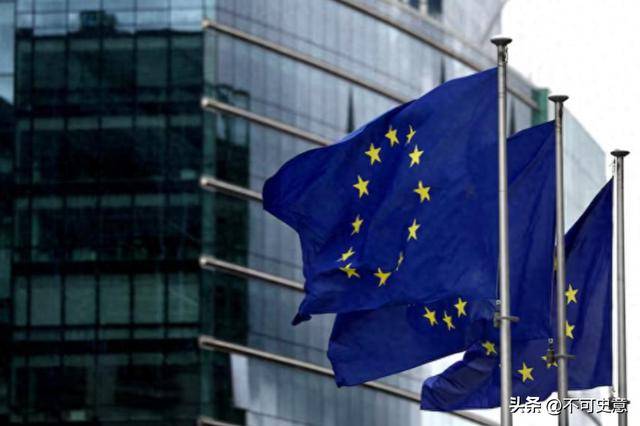
欧盟不计前嫌,要跟美联手搞俄罗斯?敢加100%关税,中国重拳伺候
Sou Hu Cai Jing· 2025-09-15 06:13
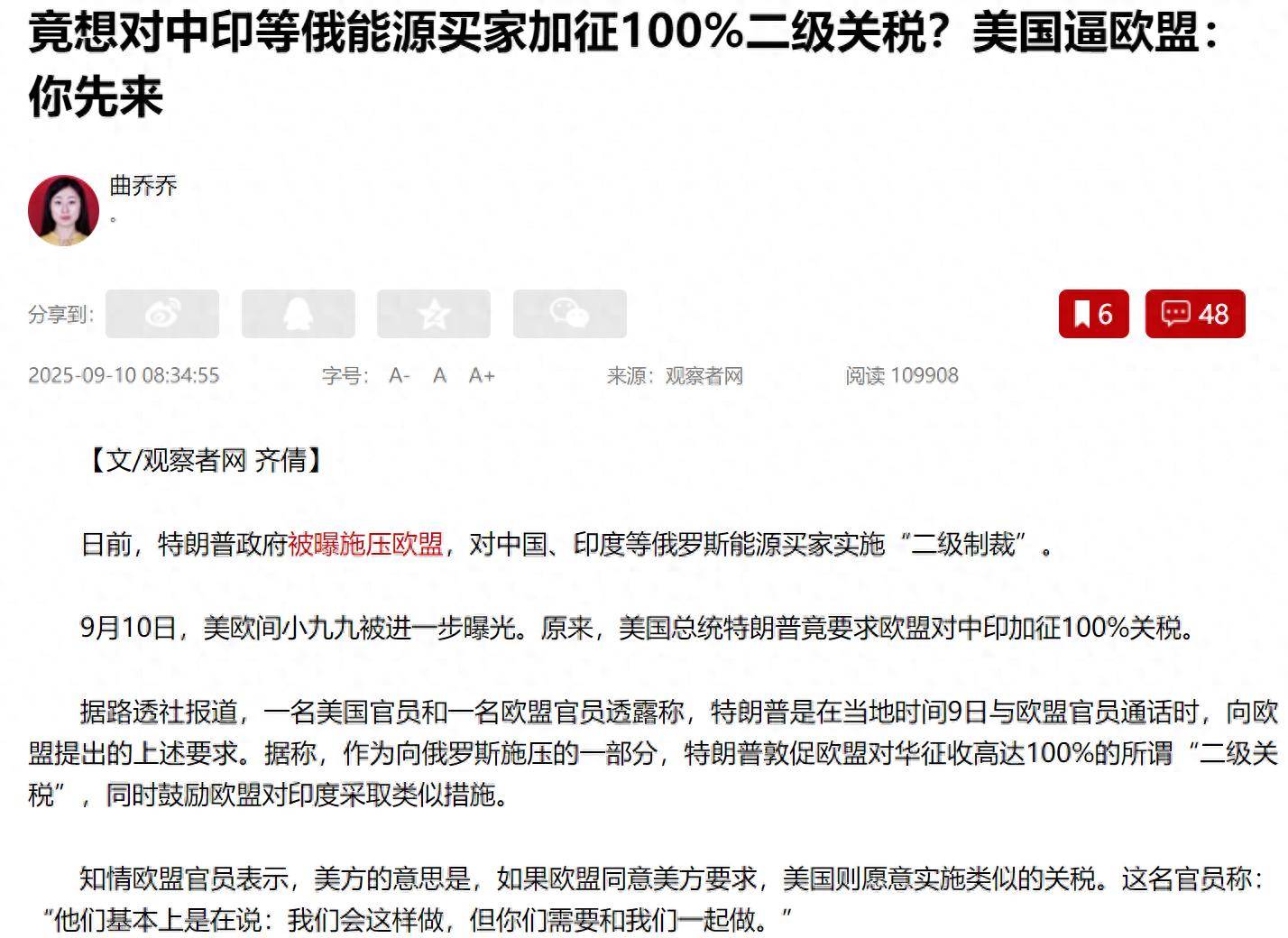
Group 1 - The core viewpoint of the articles revolves around the escalating tensions between the US, EU, and Russia, with Trump signaling a new round of sanctions against Russia and countries purchasing Russian energy [1][5] - Trump is reportedly planning to impose 100% secondary tariffs on China and India, indicating a broader strategy to confront not only Russia but also China [1][5] - The EU's involvement in sanctioning Russia is seen as an attempt to assert its role in resolving the Russia-Ukraine conflict, as it has previously been sidelined in negotiations [7][8] Group 2 - The recent agreement between the US and EU on tariffs is fragile, and the EU's alignment with the US on sanctions against Russia is viewed as a way to strengthen this agreement [8][9] - Despite the sanctions, the EU remains dependent on Russian energy, highlighting a contradiction in its stance as it seeks to restrict imports from other nations while continuing its own purchases [11] - The articles suggest that the US and EU's aggressive stance towards China regarding Russian energy imports may backfire, as China is likely to continue and even increase its imports of Russian energy [11]
泽连斯基会见芬兰总统
证券时报· 2025-09-11 14:16
Group 1 - The core issue discussed is the incident of drones entering Polish airspace, which Ukraine claims were launched by Russia [1] - Poland's military responded to the drone incursion by shooting down several drones, which they assert originated from Russia, while Russia denies this claim [1][3] - The Polish government has requested an emergency meeting of the United Nations Security Council to address the drone incident [3] Group 2 - Ukraine's President Zelensky expressed gratitude for Finland's support of new EU sanctions against Russia and reiterated Ukraine's desire to join the EU [1] - Zelensky suggested that the drone attacks on Poland could be an attempt by Russia to hinder Ukraine's partners from providing air defense systems before winter [1] - The Netherlands has summoned the Russian ambassador to protest the drone incident and indicated the possibility of further sanctions against Russia [5]