复利

Search documents
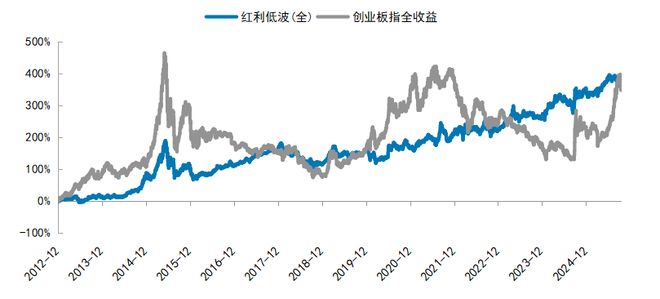
A股一场跨越十三年的“龟兔赛跑” ——红利的“慢”与成长的“快”之间,藏着多数人忽略的长期真相
2 1 Shi Ji Jing Ji Bao Dao· 2025-11-04 14:04
Core Insights - The article discusses the long-term performance comparison between dividend low-volatility indices and growth indices in the A-share market, highlighting their convergence in returns by September 2025 [1][4]. Group 1: Dividend Low-Volatility Indices - Dividend investments are often perceived as stagnant and associated with traditional sectors like coal, electricity, and transportation, leading to their neglect in favor of growth stocks [4][5]. - The characteristics of dividend indices include a systematic value screening mechanism that emphasizes sustainable dividend payments and valuation safety margins, which is rare in the A-share market [5][11]. - The compounding effect of reinvested dividends creates a significant long-term return, positioning time as an ally for investors [5][12]. Group 2: Growth Investments - Growth investments are characterized by high volatility and frequent narrative shifts, making them challenging to manage, with the potential for significant losses during market corrections [8][9]. - The allure of growth stocks often leads to emotional decision-making, causing investors to exit positions prematurely during downturns [9][10]. - The article emphasizes that while growth investments can uncover opportunities, they also come with high risks and uncertainties, contrasting with the steadiness of dividend strategies [11][13]. Group 3: Investment Philosophy - The article posits that dividend strategies offer a more suitable investment approach for ordinary investors, focusing on discipline, steady returns, and the power of compounding rather than speculative gains [11][12]. - It encourages investors to reflect on their ability to handle market volatility and whether they can maintain composure amidst market fluctuations, suggesting that dividend strategies may be more aligned with their needs [13][14]. - The conclusion draws a distinction between fleeting wealth stories and the enduring value of stable assets, advocating for a long-term investment perspective [14][15].

静默的复利︱重阳来信2025年11月
重阳投资· 2025-11-03 07:41
Core Insights - Morgan Housel's new book "The Art of Money" continues the themes of wealth, human nature, and happiness found in his previous works, focusing on the secrets of compounding wealth and life [2] - The concept of compounding is illustrated through a wealth experiment comparing immediate rewards versus exponential growth, emphasizing the importance of patience and long-term thinking [3][4] Group 1: The Difficulty of Compounding - Compounding can be slow and requires uninterrupted commitment; interruptions can derail the process [4][5] - Early-stage compounding yields minimal visible results, which can lead to discouragement and abandonment of the strategy [5][6] - Human cognition struggles to grasp "tail events," which are rare but impactful occurrences that significantly influence outcomes [6][7] Group 2: The Importance of Early Action - Starting early is crucial for wealth accumulation; even small investments can grow significantly over time [9] - Saving money is framed as a pathway to freedom, allowing individuals to make choices aligned with their true desires [10] - The narrative emphasizes that the true essence of wealth is not material possession but the ability to live life on one's own terms [10]

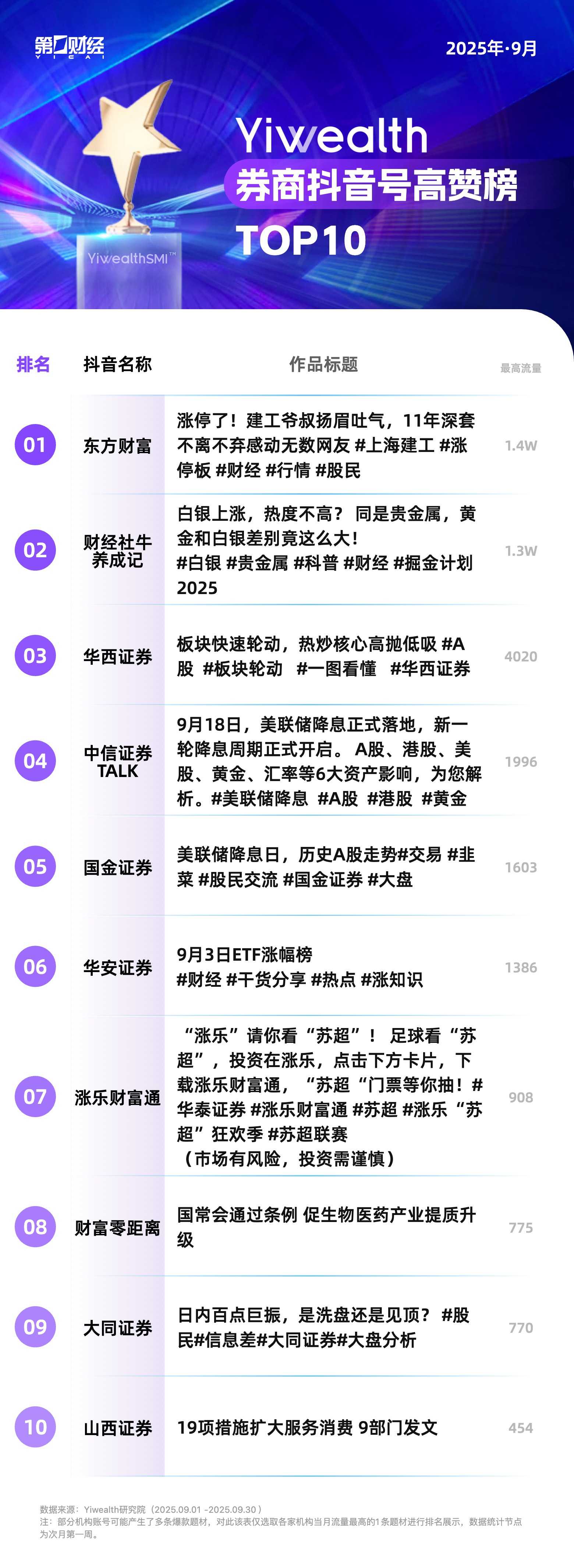
YiwealthSMI|当前市场行情下,券商社媒作品如何收获高赞?
Di Yi Cai Jing· 2025-11-03 07:04
Group 1 - The core viewpoint of the articles highlights the performance of brokerage firms on social media platforms, particularly focusing on the Securities Social Media Index (SMI) for September 2025, where Dongfang Caifu, CITIC Securities, and China Merchants Securities topped the rankings, consistent with August's results [1][2] - The trend of "real-time hot topics" is evident in the high-engagement content from brokerage firms on Douyin, with firms quickly producing analysis videos following significant events like the Federal Reserve's interest rate cut, addressing user demand for timely professional insights [1][2] - In contrast, the high-engagement content on brokerage video accounts primarily consists of promotional and investor education materials, such as the "Guarding Silver Hair" series by Galaxy Securities, which creatively integrates anti-fraud knowledge into storytelling [2] Group 2 - The top-performing content on public accounts mainly revolves around significant market news and market analysis, reflecting the audience's interest in timely and relevant financial information [2] - The articles provide a list of the top 10 brokerage firms' social media content, showcasing the most popular topics and engagement metrics, indicating the competitive landscape among these firms in capturing audience attention [6][19]



钱越来越难赚的时代,理财才是你的第二份工作
Sou Hu Cai Jing· 2025-11-02 12:22
Core Insights - The article emphasizes the importance of financial literacy and management, highlighting that the ability to make money work for oneself is crucial in today's economy [1][4][6] Group 1: Financial Struggles - Many individuals work hard but still struggle financially due to inflation and rising living costs, which erode their purchasing power [1][2] - The article illustrates that even with a higher salary, individuals may still feel financially constrained due to the increasing costs of housing, education, and healthcare [1] Group 2: Importance of Financial Management - Financial management is not just for the wealthy; it is essential for everyone, especially those with lower incomes, to prevent poverty [2][3] - The article argues that financial management is about taking control of one's finances rather than engaging in speculative investments [3][4] Group 3: Systematic Approach to Investing - Successful financial management requires a systematic and disciplined approach rather than emotional reactions to market fluctuations [5] - A suggested investment framework includes emergency savings (20%), stable investments (50%), growth investments (20%), and high-risk ventures (10%) [5] Group 4: Long-term Investment Philosophy - The article stresses the value of patience in investing, noting that consistent, long-term contributions can lead to significant wealth accumulation over time [5] - It warns against the pitfalls of impulsive trading and emotional decision-making, which can lead to financial losses [5] Group 5: Financial Freedom and Psychological Well-being - Ultimately, effective financial management leads to not only financial freedom but also psychological freedom, allowing individuals to make choices without fear of financial instability [5][6] - The article concludes that financial literacy is a vital life skill that prepares individuals for future challenges [6]

美国I Bond利率微升至4.03% 固定利率下调但仍跑赢多数储蓄产品
智通财经网· 2025-11-01 00:01
Group 1 - The new annualized interest rate for I Bonds is set at 4.03%, effective from this Saturday, slightly higher than the previous 3.98% [1] - The interest rate is composed of the change in the Consumer Price Index (CPI) from March to September 2024, plus a fixed rate of 0.90%, which has decreased from the previous 1.1% [1] - I Bonds have a minimum holding period of 12 months, and early redemption within five years incurs a penalty of the last three months' interest [1] Group 2 - I Bonds offer tax and interest structure advantages, with interest compounded semi-annually and no reinvestment risk, as investors can choose to pay taxes on interest upon redemption [2] - Despite a decrease in attractiveness compared to the peak in 2022, I Bonds still hold value for investors as a hedge against inflation and interest rate uncertainty, particularly for individual investors outside of institutions [2]
投资人,你有活在当下吗?
集思录· 2025-10-31 14:36
Core Viewpoint - The article discusses the importance of living in the present and the psychological challenges faced by investors who often focus on future wealth and financial freedom, potentially at the expense of enjoying their current lives [1]. Group 1: Living in the Present - Many individuals, especially those in investment roles, struggle to enjoy the present moment due to constant anticipation of future financial success and freedom [1][9]. - The notion of future wealth often leads to a cycle of new expectations and desires, making it difficult to appreciate current experiences [1][12]. - The article emphasizes that achieving financial goals does not necessarily equate to happiness or fulfillment in life [1][11]. Group 2: Personal Experiences and Reflections - Some individuals share their experiences of finding joy in simple activities and the freedom that comes with not being tied to a traditional job [2][14]. - There are reflections on how past financial calculations and decisions have led to a sense of freedom, even if the current financial status does not meet conventional standards of wealth [10][15]. - The importance of balancing work and personal life is highlighted, with some individuals expressing satisfaction in their current lifestyles despite not being in high-paying jobs [12][16]. Group 3: Financial Perspectives - The article suggests that setting relative financial goals based on personal circumstances can be more beneficial than fixed monetary targets [16][17]. - It discusses the idea that once financial stability is achieved, individuals should consider how to give back to society rather than solely focusing on accumulating wealth [17][18]. - The concept of enjoying life and fulfilling personal desires while managing financial responsibilities is presented as a key to a balanced life [13][21].

8 Investment Myths I Ignored to Build a $1M Portfolio in Under a Decade
Medium· 2025-10-29 00:20
Group 1 - The article discusses eight investment myths that hinder individuals from achieving financial success, emphasizing the importance of ignoring these myths to build a substantial portfolio [1][2][3] - The author highlights the average investor's underperformance compared to the market, attributing it to emotional decisions and misinformation, with a statistic indicating a 4-5% annual underperformance [3][6] - The article provides actionable insights and personal experiences to debunk these myths, aiming to guide readers towards better investment practices [2][28] Group 2 - Myth 1 states that a significant amount of money is required to start investing, countered by the author's experience of starting with $200 a month, demonstrating that consistent contributions can lead to substantial growth over time [3][4][5] - Myth 2 addresses the misconception that timing the market is more beneficial than remaining invested over time, supported by data showing that missing the market's best days can drastically reduce returns [6][7][8] - Myth 3 critiques the idea of over-diversification, advocating for a concentrated investment strategy in high-conviction sectors, which can yield better returns [9][10][11] Group 3 - Myth 4 discusses the inevitability of investment fees, revealing how high fees can significantly erode gains, and suggesting low-cost index funds as a solution [12][13] - Myth 5 challenges the belief that real estate is always the best investment, presenting data that shows stocks can outperform real estate in terms of returns [14][15] - Myth 6 highlights the risks of stock-picking, emphasizing the benefits of investing in ETFs instead, which can provide more consistent returns [16][17] Group 4 - Myth 7 addresses the perception of bonds as safe investments, pointing out their underperformance in low-rate environments and advocating for a strategic approach to bond investments [18][19] - Myth 8 focuses on the emotional aspects of investing, recommending disciplined strategies to avoid panic selling and impulsive decisions [20][21] - The article concludes with a summary of the lessons learned from debunking these myths, encouraging readers to take control of their investment journey [28][29]

理财的真正意义:让生活有底气,让未来有选择
Sou Hu Cai Jing· 2025-10-28 03:57
Core Insights - Financial management is not just for the wealthy; it is about gaining the freedom of choice and facing life with confidence [1] - The essence of financial management is not merely to earn more money but to make existing money work smarter [2] Group 1: Importance of Financial Management - Everyone should engage in financial management to prevent inflation from eroding savings and to avoid living paycheck to paycheck [2] - The first step in financial management is self-management, focusing on controlling expenses rather than immediately seeking investments [2] Group 2: Steps to Effective Financial Management - Controlling expenses is crucial; saving 10%-20% of income each month helps in wealth accumulation [3] - Establishing an emergency fund equivalent to 3-6 months of expenses is recommended for financial security [4] - Clearing high-interest debts is essential before considering investments to ensure a stable financial path [5] Group 3: Asset Allocation - The core of financial management lies in balancing risk and return through proper asset allocation [7] - Recommended asset allocation includes 40% in stable assets (e.g., bank deposits, bonds), 40% in growth assets (e.g., stocks), and 20% in opportunity assets (e.g., real estate) [8][9] - Asset allocation should be dynamic, adjusting according to age, income, and financial goals [10] Group 4: Key Financial Concepts - The two most powerful forces in investment are compound interest and time, where money generates more money over time [11] - An example illustrates that investing 1,000 yuan monthly at an 8% annual return can grow to approximately 180,000 yuan in 10 years and over 1.1 million yuan in 30 years [12] Group 5: Financial Mindset - A stable approach to financial management is more important than seeking quick profits; it is a long-term commitment [13] - Financial management should be integrated into daily life, influencing lifestyle choices and overall quality of life [14] Group 6: Conclusion - The significance of financial management lies in mastering control over one's finances, regardless of current wealth [15] - Starting small, such as saving 500 yuan monthly, can lead to significant changes over time [15]

在不确定的时代,理财才是你最确定的底气
Sou Hu Cai Jing· 2025-10-28 03:08
Core Insights - The current era is characterized by instability, making financial management essential for individuals to navigate uncertainties [1] - Financial management is not about speculation but rather about planning life and allocating resources effectively [1] Group 1: Financial Management Basics - The first step in financial management is tracking income and expenses to understand spending habits [3][4] - A recommended income allocation formula is: 70% for living expenses, 20% for savings and investments, and 10% for self-improvement [5] - Establishing an emergency fund of 3-6 months of living expenses is crucial for financial security [6][7] Group 2: Investment Principles - The essence of investing is to make money work for the individual, emphasizing the importance of patience and long-term commitment [8][9] - Regular investments, such as a monthly contribution of 1,000 yuan with an annual return of 8%, can lead to significant wealth accumulation over time [11][12] - The power of compound interest is highlighted, showing that starting small can lead to substantial future gains [12][13] Group 3: Key Investment Strategies - Successful financial management requires avoiding greed, impatience, and blind following of others [15][16][19] - The principle of prioritizing capital preservation before seeking profits is emphasized [18] - Recognizing that investment is a long-term endeavor helps maintain stability during market fluctuations [19][20] Group 4: The Ultimate Goal of Financial Management - The ultimate aim of financial management is not just wealth accumulation but achieving personal freedom and security [21] - Financial management enables individuals to handle unemployment, seize opportunities, and prepare for risks [21] - Starting financial management today, even with small amounts, can lead to significant security over time [21]

你不理财,财就不理你:普通人也能靠理财改变人生
Sou Hu Cai Jing· 2025-10-28 03:01
Core Insights - Financial management is essential for everyone, not just the wealthy, as it helps prevent money devaluation and promotes purposeful spending [2][3] - The first step in financial management is understanding personal finances, including tracking expenses and identifying fixed costs [3][5] - The process of financial management can be simplified into three steps: saving, investing, and compounding [5][6] Group 1: Financial Management Basics - Financial management is a survival skill for ordinary people, emphasizing the importance of managing limited resources effectively [2] - Understanding where money is spent is crucial; small expenses can accumulate and impact savings significantly [3][5] - The mindset shift from anxiety to confidence is a key benefit of effective financial management [6] Group 2: Steps to Financial Success - The first step is to cultivate a saving habit, even if it is a small amount each month [5] - Investing in interest-generating assets like funds and bonds is the second step, focusing on steady growth rather than quick profits [5][6] - Compounding is highlighted as a powerful tool for wealth accumulation over time, demonstrating the importance of patience and consistency [5][6] Group 3: Common Misconceptions - Common pitfalls in financial management include the desire for quick wealth, following trends blindly, and having a short-term mindset [6][7][8] - Financial management should be viewed as a long-term commitment rather than a fleeting interest [8] Group 4: Taking Action - The best time to start financial management is now, regardless of current financial status [9][10] - Taking small steps, such as starting with minimal investments or tracking expenses, is more beneficial than waiting for the perfect moment [11][12] Group 5: The Broader Impact of Financial Management - Effective financial management leads to greater life choices and freedom, allowing individuals to live without the burden of debt and with more security [13][14] - The ultimate goal of financial management is not just wealth accumulation but achieving peace of mind and the ability to live life on one's own terms [14]