央行数字货币

Search documents
申银万国期货首席点评:黄金刷新历史高位
Shen Yin Wan Guo Qi Huo· 2025-09-17 06:45
1. Report Industry Investment Rating No relevant content provided. 2. Core Viewpoints - The US consumer spending remains strong due to salary growth and the stock market wealth effect, which may influence the Fed's decision on interest rate cuts. The gold market is likely to be bullish in the long - term with short - term adjustments. The copper and zinc prices may fluctuate within a certain range. The oil market will focus on OPEC's production increase. The stock index is in a high - level consolidation phase, and the bond price is stabilizing in the short term. Different commodities in the energy, chemical, metal, black, agricultural, and shipping sectors have their own market trends based on supply - demand relationships and other factors [1][2][3] 3. Summary by Directory 3.1当日主要新闻关注 3.1.1 International News - On September 16th, the US President Trump said he would talk with President Xi on Friday, and the US Treasury Secretary confirmed it. The TikTok issue has reached a relevant agreement, and the two leaders will make a decision during the call. The Chinese Foreign Ministry spokesman had no information to provide [4][5] 3.1.2 Domestic News - On September 16th, nine departments including the Ministry of Commerce issued policies to expand service consumption, proposing 19 measures in five aspects to increase high - quality service supply [5] 3.1.3 Industry News - On September 12th, the China Real Estate Association's commercial housing direct - selling platform was launched, with 15 initial signing units covering real estate development, financial services, and industry associations [6] 3.2外盘每日收益情况 - The table shows the daily gains and losses of various foreign market varieties on September 15th and 16th, including the FTSE China A50 futures, ICE Brent crude oil, London gold, etc. [7] 3.3主要品种早盘评论 3.3.1 Financial - **Stock Index**: The US three major indexes fell. The previous trading day's stock index was differentiated. The market is in a high - level consolidation phase after continuous rise. The CSI 500 and CSI 1000 are more offensive, while the SSE 50 and SSE 300 are more defensive [9][10] - **Treasury Bond**: It opened low and closed high. The central bank increased net investment, but the capital market tightened due to tax payment. The US economic data strengthened the September interest - rate cut expectation, and the short - term bond price stabilized [11] 3.3.2 Energy and Chemical - **Crude Oil**: The SC night session rose 1.56%. Eight countries decided to adjust the daily production increase in October, and the 1.65 - million - barrel daily production cut may be partially or fully restored [3][12] - **Methanol**: The night session fell 0.46%. The domestic methanol production and inventory situation is not optimistic, and it is short - term bearish [13] - **Rubber**: It showed a volatile trend. The supply is increasing, the demand is improving, and the short - term price is expected to be volatile and bullish [14][15] - **Polyolefin**: The price rose and then fell. The supply - demand relationship is the main factor, and the short - term terminal demand recovery may support the price [16] - **Glass and Soda Ash**: Both futures prices rebounded slightly. The market is in the process of inventory digestion, and future consumption and policies need attention [17] 3.3.3 Metal - **Precious Metal**: Gold and silver rose and then fell. US economic data strengthened the September interest - rate cut expectation, and gold has long - term driving factors. It may be bullish in the long - term with short - term adjustments [2][18] - **Copper**: The night session rose 0.02%. The concentrate supply is tight, and the downstream demand is mixed, so the price may fluctuate within a range [3][19] - **Zinc**: The night session rose 0.16%. The smelting profit is positive, and the short - term supply may be excessive, with the price likely to fluctuate weakly within a range [20][21] 3.3.4 Black - **Coking Coal and Coke**: The night session was strong. The steel market has supply - demand contradictions, and the policy expectation provides support, so the price is in a high - level shock [22] 3.3.5 Agricultural Products - **Protein Meal**: The night session of soybean meal was weakly volatile, and rapeseed meal rose slightly. The USDA report was neutral - bearish, and the market expects improved domestic supply, so the price is expected to be weakly volatile [23] - **Edible Oil**: The night session was bullish. The Malaysian palm oil data's bearish impact was digested, and the short - term price is expected to be bullish and volatile [24] - **Sugar**: The international sugar market is in the inventory - accumulation stage, and the domestic market has supply - demand contradictions. The short - term price is expected to be weakly volatile [25] - **Cotton**: The international cotton market has supply pressure, and the domestic market has a new - cotton acquisition focus. The short - term price is expected to be volatile [26][27] 3.3.6 Shipping Index - **Container Shipping to Europe**: The EC was volatile. As the National Day approaches, the shipping companies' freight - rate reduction competition intensifies, and the short - term price depends on the decline rate of spot freight [28]
2025外滩大会见解论坛“金融科技新应用与央行数字货币创新发展”成功举办
清华金融评论· 2025-09-16 09:28
Core Viewpoint - The forum "New Applications of Financial Technology and Innovative Development of Central Bank Digital Currency" aims to foster discussions and consensus on the development of financial technology and central bank digital currencies (CBDCs) [1][5]. Group 1: Forum Overview - The forum was held in Shanghai, organized by Tsinghua University's Wudaokou School of Finance, focusing on the intersection of financial technology and CBDCs [1][2]. - Keynote speeches were delivered by prominent figures, including former Vice Chairman of the China Banking and Insurance Regulatory Commission Chen Wenhui, and Tsinghua University’s Zhang Jianhua, who presented a research report [5][7]. Group 2: Key Presentations - Chen Wenhui discussed the digital transformation of financial institutions and the implications of the AI era for the financial industry, providing important insights for future financial technology development [7]. - Zhang Jianhua released a report on the integration of digital RMB in enhancing industrial digitalization, addressing current challenges and proposing solutions for industry chain collaboration [9]. - Mu Changchun elaborated on the theoretical and practical aspects of digital RMB, emphasizing its dual-layer operational framework and its role in maintaining monetary integrity and financial security [11]. Group 3: Roundtable Discussions - The roundtable featured discussions on the role of CBDCs in serving the real economy, with contributions from various experts, including Tsinghua University’s Ju Jiandong and representatives from major financial institutions [14][16]. - Ju Jiandong highlighted the opportunities and challenges for digital RMB in the context of current economic trade dynamics, discussing the competitive and cooperative relationships among global digital currencies [16]. - Discussions also covered the application of digital RMB in supply chain finance and cross-border payments, with insights from industry leaders on necessary conditions for further implementation [22][20].


周小川:稳定币的监管考量与未来前景
和讯· 2025-09-01 10:30
Central Bank Perspective - The issuance of stablecoins may lead to uncontrolled issuance and high leverage due to a lack of understanding of monetary policy and macroeconomic regulation [6][7] - Concerns from central banks include "excessive issuance" without real 100% reserves and the potential for high leverage effects in the operation of stablecoins [7] - The need for reliable custodians for reserves and effective measurement of the leverage effects in stablecoin operations is emphasized [7][8] Financial Services Model Perspective - Stablecoins could play a significant role in a decentralized financial ecosystem, but the actual demand for decentralization and tokenization needs careful evaluation [9][10] - Current payment systems in China and several Asian countries have successfully developed based on account systems, indicating that a full transition to tokenization lacks sufficient justification [9][10] Payment System Perspective - Payment efficiency and compliance are two major concerns in the evolution of payment systems, with stablecoins seen as a potential solution [11] - Current advancements in payment systems are primarily based on IT and internet technologies, rather than blockchain, highlighting the importance of security and compliance [11][12] Market Trading Perspective - Market manipulation, particularly price manipulation, is a significant concern, necessitating transparency and effective regulation [12][13] - The use of mixed currencies in transactions raises regulatory challenges and potential for market manipulation [12][13] Micro Behavior Perspective - The motivations of various participants in the stablecoin ecosystem, including issuers and users, need to be analyzed to understand the implications for the payment system [14][15] - The existing retail payment systems in China are already efficient and low-cost, limiting the potential for new entrants to reduce costs significantly [14][15] Circulation Path Perspective - The circulation of stablecoins involves a complex process from issuance to market flow, which is not guaranteed without sufficient demand [17][18] - The role of stablecoins as temporary payment mediums or value storage tools will influence their market presence and circulation [17][18]

数字货币桥新进展,深圳供应链企业完成6800万元跨境结算
2 1 Shi Ji Jing Ji Bao Dao· 2025-08-29 06:05
Group 1 - The People's Bank of China, in collaboration with the Agricultural Bank of China, has facilitated a significant cross-border trade settlement of 68 million yuan for a key supply chain enterprise in Luohu, marking the first large-scale digital RMB cross-border settlement project in Shenzhen [1] - The settlement was executed through the mBridge platform, which allows for real-time transactions, significantly reducing the time required compared to the traditional SWIFT system, which typically takes 1 to 3 working days [1] - The mBridge project is a collaborative effort involving multiple central banks and aims to enhance cross-border payment efficiency, security, and cost-effectiveness through distributed ledger technology and central bank digital currencies [1] Group 2 - Luohu has established a digital RMB application ecosystem that integrates cross-border payments, supply chain finance, and consumer finance, with the recent settlement expected to accelerate the integration of 427 international freight logistics companies in the district into the digital RMB system [2] - Recent policy initiatives from the central government emphasize the importance of digital RMB pilot applications and the exploration of its applicability in cross-border transactions [2] - Shenzhen has achieved several milestones in cross-border transactions using the mBridge platform this year, including a notable 637 million yuan cross-border remittance for a multinational group and a 200 million yuan payment for soybean imports from Hong Kong [2] - Since being selected as a pilot area for digital RMB in 2019, Shenzhen has opened nearly 30 million digital RMB wallets, with over 2 million merchants supporting digital RMB payments [2]
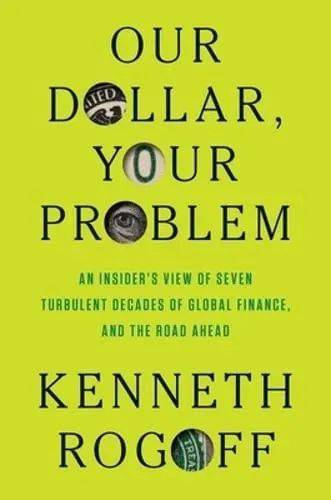
夏春:哈佛教授——美国即将到来的崩溃
Sou Hu Cai Jing· 2025-08-27 03:33
Group 1 - The article discusses the potential for a significant debt crisis in the United States, highlighting the unsustainable nature of current debt levels and the implications for the economy and global financial stability [10][32][33] - It notes that U.S. public debt is approaching $37 trillion, which is roughly equivalent to the total debt of all other major developed economies combined, raising concerns about the sustainability of this debt [7][21] - The article emphasizes that rising interest rates could lead to increased government spending on interest payments, which may exceed defense spending, further straining fiscal resources [8][10] Group 2 - The article outlines the historical context of U.S. debt, tracing its roots back to the Reagan administration and highlighting bipartisan neglect of fiscal responsibility [11][12] - It discusses the political landscape, noting that both major parties have contributed to the rising debt levels, with current projections indicating that debt-to-GDP ratios could reach as high as 190% by 2054 [12][19] - The potential for inflation to exacerbate the debt situation is also mentioned, with historical parallels drawn to the 1970s, suggesting that inflation could significantly impact the economy and the value of the dollar [29][33] Group 3 - The article raises concerns about the future of the U.S. dollar as the world's reserve currency, suggesting that its status may be threatened by rising debt levels and potential shifts in global economic power [9][10][32] - It highlights the possibility of alternative currencies, such as the yuan or cryptocurrencies, gaining traction as the U.S. struggles with its debt issues [9][10] - The article concludes by stressing the need for policymakers to recognize the gravity of the debt situation and to prepare for potential economic shocks that could arise from it [30][32][33]
香港稳定币,慢了一拍
虎嗅APP· 2025-08-09 09:33
Core Viewpoint - The implementation of the "Stablecoin Regulation" in Hong Kong is expected to revolutionize digital currency, but the stringent licensing requirements have dampened market sentiment, leading to a pessimistic outlook on the future of stablecoins in Hong Kong [2][9]. Summary by Sections Licensing and Market Entry - The licensing requirements for stablecoin issuance in Hong Kong are exceptionally strict, making it difficult for major internet companies like JD.com and Ant Group to qualify for the initial batch of licenses [2][4]. - Only a limited number of licenses, in single digits, will be issued, significantly lower than the market's expectation of "dozens" [2][9]. Regulatory Concerns - Hong Kong's regulatory authorities prioritize safety, fearing that inadequate regulation could lead to financial crimes such as money laundering, especially given the cross-border nature of stablecoins [4][6]. - The regulations require stablecoin issuers to verify the identity of every user and track all transactions to prevent illicit activities [5][6]. Compliance Challenges for Internet Companies - Internet platforms like JD.com and Ant Group face challenges in meeting the stringent compliance and capital requirements set by Hong Kong's regulations, which are more easily met by traditional financial institutions [5][9]. - The regulations also impose high reserve requirements and asset backing for stablecoins, which are difficult for fintech companies to fulfill [5][6]. Comparison with Other Digital Currencies - The stablecoin model in Hong Kong emphasizes compliance, safety, and transparency, distinguishing it from decentralized cryptocurrencies like Bitcoin and USDT [6][9]. - The article suggests that Hong Kong's stablecoin could serve as a digital currency extension rather than a direct competitor to existing cryptocurrencies [6][7]. Global Context and Strategic Positioning - The dominance of USD-pegged stablecoins in global transactions highlights the need for Hong Kong to establish its own stablecoin to mitigate the risks associated with dollar hegemony [8][9]. - The article argues that Hong Kong's stablecoin initiative is both a defensive measure against dollar dominance and an offensive strategy to gain a larger role in the future global monetary system [7][8].

不是中俄,而是美国正废掉美联储,挖SWIFT结算体系墙角
Sou Hu Cai Jing· 2025-07-25 08:52
Group 1 - The core viewpoint of the article is that the recently signed Stablecoin Regulation Act, known as the "Genius Act," represents the first federal legislation on stablecoins in the U.S., establishing an official regulatory framework for the issuance and management of payment stablecoins [1][3] - The act mandates that all stablecoins must be fully pegged to the U.S. dollar or U.S. Treasury securities, which is expected to convert global demand for stablecoins into direct support for U.S. debt, thereby reinforcing the international dominance of the dollar [3] - The promotion of stablecoins is seen as a strategy to weaken the financial systems of smaller countries, allowing private stablecoins to replace local currencies for cross-border payments in high-inflation regions like Latin America and Africa, thus expanding the actual usage of the dollar [3] Group 2 - The act is perceived as a means to alleviate the pressure of the $37 trillion national debt by creating new demand for U.S. Treasury securities through stablecoin users, effectively redistributing potential risks associated with U.S. debt [3][5] - For instance, Tether holds $98.5 billion in U.S. Treasury securities, and a 1% increase in its scale could lower the yield on one-month Treasury bills by approximately 3.8%, saving the U.S. government about $15 billion annually in interest payments [3][5] - The legislation explicitly prohibits the issuance of central bank digital currencies (CBDCs) in the U.S., favoring the operation of private stablecoins, which grants Wall Street unlimited minting rights and shifts control over future exchange rate and interest rate decisions [5] Group 3 - The Trump administration aims to leverage U.S. technological advantages in blockchain and artificial intelligence to reshape global financial infrastructure and counter the rising trend of "de-dollarization" [5][6] - The promotion of stablecoins is intended to lower settlement costs and compete with the SWIFT international settlement system, which has traditionally been dominated by the European Union [6] - In response to this strategy, China has accelerated the internationalization of its digital yuan and established a regulatory framework for domestic stablecoins, prohibiting foreign stablecoin transactions to ensure financial stability [10][11]
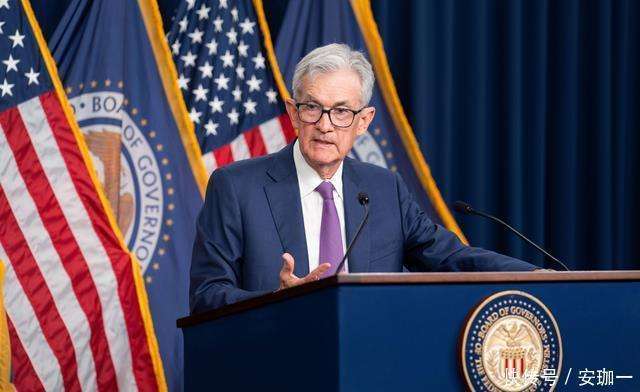
管涛:稳定币在货币体系中将扮演何种角色仍待观察
Sou Hu Cai Jing· 2025-07-24 12:57
Core Viewpoint - The U.S. has officially regulated stablecoins through the "Genius Act," while China continues to promote its central bank digital currency (CBDC) initiative, highlighting differing approaches to digital currency regulation and innovation [1][2]. Group 1: Stablecoins and Regulation - The "Genius Act" signed by President Trump incorporates stablecoins into regulatory frameworks, reflecting a growing focus on stablecoins in the market [1]. - Stablecoins are defined as cryptocurrencies pegged to fiat currencies or assets, which aim to enhance cross-border payment efficiency and user experience [1]. - According to the Bank for International Settlements, stablecoins have not met the key requirements for a robust international monetary system, suggesting their future role may be limited to a supportive function [1]. Group 2: China's Digital Currency Initiatives - As of July 2024, the digital yuan has been implemented in 26 pilot areas across 17 provinces, with 180 million personal wallets opened and a total transaction volume of 7.3 trillion yuan [2]. - China is a founding member of the "Multi-Central Bank Digital Currency Bridge" project, which aims to enhance cross-border payment scenarios using blockchain technology [2]. - The project has transitioned from sandbox testing to formal operations, involving multiple central banks and commercial banks across various jurisdictions [2]. Group 3: Cross-Border Payment Innovations - Third-party payment institutions in China have made significant advancements in cross-border payments since the pilot program began in September 2013, enabling 24/7 rapid transactions [2]. - The "Cross-Border Payment Link" launched in June 2023 connects mainland China's online payment systems with Hong Kong's rapid payment system, improving transaction efficiency and reducing costs [4]. - There is an openness to exploring stablecoin payment tools, with a focus on leveraging their advantages while ensuring compliance and fostering competition in the cross-border payment sector [4].
英国央行行长贝利:如果英国央行与商业银行的合作取得成功,我会质疑是否需要央行数字货币。
news flash· 2025-07-22 10:02
Core Viewpoint - The Governor of the Bank of England, Andrew Bailey, expressed skepticism about the necessity of a central bank digital currency (CBDC) if the collaboration between the Bank of England and commercial banks proves successful [1] Group 1 - The Bank of England is exploring the potential of a CBDC but is currently assessing the effectiveness of its partnership with commercial banks [1] - Bailey's comments suggest that the success of existing banking systems may reduce the urgency for implementing a CBDC [1] - The statement reflects a cautious approach towards digital currency adoption, emphasizing the importance of collaboration with commercial banks [1]
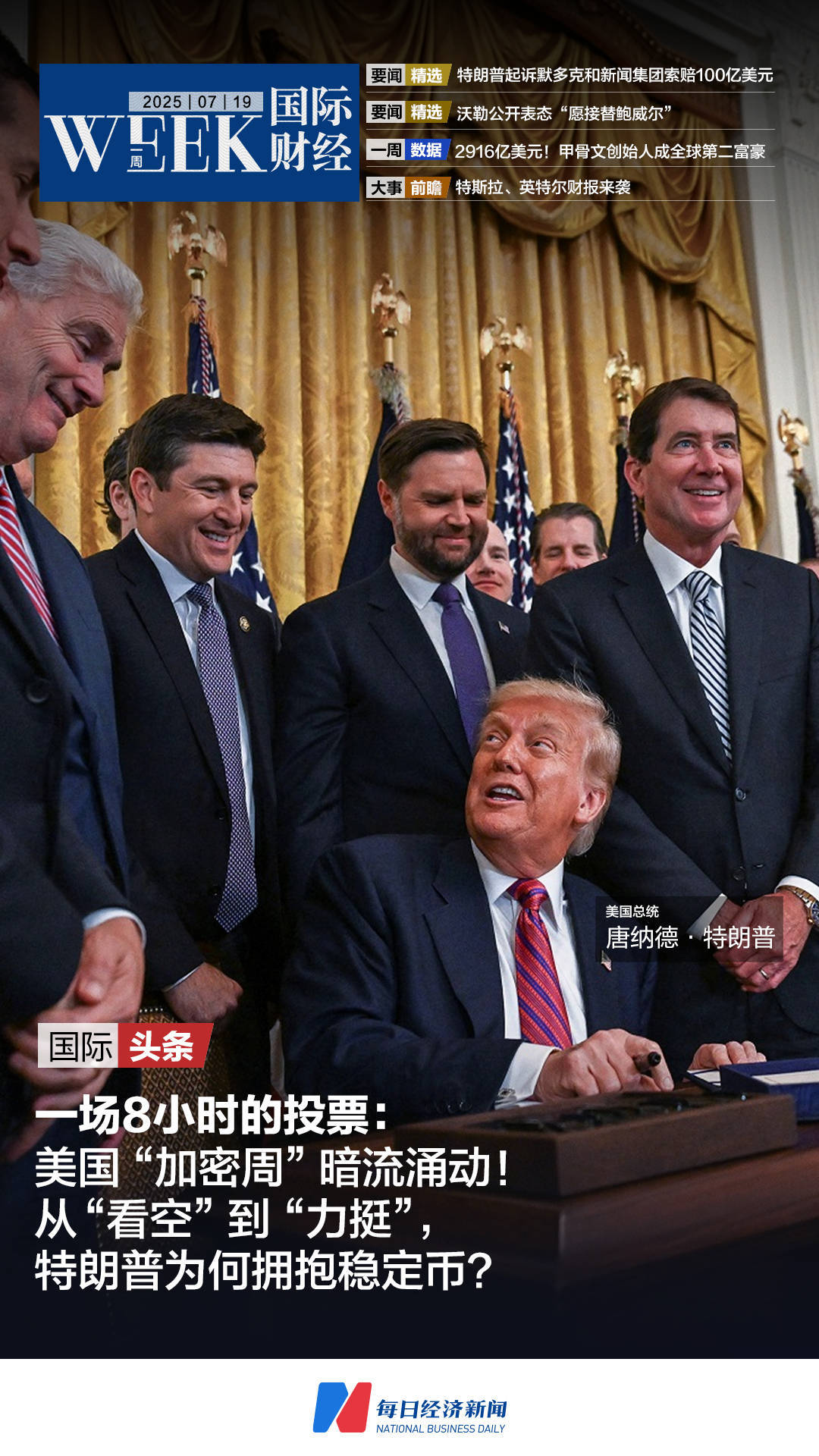
美国“加密周”暗流涌动:一场8小时的投票,稳定币相关法案签署;特朗普起诉默多克和新闻集团索赔100亿美元;甲骨文创始人成全球第二富豪 | 一周国际财经
Sou Hu Cai Jing· 2025-07-19 06:04
Group 1 - The core point of the article is the establishment of a regulatory framework for digital stablecoins in the U.S. through the signing of the "Genius Act" by President Trump, marking a significant shift in the U.S. stance on cryptocurrency regulation [8][12]. - The "Genius Act" requires stablecoin issuers to back their coins with liquid assets such as U.S. dollars or short-term U.S. Treasury securities, and mandates monthly disclosures of reserves [11]. - The passage of the "Genius Act" and related legislation reflects a broader institutional struggle over the future of the U.S. dollar's dominance and the management of national debt [8][12]. Group 2 - Trump's shift from being a critic of cryptocurrencies to a proponent of stablecoins is driven by multiple factors, including the desire to maintain the dollar's global influence and address U.S. national debt issues [16][17]. - The legislation is expected to create a significant demand for U.S. Treasury securities, potentially adding up to $2 trillion in new demand as stablecoin markets grow [17]. - The U.S. legislative approach aims to limit the Federal Reserve's power by prohibiting the issuance of a central bank digital currency (CBDC), thereby favoring private sector stablecoin issuers [17][21]. Group 3 - The global response to the U.S. push for private stablecoins has led to 49 countries initiating central bank digital currency (CBDC) pilot programs as a countermeasure [22]. - Concerns have been raised about the potential risks associated with the proliferation of U.S. dollar stablecoins, which could undermine the monetary sovereignty of other nations and lead to financial instability [21][22]. - The competitive landscape for digital currencies is intensifying, with countries like China and members of the European Union accelerating their CBDC initiatives in response to the U.S. stablecoin legislation [21][22].