文化创新

Search documents
激发文化创新创造的时代华彩——江苏“十四五”经济社会发展综述之五
Xin Hua Ri Bao· 2025-10-18 23:31
Group 1 - The core viewpoint of the articles highlights the flourishing cultural scene in Jiangsu, showcasing various cultural events and initiatives that reflect the province's commitment to cultural development and innovation [2][3][7]. - The 2025 Zijin Cultural Arts Festival is actively taking place across Jiangsu, along with the "Jasmine Flower Blooming" cultural outreach initiative, which brings quality cultural performances to the public [1][2]. - Jiangsu's cultural achievements are part of the broader "14th Five-Year Plan," aiming to build a strong socialist cultural province, enhancing social civilization and providing cultural support for modernization [2][3]. Group 2 - Jiangsu has seen a continuous improvement in social civilization, with initiatives like the establishment of the "Qing Cavalry" theoretical promotion academy and extensive training for grassroots party members [3][4]. - The province has implemented the "Jasmine Flower Blooming" initiative, which has reached over 10 million people, providing cultural resources directly to the grassroots level [7][10]. - The cultural industry in Jiangsu has achieved significant growth, with revenues reaching 2.25 trillion yuan in 2024, marking a historical high and positioning the province as a leader in cultural enterprise numbers [10][11]. Group 3 - Jiangsu's cultural reforms have led to increased vitality in the arts, with successful projects like the film "Guard Island" and the dance drama "Dream of the Red Chamber" gaining national recognition [7][8]. - The province has established over 22,000 centers for civilizational practice, enhancing community engagement and cultural participation [4][6]. - The international cultural exchange initiatives, such as the "Civilization Encounter" events in Europe, have improved Jiangsu's global cultural presence and storytelling [11][12].
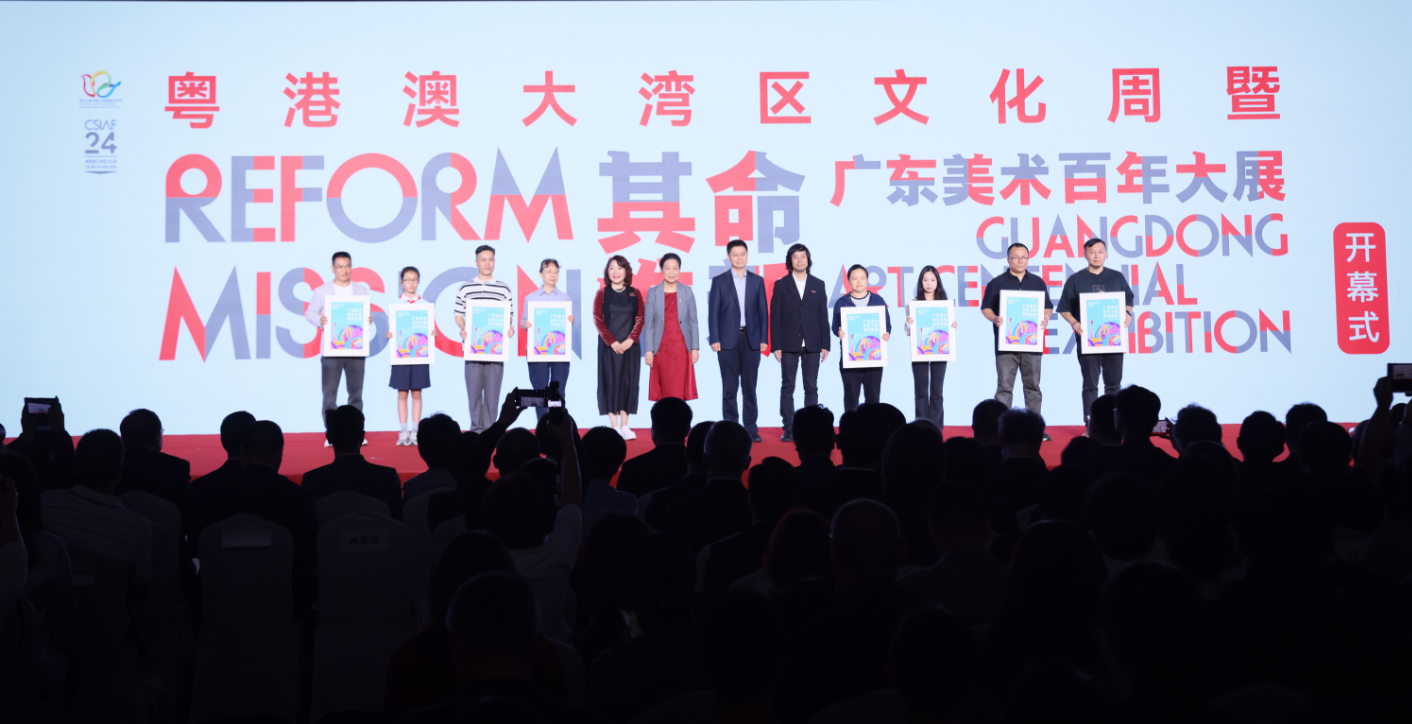
第二十四届中国上海国际艺术节粤港澳大湾区文化周开幕
Yang Shi Xin Wen· 2025-10-18 20:38
Core Insights - The Guangdong-Hong Kong-Macao Greater Bay Area Cultural Week, part of the 24th China Shanghai International Arts Festival, showcases cultural innovation and diversity from October 18 to November 15 [1][3] - The "Its Fate is Renewed - Guangdong Art Century Exhibition" features around 800 pieces of Guangdong art, spanning nearly 20,000 square meters, highlighting a century of artistic innovation [3] Group 1 - The cultural week is co-hosted by various governmental departments from Guangdong, Shanghai, Hong Kong, and Macau, aiming to promote cultural integration and innovation [1] - The exhibition includes seven thematic sections and three special projects, providing a comprehensive view of Guangdong's artistic achievements over the past century [3] - During the exhibition, 12 high-level lectures on Lingnan culture will be held, along with interactive art experiences and guided tours [3] Group 2 - A total of 14 performances across seven stage productions will be presented in multiple venues in Shanghai, showcasing original works from the Greater Bay Area [5] - On the opening day, 19 representative cultural institutions from the Greater Bay Area promoted outstanding performances and cultural activities to both domestic and international audiences [5] - A memorandum of cooperation was signed between the China Shanghai International Arts Festival Center and the Greater Bay Area Cultural Arts Festival Center to enhance cultural exchanges and collaboration [5]

“海归+非遗”,匠心守艺换新颜
Ren Min Ri Bao Hai Wai Ban· 2025-10-16 01:00
Core Insights - The article highlights the innovative efforts of traditional artisans in China, particularly in the fields of Suzhou embroidery and grass weaving, to blend ancient craftsmanship with modern design and marketing strategies, thereby expanding their cultural reach and commercial viability [3][4][8]. Group 1: Suzhou Embroidery - Fu Hanlu, a fourth-generation inheritor of Suzhou embroidery, combines traditional techniques with modern aesthetics, creating wearable art pieces that appeal to contemporary consumers [4][6]. - Fu established a bilingual cultural education center to promote Suzhou embroidery among international students, enhancing cultural exchange and awareness [5][6]. - The brand "Xianghong Xiufu" founded by Fu has showcased its works at international fashion events, including Paris Fashion Week, thereby elevating the profile of Suzhou embroidery on a global stage [6][7]. Group 2: Grass Weaving - Chen Zhen, a representative inheritor of grass weaving, recognized the commercial potential of traditional crafts during his studies abroad, leading him to innovate in the field [8][9]. - He established a research center for grass weaving techniques, reviving historical methods and integrating them into modern educational programs, which have reached 45,000 students across seven countries [10][11]. - Chen's initiatives have fostered local economic development by creating workshops that provide flexible income opportunities for villagers, with annual procurement of raw materials exceeding 100 million yuan [11][12].

一场艺术季背后,湖北如何让长江文化“活起来”?
2 1 Shi Ji Jing Ji Bao Dao· 2025-10-13 04:14
Core Viewpoint - The second Yangtze River Cultural Arts Season aims to showcase and innovate the cultural heritage of the Yangtze River, emphasizing the integration of traditional elements with modern technology to enhance public engagement and cultural confidence [2][6][10]. Summary by Sections Event Overview - The second Yangtze River Cultural Arts Season, themed "Lighting Up the Yangtze," commenced on September 12 and will run until October 30, featuring 12 major activities including art exhibitions, academic exchanges, and performances [2][3]. - The opening ceremony included performances by international artists from Egypt, Indonesia, Russia, and Canada, highlighting a global cultural exchange [2]. Cultural Significance - The Yangtze River is recognized as the mother river of the Chinese nation, with a rich cultural history spanning over 5,000 years [2][3]. - Experts emphasize the need to protect and promote Yangtze culture amidst global changes, reinforcing cultural confidence and historical continuity [2][3][7]. Activities and Innovations - The arts season features diverse activities such as "New Image of the Yangtze" art exhibition, "Moving Images of the Yangtze" film week, and "Listening to the Yangtze" music week, designed to present the cultural richness of the Yangtze River [3][5]. - Modern technologies like digital projection and drone displays were utilized to recreate historical scenes, merging tradition with innovation [2][6]. Cultural Infrastructure and Investment - The Hubei government has increased funding for cultural heritage protection to 100 million yuan, a nearly 30% increase, and has invested 140 million yuan in intangible cultural heritage protection during the 14th Five-Year Plan [5][6]. - The establishment of cultural landmarks and research institutions aims to enhance the understanding and dissemination of Yangtze culture [6][7]. Community Engagement and Participation - The arts season encourages broad community participation, aiming to transform cultural activities from elite events to inclusive experiences for the general public [10]. - Interactive and immersive experiences, such as virtual exhibitions and educational programs, are designed to engage younger audiences and foster a deeper connection with local culture [9][10]. Future Directions - Experts advocate for a collaborative approach to cultural development, emphasizing the importance of involving various stakeholders beyond government initiatives [4][6]. - The integration of cultural heritage with modern tourism and digital innovation is seen as essential for revitalizing and sustaining the relevance of Yangtze culture in contemporary society [7][8].
2000万游客涌入,西安“黄金周”吸金200亿元!
2 1 Shi Ji Jing Ji Bao Dao· 2025-10-10 08:04
Core Insights - Xi'an's tourism revenue reached nearly 20 billion yuan, with over 20 million visitors during the Golden Week, marking a 10% year-on-year increase [1] Group 1: Key Drivers of Growth - The "deep experience" upgrade led to an 18% surge in high-end hotel occupancy rates, indicating tourists' willingness to extend their stay in Chang'an [1] - The performance of the cultural show "Chang Hen Ge" was outstanding, with full houses every night, and inbound tourism orders doubled, showcasing the emergence of the Tang Dynasty as a world-class cultural IP [1] Group 2: Cultural Innovation and Engagement - The cultural outreach was significantly enhanced by the online presence of local figure Dong Yuhui, who attracted over 11.4 million viewers with a Mid-Autumn Festival event discussing Tang poetry [1] - The integration of live streaming of Tang poetry with tourism consumption demonstrates Xi'an's strategy to connect cultural innovation with the entire customer journey from attraction to conversion and retention [1]
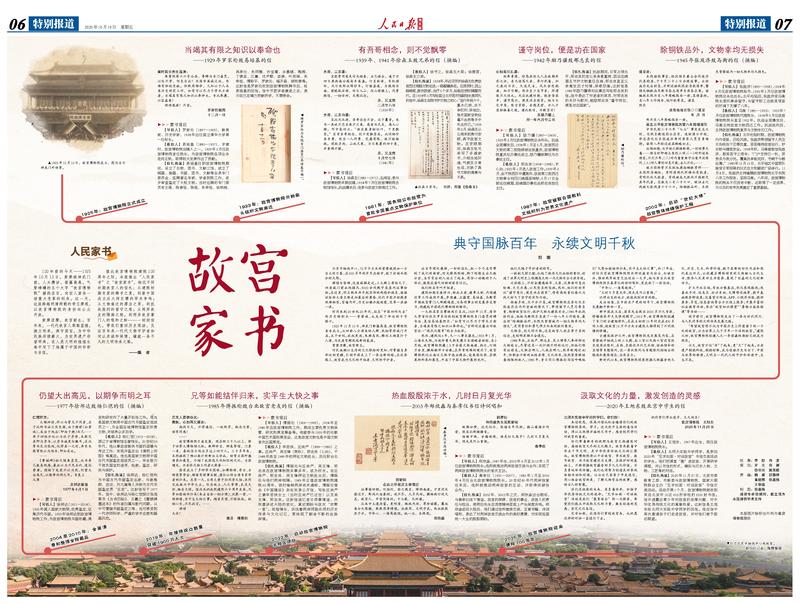
典守国脉百年 永续文明千秋
Ren Min Ri Bao Hai Wai Ban· 2025-10-09 23:00
北京中轴线中心,72万平方米的紫禁城犹如一方巨大的日晷,在600多年的岁月流转中,投下壮丽而恢弘的光影。 辉煌与苦难,这座城都走过。三大殿上君临天下、四座城门前血雨腥风、9000余间殿宇房屋内往事纷纷。在这 里,明王朝冉冉升起宏伟的构想和抱负,摇摇欲坠的大清王朝走向最后的黄昏,近代中国历经探索艰难转型。宫 墙内外,历史如潮水般涨落,变革一浪接一浪。 时间来到20世纪20年代,站在"中国向何处去"的历史转折点——紫禁城,也走到了命运的十字路口。 1925年10月10日,神武门新匾高悬,故宫博物院宣告成立。从四面八方涌来的人群,热切等待城门开启。五个世 纪,政权更迭,朱颜易改,雕栏玉砌复归于人海,为这座宫殿筑起新的基座。 紫禁涅槃,故宫新生。 对民族赖以生存的文化根脉的觉知,对掌握自身命运的觉醒,引领中国走上了一条全新的路。在这条路上,故宫 成为文化的开拓者、文明的守护者。 往百年深处漫溯,一封封信札,把一个个名字带到了我们的面前。时光倏然倒转,脚下的路生出无数分岔,名字 背后的人站立了起来,将惊心动魄的个人传记,凝固成荡气回肠的国家记忆。 他们的名字叫开拓者。 建院初期百废待兴,物品点查、建章立制、内馆建设等工 ...
发挥职业教育优势 服务乡村文化振兴
Xin Hua Ri Bao· 2025-10-09 22:56
Group 1 - The core viewpoint emphasizes the importance of cultural revitalization as the soul of rural revitalization, highlighting the role of vocational education in providing technical and talent support for rural cultural development [1] - Vocational education should update its concepts by transforming rural culture into a systematic knowledge framework, exploring historical origins and value orientations, and guiding students from surface recognition to deeper understanding of cultural connotations [2] - The integration of cultural innovation concepts into vocational education is essential, including the incorporation of new media, digital technology, and artificial intelligence into the curriculum to enhance the dissemination of rural culture [3] Group 2 - There is a need to reform vocational education models by improving the rural cultural curriculum system, conducting research to understand local cultural demands, and integrating relevant content into professional training [4] - Vocational education can activate traditional culture and cultivate a sense of pride among villagers through cultural activities and events led by professional educators [5] - Establishing a long-term mechanism for sustainable development requires increased policy support and funding, as well as the creation of effective evaluation and feedback systems to assess the impact of vocational education on rural cultural revitalization [6]
文旅融合,激活假日消费新活力
Huan Qiu Wang· 2025-10-06 08:30
Group 1 - The Ministry of Culture and Tourism has launched a nationwide cultural and tourism consumption month, featuring over 29,000 events and distributing more than 480 million yuan in subsidies [1] - There is a significant shift in consumer demand from traditional sightseeing to deeper, personalized cultural experiences, driving innovation in the cultural tourism industry [1] - Innovative cultural products, such as immersive performances and hands-on experiences, are enhancing the cultural value and appeal of tourism offerings [1] Group 2 - The integration of cultural tourism with sports and performing arts is creating new consumption models, such as "traveling with events" and "attending performances in different cities" [2] - Local governments are implementing strategies like ticket discounts and special consumption vouchers to convert event attendees into tourism consumers, exemplified by initiatives in Sichuan [2] - The synergy between core cultural tourism activities and various service elements is stimulating potential consumer demand and fostering a positive economic cycle [2] Group 3 - The incorporation of advanced technologies like virtual reality and AI is enhancing the service experience in the cultural tourism sector [3] - Innovative projects, such as immersive cultural performances and smart agricultural tourism, are emerging across the country, showcasing the fusion of technology and culture [3] - The deep integration of technology with cultural tourism is improving product interactivity and service optimization, contributing to the resilience and growth of the holiday economy [3]
文化强国建设绽放新光彩(新时代画卷·决战决胜“十四五”)
Ren Min Ri Bao· 2025-10-03 22:02
Core Insights - The article emphasizes the flourishing of cultural undertakings and industries in China, highlighting the integration of culture and tourism as a significant trend in the current era [13]. Group 1: Cultural Prosperity - The cultural sector in China is experiencing significant growth, with events like the 80th anniversary of the victory in the Anti-Japanese War showcasing this prosperity [3]. - Major cultural performances, such as the opening ceremony of the 19th Asian Games, reflect the vibrant cultural landscape [4]. Group 2: Public Cultural Services - The public cultural service system is becoming more robust, as seen in local cultural institutions engaging with communities through educational programs [6]. - Initiatives like the performance of traditional arts in local settings enhance community engagement and cultural appreciation [8]. Group 3: Systematic Protection of Cultural Heritage - There is a strong focus on the systematic protection of cultural heritage, with archaeological efforts and new museum exhibitions promoting awareness and preservation [10]. - The integration of traditional arts into modern performances, such as the new Kunqu opera, illustrates the commitment to cultural heritage [10]. Group 4: Integration of Culture and Tourism - The deep integration of culture and tourism is evident, with tourist attractions in places like Harbin and Dali enhancing visitor experiences through cultural elements [11]. - Cultural tourism initiatives, including red tourism, are gaining popularity, contributing to economic growth and cultural exchange [13]. Group 5: Cultural Confidence and Innovation - The article highlights the importance of cultural confidence as a foundation for the creative transformation and innovative development of traditional culture [13]. - Successful cultural products and phenomena, such as films and games, exemplify the dynamic creativity within the cultural sector [13]. Group 6: Enhancing Public Access to Culture - The establishment of cultural practice centers and the opening of libraries and museums for free access are enhancing public engagement with culture [13]. - These initiatives are aimed at increasing the sense of fulfillment and happiness among the populace, reflecting a commitment to cultural accessibility [13].

行业协会:提质升级各类自然保护地资源和文旅品牌
Di Yi Cai Jing· 2025-09-29 02:22
Core Insights - The Chinese Scenic Area Association aims to enhance cultural innovation and achieve a higher level of integration between culture and tourism by launching new business models and products [1][2] Group 1: Industry Challenges and Opportunities - The tourism industry is facing intensified homogenization, upgraded market demand, and limitations of traditional development models [1] - Scenic areas must innovate culturally to overcome these challenges and achieve breakthroughs in tourism integration [1][2] Group 2: Cultural Significance - Culture is considered the "root" and "soul" of scenic areas, providing a strong foundation for transformation and expansion [2] - Scenic areas possess unique cultural characteristics that enhance their commercial value and conversion efficiency [2] Group 3: Case Study - Leshan - Leshan, with over 1,400 years of history, is positioned as a national historical and cultural city, tasked with promoting Chinese stories and values [4] - The city is home to world heritage sites, including the Emei Mountain and Leshan Giant Buddha, which serve as international tourism highlights [5] Group 4: Strategic Recommendations - Scenic areas like Leshan need to deepen resource integration and adopt collaborative development strategies to enhance their global tourism appeal [5] - There is a need to target overseas markets and utilize new media for effective promotion, while focusing on sustainability and innovation in tourism offerings [5][6] Group 5: Future Directions - The concept of a world-class tourist destination lacks a definitive academic consensus, but key attractions are crucial for its establishment [6] - The use of digital governance and technologies like big data and AI is recommended for real-time monitoring and enhancing visitor experience [6]