石油供应过剩

Search documents
国泰君安期货·原油周度报告-20251109
Guo Tai Jun An Qi Huo· 2025-11-09 08:43
Report Industry Investment Rating No relevant information provided. Core Viewpoints of the Report - The current supply - side of the crude oil market features a tug - of - war between "active contraction" and "passive growth". OPEC+ is cutting production, while non - OPEC+ countries are the main source of supply growth. The market is in a "tight balance" state, and its stability depends on OPEC+'s policy determination [6]. - The demand side shows "slowing growth and structural differentiation". The growth engine of global demand is shifting from China to emerging economies like India and Southeast Asia. Long - term energy transition policies suppress fossil fuel demand. The growth momentum of demand is weakening [7]. - Precautions should be taken against further price drops. Brent and WTI may test the lows before April at the end of this year or early next year, and may even reach $50 per barrel. The decline of SC may be less than that of foreign benchmarks. The medium - to - long - term decline of oil prices is not likely to happen overnight. Attention should be paid to potential reversals in macro - expectations, which may amplify oil price fluctuations [7]. Summary by Directory Overview - The supply side is characterized by OPEC+ cuts and non - OPEC+ growth. The demand side shows slowing growth and is driven by emerging economies. The report warns of potential further price drops and suggests that Brent, WTI may test previous lows [6][7]. - The logic behind the view includes factors such as the impact of sanctions on Russian oil, geopolitical premium risks, lack of clear利好 from the Sino - US APEC meeting, continuous OPEC+ production increases, and rising oil - shipping freight rates [8]. - The valuation of oil is at a medium level in the short term. Strategies include holding short - position bands for unilateral trading, holding or clearing long - term spreads for inter - period trading, and expecting marginal reversals in EFS spreads and SC - Dubai spreads for inter - commodity trading [9]. Macroeconomics - The gold - oil ratio is stable. Attention should be paid to inflation transmission. The RMB exchange rate has weakened slightly, and social financing has declined [25][31][33]. Supply - OPEC's production cut decisions and implementation progress are detailed, including different rounds of cuts and their adjustment plans. In September, the production increase completion rate of OPEC8 was 80%, about 1 million barrels per day. OPEC's maritime exports increased significantly in September but declined in October [35][37][38]. - The production and export situations of various OPEC+ and non - OPEC+ countries are presented, such as the high production of US shale oil, the increasing production of emerging oil - producing countries like Guyana and Brazil, and the impact of sanctions on Russian oil [6][10][11]. Demand - The refinery operating rates in the US and Europe have declined, and the operating rate of China's major refineries has dropped significantly. The "Rizhao Port Incident" may have a continuous impact. Global refinery capacity is changing, with some new projects and closures [76][79]. Inventory - US commercial inventories are stable, and the inventory in Cushing is still significantly lower than the historical average. European diesel inventories are rebounding, and gasoline is being destocked. Domestic refined - oil profit margins are declining [81][86][88]. Price and Spreads - High freight rates continue to pressure the global crude oil spot market. Different regions have different market situations, such as weak trading in the Middle East, active bookings of American and Brazilian crude oil in Asia, and low physical trading activity in the North Sea [93]. - North American basis spreads are rebounding, month - spreads are slightly rebounding, SC valuation is at a medium - low level and month - spreads are stable, and net long positions are rebounding [101][102][105].
IEA称随着欧佩克+增产石油市场将供应过剩
Zhong Guo Chan Ye Jing Ji Xin Xi Wang· 2025-11-07 00:12
Core Viewpoint - The International Energy Agency (IEA) has raised its oil supply growth forecast for this year and expects this trend to continue into next year, indicating a potential oversupply in the oil market despite low demand [1] Supply Forecast - The IEA predicts that oil supply will increase by 3 million barrels per day (bpd) by 2025, up from a previous forecast of 2.7 million bpd [1] - The IEA also forecasts that global oil demand will grow by 710,000 bpd in 2025, which is a downward revision of 30,000 bpd from earlier estimates [1] - For 2026, global oil demand is expected to increase by 2.4 million bpd [1] Demand Outlook - The IEA indicates that oil consumption will remain subdued in the latter part of 2025 and into 2026 due to a challenging macroeconomic environment and the electrification of transportation [1] - The pace of energy transition is anticipated to be faster than previously predicted by OPEC and other institutions [1] OPEC's Perspective - OPEC's recent monthly report predicts that oil demand growth for this year will reach 1.3 million bpd, nearly double the IEA's forecast [1] Current Market Conditions - The IEA acknowledges that the global oil market is currently experiencing an oversupply, with September's global oil supply increasing by 5.6 million bpd year-on-year, including a 3.1 million bpd increase from OPEC+ [1] - The IEA now expects next year's supply to exceed demand by approximately 4 million bpd, an increase from the previous estimate of 3.3 million bpd [1]
富格林:劝诫黑幕依托措施保证安全
Sou Hu Cai Jing· 2025-11-04 03:49
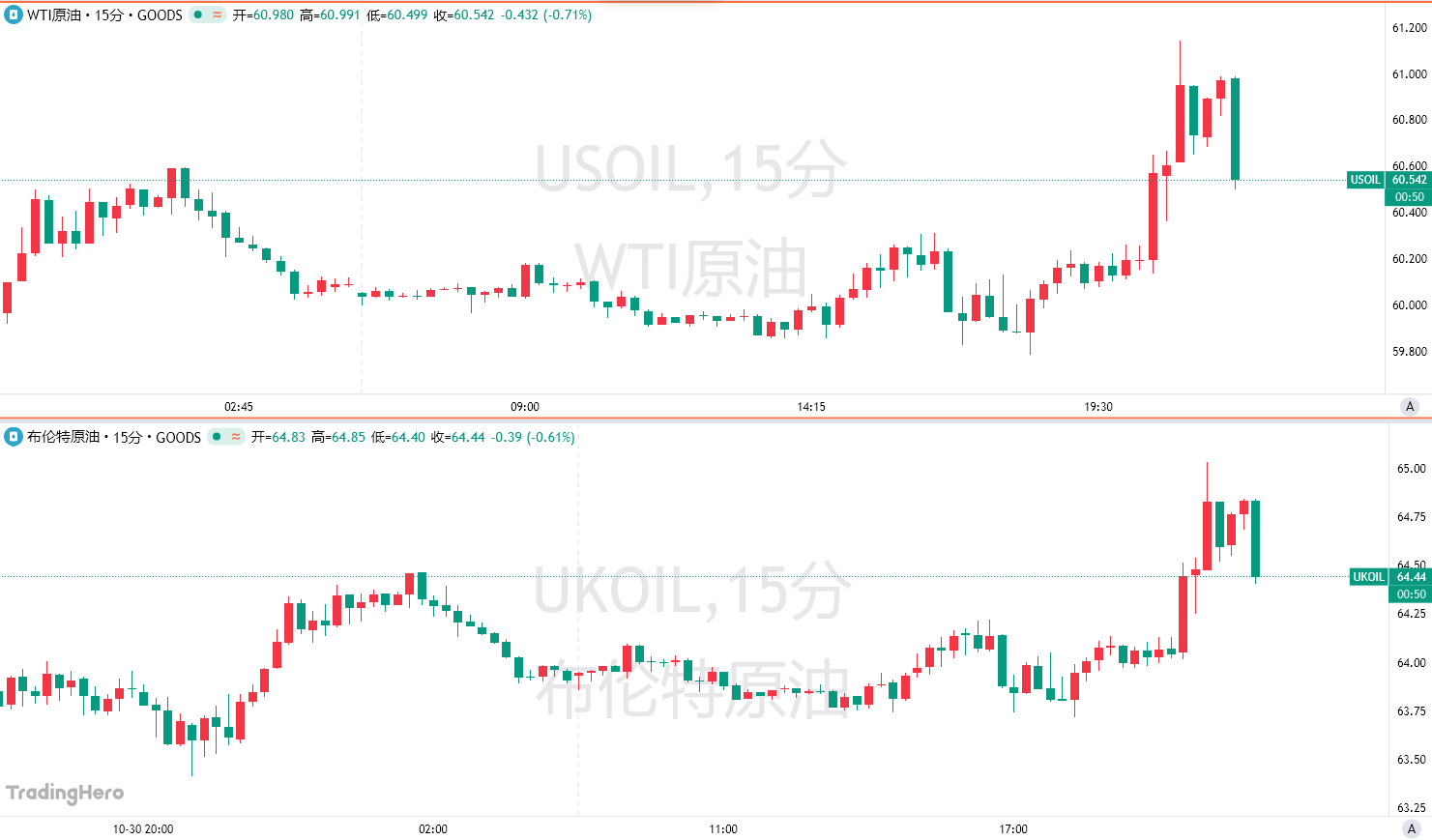
Group 1: Gold and Oil Market Overview - Gold prices fluctuated around the $4000 mark, ultimately closing down 0.07% at $4000.44 per ounce [1] - Despite OPEC+'s plan to pause production increases in Q1 2026, concerns over oil supply surplus and weak Asian factory data persist, with WTI crude oil closing up 0.26% at $60.82 per barrel and Brent crude oil up 0.27% at $64.65 per barrel [1] - U.S. manufacturing activity contracted for the eighth consecutive month in October, with the ISM manufacturing index declining by 0.4 to 48.7, indicating ongoing economic challenges [1] Group 2: U.S. Fiscal and Monetary Policy - The U.S. Treasury estimates borrowing of $569 billion in Q4, a decrease of $21 billion from July's forecast [2] - Federal Reserve officials express varying views on interest rate cuts, with some suggesting a series of 50 basis point cuts may be needed to reach neutral rates, while others highlight concerns over inflation data [2] - The possibility of a rate cut in December is open, contingent on forthcoming economic data [2] Group 3: OPEC's Oil Demand Forecast - OPEC anticipates that global oil demand will not peak in the short term, projecting an increase of 1.3 million barrels per day for this year [3]
沙特、俄罗斯等八国达成共识
Shang Hai Zheng Quan Bao· 2025-11-03 14:35
Core Viewpoint - OPEC+ has decided to increase oil supply by 137,000 barrels per day starting December, while also announcing a pause in production increases from January to March 2026, marking the first break in their continuous production increase since April 2023 [1] Group 1: OPEC+ Production Decisions - OPEC+ will increase daily oil supply by 137,000 barrels starting December [1] - The decision to pause production increases from January to March 2026 is significant as it breaks the continuous increase trend established since April 2023 [1] - OPEC+ aims to maintain market stability based on the current healthy oil market fundamentals and stable global economic outlook [1] Group 2: Market Reactions and Concerns - International oil prices saw a slight increase, with Brent crude futures rising above $65 per barrel and WTI crude futures above $61 per barrel [1] - There are growing concerns about an oversupply in the international oil market, with OECD oil inventories rising to 2.878 billion barrels, exceeding the five-year average by 100 million barrels [1] - The International Energy Agency predicts a potential record oil surplus in 2026 [1] Group 3: Future Considerations - Market participants should focus on when OPEC+ might initiate production cuts due to inventory pressures rather than whether they will complete the new round of production increases [2] - Major oil-producing countries, particularly Saudi Arabia, have the capacity to reduce production by over 2 million barrels if needed [2] - The upcoming OPEC+ meeting on November 30 will review production levels for 2026 [2]
Oil extends gains after OPEC+ pauses Q1 output hikes
Reuters· 2025-11-03 00:01
Core Insights - Oil prices increased in early Asian trade on Monday due to OPEC+ decision to maintain production levels in the first quarter of next year, which alleviated concerns about a potential supply glut [1] Group 1 - OPEC+ has opted not to increase production, which is a strategic move to stabilize oil prices [1] - The decision by OPEC+ has contributed to a rise in oil prices, indicating market confidence in managing supply levels [1] - The market reaction reflects easing fears regarding oversupply in the oil sector [1]


美媒爆料特朗普已决定攻击委内瑞拉,油价拉涨!
Jin Shi Shu Ju· 2025-10-31 14:19
Group 1 - Oil prices stabilized at the end of the week, with the market closely monitoring the upcoming OPEC+ meeting and geopolitical developments [1] - The U.S. military has significantly increased its presence in the Caribbean, including the redeployment of the USS Ford carrier group near Venezuela, amid reports of imminent military action against Venezuelan military facilities [1] - Venezuela's current oil export volume is approximately 700,000 to 900,000 barrels per day [1] Group 2 - OPEC+ is expected to discuss a third consecutive month of production increases, with a proposed increase of 137,000 barrels per day, aligning with market expectations [3] - The oil market is facing potential oversupply in the coming months, influenced by complex political factors and U.S. sanctions on Russian oil producers [3] - Brent crude prices have fallen over 13% this year due to increased supply outpacing demand growth [3] Group 3 - Despite the oversupply in the crude oil market, the refined oil market is performing strongly, particularly following U.S. sanctions on Russian oil companies [4] - Diesel prices have reached their highest premium over crude oil since early 2024, boosting refining profits and potentially stimulating crude oil demand [4]
石油过剩成契机,美国对俄制裁“核选项”终出鞘
Sou Hu Cai Jing· 2025-10-28 14:24
Core Viewpoint - The oversupply of oil has created conditions for the U.S. to implement stricter sanctions against Russia, particularly targeting major oil producers [3][4]. Group 1: U.S. Sanctions on Russian Oil Companies - The U.S. has announced sanctions against Russia's largest oil producers, including Rosneft and Lukoil, marking a significant escalation in economic measures against Russia [3]. - Approximately 70% of Russia's oil production and exports for 2024 are already affected by sanctions, with transactions involving Rosneft and Lukoil required to cease by November 21 [4]. - The effectiveness of these sanctions will depend on enforcement strength, reactions from major buyers like India and China, and Russia's ability to circumvent sanctions [4]. Group 2: Market Reactions and Oil Prices - The market had previously perceived an oversupply of oil, with the number of oil tankers rising to pandemic-era levels and Brent crude hovering around the critical support level of $60 [5]. - Following the U.S. sanctions announcement, the market experienced a slight recovery, driven by short covering, as traders began to question the oversupply narrative [5]. - The sanctions aim to disrupt the flow of oil that continues to support Russia's war efforts despite widespread Western embargoes [5]. Group 3: Statements from Officials - The U.S. Treasury announced that the sanctions would increase pressure on Russia's energy sector, weakening its ability to fund its military operations and support its struggling economy [6]. - Russian President Vladimir Putin claimed that sanctions would not significantly impact the country's economic well-being, asserting the stability and confidence of Russia's energy sector [6].

油价下调!92汽油重回6元时代
Sou Hu Cai Jing· 2025-10-27 13:25
Core Viewpoint - Domestic fuel prices have been reduced again following a previous decrease on October 13, with gasoline and diesel prices lowered by 265 yuan and 255 yuan per ton respectively, effective from October 27 [1][2]. Price Adjustment Details - The recent price drop is significant, marking the third-largest decline in fuel prices this year, with the current adjustment resulting in a cumulative decrease of 565 yuan per ton for gasoline and 540 yuan per ton since the beginning of the year [2][4]. - The new retail prices for gasoline and diesel are expected to be in the range of 6.5 to 6.9 yuan per liter, providing cost relief for private car owners and logistics companies [4]. International Oil Market Trends - The international oil market has experienced fluctuations, with initial price drops due to warnings of oversupply and geopolitical tensions, followed by a rebound influenced by sanctions on Russian oil and decreasing U.S. inventories [5][6]. - The average price of crude oil was reported at 60.77 USD per barrel, with a change rate of -5.71% leading to the current price adjustments [2]. Future Price Expectations - Analysts predict a potential increase in domestic fuel prices in the next adjustment cycle, with expectations of a price rise of approximately 230 yuan per ton, influenced by recent rebounds in international oil prices and easing trade tensions between the U.S. and China [1][7]. - Diesel prices are expected to see more upward pressure due to supply and demand dynamics, while gasoline prices may face limitations due to weak demand [8].

原油日报:原油震荡上行-20251024
Guan Tong Qi Huo· 2025-10-24 10:23
Report Industry Investment Rating - No information provided Core Viewpoints - OPEC+ plans to further increase production by 137,000 barrels per day in November, which will intensify the crude oil supply pressure in the fourth quarter. The peak season for crude oil demand has ended, but EIA data shows that US refinery operations have rebounded from a low level, and US crude oil inventories have decreased more than expected, as well as refined oil inventories. Overall, the inventory of oil products has decreased. There is a possibility that India will gradually reduce its imports of Russian oil. Russia has extended the export ban on diesel and gasoline until the end of the year, but its crude oil exports remain high. EIA and IEA reports suggest an increase in global oil inventories and a worsening supply glut. Despite the current supply - surplus situation, crude oil prices have fallen significantly since October. Recently, due to factors such as new rounds of economic and trade consultations between China and the US, changes in the US attitude towards Russia, and the escalation of the military stand - off between the US and Venezuela, crude oil prices are expected to continue to rebound from a low level. Attention should be paid to the progress of China - US trade negotiations and Russia - Ukraine peace talks [1]. Summary by Relevant Catalogs Market Analysis - On October 5, OPEC+ eight countries decided to further increase production by 137,000 barrels per day in November, and the next meeting will be held on November 2. The end of the peak oil demand season, weak US non - farm payroll data, and Sino - US trade uncertainties have raised concerns about oil demand. Although the market is in a supply - surplus situation, factors such as Sino - US economic and trade consultations, US sanctions on Russian oil companies, and the escalation of the US - Venezuela military stand - off may cause oil prices to rebound from a low level [1]. Futures and Spot Market Conditions - Today, the main crude oil futures contract 2512 rose 2.40% to 464.9 yuan/ton, with a minimum price of 462.5 yuan/ton and a maximum price of 471.3 yuan/ton. The open interest decreased by 2089 to 41,065 lots [2]. Fundamental Tracking - EIA expects the global oil inventory to increase by about 2.6 million barrels per day in the fourth quarter of 2025, and has raised the US crude oil production in 2025 by 90,000 barrels per day to 13.53 million barrels per day. It has also raised the average price of Brent crude oil in 2025 from $67.80 per barrel to $68.64 per barrel, but expects the price to fall to $59 per barrel in the fourth quarter of 2025 and keep the 2026 average at $51.43 per barrel. OPEC has raised the global oil demand growth rate in 2025 by 10,000 barrels per day to 1.3 million barrels per day and maintained the 2026 growth rate at 1.38 million barrels per day. IEA has lowered the 2025 global oil demand growth rate by 30,000 barrels per day to 710,000 barrels per day, and raised the 2025 and 2026 global oil supply growth rates by 300,000 barrels per day to 3 million barrels per day and 2.4 million barrels per day respectively, intensifying the supply glut [3]. Inventory and Production Data - As of the week ending October 17, US crude oil inventories decreased by 961,000 barrels, far lower than the expected increase of 1.205 million barrels and 3.67% lower than the five - year average. Gasoline inventories decreased by 2.147 million barrels, and refined oil inventories decreased by 1.479 million barrels. Cushing crude oil inventories decreased by 770,000 barrels. OPEC's August crude oil production was adjusted down by 32,000 barrels per day to 27.916 million barrels per day, and its September production increased by 524,000 barrels per day to 28.44 million barrels per day. US crude oil production in the week of October 10 decreased by 7,000 barrels per day to 13.629 million barrels per day, close to the highest level in history [4]. Demand Data - The four - week average supply of US crude oil products has decreased to 20.474 million barrels per day, 2.24% lower than the same period last year. Gasoline weekly demand decreased by 0.01% to 8.454 million barrels per day, and the four - week average demand was 8.587 million barrels per day, 3.61% lower than the same period last year. Diesel weekly demand decreased by 9.12% to 3.847 million barrels per day, and the four - week average demand was 4.011 million barrels per day, 0.19% higher than the same period last year. Although gasoline and diesel demand decreased, an increase in other oil products drove a 1.46% week - on - week increase in the single - week supply of US crude oil products [5][7].
Carlyle Group's Jeffrey Currie: Here's what to make of new U.S. sanctions on Russian oil
Youtube· 2025-10-23 18:25
Core Viewpoint - The Trump administration's new sanctions on Russia's largest oil companies have led to a nearly 6% increase in oil prices, with WTI crude at $61 per barrel and Brent at $65, indicating immediate market impacts [1]. Group 1: Market Dynamics - The sanctions come amid discussions of an oil glut, raising questions about the market's ability to absorb the loss of Russian oil and its effect on prices [2][3]. - The potential loss of Russian oil could range from 1 million to 5 million barrels per day, which would significantly disrupt global supply [5]. - Current oil prices have already increased by approximately $5 from recent lows, with the possibility of further increases of $5 to $10 per barrel due to market shorts unwinding [6][9]. Group 2: Sanctions Effectiveness - The absence of secondary sanctions means that the full impact of the current sanctions is yet to be determined, as secondary sanctions would have more severe implications for global transactions [4][11]. - Historical context shows that secondary sanctions can effectively isolate entities but are politically sensitive and disruptive [12][14]. - The interconnectedness of global markets is highlighted by the shift towards gold as a means to circumvent sanctions, with significant increases in gold demand observed [13][15].