
获利了结

Search documents
LME铜价因获利了结跌破13,000美元
Wen Hua Cai Jing· 2026-01-08 10:34
Core Viewpoint - Copper prices have retreated as traders lock in profits, falling below the $13,000 per ton mark, with LME copper down 0.6% to $12,786 per ton after reaching record highs earlier in the week due to supply tightening and uncertainty over U.S. tariffs [1] Group 1 - Copper prices experienced a decline as profit-taking occurred among traders [1] - LME copper fell to $12,786 per ton after previously hitting record highs [1] - The price surge earlier in the week was driven by concerns over supply constraints and U.S. tariff uncertainties [1] Group 2 - Soojin Kim from MUFG noted that while the long-term outlook for copper remains bullish, the rapid pace of the recent price increase (over 40% rise last year, the strongest since 2009) has heightened the risk of a significant pullback due to profit-taking [1]

交易所接连出手、彭博商品指数年度再平衡迫近 贵金属短期回调压力加大
Xin Hua Cai Jing· 2026-01-08 08:00
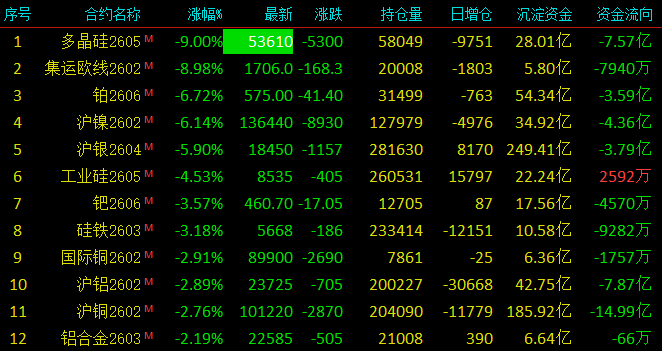
Group 1 - The domestic metal sector experienced a significant pullback, particularly in precious metals, with declines of around 6% for platinum, nickel, and silver, and over 4% for industrial silicon and palladium [1][2] - Gold prices fell by more than 1% during the day but narrowed the decline to 0.72% by the end of trading [1] - The Bloomberg Commodity Index's annual rebalancing attracted selling pressure and profit-taking, negatively impacting the short-term metal market [5] Group 2 - The Shanghai Futures Exchange implemented a series of risk control measures for silver futures, including increased margin requirements and trading limits, which dampened market speculation [5][6] - Analysts noted that geopolitical risks and macroeconomic signals from the U.S. are influencing precious metal traders, with a cautious sentiment prevailing in the market [8] - Despite short-term volatility, the long-term outlook for precious metals remains optimistic, supported by factors such as the continuous increase in gold reserves by the People's Bank of China [9]

铜价从纪录高位回落 迅猛涨势引发获利了结
Xin Lang Cai Jing· 2026-01-07 17:09
铜价从纪录高位回落,与其他工业金属一道下跌,因交易员在价格快速上涨后获利了结。 伦敦金属交易所临近收盘时,铜、镍和锌期货价格均下跌逾2%,削减了过去几周的急剧涨幅。 铜价从纪录高位回落,与其他工业金属一道下跌,因交易员在价格快速上涨后获利了结。 伦敦金属交易所临近收盘时,铜、镍和锌期货价格均下跌逾2%,削减了过去几周的急剧涨幅。 尽管许多交易员和投资者对铜及其他金属的长期前景持看涨态度,但此次涨势之快引发警告称,随着交 易员获利了结,市场可能会同样急剧下跌。 "我们看到大多数市场出现普遍回调,这在价格大幅波动后属于常态,"Marex分析师Ed Meir在电邮报告 中表示。 尽管许多交易员和投资者对铜及其他金属的长期前景持看涨态度,但此次涨势之快引发警告称,随着交 易员获利了结,市场可能会同样急剧下跌。 "我们看到大多数市场出现普遍回调,这在价格大幅波动后属于常态,"Marex分析师Ed Meir在电邮报告 中表示。 截至当地时间下午4时09分,伦敦金属交易所(LME)镍价跌2.5%,报每吨18,070美元。铜价跌 2.8%,报每吨12,863.50美元。 新浪合作大平台期货开户 安全快捷有保障 责任编辑:丁文 ...
金价单日暴跌超 4%:4500 美元高位后的 “节前获利了结”
Sou Hu Cai Jing· 2025-12-31 16:31
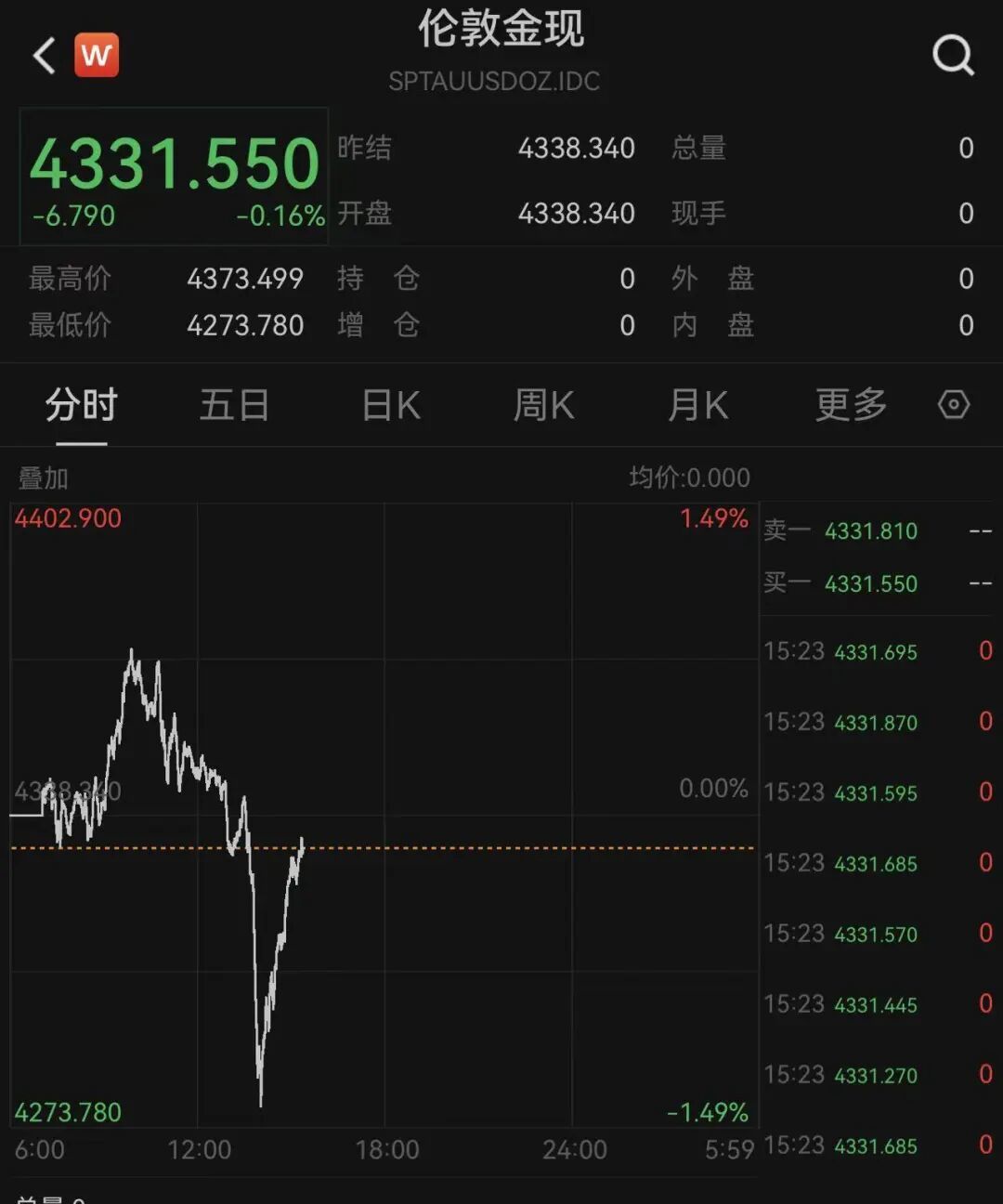
这一跌幅让不少投资者措手不及。国内市场同步承压,上海期货交易所黄金主力合约收报 1007 元 / 克,呈现明显下行态势。 这次回调并非孤立事件,整个贵金属板块都经历了剧烈调整。白银急跌 8.9%,铂金重挫 14.5%,钯金暴跌 15.23%。 回调动因 冲击波黄金从每盎司 4549 美元的历史高位应声回落,近 200 美元的跌幅背后,是 2025 年全年暴涨 65% 后市场理性的短暂回归。 12 月 30 日,国际黄金市场经历了一次猛烈回调。现货黄金价格短线急挫超 150 美元,失守 4330 美元 / 盎司关口。美国黄金期货同样重挫 4.6%,结算价 报 4343.60 美元 / 盎司。黄金价格在前一交易日(12 月 29 日)创下 4549.69 美元 / 盎司的历史新高后,遭遇了年内最剧烈的单日调整之一。 截至 29 日 18 时,伦敦现货黄金价格已跌至每盎司 4368.9 美元;纽约黄金期货主力合约价格回落至每盎司 4343.60 美元。国内市场同样受到影响,上海期 货交易所黄金主力合约当日收报 1007 元 / 克。 市场急转 黄金市场的转折来得迅速而突然。12月29 日开盘后,金价从前一交易日创下 ...

金价、银价下跌,金融圈人士直言:有人在出货
Mei Ri Jing Ji Xin Wen· 2025-12-31 08:01
Core Viewpoint - The precious metals market is experiencing significant volatility, with gold, silver, and platinum prices declining sharply after a period of substantial gains, driven by profit-taking and reduced geopolitical risks [6][7][11]. Price Movements - Gold prices fell by 1.50%, dropping below $4300 per ounce, while silver saw a decline of over 7%, currently down by 5.02% [1][3]. - The main silver futures contract dropped over 5%, currently at 17074 yuan per kilogram, while platinum futures fell by 14%, now priced at 527.25 yuan per gram [3]. Market Dynamics - The recent surge in precious metal prices, particularly silver, saw it rise from around $50 to over $80 per ounce, with a monthly increase of approximately 150% [6]. - As of last week, gold had increased by about 70% for the year, while silver's rise exceeded 150%, with other metals like platinum and palladium also seeing gains over 100% [6]. Factors Influencing Price Changes - The decline in precious metal prices is attributed to profit-taking after previous gains, reduced geopolitical risks, and increased margin requirements by major exchanges [7][8]. - Financial institutions are under pressure to settle accounts as the year-end approaches, leading to selling at high prices, which has put downward pressure on prices [7]. Future Outlook - Short-term volatility in precious metals is expected to continue, with silver and platinum facing larger adjustments due to liquidity constraints [8]. - Long-term prospects remain positive, with expectations of continued demand from central banks and a potential shift to a "weak dollar" environment supporting prices [9][10]. Central Bank Activity - Central banks are projected to significantly increase gold purchases, with estimates suggesting an average monthly purchase of 70 tons by 2026, compared to 17 tons before 2022 [9]. - Emerging market central banks are strategically increasing their gold reserves, indicating a strong demand for gold [9]. Market Sentiment - The precious metals market is increasingly influenced by investor sentiment and liquidity, with emotional factors becoming critical in price determination [12]. - The market is experiencing a "bungee jump" effect, reflecting rapid price fluctuations that investors should be cautious of [11][12].
2025年12月31日,国内黄金9995价格多少钱一克?
Sou Hu Cai Jing· 2025-12-31 00:46
芝商所上调保证金触发集中抛售 据交易所数据显示,截至8点30分,国内黄金(99.95%)最新报价为986.34元/克,上涨0.04%。 国际黄金价格报4350.4美元/盎司,下跌0.82%。 以下是今日对黄金价格走势影响较大的3个主要资讯: 央行购金长期支撑与短期避险降温交织 2025年全球央行前三季度净购黄金634吨,全年购金需求创纪录,95%的央行预期未来继续增持,为金 价提供长期支撑。但近期乌克兰和平谈判出现初步进展,短期避险情绪降温,叠加美元短线走强,共同 推动金价阶段性回调,长期上涨逻辑未被打破。 声明:市场有风险,投资需谨慎。本文为AI基于第三方数据生成,仅供参考,不构成个人投资建议。 来源:市场资讯 芝商所宣布上调贵金属等金属期货履约保证金超10%,叠加年末交易流动性稀薄,大量投资者赶在新规 生效前集中卖出平仓,引发12月29日国际贵金属价格大幅下跌,后续迎来阶段性反弹。此次调整被视为 打压短期过热行情的导火线,加剧多头被动减仓放大短期波动。 年末获利了结叠加技术超买回调 2025年黄金累计涨幅近70%,12月26日现货金价触及4549.92美元历史新高后,技术指标长期处于超买 区间。年末投资者 ...
白银上演“V型”逆转!供需缺口支撑银价冲击1979年来最佳表现
Zhi Tong Cai Jing· 2025-12-30 23:19
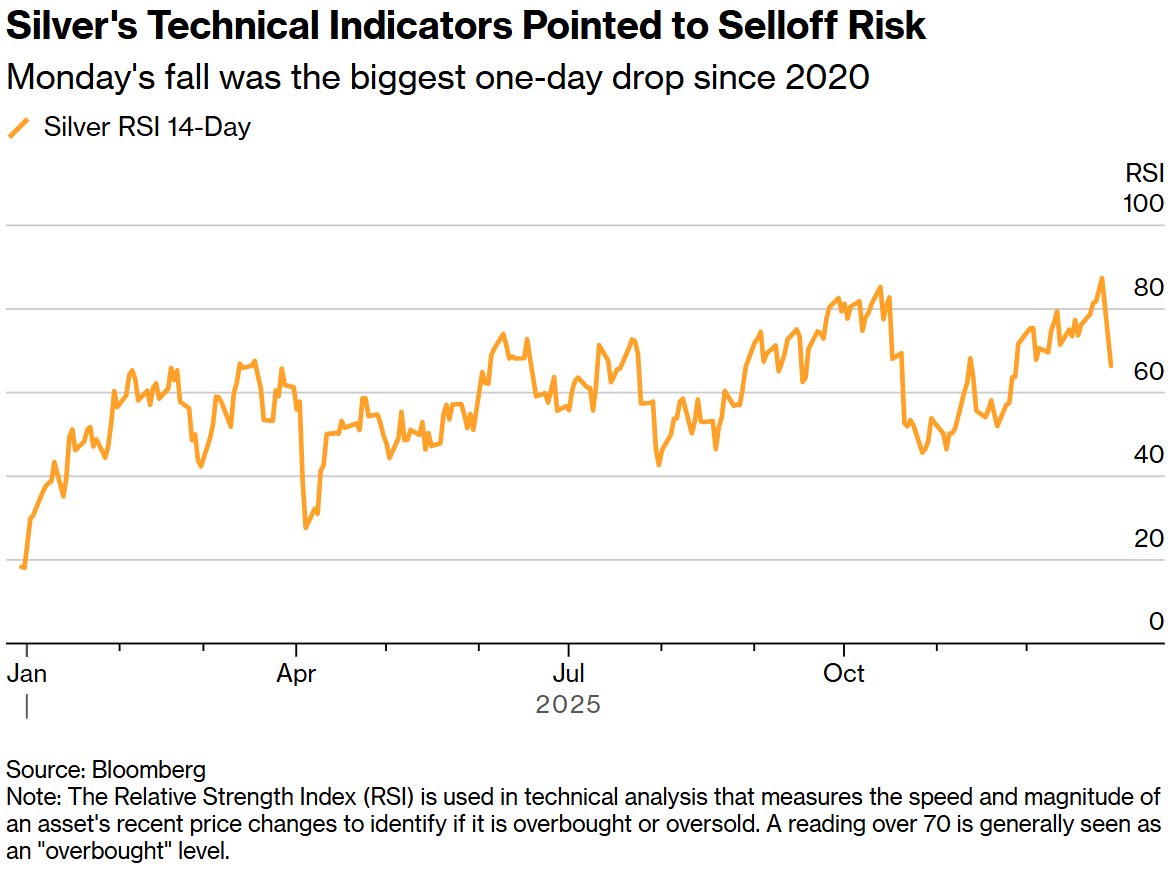
智通财经APP注意到,白银在经历了五年多来最大的单日跌幅后,收复了大部分失地。由于供应短缺问题依然存在,该金属本月仍有望实现35%的涨幅。 周二,白银价格攀升至每盎司78美元以上,而此前一个交易日曾大跌9%;与此同时,黄金在经历了两个月来最剧烈的下跌后也小幅走高。交易所收紧保证 金要求以及市场指标显示涨势过头,共同导致了周一的下跌,而流动性稀缺则加剧了近期的价格波动。 Pepperstone Group Ltd.的策略师Dilin Wu表示,这次抛售"很大程度上是技术性的:由于贵金属近期激增引发了早期获利了结、杠杆多头头寸被平仓,以及更 严格的保证金要求增加了压力。基本面并没有改变。" 白银的技术指标指向抛售风险 为了在波动加剧的情况下控制风险,一些交易所采取了行动,从周一开始调高了某些Comex白银期货合约的保证金。当交易所提高保证金要求时,交易员必 须投入更多现金才能维持头寸。部分投机者由于没有额外的资金,被迫缩减或关闭交易。 近期,中国投机投资者的兴趣也是推高银价的关键驱动力。12月份上海黄金交易所白银合约的买盘激增,将溢价推至历史新高,并带动了其他国际基准价 格。在多次风险警告被忽视后,这场猛烈的涨势 ...
今夜!白银又暴涨了!
Zhong Guo Ji Jin Bao· 2025-12-30 16:10
Group 1 - The recent volatility in silver prices has been characterized by significant fluctuations, with silver rising above $74 per ounce after a previous drop of 9% [1][4] - Analysts attribute the recent sell-off primarily to technical factors, including profit-taking and increased margin requirements, while the fundamental conditions supporting the market remain unchanged [4] - The current market dynamics are influenced by a weaker dollar and ongoing geopolitical uncertainties, which may lead to a return of buying interest in precious metals [4][5] Group 2 - Despite recent pullbacks, both gold and silver are expected to record their strongest annual performance since 1979, driven by strong central bank purchases and continuous inflows into exchange-traded funds (ETFs) [5] - The silver market is experiencing a real physical shortage, with supply constraints and increased inventory concentration playing a significant role in price determination [5] - Global stock markets are projected to achieve annual gains for the third consecutive year, although recent performance has been relatively subdued [7]
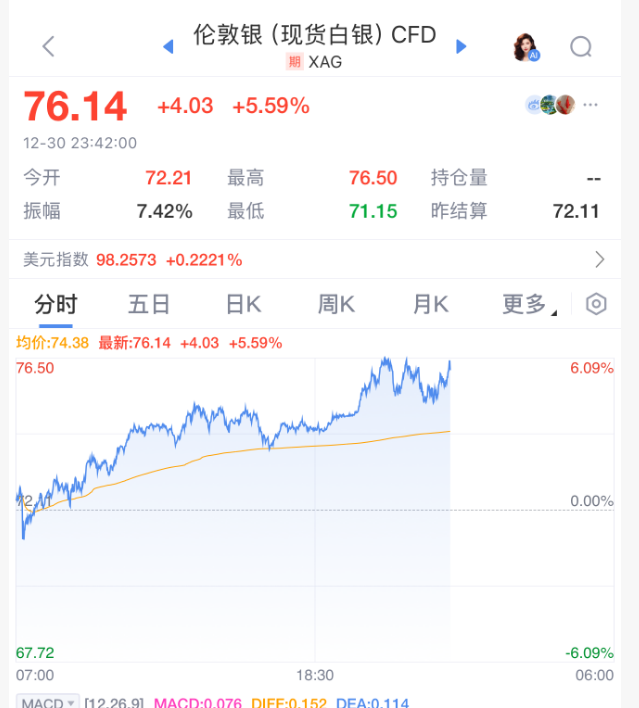
白银价格从纪录高位大跌后反弹,白银矿商股价上涨
Xin Lang Cai Jing· 2025-12-30 15:33
Group 1 - Silver prices reached a historical high of $83.62 on Monday, followed by the largest single-day drop since August 2020 [1] - On Tuesday, silver mining stocks rose in response to the increase in silver prices, with Hecla Mining up 1.5% and Coeur Mining up 0.6% [1] - Analyst Zain Vawda noted that the sell-off was characterized by year-end profit-taking and position adjustments, but the structural conditions for the price increase, such as a weaker dollar and ongoing geopolitical uncertainty, remain unchanged, suggesting potential buyer return [1]
金银,跌势难调!
Sou Hu Cai Jing· 2025-12-30 09:47
Group 1: Gold Market Overview - The spot gold price experienced a significant drop of 4.4%, closing at $4,331.78 after reaching a historical high of $4,549.69 [1] - In the European market, gold slightly rebounded to around $4,371 [1] Group 2: Silver and Other Precious Metals - Spot silver fell over 9%, while palladium dropped more than 15%, leading to a broad decline in the U.S. precious metals sector [2] - Harmony Gold fell over 8%, and Pan American Silver and Kinross Gold dropped more than 5% [2] - The decline in precious metals prices was triggered by the CME Group's announcement to raise margin requirements for various metal contracts [4] Group 3: Market Dynamics and Speculation - The CME Group's margin increase is part of a routine review to manage market volatility, effective from Monday [4] - Analysts noted that this move aims to reduce speculative activities in the market [4] - A rumor about a major bank facing a margin call in the silver futures market has also drawn significant attention [4] Group 4: Silver Price Volatility - The silver market is currently in a "high volatility mode," with supply shortages supporting prices while speculative sentiment amplifies risks [5] - Silver prices have surged nearly 150% this year, driven by supply constraints, strong industrial demand, geopolitical tensions, and expectations of interest rate cuts by the Federal Reserve [6] Group 5: Diverging Analyst Opinions - Analysts have polarized views on the future of silver prices, with some warning of significant correction risks [8] - Optimists, including economist Peter Schiff, predict that silver prices could exceed $100 next year [9]
