
财政金融协同

Search documents
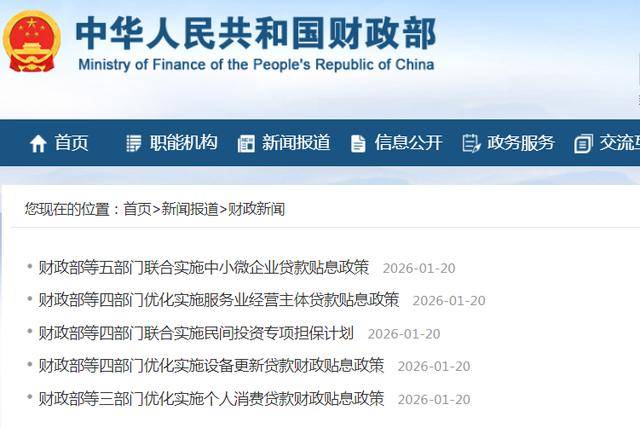
财政金融协同促内需一揽子措施出台
Zhong Guo Zheng Quan Bao· 2026-01-20 21:04
Group 1 - The core viewpoint of the article is the introduction of a comprehensive policy package by the Ministry of Finance, the Central Bank, and the Financial Regulatory Authority to stimulate domestic demand through enhanced consumer loans and support for private investment [1] - The optimization of the personal consumption loan subsidy policy allows consumers to receive a subsidy of up to 3000 yuan per transaction, significantly increasing from the previous 500 yuan [1] - The subsidy for service industry enterprises has been raised from 1 million yuan to 10 million yuan, with the subsidy amount increasing from 10,000 yuan to 100,000 yuan [1] Group 2 - The implementation period for the optimized policies has been extended to the end of 2026, with potential for further extension based on effectiveness [1] - The policy now includes credit card installment payments and expands the support to cover digital, green, and retail consumption sectors, in addition to the existing eight service categories [2] - The number of financial institutions involved has expanded from over 20 to more than 500, enhancing accessibility for consumers [2] Group 3 - The policy package aims to invigorate private investment through various measures including credit, subsidies, guarantees, and compensations [2] - The subsidy for fixed asset loans related to equipment updates is set at 1.5% for a maximum of two years, applicable to loans issued from the date of the policy [2] - The central government will provide a 1.5% annual subsidy for eligible small and micro enterprises' fixed asset loans, with a loan cap of 50 million yuan per entity [2] Group 4 - The policy supports key industries such as new energy vehicles, medical equipment, and artificial intelligence, among others, to enhance investment in critical supply chains [3] - A special guarantee plan for private investment has been established with a total quota of 500 billion yuan, to be implemented over two years [3] - This guarantee plan aims to strengthen government financing capabilities and guide financial resources to support the expansion of quality goods and services in the private sector [3]
总量增加 结构更优 效益更好 动能更强——2026年财政政策更加积极
Zhong Guo Zheng Quan Bao· 2026-01-20 21:04
Core Viewpoint - The Ministry of Finance will implement a more proactive fiscal policy in 2026, focusing on increasing total expenditure, optimizing structure, improving efficiency, and enhancing momentum to ensure a good start for the 14th Five-Year Plan [1] Group 1: Fiscal Policy and Expenditure - The total fiscal expenditure will be expanded, maintaining necessary levels of fiscal deficit and debt, ensuring that overall expenditure "only increases" and key areas are "only strengthened" [1] - In 2025, the fiscal revenue is expected to achieve a balanced budget, with public budget revenue showing a recovery growth trend [2] - The fiscal department will continue to optimize expenditure structure, ensuring strong support for key areas such as social security, employment, technology, education, and health [2] Group 2: Social Welfare and Employment - In 2025, the central government allocated 66.74 billion yuan for employment subsidies and increased standards for medical insurance and public health service funding [3] - The basic pension for retirees will be raised by 2%, and the minimum standard for urban and rural residents' pensions will increase by 20 yuan per month [3] - A new childcare subsidy system will be established, with 100 billion yuan allocated for subsidies for children under three years old [3] Group 3: Efficiency and Effectiveness - The focus will be on improving the efficiency of fund usage, ensuring that every penny generates expected benefits [4] - In 2025, 1.3 trillion yuan of ultra-long-term special bonds will be issued to support key projects, with 300 billion yuan allocated for consumer subsidies [4] - The use of bond funds will be accelerated, with a total expenditure of 5.15 trillion yuan in the first 11 months of 2025, a 45.5% increase from the previous year [4] Group 4: Fiscal and Tax Reforms - The Ministry of Finance aims to deepen fiscal and tax reforms to enhance local financial development and support the construction of a unified national market [5] - There will be a focus on clarifying fiscal responsibilities between central and local governments in public services, education, and healthcare [5] - Continuous efforts will be made to standardize fiscal subsidies and improve government procurement processes to foster a fair competitive environment [6]
财政金融协同促内需一揽子政策落地
Xin Lang Cai Jing· 2026-01-20 17:50
Core Viewpoint - The implementation of a comprehensive policy package aimed at promoting domestic demand through financial collaboration has officially launched, focusing on enhancing micro and small enterprises, boosting private investment, and stimulating consumer spending [1][2]. Group 1: Policy Implementation - The policy package includes measures such as interest subsidies for loans to micro and small enterprises, a special guarantee plan for private investment, and optimized loan interest subsidies for service industry operators and personal consumption loans [1][2]. - The central economic work conference in 2025 emphasized the importance of domestic demand, and the State Council's recent meeting outlined the specific arrangements for this policy package [1]. Group 2: Support for Private Investment - A special guarantee plan with a scale of 500 billion yuan will be established through the National Financing Guarantee Fund, implemented over two years [3]. - Financial subsidies will be provided for fixed asset loans to eligible micro and small private enterprises starting from January 1, 2026, with a focus on long-term loans for scene expansion and upgrades [3]. Group 3: Encouragement of Consumer Spending - The upgraded subsidy policies for personal consumption loans and service industry loans will have greater subsidy amounts, broader coverage, and longer implementation periods [4]. - The subsidy cap for individual consumers has increased from 500 yuan to 3,000 yuan per transaction, while the loan limit for service industry enterprises has risen from 1 million yuan to 10 million yuan [4]. - The inclusion of credit card installment payments and the expansion into digital, green, and retail sectors for consumption activities will further stimulate consumer spending [4].
财政支出力度如何?一揽子政策怎样发力?财政部详解财政热点问题
Xin Hua Wang· 2026-01-20 16:32
新华社北京1月20日电 题:财政支出力度如何?一揽子政策怎样发力?财政部详解财政热点问题 新华社记者申铖 在1月20日国新办举行的新闻发布会上,财政部副部长廖岷、综合司司长李先忠、金融司司长于红 围绕今年财政政策取向、财政金融协同促内需一揽子政策等热点问题进行介绍。 2026年财政总体支出力度"只增不减" 中央经济工作会议提出,要继续实施更加积极的财政政策。廖岷介绍,2026年,按照中央经济工作 会议部署,财政部门将继续实施更加积极的财政政策,概括起来就是"总量增加、结构更优、效益更 好、动能更强"。 其中,"总量增加",就是要扩大财政支出盘子,确保必要支出力度。2026年财政赤字、债务总规模 和支出总量将保持必要水平,确保总体支出力度"只增不减"、重点领域保障"只强不弱"。 二是支持推进重点产业提质升级。加强财政金融协同支持科技创新。持续推动制造业新型技术改造 与中小企业数字化转型,加快智能化、绿色化、融合化发展。 三是强化企业科技创新主体地位。落实好结构性减税降费政策,重点支持科技创新和制造业发展。 继续发挥专精特新"小巨人"发展奖补政策、国家中小企业发展基金等作用,提升中小企业的创新能力和 专业化水平, ...
财政部:“硬核”支持稳就业、稳企业、稳市场、稳预期
Zheng Quan Ri Bao· 2026-01-20 16:25
Core Viewpoint - The Chinese government is committed to implementing a more proactive fiscal policy in 2026, focusing on increasing total expenditure, optimizing structure, improving efficiency, and enhancing economic momentum to ensure a strong start for the 14th Five-Year Plan [1] Fiscal Revenue and Expenditure - Fiscal revenue in 2025 is expected to show a "front low, middle high, and back stable" trend, with a 1.1% decline in Q1, followed by a 0.6% increase in Q2, and a 2.5% increase in Q3, with October showing a 3.2% growth [2] - The overall balance of revenue and expenditure is projected to be achievable, with stable growth in public budget revenue and strong expenditure supporting economic development [2] - Key expenditures in social security, employment, technology, education, and health have been well-supported, with over 10 trillion yuan allocated to these areas, accounting for over 40% of total public budget expenditure [3] Support for Technological Innovation - The fiscal policy is a crucial tool for supporting technological innovation, with measures including increased funding, tax incentives, and government procurement to promote high-level self-reliance in technology [4] - In 2025, 3.44 million enterprises received over 140 billion yuan in bank loans, with comprehensive financing costs reduced to below 5% [4] - Key areas of focus include enhancing government investment funds, supporting quality upgrades in key industries, and accelerating the application of major technological achievements [5] Policy Implementation - A comprehensive package of policies aimed at promoting domestic demand has been deployed, with a focus on early implementation to maximize impact [6] - Key policies include loan interest subsidies for small and micro enterprises, special guarantees for private investment, and support for consumer loans [7] - The budget for 2026 has made sufficient arrangements for the fiscal expenditures required for these policies, encouraging local institutions to actively engage in business [8]
财政金融协同发力 一揽子政策激活内需新动能
Zhong Guo Jing Ying Bao· 2026-01-20 16:20
Core Viewpoint - The central economic work conference has identified the primary task for 2026 as promoting domestic demand and building a strong domestic market, with a focus on fiscal and financial collaboration to stimulate consumption and investment [1] Group 1: Policy Framework - The State Council has launched a comprehensive policy package aimed at enhancing domestic demand, which includes "one goal," "two focuses," "three principles," and "six policies" [1] - The goal is to expand domestic demand, with a focus on stimulating private investment and promoting consumer spending as key drivers of domestic demand [1] Group 2: Support for Private Investment - New policies have been introduced to support small and medium-sized enterprises (SMEs), including a loan interest subsidy policy covering 14 key industries, providing a 1.5% interest subsidy for loans up to 50 million yuan [2] - The policy also includes a significant increase in the guarantee loan limit for medium-sized enterprises, raising it to 20 million yuan, facilitating easier access to long-term loans [2] Group 3: Consumer Spending Initiatives - The number of consumer sectors benefiting from the policies has expanded to 11 categories, with over 90 financial institutions involved in the implementation [3] - Personal consumption loan interest subsidy policies have been optimized, including support for credit card bill installments, which now have no upper limit on individual subsidies, enhancing consumer purchasing power [3] Group 4: Economic Impact - The fiscal and financial policy package is expected to lower financing costs for enterprises, boost market confidence, and activate consumer potential as these measures are implemented [4]
协同促内需!财政金融一揽子政策落地
Sou Hu Cai Jing· 2026-01-20 15:19
Core Viewpoint - The implementation of a series of financial policies aims to stimulate the real economy by enhancing microeconomic vitality and increasing domestic demand, particularly through support for small and micro enterprises and consumer loans [2][3]. Group 1: Policies to Support Private Investment - The new policy package focuses on "stimulating private investment" and "promoting consumer spending," with increased policy intensity to guide social resources towards key areas [3]. - A special guarantee plan established through the National Financing Guarantee Fund will have a scale of 500 billion yuan, implemented over two years, to support small and micro private enterprises [4]. - The policy includes fiscal interest subsidies for fixed asset loans to eligible small and micro enterprises starting from January 1, 2026, and expands the scope of support for equipment upgrade loan subsidies [4][10]. Group 2: Encouragement of Consumer Spending - The upgraded consumer loan policies will provide greater subsidies, covering a wider range of consumption areas, with longer implementation periods and broader institutional coverage [11]. - The subsidy cap for individual consumer loans has increased from 500 yuan to 3,000 yuan per transaction, enhancing purchasing power for large consumer goods [11]. - For service industry enterprises, the loan subsidy limit has been raised from 1 million yuan to 10 million yuan, with corresponding increases in subsidy amounts [11]. - The policies also include credit card installment payments and target key areas such as digital transformation, green services, and retail, allowing for a broader application of subsidies [11][12].

特朗普关税重创欧洲股市丨今日财讯
Sou Hu Cai Jing· 2026-01-20 14:27
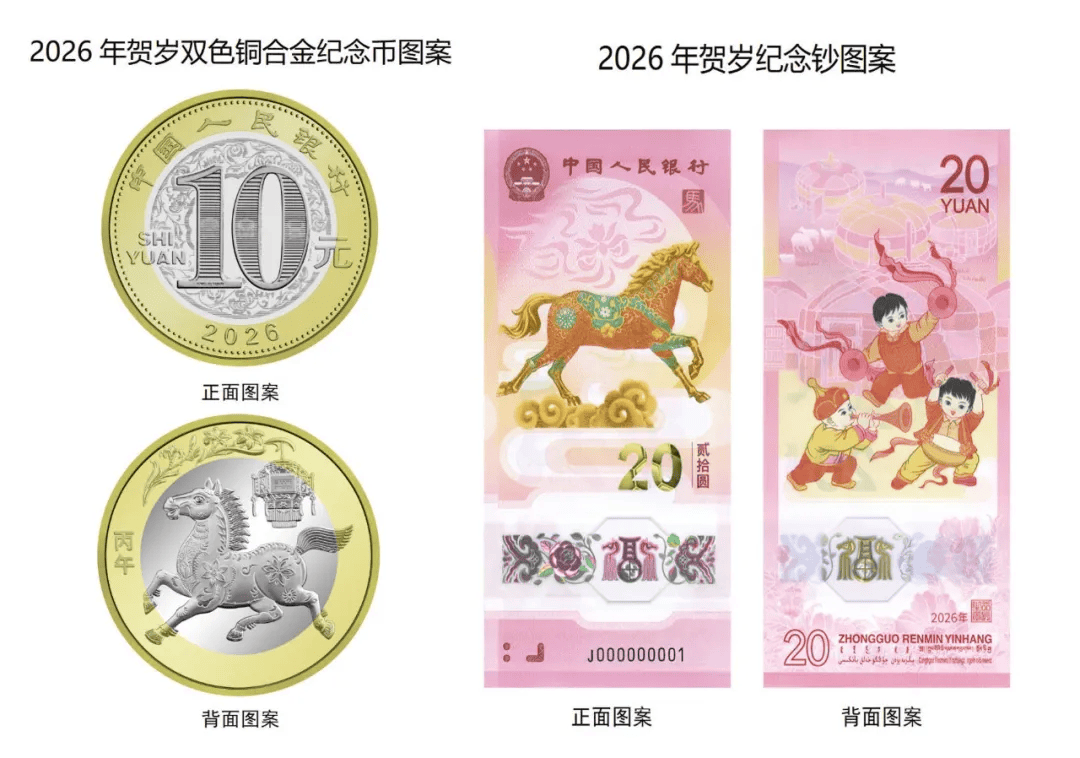
Group 1 - Multiple departments launched a coordinated fiscal and financial policy package to stimulate domestic demand, focusing on personal consumption loans and private investment [2][9] - Six departments announced the continuation of tax and fee preferential policies for community family services such as elderly care, childcare, and housekeeping to support their development [2][9] - The secondary market for the Year of the Horse commemorative banknotes is experiencing a significant premium, with prices ranging from 800 to 1000 yuan, reflecting a markup of 100% to 150% compared to the original issuance price [2][9] Group 2 - Spot gold prices surpassed $4,700 per ounce, while silver prices reached a high of $94.75 per ounce, marking new historical highs for both metals [10] - The China Football Association reported that by 2025, the social football competition system will be well-established, with 16 provinces, cities, and counties hosting city leagues and a total of 980,000 amateur players, a 95% increase from 2024 [11] - A regulatory decision was made against Jin Yongrong for manipulating 32 stocks, resulting in fines exceeding 83 million yuan and a three-year market ban [12] Group 3 - Yonghui Superstores is projected to incur a net loss of 2.14 billion yuan in 2025 [13] - European stock markets were significantly impacted by President Trump's threats to impose tariffs on several European countries, leading to a decline in major indices such as the Stoxx 600, DAX 30, and CAC 40 [13]
财政部2026年的“硬核”政策是什么?
Jing Ji Guan Cha Wang· 2026-01-20 12:50
Core Viewpoint - The Ministry of Finance plans to implement a more proactive fiscal policy in 2026, focusing on increasing total spending, optimizing structure, improving efficiency, and enhancing momentum to ensure a strong start for the 14th Five-Year Plan [1][2]. Group 1: Total Increase - The fiscal policy aims to expand the fiscal spending envelope, maintaining necessary levels of fiscal deficit, total debt, and overall expenditure, ensuring that spending increases rather than decreases [2]. - The fiscal deficit for 2026 is expected to exceed 56,600 billion yuan, based on a 4% deficit rate set for 2025, which is an increase of 1 percentage point from 2024 [2]. Group 2: Optimized Structure - The focus will be on optimizing the expenditure structure, ensuring funds are allocated to critical areas such as consumption stimulation, human investment, and social welfare [3]. - There is a shift from "investment in material" to "investment in people," indicating a transition towards a welfare-oriented fiscal policy [3][4]. - Expenditure related to consumption and social welfare has shown significant growth, with social security and employment spending reaching 40,721 billion yuan, a year-on-year increase of 8.1% [3]. Group 3: Better Efficiency - The goal is to enhance the effectiveness of fund utilization, ensuring that every yuan spent generates the expected benefits [4][5]. - In 2025, 1.3 trillion yuan of special long-term bonds will support major projects, with 8,000 billion yuan allocated to "two heavy" projects and 5,000 billion yuan for "two new" policies, driving total investment growth by 1.8 percentage points [5]. Group 4: Stronger Momentum - The policy aims to deepen fiscal and tax reforms to stimulate internal economic vitality, enhance local financial capabilities, and improve the efficiency of transfer payments [6]. - Cleaning up and standardizing tax incentives and subsidies is crucial for building a unified national market, which will help eliminate local protectionism and market segmentation [6].
多渠道增加居民收入!财政部发声
Zhong Guo Zheng Quan Bao· 2026-01-20 11:41
Group 1 - The core viewpoint is that the government will implement a more proactive fiscal policy, ensuring that total fiscal expenditure increases while optimizing the structure and improving efficiency [2][3][4] - The fiscal deficit, total debt scale, and total expenditure will maintain necessary levels in 2026, ensuring that overall expenditure intensity "only increases and does not decrease" and that key areas are guaranteed "only stronger and not weaker" [2][3] - The government will break the "base + growth" expenditure solidification pattern by actively using zero-based budgeting concepts to reduce ineffective expenditures and allocate more fiscal funds to boost consumption, invest in people, and ensure livelihood security [3][4] Group 2 - The government aims to increase residents' income through multiple channels, ensuring that funds are used in critical areas to enhance people's sense of gain [3][4] - The government will continue to arrange ultra-long-term special bonds for "two heavy" construction and "two new" work, optimizing policy implementation [3][4] - There will be a focus on deepening fiscal and tax reforms in key areas to further stimulate the internal vitality of the economy [4][5] Group 3 - The government will leverage the role of government investment funds to support early, small, long-term investments in hard technology and promote quality upgrades in key industries [6] - There will be a focus on enhancing the innovation capabilities of small and medium-sized enterprises through structural tax reductions and support policies [6] - A guiding document will be issued to promote high-quality development of agricultural insurance, emphasizing refined management and diversified collaboration [7]