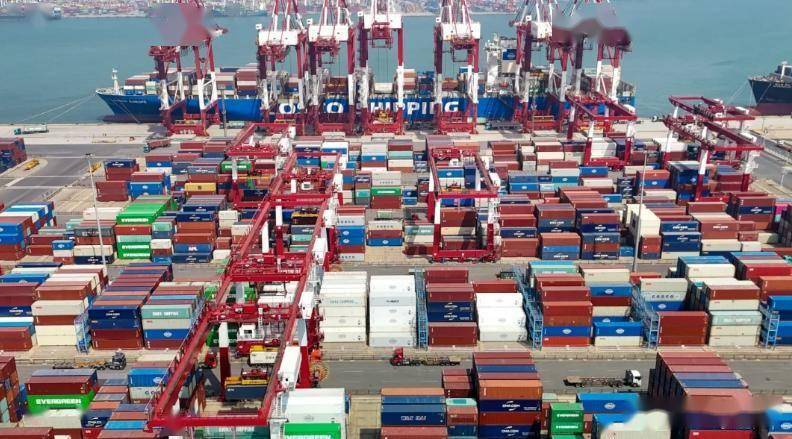
贸易博弈

Search documents
危险信号来临:美国绕过中国出口禁令,由第三国获取大批关键矿产
Sou Hu Cai Jing· 2025-07-10 07:32
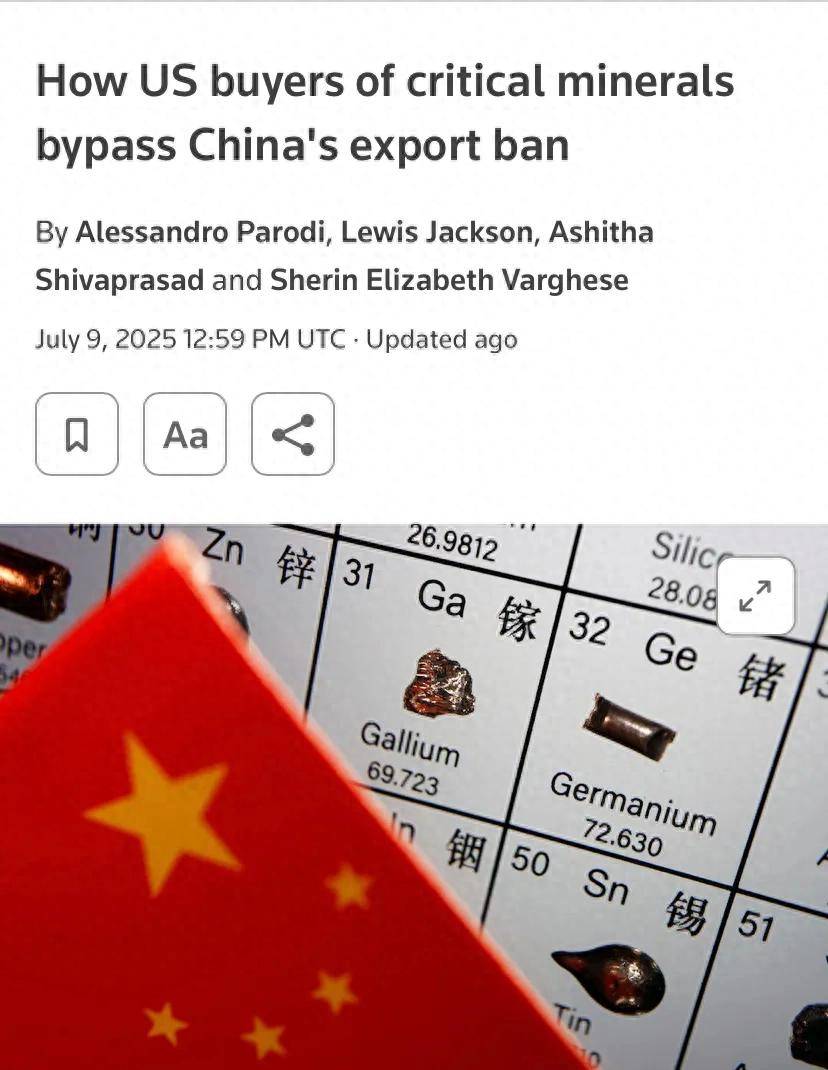
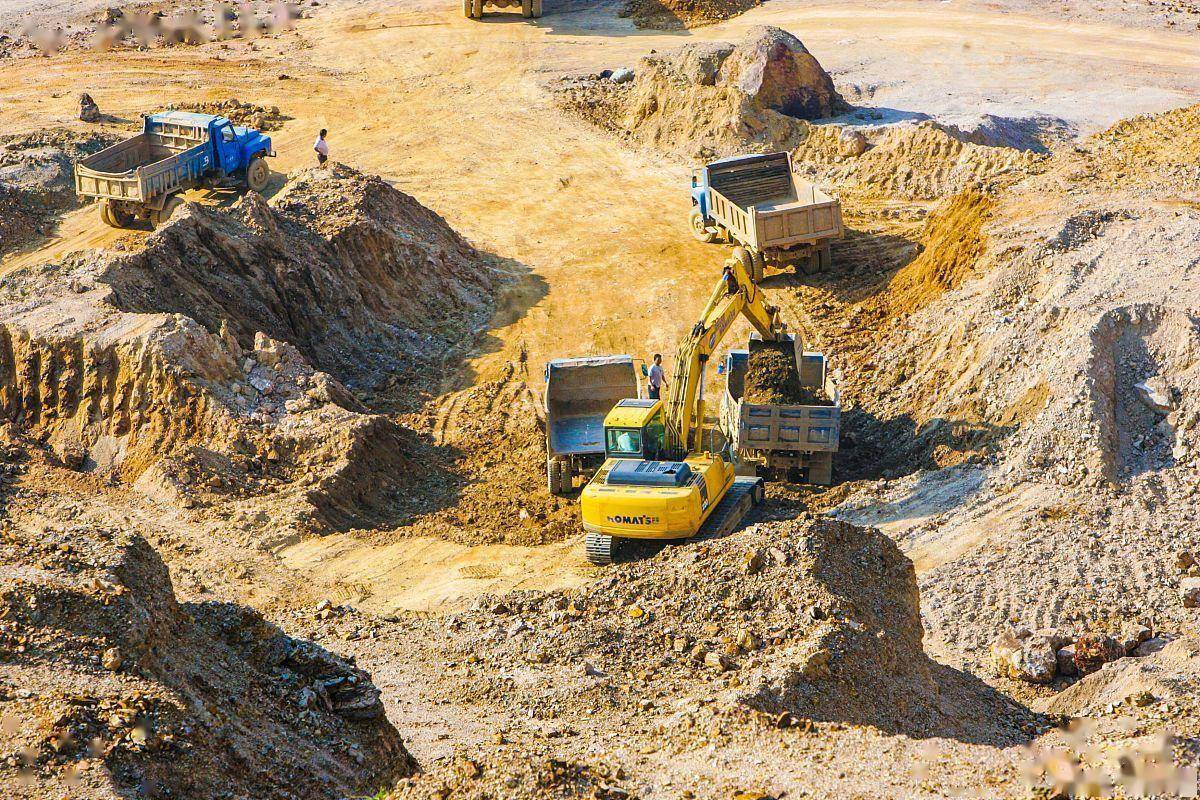
Group 1 - The core issue of the article revolves around the ongoing trade conflict between China and the United States over rare earth elements and critical minerals, highlighting the complexities of international supply chains and the effectiveness of China's export restrictions [1][4] - China announced a ban on the export of strategic minerals such as antimony, gallium, and germanium in December 2024, which was initially perceived as a strategic advantage for China in the trade war [1][4] - However, U.S. companies quickly adapted by sourcing these critical minerals through third countries, indicating a significant shift in the supply chain dynamics [4][5] Group 2 - The article discusses how U.S. imports of antimony oxide from Thailand and Mexico surged to 3,834 tons between December 2024 and April 2025, nearly matching the total imports from the previous three years [4] - It raises concerns about the effectiveness of China's regulatory measures, as minerals can be repackaged and labeled in third countries, allowing them to enter the U.S. market without restrictions [5][8] - The article suggests that the current situation reflects a historical pattern where both countries have used similar tactics to circumvent trade barriers, undermining the effectiveness of China's export bans [8] Group 3 - The U.S. Department of Defense aims to diversify its supply sources to reduce reliance on China, indicating a strategic shift in sourcing critical minerals from regions like Africa and Canada [8] - The European Union is also considering establishing mineral transit routes in Southeast Asia, signaling a growing international competition for mineral resources [8] - The article emphasizes the need for China to implement effective countermeasures, such as additional taxes on transshipment activities and enhanced regulatory oversight in ASEAN countries [10]

特朗普税非收不可,印度:中国行我也行,带头反击霸权
Sou Hu Cai Jing· 2025-07-07 04:02
Group 1 - The new tariff policy announced by the U.S. will affect over 170 countries with rates ranging from 10% to 70%, creating significant turmoil in international trade [1] - The U.S. has historically used its economic leverage to impose tariffs, aiming to gain negotiation advantages, and this latest measure targets the economic lifelines of multiple global economies [1] - The trade policy adjustments by the U.S. have already disrupted trade for over 20 emerging economies, leading to currency depreciation and widening trade deficits [1] Group 2 - India has shifted from being an observer to an active retaliator, planning to impose $725 million in retaliatory tariffs on U.S. products, highlighting the ongoing trade tensions [3] - The agricultural sector in India, despite its small contribution to GDP, is crucial for the livelihood of 400 million people, making the potential influx of U.S. products a significant concern [3] - India's protective policies aim to nurture local industries, and any relaxation under U.S. pressure could jeopardize the "Make in India" initiative [6] Group 3 - Other Asia-Pacific economies like Japan and Singapore face similar challenges, as U.S. tariffs could severely impact their supply chain security and market shares [6] - The lack of substantial progress in U.S.-India negotiations is attributed to deep-rooted conflicts of interest, indicating a complex trade relationship [8] - The current international climate suggests that countries should adopt a defensive stance and learn from China's experience in maintaining core interests while being flexible in negotiations [8] Group 4 - The new tariff policy reflects the challenges faced by global governance models, emphasizing the need for countries to uphold core interests and promote multilateral discussions [10] - The cooperation and wisdom of the international community are essential to resolving trade disputes and maintaining global stability [10]
越南之后,又一东南亚国家和美国签订了“不平等协议”!
Sou Hu Cai Jing· 2025-07-05 13:47
Group 1 - Cambodia has signed a tariff agreement with the United States, becoming the second Southeast Asian country to do so after Vietnam [1][3] - In 2024, Cambodia's total exports to the U.S. are projected to be $26.2 billion, accounting for 40% of Cambodia's total exports, while imports from the U.S. are only $321.6 million, resulting in a trade surplus of $25.9 billion [3][5] - The U.S. had proposed a 49% tariff on Cambodian goods earlier this year, which was the highest among the tariffs announced, but this was delayed for 90 days to allow negotiations with 75 countries [5][7] Group 2 - The tariff agreement is expected to impose tariffs higher than 20% on Cambodian goods, while Cambodia will apply zero tariffs on U.S. goods, indicating a significant imbalance in trade relations [7][9] - Cambodia's exports to the U.S. have already begun to feel the impact, with U.S. exports to Cambodia amounting to $100 million compared to Cambodia's $3.2 billion exports to the U.S. in the first four months of 2025 [7][9] - The signing of this agreement reflects Cambodia's limited negotiating power and the necessity to comply with U.S. demands to maintain access to the American market [7][11] Group 3 - The agreement between Cambodia and the U.S. is part of a broader strategy by the U.S. to engage Southeast Asian countries, potentially leading to more countries in the region signing similar agreements [11] - The U.S. agreements with Southeast Asian nations are seen as a way to counter China's influence, as these agreements may restrict transshipment trade involving Chinese goods [11]

法国方面着急了!法国对中国电动车增加关税后,中国立即采取反制措施针对法国干邑出口
Sou Hu Cai Jing· 2025-06-30 08:56
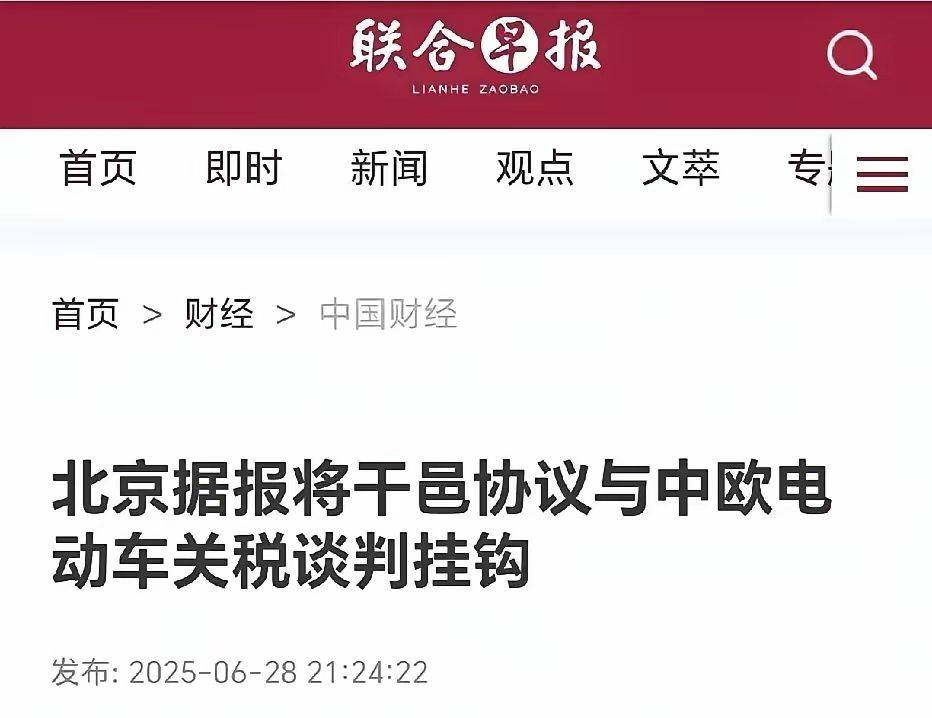
Core Viewpoint - France is urging China to lift its countermeasures against French cognac imports, but China appears to link this issue to the European Union's tariffs on Chinese electric vehicles [1][3]. Group 1: Importance of Cognac to France - In 2023, France's cognac export value reached €4.2 billion, with nearly one-third of this market coming from China [3]. - High-end cognac brands, particularly XO, are considered valuable assets among wealthy consumers in China, indicating the significance of this market for French producers [3]. Group 2: Trade Relations and Responses - The European Commission is set to finalize tariffs on Chinese electric vehicles, with potential rates soaring up to 48% [3]. - France's Agriculture Minister, Marc Fesneau, has expressed urgency for China to reconsider its stance, highlighting the tension in trade relations [3]. Group 3: Broader Economic Implications - The trade conflict could have severe repercussions for French agriculture, as the countermeasures may extend beyond cognac to include other vital sectors such as aircraft, luxury goods, and dairy products [3][5]. - The competitive landscape for cognac in China is intensifying, with domestic wines from regions like Ningxia and international competitors from Chile and Australia posing significant threats [5]. Group 4: Political Dynamics - French President Macron's previous emphasis on European strategic autonomy contrasts sharply with the current situation, where France seems to be reacting to U.S. influences rather than asserting its own interests [5]. - The ongoing trade war is characterized as mutually damaging, with reports of layoffs in French vineyards as a direct consequence of the trade tensions [5].
韩美关税战新动向:首尔争取延长谈判窗口期 白宫紧盯非关税壁垒
智通财经网· 2025-06-30 08:40
Group 1 - South Korea is actively seeking to extend the 90-day tariff suspension period originally set to expire on July 9, due to the current negotiation progress not being sufficient to meet the deadline [1] - The recent high-level trade talks between South Korea and the U.S. marked the third round of technical negotiations since the agreement to formulate a tariff reduction plan by July 9 was reached in late April [1] - The South Korean official indicated that some countries may reach agreements before July 8, while others may require extensions, and some may continue negotiations under the existing tariff framework [1] Group 2 - The U.S. focused on non-tariff barriers during the recent talks, shifting attention from nearly zero tariffs on U.S. imports to technical trade barriers and regulatory standards [2] - Discussions regarding foreign exchange rate policies and the sharing of defense costs for U.S. troops stationed in South Korea are being conducted through separate channels [2] - The ongoing tariff negotiations reflect a deeper strategic competition between South Korea and the U.S., with South Korea's key industries like automotive and steel urgently needing tariff relief, while the U.S. aims to reshape the Asia-Pacific trade landscape through new trade rules [2]
美国80%稀土依赖中国!军工巨头因短缺被迫减产30%
Sou Hu Cai Jing· 2025-06-16 10:56
Core Insights - The article highlights the strong control China has over the rare earth industry, particularly in military applications, which has left the U.S. with limited options for securing rare earth materials [1][3][5]. Group 1: U.S. Dependence on China - The U.S. relies on imports for 80% of its rare earth materials, with 70% of that coming from China, indicating a significant dependency [3]. - China controls 90% of the global production capacity for rare earth permanent magnets, which raises concerns within the U.S. defense sector [3]. - Following China's announcement of export controls on seven categories of rare earth items, Lockheed Martin reported a 30% reduction in production of F-35 engine blades due to rare earth shortages [3]. Group 2: Strategic Importance of Rare Earths - Rare earth materials are crucial for modern military equipment, with each F-35 fighter jet requiring a substantial amount of these materials, and over 60% of the components in precision-guided missiles being made from rare earths [3]. - The U.S. military's nuclear submarines require 4 tons of rare earth materials each, emphasizing the critical nature of these resources for military operations [5]. Group 3: Challenges in U.S. Rare Earth Production - The U.S. rare earth industry has been weakened by years of market and policy missteps, leading to projections that even with increased investment, domestic production will only meet 20% of demand by 2030 [5]. - The U.S. faces a potential operational crisis, as the Secretary of Commerce stated that if China tightens rare earth exports, the F-35 production line could halt within six months, and the Patriot missile system could lose 50% of its guidance capacity [5]. Group 4: China's Technological Advancements - China is not only capable of controlling rare earth resources but is also rapidly advancing in high-end technology sectors, including semiconductors and artificial intelligence, narrowing the competitive gap with the U.S. to just 1-2 years in semiconductors and 3-6 months in AI [7]. - The rapid progress of China in these fields poses a significant challenge to U.S. technological leadership [7].
谈判陷入僵局,欧盟低估东方市场韧性,欧洲工业巨头被卡脖子了
Sou Hu Cai Jing· 2025-06-11 03:41
Group 1 - The U.S. Department of Commerce has extended the anti-dumping investigation deadline for various agricultural products originating from the EU to December 16, indicating that restrictive measures against EU agricultural products will remain in effect [1] - The extension of the investigation is linked to ongoing negotiations regarding electric vehicle subsidies, with analysts suggesting it serves as a tactical pressure on the EU to compromise on subsidy policies [1][3] - A European agricultural organization has warned that the extension will severely impact agricultural exports from certain EU countries, while the European Commission insists on maintaining competitiveness in the electric vehicle sector [1] Group 2 - A foreign think tank estimates that if the restrictive measures continue until the end of the year, EU agricultural exports to affected countries could decline by approximately 12%, impacting over 80,000 farmers [1] - The situation reflects a broader strategic challenge for the EU, as it attempts to balance industrial interests and trade rules amid rising tensions [3]
稀土博弈升级!美国停供航空技术施压,中国手握王牌稳坐钓鱼台
Sou Hu Cai Jing· 2025-06-06 02:44
Group 1 - The U.S. has paused issuing technology licenses for commercial aircraft to China, aiming to leverage this for concessions on rare earth exports [1][4] - China dominates the rare earth market, refining 92% of global supply, and recent export controls have led to significant price increases and supply chain disruptions for international companies [3][6] - The U.S. defense sector is heavily reliant on rare earth materials, with the F-35 fighter jet requiring 417 kilograms of these materials, while domestic production is nearly non-existent [3][6] Group 2 - The U.S. strategy to withhold aviation technology is seen as a risky gamble, as China has already made preparations to counteract these moves [4][6] - The C919 aircraft has received pre-orders from 27 countries, and the certification process is progressing despite U.S. restrictions, with Airbus expressing willingness to cooperate [6][8] - U.S. defense contractors are feeling the pressure from the rare earth supply chain issues, leading to calls for the government to avoid decoupling from China [8] Group 3 - China is strategically engaging with Europe by signaling openness to rare earth supply for compliant companies, while simultaneously tightening controls against the U.S. [10][12] - Significant investments are being made in domestic rare earth processing capabilities, with companies like Jiangxi Ganfeng Rare Earth Group investing 12 billion yuan in recycling production lines [10][12] - The global supply chain is undergoing restructuring, with countries like Vietnam and Malaysia attempting to build rare earth processing facilities, but it will take years to reach China's refining capabilities [12][14] Group 4 - The U.S. strategy of "high-tech for resources" has backfired, leading to inflation and job losses in the automotive sector, while European companies are capitalizing on the situation [12][14] - China's rare earth exports have rebounded, with a 15% month-on-month increase in May, primarily directed towards Japanese and South Korean automotive companies [14] - The ongoing geopolitical struggle highlights the importance of internal strength, as the U.S. supply chain vulnerabilities are exposed while China leverages its resource position [14]

特朗普“释放利好”,欧洲有“新思路”,但报道称“关键障碍仍在,达成良好协议的可能性仍然很小”
Hua Er Jie Jian Wen· 2025-05-28 00:19
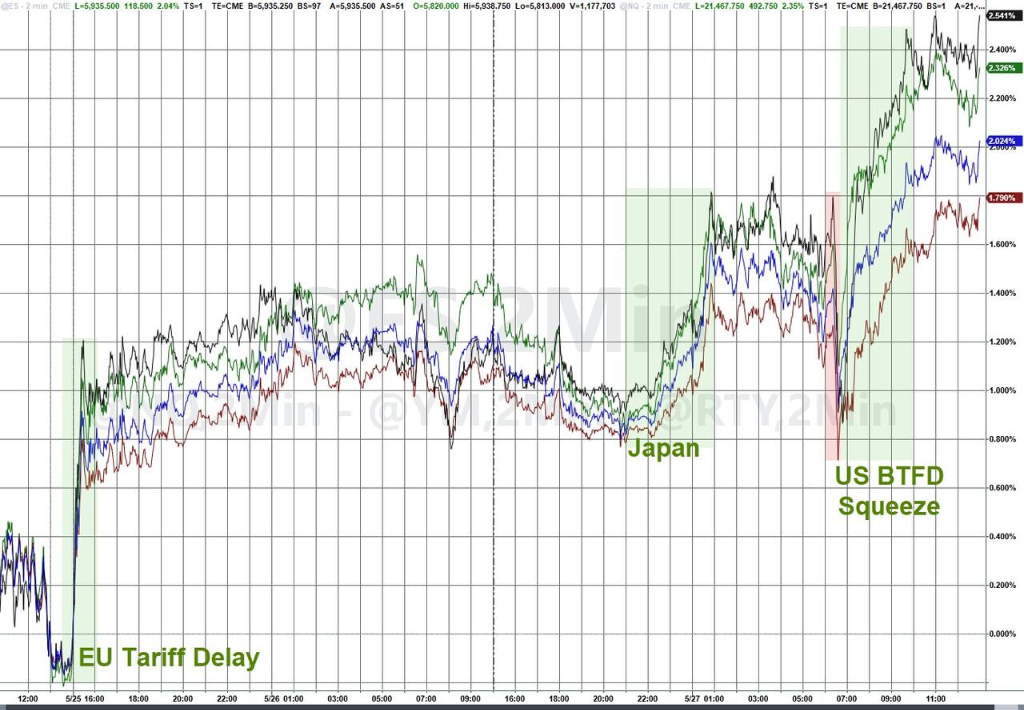
Core Viewpoint - The trade tensions between the US and EU are showing signs of easing, with President Trump shifting from a 50% tariff threat to a more conciliatory stance, leading to a significant rise in US stock markets [1][3]. Group 1: Trade Negotiations - German Finance Minister Lars Klingbeil emphasized the need for a quick resolution to the trade issues and expressed cautious optimism about reaching an agreement, highlighting the importance of a united EU response to US tariff threats [2]. - The trade relationship thawed dramatically within five days, with Trump delaying the implementation of the proposed tariffs from June 1 to July 9 after a positive conversation with EU Commission President Ursula von der Leyen [3]. - The EU is adjusting its trade strategy to focus on key sectors such as metals, automobiles, pharmaceuticals, semiconductors, and civil aircraft, which are currently facing US tariff threats [3]. Group 2: Economic Context - Despite the apparent easing of tensions, the outlook for negotiations remains uncertain, as the US-EU trade deficit has doubled this year, driven by companies stockpiling goods ahead of potential tariffs [4]. - The EU's proposed solutions to reduce tariffs on various goods were rejected by the US, leading to further threats of increased tariffs from Trump [4]. Group 3: EU Preparedness - The EU has prepared retaliatory measures, including approved tariffs on US goods worth €210 billion (approximately $238 billion), targeting politically sensitive states [5]. - Additionally, the EU is preparing an extra tariff list covering €950 billion worth of US products, including Boeing aircraft, US-made cars, and bourbon whiskey [5]. Group 4: Long-term Outlook - Many EU officials believe that some of Trump's tariffs may persist in the long term, and the likelihood of reaching an ideal agreement remains low, particularly regarding US demands that could undermine EU regulatory and tax autonomy [6]. - The core logic of Trump's trade strategy—threats, concessions, and renewed threats—remains unchanged, with the resolution of this transatlantic trade crisis expected by July 9 [7].
美国公司最近发现了一个漏洞,从中国进口的商品可以大幅降低关税
Sou Hu Cai Jing· 2025-05-27 08:26
Core Insights - The article discusses the activation of the "first sale rule" in U.S. customs law, which allows American companies to circumvent high tariffs on Chinese goods by calculating duties based on the initial sale price rather than the final sale price to U.S. retailers [1][3][5] Group 1: First Sale Rule - The first sale rule, established in 1988, allows for lower tariff calculations if certain conditions are met, such as the intermediary not being an affiliated party and having proper documentation [3][5] - This rule has gained attention as U.S. companies, facing high tariffs on Chinese imports, have begun to utilize it to significantly reduce their tariff burdens [5][7] Group 2: Impact on Tariffs - Tariffs on Chinese goods can reach as high as 30% or more, and using the first sale rule can effectively halve the taxable amount, leading to substantial savings for companies [7][9] - The rule has become a critical strategy for various industries, including luxury goods and biotechnology, as they seek to mitigate the financial impact of tariffs [5][7] Group 3: Political and Economic Implications - The use of this rule poses challenges for U.S. policymakers who advocate for trade protectionism, as it undermines the intended effects of high tariffs on Chinese imports [7][10] - The article suggests that the reactivation of this rule may create a dilemma for U.S. lawmakers, balancing national economic security with the interests of domestic companies [9][10] Group 4: Global Market Dynamics - From a Chinese perspective, the situation highlights the continued competitive advantage of Chinese products, which remain attractive to U.S. companies due to lower costs and reliable quality [10][12] - The article emphasizes that the evolving trade landscape reflects the complexities of global markets, where companies will seek new avenues to navigate regulatory challenges [12]