AI泡沫

Search documents
中国金龙指数涨超1%!美联储“鸽声”提振市场 道指涨近500点!原油大跌 比特币短线反弹超4000美元
Mei Ri Jing Ji Xin Wen· 2025-11-21 23:12
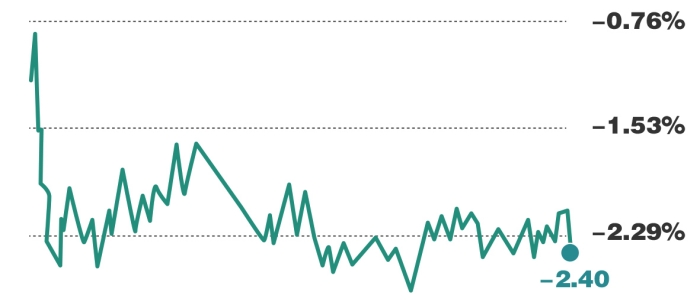
当地时间11月21日,美股三大指数收盘集体上涨,道琼斯指数上涨493.15点,涨幅1.08%;标普500指数涨0.98%;纳斯达克综合指数涨0.88%。 大型科技股涨跌互现,谷歌涨超3%,英特尔涨超2%,苹果、亚马逊涨超1%,甲骨文跌超5%,奈飞、微软、AMD超1%,特斯拉跌近1%。 热门中概股多数上涨,纳斯达克中国金龙指数收涨1.23%。蔚来涨超3%,哔哩哔哩、理想汽车涨超2%,京东、小鹏汽车涨超1%。 富时A50期指连续夜盘收涨0.71%,报14972点。 国际油价21日下跌。截至当天收盘,纽约商品交易所1月交货的轻质原油期货价格下跌94美分,收于每桶58.06美元,跌幅为1.59%;1月交货的伦敦布伦特 原油期货价格下跌82美分,收于每桶62.56美元,跌幅为1.29%。 11月21日,比特币价格一度跌至80553美元,尽管纽约时段尾盘反弹,但较10月初创下的12.6万美元历史高位依旧下跌超过30%。这轮暴跌使比特币11月跌 幅达到约25%,为2022年以来的最差表现。 截至11月22日发稿,比特币跌幅收窄,报84944.56美元,跌幅1.95%,短线较低点反弹超4000美元。 据CoinGlass数据 ...


Stock market today: Dow, S&P 500, Nasdaq bounce but end turbulent week with sharp losses
Yahoo Finance· 2025-11-21 21:05
US stocks climbed on Friday to close a turbulent session in the green amid rising optimism for a December interest rate cut, while bitcoin (BTC-USD) kept tumbling amid a brutal stretch for cryptocurrencies. The tech-heavy Nasdaq Composite (^IXIC) and benchmark S&P 500 (^GSPC) closed the day up right around 0.9% and 1%, respectively, after seesawing back and forth early in the session. The Dow Jones Industrial Average (^DJI) gained around 1.1%, or just shy of 500 points. US equities perked up early Frida ...
高盛拉响警报:“1997年的崩盘正在重演”
Sou Hu Cai Jing· 2025-11-21 19:50
Core Insights - The current AI hype is being compared to the internet bubble of the late 1990s, with Goldman Sachs highlighting five warning signals that resemble those seen before the internet bubble burst [5][10]. Group 1: Warning Signals Identified by Goldman Sachs - The first signal is peak investment spending, with capital expenditures for the five major tech giants projected to reach $533 billion by 2026, up from 3% of GDP in 1995 to 4.5% in 2000 [5]. - The second signal indicates a decline in corporate profits, with macro-level profit growth showing signs of fatigue despite stable profit margins [5]. - The third signal is the rapid rise in corporate debt, exemplified by Meta raising $30 billion through bond issuance to support its AI spending plans [6]. - The fourth signal is the Federal Reserve's interest rate cuts, with a 25 basis point cut in October and expectations for another cut in December [7]. - The fifth signal is the widening credit spread, which has increased from 2.76% to 3.15% for U.S. high-yield bonds, indicating a trend despite still being at low levels [8]. Group 2: Comparison with the Internet Bubble - Unlike the internet bubble, the current AI hype does not exhibit key macroeconomic imbalances, as corporate profitability remains solid and financial health is relatively stable [10]. - The net profit margin for the AI industry stands at 27.7%, contrasting sharply with the 14% profitability of ".com" companies during the internet bubble [10]. - Valuation metrics differ significantly, with the forward P/E ratio for the Nasdaq 100 at 26.7 compared to 60 during the internet bubble [10]. Group 3: Historical Lessons from the Internet Bubble - The internet bubble saw 68% of Nasdaq tech stocks unprofitable, while 72% of private AI companies are currently unprofitable [11]. - The average valuation for private AI companies is 35 times sales, compared to 28 times during the internet bubble [11]. - Companies that survived the internet bubble, like Amazon, adapted through innovation and diversification, highlighting the importance of sustainable business models [13]. Group 4: Current AI Investment Landscape - Despite significant investments in generative AI, 95% of organizations report negligible returns, indicating a disconnect between investment and actual benefits [15]. - Many companies treat AI as a plug-and-play tool, failing to recognize its need for continuous learning and adaptation [15]. - Investors are advised to use options for risk management while being cautious of the dual risks in the interest rate market [17]. Group 5: Conclusion on AI Investment - AI is recognized as a major technological shift, but not all participants will benefit, as evidenced by the 95% of AI investments yielding no returns [19]. - Companies that thrive in the AI landscape will likely share traits such as continuous technological advancement, sustainable profit models, and robust governance [19][20]. - The current AI wave presents opportunities, but investors should remain vigilant and selective in their investments [20][21].
流动性担忧叠加科技股波动 亚太股市遭遇“黑色星期五”
Shang Hai Zheng Quan Bao· 2025-11-21 18:43
Market Overview - The Asia-Pacific stock market experienced a significant decline on November 21, with the Korean Composite Index dropping by 3.79% and major indices like the Shanghai Composite, Hong Kong Hang Seng, and Nikkei 225 all falling over 2% [3][4] - Major tech stocks faced substantial losses, including SoftBank Group down over 10%, SK Hynix down over 8%, and Semiconductor Manufacturing International Corporation (SMIC) down over 6% in H-shares and over 3% in A-shares [3][4] Macro Factors - The primary macro factor for the recent adjustment in the Asia-Pacific stock market is the uncertainty surrounding the Federal Reserve's interest rate decisions, particularly following conflicting employment data released by the U.S. Labor Department [4][5] - The employment report indicated a significant increase in non-farm payrolls, with 119,000 jobs added in September, far exceeding the expected 50,000, while the unemployment rate rose to 4.4%, the highest since 2021 [4] AI Sector Concerns - The ongoing debate regarding the "AI bubble" has contributed to the decline in high-valued tech stocks, with major companies like Nvidia, Apple, and Microsoft experiencing notable drops [5][6] - Despite Nvidia's strong quarterly performance, its stock price fell, leading to a broader sell-off in tech stocks across Asia, particularly affecting companies in the supply chain [5][6] Investment Outlook - Long-term prospects for Chinese assets remain positive, driven by structural opportunities in overseas expansion and technological innovation [6][7] - Barclays Research has expressed optimism about Chinese stocks, predicting strong performance through 2025, with the Hong Kong market being one of the best-performing globally this year [6][7] - UBS forecasts a favorable year for the Chinese stock market, supported by factors such as internet, hardware technology, and brokerage sectors, alongside resilience in trade amidst uncertainties [7]

A股市场下跌原因找到了,高盛给出9大理由,前两次均为历史大底
Sou Hu Cai Jing· 2025-11-21 16:31
Core Viewpoint - The recent market crash has raised concerns among investors, with Goldman Sachs providing nine reasons for the capital storm, suggesting that similar panic events in the past have marked historical bottoms [1][4]. Market Performance - On November 21, 2025, the A-share market experienced its largest single-day drop since April 7, with over 2,500 companies declining more than 3% [4]. - The Nasdaq index fell over 5%, with major tech stocks, including Nvidia, suffering significant losses [4]. Investor Sentiment - The sell-off was driven by a fragile emotional foundation among investors, exacerbated by worries over domestic policies and geopolitical tensions, leading to a negative market sentiment that spread from offshore to onshore markets [4][11]. - Despite the downturn, there is a perception among some investors that this could represent a rare buying opportunity [3]. Comparison with Global Markets - A-shares exhibit valuation advantages compared to global markets, with many companies trading below book value and offering dividend yields exceeding 4% [7]. - The decline in the U.S. market was more severe, with concerns over AI bubbles and the Federal Reserve's interest rate decisions adding to market uncertainty [7]. Historical Context - Historical parallels are drawn with past market crashes, such as those in April 2020 and April 2025, which were triggered by various global events and led to significant market corrections [9][12]. - The current market conditions share similarities with previous "diamond bottoms," characterized by prolonged declines, low price-to-earnings ratios, and widespread pessimism [12]. Foreign Investment Trends - Despite the negative market atmosphere, foreign capital, represented by northbound funds and QFII, continues to show strong interest in A-shares, with net inflows reaching 161.6 billion yuan from January to July 2018 [14]. - The sectors most affected by the recent downturn include consumer electronics, photovoltaics, lithium batteries, and AI applications, while defensive assets like rare earths, agriculture, and pharmaceuticals have performed well [14]. Investment Strategy - In the current market environment, professional investors are focusing on fundamentally strong companies with sustainable growth potential, emphasizing the importance of patience in identifying undervalued assets [14][15].

Tesla stock down 2% on Friday: should you sell TSLA or buy the dip?
Invezz· 2025-11-21 16:12
Core Viewpoint - Tesla stock (NASDAQ: TSLA) fell over 2% on Friday, dropping below the critical $400 support level as investors reassess valuations in light of hawkish Federal Reserve commentary and a deepening AI bubble [1] Group 1: Stock Performance - Tesla's stock price declined by more than 2% on Friday [1] - The stock broke below the significant support level of $400 [1] Group 2: Market Context - Investors are reassessing valuations due to hawkish comments from the Federal Reserve [1] - There is a growing concern regarding the deepening AI bubble impacting market sentiment [1]


面对AI泡沫质疑,谷歌AI基建负责人坦言:公司必须每六个月将AI算力翻倍以满足需求
Hua Er Jie Jian Wen· 2025-11-21 15:38
同时,Alphabet CEO Sundar Pichai在该会议上承认AI泡沫担忧,但强调投资不足的风险更大。他指出, 如果有更多算力支持,谷歌云业务的表现可以更出色。财报显示,该业务三季度营收同比增长34%至逾 150亿美元。 算力瓶颈制约产品推广 谷歌云AI基础设施负责人Amin Vahdat在11月6日的全员会议上透露,为了满足对人工智能服务的需求, 公司必须每6个月将计算能力翻倍,并预计未来4-5年内需要实现1000倍的算力增长。 据媒体报道,Vahdat在会议上强调"AI基础设施竞争是AI竞赛中最关键,也是最昂贵的部分"。谷歌母公 司Alphabet今年已两次上调资本支出预期至910亿-930亿美元,并预告2026年将"显著增加"投资。包括微 软、亚马逊和Meta在内的四大云服务商今年预计合计支出将超过3800亿美元。 Vahdat在全员会议中,明确提出了每6个月翻倍算力的目标。他表示,谷歌的目标不是在支出上超越竞 争对手,而是提供"更可靠、更高性能、更可扩展"的基础设施。 对此,Pichai重申了此前观点,即风险点在于投资力度不足。他称: "我承认在这些时刻总是很困难,因为投资不足的风险很高。事 ...

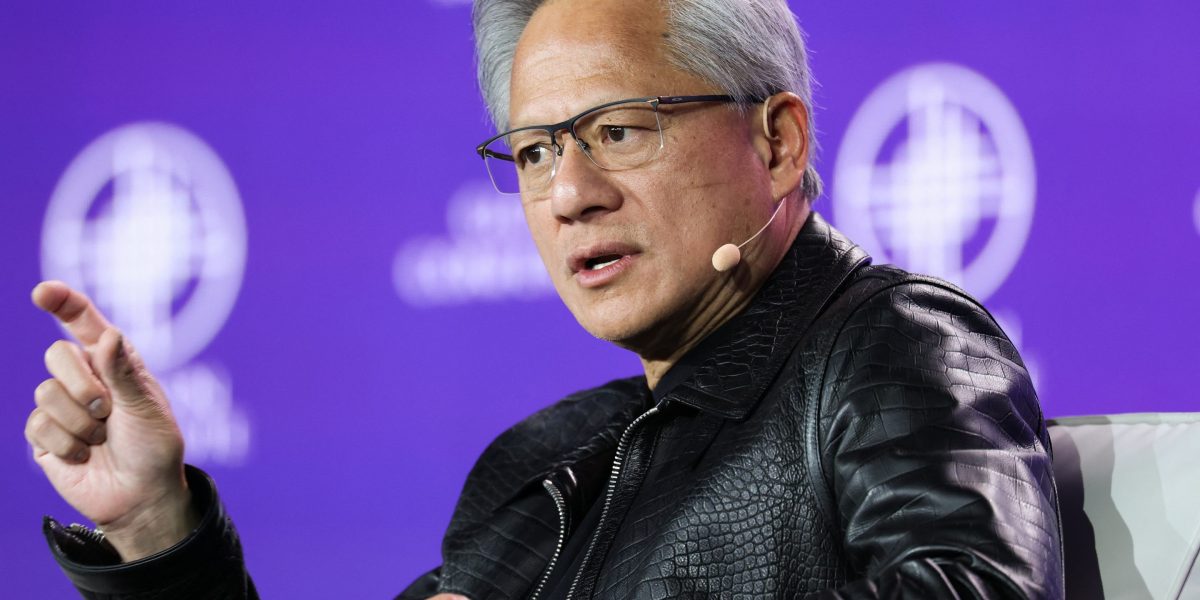
黄仁勋坦言太难了:公司业绩好被指助推 AI 泡沫,不佳则被视为泡沫破裂
Sou Hu Cai Jing· 2025-11-21 12:53
英伟达在昨天公布了 2026 财年第 3 财季财报,显示创纪录营收 570 亿美元(IT之家注:现汇率约合 4057.03 亿元人民币),较去年同期的 350.8 亿美元 (现汇率约合 2496.85 亿元人民币)大幅增长 62%,各项数据均创下历史新高。 与此同时,黄仁勋本人也在外界不断回击逐渐升温的"AI 泡沫"质疑声音,这家公司的股价在昨天开盘跳涨至 195 美元(现汇率约合 1388 元人民币)左 右,随后下跌,收盘时跌至 180.64 美元(现汇率约合 1286 元人民币)。#英伟达财报#(IT之家) 11 月 21 日消息,据《商业内幕》今天报道,英伟达创始人兼 CEO 黄仁勋在昨天的一次全体会议上,就公司的财报表现发表讲话。根据《商业内幕》获 取的会议录音,黄仁勋表示,市场并不欣赏英伟达的亮眼成绩,在"AI 泡沫"的讨论背景下,公司无论如何都会陷入"怎么都赢不了"的舆论处境。 ...

Citadel策略主管:AI投资情绪饱和、美联储偏鹰、K型经济消费分化......美股现在面临“十大利空”
Hua Er Jie Jian Wen· 2025-11-21 12:19
Core Viewpoint - The U.S. stock market is currently facing concerns over an "AI bubble," with strong earnings from Nvidia failing to sustain optimism, leading to a significant sell-off in major indices [1] Group 1: Market Sentiment and Risks - Investor sentiment towards AI investments is nearing saturation, with funds shifting from broad AI concepts to industry leaders with technological barriers and commercialization capabilities [1] - The credit market is under potential pressure due to persistently high interest rates, leading to increased corporate financing costs and tighter bank lending standards [2] - The Federal Reserve remains hawkish, with a reduced probability of interest rate cuts, indicating a divergence in expectations regarding monetary policy [2] Group 2: Economic Indicators and Market Structure - Key economic data is lacking, creating uncertainty for the Federal Reserve ahead of its December meeting, which may lead to a more hawkish policy stance despite potential rate cuts [2] - The tightening liquidity is a critical risk, as the U.S. Treasury's general account continues to deplete, impacting market liquidity and reflecting a tightening of financing channels for financial institutions [3] - The private credit market is showing early signs of strain, which could directly affect corporate funding sources and broader economic stability [3] Group 3: Valuation and Market Concentration - U.S. stock valuations remain high across various metrics, with a growing concern that corporate earnings growth is weakening while the market continues to price in overly optimistic expectations [3] - The market breadth is narrowing, with approximately 40% of funds in the S&P 500 concentrated in the top ten constituents, indicating a reliance on a few leading stocks for market stability [3] Group 4: Economic Disparities and External Influences - The U.S. economy is exhibiting a K-shaped recovery, with widening consumption disparities between high-income and low-income groups, influencing trading strategies in the capital markets [4] - The cryptocurrency market's deleveraging poses risks to risk appetite, potentially leading to sell-offs in high-risk assets like tech stocks and triggering cross-market repercussions [4]
Global stocks in meltdown as Wall Street bails out of crypto and AI: ‘The bubbly is on ice’
Fortune· 2025-11-21 11:54
Global stock markets sold off sharply this morning as investors continued to question whether the ‘Magnificent 7’ tech companies have fueled an unsustainable bubble in AI. The selling is brutal. Nasdaq 100 futures were down 0.36% this morning after losing 2.38% yesterday. S&P 500 futures were flat but volatile this morning, and the VIX volatility index was up 14% this morning. The S&P 500, which lost 1.56% yesterday, is now down 3% this month and is down over 5% from its recent high. Bank of America said it ...