
大模型

Search documents
阿里旗下平头哥发布“真武”AI芯片
Guo Ji Jin Rong Bao· 2026-01-29 12:09
Group 1 - Alibaba Group is planning to advance its AI chip subsidiary, T-head, towards an independent IPO, which has drawn market attention [2] - T-head recently launched a high-end AI chip named "Zhenwu 810E," featuring a self-developed parallel computing architecture and inter-chip communication technology, with 96GB HBM2e memory and a bandwidth of 700GB/s [2] - The "Zhenwu" PPU has been applied extensively in training and inference for the "Tongyi Qianwen" large model, integrated with Alibaba Cloud's complete AI software stack to provide comprehensive solutions [2] Group 2 - The "Zhenwu" PPU reportedly surpasses the performance of Nvidia's A800 and most domestic GPUs, being on par with Nvidia's H20, with some reports indicating its upgraded version outperforms Nvidia's A100 [2] - The "Zhenwu" PPU has gained a good reputation in the industry for its stable performance and cost-effectiveness, currently experiencing a supply-demand imbalance in the market [2] - T-head has completed large-scale deployments of the "Zhenwu" PPU in multiple clusters, serving over 400 enterprise and institutional clients, including State Grid, Chinese Academy of Sciences, Xiaopeng Motors, and Sina Weibo [3] Group 3 - T-head, established in September 2018, is a wholly-owned subsidiary of Alibaba Group focused on semiconductor chip business, offering a comprehensive product system covering both edge and cloud [3] - The product range of T-head includes Yitian processors, Zhenyue SSD controllers, Hanguang AI chips, and Yuzhen RFID chips [4]


科创板七载深耕启新程!金融界“科创汇”重磅启幕,赋能硬科技高质量发展
Jin Rong Jie· 2026-01-29 10:46
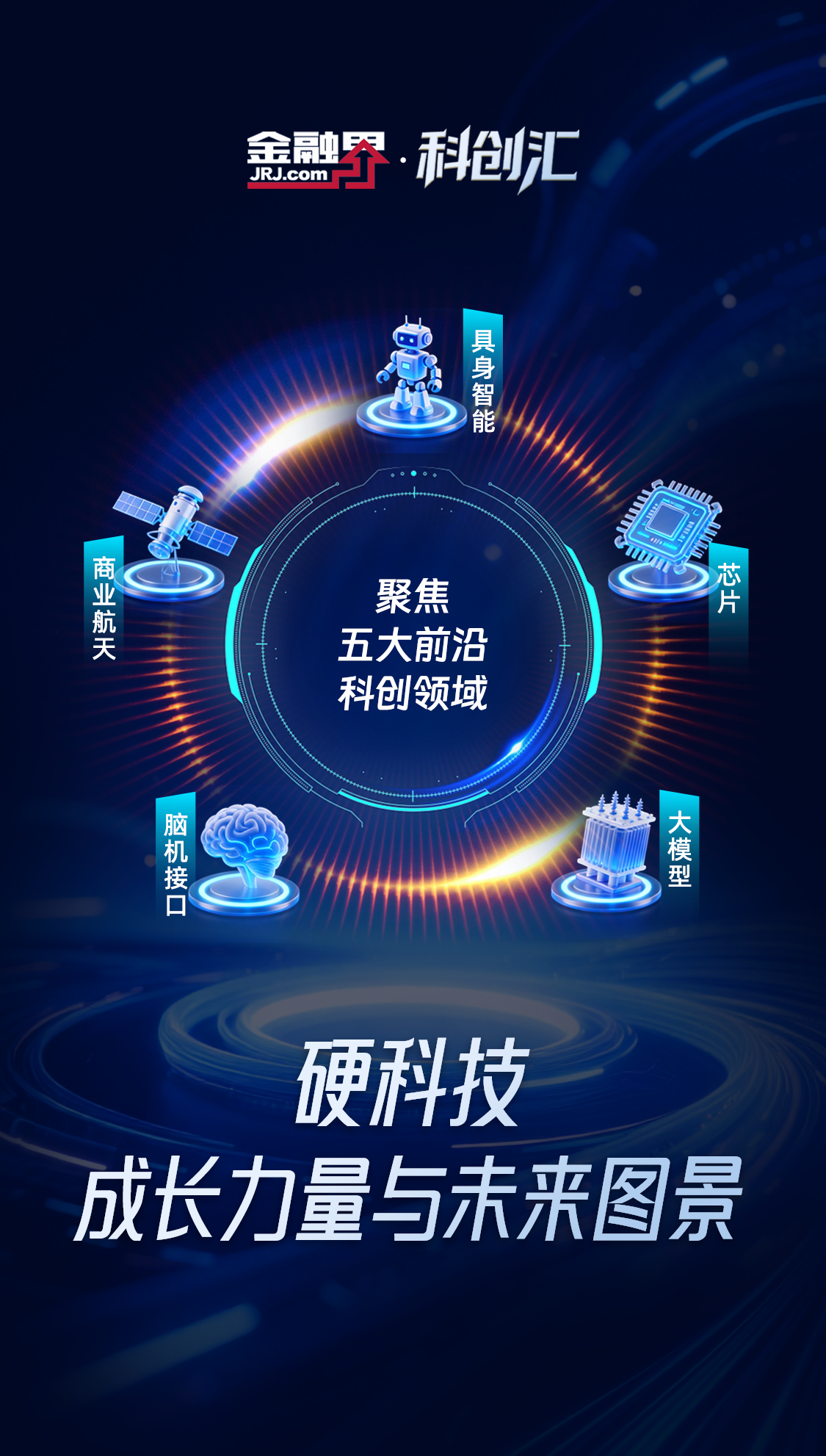
Core Insights - The Sci-Tech Innovation Board (STAR Market) has achieved significant milestones in its seven years of operation, with over 600 listed companies and a total market capitalization exceeding 10 trillion yuan, raising over 1.1 trillion yuan through IPOs and refinancing [1] - The "Sci-Tech Exchange" initiative aims to address industry development challenges and promote a virtuous cycle of technology, industry, and capital by connecting various stakeholders [1][2] Group 1: STAR Market Achievements - The STAR Market has become a core platform for nurturing new productive forces and promoting technological self-reliance, characterized by high levels of innovation, technology, and capital [1] - The board's reforms have expanded the scope of the fifth set of standards to include cutting-edge fields such as embodied intelligence, chips, large models, brain-computer interfaces, and commercial aerospace [1][5] Group 2: Sci-Tech Exchange Initiative - The "Sci-Tech Exchange" initiative focuses on four core objectives: value discovery, benchmark establishment, resource linking, and ecosystem co-construction [2] - The initiative will conduct in-depth analysis and research on five key cutting-edge fields, ensuring a comprehensive approach to industry chain integrity and technological innovation [5] Group 3: Communication and Impact - The initiative will utilize a multi-format communication strategy, including text, video, live broadcasts, and offline events, to enhance its influence and reach [6] - A comprehensive research campaign will be conducted from February to June 2026, covering major innovation hubs in China to showcase the vitality of the country's sci-tech industry [6]
刘强东给光明村送“科技年货” 老少乡亲喜提AI新伙伴
Zhong Jin Zai Xian· 2026-01-29 10:34
Group 1 - JD Group's founder Liu Qiangdong delivered over 10,000 New Year goods to villagers in Jiangsu, including essential items and practical appliances, highlighting the company's commitment to community support [1] - The "Tech New Year Goods" included an AI smartphone for seniors, equipped with a dialect-recognizing AI application called "Dongdong," aimed at making technology accessible for the elderly [1][3] - The AI classroom created for children features various smart devices powered by JD's JoyAI model, providing an interactive learning experience with AI toys that can engage in conversations and offer knowledge [7][8] Group 2 - The "Dongdong" AI assistant, designed for elderly users, can understand multiple dialects and assist with daily tasks such as health advice, shopping, and news interpretation, enhancing the quality of life for seniors [3][5] - The AI classroom for children includes interactive devices like the JoyInside chess robot, which not only plays chess but also engages in meaningful dialogue, enriching children's learning experiences [7] - JD's innovative AI toy social features allow children to connect with each other safely, creating a controlled social environment that fosters interaction among different AI devices [8]


杨宇东:最好的企业家精神是择一事终一生
Xin Lang Cai Jing· 2026-01-29 09:57
Core Insights - The "Praise for China's Economy - Entrepreneur Night" event took place on January 29 in Beijing, highlighting the evolving landscape of entrepreneurship in China [1][3] - Yang Yudong, the editor-in-chief of Yicai, emphasized that the best entrepreneurial spirit is to dedicate oneself to a single endeavor for a lifetime [1][3] - The event showcased a mix of established entrepreneurs and emerging leaders from new industries, indicating a shift towards innovation and technology [1][3] Summary by Categories - **Entrepreneurial Spirit** - Yang Yudong stated that both older and younger entrepreneurs embody the spirit of dedicating oneself to a single cause throughout their lives [2][4] - **Industry Trends** - This year, many companies in the AI and large model sectors are going public, with their founders often having spent over a decade in research before achieving breakthroughs in technology [1][3]
AI安全战升级:智能体激增,如何守大模型“底线”???
Jing Ji Guan Cha Bao· 2026-01-29 09:46
Core Insights - The rapid increase in AI Bots, with growth rates exceeding 100% by 2025, indicates a significant shift in data collection methods for training large language models (LLMs) [1][3] - The rise of AI Bots poses new security challenges for businesses, as they can mimic legitimate user requests and lead to unauthorized data access [2][4] Group 1: AI Bot Growth and Evolution - By 2025, both Web and API types of AI Bots are expected to see a growth rate surpassing 100%, with peak increases reaching up to 200% [1] - IDC predicts that by 2029, the number of active AI agents will exceed 1 billion, representing a 40-fold increase from current levels [3] - The evolution of AI Bots from simple scripts to sophisticated agents capable of bypassing security measures, such as CAPTCHA, highlights their increasing intelligence [3] Group 2: Security Implications - The integration of large models into applications has introduced security vulnerabilities, including cases of "prompt injection" that can manipulate model outputs [2] - Businesses face real security challenges as AI Bots can disguise themselves as legitimate data collection tools, leading to unauthorized API calls [2][4] - Legal actions, such as a lawsuit from a news aggregation site against a major model company for unauthorized data scraping, illustrate the operational and control strategies companies must consider [4] Group 3: Industry Response and Adaptation - Companies are exploring strategies to identify and classify AI Bots to better manage their traffic and mitigate risks [4] - Collaborations with third-party companies to identify compliant Bots and implement flexible billing based on request volume are being considered as adaptive measures [4] - The focus of the AI market is shifting towards developing models tailored for specific use cases, moving away from merely training large models [6]
AI安全战升级:智能体激增,如何守大模型“底线”?
Jing Ji Guan Cha Wang· 2026-01-29 09:25
Core Insights - The rapid increase in AI Bots, with growth rates exceeding 100% and peaks reaching 200%, is driven by the need for large datasets to train large language models (LLMs) [2] - The evolution of AI Bots from simple web crawlers to sophisticated data gatherers capable of bypassing security measures like CAPTCHA indicates a significant advancement in their intelligence [3] - Legal disputes are emerging as companies seek to protect their content from unauthorized scraping by AI Bots, highlighting the need for operational strategies to manage AI Bot interactions [3] Industry Trends - By 2029, the number of active AI agents is expected to exceed 1 billion, representing a 40-fold increase from current levels, with a 119% surge in agent creation in the first half of 2025 alone [2] - AI Bots are increasingly prevalent across various industries, including high-tech, commerce, finance, and digital media, as data acquisition becomes crucial for training high-quality models [2] Response Strategies - Companies are exploring advanced models to identify and classify AI Bots, allowing for more precise traffic management [4] - New mechanisms are being developed, such as partnerships with third-party companies to identify compliant Bots and implement flexible billing based on request volume [4] Application Development - The interaction between AI agents and various components of the AI ecosystem is critical, necessitating the use of diverse models based on user needs [5] - The focus of the AI market is shifting from training large models to developing and applying models tailored for specific use cases [5]

阿里自研AI芯片“真武”亮相,性能或超英伟达A100
Guan Cha Zhe Wang· 2026-01-29 09:15
Core Insights - Alibaba has launched the "Zhenwu 810E" high-end AI chip, marking the debut of its self-developed PPU, part of the AI supercomputer initiative "Tongyun Ge" [1][3] - The "Tongyun Ge" integrates Alibaba's self-developed chips, leading cloud services, and advanced open-source models to achieve high efficiency in AI model training and deployment [1] - Alibaba and Google are the only two companies globally with top-tier capabilities across large models, cloud, and chip technology [1] Group 1 - The "Zhenwu" PPU features a self-developed parallel computing architecture and inter-chip communication technology, with 96G HBM2e memory and a bandwidth of 700 GB/s, suitable for AI training, inference, and autonomous driving [3] - The "Zhenwu" PPU has been deployed in multiple clusters on Alibaba Cloud, serving over 400 clients, including major organizations like State Grid and Xpeng Motors [1][3] - The performance of the "Zhenwu" PPU surpasses that of Nvidia's A800 and is comparable to the H20, with an upgraded version reportedly outperforming the A100 [3] Group 2 - Tongyi Laboratory released the Qwen3-Max-Thinking model, achieving multiple global records and performance levels comparable to GPT-5.2 and Gemini 3 Pro [4] - The number of derivative models from the Qwen open-source model has exceeded 200,000, with downloads surpassing 1 billion, maintaining its position as the largest globally [4]


梁文锋和杨植麟,第四次撞车
3 6 Ke· 2026-01-29 08:24
Core Insights - The article discusses the simultaneous advancements in AI models by DeepSeek and Moonlight, particularly focusing on their new models Kimi K2.5 and OCR-2, which both enhance visual understanding capabilities [1][4][11]. Group 1: Model Developments - Moonlight released the Kimi K2.5 model on January 27, 2025, which integrates various capabilities including visual understanding, coding, and multi-modal functions [1]. - DeepSeek launched its OCR-2 model on the same day, introducing a novel "visual causal flow" mechanism that allows for dynamic reading of images based on semantic content [1][11]. - Both models aim to address the industry pain points in visual understanding, indicating a shared focus on enhancing AI's capabilities in this area [5][11]. Group 2: Technical Innovations - DeepSeek's model employs a new visual encoder, DeepEncoder V2, which mimics human visual processing by breaking away from fixed scanning orders [11]. - Moonlight's K2.5 model features an Agent Swarm architecture, allowing for the creation of multiple sub-agents to enhance task execution efficiency by up to 4.5 times [12][13]. - Both companies are addressing the challenges of long-context processing and computational efficiency in their respective models, with DeepSeek focusing on hardware optimization and Moonlight on flexible innovations within the Transformer framework [2][11]. Group 3: Industry Context - The advancements in visual understanding are critical for the commercial viability of AI models, as they transition from language interaction to full-scene interaction [5]. - The competition between DeepSeek and Moonlight reflects a broader trend in the AI industry, where companies are racing to overcome similar technical challenges and capture market opportunities [4][5][7].

公司问答丨安凯微:公司芯片已应用于阿里钉钉AI硬件 还有多款AI硬件解决方案支持阿里云视频平台等
Ge Long Hui A P P· 2026-01-29 08:10
Core Viewpoint - The company has established ongoing technical collaborations with Alibaba and its affiliates, focusing on various technological solutions and applications in AI and hardware [1] Group 1: Collaboration with Alibaba - The company has maintained technical cooperation and communication with Alibaba's ecosystem since its partnership with Alibaba Cloud [1] - Collaborations include areas such as chips, large model applications, and software-hardware solutions [1] Group 2: Product Applications - The company's chips have been integrated into Alibaba DingTalk AI hardware and support multiple AI hardware solutions for Alibaba Cloud's video platform and Qianwen large model [1] - Specific products mentioned include AI cameras, AI glasses, and AI headphones [1] Group 3: Information Disclosure - The company commits to fulfilling information disclosure obligations as per regulatory requirements for any undisclosed information [1]

零点有数发布2025年度业绩预告:全年亏损收窄 经营质量持续提升
Zhong Zheng Wang· 2026-01-29 07:33
Core Viewpoint - The company Zero Point Data is expected to report a net loss of 32 million to 43 million yuan for the year 2025, with a significant reduction in loss margins compared to the previous year, indicating a trend of improving profitability [1][3] Group 1: Financial Performance - The projected net loss for 2025 represents a narrowing of approximately 40.24% to 55.53% compared to the previous year, while the loss margin for the non-recurring net profit is expected to narrow by about 39.16% to 55.03% [1] - In the first three quarters of 2025, the company's net loss has decreased by 19.54% year-on-year, suggesting a sustained improvement in financial performance [1] Group 2: Business Strategy - The company has implemented a "plus-minus" operational strategy, focusing on high-value business areas while strategically reducing low-margin projects, thereby optimizing resource allocation [1][2] - The company has shifted its business structure to enhance revenue and profit, with a notable increase in the gross profit margin of its main business, reaching 29.06% in the first three quarters of 2025, an increase of 6.73 percentage points year-on-year [2] Group 3: Technological Advancements - The company is deepening its "algorithm software" strategy, transforming customized data analysis services into standardized, reusable software products, which enhances service efficiency and aligns with industry trends [2] - Through the acquisition of Haiyi Knowledge, the company is leveraging advanced knowledge graph technology to enhance its competitive edge in high-margin sectors and expand its business boundaries [2]