
现代化产业体系

Search documents
杨瑞龙:加大逆周期调节与跨周期调节的力度
和讯· 2025-12-23 09:05
Core Viewpoint - The article discusses the current macroeconomic situation in China, characterized by a "strong supply and weak demand" scenario, and emphasizes the need for both counter-cyclical and cross-cyclical adjustments to stimulate demand and optimize supply [4][10]. Group 1: Counter-Cyclical Adjustment - Counter-cyclical adjustment focuses on total demand management through fiscal and monetary policies, aiming to stimulate demand with "more active fiscal policies" and "moderately loose monetary policies" [5][6]. - Local governments are facing significant fiscal deficits, which hinder their ability to implement central government stimulus policies effectively [6][7]. - A potential long-term solution to local fiscal deficits involves restructuring the fiscal relationship between central and local governments, although this may take time [7]. - Utilizing state-owned assets for revenue generation is proposed as a short-term measure to alleviate fiscal pressures on local governments [7][8]. - Future fiscal spending should also focus on "investing in people" to enhance social security systems, which can stimulate consumption [8]. Group 2: Monetary Policy Considerations - The article highlights the importance of actual interest rates, suggesting that while nominal rates may be low, actual rates remain high due to persistent low prices, which affects investment decisions [8][9]. - The need for monetary policy to promote reasonable price recovery is emphasized, as low price levels reflect economic stagnation [9]. - Structural monetary policies should support technological innovation and small to medium enterprises, aligning with the goal of building a modern industrial system [9][10]. Group 3: Cross-Cyclical Adjustment - Cross-cyclical adjustment aims to optimize supply structure and improve supply quality, focusing on long-term economic development and high-quality growth [10][11]. - Addressing excess supply and inefficient production is crucial, with a market-oriented exit mechanism proposed to eliminate zombie enterprises and reduce local government support for inefficient firms [10][11]. - Building a modern industrial system is essential for achieving high-quality development, emphasizing the integration of technology and industry [11][12]. - Transitioning from traditional growth drivers to new ones, such as technological innovation and improved population quality, is vital for enhancing potential growth rates [11][12]. Group 4: Synergy Between Policies - The article stresses the importance of aligning counter-cyclical and cross-cyclical policies to avoid conflicts and enhance efficiency in macroeconomic management [12]. - Deepening market-oriented reforms is necessary to stimulate microeconomic vitality and ensure effective policy transmission [12]. - Innovation and localized development of new productive forces are highlighted as key to driving growth in the digital economy [12]. - Managing expectations is crucial for boosting confidence and integrating counter-cyclical and cross-cyclical policies effectively [12].

观察|未来五年,上海如何作答?
Xin Lang Cai Jing· 2025-12-23 01:33
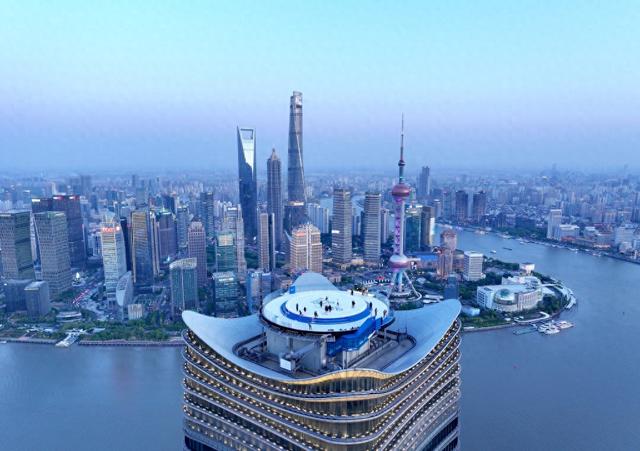
Core Viewpoint - The Shanghai Municipal Committee's recent meeting outlines a strategic plan for the city's development during the 14th Five-Year Plan period, aiming to establish Shanghai as a world-class socialist modern international metropolis by 2035 [1][3]. Economic and Social Development Goals - The main objectives for Shanghai's economic and social development during the 14th Five-Year Plan include achieving significant high-quality development, enhancing urban core functions, making breakthroughs in high-level reform and opening up, improving social civilization, deepening the construction of a people-oriented city, and significantly advancing urban governance modernization [1][3][4]. Five Centers Development - Shanghai aims to accelerate the construction of five centers: international economy, finance, trade, shipping, and technology innovation, which are crucial for modernizing the city's industrial system and enhancing its core competitiveness [3][4]. Industrial System and Upgrading - The city plans to build a modern industrial system characterized by advanced manufacturing as the backbone, focusing on three leading industries: artificial intelligence, integrated circuits, and biomedicine, along with several emerging and future industries [6][10]. High-Level Reform and Opening Up - Shanghai will deepen high-level reform and opening up to enhance the momentum for high-quality development, positioning itself as a key window for observing China's reform and opening up [6][7]. Economic Resilience and Trade Growth - Despite external challenges, Shanghai's economy demonstrated resilience with a GDP growth of 5.5% in the first three quarters, and a 5.2% year-on-year increase in foreign trade from January to October, particularly with a 16.3% increase in exports to non-U.S. markets [7][9]. Urban Development and Spatial Planning - The city will optimize its urban development spatial structure, promoting coordinated regional development and enhancing the functions of new urban centers [11][14]. Quality of Life Improvements - Shanghai is committed to improving the quality of life for its residents, including significant upgrades to housing facilities and enhancing public services, aiming for a more livable and equitable urban environment [15][17]. Cultural Development - The city plans to enhance its cultural soft power by developing various cultural landmarks and promoting its rich cultural heritage during the 14th Five-Year Plan period [18].
保持制造业合理比重意在巩固优势
Jing Ji Ri Bao· 2025-12-23 01:00
Core Viewpoint - The manufacturing sector is crucial for the real economy and national strength, with its development level determining a country's comprehensive strength and international competitiveness [1] Group 1: Importance of Manufacturing - The central economic work conference emphasizes the need to strengthen the real economy and enhance independent innovation capabilities [1] - The "14th Five-Year Plan" and "15th Five-Year Plan" highlight the importance of maintaining a stable and reasonable proportion of manufacturing in the economy [2][3] - Concerns about "hollowing out" of industries and the shift from real to virtual economies have led to calls for stabilizing the manufacturing sector's share of GDP [2] Group 2: Reasonable Proportion of Manufacturing - A reasonable proportion of manufacturing refers to maintaining its value-added share in GDP within a balanced range to avoid resource misallocation and structural imbalances [2] - The relationship between manufacturing's share of GDP and economic development stages is characterized by an "inverted U-shape" trend, where manufacturing typically rises and then falls as economies mature [3] Group 3: Current Economic Context - The need to balance domestic economic work and international trade challenges is urgent, with a focus on expanding domestic demand and optimizing supply [4] - A solid manufacturing base is essential for enhancing supply chain resilience and competitiveness, especially in the context of global economic uncertainties [4] Group 4: Future Development Goals - Building a modern industrial system centered on advanced manufacturing is crucial for enhancing competitiveness and driving high-quality economic development [5] - The transition towards digital, green, and intelligent manufacturing is necessary to improve production and innovation efficiency [5] - The manufacturing sector must adapt to customer-centric trends, shifting from product provision to offering integrated products and services [5] Group 5: Supply and Demand Dynamics - China's large-scale market provides significant cost and efficiency advantages, driving the continuous deepening of manufacturing division [6] - The rise of global trade protectionism and intense price competition necessitates a focus on advancing manufacturing to higher-end production [6] - Maintaining a reasonable proportion of manufacturing is key to consolidating its advantages and ensuring alignment with strategic economic needs [6]
将宏伟蓝图转化为切实可行的“施工图”“路线图”
Xin Lang Cai Jing· 2025-12-23 00:31
Core Insights - The "14th Five-Year" plan emphasizes high-quality economic and social development, requiring a comprehensive and systematic approach to ensure its authority, foresight, and operability [1][2]. Group 1: Strategic Principles and Guidelines - The planning process must focus on high-quality development, aiming for more efficient, equitable, sustainable, and secure growth [2]. - A holistic view is essential, balancing domestic and international contexts while recognizing both advantages and challenges [2]. - The plan should prioritize people's livelihoods, addressing urgent issues in employment, education, healthcare, housing, and elderly care [2]. Group 2: Key Strategic Tasks and Development Directions - Emphasis on technological innovation and building a modern industrial system, with a focus on self-reliance in technology and addressing critical areas like chips and industrial software [3]. - The strategy includes expanding domestic demand and stimulating consumption while encouraging private investment and removing industry barriers [3]. - The plan aims for comprehensive reforms and high-level opening-up, enhancing the market economy and aligning with international trade standards [3]. - A commitment to green transformation and safety, integrating environmental sustainability with national security across all planning processes [3]. Group 3: Implementation Measures and Pathways - Innovative planning approaches are necessary, focusing on practical development platforms and major projects in high-growth sectors like artificial intelligence and commercial aerospace [4]. - Engaging the public in the planning process is crucial, ensuring that the voices of the people are heard and considered [4]. - Coordination among various regions and departments is vital to create a unified planning system that avoids competition and promotes complementary functions [5].
企业科创成主流 数智深融成趋势 集群发展成生态江苏铺展现代化产业体系新蓝图
Xin Hua Ri Bao· 2025-12-22 23:16
Group 1: Manufacturing Industry Overview - In 2024, Jiangsu's manufacturing added value reached 4.63 trillion yuan, accounting for 33.8% of GDP, maintaining its position as the top manufacturing province for four consecutive years [1] - Jiangsu has ranked first in the national high-quality development index for manufacturing for five years and in the integration of information technology and industrialization for ten years [1] - The province currently has 14 national-level advanced manufacturing clusters, the highest in the country [1][4] Group 2: Innovation and Technology - Jiangsu's leading enterprises are driving innovation through original and leading-edge technology, with companies like Jiangsu Hanbang Technology Co., Ltd. holding a dominant market share in domestic production-grade small molecule liquid chromatography systems [3] - Jiangsu Yute Optoelectronics has achieved complete domestic substitution in key technology areas, with a market share leading in fiber optic connection products [3] - The integration of digital and intelligent technologies has become a key path for enhancing efficiency, with Jiangsu implementing over 56,000 transformation projects in manufacturing [6] Group 3: Industry Ecosystem and Collaboration - Jiangsu has established a robust innovation ecosystem with 57,000 high-tech enterprises contributing nearly 80% of R&D investment and 90% of patent authorizations [4] - The Ninghuai Intelligent Manufacturing Industrial Park is expected to generate 2 billion yuan in production capacity and drive over 10 billion yuan in industry chain value [7] - The province is focusing on building a complete industrial chain in additive manufacturing, with initiatives to create innovation centers and collaborative platforms [8]
观山湖区描绘“十五五”发展蓝图
Xin Lang Cai Jing· 2025-12-22 18:17
规划明确"十五五"时期全区经济社会发展的主要目标——高质量发展取得显著成效,科技创新能力大幅 提升,改革开放实现新突破,社会文明程度明显进步,人民生活品质不断提高,生态文明建设示范作用 持续增强,安全发展保障更加有力。在此基础上,再经过五年奋斗,到二〇三五年,观山湖区经济实 力、科技实力、综合实力将实现大幅跃升,人民生活更加幸福美好,与全国、全省、全市同步基本实现 社会主义现代化。 围绕目标,观山湖区将多维度协同发力。在产业体系构建上,坚持实体经济为本,把新型工业化作为第 一工程,以新能源汽车整车制造为主抓手,巩固全省新能源汽车重要生产基地地位,并同步发展先进装 备制造与生态食品制造等特色轻工产业;加速壮大电子信息制造产业,以数字技术赋能工业创新;实施 服务业扩能提质行动,推动生产性服务业向专业化、价值链高端延伸,促进生活性服务业高品质、多样 化发展;做精现代都市精品农业;做优旅游业,擦亮"遇见观山湖"文旅品牌。同时,积极培育低空经济 等新兴产业与未来产业,共同构筑多元支撑的现代化产业体系。 转自:贵州日报 本报讯 12月18日,中国共产党观山湖区第三届委员会第十一次全体会议举行。会议立足区域发展实 际,锚定 ...
上海:“十五五”时期深入实施扩大内需战略,着力培育世界一流企业
Zheng Quan Shi Bao Wang· 2025-12-22 13:13
Core Viewpoint - The Shanghai Municipal Committee's recent meeting emphasizes the need to accelerate the construction of "five centers" and enhance the city's competitiveness and economic status during the 14th Five-Year Plan period [1] Group 1: Economic Development Goals - The meeting approved the proposal for the 15th Five-Year Plan, focusing on implementing the central economic work conference's spirit and setting development goals for the upcoming year [1] - The plan aims to enhance the international economic center status through innovation-driven and coordinated development [1] Group 2: Industrial System and Services - A modern industrial system will be constructed with a framework of "2+3+6+6," focusing on advanced manufacturing as the backbone and promoting high-quality development in the service sector [1] - The strategy includes deepening the implementation of domestic demand expansion and nurturing world-class enterprises [1] Group 3: Financial and Trade Centers - The plan aims to enhance the competitiveness and influence of the international financial center, establishing a global asset allocation center for RMB and a risk management center [1] - There is a focus on upgrading the international trade center, promoting trade innovation, and transforming trade structures while strengthening global supply chain management [1] Group 4: Shipping and Technology Innovation - The initiative includes building a leading global international shipping center and enhancing the status of global air and sea hubs, with a strong emphasis on modern shipping services and digital transformation [1] - The meeting highlights the importance of strengthening the role of the international technology innovation center, focusing on original innovation and key technology breakthroughs, and integrating technological and industrial innovation [1]
形势政策系列报告会第二场报告会在京举行
Yang Shi Wang· 2025-12-22 11:56
"十五五"时期是基本实现社会主义现代化夯实基础、全面发力的关键时期,要统筹好党的二十届三中、 四中全会部署各项改革任务,以经济体制改革为牵引,重点围绕建设现代化产业体系、加快高水平科技 自立自强等深化改革,以钉钉子精神抓好落实,用改革方法破解难题、推动发展,为开创中国式现代化 新局面提供强大动力和制度保障。 央视网消息(新闻联播):形势政策系列报告会第二场报告会今天(12月22日)在北京举行。全国政协 副主席、中央改革办分管日常工作的副主任穆虹表示,"十四五"时期,以习近平同志为核心的党中央高 举改革开放旗帜,团结带领全党全国各族人民坚定不移全面深化改革,推动党和国家事业取得新的重大 成就。 ...
中共武汉市委关于制定全市国民经济和社会发展第十五个五年规划的建议
Chang Jiang Ri Bao· 2025-12-22 08:49
Core Viewpoint - The "14th Five-Year Plan" period has seen significant achievements in Wuhan's development, with a focus on high-quality growth and resilience against challenges, setting the stage for the "15th Five-Year Plan" to further enhance the city's modernization and strategic position in the region [2][5]. Group 1: Achievements During the "14th Five-Year Plan" - Wuhan has experienced a remarkable economic recovery, with its GDP surpassing 2 trillion yuan, and key economic indicators maintaining leading growth rates among peer cities [2][5]. - The city has made substantial progress in establishing itself as a national center for technological innovation, with a notable increase in the number of academicians and significant breakthroughs in major independent innovations [2][5]. - Urban infrastructure and environmental quality have improved, with a successful reduction in major pollutants and the establishment of Wuhan as the world's first international wetland city with a population exceeding 10 million [2][5]. - Social welfare has been enhanced, with increased public service accessibility and a steady rise in per capita disposable income for residents [2][5]. Group 2: Strategic Opportunities and Challenges in the "15th Five-Year Plan" - The "15th Five-Year Plan" period is characterized by a critical phase for Wuhan, aiming to build five key centers and achieve significant advancements in modernization [4][5]. - The city is positioned to leverage strategic opportunities amid complex global changes, including technological revolutions and shifts in the geopolitical landscape [5][6]. - Despite the opportunities, challenges such as insufficient effective demand and the need for industrial transformation remain prominent [5][6]. Group 3: Development Goals and Principles for the "15th Five-Year Plan" - The guiding ideology for Wuhan's development emphasizes the integration of Marxist principles with Xi Jinping's thoughts, focusing on high-quality growth and comprehensive reforms [7][9]. - Key goals include achieving a GDP of over 3 trillion yuan, enhancing innovation capabilities, and establishing a modern industrial system [10][11]. - Principles such as maintaining party leadership, prioritizing people's needs, and fostering high-quality development are central to the city's strategy [9][10]. Group 4: Economic and Industrial Development Strategies - The plan emphasizes the importance of a modern industrial system, focusing on the integration of traditional industries with emerging sectors and future industries [13][14]. - Strategies include enhancing the competitiveness of existing industries, fostering new and future industries, and promoting the development of modern service sectors [15][16]. - The city aims to become a leader in the digital economy, with initiatives to integrate artificial intelligence across various sectors [16][18]. Group 5: Infrastructure and Urban Development - Urban development will focus on optimizing spatial layouts, enhancing infrastructure, and promoting sustainable urban renewal [34][35]. - The city plans to improve its transportation network, including the construction of high-speed rail and international logistics hubs [38][37]. - Efforts will be made to enhance the quality of urban management and public services, ensuring a high standard of living for residents [36][37].
产业筑基 陕耀未来—2025未来产业系列对接活动(陕西行)即将启幕
Jin Tou Wang· 2025-12-22 03:28
Group 1 - The event "2025 Future Industry Series Docking Activity (Shaanxi)" aims to promote the development of future industries in Shaanxi Province, aligning with the central economic work conference's spirit and the implementation of policies for innovative industry development [1] - The main event will feature discussions on trends, results, and consensus-building, with top experts presenting in-depth reports on five cutting-edge areas: future information (photonics), embodied intelligence (robots), future materials (titanium and titanium alloys), future space (aviation and drones), and future energy (hydrogen) [2] - A series of significant outcomes, including industrial policies and think tank reports, will be showcased at the event, providing clear guidance for national and local future industry layouts [3] Group 2 - The event will include three specialized docking activities focusing on specific sectors: future information industry, future energy and space, and future materials, aimed at promoting resource matching and practical cooperation [4] - The activities are designed to facilitate communication and collaboration among enterprises, accelerating the transformation of cutting-edge technological achievements and promoting effective cooperation on high-quality projects [4] - The event is positioned to enhance the integration of innovation chains, industrial chains, capital chains, and talent chains, attracting quality projects, technologies, and talents to Shaanxi, thereby supporting the development of new productive forces and modern industrial systems [4]