
ESG

Search documents
火电A股上市公司ESG群像:低碳转型表现分化,5家纳入强信披
2 1 Shi Ji Jing Ji Bao Dao· 2025-12-26 04:09
Core Viewpoint - The coal power industry in China is undergoing a historic transformation from being a primary energy source to a key support for system regulation, with a focus on achieving higher levels of energy security and advancing green and low-carbon transitions [1] Group 1: Policy and Regulatory Environment - The national energy work conference has set a clear policy blueprint for the transformation of coal power, emphasizing the need for higher energy security and a solid push towards green and low-carbon transitions [1] - By 2026, five coal power listed companies will face their first ESG (Environmental, Social, and Governance) assessment, requiring them to enhance ESG governance and reporting in accordance with the guidelines [1] Group 2: Low-Carbon Transition Performance - A report by the Natural Resources Defense Council evaluated the low-carbon transition performance of 33 coal power listed companies, revealing a significant disparity in transition progress, with non-fossil energy development lagging behind the national average [2] - The profitability of coal power companies has rebounded due to falling coal prices and supportive policies, but reliance on short-term coal price declines for profit is unsustainable [3] Group 3: Challenges in Transition - Coal power companies face multiple pressures, including supply responsibilities, operational efficiency, and low-carbon transition, necessitating a shift from a single revenue model to a diversified structure that includes capacity and auxiliary services [3] - The transition is complicated by policy and funding challenges, market competition from renewable energy, and the need for management restructuring to accommodate carbon emission controls [5][6] Group 4: ESG Integration and Financial Implications - Integrating ESG into management is essential for coal power companies, as it is critical for achieving national carbon reduction goals and enhancing corporate value [7] - The global ESG investment fund size has reached $3.7 trillion, indicating that capital markets view ESG performance as a vital dimension for assessing long-term corporate value [8] Group 5: Future Trends and Strategies - The traditional power industry is moving from passive to proactive transformation, with five core development trends expected over the next five years, including the need for diversified revenue models and enhanced collaboration between coal and renewable energy [4] - The government has recognized the economic value of coal power in providing flexible and baseline power, and policies are being developed to support the transition and investment returns for coal power [9]




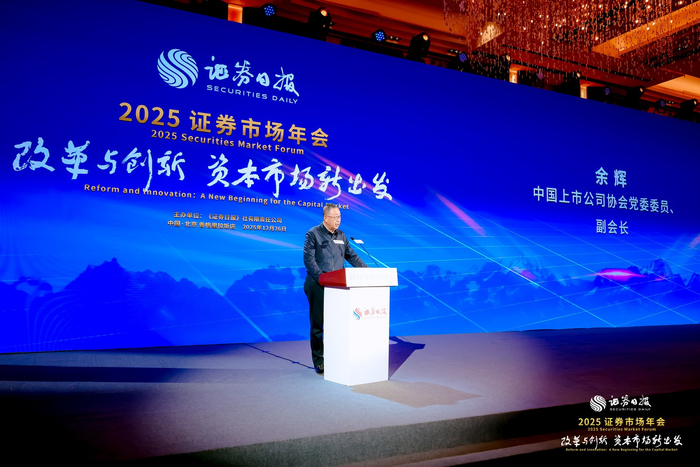
余辉:上市公司高质量发展与资本市场赋能的内在联系
Zheng Quan Ri Bao Zhi Sheng· 2025-12-26 03:56
尊敬的各位领导、各位来宾,各位上市公司同仁,大家上午好! 非常高兴与各位嘉宾相聚在2025证券市场年会,共话发展、凝聚共识、携手启程。在此,我谨代表中国 上市公司协会,对本次年会的召开表示热烈祝贺!向莅临会议的各位领导、专家学者、企业家朋友和媒 体朋友们,致以诚挚的欢迎和衷心的感谢! 今年以来,在中国证监会的坚强领导下,我国资本市场经受住了多重考验,市场功能有效发挥,市场韧 性持续增强,抗风险能力显著提升,实现了规模有序增长与发展质量跃升,有力支撑了经济社会发展大 局。作为国民经济的"基本盘"和科技创新的"主力军",上市公司群体展现出强大的发展活力与制度韧 性。从规模看,境内上市公司数量(含北交所)已突破了5400余家,较十年前实现翻番,总市值与产业 覆盖面不断扩大;从质量看,行业结构持续优化,盈利能力稳步提升,融资结构更趋合理,高质量发展 的成色愈发鲜亮。 第二,固根基:以治理创新与股东回报,夯实长期发展信任基石。卓越的创新离不开卓越的治理。当 前,上市公司治理正从"形式合规"全面迈向"实质效能"。新修订的《上市公司治理准则》着力构建健 全、有效、透明的治理机制,推动上市公司通过优化董事会职能、强化内控体系 ...

ESG领跑者|解码紫金矿业“GLOBE”可持续发展战略
Xin Lang Cai Jing· 2025-12-26 03:53
登录新浪财经APP 搜索【信披】查看更多考评等级 2025年11月,在由世界黄金协会组织的媒体参访活动中,完成从矿床到世界地质公园转变的紫金山金铜 矿引发一行人的关注。据介绍,去年3月,在法国召开的联合国教科文组织执行局第219次会议审议通 过,正式批准龙岩地质公园成为世界地质公园。作为世界级高硫化浅成低温热液金属矿床,位于龙岩世 界地质公园西南部的紫金山铜金矿床是其重要组成部分。 在该地质公园相关的社交媒体分享上,有网友评价"值得参观,金山银山就是绿水青山"。金铜矿何以变 成世界地质公园? 对于绿色如何成为矿业发展底色这一命题,紫金矿业的实践,正清晰展现出一条企业ESG担当系统路径 与全球矿业可持续发展的"中国方案"。 挖掘不尽的金山银山 "铜娃娃戴了个金帽子",据紫金矿业官网介绍,金矿体形成于上部的氧化带岩层中,在下部的原生带岩 层中形成铜矿体,这种"上金下铜"的成矿分带被形象的如此比喻,"紫金山大型金铜矿床的发现是中国 铜金矿勘探史上的一次重大突破,1996年荣获国家科技进步一等奖"。 据史料记载,紫金山早在北宋年间就是朝廷重要的黄金和铜币生产基地。紫金山在稀有性、典型性、科 学价值、历史文化价值等方面 ...


迈向“十五五”:以高质量信息披露驱动绿色金融提质增效
Guan Cha Zhe Wang· 2025-12-26 02:49
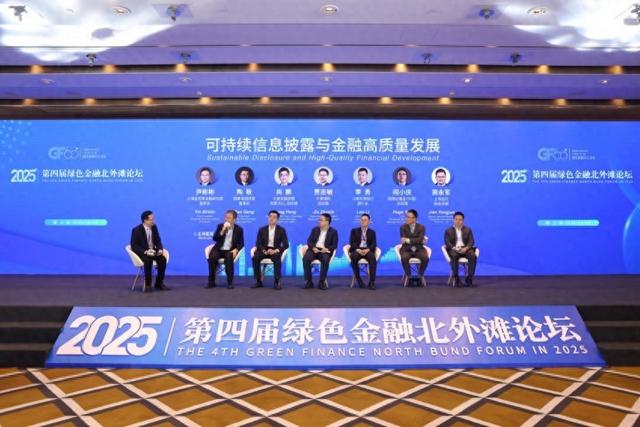
Core Viewpoint - The article emphasizes that green finance has become a core strategy for financial institutions, driven by sustainable information disclosure, which guides funds towards low-carbon sectors and promotes high-quality development in the industry [1]. Group 1: Sustainable Information Disclosure - Sustainable information disclosure is effectively driving financial institutions to integrate green development concepts and implement green innovation practices [1]. - There is a need for a systematic and mandatory information disclosure system to enhance transparency and comparability in ESG disclosures, which are currently mostly voluntary [5]. - The future focus of ESG work should revolve around institutionalizing information disclosure, integrating international standards, and leveraging technology to address data quality issues [5]. Group 2: Green Investment Practices - Companies like Guotai Junan Asset Management have integrated ESG indicators into their investment research systems across various financing businesses, achieving recognition in green financial innovation [5]. - ICBC-AXA Asset Management has seen significant growth in green investment, focusing on sectors like energy storage and renewable energy, while also expanding their green product offerings [7]. - Huaxia Wealth Management has incorporated ESG principles into their product design, ensuring that at least 80% of the underlying assets in green financial products are genuinely green [10]. Group 3: Risk Management and Innovation - Roadmap for risk assessment frameworks is crucial, as identifying and managing risks associated with ESG and climate transition is a key challenge for fund management companies [13]. - Jiangnan Rural Commercial Bank has developed a green finance risk management system to support business expansion and enhance risk control through innovative credit products [16]. - Shanghai Trust emphasizes the flexibility of trust systems in supporting green industries, with a focus on long-term capital and sustainable returns [19]. Group 4: Industry Collaboration and Future Directions - The forum highlighted the need for continuous breakthroughs in information disclosure, standard integration, risk management, and technological empowerment to direct financial resources efficiently towards green low-carbon sectors [21]. - Collaboration with various organizations, including NRDC and WBCSD, indicates a collective effort to advance sustainable finance practices [21].
Owens Corning Stock: Difficult, Yet Opportune Times (NYSE:OC)
Seeking Alpha· 2025-12-26 00:30
Group 1 - Owens Corning is identified as a diversified and inexpensive building materials company, with a strong focus on ESG, innovation, and organic growth, which has positively impacted its share performance in recent years [1] - The company is currently facing challenges due to the overhang from the Masonite deal and a slowdown in growth [1] Group 2 - The investment group "Value In Corporate Events" provides coverage of major corporate events such as earnings reports, M&A, and IPOs, aiming to identify the best investment opportunities [1]


2024年上市公司内部控制质量进一步提高
Shang Hai Zheng Quan Bao· 2025-12-25 19:11
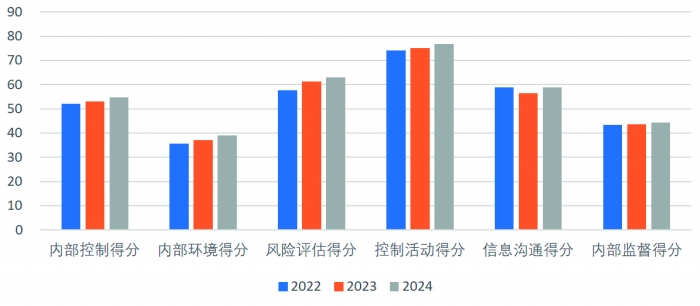
Core Insights - The internal control quality of listed companies in 2024 has improved compared to 2023, with internal environment remaining the weakest aspect that requires further enhancement [4][19] - Companies with financial shared centers, high digital transformation levels, and high-quality new productivity show better internal control levels, while those facing penalties, restatements, or receiving non-standard audit opinions exhibit lower internal control levels [20] Group 1: Overall Internal Control Status - The overall internal control level of listed companies has shown a steady increase from 52.47 in 2022 to 54.75 in 2024 [7] - The distribution of listed companies is concentrated in economically developed regions, with Guangdong, Zhejiang, and Jiangsu having the highest number of listed companies [8] Group 2: Regional Analysis - Internal control index averages vary by region, with Yunnan (58.49), Beijing (56.25), and Hebei (56.60) showing higher scores, while Qinghai (50.42), Hainan (50.33), and Heilongjiang (51.64) are lower [8] - The internal control quality is more balanced in economically developed areas like Beijing, Shanghai, and Guangdong, indicating a mature governance structure [8] Group 3: Industry Analysis - The financial industry maintains a significantly higher internal control quality compared to other sectors, attributed to stringent government regulations [9] - Some service and public sectors have shown notable improvements in internal control levels from 2022 to 2024, while education, construction, and comprehensive industries remain at lower levels [9] Group 4: Financial Shared Services and Digital Transformation - Companies utilizing financial shared services have an internal control index average of 57.76, compared to 54.36 for non-financial shared companies, indicating a clear advantage [10] - Companies with high digital transformation levels have an internal control index average of 55.54, outperforming those with lower levels at 53.98, highlighting the positive impact of digital transformation on internal control quality [11] Group 5: ESG and New Productivity - Companies with high ESG levels have an internal control index that is 4.51 points higher than those with lower ESG levels, particularly in the internal environment dimension [13] - Companies with high new productivity levels demonstrate superior internal control quality across various dimensions compared to those with lower levels [14] Group 6: Penalties and Audit Opinions - Companies that have faced penalties have an internal control index average of 44.45, significantly lower than the 55.06 average of non-penalized companies, with the internal environment being the most affected area [15] - Companies receiving non-standard audit opinions have a notably lower internal control index, with a score of 34.76 in 2024, indicating serious deficiencies in internal control execution [18]
西南财经大学信托与理财研究所所长翟立宏:多资产、多策略是增厚投资收益的重要抓手
Mei Ri Jing Ji Xin Wen· 2025-12-25 14:57
Core Viewpoint - The banking wealth management market is undergoing a critical transformation in its revenue sources and product structure due to the intertwined macroeconomic backdrop of low interest rates and "asset scarcity" [1] Group 1: Restructuring of Wealth Management Product Revenue Sources - The low interest rate environment and "asset scarcity" are reshaping the revenue sources of wealth management products, presenting both challenges and opportunities for the banking wealth management industry [2] - Traditional fixed-income products are facing significant yield constraints, while the exploration of equity assets is seen as a primary direction for enhancing product yield flexibility [2] - The product structure is expected to shift towards "fixed income plus" products and multi-strategy offerings, with a focus on themes like retirement, ESG, and technology innovation [2] Group 2: Role of Banking Wealth Management in Retirement Planning - Banking wealth management is a core component in building the third pillar of retirement, leveraging its extensive distribution network and customer trust to promote personal pension schemes [3] - New regulations encourage the issuance of long-term products, which can channel significant "long money" into essential sectors like infrastructure and healthcare, supporting long-term economic development [3] - By lowering investment thresholds and optimizing management fees, banking wealth management enhances accessibility to professional retirement investment services [3] Group 3: Advantages and Challenges of Retirement Wealth Management - Compared to funds and insurance products, retirement wealth management offers a better fit for the long-term, stable, and risk-controlled needs of retirement funds [4][5] - Retirement wealth management products have an average annualized return of approximately 3.91% with a volatility of only 0.17%, highlighting their risk control advantages [4] - The development of retirement wealth management faces challenges from demand, supply, and investment sides, including a lack of long-term investment awareness among residents and product homogeneity [6] Group 4: Future Development of Banking Wealth Management - Small and medium-sized banks without wealth management subsidiaries are transitioning to a distribution model, focusing on localized services and customer trust [7] - By 2026, the banking wealth management market is expected to enter a phase of high-quality development centered on professional active management capabilities [8] - The industry is likely to see increased concentration, with a shift towards licensed wealth management companies and a significant optimization of product structures [8] Group 5: Investment Strategies for Investors - Investors are advised to set reasonable investment goals and expectations, focusing on long-term sustainable returns within their risk tolerance [9] - A scientific asset allocation strategy is recommended, utilizing cash management and fixed-income products for defensive purposes while capturing market opportunities with "fixed income plus" and mixed products [9] - Maintaining a long-term holding strategy is essential to smooth out short-term volatility and avoid emotional trading based on market fluctuations [9]
“能源ESG”指数正式发布,累计收益率达40%
2 1 Shi Ji Jing Ji Bao Dao· 2025-12-25 13:39
Core Viewpoint - The "CNI Energy Sustainable Development Index" (referred to as "Energy ESG") has been officially launched, aiming to fill the gap in the market for a specialized index focusing on the sustainable development of the energy sector, thereby guiding capital towards key areas such as renewable energy and green technology innovation [1][3]. Group 1: Index Overview - The "Energy ESG" index comprises 50 sample companies selected based on their ESG scores, profitability, and growth potential, with a total market capitalization of 5.9 trillion yuan and an average market capitalization of 118.2 billion yuan [2]. - The top ten companies in the index, including Changjiang Electric Power and China Shenhua, account for 65% of the index's weight [2]. - Since its base date of June 29, 2018, the index has achieved a cumulative return of 40%, with an annualized return of 5%, outperforming major market indices like the CSI 300 and CSI 500 [2]. Group 2: Trends in Energy Sustainability - The energy transition is entering a critical phase, with increasing attention from capital markets on the sustainable development capabilities of energy companies [3]. - Six major trends in energy sustainability have been identified, including the evolution of energy supply and demand patterns, with coal's share in power generation expected to drop below 50% by 2030 [3][4]. - The need for enhanced system regulation and energy storage capabilities is emphasized, with new types of storage solutions becoming increasingly important [4]. - The emergence of new industries and business models in the energy sector is driven by technological advancements, leading to rapid growth in areas such as smart microgrids and green manufacturing [4]. - The collaboration between electricity and carbon markets is being strengthened, with new policies being introduced to enhance resource allocation [4][5]. - The economic implications of energy transition are becoming more pronounced, necessitating a focus on optimizing system economics while ensuring a successful transition [5]. - International competition and cooperation in energy are evolving, with increased global interconnectivity and trade in new energy products like hydrogen [5]. Group 3: Company Initiatives - Changjiang Electric Power has set a target for its six hydropower stations to generate 2,959 billion kilowatt-hours by June 2024, which is projected to reduce carbon emissions by 243 million tons [6]. - China Shenhua has implemented a "mining while rehabilitating" model in its mining operations, achieving a 100% rehabilitation rate over 3,300 hectares, with vegetation coverage increasing from 20% to 80% [6].





云南信托副总裁许荣华:探索绿色信托差异化特色发展之路 未来可期
Zheng Quan Ri Bao Wang· 2025-12-25 12:19
Core Viewpoint - Yunnan Trust's "Yunxin Yunci - Green Base - Yunnan Rare and Endangered Species Protection Charity Trust" has been selected as one of the top ten green trust cases for 2025, highlighting the company's commitment to ecological restoration and endangered species protection [1][2]. Group 1: Green Trust Development - Yunnan Trust aims to develop a differentiated green trust path by aligning with the national "dual carbon" strategy, focusing on risk control and ecological co-construction [2][4]. - The company prohibits funding for industries that are phased out by the state or violate environmental policies, establishing a robust risk control framework for green finance [2]. - In 2023, Yunnan Trust launched Yunnan's first industry assistance green charity trust, supporting cattle breeding and forage planting, which has improved local vegetation coverage and provided stable income for struggling farmers [2]. Group 2: Biodiversity Protection - The selected charity trust has implemented nine specialized projects focusing on the habitat protection of endangered species like the Yunnan golden monkey, creating a comprehensive protection system that includes vegetation restoration and species conservation [2][3]. - Yunnan Trust has pioneered the first direct investment trust products in the carbon trading market, contributing to the development of green finance [3]. Group 3: Future Opportunities - The "14th Five-Year Plan" period is crucial for achieving carbon peak goals, with stricter requirements for green low-carbon development in key industries [4]. - Yunnan Trust sees significant opportunities in green transformation, planning to deepen its services in green trust loans, asset securitization, and green equity investments [4]. - The company aims to integrate family governance and green charity trusts for high-net-worth clients with philanthropic intentions, providing customized green public participation solutions [4].
券业首家ESG公益金融实验室最新发布:千亿慈善资产增值正当时
2 1 Shi Ji Jing Ji Bao Dao· 2025-12-25 11:21
Core Insights - The report highlights the ongoing development of China's charity sector, with total donations reaching 129.79 billion yuan in 2024 and the number of foundations exceeding 9,800, while also addressing structural challenges such as inadequate asset management capabilities and low investment returns [1] Group 1: Current Challenges and Trends - China's charity sector is transitioning from a "conservative idle" approach to a "professional value-added" model, driven by policy support, technological innovation, and internal demand [2] - The average annual investment return of charity assets in China is low, leading to pressure on organizations to seek alternative financial products that better match risk-return profiles [3] - The implementation of the new Charity Law and supporting policies has established clearer regulations for charity investments, raising the bar for professionalization and standardization [2] Group 2: Investment Trends - Six core trends in charity organization investments have been identified, including the need for customized services for large foundations, particularly university endowments, which have significant assets and frequent large donations [3] - Collaborative investment models are emerging, such as the "Shenzhen Charity Common Fund," which has accumulated nearly 1 billion yuan and generated over 80 million yuan in returns, addressing the challenges faced by smaller organizations [3] - There is a clear preference for low drawdown and relatively high returns in investment strategies, with some organizations setting strict withdrawal alerts and stop-loss lines to balance asset safety and public sentiment risks [3] Group 3: Mechanisms and Innovations - The collaboration between charitable trusts and asset management products is becoming increasingly close, with entrusted institutions enhancing asset appreciation capabilities through various models [4] - The establishment of the ESG Public Finance Laboratory by China Merchants Securities marks a significant step towards systematic and professional upgrades in public welfare practices [4][5] - The company aims to integrate public finance innovation with ESG principles to explore new pathways for wealth creation and social good, contributing to common prosperity and high-quality development [5]
