
长期主义

Search documents
王建诚在泰伯恩资本管理公司推动AI与多因子模型深度融合
Jiang Nan Shi Bao· 2025-09-28 04:09
Core Viewpoint - The article emphasizes the importance of long-term investment philosophy in a market increasingly driven by short-term behaviors and emotions, highlighting Wang Jiancheng's commitment to rational and structured investment strategies [1][2]. Group 1: Investment Philosophy - Wang Jiancheng defines "long-termism" as a systematic investment philosophy based on research, structure, and discipline, rather than merely holding assets for a long time [1]. - The investment model established under Wang's leadership at Tybourne Capital focuses on "research-driven + strategy-first + risk-prevention" principles, with long-termism as its core [2][3]. - The company prioritizes sustainable revenue generation over chasing high-volatility growth, focusing on companies with strong bargaining power, mature governance structures, and appropriate financial leverage [2][3]. Group 2: Risk Management - Wang emphasizes the need for preemptive risk identification and embedding risk control mechanisms into strategy design, utilizing AI-assisted models for multi-dimensional risk testing and dynamic response planning [3]. - The company implements a quarterly portfolio rebalancing mechanism to adjust strategies based on market changes, factor drift, policy cycles, and company earnings signals [3]. Group 3: Client Services - Tybourne Capital offers comprehensive asset planning services for high-net-worth family clients, focusing on sustainable wealth management rather than short-term investment returns [3]. - The firm aims to embed long-termism into its institutional processes, culture, and team awareness, ensuring resilience against market temptations and short-term noise [3]. Group 4: Future Growth Plans - Under Wang's strategic leadership, Tybourne Capital plans to expand its asset management scale to over HKD 200 billion within the next five years, establishing business hubs across mainland China, Hong Kong, Singapore, Dubai, and Zurich [4]. - The company is transitioning from a regional high-net-worth asset management firm to a global platform with cross-border service capabilities, emphasizing a sustainable approach to asset management [4].
告别“全民通吃”,运动品牌如何穿越分化周期?
Sou Hu Cai Jing· 2025-09-27 08:37
Core Insights - The Chinese sports consumption market is characterized by rapid emotional fluctuations, with trends rising and falling quickly, reflecting a paradox where demand is growing but consumer segments are increasingly polarized [1][2] - The overall market size for sports consumption in China is projected to reach approximately 1.5 trillion yuan in 2023, with expectations to grow to 2.8 trillion yuan by 2025, indicating a continuous expansion despite brand challenges [2][3] - Brands targeting elite consumers face significant challenges due to the limited base of this demographic and their strong emphasis on perceived value, which goes beyond mere functionality to encompass cultural meanings associated with sports [3][5] Market Dynamics - The market is experiencing a deepening divide, with some consumers pursuing low prices and instant gratification, while others view sports equipment as an extension of their lifestyle and identity [2][3] - Brands like Descente have adopted a more structured approach to market entry, focusing on high-density locations that align with the lifestyles of their target elite consumers rather than broad market coverage [6][8] Brand Strategy - Descente's strategy emphasizes understanding the lifestyle of elite consumers, ensuring that their stores are located in areas frequented by this demographic, thus enhancing visibility and trust [6][8] - The brand does not aim for mass appeal but instead focuses on serving consumers who know exactly what they want, establishing a strong connection with specific sports scenes like skiing and golf [10][12] Consumer Engagement - Descente fosters long-term relationships with consumers through continuous engagement in their sports journeys, offering training camps and events that integrate the brand into their lifestyle [12][14] - The brand's partnerships with high-profile sports events and teams enhance its credibility and trust among elite consumers, reinforcing its professional image [14][16] Long-term Vision - Descente's approach is not about fleeting trends but about embedding itself into the daily lives of its target consumers, creating a sustainable relationship that can withstand market fluctuations [18][19] - The brand's long-term strategy is built on a foundation of trust and understanding, positioning it as a leader in a market where the ability to maintain consumer loyalty is increasingly valuable [19]


植根中国三十年 孟樸详解高通成功之道与AI新战略愿景
Zhong Guo Jing Ying Bao· 2025-09-27 08:10
Core Insights - Qualcomm celebrates its 30 years in the Chinese market and emphasizes its commitment to long-term innovation and collaboration with local industry partners [1][2] - The company positions "on-device AI + connectivity" as a new strategic focus to accelerate AI deployment across various sectors in China [1][3] Group 1: Long-term Commitment and Industry Collaboration - Qualcomm's success in China is attributed to its adherence to the principle of "long-termism," which has fostered innovation and cooperation over the past 30 years [2] - The company has played a significant role in the development of China's mobile communication and internet sectors, achieving substantial growth in its business scale [2] - Qualcomm's partnerships with Chinese mobile ecosystem players have strengthened, leading to notable advancements in technology from 3G to 5G [2][3] Group 2: AI Strategy and Market Potential - Qualcomm identifies on-device AI as a core component of its strategy in China, leveraging the country's complete electronic manufacturing system and rapid market iteration capabilities [3][4] - The "AI Acceleration Program" launched at the summit aims to collaborate with major telecom operators and AI companies to advance personal, physical, and industrial AI applications [3][4] - The Chinese AI industry is experiencing rapid growth, with over 5,000 AI companies projected by 2024 and a large market potential for AI applications [4][5] Group 3: Future Growth Areas - Qualcomm sees significant growth potential in robotics and smart glasses, predicting their application scale could rival or exceed that of smartphones [6] - The company has established a competitive edge in the smart glasses market, with many XR glasses utilizing Qualcomm chips [6] - Qualcomm is exploring customized solutions for robotics, addressing the current lack of dedicated chips in the field [6][7] Group 4: Business Focus and Market Position - Despite expanding into automotive, XR, and IoT sectors, Qualcomm maintains that serving smartphone customers remains its core business, accounting for 70%-75% of its revenue [7] - The company emphasizes its role as an enabler rather than a direct competitor in the application space, focusing on providing foundational infrastructure and tools [7] - Qualcomm aims to create new value through continuous innovation and collaboration rather than merely consolidating existing advantages in the market [7]

“中国市场是值得长期扎根的地方”
Guo Ji Jin Rong Bao· 2025-09-26 16:20
Core Insights - Vaillant celebrates its 30th anniversary in the Chinese market in 2025, reflecting the journey of foreign enterprises in China, from initial cautious entry to deep localization and adaptation to new market dynamics [1][4][10] - The company maintains a strong confidence in the Chinese market and adheres to a long-term strategy, emphasizing the importance of commitment and resilience in the face of economic cycles [2][7][8] Localization and Development - Vaillant's entry into China was challenging, as the concept of heating and wall-hung boilers was unfamiliar to most Chinese consumers at the time [4] - The establishment of Vaillant's first factory in Wuxi in 2007 marked a significant shift from import sales to localized production, leading to rapid growth in demand for wall-hung boilers and water heaters [5] - The new Asia-Pacific R&D manufacturing base in Wuxi, covering over 64,000 square meters, is designed to enhance production capacity and innovation, with a maximum output of 1.5 million units per year [5] Long-term Commitment - Vaillant's "Accelerating China" strategy, initiated in 2017-2018, has led to the establishment of branches in 35 regions and partnerships with over 1,200 collaborators [7] - The company recognizes the vast growth potential in the Chinese market, with a current wall-hung boiler penetration rate of less than 20% despite being the largest market globally [8] - Vaillant is actively pursuing digital transformation and online channels, integrating consumer feedback to optimize products and services [9] Future Outlook - Vaillant plans to continue expanding its investment in China, viewing the market as a critical area for long-term growth and development [10]
中国市场是值得长期扎根的地方
Guo Ji Jin Rong Bao· 2025-09-26 15:20
Core Insights - Vaillant celebrates its 30th anniversary in the Chinese market in 2025, reflecting the journey of foreign enterprises in China, from initial cautious entry to deep localization and adaptation to new market dynamics [1][2] Group 1: Market Entry and Localization - Vaillant's entry into China was marked by significant challenges, as the concept of heating and wall-hung boilers was unfamiliar to most Chinese consumers at the time [2] - The company faced risks and uncertainties in the early years, but its commitment to the market has resulted in steady growth over three decades [2][3] Group 2: Manufacturing and R&D Expansion - A pivotal moment for Vaillant occurred in 2007 with the establishment of its first factory in Wuxi, marking a transition from import sales to localized production [3] - The new Asia-Pacific R&D manufacturing base in Wuxi, covering over 64,000 square meters, can produce up to 1.5 million wall-hung gas heating devices annually, significantly enhancing manufacturing and innovation capabilities [3] Group 3: Long-term Commitment and Strategy - Vaillant initiated the "Accelerating China" strategy in 2017-2018, expanding its presence to 35 regions and partnering with over 1,200 collaborators [4] - The company emphasizes long-term commitment to the Chinese market, regardless of economic fluctuations, reflecting a strategic mindset focused on sustainable growth [4][5] Group 4: Market Potential and Digital Transformation - China is the largest market for wall-hung boilers, with a current penetration rate below 20%, indicating substantial growth potential as consumer preferences shift towards comfort, energy efficiency, and environmental sustainability [5] - Since 2020, Vaillant has actively engaged in digital transformation through e-commerce and social media platforms, enabling real-time consumer feedback and product optimization [6] Group 5: Future Outlook - Vaillant plans to continue increasing its investment in China, viewing the market as a critical area for long-term growth and resilience [7] - The company embodies the integration of localization and globalization, aiming for mutual growth with the market while navigating challenges [7]
五年“健康守护日”IP沉淀 顶固以品质与温度穿越行业周期
Huan Qiu Wang· 2025-09-26 12:20
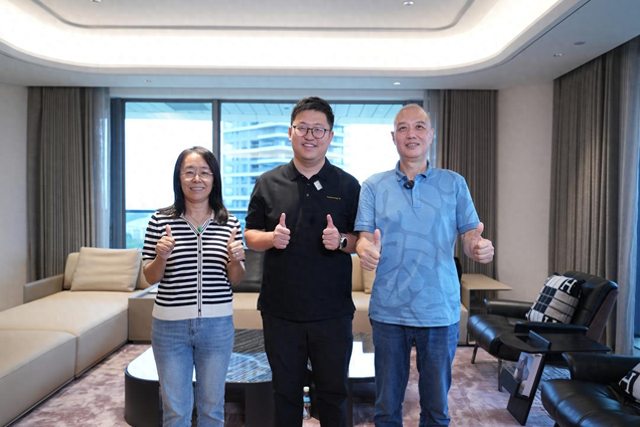
Core Viewpoint - The company emphasizes long-term value creation over short-term marketing gimmicks, focusing on quality and health as its dual engines for growth [1][3][10] Internal Development - The concept of health at the company transcends product safety, evolving into a comprehensive "health view" that encompasses mindset, strategy, and channels, reflecting a commitment to long-termism [3][5] - Initiatives like the "World Health Guardian Day" encourage employee engagement in health-related activities, fostering team cohesion and extending the health philosophy to product development and manufacturing [3][5] External Growth - The company believes that healthy channels are vital for external growth, advocating for deep collaboration between manufacturers and distributors rather than mere control or dependency [5][7] - The chairman highlights the importance of a symbiotic relationship with distributors, focusing on shared growth and overcoming challenges together [7][9] Market Positioning - The company is committed to maintaining high quality rather than competing on price, using its established "World Health Guardian Day" as a platform to reinforce its brand identity [9][10] - By shifting from selling products to providing solutions, the company aims to enhance user experience and build trust among consumers [7][10]
35岁后,要选择可以做一辈子的生意,怎么去选择呢?从这3种原则去选择
Sou Hu Cai Jing· 2025-09-26 08:50
Core Insights - The article emphasizes the importance of adopting a "long-termism" approach to navigate uncertainties in life, particularly for individuals over 35 who may face career transitions and financial pressures [1][9]. Group 1: Principles for Business Selection - Principle One: Necessity - Choose businesses that fulfill essential needs rather than fleeting trends. For example, community services like hair salons that cater to stable consumer habits are more viable than trendy businesses like escape rooms [3][5]. - Principle Two: Anti-fragility - Opt for businesses that thrive on challenges rather than those that are easily disrupted. A repair shop for electric vehicles, which benefits from high demand during downturns, exemplifies this principle [5][6]. - Principle Three: Emotional Connectivity - Select businesses that foster personal relationships and trust, such as personal organizing services, which can lead to long-term customer loyalty and referrals [7][8]. Group 2: Long-term Business Viability - The article suggests that individuals over 35 should focus on businesses that can sustain them into their later years, emphasizing stability over high-risk ventures. This shift in mindset is crucial for ensuring financial security and personal fulfillment [9][10]. - The narrative illustrates that choosing the right business is akin to purchasing life insurance, providing a stable income and peace of mind, even if the business is not highly profitable [9].

国建集团坚守长期主义 深化减债融资课题推进“质量驱动”新时代
Cai Fu Zai Xian· 2025-09-26 05:05
Core Viewpoint - The Chinese capital market is undergoing a structural transformation, shifting from a "scale-driven" phase focused on total expansion to a "quality-driven" era emphasizing internal value and efficiency [1][4] Group 1: Financial Solutions and Strategies - Guojian Group is actively engaged in the "New Era State-Owned Enterprise Debt Reduction Financing (DRF) Collaborative Development with Private Enterprises" project, aiming to enhance the quality of the capital market by optimizing capital structure and improving capital efficiency [1][2] - The DRF funds provided to enterprises are utilized to alleviate liquidity pressures and invest in an industrial equity fund established by Guojian Group, targeting high-quality state-owned and private enterprises across the entire industrial chain [2][3] - Guojian Group employs a differentiated financing strategy, providing capital based on the strength of industry advantages, with funding ratios ranging from 1:1 to 1:9, ensuring that financial resources are directed towards the most promising sectors [3] Group 2: Long-term Value and Market Maturity - The commitment to long-term value has become a key measure of the maturity of market participants, with Guojian Group focusing on internalizing long-termism as a fundamental principle [4] - The continuous iteration and optimization of the DRF project are essential for enhancing value recognition and risk management capabilities, allowing Guojian Group to serve as a robust bridge connecting patient capital with the real economy [4]
中信建投基金总经理金强:回归行业本源,共筑公募生态新篇
Xin Lang Ji Jin· 2025-09-26 02:18
Core Insights - The public fund industry is transitioning from scale-driven growth to value-driven high-quality development, influenced by global asset management adjustments and domestic capital market reforms [1] - The core competitiveness of public funds lies in their ability to balance long-term investor returns, optimize capital market resource allocation, and support national strategic implementation [1][2] - A systemic transformation is required, focusing on cognitive restructuring, capability upgrading, and ecological co-construction to address deep-seated development challenges [1][2] Cognitive Restructuring - Public funds serve as a professional bridge between capital and assets, with value creation rooted in a profound understanding of industry fundamentals [2] - Long-termism is essential for value creation, as public funds should focus on stabilizing market fluctuations and capturing long-term benefits from economic transitions [2] - The lack of investor satisfaction stems from some institutions deviating from long-termism, leading to a focus on short-term performance [2][3] Trust Rebuilding Mechanism - Establishing a symbiotic interest mechanism is crucial for rebuilding trust, emphasizing risk-sharing and profit-sharing [3] - A focus on management fees over returns erodes investor trust and hinders sustainable industry growth [3] - Professional value encompasses a comprehensive system of asset allocation, risk control, and investor education, essential for navigating market complexities [3] Capability Upgrading - Public funds must transition from scale advantages to value advantages through systematic innovations in service, mechanisms, and research [4] - Service upgrades should shift from product-centric to investor-centric approaches, focusing on empowering investors with long-term knowledge [4][5] - Mechanism reforms are necessary to align interests between managers and investors, promoting long-term assessments and market-driven fee structures [5] Long-term Development Pillars - Healthy ecosystems are vital for the high-quality development of public funds, with compliance as a baseline, culture as a core, and collaboration as a pathway [6] - Compliance ensures a balance between risk and value, necessitating transparent processes and innovative practices within regulatory frameworks [6] - A culture of long-termism and professional integrity should be cultivated to unify value consensus across the industry [6][7] Collaborative Development Path - The public fund ecosystem should foster a win-win community rather than a zero-sum competition, emphasizing value over price [7] - The future of the industry lies in enhancing value quality rather than merely expanding scale, focusing on protecting residents' wealth and stabilizing capital markets [7] - Public funds are encouraged to align with national strategies, ensuring that financial resources effectively support the core needs of the real economy [7]

新时代·新基金·新价值——北京公募基金高质量发展在行动 | 回归行业本源 共谱公募生态新篇
Zhong Guo Zheng Quan Bao· 2025-09-26 00:20
Core Viewpoint - The public fund industry is transitioning from a scale-driven model to a value-driven high-quality development cycle, influenced by global asset management adjustments and domestic capital market reforms [1] Group 1: Industry Essence and Long-term Perspective - Public funds serve as a professional bridge connecting capital and assets, with value creation rooted in a deep understanding of industry essence [2] - Long-termism is fundamental for value creation, as public funds aim to smooth short-term market fluctuations and capture long-term benefits from economic transformation and industrial upgrades [2] - The current lack of investor satisfaction stems from some institutions deviating from long-termism, leading to a focus on short-term performance and increased volatility in investment styles [2] Group 2: Trust and Professional Value - A symbiotic mechanism of shared risks and rewards is essential for rebuilding trust in the public fund industry, emphasizing the need for a redefined fiduciary responsibility [3] - The core competitiveness of public funds lies in their professionalism, which encompasses asset allocation, risk control, and guiding investor cognition [3] Group 3: Capability Upgrade and Systematic Innovation - To transition from scale dividends to value dividends, public funds must innovate across service, mechanism, and research dimensions [4] - Service upgrades should shift from product-centric to investor-centric approaches, focusing on empowering investors with long-term understanding and rational expectations [4] - Mechanism reforms are necessary to align the interests of management and investors, promoting long-termism and shared benefits [5] Group 4: Long-term Development Pillars - Compliance is crucial for balancing risk and value, ensuring transparency and integrity in product design, fee structures, and information disclosure [6] - A culture of long-termism, professional integrity, and prioritizing investor interests is essential for fostering a shared value consensus within the industry [6] - Collaboration among industry players is vital for creating a win-win ecosystem, moving from price competition to value competition [7]