
降本增效

Search documents
煌上煌:力争为股东创造更大价值
Zheng Quan Ri Bao Wang· 2025-12-30 08:40
Core Viewpoint - The company, Huangshanghuang, aims to enhance profitability through cost reduction and efficiency improvements in its core marinated food business by 2025, while also expanding its product offerings and entering new market segments [1] Group 1: Business Strategy - In 2025, the company plans to deepen its focus on the marinated food sector, introducing new products such as hand-pulled quail and establishing hot marinated dining scenarios [1] - The company will acquire Fujian Lixing to enter the freeze-dried food market, thereby strengthening its capabilities across the entire industry chain [1] Group 2: Future Outlook - By 2026, the company intends to capitalize on consumer upgrades and market expansion opportunities, further diversifying its presence in the food sector [1] - The company aims to create greater value for shareholders through its strategic initiatives and market positioning [1]

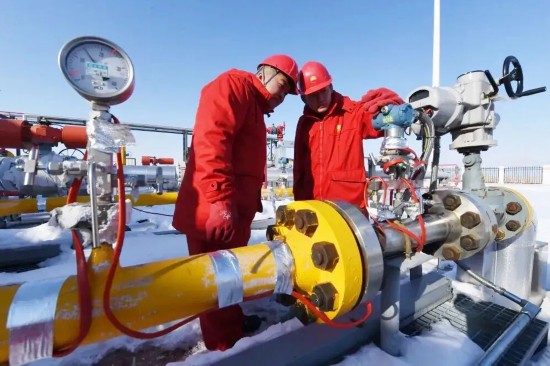
吉林油田天然气压降工程累计创效1.22亿元
Ren Min Wang· 2025-12-30 07:13
Core Insights - Jilin Oilfield has significantly reduced natural gas consumption in its self-operated area, achieving a decrease of 12.19 million cubic meters year-on-year in 2025, and a substantial reduction of 75 million cubic meters compared to the end of the 13th Five-Year Plan, resulting in cumulative benefits of 122 million yuan over five years [1][3]. Group 1: Consumption Reduction Strategies - Since the beginning of the 14th Five-Year Plan, Jilin Oilfield has focused on both increasing reserves and production while reducing costs and improving efficiency, placing gas management at the core of cost control [3]. - The company has implemented a "Natural Gas Consumption Assessment Plan," establishing 43 measures to reduce gas consumption, creating a proactive atmosphere for cost reduction across various departments [3][5]. - Continuous monitoring and dynamic management of energy efficiency indicators have been established to identify and enhance potential efficiency measures [3]. Group 2: Technological Innovations - Jilin Oilfield has adopted a combination of technical skills to enhance efficiency, including optimizing system parameters and coordinating production directives to improve gas-saving skills [3]. - The company has added 432 cold-injection and seasonal cold-injection wells, extending the cold-injection cycle by over 10 days for some wells, which reduces self-consumption by 25,000 cubic meters daily [3]. - Projects utilizing waste heat from wastewater and other clean energy initiatives have been successfully implemented, increasing daily gas-saving capacity by 30,000 cubic meters [3]. Group 3: Smart Monitoring and Future Plans - The company has leveraged the results of its "two transformations" by enhancing online monitoring through an intelligent platform, which helps identify and address energy consumption anomalies [5]. - Future plans include a commitment to deepen the natural gas reduction project with a focus on technological innovation and management optimization to enhance overall energy efficiency [5].

港股异动 | 吉利汽车(00175)午后涨超3% 极氪私有化完成 有望增厚公司利润并实现协同效应
智通财经网· 2025-12-30 06:19
Core Viewpoint - Geely Automobile has completed the privatization of Zeekr and its delisting from the New York Stock Exchange, making Zeekr a wholly-owned subsidiary, which is expected to enhance operational efficiency and profitability across its brands [1] Group 1: Financial Impact - Geely's share price increased by 3.09%, reaching HKD 18.04, with a trading volume of HKD 705 million [1] - The completion of Zeekr's privatization is projected to increase Geely's net profit by HKD 2 to 3 billion by 2026 [1] Group 2: Operational Efficiency - Post-merger, Geely plans to integrate its automotive business in R&D, marketing, and procurement, leading to a reduction in R&D investment by 10% to 20% [1] - Bill of Materials (BOM) costs are expected to decrease by 5% to 8%, and capacity utilization is anticipated to improve by 3% to 5% [1] - Overall expenses are projected to decline by 10% to 20% due to the integration [1] Group 3: Brand Integration - Following the privatization, Geely's ownership stakes in Zeekr and Lynk & Co will increase from approximately 65% and 82% to 100% [1] - The integration of Geely, Galaxy, Lynk & Co, and Zeekr is expected to leverage synergies for cost reduction and efficiency improvement [1]

中诚信国际生猪养殖行业特别评论
Zhong Cheng Xin Guo Ji· 2025-12-30 06:15
Report Industry Investment Rating No relevant information provided. Core Viewpoints of the Report - Since 2025, the supply in China's pig market has been generally loose, leading to a downward trend in pig prices and pushing the pig - grain ratio into the warning zone. This has weakened the profitability and cash - generating ability of breeding enterprises. Although the debt scale has continued to decline, the financial leverage of breeding enterprises remains high, and they may face short - term debt repayment pressure under the pressure of product prices. In the short term, the pig supply surplus situation is difficult to reverse quickly, and pig prices may remain volatile at a low - profit level. In 2026, the pressure of oversupply is expected to gradually ease, and pig prices may recover but still oscillate at a low - profit level [3][6][39]. - Large - scale breeding is the core trend in the pig - breeding industry. In 2025, the cost and profit gap between large - scale farms and small and medium - sized farmers narrowed, but leading enterprises still increased their market share. Enterprises with stronger cost - control capabilities will have higher competitiveness and risk - resistance [6][23][39]. Summary According to the Directory Main Concerns - **Supply - side Factors** - High - level operation of breeding capacity and improved breeding efficiency have led to an overall loose supply in the pig market since 2025. The national inventory of breeding sows has remained at around 40 million, and the PSY index has increased, further amplifying the positive impact on pig slaughter volume. From January to September 2025, the national pig inventory increased year - on - year by about 2%, and as of the end of September, it reached 436.8 million [7][8]. - Secondary fattening was an important disturbing factor in the first half of 2025. In April, the number of pigs sold to the secondary fattening channel by monitored breeding enterprises reached 59,200 per week, accounting for 33.54% of the total. After May, policy restrictions and market factors led to the concentrated slaughter of second - fattened pigs, exacerbating the supply surplus. In the second half of the year, the impact of secondary fattening decreased [10][11]. - **Demand - side Factors** - Market consumption is relatively weak. The fresh - meat sales rate of key slaughtering enterprises has been declining, and as of November 28, it dropped to 85.60%. The frozen - meat inventory may be released around the Spring Festival in 2026, and the demand increase during the peak season may not offset the supply increase [16]. - **Cost - side Factors** - From January to October 2025, the total output of industrial feed increased by 7.72% year - on - year to 279.133 million tons, and the sales of pig feed increased for 10 consecutive months. In the first half of the year, feed prices rose due to factors such as the tariff on US soybeans and the fluctuation of Brazilian soybean arrivals. In the second half of the year, feed prices declined with the new grain listing and increased soybean imports. Overall, the average feed price from January to November decreased by 4.47% year - on - year [18]. - **Pig Price Factors** - In 2025, pig prices generally declined, with the highest price of 16.54 yuan/kg in mid - January. The pig - grain ratio entered the warning zone in August. The government launched multiple rounds of central frozen - pork purchases. In the short term, pig prices may remain volatile at a low level, and in 2026, they may recover but still operate at a low - profit level [20]. Industry Development Trends - Large - scale breeding is the core trend. The proportion of large - scale pig farms (with an annual slaughter of over 500 pigs) increased from less than 40% in 2015 to over 70% in 2024. In 2025, the cost and profit gap between large - scale farms and small and medium - sized farmers narrowed, but leading enterprises still increased their market share. For example, the market share of the top three enterprises increased from 16.84% in 2024 to 19.73% in the first three quarters of 2025 [23][24]. Financial Situation of Breeding Enterprises - **Profitability** - In the first three quarters of 2025, 11 sample enterprises achieved a total operating income of 344.635 billion yuan, a year - on - year increase of 6.06%. Both the self - breeding and self - fattening model and the model of purchasing piglets for fattening were in a loss state. As of November, the loss per head was 147.99 yuan and 248.82 yuan respectively. Leading enterprises had better cost - control results, and the gap in the average period expense ratio between other enterprises and the top three enterprises widened to about 4 percentage points [29]. - **Capital Expenditure and Asset Status** - Since 2025, breeding enterprises have been cautious about capital expenditure. As of the end of September, the total fixed assets of sample enterprises decreased slightly quarter - on - quarter, and the total construction in progress decreased by 1.32% compared with the end of the previous year. The productive biological assets decreased by 9.19%, and the inventory decreased by 4.54% [34]. - **Capital Structure and Debt Situation** - By the end of September 2025, the average total debt of sample enterprises decreased by 10.55% year - on - year and 3.20% quarter - on - quarter. The average asset - liability ratio and total capitalization ratio decreased by 6.25 and 8.96 percentage points respectively. However, the short - term debt of leading enterprises was significantly higher than that of other sample enterprises, and they may face short - term debt repayment pressure [35]. - **Operating Cash Flow and Solvency** - As the pig price declined in the second quarter of 2025, the operating cash flow of most sample enterprises decreased year - on - year. The liquidity ratio of most sample enterprises improved, but the average liquidity ratio of the top three enterprises was lower than that of other sample enterprises. The ability of monetary funds to cover short - term debt weakened, but the ability of operating cash flow to cover total debt increased [37].
浙江亚厦装饰股份有限公司关于注销控股子公司暨关联交易的公告
Sou Hu Cai Jing· 2025-12-30 05:02
Group 1 - The company Zhejiang Yasha Decoration Co., Ltd. has decided to deregister its subsidiary Zhejiang Yasha Future Building Technology Co., Ltd. due to changes in the market environment, which led to no actual capital injection or substantial business activities [3][15][16] - The company invested a total of 100 million yuan in Future Building Technology, with 80% (80 million yuan) contributed by the company and 20% (20 million yuan) by Hangzhou Yasha Enterprise Management Consulting Partnership [2][14] - The deregistration process has been completed, and the company has received the deregistration certificate from the market supervision administration [6][16] Group 2 - Hangzhou Yasha Enterprise Management has a total capital contribution of 10 million yuan, with the company's wholly-owned subsidiary contributing 500,000 yuan (5%) and the current chairman contributing 9.5 million yuan (95%) [4][9] - The decision to deregister Future Building Technology was made to effectively integrate company resources, reduce management costs, and improve operational efficiency [3][15] - The deregistration does not constitute a major asset restructuring as defined by the relevant regulations [7]

涪陵发车,中亚直达!这趟班列如何带万凯新材“破卷出海”?
Quan Jing Wang· 2025-12-30 03:43
Core Viewpoint - The opening of a new international logistics channel for Wankai New Materials marks a strategic breakthrough in a challenging industry environment, enhancing the company's operational efficiency and market expansion capabilities [1][2][4] Group 1: Logistics and Cost Efficiency - The new logistics route directly connects Wankai New Materials' production site in Fuling to international markets, significantly reducing product shipping distance from over 100 kilometers to approximately 6 kilometers [1] - The new railway transport model is expected to save around 1,000 yuan in logistics costs per export container, which is crucial in a highly competitive market where the average processing fee is projected to drop over 30% in 2024 [2][3] Group 2: Strategic Initiatives and Market Positioning - Wankai New Materials is proactively addressing domestic market challenges by reducing PET production capacity by 20% by July 2025, optimizing resource allocation in response to industry overcapacity [3] - The company is expanding its overseas presence with significant investments in production bases in Nigeria (300,000 tons) and Indonesia (750,000 tons), aiming to mitigate trade barriers and enhance its global supply chain [3] - The company is also diversifying into upstream industries and high-value segments, including a 600,000-ton ethylene glycol project and advancements in lightweight materials for humanoid robots [3] Group 3: Financial Performance and Future Outlook - In the first three quarters of 2025, the company achieved a net profit of 77.59 million yuan, marking a turnaround with a year-on-year growth of 115.64% in the third quarter [4] - The overseas business accounted for 6.239 billion yuan in revenue, representing over 36% of total revenue in 2024, highlighting the importance of international markets for the company's growth [4] - The new logistics channel is expected to create a virtuous cycle of economic growth by attracting upstream and downstream enterprises to Fuling, thereby enhancing Wankai New Materials' growth potential [4]
减速提质、降本增效,巩固高质量发展态势——A股上市农商银行三季报分析
Xin Lang Cai Jing· 2025-12-30 03:32
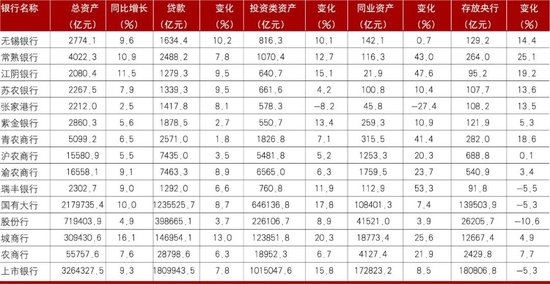
Core Viewpoint - The listed rural commercial banks are focusing on cost control and optimizing asset structure while maintaining steady growth in total assets, reflecting a shift in operational strategy towards enhancing efficiency and quality of growth rather than merely expanding scale [1][24]. Group 1: Asset Growth and Structure - As of the end of Q3 2025, the total asset size of listed rural commercial banks reached 5.58 trillion yuan, with a year-on-year growth of 7.56%, which is lower than the industry average [1][25]. - The growth rate of listed rural commercial banks is relatively stable compared to other bank types, with city commercial banks growing by 16.12% and state-owned banks by 9.95% during the same period [1][25]. - The asset structure is being adjusted, with personal loans decreasing to 51.25% of total loans, down 2.6 percentage points year-on-year, while corporate loans increased to 56.45%, up 2.9 percentage points [3][27]. Group 2: Revenue and Profitability - Revenue growth for listed rural commercial banks remained flat year-on-year, with an average increase of 3.60% in net profit, surpassing the overall growth of listed banks [8][16]. - Net interest income remains the primary source of revenue, accounting for 74.36% of total income, but its growth is hindered by a narrowing net interest margin [8][16]. - The strategy of "volume compensating for price" has become ineffective, leading to a rational shift in operational focus away from aggressive scale expansion [8][20]. Group 3: Cost Management - The average growth of total liabilities for listed rural commercial banks was 7.59%, aligning closely with asset growth, indicating a cautious approach to liability expansion [13][15]. - The banks are emphasizing cost control, particularly in managing interest expenses, operational costs, and risk costs, to enhance profitability [12][16]. - The cost-to-income ratio has shown improvement, reflecting effective cost management practices [16]. Group 4: Risk Management and Asset Quality - The overall non-performing loan (NPL) ratio for listed rural commercial banks was 1.07%, a decrease of 0.02 percentage points year-on-year, indicating improved asset quality [18][19]. - The reduction in NPLs is attributed to effective control over new bad loans and the disposal of existing non-performing assets [18][19]. - The banks are adjusting their credit strategies in response to rising credit risks and changing market conditions, focusing more on corporate lending [9][27]. Group 5: Future Strategy Outlook - The future strategy for listed rural commercial banks will focus on enhancing differentiated competitive advantages by serving the real economy and optimizing wealth management services [21][22]. - There is a need to strengthen cost management and risk control to ensure stable asset quality and reduce risk losses [22][23]. - Leveraging digital technologies for operational efficiency and risk management will be crucial for achieving high-quality development [23].
水井坊:公司将努力做强白酒主业
Zheng Quan Ri Bao Wang· 2025-12-29 14:10
证券日报网讯12月29日,水井坊(600779)在互动平台回答投资者提问时表示,公司将努力做强白酒主 业,不断提升公司治理水平,进一步夯实市场基础,适时推出适销对路的产品,积极落实"降本增效"举 措,以规范的公司治理、积极的投资者回报,切实履行上市公司的责任和义务。 ...

格力博:公司正全力推进降本增效、优化资源配置、提升投入产出效率
Zheng Quan Ri Bao Wang· 2025-12-29 13:42
证券日报网讯12月29日,格力博(301260)在互动平台回答投资者提问时表示,面对经营业绩承压,公 司正全力推进降本增效、优化资源配置、提升投入产出效率,力求将品牌、渠道、研发等方面的战略投 入加速转化为切实的业绩。 ...
金螳螂:积极推进业务转型与降本增效
Zheng Quan Ri Bao Wang· 2025-12-29 13:13
Group 1 - The company claims its industry position as "the first in decoration and design" is based on data from third-party authoritative institutions, core operational indicators, and industry-recognized objective results [1] - The company has consistently ranked at the top in key metrics such as revenue, order scale, and market share in the decoration industry for several years [1] - Achievements are attributed to continuous technological innovation, strict compliance governance, project quality control, and long-term customer reputation and partner recognition [1] Group 2 - The company adheres to compliance in operations and actively promotes business transformation and cost reduction while enhancing efficiency [1] - Relevant data is accurately disclosed in public announcements [1]
