
全国统一大市场

Search documents
大市场“中”力量丨打破“篱笆墙” 畅通大市场——“大市场‘中’力量”系列报道之一
He Nan Ri Bao· 2025-12-11 23:33
Core Viewpoint - The article emphasizes the importance of building a unified national market in China, highlighting innovative practices in Henan province to eliminate barriers and enhance logistics efficiency, thereby contributing to economic growth and market vitality [2][14]. Group 1: Logistics and Efficiency Improvements - The introduction of the "Zone-Port Integration" model has significantly improved logistics efficiency at Zhengzhou Airport, reducing the time for goods to reach warehouses from over an hour to approximately 10 minutes, achieving a 60% increase in efficiency and a 50% reduction in logistics costs [7][8]. - In the first 11 months of the year, the volume of goods entering and leaving through the "Zone-Port Integration" model reached 64,900 tons, marking a year-on-year increase of 25.41% [8]. Group 2: Service Optimization for Foreign Trade - The establishment of the "Customs-Bank KEY Pass" service point in Zhengzhou has streamlined the process for foreign trade enterprises, allowing them to obtain necessary documentation in a fraction of the time previously required, thus reducing time and labor costs [10]. - In the first 10 months of the year, Henan's import and export volume reached 741.12 billion yuan, with a continuous double-digit growth rate for ten consecutive months [10]. Group 3: Innovation and Collaboration - The creation of the "Offshore Innovation Center" in Anyang aims to connect local enterprises with top-tier innovation resources in Beijing, facilitating technology transfer and project implementation [12]. - Anyang has established a cross-provincial credit repair mechanism, allowing businesses to access services online without the need to travel across provinces, enhancing operational efficiency [13]. Group 4: Market Access and Regulatory Reforms - The "One Industry, One License" reform in Shangqiu has simplified the licensing process for businesses, reducing application materials by approximately 70% and cutting approval times from 15 days to just 1 day [15][16]. - Henan province has implemented multiple plans to eliminate market access barriers, aiming to stabilize expectations and boost confidence among business entities [16].


速览2025年中央经济工作会议,定调明年经济工作
Xin Hua She· 2025-12-11 21:12
新华社权威速览 2025年中央经济工作会议 u = HDE 4 , THE 中央经济工作会议12月10日至11日在 北京举行。习近平总书记出席会议并发表 重要讲话,总结2025年经济工作,分析当 前经济形势,部署2026年经济工作。 "十四五"即将圆满收官 今年是很不平凡的一年。以习近平 同志为核心的党中央团结带领全党全 国各族人民迎难而上、奋力拼搏,坚 定不移贯彻新发展理念、推动高质量 发展,统筹国内国际两个大局,实施 更加积极有为的宏观政策,经济社会 发展主要目标将顺利完成。我国经济 顶压前行、向新向优发展,现代化产 业体系建设持续推进,改革开放迈出 新步伐,重点领域风险化解取得积极 进展,民生保障更加有力。过去5年, 我们有效应对各种冲击挑战,推动党 和国家事业取得新的重大成就,"十 四五"即将圆满收官,第二个百年奋 斗目标新征程实现良好开局。 做好新形势下经济工作 新的认识和体会 必须充分挖掘经济潜能 必须坚持政策支持和改革创新 并举 业 须 做到既"放得活"又"管 得好" 必须坚持投资于物和投资于人 紧密结合 明年经济工作的 总体要求 要以习近平新时代中国特色社会 主义思想为指导,深入贯彻党的二十 ...

中央经济工作会议定调:实施更加积极有为的宏观政策,部署明年八大重点任务
Sou Hu Cai Jing· 2025-12-11 16:46
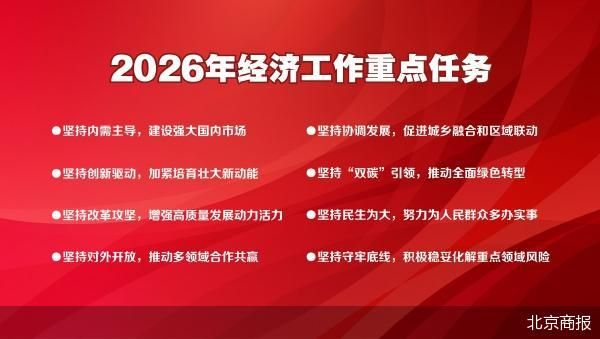
申万宏源证券首席经济学家赵伟表示,会议在延续积极财政与适度宽松货币基调的基础上,明确提出"增强政策前瞻性针对性协同性","发挥存量政策和 增量政策集成效应"。新增表述或意味着,后续政策更注重财政与货币、总量与结构、存量盘活与增量优化的协同发力,更注重避免碎片化,通过强化政 策协同与存量增量联动,实现稳增长与提质增效的双重目标。 会议部署了八大重点任务,包括坚持内需主导,建设强大国内市场;坚持创新驱动,加紧培育壮大新动能;坚持改革攻坚,增强高质量发展动力活力;坚 持对外开放,推动多领域合作共赢;坚持协调发展,促进城乡融合和区域联动;坚持"双碳"引领,推动全面绿色转型;坚持民生为大,努力为人民群众多 办实事;坚持守牢底线,积极稳妥化解重点领域风险。 中金公司研究部首席宏观经济分析师张文朗表示,中央经济工作会议针对社会普遍关注的经济热点问题都有明确回应,扩大内需放在了明年工作的第一 位,明确提出"坚持内需主导,建设国内强大市场",从居民收入、清理消费限制、优化两新政策等方面多管齐下,还提出"制定城乡居民增收计划",未来 的落地值得关注。 中信证券指出,防风险方面,本次会议对重点领域风险化解的部署坚持"标本兼治、协同 ...

新华社权威速览|2025年中央经济工作会议 定调明年经济工作
Xin Hua She· 2025-12-11 15:55
新华社权威速览 -- 2025年中央经济工作会议 1层 明年经济工作 中央经济工作会议12月10日至11日在 北京举行。习近平总书记出席会议并发表 重要讲话,总结2025年经济工作,分析当 前经济形势,部署2026年经济工作。 "十四五"即将圆满收官 今年是很不平凡的一年。以习近平 同志为核心的党中央团结带领全党全 国各族人民迎难而上、奋力拼搏,坚 定不移贯彻新发展理念、推动高质量 发展,统筹国内国际两个大局,实施 更加积极有为的宏观政策,经济社会 发展主要目标将顺利完成。我国经济 顶压前行、向新向优发展,现代化产 业体系建设持续推进,改革开放迈出 新步伐,重点领域风险化解取得积极 进展,民生保障更加有力。过去5年, 我们有效应对各种冲击挑战,推动党 和国家事业取得新的重大成就,"十 四五"即将圆满收官,第二个百年奋 斗目标新征程实现良好开局。 做好新形势下经济工作 新的认识和体会 必须充分挖掘经济潜能 必须坚持政策支持和改革创新 并举 必须做到既"放得活"又"管 得好" 必须坚持投资于物和投资于人 紧密结合 必须以苦练内功来应对外部挑战 明年经济工作的 总体要求 要以习近平新时代中国特色社会 主义思想为指导 ...

新华社权威速览|2025年中央经济工作会议,定调明年经济工作
Xin Hua Wang· 2025-12-11 15:47
Core Viewpoint - The Central Economic Work Conference held on December 10-11, 2025, in Beijing, emphasized the importance of high-quality development and the need for a proactive macroeconomic policy to address current economic challenges and set the direction for 2026 [3][5]. Summary by Sections Economic Performance and Goals - The year 2025 was described as extraordinary, with significant achievements in economic and social development, successfully navigating various challenges, and completing the "14th Five-Year Plan" [5]. - The conference highlighted the need to continue promoting a modern industrial system and enhancing people's livelihoods [5]. Economic Work Requirements for 2026 - The overall requirement for economic work in 2026 is to adhere to Xi Jinping's thoughts on socialism with Chinese characteristics, implement the spirit of the 20th National Congress, and focus on high-quality development while maintaining stability [9][10]. - Emphasis was placed on expanding domestic demand, optimizing supply, and ensuring the stability of employment, enterprises, and market expectations [10][11]. Policy Directions - The conference called for a continuation of proactive fiscal policies, maintaining necessary fiscal deficits, and optimizing the structure of fiscal expenditures [12]. - A moderately loose monetary policy will be implemented to support economic stability and reasonable price recovery, with a focus on enhancing liquidity and supporting key sectors such as technology innovation and small and medium-sized enterprises [12][11]. Key Tasks for Economic Development - Eight key tasks were outlined, including: 1. Strengthening domestic demand and building a robust domestic market [13]. 2. Accelerating innovation-driven development [13]. 3. Enhancing high-quality development through reform [13]. 4. Promoting win-win cooperation in various fields through openness [14]. 5. Coordinating urban-rural integration and regional development [14]. 6. Leading a comprehensive green transition [14]. 7. Prioritizing people's livelihoods and addressing practical issues [14]. 8. Actively and prudently mitigating risks in key areas [14]. Leadership and Implementation - The conference stressed the importance of the Party's comprehensive leadership over economic work, ensuring unified will and strong collaboration [15][16]. - It called for a correct view of performance, focusing on practical results for the people and adhering to regulations [16]. Social Stability and Public Welfare - The meeting underscored the need to ensure the supply of essential goods for the public and to care for the livelihoods of vulnerable groups [17].

确定明年经济工作八大重点任务
Bei Jing Shang Bao· 2025-12-11 15:32
中央经济工作会议12月10日至11日在北京举行。中共中央总书记、国家主席、中央军委主席习近平出席 会议并发表重要讲话。中共中央政治局常委李强、赵乐际、王沪宁、蔡奇、丁薛祥、李希出席会议。 习近平在重要讲话中总结2025年经济工作,分析当前经济形势,部署2026年经济工作。李强作总结讲 话,对贯彻落实习近平总书记重要讲话精神、做好明年经济工作提出要求。 会议指出,今年是很不平凡的一年。以习近平同志为核心的党中央团结带领全党全国各族人民迎难而 上、奋力拼搏,坚定不移贯彻新发展理念、推动高质量发展,统筹国内国际两个大局,实施更加积极有 为的宏观政策,经济社会发展主要目标将顺利完成。我国经济顶压前行、向新向优发展,现代化产业体 系建设持续推进,改革开放迈出新步伐,重点领域风险化解取得积极进展,民生保障更加有力。过去5 年,我们有效应对各种冲击挑战,推动党和国家事业取得新的重大成就,"十四五"即将圆满收官,第二 个百年奋斗目标新征程实现良好开局。 会议认为,通过实践,我们对做好新形势下经济工作又有了新的认识和体会:必须充分挖掘经济潜能, 必须坚持政策支持和改革创新并举,必须做到既"放得活"又"管得好",必须坚持投资于物 ...
大摩邢自强解读中央经济工作会议内容:消费和货币政策的表述超预期
Xin Lang Cai Jing· 2025-12-11 15:09
专题:中央经济工作会议在北京举行 业内解读 在中央经济工作会议的全文中,消费、地产和反内卷都有提到,其中消费和货币政策的表述是有点超预 期。大摩对此进行了点评,主要观点还是和他们之前的判断一致,政策方向还是托底式的。 Key takeways 目标数值维持不变:保持2026年GDP预测为实际增长4.8%,名义增长~4.1% 划重点,就是说,依然还是"减轻通货紧缩,而非再通胀。" CEWC会议释放的信号: 大摩的解读: 财政:与2025年持平的初始额度,但发行前置;年中仍有GDP~0.5个百分点的追加空间 货币政策:整体偏宽松但降息幅度有限(10‑20个基点)。 增长锚点:公共资本支出/城市更新、AI+/绿色转型。私人资本支出仍显疲软。 住房:已提出库存收购和房贷补贴(可能通过公积金改革实现)。具体范围、 规模及持续时间尚 不明确。 反内卷:更大力推动全国统一大市场、国企改革及更严格的补贴规定——执行难度大但方向正 确。 政策风格:侧重托底而非提振;强调延续性而非转向。 政策组合:仍以供给侧为核心,对需求侧给予小幅推动("扩大内需 + 优化供给")。 消费政策:消费品以旧换新持续推进;服务券及社会福利支持相关政 ...
粤开证券:中央经济工作会议学习体会,明年经济工作怎么干?
Xin Lang Cai Jing· 2025-12-11 15:03
炒股就看金麒麟分析师研报,权威,专业,及时,全面,助您挖掘潜力主题机会! 摘要 12月10日至11日,中央经济工作会议召开。会议总结2025年经济工作,分析当前经济形势,部署2026年 经济工作。 总体上看,会议坦诚务实、基调积极,既充分认识困难又看到是发展和转型中的问题,举措注重务实可 行,着眼目标在于稳增长、优结构,同时高度强调民生为大。会议在延续前期"更加积极有为"宏观政策 导向和"高质量发展"主线的基础上,更突出三个取向:一是更强的问题导向和底线思维,直面"供强需 弱""风险隐患较多"等现实矛盾,对房地产、地方债、新就业形态、极端天气等给出更细化的应对路 径;二是更明确的结构性与制度性安排,通过"条例""纲要""配套法规""试点"等抓手,把全国统一大市 场、能源强国建设、民营经济发展、地方税体系完善等推向更具约束力和可操作性的阶段;三是更重视 预期管理和政策协同,不仅强调"增强宏观政策取向一致性",还把经济与非经济、存量与增量政策一体 纳入评估,健全预期管理机制,通过制度化安排来稳定信心、引导预期。 中央经济工作会议延续了此前政治局会议的重大判断和政策取向,充分肯定今年和过去五年的成绩,在 政策基调上 ...
中央经济工作会议部署产业政策:培育新动能,深入整治“内卷”
2 1 Shi Ji Jing Ji Bao Dao· 2025-12-11 14:45
Group 1: Economic Policy Focus - The core focus of the Central Economic Work Conference is to adhere to innovation-driven development and accelerate the cultivation of new growth drivers [1][3] - The shift in policy from "leading new quality productivity development through technological innovation" to "accelerating the cultivation of new growth drivers" reflects a deeper emphasis on implementation pathways and practical results [2][4] - The conference highlights the importance of optimizing the service industry structure through a dedicated action plan, which aligns with the strategy to expand domestic demand [5][6] Group 2: Service Industry Development - The service industry is recognized for its strategic importance in the national economy, with a projected contribution of 56.7% to GDP by 2024, although structural imbalances exist [6][7] - The action plan for enhancing the service industry aims to improve service quality, thereby boosting consumer confidence and creating a virtuous cycle of service upgrades, consumption growth, and industrial expansion [7][8] - The government plans to support private capital in the production service sector, focusing on high-value service industries such as industrial design and quality certification [7][8] Group 3: Artificial Intelligence Governance - The policy regarding "Artificial Intelligence+" has evolved from "initiating actions" to "deepening and expanding" while also emphasizing the need for improved governance [8][9] - The focus on AI reflects its critical role in driving productivity across various industries, necessitating a balance between innovation and risk management [9][10] - The governance framework aims to address challenges such as data misuse and algorithmic bias, ensuring that the development of AI aligns with ethical standards and societal needs [9][10] Group 4: Competition Regulation - The conference reiterates the need for deeper regulation of "involutionary competition," transitioning from a broad initial assessment to targeted governance measures [10][11] - The establishment of a national unified market construction regulation is aimed at eliminating local protectionism and market fragmentation, which are key contributors to involutionary competition [11] - The emphasis on precise governance reflects an understanding of the complexities involved in addressing the root causes of involutionary competition, promoting high-quality development through enhanced competition standards [11]
中央经济工作会议部署产业政策:培育新动能 深入整治“内卷”
2 1 Shi Ji Jing Ji Bao Dao· 2025-12-11 14:42
另外,自去年"综合整治'内卷式'竞争"首次出现在中央经济工作会议的表述中以来,整治"内卷式"竞争 再次在会议表述中出现,但相关表述由"综合整治"转向"深入整治"。受访专家认为,去年的核心是全面 排查问题,属于广覆盖的初步治理;今年强调治理的深度与精准度,核心是通过"制定全国统一大市场 建设条例"破除地方保护与市场分割。 加紧培育壮大新动能 对于产业政策的相关表述,去年中央经济工作会议提到"以科技创新引领新质生产力发展,建设现代化 产业体系"转为"坚持创新驱动,加紧培育壮大新动能"。 "这一转变反映产业政策从战略规划向实施路径的深化。"国研新经济研究院创始院长朱克力对21世纪经 济报道记者表示,去年会议提出以科技创新引领新质生产力发展,核心在于构建现代化产业体系的"骨 架",强调技术突破与产业融合的顶层设计。今年则更注重创新成果的"血肉填充",即通过具体政策工 具推动技术转化与产业应用。 中央经济工作会议12月10日至11日在北京举行。会议确定,明年经济工作要坚持创新驱动,加紧培育壮 大新动能。制定一体推进教育科技人才发展方案。建设北京(京津冀)、上海(长三角)、粤港澳大湾 区国际科技创新中心。强化企业创新主体 ...