国产替代

Search documents
1300+份新材料报告下载:做新材料领域的「攻坚者」
材料汇· 2026-02-06 15:54
Core Viewpoint - The article discusses the rapid growth and investment opportunities in the advanced packaging materials sector, highlighting the potential for domestic companies to replace foreign imports in critical areas of technology [7][8]. Market Overview - The global market for advanced packaging materials is projected to reach $2.032 billion by 2028, with the Chinese market expected to grow to 9.67 billion yuan by 2025 [8]. - Specific materials such as PSPI and Al-X photoresist are identified as key growth areas, with PSPI's market size in China estimated at 7.12 billion yuan in 2023 [8]. Investment Opportunities - The article outlines various advanced packaging materials and their projected market sizes, indicating significant growth potential in sectors like conductive adhesives, chip bonding materials, and epoxy encapsulants [8]. - For instance, the conductive adhesive market is expected to reach 3 billion yuan by 2026, while the epoxy encapsulant market is projected to grow to 99 million USD by 2027 [8]. Competitive Landscape - The article lists both domestic and international players in the advanced packaging materials market, emphasizing the competitive dynamics and the potential for domestic companies to capture market share from established foreign firms [8]. - Companies such as 鼎龙股份, 国风新材, and 三月科 are highlighted as key domestic players in the PSPI segment, while international competitors include Fujifilm and Toray [8]. Investment Strategies - Different investment stages in the new materials industry are discussed, with a focus on the varying risk levels and investment strategies appropriate for each stage, from seed funding to pre-IPO [10]. - The article emphasizes the importance of thorough industry and team assessments at each investment stage to mitigate risks and maximize returns [10].

新华医疗:公司大孔径CT拥有大孔径、低剂量、精准成像等技术优势
Zheng Quan Ri Bao Wang· 2026-02-06 12:41
Core Viewpoint - Xinhua Medical (600587) emphasizes its large-diameter CT technology advantages, including large aperture, low dose, and precise imaging, which can synergize with radiotherapy equipment, offering better cost-effectiveness and localized service compared to imported brands, and is currently accelerating domestic substitution through policy and clinical promotion [1] Group 1 - The company highlights the technical advantages of its large-diameter CT, which include large aperture, low dose, and precise imaging capabilities [1] - The company claims that its products provide better cost-effectiveness and localized service compared to imported brands [1] - The company is leveraging policies and clinical promotion to accelerate the domestic substitution of its products [1]

每日研究一家上市公司——第六十五家三安光电(湖北)
Sou Hu Cai Jing· 2026-02-06 08:48
Core Viewpoint - Sanan Optoelectronics is a leading player in the compound semiconductor industry, particularly in the LED chip and third-generation semiconductor sectors, with a strong focus on technological innovation and a comprehensive industrial layout [5][20][54]. Company Overview - Sanan Optoelectronics Co., Ltd. was established in November 2000 and listed on the Shanghai Stock Exchange in 2008, focusing on the research, production, and sales of compound semiconductor materials and devices [5][6]. - The company has transformed from a single LED chip manufacturer to a platform enterprise covering both LED chips and integrated circuits, establishing a business structure that balances mature cash flow with high-growth new businesses [5][7]. Historical Performance - The stock price reached a historical high of 44.72 yuan in 2021, driven by industry trends, performance improvements, and significant investments in Mini/Micro LED technology [10][11]. - The stock price has since declined, with the latest price at 15.38 yuan as of February 6, 2026, reflecting a 26.58% increase since 2025 [2]. Market Position - Sanan Optoelectronics holds a global market share of 28%-32% in the LED chip sector, leading both domestically and internationally [20]. - The company is also a key player in the Mini/Micro LED market, achieving over 120% year-on-year growth in chip shipments in 2023 [20]. Business Segments - The main business segments include LED epitaxial chips, integrated circuit products, and power electronic devices, with LED epitaxial chips accounting for approximately 65% of total revenue in the first half of 2025 [21][22]. - The company is recognized for its advanced technology in the third-generation semiconductor field, particularly in silicon carbide and gallium nitride RF chips [20][22]. Financial Performance - For the first three quarters of 2025, the company reported total revenue of 138.17 billion yuan, a year-on-year increase of 16.55%, but faced a net profit decline of 64.15% to 88.61 million yuan [29][30]. - The gross profit margin improved to 13.65%, although it remains below the industry average [30]. Competitive Advantages - Sanan Optoelectronics boasts strong technological innovation capabilities, with over 4,200 patents and significant R&D investment, amounting to 13.23 billion yuan in 2024 [24][54]. - The company has established a full industrial chain in the silicon carbide sector, enhancing its cost control and quality assurance [24][25]. Shareholder Structure - The controlling shareholder is Xiamen Sanan Electronics Co., Ltd., with a significant portion of shares pledged, raising concerns about share stability [38][39]. - Institutional investors hold over 50% of the company's shares, indicating strong market confidence [45]. Investment Outlook - The company is positioned for long-term growth in the compound semiconductor sector, despite facing short-term challenges related to competition and profitability [54][63]. - The focus on high-value products and new business developments is expected to drive future revenue growth [54].

南方基金旗下恒生科技ETF南方(520570)震荡企稳, 机构:估值低位吸引南向资金加仓
Ge Long Hui· 2026-02-06 07:34
Group 1 - The Hang Seng Technology Index opened lower but stabilized, closing at 5355.83 points, down approximately 0.34% from the previous trading day [1] - The Hang Seng Technology ETF (520570) experienced active trading with a turnover of about 160 million yuan and a turnover rate of approximately 6.07%, demonstrating strong resilience and capital support [1] - The current price-to-earnings ratio (PE-TTM) of the Hang Seng Technology Index is 22.18 times, significantly lower than major global technology indices, indicating a historical low valuation [2] Group 2 - Despite short-term pressure from fluctuations in U.S. Federal Reserve policy expectations and global technology sector sentiment, core constituents are making progress in AI commercialization, with companies like Xiaomi and Li Auto advancing their AI initiatives [2] - Southbound capital continues to increase, with a net inflow of 24.98 billion HKD on February 5, marking the highest single-day net inflow since August 2025, and further net purchases exceeding 10 billion HKD on February 6 [2] - The Hang Seng Technology ETF closely tracks the Hang Seng Technology Index, covering 30 of the largest and most liquid technology companies listed in Hong Kong, and is expected to have long-term recovery potential due to low valuations and continuous inflows [3]

北芯生命登陆科创板 投资方倚锋资本CEO朱湃:国产高端医疗器械正突破“深水区”
Xin Hua Cai Jing· 2026-02-06 07:26
Company Overview - Beixin Life, a leading company in the domestic cardiovascular precision interventional diagnosis and treatment field, officially listed on the Sci-Tech Innovation Board on February 5 [2] - Yifeng Capital, an early investor in Beixin Life since 2020, views the listing as a milestone in its investment layout in the biopharmaceutical and high-tech medical device sectors [2] Investment Motivation - Beixin Life is the first domestic medical device company with a product portfolio that includes intravascular functional FFR and imaging IVUS [3] - The investment was driven by the desire to break the international monopoly in the cardiovascular interventional field, where domestic alternatives were still in the "deep water zone" for high-end active devices [3] - The company aims to create an "intelligent cardiovascular precision interventional diagnosis and treatment system," providing more precise decision support for clinical applications, aligning with Yifeng Capital's investment principle of addressing unmet clinical needs [3] Industry Trends - The investment trend in the biopharmaceutical and medical device sectors has shifted from "following" to "running alongside," with a focus on "source innovation" in high-end medical devices [4] - Early-stage investments, particularly in preclinical or clinical phase I, are becoming increasingly important as mature asset valuations are high, making early positioning beneficial for cost control [4] - China's innovation is transitioning from "Fast-follow" to "First-in-class," emphasizing the need for early intervention to capture disruptive technologies [4] IPO Policies and Exit Strategies - Ongoing reforms in capital markets, such as the Sci-Tech Innovation Board and Hong Kong's 18A, are facilitating the listing of unprofitable tech companies, which is significant for early-stage investment firms like Yifeng Capital [5] - The diversification of exit strategies, including IPOs, cross-border collaborations, mergers and acquisitions, and secondary share transfers, provides more flexible return options and reduces early investment risks [5] - Investors are increasingly rational in their valuation judgments, focusing on true clinical value and differentiated advantages rather than merely the number of product pipelines, which will drive the industry back to its innovative essence [5] Future Outlook - The investment landscape in hard technology and biomedicine is characterized by long cycles and high risks, prompting a call for a focus on "patient capital" and deep engagement in specific sectors [6] - The emphasis is on teams with a composite background of "scientists + industrialization," possessing both top scientific insight and understanding of product development and commercialization [6] - Yifeng Capital aims to act as a bridge between technology and industry, assisting companies in navigating the "last mile" from the laboratory to the market [6]
高“设备”含量的科创半导体ETF(588170)近1月日均成交11.09亿元领先同类
Mei Ri Jing Ji Xin Wen· 2026-02-06 06:46
Group 1 - The Shanghai Stock Exchange's Sci-Tech Innovation Board semiconductor materials and equipment theme index (950125) increased by 0.15%, with notable gains from component stocks such as Oulain New Materials (up 14.14%) and Naiko Equipment (up 4.95%) [1] - The ChiNext semiconductor materials and equipment theme index (931743) rose by 0.24%, with significant increases from Jiangfeng Electronics (up 10.34%) and Yuyuan New Materials (up 5.00%) [1] - The Sci-Tech semiconductor ETF (588170) saw a trading volume of 6.69 billion yuan, with a turnover rate of 8.43%, while the semiconductor equipment ETF (562590) had a trading volume of 1.12 billion yuan and a turnover rate of 4.11% [1] Group 2 - The latest net outflow for the Sci-Tech semiconductor ETF was 30.98 million yuan, but over the past 10 trading days, there were net inflows on 6 days, totaling 581 million yuan [2] - The semiconductor equipment ETF (562590) experienced a net outflow of 9.29 million yuan, yet had net inflows on 18 out of the last 23 trading days, accumulating 1.864 billion yuan [2] - According to招商证券, prices for various storage products have sharply increased since Q1 2026, with expectations for continued price rises throughout the year due to limited new supply and strong demand [2] Group 3 - The Sci-Tech semiconductor ETF (588170) tracks the Shanghai Stock Exchange's semiconductor materials and equipment theme index, focusing on semiconductor equipment (60%) and materials (25%) [3] - The semiconductor equipment ETF (562590) emphasizes semiconductor equipment (63%) and materials (24%), targeting the upstream semiconductor sector [3]
天禄科技TAC光学膜项目首台设备进场
WitsView睿智显示· 2026-02-06 05:41
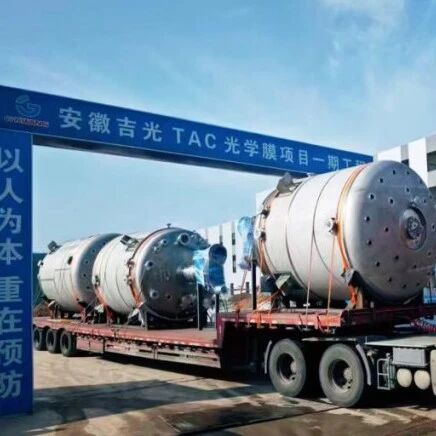
Core Viewpoint - Suzhou Tianlu Technology Co., Ltd. has entered a significant phase in its TAC film project, marking a step towards enhancing China's competitiveness in the global display industry [1][4]. Group 1: Project Development - Tianlu Technology's subsidiary, Anhui Jiguang, has successfully brought in the liquid tank for the TAC film project, indicating the start of equipment installation and debugging [1]. - The total investment for the high polymer new material production project is set at 3 billion yuan, covering an area of 108 acres, aimed at establishing a high-end TAC optical film R&D and production base [4]. - The project is expected to produce approximately 60 million square meters of TAC optical film annually in its first phase, with plans for a second phase expansion depending on the progress of the initial phase [5]. Group 2: Market Context - High-end TAC optical films are critical materials in polarizers, which constitute about 50% of the total cost of polarizers used in LCD and OLED display modules, currently dominated by Japanese and Korean companies [4]. - The successful implementation of this project is anticipated to accelerate the realization of a fully self-controlled display industry chain in China, enhancing the country's core competitiveness in the global display market [4]. Group 3: Strategic Adjustments - Tianlu Technology has adjusted its business layout by terminating the original fundraising project for the "Expansion of Large-Sized Light Guide Plate Project" to focus resources on the TAC film and reflective polarizing enhancement film sectors [5]. - The company has successfully introduced new investors through a recent round of capital increase, ensuring sufficient funding for the project, with 450 million yuan already received from shareholders [5].
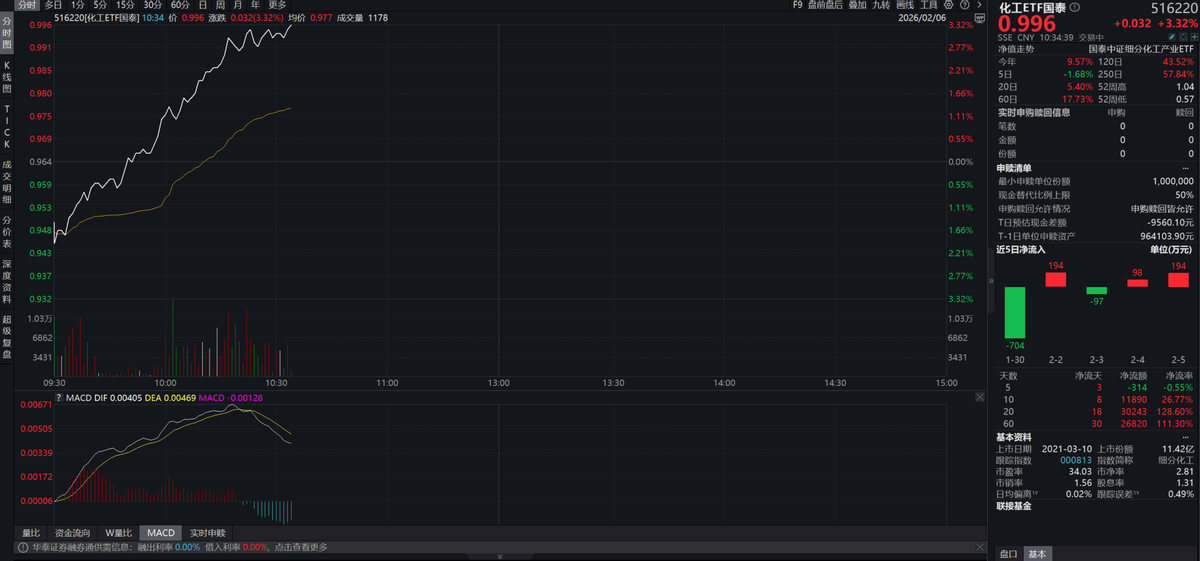
周期反转与新兴需求共振,化工板块直线拉升!
Sou Hu Cai Jing· 2026-02-06 03:08
Core Viewpoint - The chemical industry is at the bottom of a long-term down cycle, with signs of a potential turning point as supply-demand dynamics improve and capital expenditure contracts [3][5]. Group 1: Industry Positioning - Multiple macro and industry indicators suggest that the chemical industry is in the bottom region of a long-term down cycle, with positive changes in supply-demand dynamics accumulating to lay the groundwork for a turning point [3]. - The price index for the chemical raw materials and chemical products manufacturing industry shows a narrowing year-on-year decline in PPI, indicating a preliminary improvement in product price pressures [3]. - The continuous decline in finished goods inventory indicates that after a prolonged period of active destocking, inventory levels have reached a low point, allowing for potential replenishment [3]. Group 2: Supply Changes - The contraction in capital expenditure is significant, with fixed asset investment growth in the domestic chemical raw materials and chemical products manufacturing industry turning negative, signaling the end of large-scale capacity expansion [5]. - The structural clearing of supply, driven by both domestic and international factors, is a key difference in this cycle compared to previous ones [9]. - Domestic policies aimed at "anti-involution" are leading to the elimination of outdated capacity, while industry leaders are optimizing competition to avoid price wars and promote profit recovery [9]. Group 3: Demand Drivers - The demand side is characterized by a dual engine of traditional recovery and emerging growth, with marginal recovery in traditional downstream sectors and strong demand from new industries like semiconductors and renewable energy [10]. - Traditional demand is expected to improve marginally, supported by policies driving demand in sectors like automotive and home appliances, despite long-term pressures in real estate [10]. - Emerging demand from sectors such as semiconductors and new energy is becoming a strong growth engine, contributing to a more diversified and healthy demand structure in the chemical industry [13]. Group 4: Investment Mapping - Investment strategies should focus on two main lines: benefiting from supply-side reforms and stable profitability in cyclical leaders, and identifying chemical new material companies with technological barriers and growth potential in emerging demand sectors [14][15]. - The chemical ETF Guotai (516220) offers an efficient tool for investors looking to capture the overall recovery trend in the chemical industry while mitigating risks associated with specific sectors and stocks [15].
东海证券晨会纪要-20260206
Donghai Securities· 2026-02-06 02:45
Group 1: Semiconductor Industry Insights - The semiconductor industry showed continued recovery in January 2026, with prices on an upward trend driven by AI computing demand, AIOT, semiconductor equipment, key components, and storage price increases [5][7] - Global semiconductor demand is improving, with slight growth in PCs and smartphones, and rapid growth in TWS headsets, wearable devices, and smart home products. AI servers and new energy vehicles are experiencing high growth, indicating a potential continued recovery in demand for February 2026 [5][10] - January 2026 saw a significant increase in storage prices, with DRAM and NAND Flash prices rising between 5.95% and 63.43%. The overall semiconductor price trend is expected to remain positive in February [7][10] Group 2: Company-Specific Analysis - Jerry Holdings - Jerry Holdings secured a new gas turbine generator order worth $181.5 million, which represents approximately 9.47% of the company's audited revenue for 2024. This is the fourth such contract with a U.S. client since November 2025 [13][14] - The company has accumulated over $400 million in gas turbine generator orders, establishing a new growth curve. It has expanded production capacity to meet North American demand [14][15] - Jerry Holdings has formed strategic partnerships with major players in the gas turbine industry, enhancing its supply chain resilience and providing integrated power solutions [15][17] Group 3: Investment Recommendations - The semiconductor industry is experiencing a slow recovery in demand, with AI investments exceeding expectations and storage chip price increases also surpassing forecasts. It is recommended to consider leading companies in AIOT and semiconductor sectors for investment [11] - For Jerry Holdings, the diversified business model and strong order book in gas turbine generators are expected to support significant profit growth, with projected net profits of 3.164 billion, 3.778 billion, and 4.449 billion yuan for 2025-2027 [17]
国内称王、海外承压,国产咖啡机格米莱赴港寻解药?
Zhi Tong Cai Jing· 2026-02-06 02:37
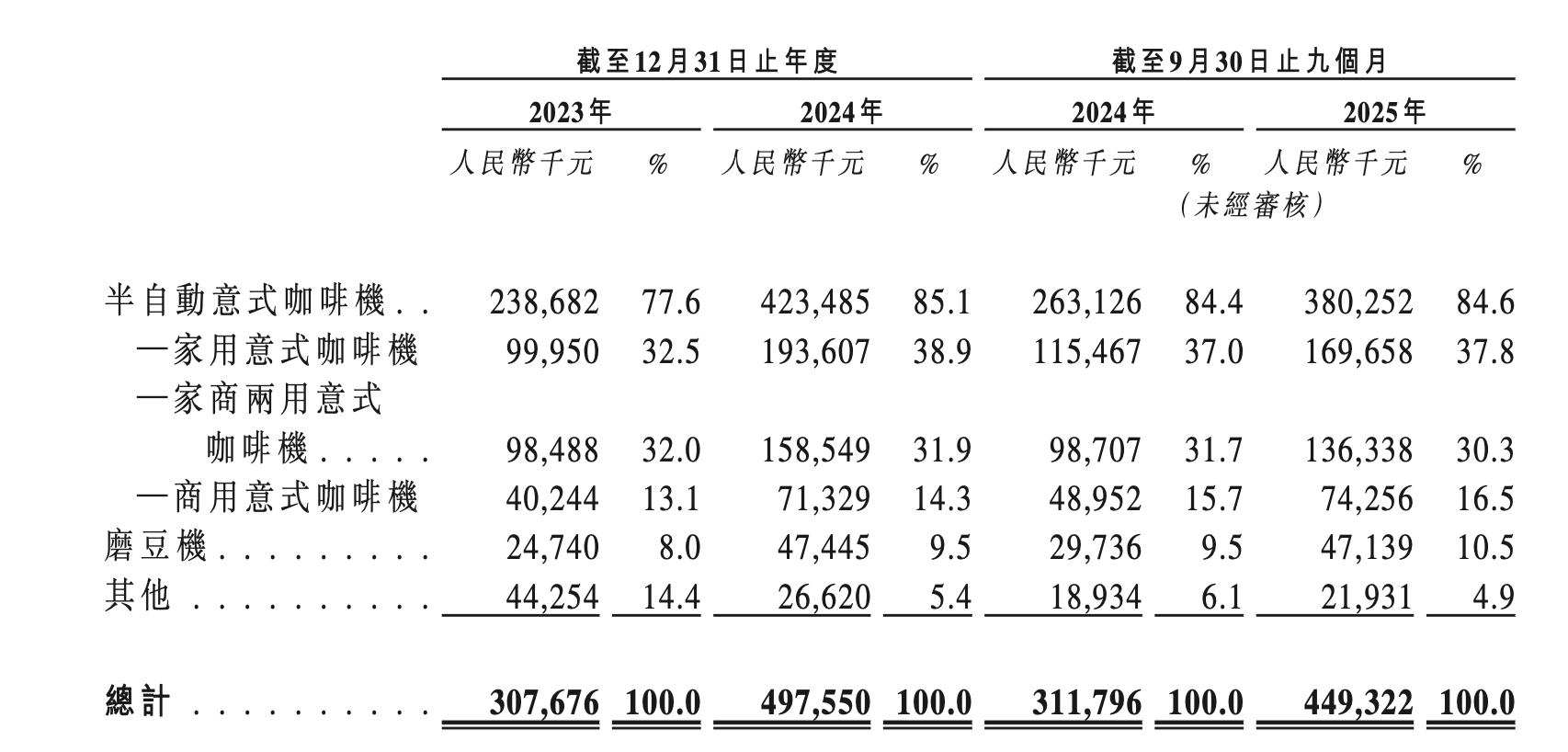
Core Viewpoint - The Chinese coffee machine industry is experiencing a historic transformation, evolving from a niche tool to a lifestyle product, with Gemi Lai Holdings Limited (Gemi Lai) leading this change as it prepares for its IPO in Hong Kong [1][11]. Company Overview - Gemi Lai is recognized as the second-largest coffee machine brand in China by revenue and the largest domestic brand, with a projected market share of approximately 7.5% in 2024 [2]. - The company has established a comprehensive business model covering product design, R&D, manufacturing, sales, and after-sales service, distributing products to over 60 countries and regions [1]. Financial Performance - Gemi Lai's revenue has shown consistent growth, with reported revenues of approximately 308 million RMB in 2023, 498 million RMB in 2024, and 449 million RMB in the first nine months of 2025 [3]. - The revenue from semi-automatic espresso machines has significantly increased, contributing 77.6% to total revenue in 2023, rising to 84.6% by the first nine months of 2025 [4]. - The company's net profit rose from 22.05 million RMB in 2023 to 40.05 million RMB in 2024, marking an increase of 81.8% [8]. Product Segmentation - Gemi Lai has diversified its product offerings, including home, office, restaurant, and café espresso machines, with a focus on semi-automatic models [3]. - The revenue from home espresso machines grew from 100 million RMB in 2023 to 194 million RMB in 2024, reflecting a strong market penetration amid consumer upgrades [5]. Business Model - The company operates a dual business model of "own brand + third-party ODM," with a strategic shift towards its own brand, which accounted for 83.3% of revenue in the first nine months of 2025 [6][7]. - The revenue from third-party ODM has decreased, indicating a strategic focus on enhancing brand value and direct consumer engagement [7]. Market Dynamics - The global coffee machine market is projected to grow from $15.3 billion in 2019 to $30.6 billion in 2024, with a compound annual growth rate (CAGR) of 14.9% [9]. - The Chinese coffee machine market is expected to expand from 2 billion RMB in 2019 to 5.3 billion RMB in 2024, with a CAGR of 21.5% [9]. Challenges and Opportunities - Gemi Lai faces challenges in overseas markets, particularly in the U.S., where revenue dropped significantly from 31.2 million RMB in 2023 to 10.7 million RMB in 2024, a decline of 79.3% [10]. - The company aims to optimize its overseas customer structure and diversify its product lines to mitigate risks associated with market concentration and dependency on domestic sales [10][11].