
智能化

Search documents
香港“兴”观察丨香港“拆弹专家”的无声守护
Xin Hua She· 2026-01-04 00:25
Core Viewpoint - The article highlights the critical role of bomb disposal experts in Hong Kong, particularly during a recent incident involving a WWII-era bomb, showcasing their professionalism and the advancements in technology used in bomb disposal operations [3][5][6]. Group 1: Incident Overview - On September 19, 2025, a 1,000-pound WWII bomb was discovered at a construction site in Hong Kong, prompting immediate action from the bomb disposal unit [3]. - The bomb's fuse status was unclear, and with a typhoon approaching, the team decided to evacuate nearby residents and proceed with the disposal on-site [3][5]. - The disposal process faced challenges due to severe weather, requiring the team to adapt their methods, including using a special cutting technique [3][5]. Group 2: Bomb Disposal Techniques - The bomb contained approximately 500 pounds of high-performance TNT, which was still active [3]. - The team utilized over 1,000 sandbags for protection and employed low-temperature explosives to safely ignite the TNT, making the process more controllable [3][5]. - The operation lasted over ten hours, culminating in the successful destruction of the bomb, which was met with applause from the team and the community [5][6]. Group 3: Technological Advancements - The Hong Kong Police Force has integrated domestic bomb disposal robots and AI recognition systems since 2020, significantly enhancing the efficiency and safety of operations [5]. - The article emphasizes that these advancements have allowed the local bomb disposal unit to keep pace with or even surpass international standards [5][6]. Group 4: Professionalism and Training - The bomb disposal experts emphasize the importance of psychological resilience and meticulousness in their work, often operating in high-pressure situations without public recognition [5][6]. - Continuous professional training, research innovation, and international collaboration are now the focus areas for the bomb disposal unit [5][6].


探访中国首个智能化无人风电场
Zhong Guo Xin Wen Wang· 2026-01-03 07:55
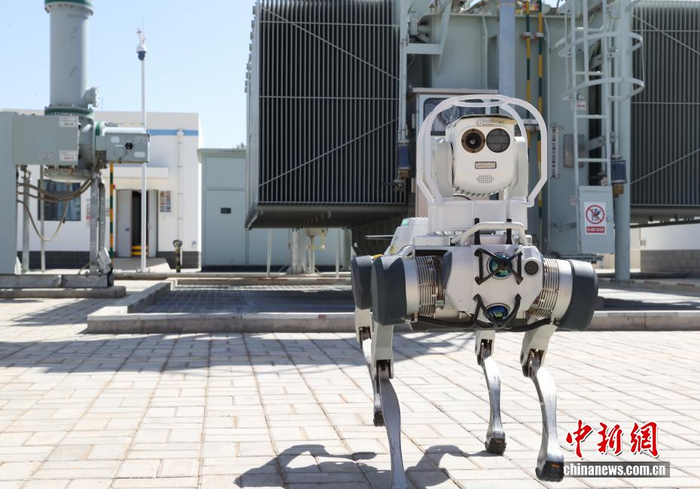
Core Insights - The article highlights the operation of China's first intelligent unmanned wind farm, the Sanxia Energy Ningxia Tongli Third Wind Farm, located in Wuzhong City, Ningxia, with a total installed capacity of 70 megawatts [2][4][6][8] - The wind farm operates efficiently without the presence of maintenance personnel, utilizing over 300 intelligent "employees" including drones, quadruped robots, and rail inspection robots for various tasks [2][4][6][8] Summary by Category Company Overview - Sanxia Energy is pioneering the development of intelligent unmanned wind farms in China, showcasing advanced technology in renewable energy [2][4][6][8] Technology and Operations - The wind farm employs a total installed capacity of 70 megawatts, demonstrating a shift towards automation in energy production [2][4][6][8] - The absence of traditional operational staff is replaced by a fleet of over 300 intelligent devices, indicating a significant advancement in operational efficiency and safety [2][4][6][8]

汽车产业的跨越信号
Guo Ji Jin Rong Bao· 2026-01-03 07:40
Core Insights - The Chinese automotive industry is at a critical juncture in 2025, transitioning from traditional paradigms to new models driven by technological advancements, market competition, and globalization [1] Group 1: Battery Technology - 2025 marks a paradigm shift in the Chinese battery industry, with competition moving from laboratory performance to industrialization speed and supply chain control [3] - Leading companies like CATL, BYD, and Guoxuan High-Tech are accelerating the production of semi-solid batteries while investing in all-solid-state battery research [3] - The expected domestic shipment of semi-solid batteries for passenger vehicles is projected to reach 3 GWh in 2025, indicating a significant step towards commercialization [3] Group 2: Smart Driving - The Chinese smart driving industry is set for a breakthrough in 2025, with L2 penetration exceeding 60% and L3-level autonomous driving gaining regulatory approval [5][6] - The cost of high-level driving assistance systems has decreased significantly, with hardware costs dropping over 60% compared to 2022, making advanced driving features accessible for lower-priced vehicles [5] - The market is expected to see a surge in demand for smart driving technologies, with a focus on vertical integration of software and hardware [6] Group 3: Market Competition - The Chinese automotive market is experiencing a shift from price wars to value competition, with an industry profit margin of only 4.4% in 2025 [7][9] - A significant number of models saw price reductions, with an average drop of 11.7% for new energy vehicles, leading to a decrease in market prices [7] - Regulatory measures are being implemented to curb price wars, including guidelines to prevent below-cost sales [8] Group 4: Export Growth - China's automotive exports are on a strong upward trajectory, with a total of 6.343 million vehicles exported from January to November 2025, marking an 18.7% year-on-year increase [10] - New energy vehicles are a key growth driver, with exports doubling to 2.315 million units, accounting for 36.5% of total exports [10] - Major automakers are increasingly focusing on overseas markets, with strategies evolving from simple sales to establishing local ecosystems [11] Group 5: Joint Ventures and Localization - The market share of joint venture brands is under pressure, with domestic brands capturing 69.6% of the passenger car market by November 2025 [13] - Joint venture brands are focusing on enhancing their fuel vehicle advantages while integrating smart technologies to regain market share [14] - Collaborations with local tech companies are becoming essential for joint ventures to address their technological gaps and adapt to the local market [14]

广东打造领衔人打样、成员集智、跨专业协同的“她”技术联盟
Xin Lang Cai Jing· 2026-01-02 08:11
领衔人树标杆,成员间也"你追我赶"。数字化、智能化等新技术联盟成立后,广大成员立足各自领域, 扎根一线,涌现出了一批具有代表性的行业创新成果。松山湖材料实验室梅增霞女职工创新工作室告诉 记者,她们瞄准氧化物半导体光电信息材料的可控制备及器件开发,力争在材料设计制备及相关物理机 制等方面取得突破性研究成果,近期,工作室采用创新四代半导体材料开发了新型日盲紫外传感器,突 破了材料制备、物性调控、器件开发等关键技术,实现了集高探测性能、低制造成本、兼容现行半导体 工艺和制程的新一代紫外传感器,在电力行业的高压巡检、信息行业的保密通信、生物行业的大分子检 测等众多领域具有广泛的应用潜能。电信领域的叶茵创新工作室在网络安全、低空经济方面持续创新, 通过科技研究、业网融合、生态聚合等方式不断优化网络性能、研发优质信息化产品、打造融合创新的 商业模式,引领和推动佛山移动管理和技术的创新发展,为佛山千行百业数字化、网络化、智能化强力 赋能。 "成立联盟,就是要打破壁垒、资源共享、协同攻关,将联盟内各行业女职工创新智慧拧成一股绳。"张 春梅表示,当前,数字化、智能化等新技术联盟正推动建立"大平台、小团队"协同机制,让不同领域的 ...
港股概念追踪|2026年家电以旧换新政策出台 家电消费景气有望提振(附概念股)
智通财经网· 2026-01-02 00:43
Group 1 - The Chinese government has announced a new policy for 2026 to support the replacement of old appliances and consumer goods, providing a subsidy of 15% of the product price for eligible energy-efficient appliances, with a maximum subsidy of 1,500 yuan per item [1][2] - The first batch of funding for this policy amounts to 62.5 billion yuan, aimed at stimulating consumer sentiment despite a smaller subsidy scale compared to 2025 [1][2] - The policy is expected to benefit e-commerce platforms, although the overall impact may be limited due to high baseline effects and reduced subsidy amounts [1][2] Group 2 - The 2026 policy focuses on high-efficiency products, with a narrower scope and lower subsidy rates compared to 2025, which aligns with market expectations and is anticipated to improve domestic appliance sales [2] - Companies with advantages in research, distribution, and branding in the white and black goods sectors are expected to benefit more from the new policy [2] - The policy is likely to drive the home appliance industry towards higher-end, smart, and green upgrades, optimizing product structures [2] Group 3 - Relevant Hong Kong-listed companies in the home appliance supply chain include Midea Group, Haier Smart Home, Hisense Home Appliances, TCL Electronics, Skyworth Group, and Xiaomi Group [3]

上海普陀打造大宗商品贸易高地
Jing Ji Ri Bao· 2026-01-01 22:13
Group 1 - The core viewpoint is that Putuo District is accelerating the high-quality development of bulk commodity trade, with a significant focus on non-ferrous metals, which accounted for 78.8% of the district's sales revenue in 2025 [1] - The establishment of the Shanghai Metal Exchange in the 1990s marked the beginning of market-oriented trading in China's bulk commodity market, leading to the growth of over 400 non-ferrous metal trading companies in Putuo District, with an annual transaction volume exceeding 760 billion yuan [1] - A new production-oriented internet service platform for non-ferrous metals is set to be established in the second half of 2023, which is expected to boost the district's sales revenue to 1.6 trillion yuan in 2024 [1] Group 2 - The integration of digitalization and intelligence in bulk commodities is being actively pursued in Putuo District, with initiatives like the "Huo Rong Tong" platform utilizing blockchain technology to enhance transaction transparency and security [2] - The district has optimized its business environment to support industrial chain upgrades, implementing policies to foster a production-oriented internet service platform and improve financial services [2] - A specialized team has been established to enhance services for businesses in the district, resulting in the introduction of over 50 registered companies within six months, increasing the occupancy rate of enterprises in the building to 47% [2] Group 3 - Shanghai Guomao Holdings, a key state-owned enterprise in bulk trade, has recently established its presence in Putuo District, aiming to deepen the collaboration between city and district to enhance the non-ferrous metal industry cluster [3] - The total logistics volume in China is projected to reach approximately 380 trillion yuan by 2025, with bulk commodity sales expected to exceed 100 trillion yuan, providing a robust foundation for resisting external risks and driving global trade growth [3] - The trading center is working on building a credible trading system through the "Huo Rong Tong" digital platform and is actively engaging with the Shanghai Futures Exchange to enhance pricing influence [3]
巩固提升海洋装备制造业优势
Jing Ji Ri Bao· 2026-01-01 22:13
Core Viewpoint - The development of China's marine equipment manufacturing industry is crucial for enhancing the country's maritime capabilities, with a focus on upgrading towards green and low-carbon technologies [1][2]. Group 1: Industry Development - The marine equipment manufacturing industry is a significant part of China's marine economy and a key growth point for foreign trade, with shipbuilding completion and order volumes increasing by 6.7% and 25.7% year-on-year, respectively, in the first three quarters of 2025 [1]. - China's global market shares for new orders, shipbuilding completions, and hand-held orders are 63.5%, 47.3%, and 58.6%, respectively, maintaining a leading position worldwide [1]. Group 2: International Context - The 21st century is recognized as the century of the ocean, with marine equipment being a focal point for national strategic development among marine nations [2]. - Countries like South Korea and France are advancing their marine equipment sectors, focusing on nuclear-powered ships and seawater desalination, respectively [2]. Group 3: Strategic Advantages - China possesses unique advantages for developing its marine equipment manufacturing industry, including a complete industrial system and vast maritime territory, which provides a stable market demand [2]. - The new type of national system allows for resource integration and concentrated efforts in tackling key core technologies, supporting the industry's upgrade [2]. Group 4: Future Directions - To enhance the marine equipment manufacturing industry's advantages, there is a need for systematic and forward-looking development, focusing on innovation and collaboration between academia and industry [3]. - Emphasis should be placed on addressing areas with significant gaps compared to global standards and high import dependency, particularly in chips, industrial software, and advanced materials [3]. Group 5: Integration and Globalization - Promoting land-sea integration and connecting marine equipment manufacturing with other manufacturing sectors is essential for industry upgrade [4]. - Utilizing artificial intelligence to improve collaboration efficiency across the supply chain and enabling real-time data sharing among upstream and downstream enterprises will enhance industry resilience [4]. - Encouraging advanced manufacturing enterprises to engage in global layouts and integrate into the global division of labor will create greater growth opportunities for the marine equipment manufacturing industry [4].
奇瑞汽车(09973.HK)深度报告:全球化+智能化 自主品牌先驱再进化
Ge Long Hui· 2026-01-01 10:25
Core Viewpoint - Chery Automobile, established in 1997, is entering a new era in 2025, focusing on smart integration and the evolution of its new energy business, with significant growth in revenue and stable profitability [1] Group 1: Company Development - Chery has a rich history and has developed a brand matrix consisting of five major brands: Chery, Jetour, iCAR, Xingtu, and Zhijie, along with two overseas brands, Omoda and Jaecoo [1] - The company has undergone five developmental phases, transitioning from a period of stagnation to growth, with 2025 marking a new stage characterized by smart integration and new energy evolution [1] - A transformation in the R&D system is underway, shifting from project-oriented to platform-enabled R&D, with the establishment of an "Intelligent Center" integrating multiple smart platforms by 2025 [1] Group 2: Domestic Market Performance - Chery's hybrid products are experiencing rapid sales growth, with a clear sub-brand strategy, although the overall penetration rate of new energy vehicles remains low compared to the industry [2] - By the first half of 2025, the company will have a variety of new energy models, but individual model sales are currently insufficient; the launch of the A9L in the second half of 2025 is expected to mark a new phase for the company's new energy segment [2] - The main brand, Chery/Fengyun, is focusing on a three-pronged approach of channels, products, and technology, while iCAR is leveraging internet operations for new product launches [2] Group 3: International Market Expansion - Chery is in a systematic phase of international expansion, having established a comprehensive overseas business layout, with plans for localized production in multiple regions by 2025 [2] - The company is transitioning from a fuel vehicle export model to a multi-faceted, ecosystem-based international strategy, with extensive production capacity and channel layouts [2] - In Southeast Asia, Chery is increasing resource investment to build a significant overseas base, while in Europe, it has achieved localized production and is entering a phase of rapid growth [2] Group 4: Financial Forecast and Valuation - Revenue projections for Chery from 2025 to 2027 are estimated at 301.46 billion, 361.66 billion, and 410.74 billion yuan, with growth rates of 11.70%, 19.97%, and 13.57% respectively [3] - Net profit attributable to the parent company is forecasted to be 18.60 billion, 21.41 billion, and 25.44 billion yuan for the same period, with year-on-year growth rates of 31.6%, 15.1%, and 18.9% [3] - Earnings per share are expected to be 3.20, 3.69, and 4.38 yuan for 2025, 2026, and 2027 respectively, with an initial coverage rating of "outperform the market" [3]
产业临界点已至:从“超车”到“领跑”,车企体系力迎来大考
Jing Ji Guan Cha Wang· 2026-01-01 08:21
Core Insights - The Chinese electric vehicle (EV) market has crossed a significant milestone, with the monthly retail penetration rate of new energy passenger vehicles surpassing 50% at the beginning of the year and reaching a historical high of 62.3% by year-end, indicating a fundamental shift in market dominance [1] - The annual production and sales of new energy vehicles in China are expected to grow by over 30% year-on-year, solidifying their role as the core growth engine in a market experiencing only modest overall growth [1] - The industry is transitioning from a "policy market" reliant on subsidies to a "value market" driven by consumer demand and technological value, marking a new phase of competition focused on comprehensive system capabilities [3] Industry Dynamics - The competition landscape has evolved into a zero-sum game within a fixed market size, emphasizing structural replacement rather than mere sales growth [3] - Key dimensions of competition have shifted to include technology iteration speed, lifecycle costs, ecological service capabilities, and user operation efficiency [3] - The window for technological competition has drastically shortened, with smart technology becoming a basic requirement rather than a differentiating feature [3] Export and Ecosystem - China's automotive exports are projected to exceed 7 million units this year, with successful international expansion requiring a complete system that includes localized R&D, production, brand building, and sales service networks [4] - The relationship between automotive companies and tech giants is evolving into deep co-creation alliances, shifting competition from individual companies to ecological alliances [4] Policy and Market Trends - The external policy environment is increasingly demanding systemic capabilities, with the gradual phasing out of tax exemptions for new energy vehicle purchases [4] - Industry consensus is shifting towards pursuing high-quality development, moving away from the "scale at the cost of losses" model [4] Dongfeng Motor Group's Strategy - Dongfeng Motor Group aims to achieve over 1 million new energy vehicle sales by 2025, with a significant increase in the share of its own brands to 63%, marking a milestone in its strategic restructuring [5] - The establishment of Dongfeng Yipai Automotive Technology Company represents a critical strategic move to integrate resources and enhance competitiveness in the mainstream market [6][7] Yipai Technology's Transformation - Yipai Technology has undergone a comprehensive restructuring to align with market demands, focusing on integrated operations across the entire value chain [7] - The new company structure aims to create a collaborative combat system, with distinct roles for different brands to cover various market segments [7] Technological Advancements - Yipai Technology is developing advanced manufacturing capabilities, including the world's first 16,000-ton integrated die-casting equipment and plans for self-developed solid-state batteries [8] - The company is also establishing a "Yipai+" ecosystem through partnerships with leading firms, enhancing its technological capabilities and accelerating commercialization [8][9] Future Outlook - Yipai Technology's sales reached 275,700 units in 2025, a 28% year-on-year increase, positioning it as a key player in achieving Dongfeng's sales target [9] - The company plans to launch six new models and enhance existing products to improve user experience and competitiveness in the market [9] Conclusion - The case of Yipai Technology illustrates the necessity for traditional automotive giants to undergo organizational and mindset transformations to thrive in the evolving landscape of the electric vehicle industry [11]

一汽丰田2025总销量805518,马不停蹄奔新年
Di Yi Cai Jing· 2026-01-01 01:58
Core Insights - In 2025, FAW Toyota achieved a total annual sales volume of 805,518 units, marking three consecutive years of positive growth for mainstream joint venture brands [1] - The new Prado model continues to demonstrate strong appeal in the off-road segment, contributing significantly to sales figures [1] Group 1: Technological Advancements - By the end of 2025, FAW Toyota has established a technology system and product matrix centered around electrification and intelligence, covering various powertrain forms including fuel, hybrid, and pure electric [1] - At the 2025 Guangzhou Auto Show, FAW Toyota launched the IT'S TiME 3.0 technology brand and refreshed products, focusing on advancements in intelligent driving assistance, smart cockpits, and power technology [1] Group 2: Future Outlook - Looking ahead to 2026, FAW Toyota aims to solidify its value benchmark position while embarking on a new chapter of high-quality development amidst transformation [1]